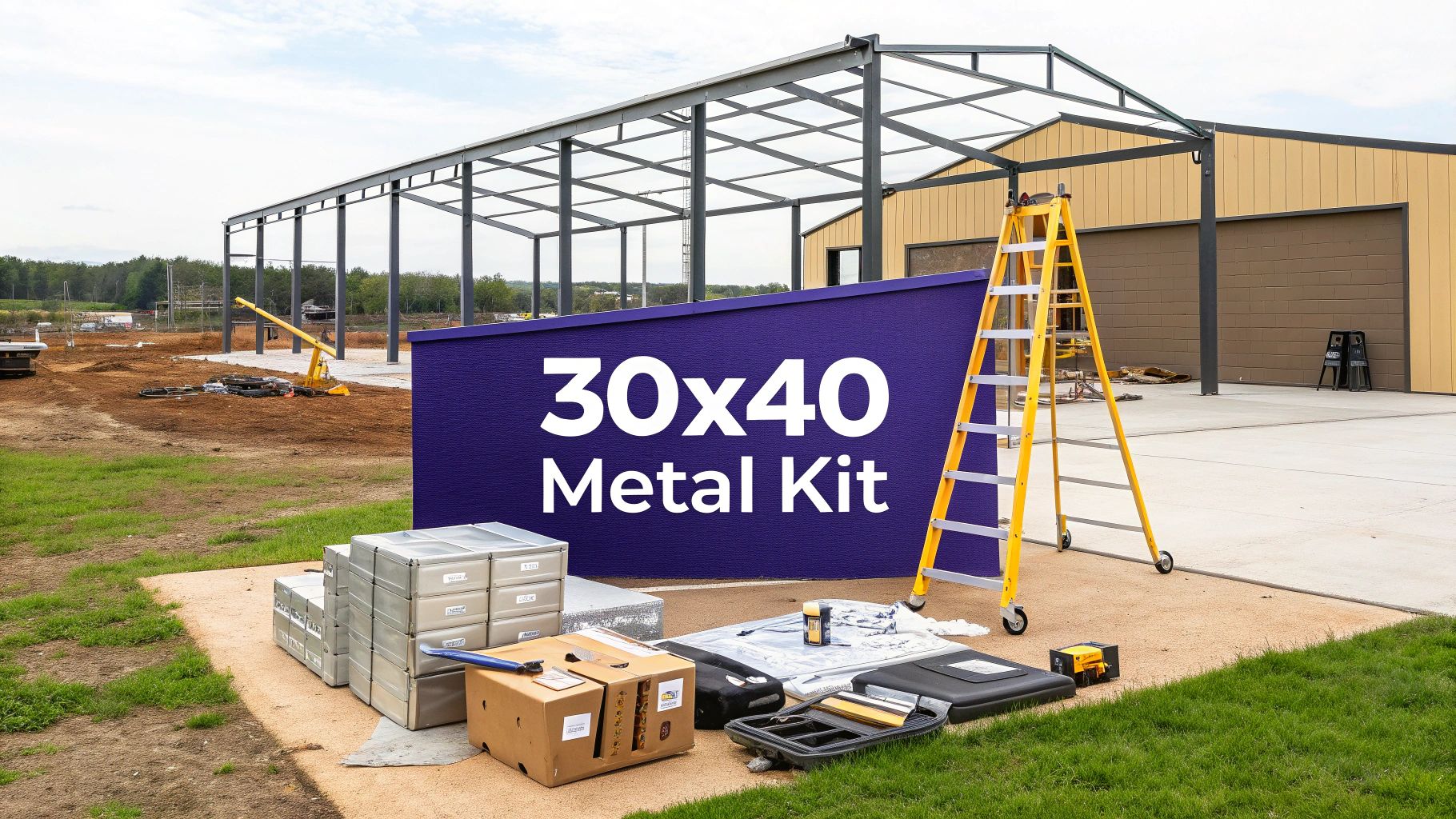
A 30×40 metal building kit gives you 1,200 square feet of wide-open, usable space built from pre-engineered steel. The best way to think about it is like a life-sized, high-strength construction set, designed from the ground up for straightforward assembly. It’s a seriously durable and cost-effective alternative to building with traditional materials like wood.
Decoding Your 30×40 Metal Building Kit
Ever built with LEGOs? Imagine getting a giant set designed for real-world, heavy-duty use. That’s pretty much what a 30×40 metal building kit is.
Instead of a pile of lumber you have to measure and cut on-site, you get a complete package with steel components that are already pre-cut, pre-drilled, and pre-welded. They’re engineered to fit together perfectly, which takes all the guesswork out of the construction process.
The real magic is in its 1,200 square feet of unobstructed space. Because steel is so incredibly strong, these buildings don’t need any interior support columns. This “clear-span” design creates a massive, open area—a blank canvas you can set up for anything from a spacious workshop to a retail shop without having to work around pesky posts.
To give you a clearer picture of what to expect, here’s a quick rundown of a standard kit’s key features.
30×40 Metal Building Kit at a Glance
| Feature | Description | Primary Benefit |
|---|---|---|
| Dimensions | 30 feet wide by 40 feet long | Provides 1,200 sq. ft. of versatile floor space. |
| Clear-Span Design | No interior support columns needed | Maximizes usable interior space and layout flexibility. |
| Pre-Engineered Kit | Components are pre-cut and pre-drilled | Simplifies and accelerates the assembly process. |
| Steel Framing | High-grade I-beams and secondary framing | Offers superior strength, durability, and weather resistance. |
| Galvalume Coating | Protective zinc-aluminum alloy on panels | Prevents rust and corrosion, extending the building’s lifespan. |
This table shows just how much practical value is packed into a single, efficient kit.
What’s Included in a Standard Kit
Every single piece in the kit is engineered for long-term durability and simple assembly. We use high-grade steel, often coated with Galvalume Plus—a powerful blend of aluminum, zinc, and silicon that provides top-tier protection against rust and corrosion.
A standard kit typically includes:
- Primary Framing: These are the main I-beams that create the building’s skeleton.
- Secondary Framing: The girts and purlins that connect the main frames, supporting the walls and roof.
- Wall and Roof Panels: Heavy-duty corrugated steel sheets that form the building’s exterior shell.
- Fasteners and Hardware: Every nut, bolt, and screw you’ll need for assembly.
- Engineered Blueprints: Certified, detailed plans specific to your location and building codes.
This all-in-one “kit” approach makes everything from shipping to construction so much simpler. Since every piece is manufactured with precision, the building goes up significantly faster than one made from wood or concrete. For a deeper dive into what steel building kits can do, check out our ultimate guide to steel building kits.
The 30×40 dimension is a popular choice in the steel building industry because its 1,200 square feet hits a sweet spot for versatility, accommodating residential garages, workshops, and small commercial operations with ease. Its widespread adoption is confirmed by leading suppliers who have sold tens of thousands of buildings worldwide, highlighting the size’s immense popularity and practical demand. Learn more about the versatility of 30×40 metal buildings on futurebuildings.com.
Exploring Real-World Uses for Your Building
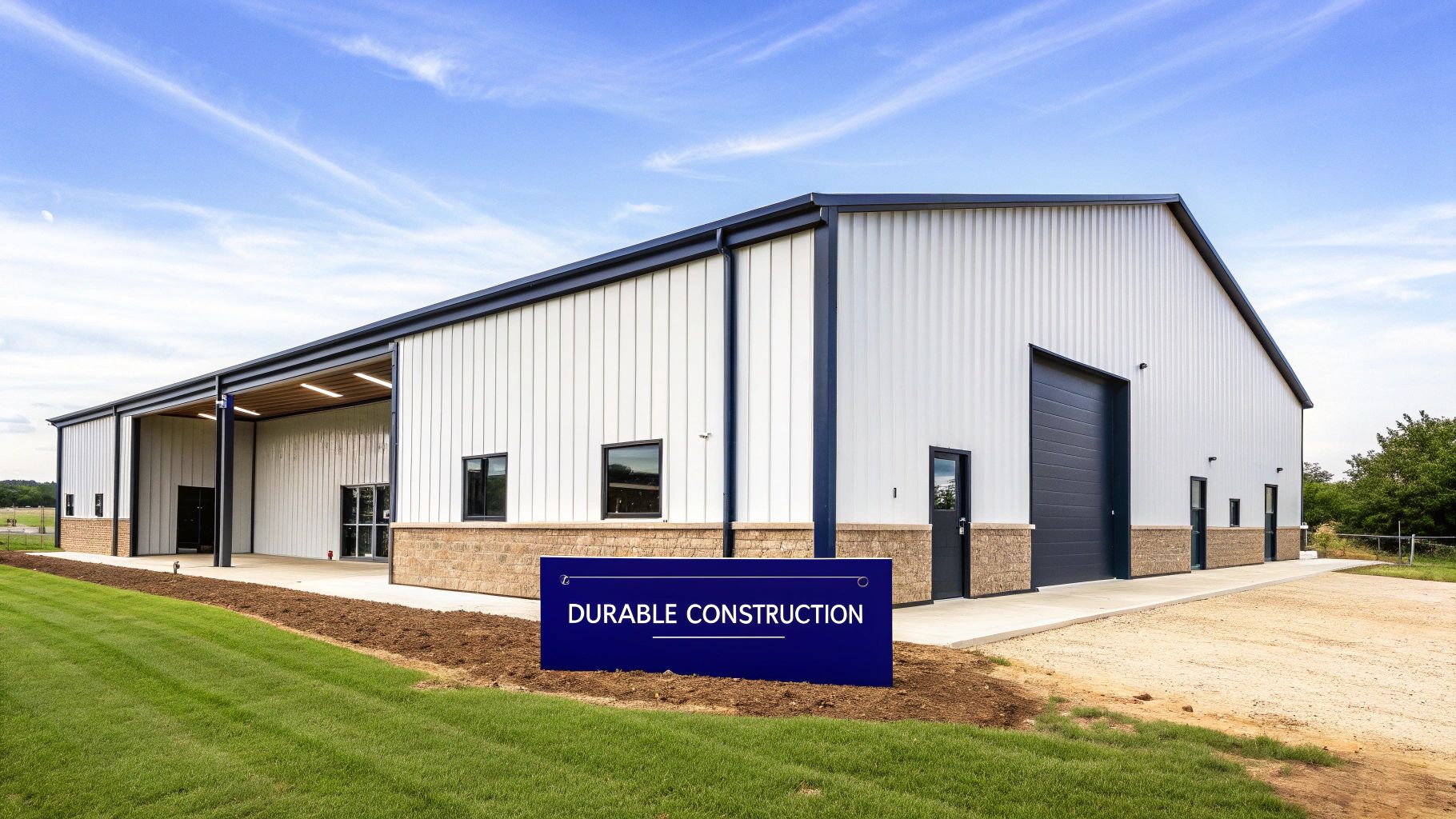
A 1,200-square-foot structure is so much more than just four walls and a roof—it’s a blank canvas waiting for a purpose. The real magic of 30×40 metal building kits is just how adaptable they are. This wide-open, clear-span space can be transformed to solve a huge range of problems, whether for your home, business, or farm.
Let’s dig into some practical, real-world applications. Seeing how other people have put these buildings to work can help you start picturing exactly how a structure this size could solve your own challenges and bring your ideas to life.
Residential Dreams Realized
For homeowners, a 30×40 metal building is often the missing piece for unlocking new hobbies or just finally getting organized. The column-free interior gives you incredible flexibility, letting you create a space that fits your lifestyle perfectly. Just imagine the possibilities right in your own backyard.
Some of the most popular ways we see them used include:
- The Ultimate Workshop: This is your chance to build a dedicated space for woodworking, metalworking, or restoring that classic car. With 1,200 square feet, you have plenty of room for big equipment like table saws and vehicle lifts, plus all the storage you need for tools and supplies.
- A Multi-Car Garage: You can comfortably park two or even three vehicles inside, with room to spare for the lawnmower, bikes, and seasonal gear. It’s the perfect way to protect your investments from the weather and reclaim your primary garage.
- A Personal Home Gym or Studio: Think about it—a private fitness center, a quiet yoga studio, or a messy art space, all separate from the main house. The tough steel structure can easily handle heavy equipment and gives you a peaceful retreat to focus.
Commercial and Business Hubs
For small business owners and entrepreneurs, a 30×40 building is a smart, cost-effective way to grow. It’s the ideal size for a startup or for expanding your current operation without the massive costs and long waits of traditional construction. It lets you get a professional space up and running fast.
A metal building provides a durable, low-maintenance solution for commercial ventures. Its efficiency and affordability make it an excellent investment, allowing business owners to allocate more capital toward growth rather than expensive infrastructure.
Here are a few ways businesses put this footprint to work:
- Compact Auto Repair Shop: The clear-span design is perfect. It gives you all the open space needed for one or two vehicle lifts, work bays, and a small office area right where you need it.
- E-commerce Warehouse: Need a spot to manage inventory, pack orders, and run your shipping operations? This is it. The high ceilings are great for vertical shelving, letting you maximize every square foot of storage.
- Retail Storefront: With customizable doors, windows, and exterior finishes, you can create a really inviting retail space for a boutique, a small local market, or a specialty goods shop.
Agricultural and Farm Applications
Out on a farm or ranch, you need things that are tough and practical. A 30×40 metal building kit delivers a resilient structure that stands up to harsh weather while demanding almost no upkeep. It’s a workhorse built to protect your valuable equipment and livestock.
Common uses on the farm include:
- Equipment Storage: Get your tractors, hay balers, and other essential machinery out of the elements. A secure building protects them from rust and weather damage, extending their life.
- Small Barn or Animal Shelter: It’s a great size for housing small livestock, storing feed, or creating a protected area for animal care.
- Hay and Crop Storage: Keep your harvest dry and safe from pests in a structure that’s well-ventilated and secure.
Understanding the True Cost of Your Project
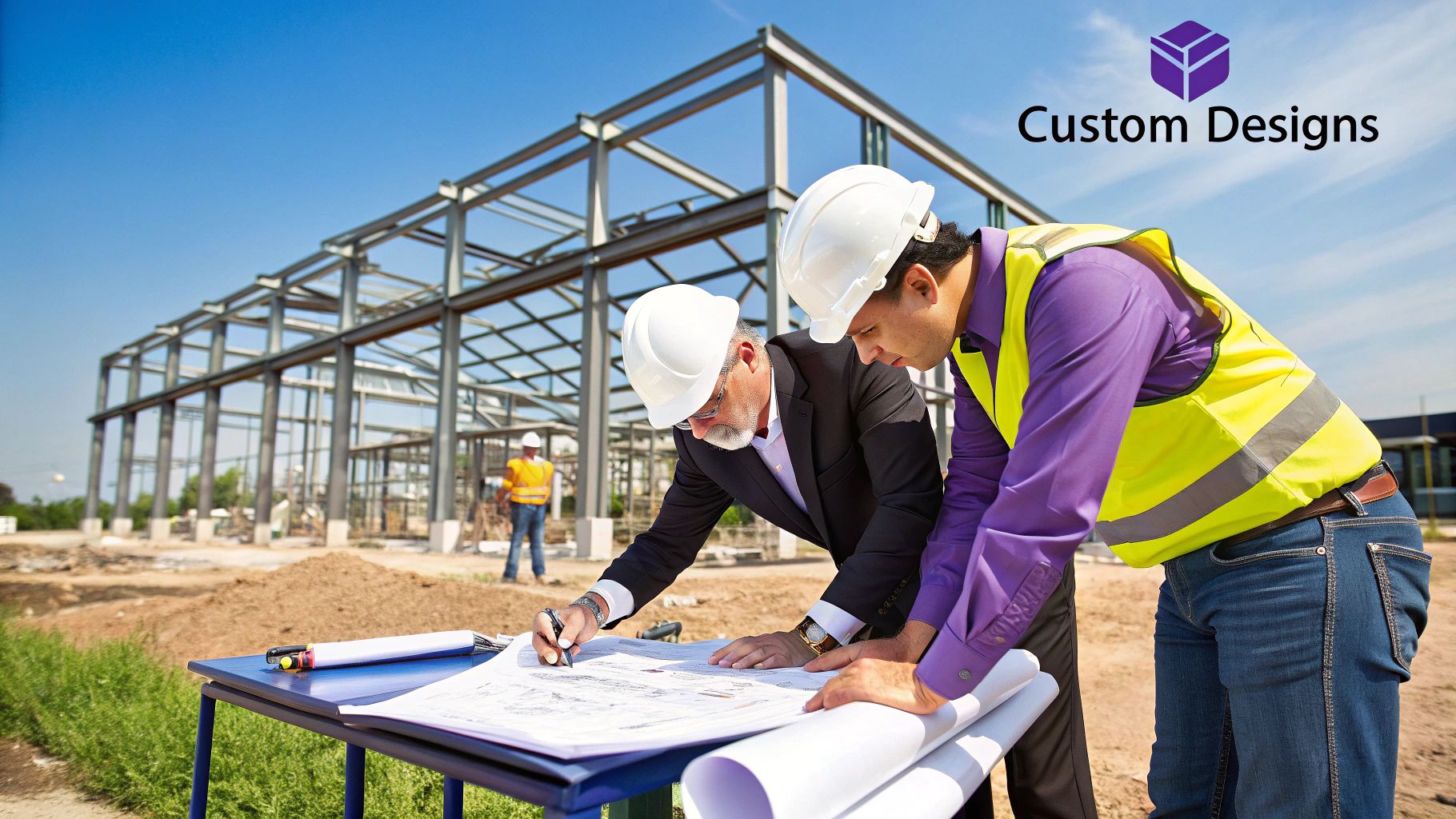
Thinking about the cost of a 30×40 metal building kit is a bit like buying a car. You see that attractive base price, and it’s a great starting point, but it’s rarely the final number you drive off the lot with. The initial kit price is just one piece of a much larger financial puzzle.
To budget accurately and avoid any unwelcome surprises, you have to look beyond the price tag on the steel itself. The real investment covers everything it takes to turn that patch of dirt on your property into a fully functional building. This all-in number is what we call the “turnkey” price, and understanding what goes into it is the key to a smooth project.
What Influences the Base Kit Price
The price of the kit isn’t set in stone; a few key factors can make it move up or down. The thickness of the steel, known as its gauge, plays a huge role. Remember this: a lower gauge number means thicker, stronger, and yes, more expensive steel.
Your building also has to be certified to handle whatever Mother Nature throws at it in your area. If you live somewhere with heavy winters, you’ll need a higher snow load rating. If you’re in a coastal or storm-prone region, you’ll need a specific wind load rating. These certifications often require beefier framing or extra supports, which adds to the base cost but ensures your building is safe and up to local code.
Uncovering the Hidden Project Costs
The single biggest mistake we see people make is underestimating all the costs that pop up after buying the kit. These “soft costs” and site-specific expenses are absolutely essential for a successful build, so you need to factor them in from day one.
Here’s a rundown of the typical expenses you should have on your radar:
- Foundation Work: Almost every metal building needs a solid concrete slab to sit on. This isn’t a small line item—it involves excavation, grading, setting up forms, and pouring tons of concrete.
- Site Preparation: Before that concrete can even be poured, your land needs to be cleared, leveled, and graded. A stable base is non-negotiable.
- Permits and Fees: Your local city or county will require building permits. This comes with application fees and often means paying for professional inspections along the way.
- Utility Connections: Need power, water, or plumbing? You’ll have to budget for trenching and connecting those services from the main lines to your new building.
- Erection and Labor: Unless you’re a seasoned pro planning a full DIY job, you’ll hire a crew to put the building up. Labor can be a significant chunk of your total budget. You can learn more by checking out our deep dive into the average cost of a steel building.
- Interior Finishing: The kit gives you a weatherproof shell. Everything inside—insulation, drywall, electrical wiring, lights, and flooring—is a separate cost.
To help you see the bigger picture, we’ve put together a sample budget. This table breaks down the common expenses that go into a complete 30×40 metal building project, giving you a much clearer idea of the total investment.
Estimated Cost Breakdown for a 30×40 Metal Building
| Expense Category | Estimated Cost Range | Key Considerations |
|---|---|---|
| Metal Building Kit | $20,000 – $40,000 | Varies with steel prices, gauge, and certifications (wind/snow loads). |
| Foundation | $7,200 – $14,400 | Based on $6-$12 per sq. ft.; depends on slab thickness and local labor. |
| Site Preparation | $1,500 – $5,000+ | Costs depend on land clearing, grading, and soil conditions. |
| Installation/Labor | $6,000 – $12,000 | Based on 30-50% of the kit price; varies by crew and project complexity. |
| Permits & Fees | $500 – $2,500 | Highly dependent on local municipal requirements and inspection schedules. |
| Utilities | $2,000 – $8,000+ | Cost for connecting electricity, water, and septic can vary widely. |
| Interior Finishing | $5,000 – $25,000+ | Depends on insulation, drywall, electrical, plumbing, and flooring choices. |
Keep in mind these are estimates. The final cost will always depend on your specific location, choices, and the contractors you hire. This table is a tool to help you start budgeting realistically, ensuring you account for every step of the process from the ground up.
How to Customize Your Metal Building
One of the biggest myths about 30×40 metal building kits is that they’re just one-size-fits-all gray boxes. Nothing could be further from the truth.
Think of the base kit as the chassis of a car—solid, reliable, and engineered for performance. But the real personality comes from the features and finishes you choose. Customization is where you turn a standard structure into a space that’s uniquely yours, both in how it works and how it looks.
This is about more than just picking a color. It’s about making smart choices that define how you’ll use your building every day. From massive doors big enough for an RV to windows that flood the space with natural light, every decision shapes the final product. Your goal is to perfectly tailor the building to your needs, whether it’s for a dream workshop, a multi-car garage, or a small business.
Functional Upgrades for Better Use
Before you even think about aesthetics, let’s talk about function. How you’ll use the building day-to-day should drive your first set of decisions. Getting the practical stuff right from the start is what turns a simple steel shell into a highly efficient and comfortable workspace.
Here are some of the most critical functional customizations to consider:
- Doors: The type, size, and number of doors are make-or-break decisions. You might need a huge 10×10 roll-up door for vehicle access, a standard walk-in door for easy entry, or a combination of both. Where you place them is just as important as what kind you choose.
- Windows and Skylights: Don’t underestimate the power of natural light. Adding windows makes the interior feel bigger and brighter, cutting down on your electricity bill. Skylights are a fantastic way to light up the center of your 1,200-square-foot space without sacrificing wall area.
- Lean-Tos: A lean-to is an easy and affordable way to add more covered space. It’s a single-slope roof structure that attaches to the side of your main building, giving you the perfect spot for firewood, equipment storage, or even a shaded patio area without pouring a new foundation.
Customizing a metal building is a balancing act between practicality and personal style. If you nail the functional components first, you guarantee the building won’t just look great—it will serve its purpose flawlessly for years to come.
Aesthetic Choices to Match Your Style
Once you’ve locked in the functional elements, it’s time for the fun part: making it look good. This is your chance to make sure your new building complements your property and reflects your personal taste. You’d be surprised by the range of options available for modern metal buildings. You can see a ton of great examples by exploring steel building accessories and components.
Your main aesthetic choices boil down to a few key areas:
- Color Palettes: The days of boring industrial gray are long gone. You can now pick from a whole spectrum of colors for the walls, roof, and trim. This lets you create a sharp contrast, match your home, or go for a bold, standout look.
- Roof Styles: The roofline has a huge impact on the building’s overall appearance. A vertical roof, for instance, not only looks clean and modern but is also the best design for shedding rain and snow, keeping your building protected.
A Practical Guide to DIY Installation
When you hear that a 30×40 metal building kit is “DIY-friendly,” it might sound a little intimidating for a structure of this scale. But these kits are engineered from the ground up for straightforward assembly. Think of it like a giant, high-stakes Erector Set—every beam, panel, and screw has a precise purpose and a designated spot, stripping away the guesswork of traditional construction.
With a small crew and the right basic tools, the whole process is designed to be tackled in clear, manageable steps. You don’t need to be a seasoned contractor to succeed; you just need to follow the manufacturer’s manual to the letter. That manual is your roadmap, and sticking to it is the key to a safe, structurally sound building.
The Assembly Process Unpacked
Bringing your building to life is a logical, step-by-step journey, starting from the ground and working your way up. Each stage builds on the one before it, from laying the foundation to adding the finishing touches that make the space your own.
Just like you’d plan your budget in stages to make sure everything adds up, the construction process follows a similar sequential approach. The infographic below shows how a good financial plan mirrors a good building plan—it’s all about organized, logical progression.
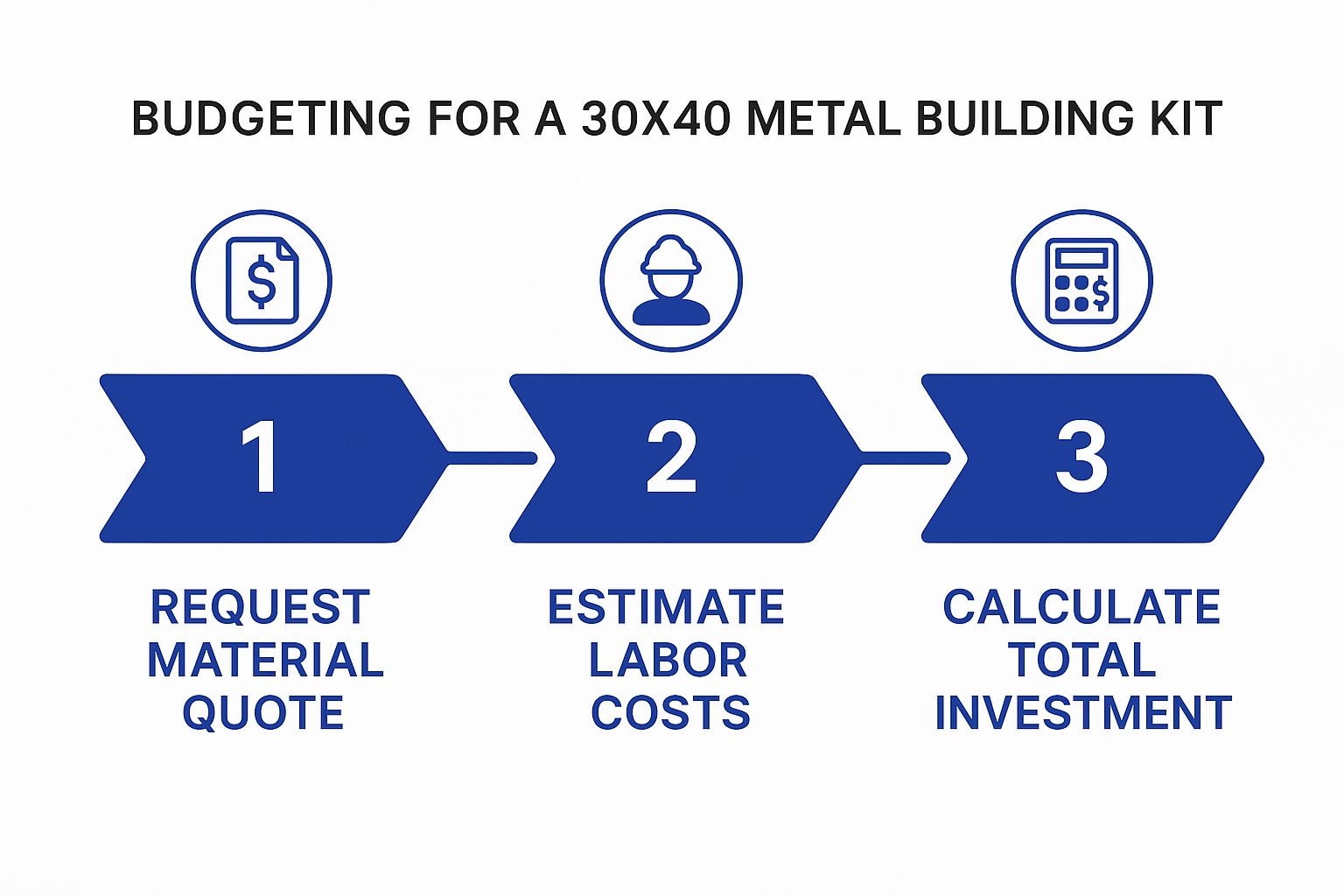
Whether you’re managing money or materials, a well-thought-out plan is what separates a smooth project from a stressful one.
Here’s a look at the typical construction phases you’ll go through:
- Site Prep and Foundation: This happens before your kit even shows up. The ground needs to be cleared, leveled, and properly graded. Then, a solid and perfectly square concrete foundation is poured to create the sturdy base your building needs.
- Organize Your Parts: Once the kit is delivered, resist the urge to jump right in. Take the time to unpack and inventory every single component against the parts list. Sorting your bolts, frames, and panels now will save you massive headaches later.
- Frame Erection: This is the exciting part where your building starts to take shape. You’ll bolt together the massive primary steel I-beams first. Then, you’ll connect them with the secondary framing, known as girts and purlins, to form the complete skeleton of the structure.
- Sheeting and Panels: Next up, the wall and roof panels get attached to the framework. This is the step that encloses the structure, turning that steel skeleton into a weatherproof shell. You can finally see what your building will really look like.
- Doors and Windows: With the shell complete, it’s time to install your walk-in doors, roll-up garage doors, and any windows you’ve included in your design.
- Trim and Finishing: The final step is all about the details. Adding trim to the corners, roofline, and doorways gives the building a clean, polished look and seals everything up tight.
Even though the process is designed to be simple, having the right tools on hand is non-negotiable. You’ll need a standard toolkit with wrenches, a good drill with a set of bits, ladders or scaffolding for safe access, and a screw gun. If you want to see what this process looks like in the real world, check out some of our customer projects and videos to see these steps in action.
Why Choose an Icon Steel Building Kit
Choosing the right building kit is about more than just the structure itself—it’s about finding a partner you can trust. At Icon Steel Buildings, we know this isn’t just another purchase. It’s an investment in your property and your future, and we’re here to make sure it’s a smart one that lasts a lifetime.
Our promise starts with the steel. We don’t cut corners. We exclusively use premium, American-made steel like Galvalume Plus™, known for its incredible resistance to corrosion and its sheer longevity. This commitment to quality is why you can build better with Icon Steel Buildings.
Engineered for Excellence
Every single Icon kit is meticulously engineered to meet—and often exceed—your local building codes for both wind and snow loads. This isn’t just a box-checking exercise for us. It’s a guarantee that your building will be safe, fully compliant, and ready to stand strong against whatever Mother Nature throws its way.
Choosing a prefabricated structure aligns with a global shift toward efficient and sustainable construction. The market is projected to reach USD 2.79 billion by 2032, with North America leading the demand for durable solutions like 30×40 metal building kits. Read more about prefabricated steel building market trends on coherentmarketinsights.com.
Beyond the steel and the engineering, you get us. Our dedicated customer support team is with you for the entire journey, from the moment you make that first call to the day your project is complete. We believe in building strong relationships just as much as we believe in building strong structures.
When you choose an Icon Steel building kit, you’re not just buying a building; you’re investing in total peace of mind.
Frequently Asked Questions
When you’re looking into a 30×40 metal building kit, a few questions always pop up. Getting these details ironed out early on is the key to making your project run smoothly, so you can move ahead with confidence.
We’ve pulled together the most common questions we hear about permits, foundations, and delivery to give you clear, straightforward answers. This will help you get your site ready for your new building’s arrival without any surprises.
Do I Need a Permit for a 30×40 Metal Building?
Almost always, yes. A building of this size isn’t a temporary shed—it’s a permanent structure. Your local authorities will want to see a permit to make sure everything is built to code and meets safety and zoning rules.
These rules can change quite a bit from one city or county to the next. The best first step is to call your local building department. They’ll walk you through exactly what they need for your application, from plans to other documents.
We provide certified engineered blueprints with every kit, and this is exactly what the permit office needs to see. These plans confirm that your building’s design can handle local wind and snow loads, which makes the approval process a whole lot easier.
What Kind of Foundation Is Required?
For a building this size, a solid foundation isn’t just a good idea—it’s a necessity. The go-to choice, and what we always recommend, is a reinforced concrete slab.
A 30×40 slab gives your building a perfectly level and stable base, anchoring it securely and spreading its weight out evenly. The thickness of the slab depends on your soil and what you’ll be using the building for. A 4-inch thick slab is plenty for most workshops or storage, but if you’re parking heavy trucks or equipment inside, you’ll want to upgrade to a 6-inch slab. Don’t forget, proper site prep like leveling and grading is the first critical step before any concrete gets poured.
How Long Does Delivery Take?
Once your design is locked in and the order is placed, you can typically expect your kit to arrive in four to eight weeks.
This timeline can shift a little depending on the season, how complex your custom options are, and where you’re located. As soon as your order is processed, we’ll give you a much more specific delivery window. That way, you can get your site prep and foundation work scheduled and ready to go.
Ready to design the perfect steel structure for your property? The team at Icon Steel Buildings is here to guide you through every step, from initial concept to final installation.
Article created using Outrank