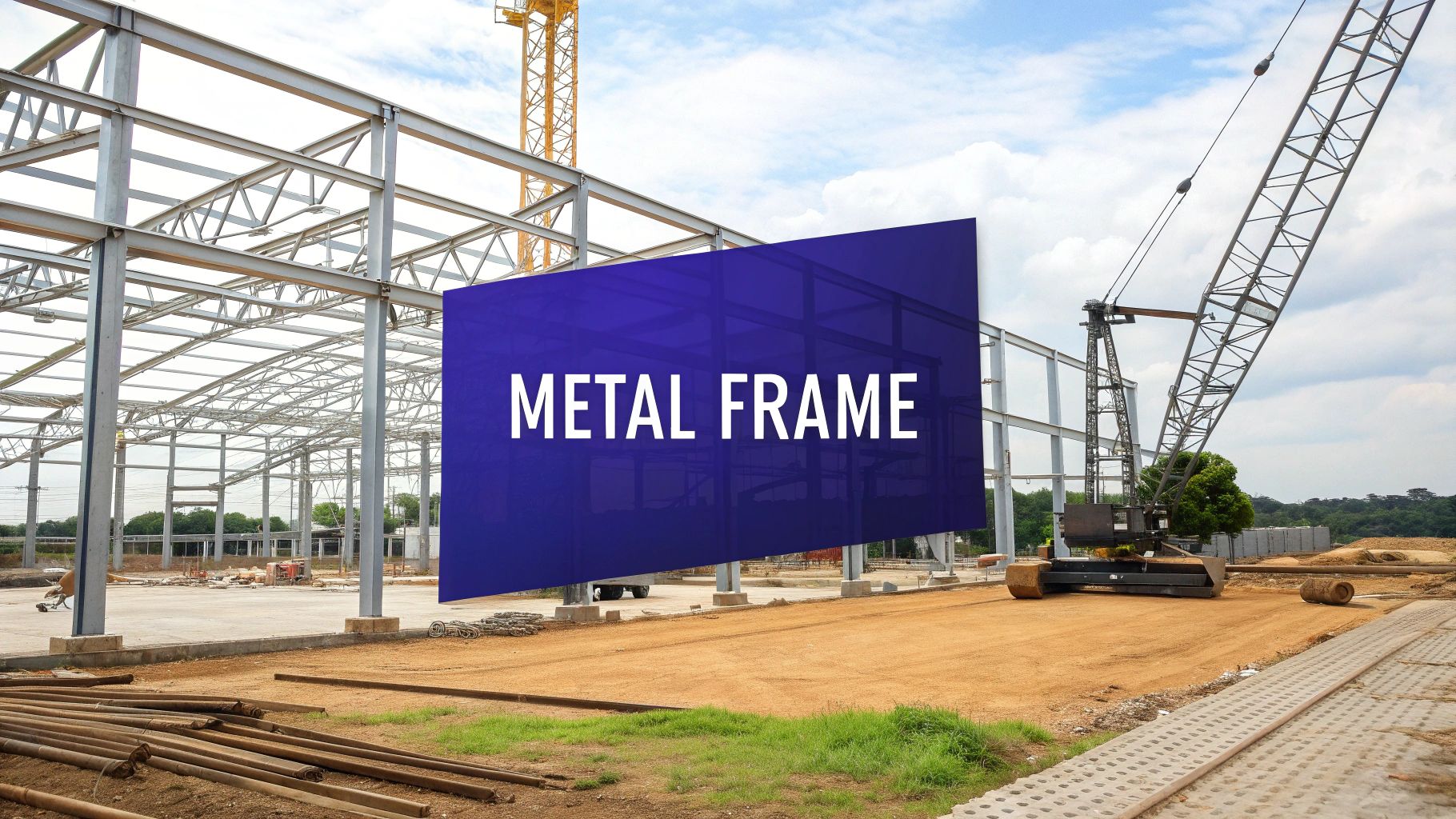
Think of a metal building frame as the skeleton of the structure. It’s the core system of beams and columns that gives the building its shape, holds everything up, and provides the strength to withstand the elements. Just like our bones, this frame is the essential foundation that everything else is built upon.
Why a Metal Frame Is Your Building’s Backbone
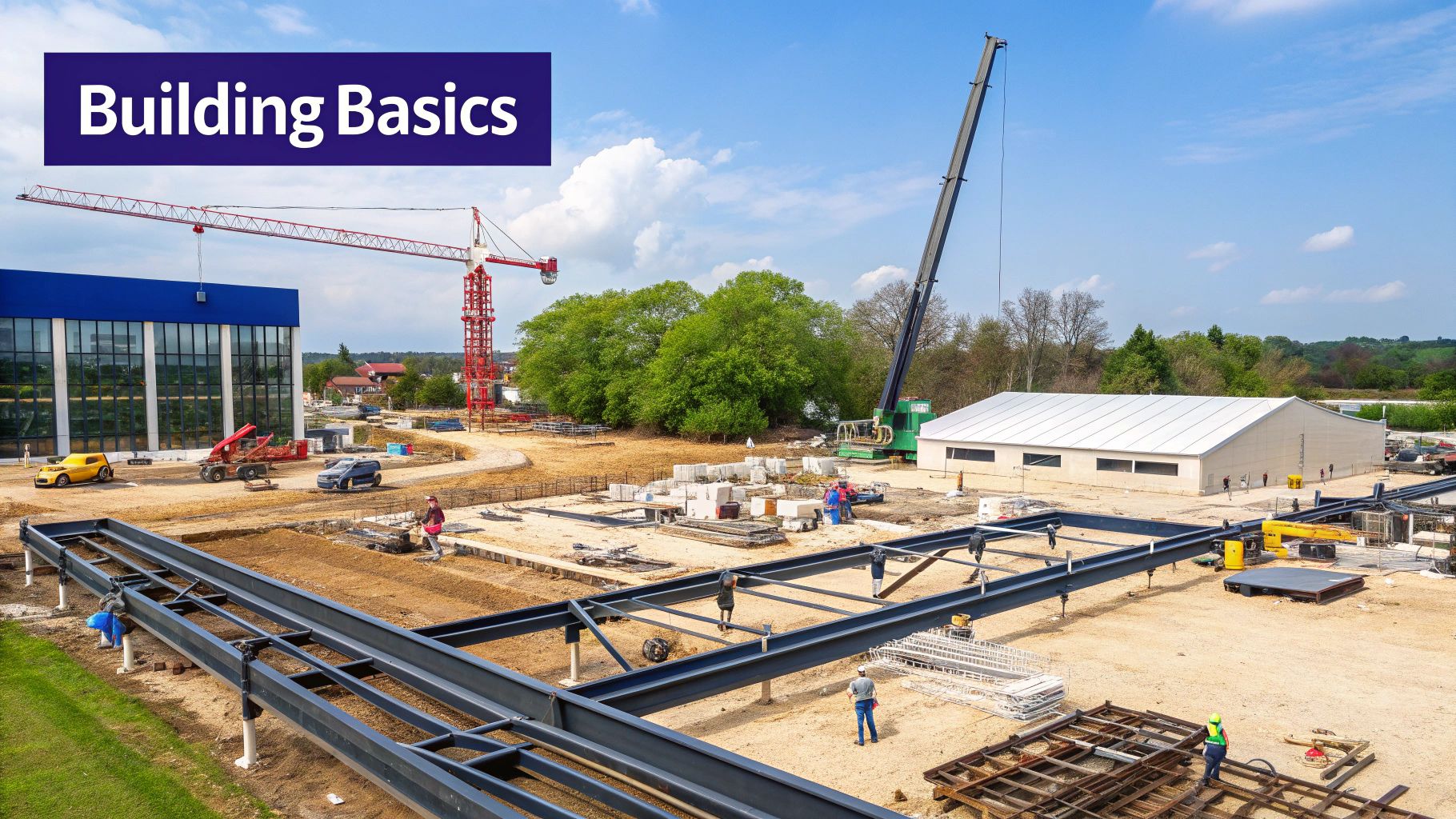
Every strong structure needs a solid core to hold it all together, and for modern buildings, that core is the metal building frame. It's far more than just a random assortment of steel beams; it's a meticulously engineered system designed to transfer every load—from the roof's weight to heavy snow—safely down to the foundation.
This system is built from two key types of components working in harmony: primary and secondary framing. The primary frame handles the heavy lifting with massive columns and rafters that define the building's shape. Then, secondary framing like girts and purlins runs between those main supports, creating a sturdy grid to attach the roof and wall panels.
The Raw Power of Steel
There’s a good reason steel is the go-to material for these frames. Its incredible strength-to-weight ratio allows for massive, wide-open interior spaces without a forest of support columns getting in the way. This is a total game-changer for warehouses, airplane hangars, and indoor sports facilities where you need as much clear-span space as possible.
And when you compare it to traditional wood, steel is in a league of its own. A steel frame is:
- Pest-Proof: Termites have nothing to chew on here.
- Rot-Resistant: Steel won't mold, decay, or warp when exposed to moisture.
- Naturally Fire-Resistant: It has an extremely high melting point and won't add fuel to a fire.
At its heart, a metal building frame provides a durable, reliable, and incredibly long-lasting structural backbone. It's the permanent architecture ensuring the building stays stable and safe for decades, no matter what Mother Nature throws at it.
The Economic Engine of Construction
The impact of metal building frames goes well beyond just one construction site. The industry is a powerhouse for the U.S. economy, with the metal building structure manufacturing sector projected to hit sales of around $66.7 billion in 2024. That figure covers everything from the raw steel to the finished framing components that are the focus of any project.
To put it in another context, think about the internal structure of a massive distribution center. Systems like industrial pallet racking, often considered the steel skeleton of a warehouse, demonstrate the same principle of engineered strength on a different scale. The building's frame does the exact same job, but for the entire structure that houses it. It's the unsung hero, providing the quiet strength that makes everything else inside possible.
Matching The Right Frame To Your Project
Choosing the perfect metal building frame is a lot like picking the right tool for a complex job—it sets the stage for efficiency, structural soundness, and long-term success. Before we dive into the specifics, let’s take a quick side-by-side look at how the most popular frame types stack up.
Comparing Common Metal Building Frame Types
This table compares key features, best-use cases, and typical span capabilities of different metal building frame designs.
| Frame Type | Primary Feature | Ideal Application | Typical Clear Span Range |
|---|---|---|---|
| Clear-Span Frame | Unobstructed Interior | Sports arenas, aircraft hangars, large warehouses | Up To 200 Feet |
| Modular Frame | Easy Expansion | Distribution centers, self-storage facilities, manufacturing plants | 80–150 Feet |
| Single-Slope Frame | Simple, One-Way Drainage | Retail storefronts, small office complexes, strip malls | 30–60 Feet |
With this overview in hand, you’ll see at a glance which frame aligns with your project goals.
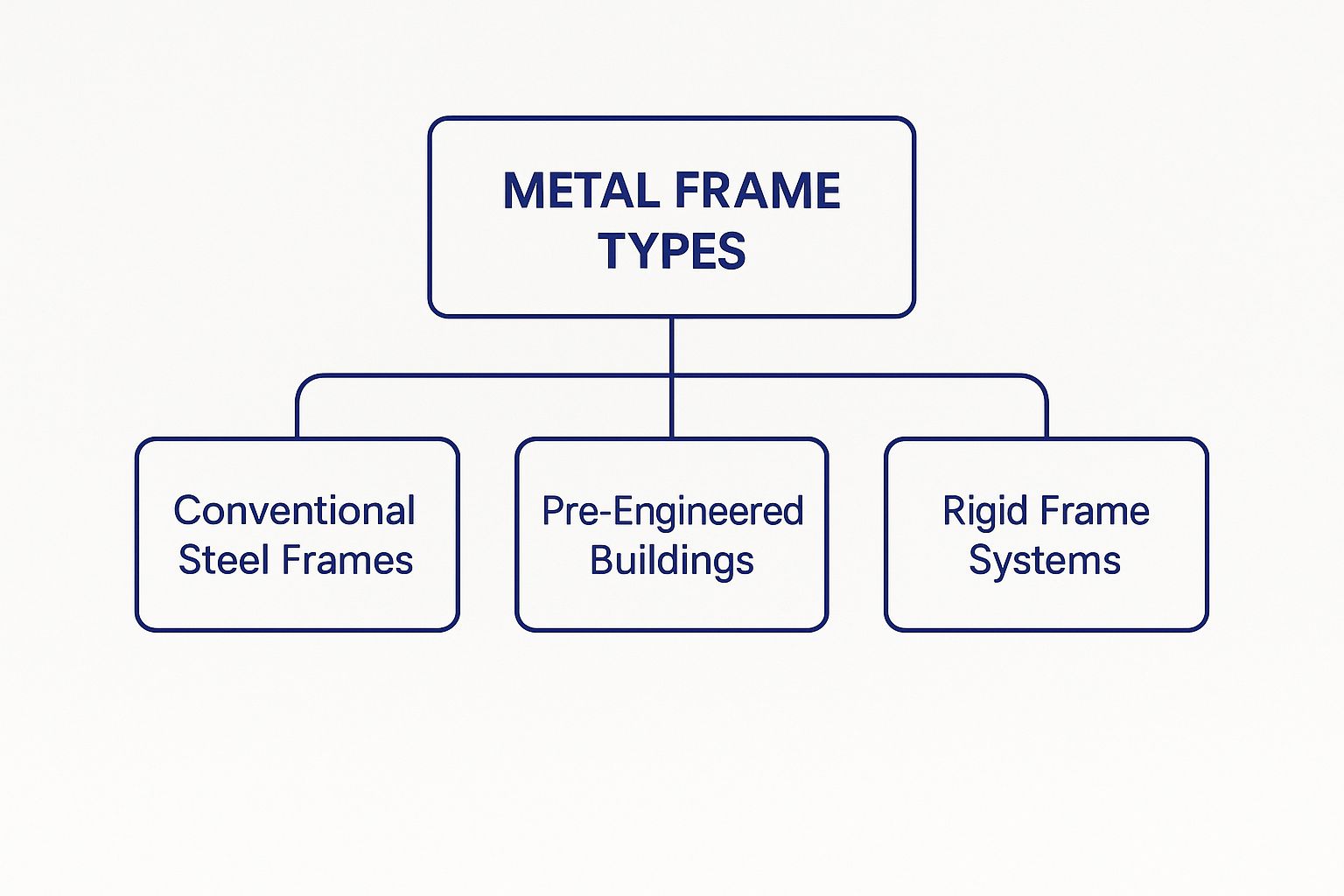
This diagram highlights how metal frames branch into systems like Pre-Engineered Buildings and Rigid Frame Systems, each optimized for different needs.
Clear-Span Frames For Unobstructed Space
Think of a massive basketball court or an aircraft hangar—what they share is a need for vast, uninterrupted floor space. That’s where the clear-span frame earns its stripes.
• It uses beefy rafters to carry the entire roof load directly to the foundation.
• You eliminate interior columns, giving you 100% usable floor area.
• Clear-span designs can often extend over 200 feet wide, making them perfect for:
- Agricultural buildings storing oversized equipment
- Indoor sports facilities like tennis courts or riding arenas
- Aviation hangars that must clear wide wingspans
The biggest payoff? Total layout flexibility. No columns ever get in the way of your workflow or how you arrange equipment.
Modular Frames For Future Growth
Imagine your business booming next year—and needing more square footage. A modular frame anticipates that growth.
• Interior columns share the roof load, lightening the stress on individual rafters.
• Endwalls are non-load-bearing, so extending the building is as simple as swapping out a wall panel.
• You save on initial costs and keep expansion options wide open.
This approach is a strategic choice for anything from self-storage units to sprawling distribution centers. If you plan for the long haul, modular framing offers a cost-effective path to grow at your own pace.
A modular frame lets you build boldly now and expand seamlessly later.
Single-Slope Frames For Simplicity And Drainage
A single-slope frame is exactly what it sounds like—one continuous roof pitch that makes one side taller than the other. It’s the go-to for retail shops, small offices, and strip malls where smart water management and curb appeal matter.
• The taller front wall becomes a natural billboard for signage.
• Rain and snow flow off the lower rear roof, away from customer entrances.
• Its straightforward geometry keeps construction and material costs in check.
If you’re eyeing an addition to an existing building, the single slope easily ties into higher adjacent walls. For a clean, modern look without breaking the bank, it’s hard to beat this simple frame.
For more creative rooflines and layouts, explore how https://iconsteelbuildings.com/custom-steel-buildings/ can adapt steel frames to nearly any vision.
The Real-World Benefits of Building with Steel
When you're deciding on a building frame, you're not just making a technical choice—you're making a long-term investment in durability, efficiency, and peace of mind. While wood has its place, steel brings a unique set of advantages to the table that directly impact your budget and schedule for decades.
It all starts with sheer resilience. Unlike wood, a steel frame is immune to the natural threats that cause costly damage over time. Forget about rot, warping, or cracking from moisture. Termites? They have nothing to feed on here. This built-in toughness means fewer maintenance headaches and repair bills down the road.
Steel also offers superior protection against fire. As a non-combustible material, it doesn’t add fuel to a blaze. This can often lead to lower insurance premiums and, more importantly, provides an extra layer of safety for everyone and everything inside.
Unmatched Durability and Strength
A metal building frame is engineered to stand up to whatever nature throws at it. Thanks to its incredible strength-to-weight ratio, it can handle serious environmental stress, from heavy snow loads and high winds to seismic activity. You get a structure that stays safe and sound, no matter the weather.
This reliability is exactly why the market is booming. The global steel framing market was valued at $36.02 billion in 2023 and is projected to hit $56.07 billion by 2032. Why the massive growth? Because steel framing simply outlasts traditional materials against threats like termites, mold, and rot, which extends the building's life and slashes maintenance costs. You can see more on these trends in the industry research from Dataintelo.com.
This exceptional durability ensures your investment is protected for the long haul. If you want to dive deeper into how these structures perform under pressure, check out our guide on the safety of steel buildings in storms and bad weather.
Cost and Time Efficiency
One of the most compelling reasons to choose a metal building frame is the efficiency it brings to the job site. The components are pre-engineered in a factory with laser-like precision, so they arrive ready to be bolted together. This dramatically cuts down on-site labor costs and shrinks construction timelines.
A pre-engineered metal frame minimizes waste and accelerates your project schedule. Every piece is cut to exact specifications, ensuring a perfect fit that eliminates the need for time-consuming field modifications.
This streamlined process pays off in several ways:
- Reduced Labor Costs: Faster assembly means fewer hours for the construction crew.
- Minimal Material Waste: Precision manufacturing means you only pay for what you actually use.
- Faster Occupancy: A quicker build time lets you open your doors for business sooner, which means you start generating revenue faster.
Design Flexibility and Sustainability
Steel’s strength unlocks a world of architectural possibilities. It enables massive clear-span interiors—some stretching over 200 feet—without any need for interior support columns. This creates wide-open, unobstructed spaces perfect for warehouses, manufacturing plants, or athletic facilities where an open layout is everything.
Beyond its practical muscle, steel is also a responsible choice for the environment. It’s the most recycled material on the planet, with a recycling rate of nearly 90%.
When you choose a steel frame, you're building with a material that is not only tough and efficient but also sustainable. At the end of its life, the entire frame can be recycled, minimizing its environmental footprint. This blend of design freedom and eco-friendliness makes steel a truly forward-thinking choice for any modern building project.
Key Engineering Factors You Cannot Ignore
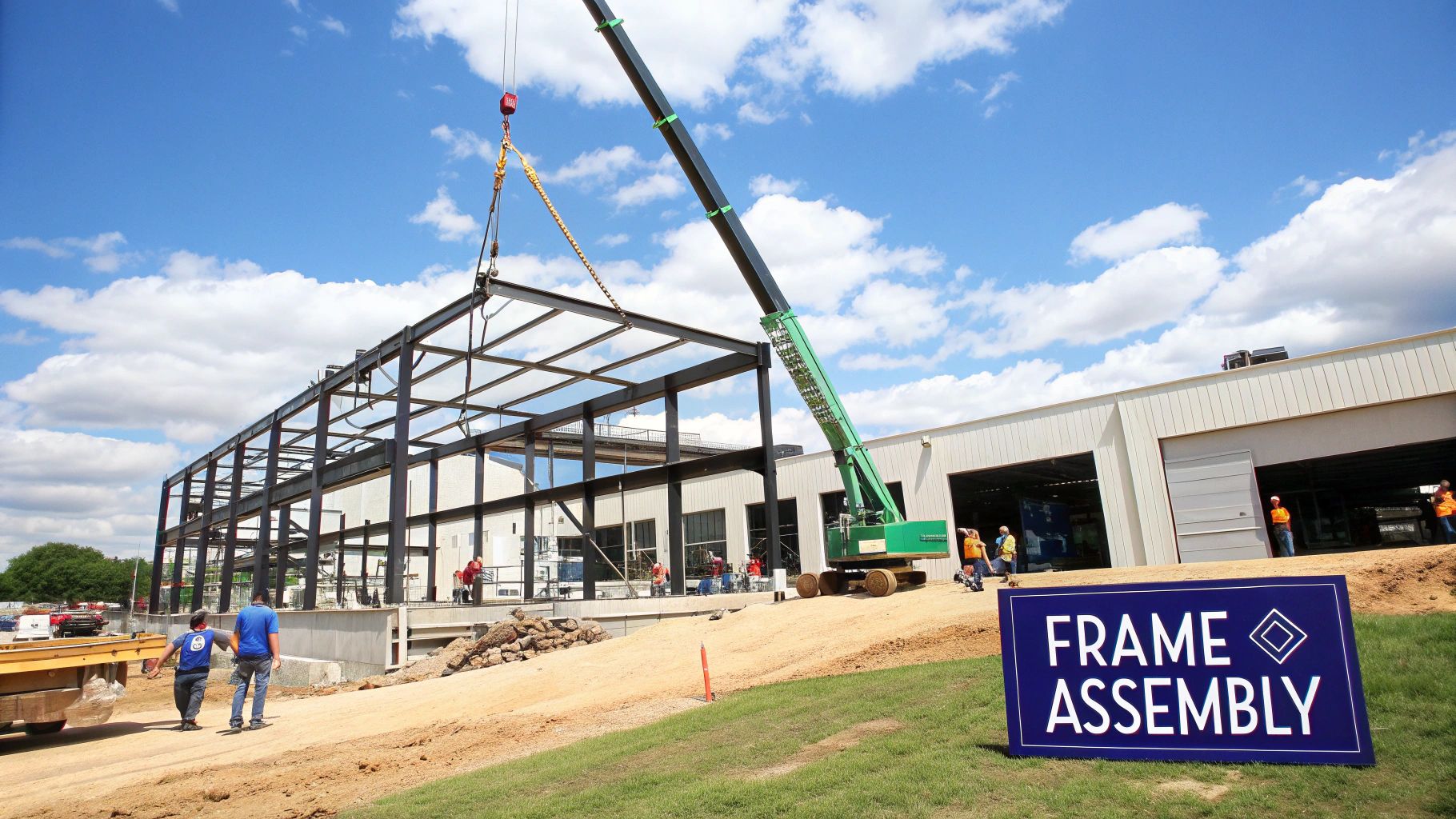
A successful building project is won or lost long before the first piece of steel ever gets bolted into place. The real work happens in the engineering and design phase, where critical calculations and careful planning ensure your structure is safe, compliant, and built to last. Skimping on this stage isn't just risky—it's a recipe for expensive failures and serious safety hazards down the road.
Think of the engineering phase as mapping out your building's DNA. Every instruction needed for it to stand strong against mother nature is encoded right here. Get this part right, and your metal building frame will perform exactly as you expect, protecting your investment for decades.
Understanding Building Codes And Environmental Loads
Before a single design choice is locked in, everything has to comply with local building codes. These aren't just suggestions; they are legally enforced rules that set the minimum safety standards for any construction in your area. They cover everything from structural integrity to fire safety and are the absolute baseline for your project.
These codes are especially crucial when figuring out how your metal building will handle the forces of nature, which engineers call loads. Your building's design must be tailored to the specific challenges of its location.
-
Snow Loads: If you’re building in a snowy climate, the frame has to be engineered to hold up the immense weight of accumulated snow without buckling. A building in Florida will have a completely different snow load requirement than one in Colorado. Simple as that.
-
Wind Loads: For coastal areas or anywhere prone to high winds, the frame needs to be designed to resist being pushed sideways and lifted up. The engineering has to prevent the wind from turning your roof into a giant kite.
-
Seismic Loads: In earthquake zones, the frame needs special engineering to absorb and dissipate seismic energy. This allows it to flex during a tremor without a catastrophic collapse.
These aren't just abstract numbers on a blueprint; they directly impact the size, spacing, and connection details of every single column and rafter. To get these critical details right, bringing in an expert structural engineer is non-negotiable. They are the key to ensuring your frame is safe and sound.
The Foundation Is Everything
Your metal building frame is only as strong as the foundation it sits on. The foundation is the critical link that transfers all the building's weight—plus any environmental loads—safely into the ground. A poorly matched foundation can lead to settling, structural stress, and, eventually, total failure.
The right foundation type depends on a few key things: your soil conditions, the local frost line, and the building's size and weight. A soil report is usually the first step, as it tells the engineers what they’re working with. Common foundation types include:
- Slab-on-Grade: A single layer of concrete poured right on the ground. This works well for stable soil and lighter buildings.
- Pier and Beam: Concrete piers are sunk deep into the ground to hit more stable soil, with beams running between them to support the structure.
- Perimeter Wall/Frost Wall: A continuous concrete wall around the building’s edge that goes below the frost line to stop the ground from heaving during freeze-thaw cycles.
A properly engineered foundation doesn't just support the building; it anchors it. It provides the stability needed to resist uplift from high winds and ensures even distribution of the structure's massive weight.
Planning For The Future
Great engineering doesn't just solve for today; it anticipates the future. Two things you absolutely have to plan for from the get-go are functionality and future growth.
First, think about insulation and ventilation. A metal shell can become an oven in the summer and an icebox in the winter. Planning for a solid insulation system and proper airflow is key for energy efficiency, comfort, and preventing condensation that can lead to rust.
What happens if your business takes off? If you even think you might need more space down the road, designing for future expansion is a brilliant move. An engineer can design specific "expandable endwalls" that aren't load-bearing, making it far easier and cheaper to add new sections later without a massive structural overhaul. That kind of foresight turns your building into a scalable asset instead of a fixed limitation.
From Raw Steel To Ready-To-Build Frame
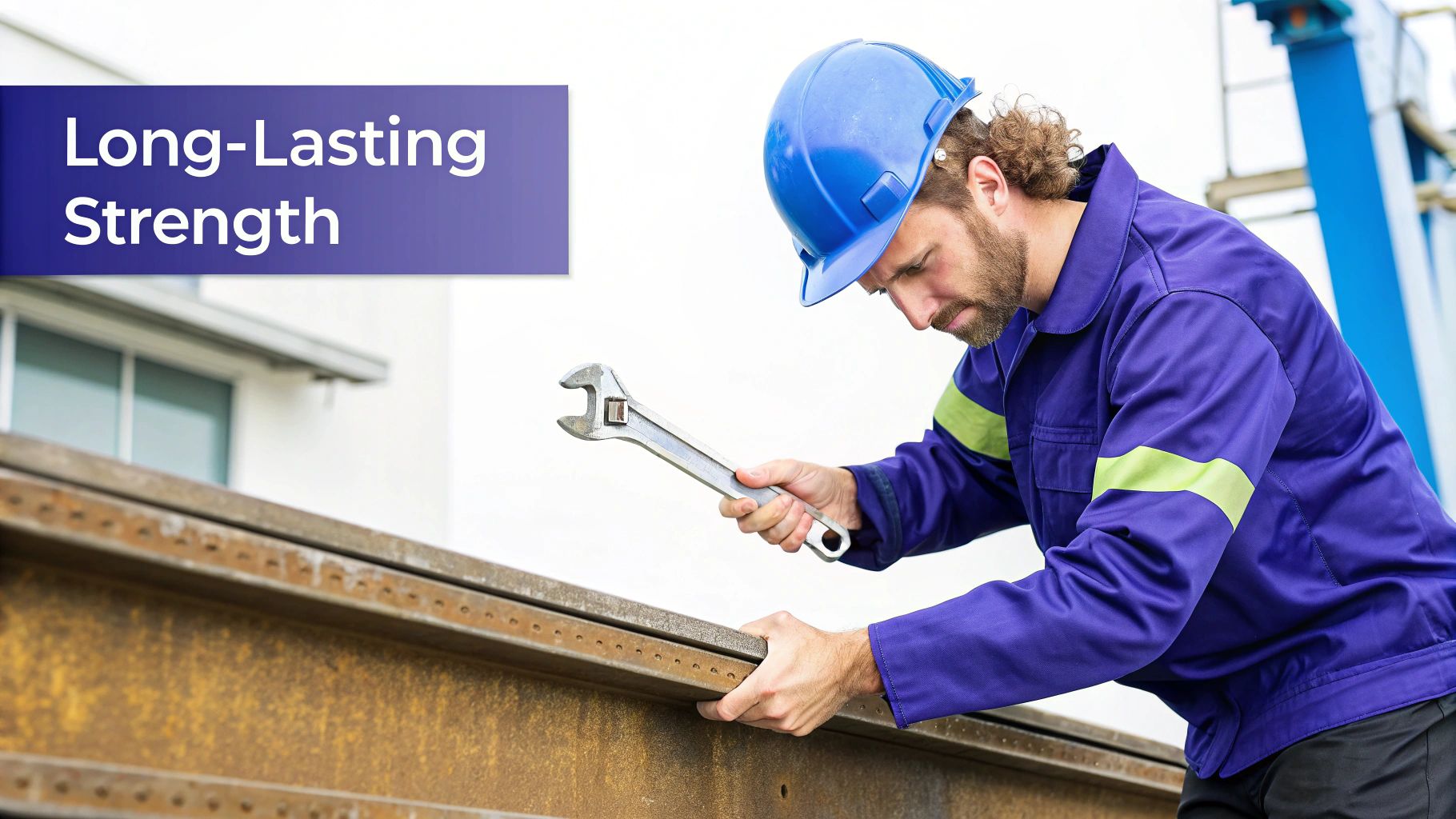
Watching a metal building frame rise on site can feel like a magic trick—giant beams lock into place almost overnight. In reality, that swift assembly is the grand finale of a meticulous journey that starts in a factory hub.
It all kicks off not with hammer and wrench, but with data. Engineers feed architectural drawings into sophisticated CAD software, crafting a digital model that maps out every beam, plate, and bolt hole. Think of it like ordering a custom puzzle: each piece is cut and numbered to fit perfectly.
That digital precision underpins the pre-engineered metal building frame system. By planning every cut, weld, and connection in advance, builders sidestep costly on-site guesswork and delays.
The Fabrication Floor Transformation
Once the design is locked, the factory floor hums to life. Here, raw steel coils become the skeleton of your building through a tightly choreographed dance.
Key Fabrication Stages Include:
- Cutting and Shaping: Steel coils unspool as plasma cutters and saws slice flanges and webs to exact lengths.
- Welding and Assembly: Automated welding rigs join those cut pieces into columns and rafters, delivering uniform welds every time.
- Punching and Drilling: High-speed machines punch precise bolt holes, so parts align without a hitch when they hit the site.
The fabrication process is where the digital blueprint becomes a physical reality. It’s a system of controlled manufacturing that guarantees every component of the metal building frame is produced to exact specifications, ensuring a seamless fit on site.
Applying The Protective Shield
Steel may be tough, but it hates moisture. Before any member leaves the plant, it gets a coat of rust-inhibiting primer—usually gray or red oxide. This temporary barrier:
- Blocks water during shipping and erection
- Prepares the surface for a final paint layer
It’s like giving each beam its own raincoat, ensuring decades of performance for your metal building frame.
The numbers speak volumes. The U.S. steel framing market hit $24.5 billion in 2024, marking a sturdy 4.8% uptick from the year before. That growth shows how much builders value these precision-made, protected systems. For deeper insights, check out the latest market size data from IBISWorld.com.
Finally, workers inspect every piece, label it, and bundle components for shipment. When the truck pulls in, you’re not just unloading steel—you’re unpacking a fully engineered system ready for rapid assembly. For a complete look at how these kits serve anything from homes to warehouses, see our guide on steel building kits covers everything from residential to commercial uses.
Finding a Supplier You Can Trust
Choosing the right supplier for your metal building frame is every bit as important as picking the frame design itself. This isn't just a transaction; it's a partnership that will shape your entire project, from the quality of the steel to how smoothly construction day goes.
A great supplier is your guide, making sure you get a structure that fits your vision and meets local codes. A bad one? They can leave you with a mess of costly delays, frustrating mistakes, and a building that just isn't right.
Vetting Potential Partners
The first thing to look for is a proven track record. You want a company that's been in the trenches, with a long history of successful projects. Seasoned suppliers have seen it all—they understand the engineering quirks, have solid relationships with the best manufacturers, and know how to navigate the permitting process. That kind of experience is priceless, especially if this is your first build.
When you start talking to potential suppliers, it’s time to get into the weeds. Your goal is to find a partner who is transparent, knowledgeable, and absolutely committed to quality. A trustworthy supplier won’t just try to sell you a kit; they’ll work with you to make sure it’s the right kit for your land and your needs.
Here are the questions you need to ask:
- What are your engineering certifications? Make sure their engineers are licensed to practice in your state. This is a deal-breaker. Without it, you won't get your plans approved.
- Where do you source your steel? The quality of the raw material is everything. To ensure you’re getting a durable, high-quality product, learn more about why top builders prefer US-made steel for their structures.
- What is included in the standard building kit? Ask for a detailed, itemized list. Does it cover anchor bolts, fasteners, and clear erection drawings? Hidden costs often pop up in the things that aren't included.
- What warranties do you offer? Get the specifics on warranties for the structural frame, the paint finish, and the roof's weathertightness. A solid warranty is a sign of a company that stands behind its product.
Verifying Quality And Support
Don't just take their word for it—verify their claims. A reputable company will be more than happy to give you references from past clients and show you a portfolio of their completed work. Talking directly to previous customers gives you the real story on their communication, delivery accuracy, and what happens when you need help after the sale.
A supplier’s true value is revealed not just in the quality of their metal building frame, but in the support they provide throughout your project. From initial design to final assembly, their expertise should be a resource you can consistently rely on.
Finally, get a feel for their customer service. Are they quick to respond? Do they patiently answer your technical questions in a way you can understand? A good partner will guide you through the process, making you feel confident and informed every step of the way. Choosing a supplier who is genuinely invested in your success is the best way to guarantee a smooth build from day one.
Common Questions About Metal Building Frames
Jumping into a new construction project always brings up a lot of questions, especially if you're new to metal building frames. To help clear things up, we've put together some of the most common questions we hear and answered them with practical, straightforward advice to guide you.
How Long Will a Metal Building Frame Last?
One of the standout features of steel is its incredible lifespan. A properly maintained metal building frame will easily last 50 to 100 years, and often much longer. Unlike wood, steel is completely immune to the things that typically destroy traditional buildings, like termites, rot, and mold.
The secret to its longevity really comes down to the quality of its protective coatings. Today’s frames are treated with advanced primers and paints that act as a shield against rust and corrosion. Simple, regular maintenance—like checking for scratches and making sure water drains away properly—is all it takes to help it last a lifetime.
Can I Customize My Metal Building?
Absolutely. The old idea that metal buildings are just boring, cookie-cutter boxes is long gone. Modern pre-engineered systems give you an incredible amount of design freedom, so you can create a structure that perfectly fits your vision and your needs.
You have control over nearly every detail:
- Unique Dimensions: Need a specific width, length, or height? You can spec it out down to the inch.
- Roof Pitch and Style: Whether you want a low-slope roof for a commercial look or a classic A-frame design, you have options.
- Exterior Finishes: The frame can be dressed up with almost any exterior material you can think of—brick, stucco, stone veneer, or traditional metal panels in a huge range of colors.
- Doors and Windows: You can integrate any style of overhead doors, walk-in doors, and windows to get the exact look and function you're after.
This flexibility means your metal building can be anything from a simple workshop to a beautiful retail storefront or even a comfortable home.
What Are the Financing Options?
Financing a metal building kit is a very common and straightforward process, much like funding any other type of construction. Most people take one of a few common routes, depending on their financial situation and the project's size.
Many lenders are very familiar with pre-engineered buildings and offer construction loans specifically for them. To get approved, you'll usually need a solid project plan, a detailed budget, and good credit. Some building suppliers even partner with lenders to offer their own financing packages, which can make things even easier. Before you talk to a lender, it helps to have a good handle on the total cost, and our guide on the average cost of a steel building is a great place to start.
When you approach a lender, be sure to highlight the durability and low long-term maintenance costs of a metal building. These are huge selling points that make it a secure and attractive investment from their perspective, which can really help your chances of getting approved.
At Icon Steel Buildings, we specialize in turning your ideas into a strong, customized reality. Our team is here to answer all your questions and walk you through every step, from the initial design to final delivery.
Ready to get started with a team you can trust? Get a free quote from Icon Steel Buildings today!
Article created using Outrank