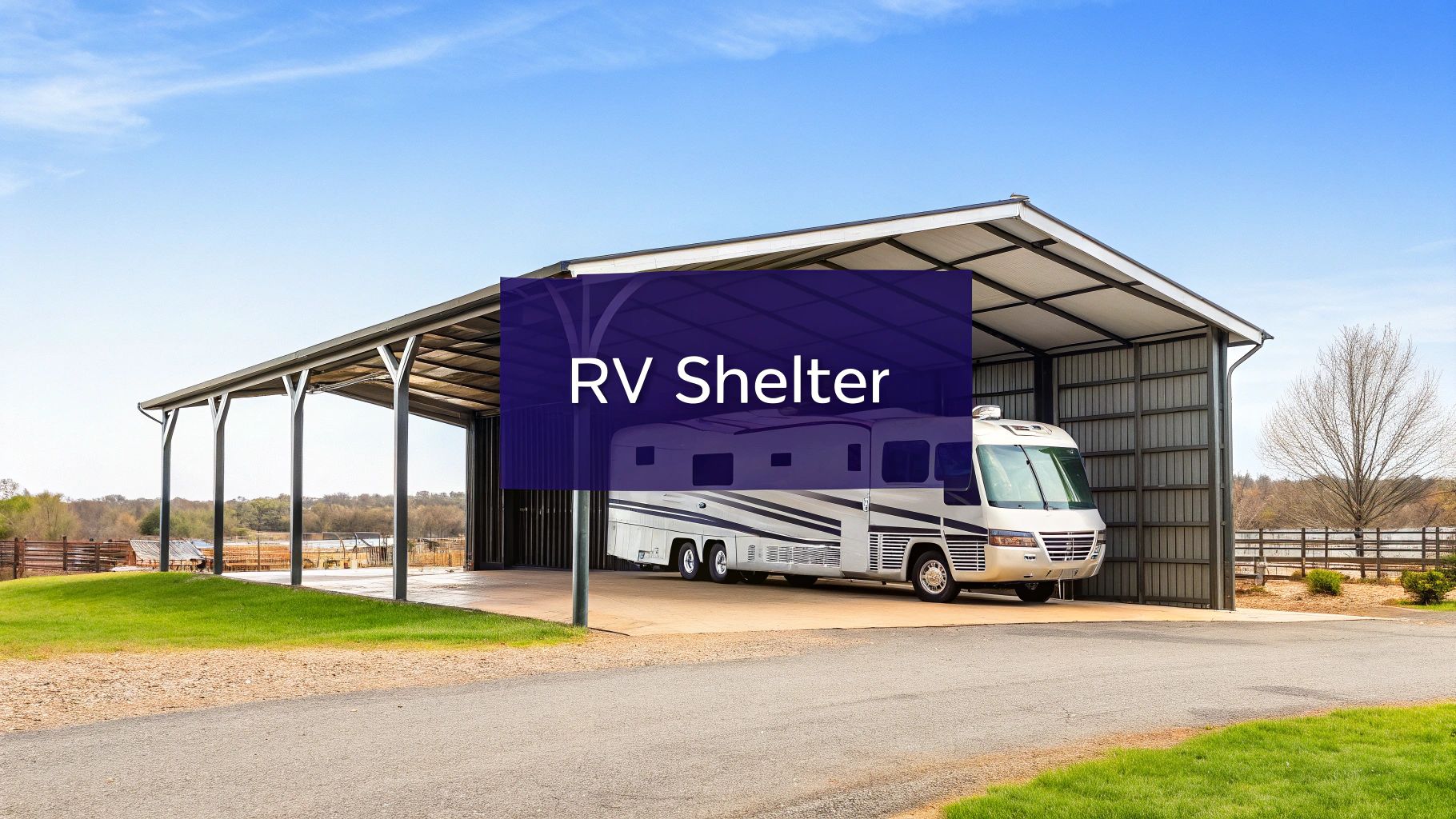
Protecting your RV from the sun, snow, and rain is one of the smartest decisions you can make as an owner. After all, your rig is more than just a vehicle—it’s a huge investment and your ticket to freedom. When it comes to RV shelter designs, you've got options ranging from simple open-air carports to fully enclosed steel garages that offer Fort Knox-level security.
Think of the right shelter as an insurance policy for your investment, one that actively preserves its value and keeps it ready for your next adventure.
Why an RV Shelter is a Critical Investment
Leaving your RV exposed to the elements is like leaving cash out in a storm. A dedicated shelter is your first and best line of defense against costly damage and the kind of depreciation that happens way too fast. It's what keeps your home-on-wheels in prime condition, trip after trip.
The idea of protecting mobile living spaces isn't new. It really took off in the early 20th century, especially after Arthur G. Sherman invented the first solid-body trailer back in 1928 following a particularly miserable camping trip. That innovation sparked a revolution in recreational travel, and with it, the need for better ways to store these new homes-on-wheels.
The True Cost of No Protection
Without a roof over its head, your RV is fighting a losing battle against Mother Nature. The sun's UV rays are relentless, fading your paint, cracking your decals, and making plastic components brittle and weak. Rain is just as bad, finding its way into the tiniest cracks in your seals and leading to devastating water damage, mold, and rot inside.
An RV stored under cover will simply look better and have fewer weather-related issues than one left out in the elements. Any investment in an RV shelter today will pay off when it comes time to sell by helping maintain your RV’s value.
And then there's the more dramatic stuff. A single hailstorm can cause thousands of dollars in cosmetic damage, while the weight of heavy snow can put serious stress on your RV's roof and structure. A well-designed shelter, especially a steel one, takes all these worries off the table. To see just how tough these structures are, check out our guide on the safety of steel buildings in storms and bad weather.
Ultimately, investing in one of the many RV shelter designs isn't just about convenience—it's smart, long-term asset protection.
Comparing the Core Types of RV Shelters
Picking the right RV shelter is a lot like choosing the right gear for a long hike—what you need depends entirely on the environment you're in. RV shelter designs run the gamut from simple, open-air carports to fully secured steel garages, and each one offers a different level of protection for your investment.
Open-Air vs. Enclosed: Finding the Right Balance
The journey often starts with the RV carport. It's the most common and budget-friendly permanent option, acting like a giant, sturdy umbrella for your rig. A carport gives you fantastic overhead protection from the sun, rain, and light snow while letting air circulate freely. Best of all, access is a breeze. This design is perfect for milder climates where you aren't fighting off sideways storms.
But what if you need a little more? A partially enclosed shelter is that perfect middle ground. We just take a standard carport and add one or more side panels. It’s a simple upgrade that makes a huge difference, blocking prevailing winds, driving rain, or just giving you a bit more privacy. It strikes a great balance between serious protection and easy accessibility.
Then there's the top of the line: the fully enclosed RV garage. This is less of a shelter and more of a fortress for your motorhome. It provides complete, 360-degree security from everything—blazing sun, howling wind, hail, and heavy snow. It also keeps out pests and provides a major deterrent to theft. This is the ultimate peace-of-mind option, ensuring your RV stays in pristine condition all year long. Seeing how others protect large investments, like with smart boat storage ideas, can really highlight the value of complete enclosure.
This flowchart helps visualize how your local weather might guide your decision.
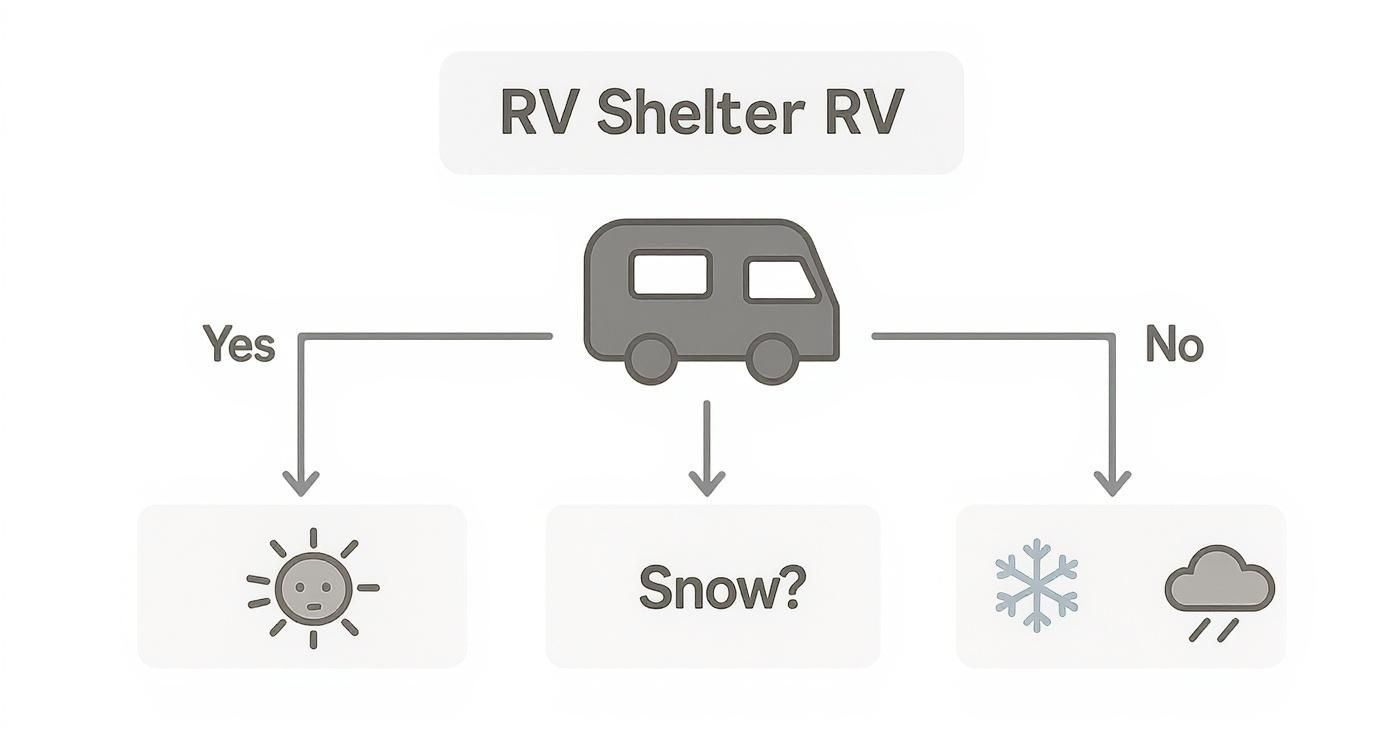
As you can see, the more you have to deal with harsh sun or heavy snow, the more sense it makes to go with a more comprehensive, enclosed design.
To make the choice clearer, here’s a quick breakdown of how these main designs stack up against each other.
Comparison of RV Shelter Design Types
| Shelter Type | Protection Level | Accessibility | Cost Factor | Best For |
|---|---|---|---|---|
| RV Carport | Basic (Overhead) | Excellent | Low | Mild climates, sun/rain protection, easy access |
| Partially Enclosed | Moderate | Good | Medium | Areas with prevailing wind, driving rain, privacy needs |
| Fully Enclosed | Maximum | Fair | High | Harsh weather (snow, hail), security, pest control |
| Lean-To | Varies | Good | Low-Medium | Properties with existing structures, space-saving needs |
| Custom Steel Building | Maximum+ | Varies | High | Multi-purpose use (workshop, storage), unique specs |
Each option serves a purpose, from basic coverage to a complete, multi-functional garage.
Custom and Space-Saving Solutions
Beyond the standard models, there are other clever designs for specific situations. A lean-to shelter is a brilliant space-saver. It attaches directly to an existing building, like your house or a barn, using that structure for support on one side. This makes it a very cost-effective way to add covered parking without needing a standalone building.
For the highest degree of personalization, a custom-engineered steel building is unmatched. These structures can be designed not just to house an RV, but to include a full workshop, extra storage bays, or even living quarters.
These versatile structures go way beyond simple storage, becoming multi-functional hubs for maintenance, hobbies, and more. To get a better sense of what’s possible, you can explore the different types of steel buildings available and see how they can be adapted to your exact needs. Ultimately, there’s a perfect fit for every RV owner’s property, budget, and protection requirements.
Choosing the Best Materials and Roof Styles
Think of your RV shelter like a house—the materials you choose are its bones, and the roof is its first line of defense. Get these right, and your structure will have the strength and longevity to handle whatever Mother Nature throws its way. A building is only as good as what it's made of, so this decision is critical for protecting your investment long-term.
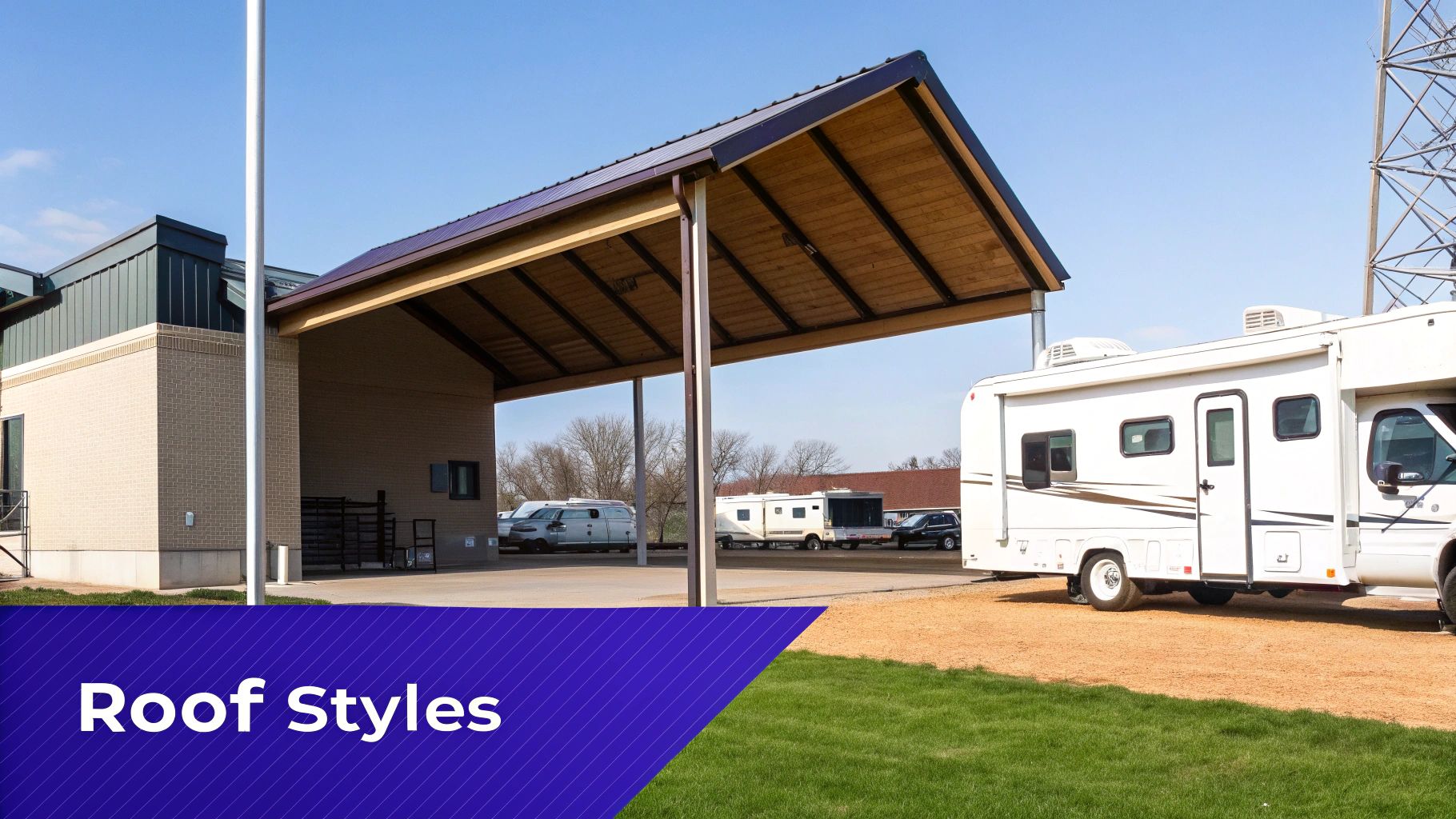
While wood has a certain classic charm, it comes with a constant need for maintenance to fight off rot and pests. That's why steel is the undisputed champion for modern RV shelters. It has an incredible strength-to-weight ratio, needs very little upkeep, and is naturally resistant to fire, insects, and decay.
Material Choices That Make a Difference
Galvanized steel is the industry standard for a good reason. It's coated in a protective layer of zinc that acts as a shield against rust and corrosion, ensuring your shelter stays structurally sound for decades. We typically offer two gauges for framing:
- 14-Gauge Steel: This is the workhorse of the industry—a strong, reliable option perfect for most climates and conditions.
- 12-Gauge Steel: As the thicker and stronger of the two, 12-gauge steel is an excellent upgrade for larger buildings or for areas prone to high winds and heavy snow loads.
Investing in a heavier gauge is a smart move if you live somewhere with severe weather. It just gives you that extra layer of confidence.
Why Roof Style is So Important
The roof is your shelter's primary shield. Its design directly impacts how well it channels away rain, snow, and falling debris. The whole idea is to use shape to manage the elements effectively.
There are three main roof styles to consider for your RV shelter, and each one comes with its own set of advantages.
The most important job of any roof is to move water and weight away from the structure. A design that excels at this prevents leaks, reduces strain, and will dramatically extend the life of the entire building.
Let's break down the main options:
- Regular Roof: This is the most budget-friendly style, easily identified by its rounded eaves and horizontal roof panels. It’s a solid choice for regions with mild weather but isn't the best at shedding heavy rain or snow.
- A-Frame Horizontal Roof (Boxed-Eave): This style gives you a more traditional, house-like look with its clean, sharp angles. Like the regular roof, it uses horizontal paneling, which means it shares some of the same limitations in shedding precipitation.
- Vertical Roof: This is the top-tier choice for performance and durability. The roof panels are installed vertically, running from the peak down to the eaves. This clever design works like a slide, effortlessly getting rid of snow, rain, and leaves.
For any area that gets significant snowfall or frequent, heavy rain, a vertical roof is the undisputed best option. It prevents water from pooling and minimizes the stress from snow buildup, making it the most reliable design for protecting your valuable RV. To see how these styles work on other structures, you can check out different roof styles for barns, as they operate on the very same principles.
How to Determine the Perfect Shelter Size
Picking the right size for your RV shelter feels a lot like choosing a new pair of hiking boots. Guessing can lead to some serious problems down the road, but a perfect fit ensures comfort and protection for years. Don't just pull the numbers off the manufacturer's spec sheet—the real secret is to measure your RV yourself and then add a generous buffer for how you'll actually use the space.
First things first: grab a tape measure and get the real-world length, width, and height of your rig. When you measure the height, make sure you go from the ground to the absolute highest point. This is usually a roof-mounted A/C unit, a satellite dish, or a vent cover. Forgetting about those add-ons is one of the most common—and costly—mistakes people make.
Calculating Your Ideal Dimensions
Once you have your base measurements, it's time to add room to breathe. This isn't about luxury; it’s all about practicality. A shelter that's too snug quickly becomes a hassle to use and kills any chance of future upgrades.
Here’s a simple formula to get you started:
- Length: Your RV's total length + at least 5 feet. This gives you crucial walk-around room at the front and back, so you can handle maintenance, cleaning, or access storage compartments without having to squeeze by.
- Width: Your RV's width + 5 to 10 feet. If you have slide-outs, this extra space is non-negotiable. It also guarantees you can open doors all the way and move around the RV comfortably.
- Height: Your RV's maximum height + 2 to 3 feet. This provides safe clearance when you’re backing in and accounts for any future modifications or even slight shifts in the ground level over time.
Planning for more than just your RV's footprint is the key to a truly functional design. Think of it as building a workspace, not just a parking spot. A little extra room can transform a simple cover into a multi-purpose hub for your outdoor gear and maintenance tasks.
Planning for Today and Tomorrow
A well-planned shelter doesn't just serve you now—it adapts to what's next. Do you see yourself upgrading to a larger fifth wheel in a few years? Maybe you need a dedicated corner for a workbench, tool storage, or even another vehicle like an ATV. Thinking through these possibilities now is far cheaper than trying to expand your structure later.
Considering these variables from the start ensures you get the perfect metal building for your RV that truly meets all your needs. By going a little bigger than you think you need, you create a versatile space that makes your entire RV lifestyle better, providing not just protection but also convenience and flexibility for years to come.
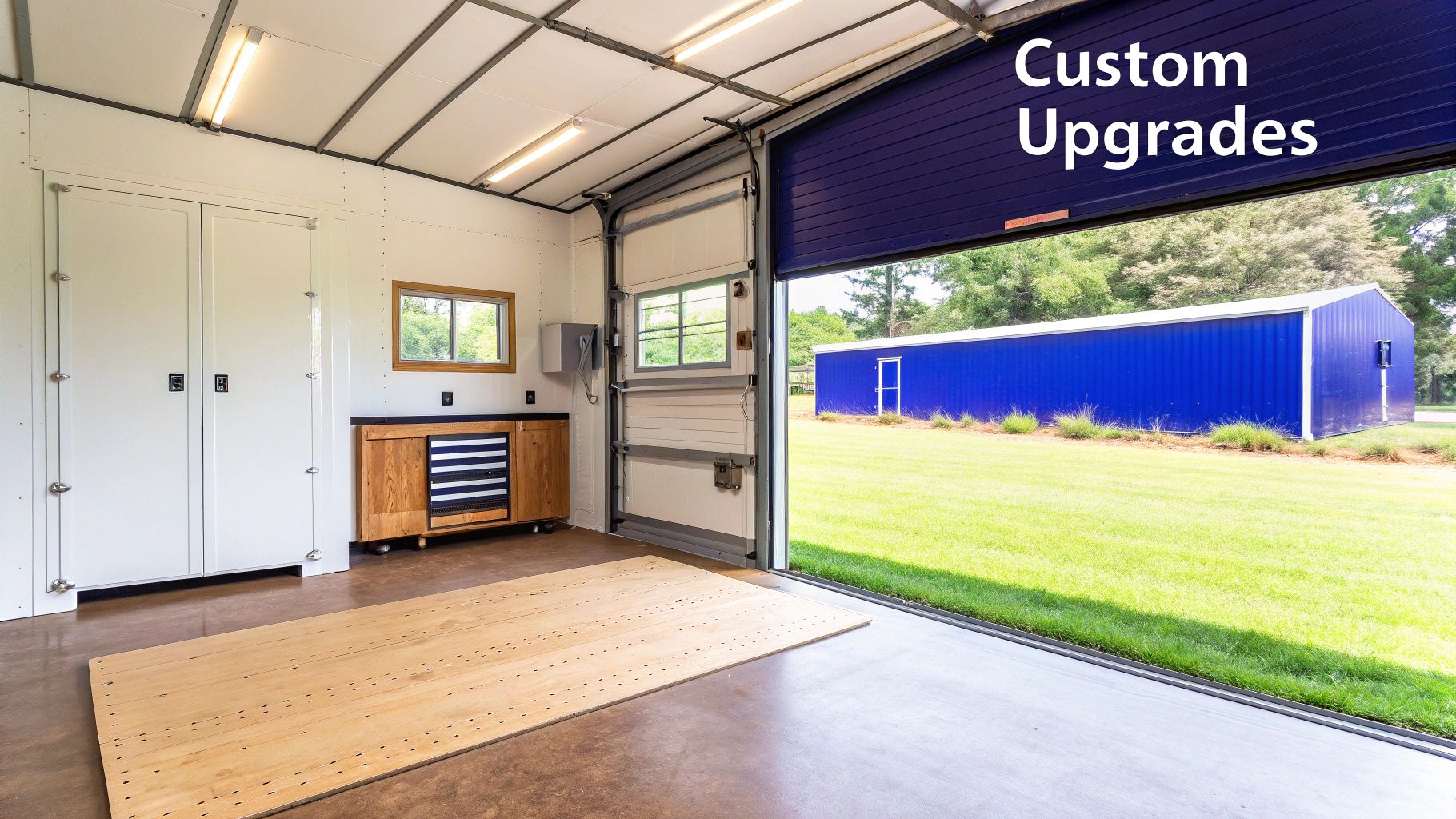
Essential Customizations and Add-Ons
A modern RV shelter can be so much more than just a roof over your rig. The right customizations are what turn a basic structure into a truly functional, secure, and comfortable space that’s built for your specific needs. Think of it like upgrading from a primitive campsite to a full-service RV resort—the core purpose is the same, but the experience is on a whole other level.
This idea of elevating a simple shelter isn’t new. In fact, Wally Byam’s Airstream trailer, first introduced way back in 1929, set a new standard for RV design that really shaped the industry. Byam’s revolutionary all-aluminum trailers came with amenities like small stoves and iceboxes, making them the first truly self-contained shelters built for life on the road. You can discover more about the evolution of iconic RVs to see how that legacy of innovation continues today.
Functional Upgrades for Security and Access
The most popular add-ons are usually focused on improving security and making access easier, which is what takes an open carport and transforms it into a real garage. These features are must-haves for anyone who wants total protection from bad weather, curious critters, and potential theft.
Here are the key options you’ll want to consider:
- Roll-Up Garage Doors: Available in all sorts of sizes, these give you secure and easy access for your RV. Getting a door that’s tall enough for your rig is non-negotiable for any enclosed design.
- Walk-In Doors: Adding a standard walk-in door is a game-changer. It means you can pop inside to grab tools or check on your RV without having to heave open that massive main garage door every time.
- Windows: Installing a few windows lets natural light pour in, making the space much more pleasant for doing maintenance work and cutting down on the need for artificial lighting during the day.
Creating a Multi-Purpose Space
Beyond just getting in and out, you can add features that morph your shelter into a true multi-purpose hub. These structural and utility upgrades make the space way more comfortable and versatile for hobbies, tinkering on the RV, and storing all your gear.
A well-customized RV shelter isn't just for parking; it's a dedicated workspace and a secure storage facility. By adding power, light, and climate control, you create an environment where you can comfortably work on your RV in any season.
Think about these powerful enhancements:
- Insulation: If you plan on spending any time inside your shelter during blistering summers or frigid winters, insulation is absolutely critical for keeping the temperature bearable.
- Electrical Packages: Running electricity to your shelter opens up a world of possibilities. You can have overhead lighting, power outlets for your tools, and even set up charging stations for your RV's batteries.
- Internal Walls: By adding interior partitions, you can create a separate, secure workshop or a dedicated storage room for your tools and equipment, keeping your main space clean and organized.
By selecting the right metal carport components, you can build a structure that perfectly matches your vision.
Navigating Site Prep, Permitting, and Installation
Getting your perfect RV shelter from a blueprint to a standing structure involves a few critical steps on the ground. A solid foundation isn't just a good idea—it's the very bedrock of a stable, long-lasting shelter that will protect your investment from the elements for years.
Before a single bolt can be tightened, your site has to be ready. That process starts with making sure the ground is perfectly level. An uneven base can seriously compromise the structural integrity of the entire building, creating headaches you don't want down the road.
Laying the Groundwork: A Foundation Checklist
Choosing the right foundation is a pivotal decision that shapes both your budget and your shelter's longevity. Each option brings its own set of advantages to the table.
- Gravel Pad: This is a popular and cost-effective route that also provides fantastic drainage. A well-compacted gravel base creates a stable, permeable surface that's a perfect match for RV carports.
- Concrete Slab: For durability and performance, a concrete slab is the gold standard. It's the ideal choice for enclosed RV garages, giving you a permanent, level, and easy-to-clean floor.
- Asphalt Pad: While less common, an asphalt pad is still a solid option. It offers a paved surface that strikes a nice middle ground between the cost of gravel and the permanence of concrete.
For properties starting from scratch, successful installation always begins with proper land clearing and site preparation.
The Non-Negotiable Step: Getting Your Permit
Before you even think about breaking ground, the first call you make should be to your local building authority. This is one step you absolutely cannot skip. Building codes and permit requirements can vary wildly from one county to the next.
Checking local regulations isn't just about dodging fines; it's about safety and legal compliance. A permitted structure ensures your RV shelter is built to handle the specific wind and snow loads in your region.
Trying to bypass the permitting process can lead to expensive penalties or, even worse, an order to tear the whole thing down. A quick phone call to your local planning department will tell you exactly what’s required for your chosen RV shelter design. It’s a simple action that protects your project and gives you complete peace of mind.
Common Questions About RV Shelter Designs
Even after you’ve sketched out the perfect plan, questions always pop up when you're digging into different RV shelter designs. Getting straight answers is the key to feeling confident about your investment, so let's tackle the most common questions we hear from RV owners just like you.
Getting clear on these points now helps you sidestep common headaches and ensures the final structure is a perfect match for your rig, your property, and your local weather.
What Is the Best Roof Style for Heavy Snow?
When it comes to heavy snow, a vertical roof is the undisputed champion. It’s all in the design. Unlike horizontal roofs where the panels run lengthwise, vertical panels are oriented from the peak down to the eaves.
This simple but brilliant design creates a natural, unobstructed path for snow and ice to slide right off. Instead of piling up and straining the structure, the accumulation clears itself, which is a huge deal for protecting your shelter’s integrity during harsh winters.
How Much Bigger Should an RV Shelter Be Than the RV?
Think of it as giving your rig some breathing room. A good rule of thumb is to add at least 5 feet of extra length so you can walk around easily and access storage. For the width, you’ll want 5 to 10 feet of extra space to comfortably handle your slide-outs without feeling cramped.
Don't forget about height! Measure your RV at its highest point—which is usually the A/C unit on top—and add at least 2 to 3 feet of clearance. Going a little bigger than you think you need is a smart move; it future-proofs your shelter in case you ever upgrade to a larger RV down the road.
Do I Need a Building Permit for a Metal RV Carport?
This is a big one, and the answer almost always depends on where you live and the size of the structure. In some rural counties, a small, open-sided carport might fly under the radar. But larger, and especially fully enclosed, buildings will almost certainly require a permit.
The golden rule here is to never assume. Your first step, before you buy anything, should be to call your local city or county building department. A quick conversation can save you from hefty fines, project delays, and the nightmare of having to take the structure down.
What Is the Difference Between 14-Gauge and 12-Gauge Steel?
It really comes down to thickness and strength, and with steel gauges, the lower the number, the beefier the material.
- 14-Gauge Steel: This is the industry standard and for good reason. It’s plenty strong and reliable for most climates and applications.
- 12-Gauge Steel: This is a premium upgrade. It's noticeably thicker, significantly stronger, and the top recommendation for larger buildings or areas that get hammered with high winds and heavy snow.
While 12-gauge steel has a higher upfront cost, the investment pays off with superior long-term durability and, often, a longer warranty to back it up.
Ready to design the perfect shelter to protect your investment? The experts at Icon Steel Buildings can help you customize a structure that meets your exact needs, from size and style to material strength.
Explore your options and get a free quote today at https://iconsteelbuildings.com.