Your Guide to a Metal Building Home Shop
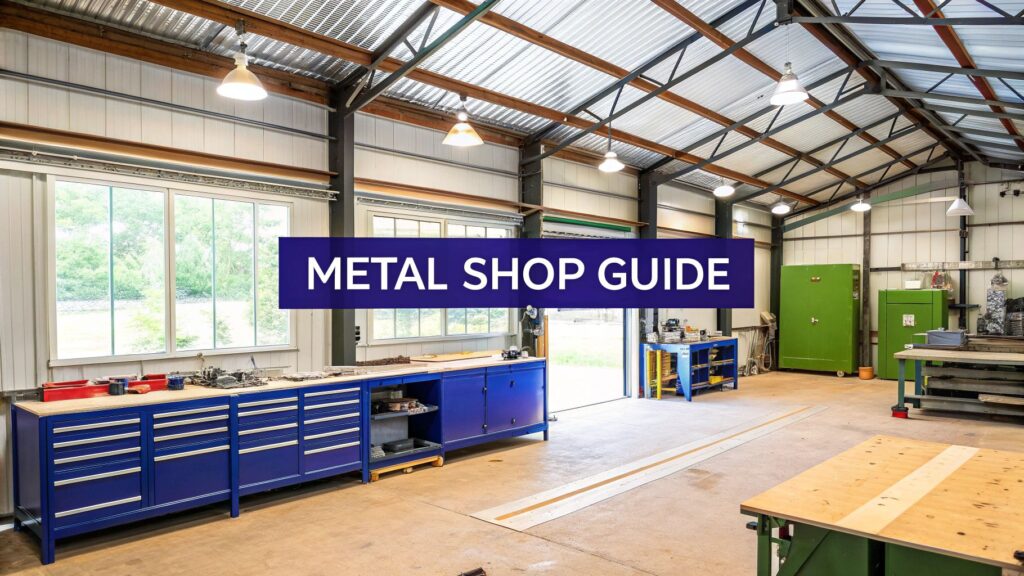
If you're looking for a dedicated space for your hobbies, business, or just tinkering with your truck, a metal building home shop is an incredible solution. Forget cramped garages or damp basements. These pre-engineered buildings are a world away from traditional wood structures, delivering unmatched durability, wide-open interiors, and a surprising level of cost-effectiveness. This guide will walk you through everything you need to know to plan the perfect workshop from the ground up. Why Your Next Workshop Should Be a Metal Building When you picture your dream workshop, you probably imagine a space with no limitations. That’s exactly what a modern metal building shop delivers, moving far beyond the old stereotypes of simple tin sheds and offering a far superior alternative to traditional construction. The secret is the pre-engineered steel frame. This design creates massive, open interiors without a single interior support column getting in your way. Imagine working on a car lift or sliding a full sheet of plywood across the floor without dodging posts—that’s the kind of freedom a clear-span design gives you. Durability That Outlasts Traditional Builds You’re not just building a shop for today; you're making an investment for the future. Steel framing is naturally resistant to almost all the common headaches that come with wood structures. Pest and Rot Proof: Termites, carpenter ants, and moisture-related decay are simply non-issues. Fire Resistance: Steel is non-combustible, which is a massive safety benefit if you're welding, grinding, or woodworking. This often translates to lower insurance premiums, too. Weather Hardy: These buildings are engineered to meet your specific local codes for wind and snow loads, meaning they are literally built to handle the worst weather your area can throw at them. The real value of a metal building isn't just in its initial cost, but in its low-maintenance longevity. You're investing in a structure that won't require constant repairs, painting, or pest control, saving you significant time and money over the decades. This isn't just a niche trend; it's a major shift in construction. The global demand for metal building materials is booming, with a projected market value of $225.23 billion by 2025. It’s a clear sign that homeowners and businesses alike are choosing durable, customizable buildings. The conversation often boils down to metal versus wood. While a traditional pole barn has its uses, a steel building pulls ahead with serious advantages in raw strength and long-term value. For a much deeper comparison, check out our complete guide on steel building vs. wood building. Making the switch to steel ensures your workshop is an asset that will stand strong for years. Laying the Groundwork for Your Shop A truly great workshop isn’t just about the steel that goes up; it’s about the earth it stands on. The success of your metal building home shop begins long before the first piece of framing arrives, starting with careful site prep and a solid foundation plan. Getting this stage right prevents countless future headaches, from water issues to structural problems down the road. Choosing the right location on your property is the first critical decision you'll make. It’s tempting to just pick the flattest, most open area, but there’s more to it than that. Think about future access—will you be able to easily drive a truck or trailer right up to the main doors? You also have to consider things like sunlight and prevailing winds, as these can impact your workshop's natural lighting and temperature all year long. But most importantly, you need to analyze the drainage. Never, ever build at the lowest point of your property. Water will inevitably find its way to your foundation, creating a constant battle against moisture. A slightly elevated spot is always the better choice. Preparing Your Building Site Once you’ve pinpointed the perfect spot, the real work begins. Proper site preparation involves more than just clearing away some brush. The goal is to create a stable, level, and well-drained base that will support your building for decades to come. This process breaks down into a few key actions: Clearing and Grubbing: All vegetation, trees, stumps, and big rocks have to go. Make sure to clear the building footprint plus a buffer of at least 5-10 feet on all sides. Grading: The land must be graded to create a level building pad. Crucially, the surrounding area should be sloped away from the pad to direct water runoff away from your future foundation. A slope of at least 1/4 inch per foot is a good rule of thumb. Compaction: This step is non-negotiable for a stable foundation. The soil and any added base material (like gravel) must be thoroughly compacted to prevent it from settling later on. Settling can cause your concrete foundation to crack, compromising the entire structure. Proper site prep is everything, especially when it comes to compacting the base for your shop's foundation. Using the right vibration plate compactors is key to ensuring you get that solid, reliable base your project needs. Choosing the Right Foundation The foundation is the literal bedrock of your metal building home shop. It transfers the entire weight of the structure to the ground, so getting this right is paramount. Your choice will depend on your local soil conditions, frost line depth, and how you plan to use the shop. For most workshops, a slab-on-grade concrete foundation is the most popular and practical option out there. This single pour of concrete acts as both the foundation and the floor of your shop. It’s durable, easy to clean, and gives you a perfectly flat surface for rolling tool chests and heavy equipment. Of course, other options might be more suitable in certain scenarios. Pier Foundations: These are best for uneven terrain or areas with poor soil stability. Concrete piers are sunk deep into the ground, and the building's frame is anchored to them. You'll just need to add a separate floor system, typically wood or steel. Basement or Crawl Space Foundations: While less common for simple shops because