
A solid foundation is the backbone of any structure, but when it comes to steel buildings, the rules of the game change completely. Steel building foundation requirements aren't just a copy-paste from traditional construction. Because these buildings are so light, the foundation has a much bigger job—it has to be engineered to fight powerful wind uplift forces and handle unique horizontal loads that come from the rigid frame design. Getting this right is non-negotiable for the building's long-term integrity.
Why Steel Building Foundations Are Different
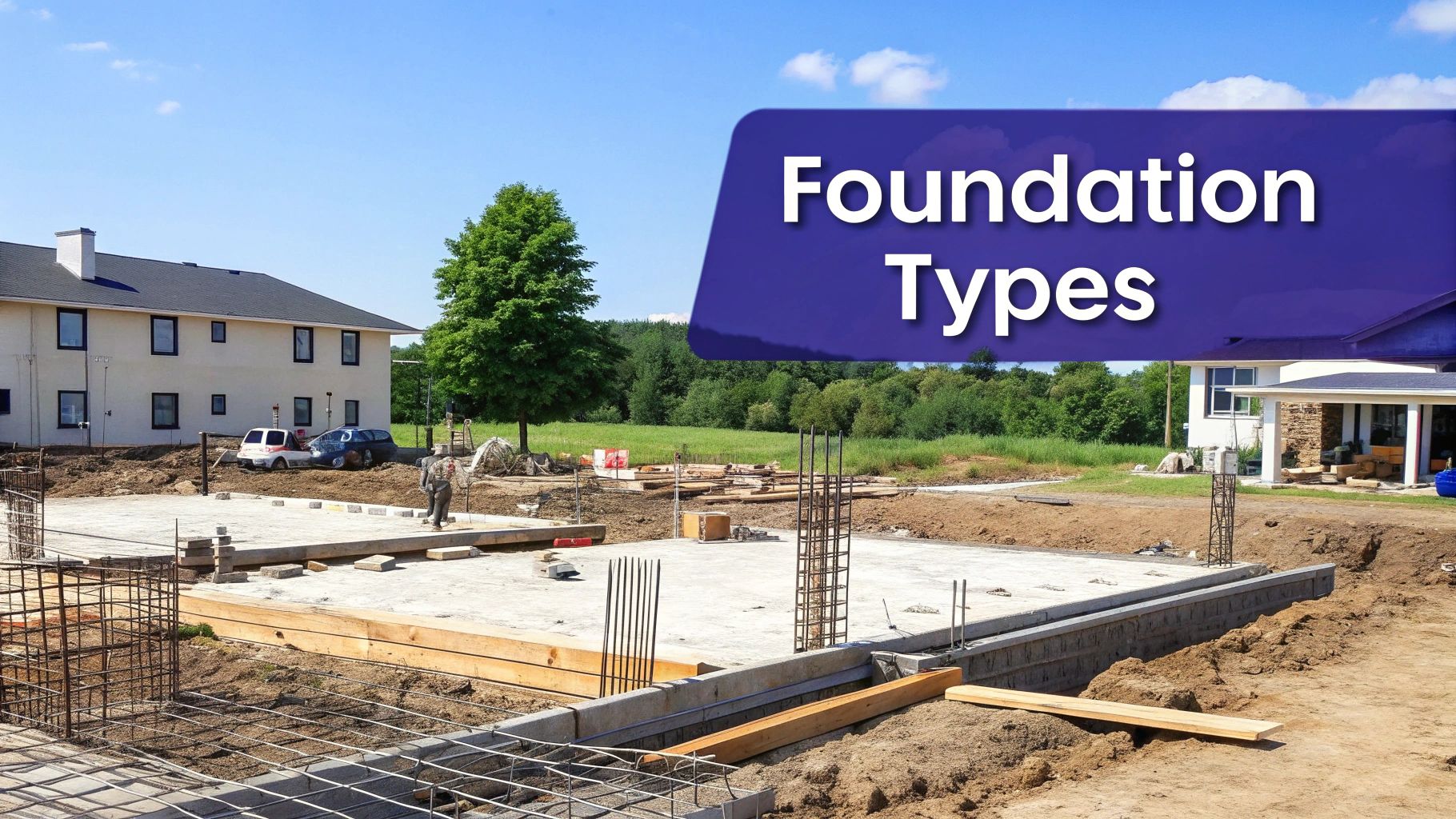
Before you can build up, you have to build down—and build correctly. A foundation for a steel building isn't just a smaller version of what you'd see under a brick or block building. It's a purpose-built system designed to counteract forces that other structures rarely face. If you overlook these specific demands, you're putting your entire investment at risk.
The core difference boils down to physics. A traditional wood or concrete block building relies on its own sheer weight for stability. Steel buildings, on the other hand, are surprisingly light. This lightness makes them incredibly vulnerable to wind uplift, where strong winds create a lifting force that can literally try to pull the building off the ground.
Counteracting Uplift and Horizontal Forces
Your foundation’s primary mission is to act as a massive, immovable anchor. It provides the dead weight needed to clamp the building down. A typical single-story metal building might only weigh 2 to 5 pounds per square foot, which is nothing compared to the immense upward forces a major storm can generate. We dive deeper into how these structures are engineered for severe weather in our guide on the safety of steel buildings in storms.
But that's not all. The rigid frame design that gives steel buildings their wide-open interiors creates another major challenge. These frames generate significant horizontal forces that push outward at the base of the columns. A standard foundation simply isn't built to resist that kind of sideways pressure.
An experienced foundation engineer will use specific solutions to manage these forces:
- Deep Footings: These extend well below the frost line, providing the mass needed to fight both uplift and horizontal thrust.
- Tie Rods or Grade Beams: These are often used to connect opposite footings, creating a rigid system that cancels out the outward-pushing forces.
- Reinforced Slabs: In some designs, the entire concrete slab is heavily reinforced to act as a single, unified anchor that distributes all the loads evenly.
To understand why these special considerations are so critical, let's look at the key design factors an engineer must account for when designing a foundation specifically for a steel building.
Key Steel Foundation Design Considerations
The table below breaks down the unique forces and factors that engineers have to address. This is what sets a steel building foundation apart from a standard concrete slab.
| Design Factor | Description | Primary Concern |
|---|---|---|
| Wind Uplift | The upward force generated by wind moving over the roof, creating a vacuum effect. | Pulling the building off its foundation. The foundation must provide sufficient dead weight. |
| Horizontal Thrust | The outward-pushing force exerted at the base of the main frame columns. | Spreading of columns, leading to frame distortion and potential structural failure. |
| Overturning Moment | The rotational force caused by lateral loads (wind or seismic) pushing on the building's side. | Tipping or rocking of the entire structure. Footings must be wide and deep enough to resist. |
| Shear Forces | Forces that act parallel to the foundation surface, attempting to slide the building sideways. | Lateral movement of the building during high winds or seismic events. |
| Point Loads | Concentrated loads from the steel columns, as opposed to distributed loads from a continuous wall. | Punching through the slab or causing localized settlement if footings are inadequate. |
Each of these factors requires a specific engineering solution. Simply pouring a thicker slab won't solve the problem; the foundation must be designed as a complete system to resist these interconnected forces.
A common mistake is assuming a simple slab is enough. Without proper engineering to account for uplift and lateral shear, the foundation will fail. You'll see columns start to move, the structure will go out of alignment, and eventually, it could lead to a total collapse. This is a critical piece of the puzzle for understanding the real-world steel building foundation requirements. For a deeper technical dive, StructureMag.org has an excellent article on these engineering challenges.
Decoding Your Site and Soil Report
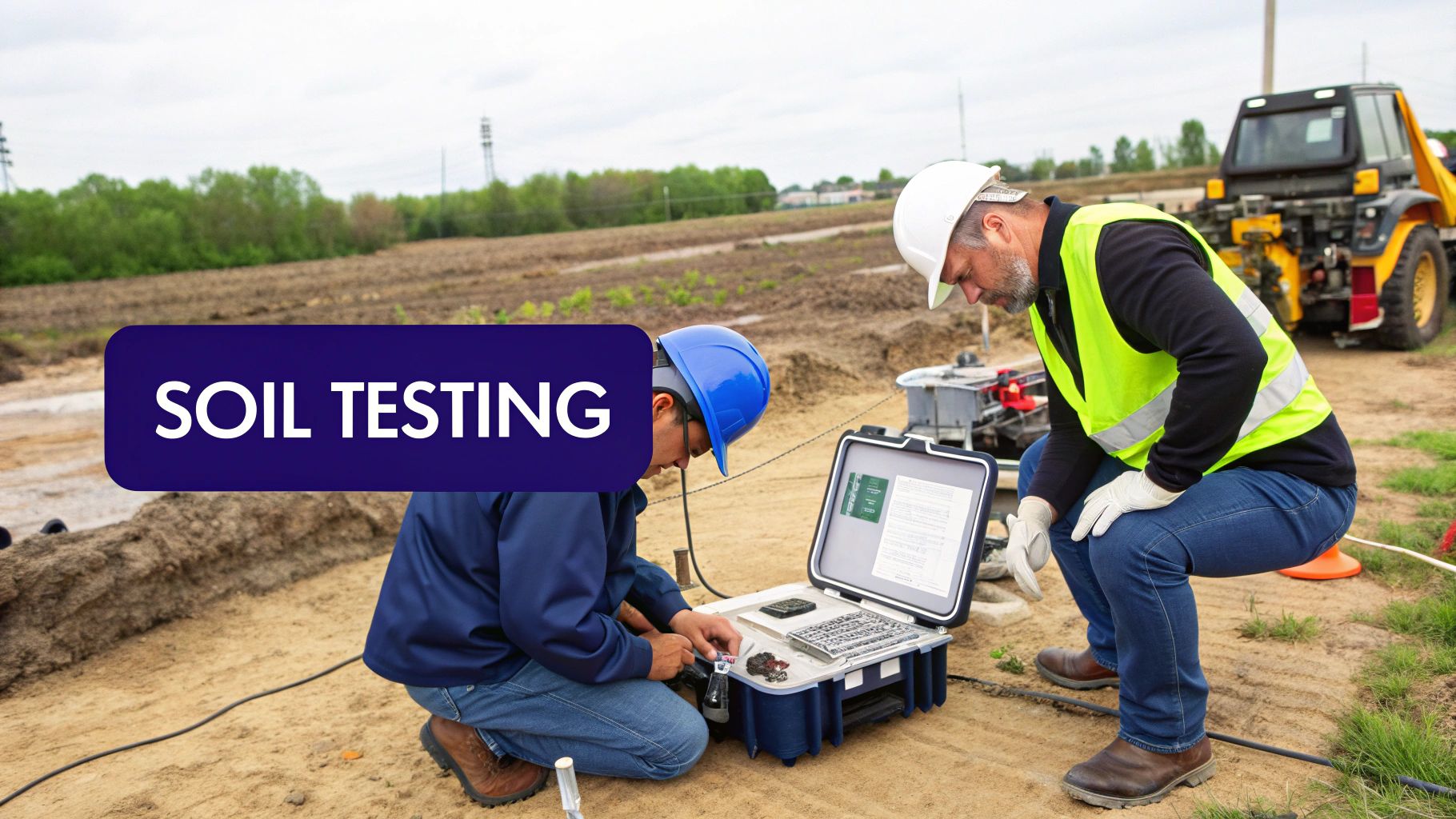
The real strength of your steel building foundation is decided long before the first concrete truck shows up. It all comes down to the ground it sits on, which is why a professional site evaluation is the most critical investment you'll make at the start. This is about more than just finding a flat piece of land; it’s about understanding exactly what’s happening beneath the surface.
Think of a geotechnical report—often just called a soil report—as the true blueprint for your foundation design. Skipping this step is a huge gamble. You might be sitting on solid bedrock, or you could have unstable clay that will compromise your entire structure down the road. This report gives your engineer the hard data they need to meet the specific steel building foundation requirements for your site.
What Your Soil Report Reveals
A good soil report translates the ground under your feet into actionable data. It answers the big questions that directly impact the size, depth, and type of foundation your building needs. It’s basically a diagnostic report for your property's structural health.
Here's what you'll find in a typical report:
- Soil Bearing Capacity (SBC): This is the most important number. It tells you how much weight the soil can safely handle per square foot. A low SBC, common in soft clay or loose sand, means you’ll need wider footings to spread the building's load over a bigger area.
- Soil Composition: Is the ground mostly sand, silt, or clay? Expansive clay, for example, is notorious for swelling when it gets wet and shrinking when it dries, a process that can literally lift and crack a concrete slab. Stable, well-draining sandy loam is much easier to work with.
- Water Table Level: The report will pinpoint how deep you have to dig to hit groundwater. A high water table can put hydrostatic pressure on your foundation, and you'll likely need special waterproofing or even a completely different foundation design.
- Frost Depth: In colder climates, this is non-negotiable. Your footings have to be placed below the local frost line to prevent "frost heave"—a powerful upward force that happens when frozen water in the soil expands.
The findings in a geotechnical report aren't just suggestions; they are mandates for building a safe, long-lasting structure. Ignoring a recommendation for wider footings because of low soil bearing capacity is a recipe for disaster. It leads to differential settlement, where parts of your building sink, causing cracks and serious structural stress.
Essential Site Preparation Tasks
Once you have the soil report in hand, the real work of preparing the site can begin. This isn’t just about clearing trees and moving rocks; it’s about creating an engineered platform that will support your foundation for decades. This is where professional help is absolutely crucial. Understanding how to handle the complexities of site prep is a key part of the architectural services that guide a project from concept to completion.
The two main tasks are grading and compaction. Proper grading is all about water management, ensuring that rain and runoff flow away from your building instead of pooling around the foundation and weakening it over time. After grading, the soil must be compacted to increase its density and load-bearing capacity, creating a solid base that won't settle.
With your soil report decoded, finding a skilled foundation excavation contractor is your next move. They have the right equipment and expertise to handle the grading and compaction exactly as your geotechnical engineer specified, ensuring your project starts on solid ground.
Choosing the Right Foundation for Your Building
There's no single "best" foundation for every steel building. The right answer is always the one that’s a perfect match for your specific building design, your local climate, and what your soil report tells you. Nailing this choice is one of the most important steps in defining your steel building foundation requirements.
Think of it like picking tires for a truck. You wouldn’t put slicks on a rig you’re taking through a muddy field, and you wouldn't put knobby off-road tires on a highway cruiser. Each foundation type is engineered to do its job best under a very specific set of conditions.
Monolithic Slab Foundations
For many smaller projects, especially in warmer climates, a monolithic slab is a fantastic, cost-effective solution. The design is all in the name: the footing and the floor slab are poured all at once in a single, continuous pour.
How does it work? The edges of the slab are formed to be thicker and deeper, creating an integrated footing that runs the entire perimeter. This thickened edge gives it the strength needed to support the building’s columns and spread their load evenly.
- Best For: Smaller workshops, garages, or storage buildings in regions that don't have a deep frost line.
- Why It Works: It’s fast. Forming and pouring a monolithic slab is relatively simple, which can lead to real savings on both labor and materials.
- Real-World Scenario: Imagine a homeowner in southern Texas putting up a 30×40 metal workshop. The soil is stable, and frost heave isn't a concern, making a monolithic slab the perfect choice for both performance and budget.
Pier and Beam Foundations
Now, what if you're building on a tricky piece of land, like a sloped lot or an area with that notorious expansive clay soil? This is where a pier and beam foundation really shines. This system elevates the building right off the ground, effectively isolating it from any problematic soil movement below.
Instead of one big slab, this design uses strategically placed concrete piers that are drilled deep into the ground until they hit stable, load-bearing soil. Concrete or steel beams then span between these piers, creating a rock-solid frame for the building to sit on.
One of the biggest upsides to this approach is accessibility. By raising the structure, you get a crawl space that makes running utilities—plumbing, electrical, you name it—so much easier. This is a huge benefit not just during the initial build but for any future maintenance or upgrades down the road.
Perimeter Wall Foundations
When you step up to larger commercial buildings or any structure in a cold climate, a perimeter wall foundation (often called a frost wall) is the industry standard. This is the most robust option out there, and it’s often required to handle heavy loads and, most importantly, prevent frost heave.
This is a two-step process:
- Footings: First, deep concrete footings are poured well below the local frost line. This depth is non-negotiable; it anchors the entire building to ground that won't freeze, expand, and shift.
- Foundation Walls: Next, concrete walls are built right on top of those footings, extending up to ground level. The building's steel columns are anchored directly to these heavily reinforced walls.
Finally, the building's floor slab is poured inside the perimeter created by these walls. This separation of components provides maximum stability. The structural load is carried by the walls, the walls are supported by the deep footings, and the entire structure remains securely anchored. To see how the building connects to this type of foundation, you can learn more about the engineering of a pre-engineered metal building frame.
This quick visual breaks down some common concrete mix specifications, showing how the ratio of materials directly impacts the final strength.
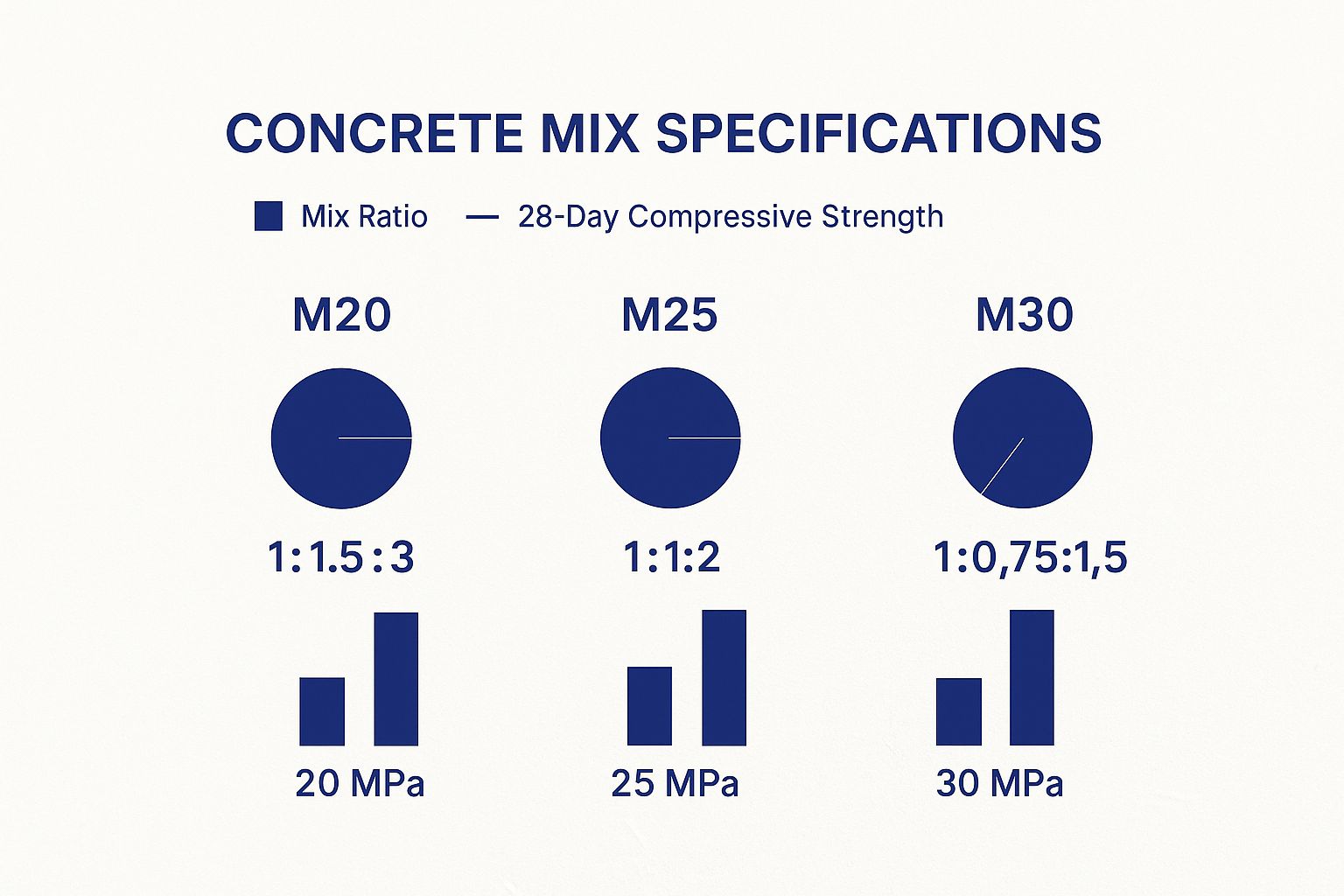
As you can see, a mix with a higher proportion of cement, like an M30, results in significantly greater compressive strength. This is absolutely critical for foundations that have to support heavier, larger-scale structures.
To make the decision a little clearer, here's a side-by-side look at these common foundation types.
Comparison of Steel Building Foundation Types
| Foundation Type | Best For | Pros | Cons |
|---|---|---|---|
| Monolithic Slab | Small to medium buildings in warm climates with stable soil. | Fast and cost-effective to install; single pour simplifies construction. | Not suitable for sloped lots or areas with significant frost heave. |
| Pier and Beam | Sloped terrain, expansive soils, or areas prone to flooding. | Excellent stability on difficult sites; easy access for utilities. | More complex and expensive than a monolithic slab; requires a separate floor system. |
| Perimeter Wall | Large commercial buildings and any structure in cold climates. | Maximum strength and stability; necessary to prevent frost heave. | Most complex and costly option; requires a multi-step construction process. |
Each foundation has its place. Your engineer will analyze your site specifics and building plans to recommend the system that offers the best long-term performance and safety for your project.
Getting Your Concrete Mix and Pour Right
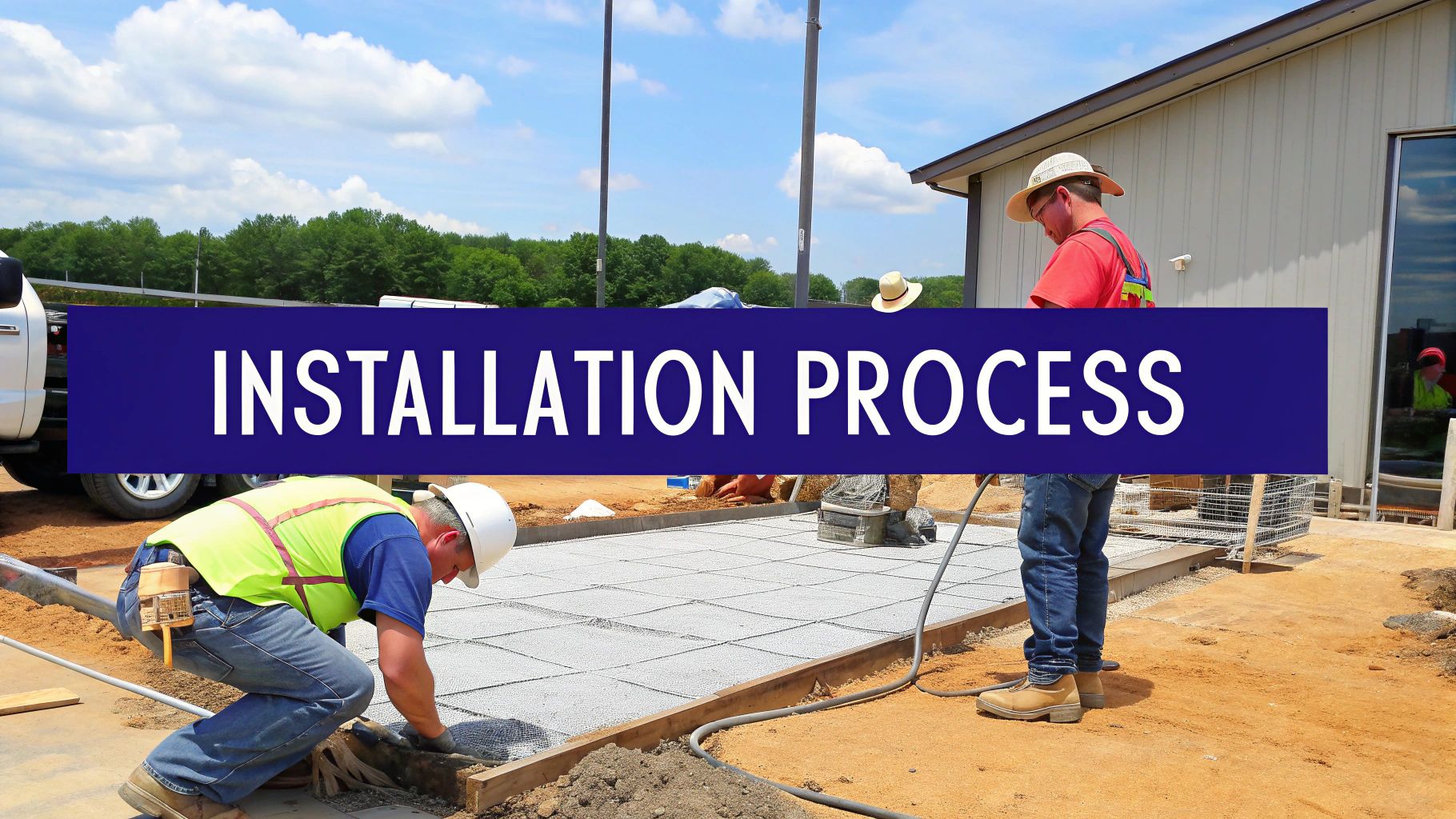
This is the moment your blueprints start becoming reality. The concrete pour is where your foundation design takes physical form, but its success hinges entirely on getting the technical details right. The specific mix, the reinforcement inside, and the pouring process itself are all critical steel building foundation requirements.
The concrete itself isn't a "one size fits all" material. Its strength, measured in pounds per square inch (PSI), has to be perfectly matched to your building’s specific loads and the local climate. For a small residential garage, a standard 3,000 PSI mix is usually more than enough. But a large commercial warehouse with heavy machinery and concentrated column loads will demand a much stronger mix, often 4,000 PSI or even higher.
Reinforcement: The Unseen Hero
Concrete is amazing at resisting compressive force—it’s tough to crush. However, it's terrible with tensile strength, which means it cracks easily when it gets pulled or bent. This is where steel reinforcement, like rebar grids and wire mesh, becomes the foundation's unseen hero.
- Rebar Grid: This lattice of thick steel bars is the primary defense against large-scale cracking, providing the core tensile strength, especially in footings and around the perimeter.
- Wire Mesh: A lighter grid of steel wire, this is typically used in the main slab area to control the small shrinkage cracks that naturally form as concrete cures.
Without proper reinforcement, a foundation is just a brittle slab waiting to fail from soil movement, frost heave, or even the operational loads of the building itself. Getting a handle on your material budget is key, and a tool like a Construction Material Cost Predictor can give you a solid idea of what to expect for concrete and rebar.
Formwork and the Pour
The wooden or metal forms you set up are the mold that will shape your foundation. There is zero room for error here. If your forms aren't perfectly level, square, and braced, your foundation won't be either—a mistake that creates massive headaches when it’s time to erect the steel frame.
A common and costly mistake is rushing the formwork. I've seen projects where forms bowed out during the pour, resulting in a foundation that was out of spec. This meant expensive concrete grinding and shimming to get the steel columns to sit correctly. Double-check every measurement and add extra bracing—it’s cheap insurance.
The global market for pre-engineered metal buildings (PEMB) was valued at $17.6 billion in 2022, and it’s still growing. This massive industry relies on absolute precision at the foundation level. One of the top requirements from steel building manufacturers is the exact placement of anchor bolts in the wet concrete. Even a slight misalignment can compromise the building's structural integrity.
The Critical Curing Process
Pouring the concrete isn't the final step—it's just the start of the curing process. Curing is a chemical reaction, not just drying. For concrete to reach its full designed strength, it has to retain moisture for anywhere from 7 to 28 days.
Skipping or rushing this step is a huge mistake. Concrete that dries out too fast will be weak and brittle for its entire life. Proper curing involves keeping the surface moist, either by covering it with plastic sheeting or applying a chemical curing compound. This simple step ensures your foundation will be just as strong in 30 years as the engineer designed it to be. If you want a team of pros to handle this crucial stage, checking out a local concrete service and service area is a great next move.
Mastering Your Anchor Bolt Layout
The connection where your steel frame meets its concrete base is, without a doubt, the single most critical point of the entire structure. An improper anchor bolt layout isn't a small mistake you can patch over later—it's a foundational error that can bring a project to a dead stop. Getting these steel building foundation requirements right is what ensures the massive loads from the building transfer safely and permanently into the ground.
Your steel building manufacturer will give you a detailed anchor bolt plan. This isn't just a guide; it's a non-negotiable blueprint. This document spells out the exact type, diameter, placement, and embedment depth for every single bolt. Think of it less like a suggestion and more like a precise surgical plan where accuracy down to the millimeter is the only standard.
Translating the Blueprint to Concrete
The manufacturer's plan will show you the exact center-to-center measurements for the bolt patterns at each column location. Your job is to get those dimensions onto your concrete forms with absolute precision before the concrete truck shows up. Being off by even a half-inch can prevent a column from seating correctly, which leads to incredibly expensive and time-consuming fixes on site.
The most common mistakes I see on job sites happen right here:
- Misreading the Plan: You have to double-check every measurement, from the grid line to the center of each bolt. No assumptions.
- Incorrect Embedment: Bolts have to be set to the specified depth to get their required pull-out strength. Too shallow, and the connection is dangerously weak.
- Poor Bracing: Wet concrete is heavy. It can easily push your bolt templates and bolts out of position during the pour if they aren't braced securely.
One of the smartest, cheapest investments you can make is a simple plywood template. Just drill holes in a sheet of plywood that perfectly match the anchor bolt plan for a column base. This creates a rigid guide that locks the bolts in the exact position and elevation while the concrete is being poured.
Choosing the Right Anchor Bolt Type
Not all anchor bolts are created equal. The type specified in your plans is based on the forces it has to resist, from vertical uplift during high winds to horizontal shear forces.
While older designs often used L-shaped or J-shaped hooked bolts, modern engineering has moved on. Today, the best practice is to use straight, threaded rods secured with heavy-duty nuts and plate washers on the embedded end. This design gives you a much more reliable and calculable resistance to pull-out forces.
Ultimately, precision during this phase sets the stage for a smooth building erection. For a closer look at what comes after the foundation is cured, our guide on how to erect a metal building walks through the entire assembly sequence. The time you invest in getting your anchor bolt layout perfect will pay you back tenfold when the steel frame goes up without a single hitch.
Navigating Building Codes and Inspections
You can engineer the perfect foundation, but if it doesn't get the green light from your local building department, it's just a very expensive concrete sculpture. This final step is what transforms all your hard work into a legally compliant structure, so getting a handle on the process from day one is the only way to avoid frustrating delays and costly rework.
Every town, county, and state has its own rulebook. It's on you to work with your local building officials right from the start. Don't think of building codes as a bureaucratic headache; they're the bare minimum standards that ensure your building is safe and will last. These codes dictate crucial steel building foundation requirements based on your specific region. For instance, your local code will tell you the mandatory frost depth for footings—a non-negotiable measurement in cold climates to prevent the ground from pushing your foundation up. It will also specify reinforcement schedules for areas prone to seismic activity.
The Inspection Timeline
Inspections aren't a one-and-done deal at the very end. They happen in stages, and knowing the timeline helps you schedule your project without hitting a wall. A failed inspection means all work stops until you fix the problem, period.
Here are the moments that really count:
- Pre-Pour Inspection: This is the big one, the point of no return. Before a single drop of concrete is poured, an inspector will come out to verify your excavation depth, the formwork, rebar placement, and the exact positioning of your anchor bolts.
- Final Foundation Inspection: After the concrete has cured, another check might be required to confirm the finished dimensions and overall quality. Only after this approval can the steel erection begin.
One of the great things about steel construction is its efficiency, and that extends all the way down to the foundation. Steel frames can impose loads up to 50% less than similar concrete structures. This often means your foundation can be smaller and more economical, saving you money on materials and potentially simplifying the inspection process. You can learn more about these load advantages on steelconstruction.info.
Pro Tip: Make the inspector's job easy. Always have your approved plans, permits, and your engineer’s report on-site for every visit. When they can easily verify your work against the official documents, it builds trust and keeps things moving smoothly.
Ready to start your project on a solid footing? The experts at Icon Steel Buildings can guide you through every step, from design to delivery, ensuring your structure is built to last. Get your free quote today!