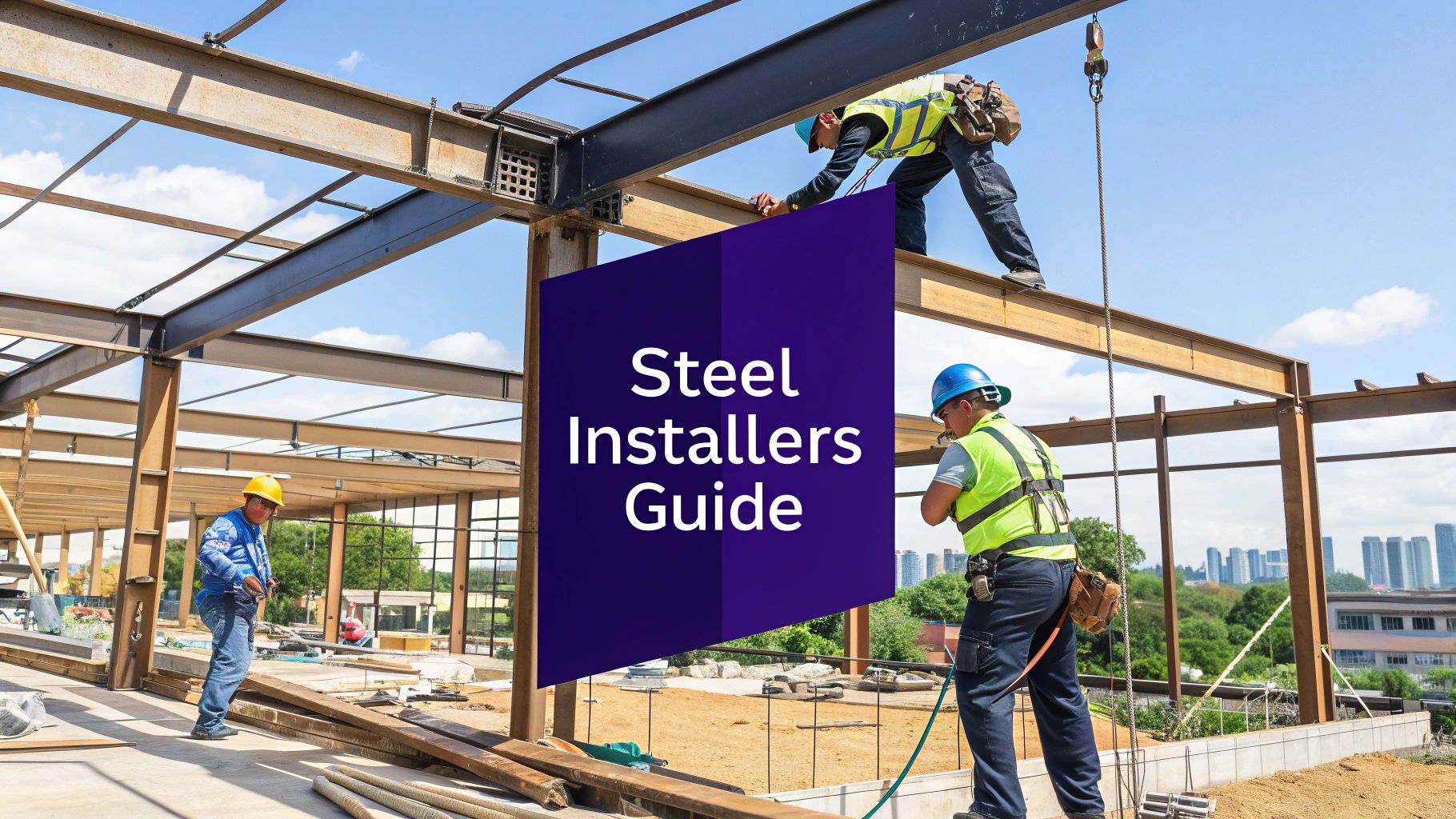
Choosing the right steel building installers is arguably the most critical decision you'll make for your project. They aren't just a crew; they're the partners who turn a kit of parts into a functional, durable structure. Getting this choice right directly impacts your timeline, your budget, and the quality of the finished building.
How to Find Qualified Steel Building Installers
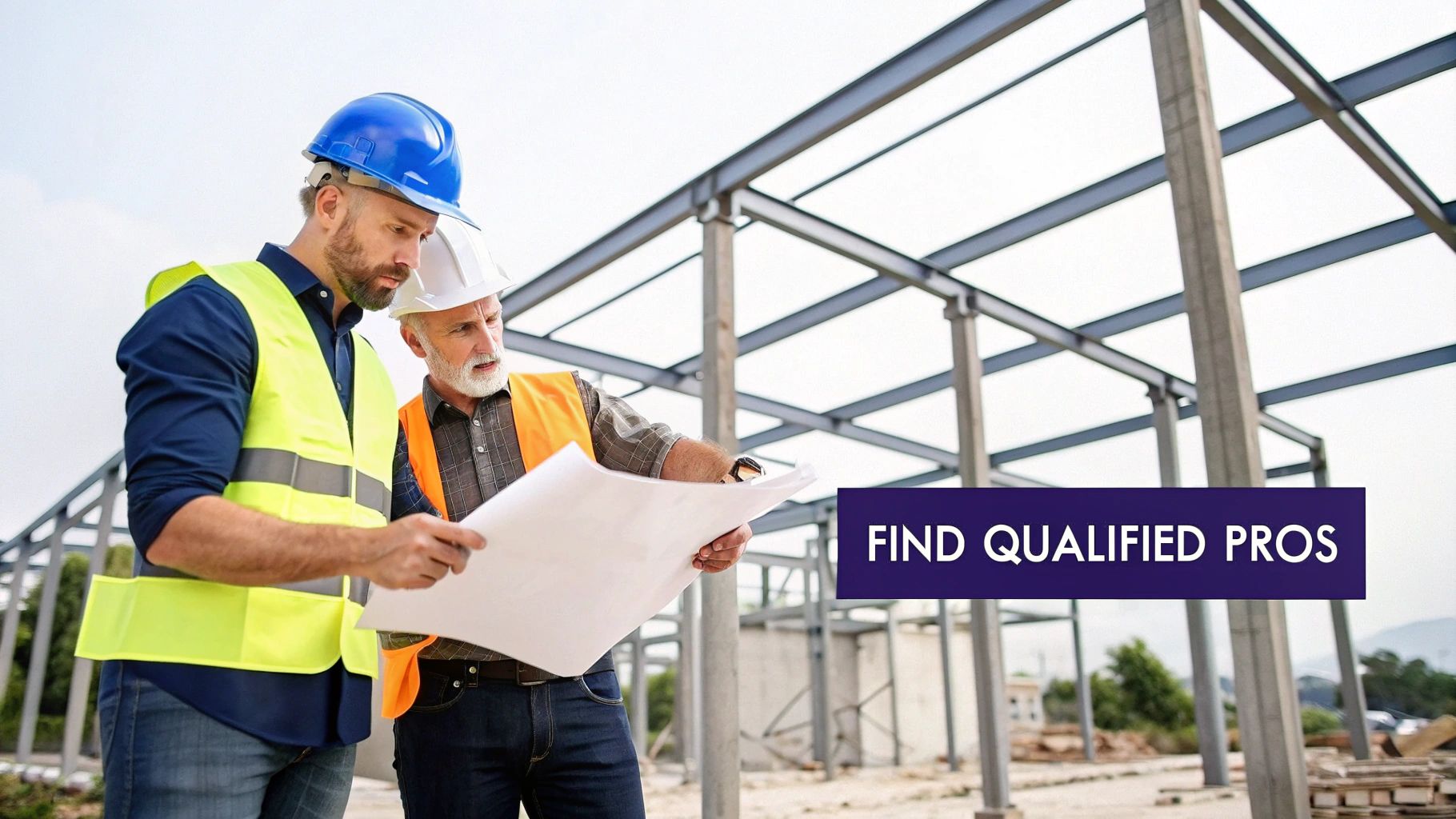
Finding top-tier professionals means looking beyond a simple online search. The best, most reliable installers are often found through industry networks and solid referrals, not just the first page of Google. Before you even start making calls, it helps to understand the value of professional installation services. While that link is about garage doors, the core principles of safety, expertise, and getting the job done right the first time apply everywhere in construction.
Your best first step? Tap into your local building supply networks. The folks who sell steel building kits work with installation crews every single day. They know exactly which teams are reliable, efficient, and consistently deliver quality work. A solid recommendation from a trusted local supplier is often worth more than a dozen online reviews.
Differentiating Between Crew Types
It's important to know that not all construction crews are the same. You need to distinguish between a general contractor and a specialized steel erection crew. A general contractor oversees the entire project—foundation, finishing, plumbing, the works. A steel erection specialist, on the other hand, focuses exclusively on assembling the building's frame and shell.
For a straightforward building assembly, hiring a specialist is usually more efficient and cost-effective.
A specialized steel crew brings focused experience that helps them avoid common mistakes unique to pre-engineered buildings. Things like improper panel alignment or over-tightening fasteners might seem small, but they can seriously compromise your building's weatherproofing and structural integrity down the line.
Verifying Credentials and Experience
Once you have a shortlist of potential installers, the real vetting process begins. This is where you protect yourself from liability and ensure the job will be done correctly. Whether you're searching online for a "https://iconsteelbuildings.com/metal-shop-building-near-me/" or working off referrals, you absolutely must verify these key items:
- License and Insurance: Always, always ask for proof of current general liability insurance and worker's compensation. An uninsured crew on your property puts your entire project and your finances at massive risk. No exceptions.
- Relevant Experience: Don't just look at their portfolio—scrutinize it. You want to see projects similar to yours in size, scope, and complexity. A team that specializes in simple agricultural barns might not be the best fit for a complex industrial warehouse with multiple bays.
- Certifications: Ask if they hold any manufacturer-specific or industry certifications. These credentials aren't just pieces of paper; they show a commitment to professional standards and staying current with the best installation practices.
To make this process easier, use this quick checklist when you're talking to potential installers.
Installer Vetting Checklist
Use this table as a quick reference to make sure you're covering all your bases when evaluating a potential steel building installer.
| Vetting Criteria | What to Look For | Red Flags |
|---|---|---|
| License & Insurance | Current, valid general liability and worker's comp certificates. | Hesitation to provide proof, expired policies, or no insurance at all. |
| Relevant Experience | A portfolio with projects similar in size and complexity to yours. | Vague project descriptions, no photos, or only experience with sheds. |
| References | At least 3 recent clients you can call to ask about their experience. | Unwilling to provide references or providing only very old contacts. |
| Professionalism | Clear communication, a detailed written quote, and a professional demeanor. | Unreturned calls, vague answers, or pressure to sign immediately. |
| Certifications | Any credentials from building manufacturers or industry associations (e.g., MBMA). | Dismissing certifications as unnecessary or irrelevant. |
This checklist isn't foolproof, but it will help you quickly weed out the less-than-reputable crews and focus on the true professionals who will get your project built right.
Key Questions to Ask Every Installer
Once you have a shortlist of potential steel building installers, it’s time to dig in. This is where you separate the real pros from the rest. Going beyond a simple "How much will this cost?" is critical if you want to gauge their professionalism and avoid expensive headaches later. Your goal is to get a feel for their process, their real-world experience, and their commitment to safety.

A great place to start is their safety record. Don't just ask if they're "safe"—ask for their Experience Modification Rate (EMR). An EMR below 1.0 means they have a better-than-average safety record. Anything above 1.0 is a major red flag. This single number tells you a lot about their crew's training and how they operate on-site.
Digging into Project Specifics
Next, you need to confirm they have direct experience with your kind of building. After all, putting up a simple agricultural barn is a whole different ballgame than erecting a multi-bay commercial warehouse.
Get specific with your questions to see what they’re really made of:
- "Can you show me three projects similar to mine that you've completed in the last two years?" This proves they have recent, relevant experience—not just something they did a decade ago.
- "What’s your formal process for handling change orders?" A true professional will have a clear, documented system. If they just say "we'll figure it out," be wary.
- "Who will be my single point of contact on-site, and what’s their experience level?" You need one dedicated, qualified supervisor running the show day-to-day, not a revolving door of people.
Getting this level of detail is non-negotiable for any project. It helps set a clear standard for quality from day one. In fact, having a good framework for oversight can make or break a project, which is why we always suggest reviewing a construction quality control checklist before you get started.
A common mistake is assuming every crew works on the same timeline. Always insist on a detailed schedule, from the foundation pour to the final inspection. A vague timeline is often a sign of inexperience or sloppy project management.
Understanding Warranties and Timelines
Finally, you need to know what happens after the last bolt is tightened. A workmanship warranty is their promise that the installation was done right. Ask exactly what the warranty covers and for how long. Typically, it should include things like leaks, panel alignment, and fastener issues.
A reliable installer will have no problem giving you clear, confident answers to these questions. How transparent they are at this stage is a strong indicator of the kind of partner they'll be throughout the entire build, ensuring your project is a success for years to come.
Understanding the Steel Construction Market
Before you can make a smart hiring decision, you need to know the lay of the land. It’s about more than just finding a good crew; it’s about understanding the industry you’re stepping into.
Right now, the demand for skilled steel building installers is climbing, and it’s largely driven by the boom in pre-engineered metal building (PEMB) systems. Why? Because PEMBs offer a level of speed, efficiency, and value that traditional construction often can't touch.
This surge in popularity has a direct impact on your project: the best installation teams are often booked solid for months. Knowing this upfront helps you set a realistic timeline and highlights why you need to start your search sooner rather than later.
Key Market Influences
The steel construction world doesn’t stand still. A few key factors are always at play, and they can directly affect your project’s cost and schedule.
The biggest variable is the fluctuation in global steel prices. A sudden price hike can change an installer's quote almost overnight, which is why locking in your pricing with a signed contract is so important.
We’re also seeing a trend toward more complex and custom steel buildings. Installers aren't just putting up simple warehouses anymore; they’re assembling everything from intricate retail centers to multi-story commercial hubs. This shift has created a real need for specialized skills and advanced training in the workforce. You can explore the sheer variety and learn more about the different types of steel buildings that crews are tackling today.
Knowing the market's direction gives you a strategic advantage. It allows you to anticipate potential delays, negotiate contracts more effectively, and recognize the true value of a highly skilled and experienced installation crew in a competitive environment.
The health of the industry tells a powerful story. The global market for prefabricated steel building systems—the bread and butter for most installers—was valued at around USD 2.01 billion and is expected to hit USD 2.79 billion by 2032.
This growth is being pushed by better manufacturing techniques and a rising demand for sustainable building materials. In fact, some parts of the market are projected to expand at a rate of 7.8% annually.
Decoding Contracts and Project Costs
A fuzzy contract is a fast track to a project nightmare. Before you let any crew set foot on your property, signing a detailed, transparent agreement is the final, most important step. This single document protects both you and the steel building installers from expensive misunderstandings down the line.
The first thing to iron out is how you’ll pay for the work. Most installers use one of three contract types, and the best one for you really depends on how complex your build is and your comfort level with financial risk.
Choosing the Right Contract Structure
Not all agreements are built the same. A fixed-price contract is exactly what it sounds like—you pay one set amount for the entire job. Simple as that. This is the go-to for straightforward projects where the scope is crystal clear from day one.
On the other hand, a cost-plus contract means you pay for the actual labor, materials, and a pre-negotiated percentage or fee for the installer's profit. This structure offers more wiggle room for complicated jobs where things might change, but it comes with a higher risk of blowing your budget if it isn't managed with an iron fist. A time-and-materials contract works similarly, billing you for hourly labor plus the cost of materials.
Here’s a major red flag: an installer pushing a cost-plus contract for a simple, standard building kit. For most pre-engineered buildings, a fixed-price contract is the industry standard. It offers the best protection for you, the owner.
Before you put pen to paper, double-check that the contract spells out these critical details:
- A Detailed Scope of Work: The agreement needs to list every single task the installer will handle, from grading the site to hauling away the last scrap of trash.
- Clear Payment Schedule: This should break down exactly when payments are due. Think milestones, like when materials arrive, when the frame is up, and after the final walkthrough.
- Official Completion Date: Avoid vague promises like "in the fall." The contract needs a firm, targeted completion date to keep everyone on track.
- Dispute Resolution Clause: This section explains how you’ll handle disagreements. It’s the key to preventing a minor hiccup from turning into a full-blown legal battle.
Getting this part right ensures a smooth partnership from start to finish. If you want a better handle on the total project expenses, you can explore the average cost of a steel building to see the full financial picture.
Managing Your Project from Start to Finish
Once the contract is signed, the real work begins. This is where you shift from planning to active project management, making sure the build stays on track and sticks to the budget. Your main job now is oversight—ensuring the skilled steel building installers you hired are delivering exactly what you agreed on.
First things first, set up a solid line of communication. Designate a single point of contact with the crew leader and schedule quick, regular check-ins. Consistent communication is your best tool for stopping small hiccups from turning into major headaches. Make it a point to visit the site regularly; there's no substitute for seeing the progress with your own eyes and asking questions on the spot.
Tracking Progress and Milestones
Document everything. I mean everything. Snap photos and take detailed notes every time you're on-site. This creates a visual timeline of the build, which can be a lifesaver if a dispute ever pops up or you need to double-check a specific construction phase down the road.
Keep a close eye on these key milestones:
- Foundation Completion: Before any steel shows up, make sure the concrete is properly cured and meets all the specs in your plan.
- Frame Erection: This is the exciting part where your building’s skeleton starts taking shape.
- Sheeting and Roofing: The moment your structure becomes weathertight is a major step forward.
And don't forget about safety. With all that heavy material and machinery moving around, knowing the crew is following specific forklift safety protocols is crucial. A safe job site isn't just about preventing accidents—it's about keeping the project running smoothly and efficiently.
A final walkthrough is your last line of defense before you hand over that final payment. Be thorough. Create a detailed "punch list" of anything that needs fixing, from a minor scratch on a panel to a door that doesn't quite hang right. A true professional will take care of these items without any fuss.
The infographic below gives you a good look at the different contract types you might run into, which will definitely shape how you manage the project.
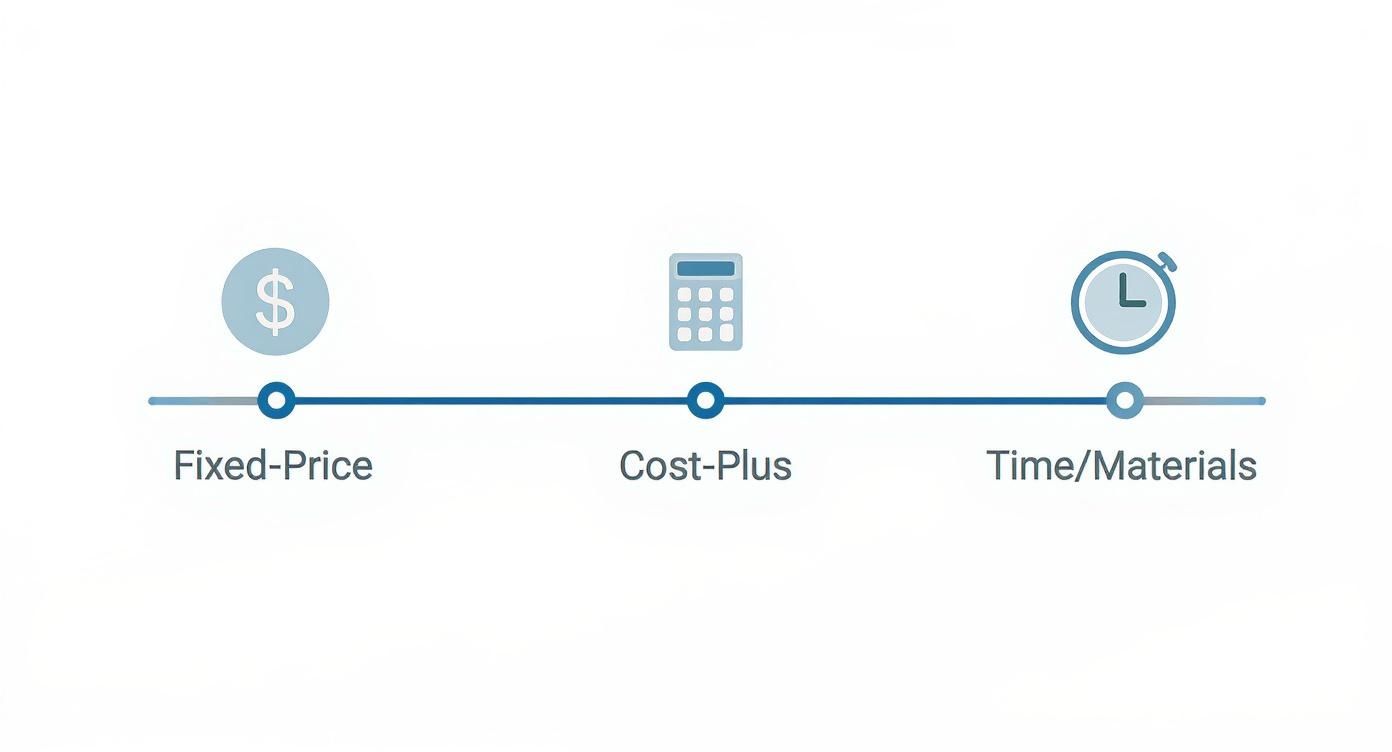
This visual breaks down the differences between fixed-price, cost-plus, and time-and-materials contracts. It's more important than ever to have clear agreements and sharp oversight, especially with the North American pre-engineered steel building market currently valued at USD 4.0 billion and expected to jump past USD 7.5 billion. If you want to get ahead of the curve, you can learn more about metal building installation processes to feel fully prepared. This industry growth is fueled by new tech that makes building more precise, making your role in verifying progress even more critical.
Questions to Ask Before You Hire an Installer
Even after you've done your homework, a few final questions always seem to pop up right before you sign on the dotted line with an installer. That's perfectly normal. Getting straight answers to these common queries is the last step in making sure you're moving forward with total confidence.
How Do Installers Charge for Their Work?
Cost is always top of mind, and it's one of the first things people ask about. Most steel building installers will base their price on the project's size, how complex it is, and where you're located. You'll often see this quoted as a price per square foot just for the labor.
For a standard, pre-engineered building, this is usually a fixed price. But here’s a pro tip: always ask if that price includes equipment rentals. Things like cranes or man lifts can add up, and you don’t want any surprises on the final bill.
What About Crew Qualifications and Timelines?
Another big concern is the experience of the crew who will actually be on your property putting the building up. It is absolutely reasonable to ask, "Is your crew certified by the building manufacturer?" While it isn't always a requirement, manufacturer-certified teams know the ins and outs of your specific building system. That little detail can save you from big, expensive installation mistakes down the road.
Finally, everyone wants to know about the timeline. A true professional won't just give you a vague start date; they'll provide a detailed schedule. A great question to ask is, "What are the most common things that could delay my project?" Their answer will tell you a lot about their real-world experience with things like bad weather, site access issues, or hiccups with material deliveries.
Think of the relationship with your installer as a partnership. The foundation of a successful build is built on open communication and crystal-clear expectations, especially on topics like insurance, warranties, and how change orders are handled.
This partnership is a key piece of a massive, growing industry. The global metal building system market, which includes the very contractors you’re hiring, was valued at USD 22.4 billion and is expected to nearly double to USD 49.4 billion. This boom is fueled by major investments in infrastructure, a trend you can read more about by exploring these insights on the metal building market.
At Icon Steel Buildings, we connect you with experienced and vetted installers to ensure your project is a success from the ground up. Start designing your building today!