
The success of any construction project, especially a durable and long-lasting metal building, hinges on meticulous attention to detail. Skipping a single step or overlooking a minor issue can lead to costly rework, safety hazards, and a structure that fails to meet long-term performance expectations. That's where a robust construction quality control checklist becomes your most valuable tool, acting as a systematic safeguard against common but critical errors.
This guide isn't just a generic list of tasks; it's a strategic framework designed to ensure every phase of your project, from the foundation to the final finishes, adheres to the highest standards of safety and quality. It provides a clear, actionable roadmap for verifying work, preventing defects, and ensuring compliance with engineering specifications and building codes.
We will walk through 10 critical checkpoints that cover pre-construction planning, in-progress work, and final inspections. For each point, you'll find actionable steps and expert tips to safeguard your investment and guarantee a high-quality outcome. Consider this checklist your essential guide to building with precision, confidence, and ultimate peace of mind, ensuring your structure stands strong for decades.
1. Phase 1: Pre-Construction – Foundation and Site Work
Before the first steel beam is erected, the success of your metal building is determined by the quality of its foundation. This initial phase involves critical checks of the groundwork and concrete, which provide the essential support for the entire structure. Mistakes made here are the most difficult and expensive to correct later. This section of our construction quality control checklist focuses on verifying soil conditions, ensuring rebar is placed correctly, and testing the concrete's integrity to prevent settlement and structural weaknesses from the very start.
Key Inspection Points
The pre-construction phase sets the stage for everything that follows. Pay close attention to these details:
- Soil Compaction and Grading: Verify that the site has been properly graded for drainage and that the soil is compacted to the specifications outlined in the geotechnical report. Poor compaction can lead to foundation settlement.
- Formwork and Rebar Placement: Inspect the concrete forms to ensure they are correctly sized, positioned, and braced. Check that all rebar is the specified grade and size, and that its placement, spacing, and clearance from the forms match the engineering drawings precisely.
- Anchor Bolt Verification: Meticulously check the location, projection, and alignment of every anchor bolt against the approved plans. Even a minor misplacement can cause significant delays during steel erection.
Pro Tip: Create a physical template based on the steel column base plates to double-check anchor bolt patterns before the concrete pour. This simple step can prevent costly rework.
By rigorously inspecting these foundational elements, you ensure the structure has a stable, durable base, which is crucial for the longevity and safety of your metal building.
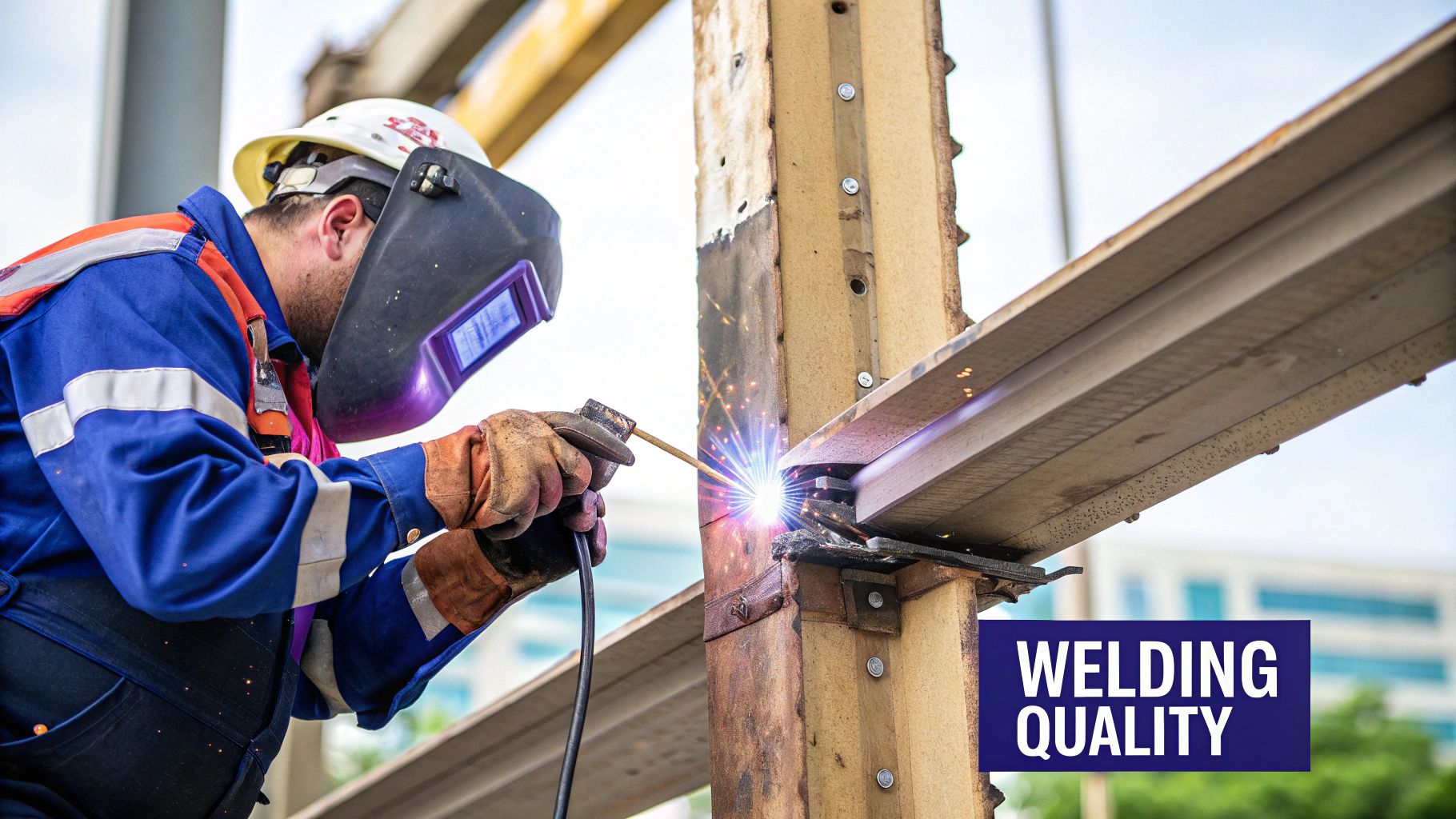
2. Structural Steel Inspection and Welding Quality
Once the foundation is cured, the skeleton of your metal building takes shape. The structural steel and its connections are the backbone of the entire system, responsible for bearing loads and resisting environmental forces. This phase of the construction quality control checklist is dedicated to the meticulous examination of steel beams, columns, and most importantly, the welds that join them together. Ensuring every connection meets engineering standards is non-negotiable for the building's long-term safety and structural integrity, as demonstrated in the rigorous protocols used for structures like One World Trade Center.
Key Inspection Points
Proper steel erection and welding quality directly impact the load-bearing capacity and stability of the final structure. Attention to detail here prevents catastrophic failures. For metal building projects, special attention during these inspections is required, especially when integrating stone veneer with a metal building, as the cladding system relies on a perfectly aligned and secured structure.
- Material Verification: Confirm that all delivered steel components (beams, columns, girts) match the grades, sizes, and specifications detailed in the approved shop drawings. Check for mill certificates and look for any signs of damage or corrosion from shipping.
- Weld Quality and Welder Certification: Visually inspect all accessible welds for defects like cracks, undercut, or porosity. Crucially, verify that all welders on-site hold current certifications from the American Welding Society (AWS) for the specific procedures they are performing.
- Bolt Tightening and Connections: Check that all bolted connections use the correct grade of bolts and that they are tightened to the specified torque values using calibrated equipment. This is often done using the turn-of-nut method or direct tension indicators.
Pro Tip: Insist on a pre-fabrication meeting with your steel supplier and erector. This allows you to align on quality standards, review shop drawings, and establish clear communication channels before the first piece of steel arrives on site.
By implementing these stringent checks, you ensure the structural frame is assembled exactly as the engineer designed it, providing a safe and durable building. Learn more about the intricacies of a proper steel building installation process.
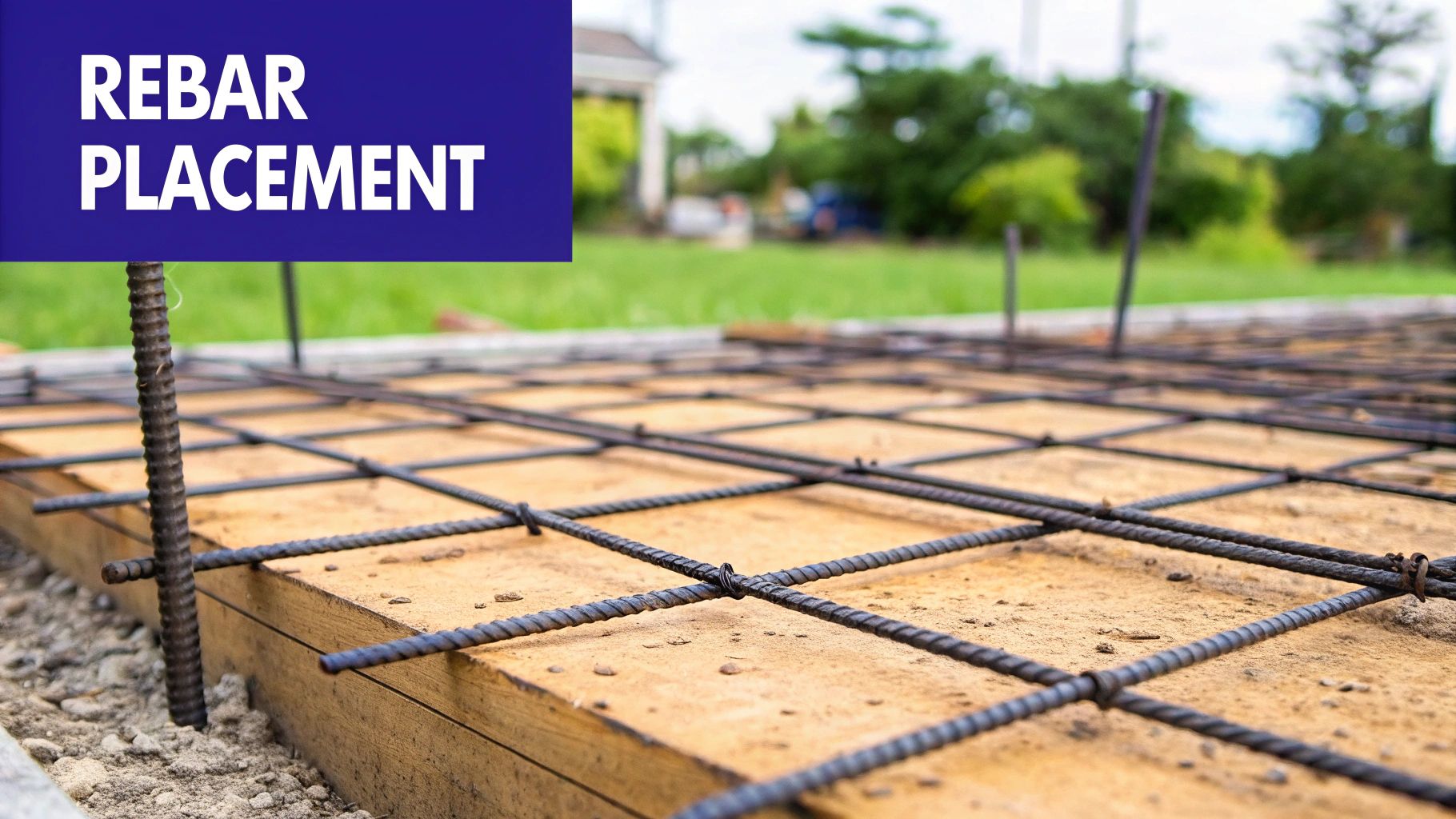
3. Reinforcement Steel (Rebar) Placement and Coverage
The long-term strength and durability of your metal building's concrete foundation depend entirely on the correct placement of reinforcement steel, or rebar. This critical step in our construction quality control checklist ensures the steel is positioned to provide maximum tensile strength, compensating for concrete's natural brittleness. Proper placement and sufficient concrete cover are essential to prevent corrosion and ensure the structural elements can handle their designed loads without cracking or failure.
Key Inspection Points
Improper rebar installation is a common but preventable defect that can compromise the entire structure. Focus your inspection on these areas:
- Grade and Size Verification: Confirm that the rebar delivered to the site matches the grade, size, and coating specified in the structural drawings. Always check the mill test reports against the project requirements.
- Placement, Spacing, and Tying: Meticulously measure the spacing between bars, their height within the formwork, and the lap splice lengths. Ensure all intersections are tied securely according to the engineering plans to prevent shifting during the concrete pour.
- Concrete Cover: Verify that the minimum concrete cover (the distance from the rebar to the surface) is maintained on all sides. This is crucial for protecting the steel from moisture and corrosion, especially in environments with high salt exposure. For a deeper look into foundational elements, you can learn more about concrete slab requirements here.
Pro Tip: Conduct a comprehensive pre-pour inspection and document everything with photographs from multiple angles. Use a cover meter for non-destructive verification after the forms are removed to confirm that placement remained accurate during the pour.
By ensuring precise rebar placement, you embed structural integrity directly into your building’s foundation, safeguarding it against premature deterioration and failure.
4. Excavation and Foundation Soil Verification
Long before concrete is poured, the ground itself must be thoroughly vetted. The stability of your entire metal building rests on the soil beneath it, making this verification step a non-negotiable part of any rigorous construction quality control checklist. This phase involves ensuring that excavation reaches the correct depth, the soil conditions on-site match the geotechnical report, and that all compaction meets engineering specifications. Overlooking this can lead to catastrophic settlement, structural cracks, and even total failure, as seen in historical examples like the Leaning Tower of Pisa.
Key Inspection Points
Proper ground support is the first line of defense against structural issues. Focus on these critical checks:
- Geotechnical Report Alignment: Confirm that the excavated soil conditions (type, density, moisture) are consistent with the findings in the initial geotechnical report. Any significant discrepancies may require a revised foundation design.
- Bearing Capacity and Compaction: Verify that the foundation subgrade has been compacted to the required percentage (often 95% of the Standard Proctor Maximum Dry Density). Compaction tests should be performed and documented for each soil lift.
- Excavation Depth and Cleanliness: Ensure the excavation has reached the specified depth and that the bottom is clean, free of loose debris, organic material, and standing water. This provides a solid, uniform base for the foundation.
Pro Tip: Keep all soil test reports, including compaction test results and moisture-density curves, readily available on-site. This documentation is crucial for verifying compliance and serves as a reference for any future inspections or engineering questions.
By confirming the ground's integrity, you ensure it can properly support the structure's load for decades to come. To understand the specifics of what your project might entail, learn more about steel building foundation requirements.
5. Masonry and Mortar Joint Quality
While metal buildings are known for their steel frames, many designs incorporate masonry walls as infill, wainscoting, or for aesthetic accents. The quality of this masonry work is critical for both the building’s appearance and its ability to resist weather. This phase involves inspecting brick, block, or stone placement, mortar strength, and joint alignment to prevent water infiltration and structural weakness. A thorough masonry check is a key part of any construction quality control checklist, ensuring the finished building is not just strong, but also durable and weather-tight.
Key Inspection Points
Poor masonry is a common source of leaks and long-term maintenance issues. Focus your inspections on these crucial details:
- Mortar Composition and Consistency: Verify that the mortar mix (cement, lime, sand) meets the project's specifications for strength and color. Regularly check batches for consistent workability to ensure proper adhesion and prevent variations in appearance.
- Joint Tooling and Fill: Inspect mortar joints to confirm they are completely filled, with no voids or hollow spots that could trap water. Joints should be tooled at the correct moisture level to create a dense, weather-resistant surface.
- Alignment and Bond Pattern: Check that all courses are level, plumb, and laid in the specified bond pattern (e.g., running bond, stack bond). Verify that joint widths are consistent, typically within a ±3/16 inch tolerance, for a professional finish.
Pro Tip: Before work begins, have the mason create a small sample panel (typically 4×4 feet) on-site. This panel becomes the agreed-upon standard for color, joint style, and overall workmanship for the entire project.
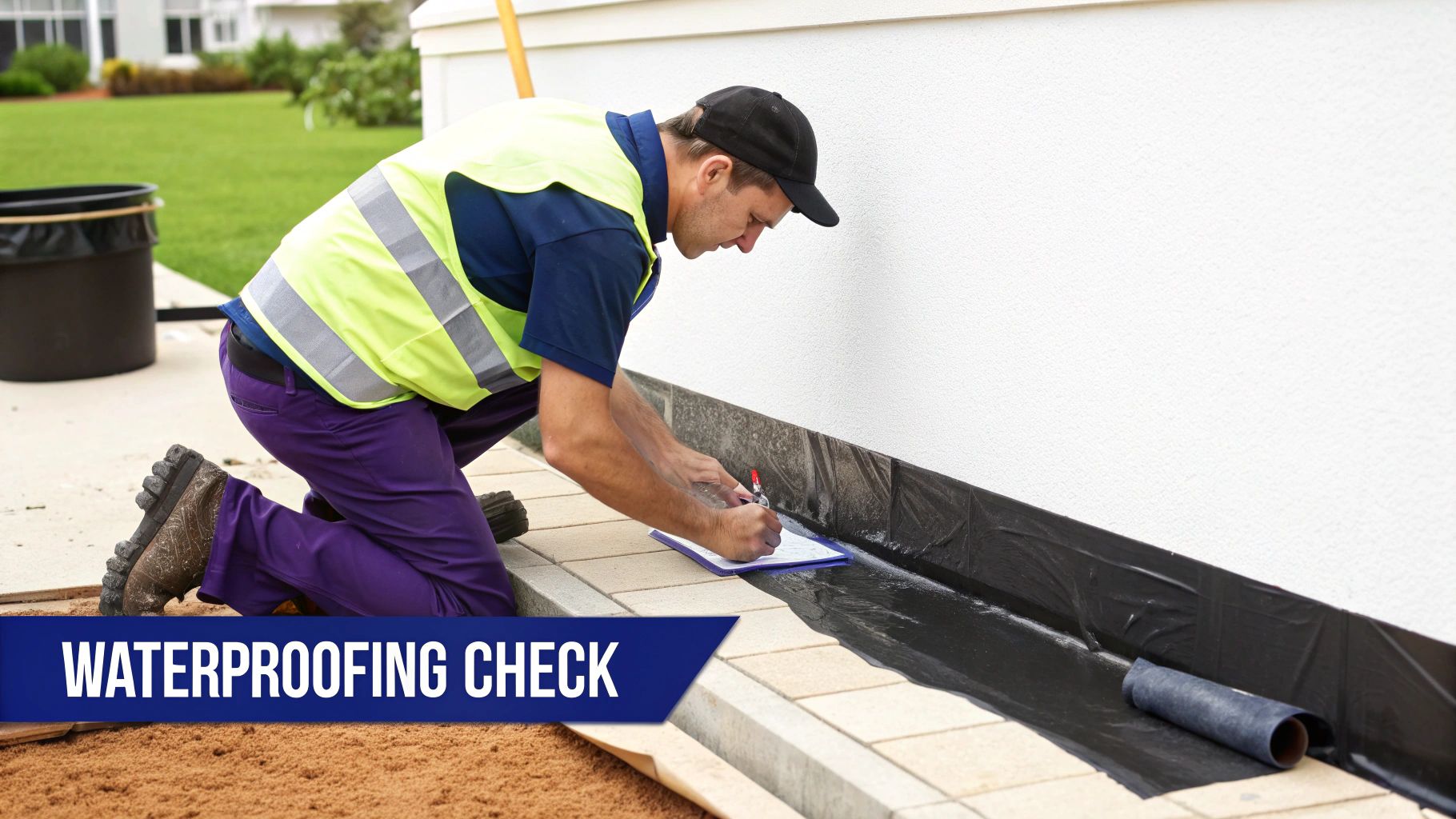
6. Waterproofing and Moisture Barrier Installation
Water intrusion is a silent threat that can compromise a metal building's structural integrity, ruin finishes, and lead to hazardous mold growth. This phase of the construction quality control checklist is dedicated to the meticulous inspection of all waterproofing systems, including membranes, sealants, and flashing. Proper installation is non-negotiable, as failures are notoriously difficult and expensive to remediate once construction is complete. A robust moisture barrier is as critical as the steel frame itself for ensuring the building’s long-term durability and performance.
Key Inspection Points
Effective waterproofing relies on flawless application and attention to detail at every seam, joint, and penetration. Focus your inspections on these critical areas:
- Substrate Preparation and Application: Before any membrane is applied, verify that the substrate (concrete, sheathing) is clean, dry, and properly primed according to the manufacturer’s specifications. During application, confirm consistent membrane thickness and full adhesion, especially at critical areas like corners and transitions.
- Sealant and Flashing Integrity: Inspect all joints, window and door openings, and roof penetrations to ensure flashing is installed correctly to direct water away from the structure. Check that all sealants are the appropriate type for the application, are applied neatly, and create a continuous, watertight seal.
- System Integration: A building’s waterproofing is a complete system. Ensure that below-grade waterproofing, wall moisture barriers, and roofing membranes are all correctly lapped and integrated to create a continuous, unbroken envelope that sheds water effectively. Combining this with the right insulation is key for climate control. Learn more about how insulation and moisture barriers work together.
Pro Tip: Require a "flood test" for flat roofs or waterproofed decks. This involves temporarily damming drains and flooding the area with water for 24-48 hours to reveal any leaks before finishes are installed, a practice that has saved countless projects from future water damage claims.
By rigorously verifying every aspect of the waterproofing installation, you protect the building asset from its most persistent enemy: moisture.
7. Electrical System Installation and Testing
A building's electrical system is its central nervous system, and defects can create severe fire and shock hazards. This phase of the construction quality control checklist involves the rigorous inspection of all wiring, conduits, grounding, and panel installations to ensure they are safe, functional, and compliant with the National Electrical Code (NEC) or equivalent standards. Proper verification at this stage is non-negotiable for occupant safety and obtaining necessary permits, preventing catastrophic failures down the line.
Key Inspection Points
From conduit supports to final load testing, every electrical component requires careful scrutiny. Meticulous checks ensure the system can handle its intended load safely for years to come.
- Rough-In and Conduit Inspection: Before drywall is installed, verify that all wiring is run correctly, protected from damage, and that conduits are properly supported and secured. Check that outlet box placement matches the plans.
- Grounding and Bonding Verification: Confirm the integrity of the entire grounding system. This includes checking the main grounding electrode conductor, bonding of all metallic components, and ensuring continuity throughout the system.
- Panel and Breaker Installation: Inspect the electrical panel to ensure all breakers are the correct size for their respective circuits, connections are torqued to specification, and the panel schedule is clearly and accurately labeled.
Pro Tip: Use a digital multimeter to conduct insulation resistance tests (megger testing) on all circuits before they are energized. This test can identify hidden damage to wire insulation that could cause a short circuit, a critical check popularized by safety organizations like the NFPA.
By implementing these electrical checks, you validate that the system is not only code-compliant but also installed to the highest safety standards, protecting the building and its future occupants.
8. HVAC System Performance and Balance Testing
Once the building envelope is sealed, attention turns to the systems that control its internal environment. A properly functioning HVAC system is not just about comfort; it's a critical component for energy efficiency, air quality, and operational costs. This phase of the construction quality control checklist involves verifying that the heating, ventilation, and air conditioning systems are installed and operating exactly as designed. Neglecting this step can lead to persistent occupant complaints, high utility bills, and premature equipment failure, undermining the quality of the entire project.
Key Inspection Points
Thorough testing confirms that the theoretical design translates into real-world performance. Focus on these critical verifications:
- Ductwork Integrity and Sealing: Before any performance testing, visually inspect all ductwork connections for secure seals. Conduct a duct leakage test to ensure that conditioned air is being delivered where it's needed, not lost within walls or ceilings.
- System Balancing: A certified technician should perform a full Testing, Adjusting, and Balancing (TAB) report. This process measures airflow at each register to confirm it meets the design specifications, ensuring even temperature distribution throughout the building.
- Controls and Functionality: Test all thermostats, sensors, and controls to verify they are calibrated correctly and functioning as intended. This includes checking heating and cooling cycles, damper operation, and any emergency shutdown features.
Pro Tip: Insist on a TAB report from a technician certified by the National Environmental Balancing Bureau (NEBB) or the Associated Air Balance Council (AABC). This ensures the testing is conducted to a recognized industry standard, providing reliable and actionable data.
By commissioning and rigorously testing the HVAC system, you guarantee the building will provide a comfortable, healthy, and energy-efficient environment for its occupants from day one.
9. Phase 3: Systems and Finishes – Plumbing System Testing and Inspection
Once the building envelope is secure, the focus shifts to the internal systems that make the structure functional. A properly installed and tested plumbing system is non-negotiable, as failures can lead to catastrophic water damage, costly repairs, and potential health hazards. This part of the construction quality control checklist covers the comprehensive verification of water supply lines, drainage, and venting. It ensures every pipe, fixture, and connection meets code and performance standards before being concealed behind walls and under floors.
Key Inspection Points
Thoroughly testing the plumbing system is a critical step to prevent future leaks and ensure long-term reliability. Focus your inspection on these key areas:
- Pressure Testing: Before any drywall or concrete slab covers the pipes, conduct both hydrostatic (water) and pneumatic (air) pressure tests on all supply lines. This verifies the integrity of every joint and connection under stress, identifying potential leaks when they are still easy to fix.
- Drainage and Venting Verification: Confirm that all drain, waste, and vent (DWV) pipes are correctly sloped to ensure proper flow and prevent clogs. Check that all venting is installed according to code to protect trap seals and allow the system to drain efficiently.
- Fixture and Material Compliance: Inspect all fixtures, pipes, and fittings to ensure they are the specified grade and material for their intended use. Verify that all cleanouts are accessible for future maintenance and that backflow prevention devices are installed where required to protect the potable water supply.
Pro Tip: Document every pressure test with time-stamped photos showing the pressure gauge reading. Require the licensed plumber to sign off on the test results, creating a clear record of compliance and accountability.
10. Paint and Coating Surface Preparation and Application Quality
The protective coating on a metal building is its first line of defense against corrosion and environmental degradation. This critical step goes beyond aesthetics; it's about ensuring long-term durability. This part of the construction quality control checklist focuses on verifying that surfaces are impeccably prepared and coatings are applied according to strict specifications. A failure in the coating system can lead to premature rust, compromising the structural integrity and appearance of the entire building.
Key Inspection Points
Proper application ensures the coating system performs as designed. A flawless finish relies on meticulous preparation and execution:
- Surface Preparation Verification: Confirm that all surfaces are cleaned and prepared according to specifications from organizations like SSPC or NACE. This includes checking for the correct surface profile (anchor pattern) to ensure mechanical adhesion.
- Environmental Condition Monitoring: Continuously monitor ambient temperature, humidity, and surface temperature. Applying coatings outside of the manufacturer's recommended window (typically 50-85°F, humidity below 85%) can lead to poor curing and premature failure.
- Film Thickness and Adhesion Testing: Use electronic gauges to measure the dry film thickness (DFT) at multiple points, ensuring it meets the specified range. Conduct adhesion tests, such as the ASTM D3359 cross-hatch test, to confirm the coating is properly bonded to the substrate.
Pro Tip: Before full-scale application, require the contractor to prepare and coat a small, representative mock-up panel. This allows you to approve the color, finish, and quality, setting a clear standard for the entire project and preventing costly disputes later.
By rigorously controlling the coating process, you protect the building's structural steel and ensure its exterior finish remains vibrant and resilient for years, which is essential for creating durable and attractive modern metal exteriors.
10-Point Construction Quality Control Comparison
| Checkpoint | Implementation complexity 🔄 | Resource requirements ⚡ | Expected outcomes 📊 | Ideal use cases 💡 | Key advantages ⭐ |
|---|---|---|---|---|---|
| Concrete Quality and Strength Testing | Moderate–High: multiple test methods and cure‑time waits | Lab equipment, compression machines, NDT tools, curing area; certified technicians | Verified compressive strength, workability and compliance; documented test records | Foundations, high‑rise, bridges, seismic zones | Prevents structural failure; regulatory proof |
| Structural Steel Inspection and Welding Quality | High: NDT, dimensional checks, welding QC | Radiography/UT/MPI equipment, certified inspectors and welders; expensive | Detects weld and fabrication defects; ensures load capacity and connection integrity | Steel frames, bridges, critical connections | Prevents catastrophic failure; high assurance |
| Reinforcement Steel (Rebar) Placement and Coverage | Low–Moderate: visual checks and measurement before pour | Cover meters, tapes, photos, experienced inspectors; relatively low cost | Correct spacing, cover and splice verification; reduced corrosion risk | Slabs, parking structures, marine/exposed environments | Cost‑effective prevention; easy to correct pre‑pour |
| Excavation and Foundation Soil Verification | Moderate–High: geotechnical testing and variable site conditions | Borings, lab Proctor/plate tests, geotechnical engineer involvement | Verified bearing capacity and compaction; reduced settlement risk | New foundations, variable soils, heavy structures | Prevents settlement; optimizes foundation design |
| Masonry and Mortar Joint Quality | Low–Moderate: visual inspection and mortar testing | Mortar test lab, experienced masons, weather control | Proper joint fill, bond patterns, and weather resistance | Facades, historic restoration, exterior walls | Prevents water ingress; defects often correctable on site |
| Waterproofing and Moisture Barrier Installation | Moderate: surface prep and detail work critical | Membranes/sealants, adhesion/moisture tests, skilled installers | Intact barrier performance; reduced water ingress and mold risk | Basements, roofs, wet rooms, building envelopes | Prevents costly water damage; long‑term protection |
| Electrical System Installation and Testing | High: safety‑critical code compliance and testing | Licensed electricians, insulation/grounding testers, possible de‑energizing | Safe, code‑compliant electrical systems; documented safety records | Occupancy permits, hospitals, industrial facilities | Prevents fires/shock; ensures reliable power distribution |
| HVAC System Performance and Balance Testing | Moderate–High: TAB and control verification | Duct blaster, anemometers, TAB technicians, calibration tools | Balanced airflow, temperature control, improved energy efficiency | Offices, data centers, LEED or energy‑sensitive buildings | Energy savings and occupant comfort; extends equipment life |
| Plumbing System Testing and Inspection | Moderate: pressure and drainage verification before close‑up | Pressure test gear, temporary plugs, licensed plumbers | Leak‑free supply/drainage, correct slope and venting; health protection | Kitchens, hospitals, multi‑story plumbing stacks | Prevents water damage and contamination; early defect detection |
| Paint and Coating Surface Preparation and Application Quality | Moderate: surface profile, environmental controls and testing | Surface prep tools, DFT gauges, adhesion testers, certified applicators | Durable protective finish, corrosion resistance and consistent appearance | Bridges, steel structures, exterior facades and marine environments | Extends asset life; maintains aesthetics and corrosion protection |
From Blueprint to Reality: Your Commitment to Quality Construction
Navigating the complexities of a metal building project can be daunting, but a robust quality control process transforms potential challenges into manageable tasks. The detailed 10-point construction quality control checklist we have explored is more than just a procedural document; it is a foundational framework for excellence. It acts as your project's command center, guiding every decision from the ground up to ensure structural integrity, operational efficiency, and long-term durability.
By systematically verifying each critical stage, from the initial soil verification and foundation pour to the final HVAC balance and paint application, you are actively building quality into the very fabric of your structure. This proactive approach doesn't just catch errors; it prevents them. It’s the difference between hoping for a good outcome and engineering one. A well-executed checklist is your best defense against costly rework, schedule delays, and the latent defects that can emerge years after completion.
Key Takeaways for a Flawless Project
Remember, quality is not a single action but a consistent habit. The most crucial takeaways from this guide are:
- Proactive vs. Reactive: Quality is built-in, not inspected-in. Use this checklist to set standards before work begins, not just to find faults after it's done.
- Documentation is Paramount: Meticulous records, from concrete slump tests to welding inspection reports, create an undeniable project history. This documentation is your proof of compliance and your reference for future maintenance.
- Collaboration is Non-Negotiable: A successful quality control plan involves everyone on the project team, from the general contractor to every subcontractor. Clear communication and shared responsibility are essential for enforcing standards across the board.
Your Actionable Next Steps
To turn this knowledge into tangible results, start by adapting this comprehensive checklist to the specific requirements of your metal building project. Integrate these checkpoints directly into your project schedule and contractual agreements. Assign clear responsibility for each inspection point and establish a formal sign-off process. This creates a chain of accountability that ensures no detail is overlooked.
Ultimately, embracing a rigorous construction quality control checklist is a commitment to the future. It ensures your agricultural building withstands the elements, your commercial space operates efficiently, and your personal workshop provides a safe, reliable environment for years to come. This dedication to detail is what transforms a simple steel structure into a lasting asset, delivering peace of mind and tangible value long after the construction dust settles. By prioritizing these steps, you are not just erecting a building; you are constructing a legacy of quality and reliability.
Ready to build with confidence? A successful project starts with a partner who prioritizes quality from the very first design. At Icon Steel Buildings, our commitment to superior materials and engineering aligns perfectly with the rigorous standards of a thorough construction quality control checklist, ensuring your vision is built to last. Partner with us to bring your high-quality metal building project to life by visiting Icon Steel Buildings today.