On average, you can expect a metal building kit to run anywhere from $15 to $30 per square foot. That figure is for the kit alone. So, for a standard 30×40 building, which is 1,200 square feet, you’re looking at a starting price between $18,000 and $36,000. But that’s just the beginning—it doesn't include delivery, the concrete foundation, or putting it all together.
What Really Drives Metal Building Kit Prices
Trying to get a single, flat price for a metal building kit is a lot like asking "how much is a car?" The real answer is always, "well, it depends." The model, the features, the upgrades—they all play a role. The base price is just where the conversation starts.
The final number on your quote is shaped by a whole mix of choices that take a simple steel frame and turn it into a functional building tailored to you.
Think about it like this: a basic two-car garage kit is your standard sedan. It gets the job done and is easy on the wallet. But a large, fully insulated workshop with heavy-duty commercial roll-up doors? That’s more like a premium pickup truck with all the bells and whistles. It's built for a specific, demanding purpose, and the price tag reflects that.
To give you a better idea of what moves the needle, here are the core factors that will influence your final cost:
- Size and Dimensions: It’s not just about square footage. The width, length, and especially the height are the biggest cost drivers. Taller buildings need more steel and more robust engineering, which pushes the price up.
- Steel Gauge and Quality: The thickness of the steel makes a huge difference. A thicker, lower-gauge steel is much stronger and costs more, but it’s absolutely essential if your area gets heavy snow or is prone to high winds.
- Design Complexity: A straightforward rectangular building will always be the most cost-effective option. Once you start adding custom rooflines, multiple sections, or lean-tos, the engineering gets more complex and the price goes up.
A Quick Glance at Estimated Kit Prices
To help you get a ballpark idea for your project, this table breaks down the typical price ranges for some common building types. Just remember, these numbers are for the building kit itself. They don't factor in the foundation, delivery fees, or the cost of installation.
Estimated Price Ranges for Common Metal Building Kits
| Building Type | Typical Size Range (sq. ft.) | Estimated Kit Price per Sq. Ft. |
|---|---|---|
| Personal Garage / Workshop | 600 – 2,400 sq. ft. | $17 – $30 |
| Agricultural Barn / Storage | 2,000 – 8,000 sq. ft. | $15 – $25 |
| Small Commercial Building | 3,000 – 10,000 sq. ft. | $18 – $35+ |
Much like how a new HVAC system has all sorts of component costs, it’s critical to understand that the final price of a metal building is a sum of many parts. It's a key piece of the puzzle for anyone navigating complex installation costs.
For a much deeper dive, you can learn all about the average cost of a steel building from manufacturing to installation. All these variables are what ensure you only pay for what you actually need.
Unpacking the Core Price Drivers
Before you start picking out windows and doors, you’ve got to lock in the building’s core structure. Think of it like the chassis of a car—it’s the fundamental framework that everything else gets bolted onto, and it sets the baseline for your metal building kit prices. Three elements have the biggest impact at this stage: dimensions, steel gauge, and design complexity.
These foundational choices are the main levers that move your initial quote up or down. Get a good handle on how they work together, and you’re well on your way to building a realistic and accurate budget.
This approach is what makes the whole prefabricated construction industry tick. In fact, the U.S. prefabricated metal building market was recently valued at around $12.8 billion, showing a solid 2.6% jump from the previous year. This growth is being fired up by commercial, industrial, and agricultural sectors that need simplified construction and lower on-site labor.
The Three Dimensions of Cost
It's easy to just think in square footage, but when it comes to steel buildings, cost is a three-dimensional game. Width, length, and height each have their own unique impact on the final price tag.
- Width: This is usually the biggest cost factor. A wider building needs longer and beefier steel beams (rafters) to give you that clear-span interior without needing annoying support columns. That means more material and more engineering, which drives up the kit price.
- Length: Adding length is generally simpler and cheaper per foot than adding width. You’re just extending the building by adding more of the same frame sections, so the cost increases in a more predictable, linear way.
- Height: Pushing up the eave height adds cost, too. Taller walls mean more steel for the columns and the wall paneling. More importantly, they have to be engineered to handle stronger wind loads, which often requires a tougher overall frame.
Real-World Example: Let's say you need a 30×40 (1,200 sq. ft.) workshop. A standard 12-foot height works for most things. But what if you want to install a vehicle lift? You'll need to bump that height to 16 or 18 feet. That extra vertical space could easily add thousands of dollars to your kit price, thanks to the need for more steel and beefier engineering.
Steel Gauge: The Unseen Strength Factor
The gauge of the steel is another critical piece of the pricing puzzle. Steel gauge is all about thickness—and here’s the counterintuitive part: a lower gauge number means thicker, stronger steel. For example, 12-gauge steel is much thicker and more robust than 14-gauge steel.
Picking the right gauge isn't just a personal choice; your local building codes and climate often make the decision for you.
- 14-Gauge Steel: This is the industry standard for lots of carports and garages, especially in areas with mild weather. It's more affordable and does the job perfectly for most general-purpose uses.
- 12-Gauge Steel: If you live somewhere with heavy snow, high winds, or seismic activity, you'll almost certainly need to upgrade to 12-gauge. This thicker steel provides the strength needed to meet tough structural load requirements, but it also comes with a higher price tag. This choice also affects the specifics of your metal building frame design, as a stronger frame might be necessary to handle those heavier loads.
Design Complexity: From Simple Box to Custom Shape
Finally, the overall complexity of your building’s design has a direct line to your wallet. The most budget-friendly structure you can get is a simple, rectangular "box" with a standard gable roof. Every time you stray from that basic shape, you add engineering time, manufacturing complexity, and material costs.
Here are a few common design tweaks that will increase the price:
- Custom Roof Pitches: Steeper roof pitches look great, but they require longer panels and more complex truss engineering.
- Lean-Tos and Overhangs: Attaching side structures or adding roof overhangs means more materials and engineering work.
- Multiple Building Sections: Connecting different building sections to create an L-shaped or T-shaped structure is way more complicated than a single rectangle and will definitely raise your costs.
How Custom Features Shape Your Final Quote
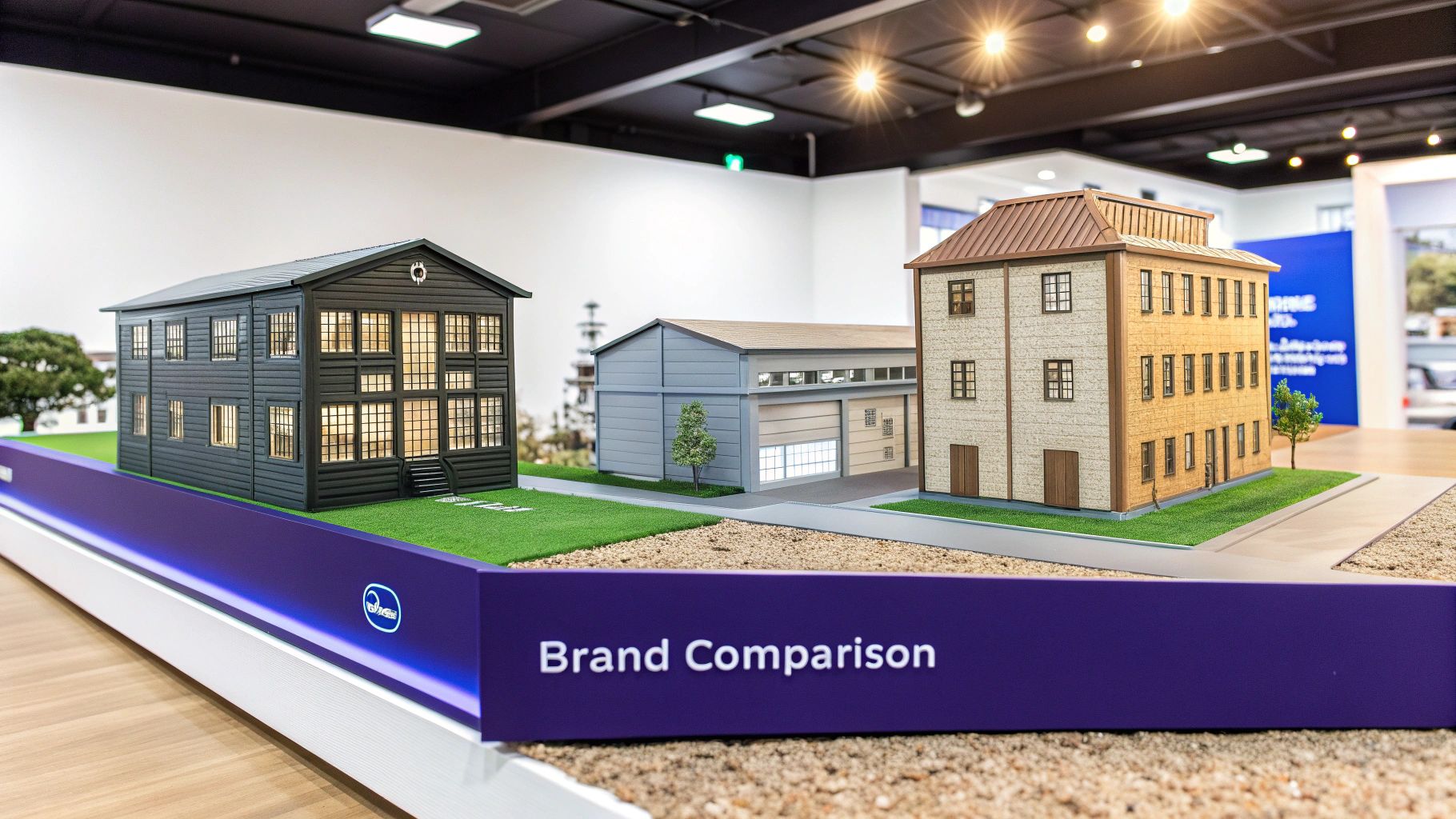
Once you've nailed down the basic size and steel gauge, the real fun begins. This is where you get to turn a simple steel shell into a space that’s truly yours. But it’s also where the numbers on your quote can start to climb.
Think of it like ordering a pizza. The plain cheese is your base price, but every topping you add—from doors and windows to custom colors—adjusts the final bill. Understanding these add-ons is the key to balancing your dream building with your budget, helping you decide where to invest and where to save.
Doors and Windows: The Gateways to Your Building
Doors and windows aren't just about getting in and out; they define the building's function and feel. And trust me, not all doors are created equal, especially when it comes to price.
A basic walk-in door is a simple, affordable add-on. But if you need a heavy-duty commercial steel door for security, expect the price to jump significantly. The same logic applies to the big openings.
- Roll-Up Doors: A standard, lightweight roll-up door is perfect for a backyard garage. But for a commercial workshop needing a wind-rated or insulated door, you could be looking at an additional $1,000 to $3,000 or more for each one.
- Windows: Simple single-pane windows are the cheapest way to let in some light. But upgrading to double-pane, energy-efficient windows is a smart move for any building you plan to heat or cool. It costs more upfront but pays you back over time.
Insulation and Interior Finishes
If you plan to spend any real time in your building—whether for work, hobbies, or storage—insulation is a must-have upgrade. It does add a noticeable amount to the initial price tag, but it’s essential for climate control and preventing condensation that can ruin whatever you’re storing inside.
Adding a proper vapor barrier and fiberglass insulation can increase your kit price by 15% to 25%. It's a chunk of change, for sure. But trying to retrofit insulation after the fact is a massive, expensive headache you want to avoid.
Choosing the right level of customization is key to creating a building that serves its purpose without breaking the bank. It's about finding the perfect balance between what you need and what you can invest in.
Beyond just staying warm or cool, other interior features can completely change the space. Adding interior liner panels, for instance, gives your workshop or office a clean, finished look instead of exposed steel framing. Each of these choices adds material and labor costs. To get a better feel for what's possible, checking out a gallery of custom steel buildings can spark some great ideas for your project.
Aesthetic Choices: Paint Colors and Wainscoting
Believe it or not, even the color you choose can affect the price. Most suppliers include a selection of standard colors in the base cost. But if you want a premium or custom color to match your home or brand, it will likely come with an extra fee.
Another popular touch is wainscoting, where the lower portion of the walls uses a different colored panel. It gives the building a sharp, two-tone look that really elevates the style. It's a relatively modest cost increase, but it's a perfect example of how even the smaller details add up to your final project total.
Comparing Costs for Different Building Uses
A metal building kit isn't a one-size-fits-all product, and its intended use is one of the biggest factors steering the final price. A simple two-car garage for your home has entirely different requirements—and a different price tag—than a sprawling agricultural barn or a customer-facing commercial storefront.
Getting a handle on these differences is the key to setting a realistic budget.
Think of it like buying tires. A standard set for your family sedan is affordable and perfectly reliable for daily driving. But if you’re outfitting a heavy-duty truck for hauling serious weight, you need specialized, reinforced tires that cost significantly more. The job dictates the gear, and the gear dictates the price.
That same principle is at play with metal building kits. The structural demands, local building code requirements, and necessary customizations are worlds apart from one application to the next.
Personal Garages and Workshops: The Entry Point
For most homeowners, a personal garage or workshop is their first foray into the world of steel buildings. These structures are usually the most straightforward and cost-effective options out there, designed for simple jobs like storing vehicles, housing lawn equipment, or creating a hobby space.
Because they're for residential use, the building codes are often less strict than what you’d find for a commercial property. The main goal here is practicality and durability, not complex, heavy-duty engineering.
Here’s what typically defines these projects:
- Simpler Designs: Most are basic rectangular shapes with standard roof pitches.
- Lighter Steel Gauge: In many climates, a 14-gauge steel frame is more than enough, which is a more budget-friendly option.
- Standard Features: They often use common roll-up door sizes and basic windows, which helps keep costs down.
This simplicity is what makes garages and workshops such a great value. Just keep in mind that as you start adding upgrades like insulation or premium doors, the price will naturally start to climb.
Agricultural Barns: Utility Over Aesthetics
Agricultural buildings, or "ag barns," are the undisputed workhorses of the metal building world. Their whole purpose is pure function—storing hay, sheltering livestock, or protecting massive farm equipment. Looks almost always take a backseat to durability and maximizing every square inch of usable space.
This laser focus on utility often leads to a lower cost per square foot compared to other building types, especially when you get into seriously large structures.
For an agricultural building, the mission is simple: enclose the largest possible area for the lowest possible cost. This often means fewer interior walls, simpler electrical and plumbing systems, and sometimes no need for a full concrete slab foundation, which slashes a huge chunk off the total project expense.
That said, certain factors can drive the cost up. A building designed for livestock might need specific ventilation systems or special coatings to fight off corrosion. Likewise, the massive clear-span designs required to park combines and tractors demand more robust engineering.
Generally, you can expect prefabricated steel building kits to cost between $15 and $25 per square foot. The simpler agricultural or storage buildings often fall on the lower end of that spectrum, somewhere in the $10 to $20 per square foot range. For a complete breakdown, you can learn more from this steel building costs and prices guide.
Commercial Buildings: The Highest Investment
Commercial metal buildings sit at the top tier in both complexity and cost. These structures aren't just buildings; they're public spaces. That means they have to meet a long list of strict local building codes for public safety, accessibility (like ADA compliance), and energy efficiency. They’re engineered from the ground up to handle higher occupancy and, often, specific commercial activities like manufacturing or retail.
The price jump for commercial buildings is driven by several non-negotiable requirements:
- Stricter Codes: Commercial codes demand thicker steel, more extensive foundations, and often fire-suppression systems.
- Aesthetic Finishes: A retail space needs to look good. That might mean adding an attractive facade with brick, stucco, or decorative metal paneling—all of which add significant material and labor costs.
- Heavy-Duty Components: Commercial-grade doors, windows, and insulation are mandatory, and they're all more expensive than their residential counterparts.
These factors easily explain why a commercial structure can cost 20-50% more per square foot than an agricultural barn of the same size. Our ultimate guide to steel building kits takes a deeper look into the specific needs of each building type.
To illustrate how these priorities shift, let's compare them side-by-side.
Cost Factor Comparison Across Building Types
This table shows how different factors change in importance and cost depending on what the building is for.
| Factor | Personal Garage/Workshop | Agricultural Barn | Commercial Building |
|---|---|---|---|
| Primary Goal | Secure storage, hobby space | Maximize usable space, protect assets | Public access, business operations, aesthetics |
| Code Complexity | Low to moderate (local residential codes) | Low (often exempt or has special ag codes) | High (strict commercial, ADA, fire codes) |
| Aesthetics | Low priority (functional appearance) | Very low priority (utility is key) | High priority (curb appeal is crucial) |
| Foundation | Standard slab | Varies (slab, piers, or even dirt floor) | Heavy-duty, engineered for high loads |
| Steel Gauge | Standard (e.g., 14-gauge) | Varies (can be standard or heavy-duty for wide spans) | Heavy-duty (e.g., 12-gauge or thicker) |
| Insulation | Optional, moderate R-value | Optional, often minimal or specialized | Required, high R-value for energy efficiency |
| Doors/Windows | Standard residential grade | Basic, functional, often oversized for equipment | Commercial grade, often with security/safety features |
As you can see, a commercial project has a much longer and more expensive checklist to work through than a simple garage or barn.
The infographic below really drives home the other crucial costs—like the foundation, shipping, and permits—that make up the total project budget.
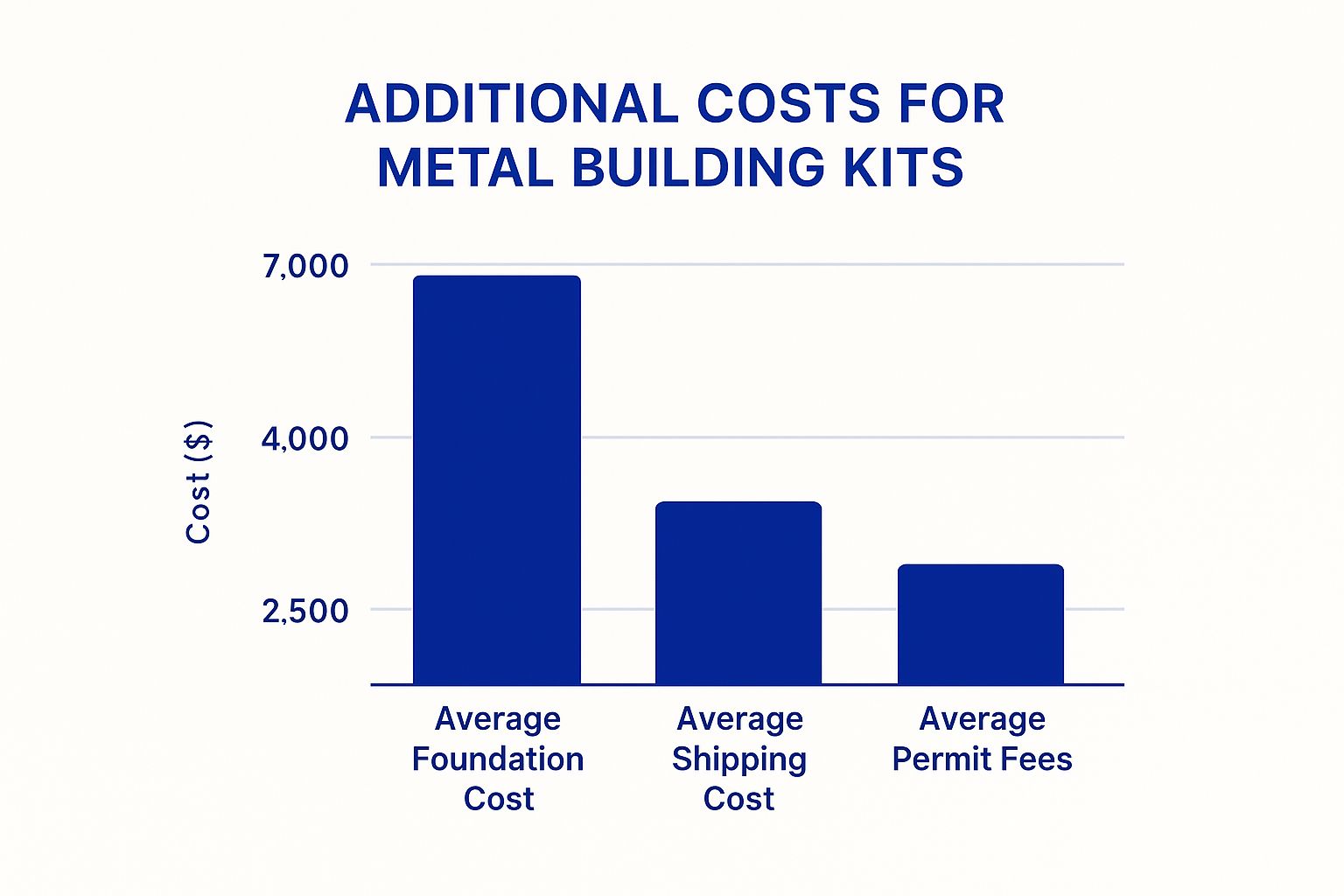
Notice how the foundation is often the largest of these extra expenses. It's a perfect reminder of why you have to budget for more than just the kit itself.
Budgeting Beyond the Building Kit

Getting that quote for your metal building kit feels like a huge milestone, but it’s really just the starting line. Think of it as the price tag for the engine, not the entire car. That number is a big part of your budget, sure, but it’s just one piece of a much larger puzzle.
The single biggest mistake we see new buyers make is forgetting to budget for everything else. These other costs—the site work, the concrete, the crew—can be massive. In some cases, they can even match or exceed the price of the steel kit itself. A realistic budget covers every single step, from clearing the land to flicking on the lights for the first time.
The Foundation Your Project Rests On
Before a single beam goes up, you need a solid, level place to put it. This part is absolutely non-negotiable and often ends up being the biggest "extra" cost you'll face.
It all starts with site prep. You might need to clear trees, level a sloped patch of land, or haul in fill dirt to create a stable building pad. Depending on what your property looks like, this work alone can range from a few hundred to several thousand dollars.
Next up is the concrete foundation. While a simple farm shed might get away with a gravel base, most structures need a professionally poured concrete slab. For a typical 30×40 building, you can expect a 4-inch slab to run between $5 to $10 per square foot. Do the math, and that single line item lands somewhere between $6,000 and $12,000.
A properly engineered foundation is no place to cut corners. It’s what guarantees your building’s stability and longevity, and it’s critical for meeting local wind and snow load codes.
Assembling the Pieces: Construction and Labor
Unless you’re a contractor with a crew and heavy machinery on standby, you’re going to need to hire pros to put your building together. The cost for professional metal building installation is a major budget item, often running 40% to 50% of the kit's price.
Labor rates swing wildly based on your location, how complex the building is, and how busy local crews are. For a moderately sized workshop, it's smart to set aside anywhere from $5,000 to $15,000 just for the construction crew.
Don't forget about equipment rentals, either. You’ll almost certainly need a scissor lift or a telescopic forklift to safely hoist heavy steel panels and beams into place. Renting this gear can add another $1,000 to $3,000 to the final bill.
The Hidden Costs and Final Touches
Beyond the big-ticket items like concrete and labor, there's a whole list of smaller—but equally important—costs that add up. These are the details that transform a steel shell into a usable space.
- Permits and Inspections: Your local government will want its cut. Before you can even break ground, you'll need building permits, which can easily cost several hundred dollars.
- Delivery Fees: Some companies include delivery, but if you're far from their hub, shipping can tack on $1,000 or more. Always ask.
- Utility Connections: Getting electricity, water, and septic to your new building is a separate project with its own price tag.
- Finishing Work: This is the fun stuff! But it all costs money. We’re talking garage doors, windows, insulation, interior walls, lighting, and anything else you need to make the space functional.
When you're mapping out the full project budget, remember to plan for utilities. For example, if you're adding power, it can be helpful to look at related expenses like whole house generator installation costs to get a complete financial picture of your electrical setup. Thinking through every detail from the ground up is the only way to avoid painful surprises.
How Market Trends Influence Building Prices
The price you get quoted for a metal building kit isn’t pulled out of thin air. It’s directly tied to a massive, interconnected web of global market forces that can make prices swing from one month to the next. Knowing what’s happening behind the curtain gives you a huge advantage in the buying process and explains why those numbers can be so dynamic.
Think of the global steel market like a giant ocean. When a huge construction boom kicks off in one part of the world, or a major steel mill shuts down for maintenance, it sends ripples across the entire surface. Those ripples eventually wash up on your shores in the form of price changes from your local supplier. The volatility of raw steel is easily the single biggest factor influencing what you'll end up paying.
But it’s not just about the raw material. Getting that steel from point A to B plays a massive role. The cost to ship enormous steel coils from the mill to the fabricator, and then to get the finished kit delivered to your property, is all baked into your final price. Things like fuel costs, the availability of shipping containers, and even a shortage of truck drivers can nudge that final number up or down.
The Impact of Technology and Innovation
Fortunately, it’s not all about costs going up. The metal building industry is constantly getting smarter, and new technology is helping create efficiencies that can put a lid on price hikes over the long run. Modern fabrication plants now use sophisticated software to map out designs, which cuts down on wasted steel and seriously speeds up production.
This drive to innovate is a huge part of where the industry is headed. The global metal building market is on track to hit around USD 50 billion by 2027, a jump fueled by the growing hunger for durable, sustainable construction. To keep up, the industry is embracing digital tools that streamline projects, fill skill gaps, and make every resource count. You can get a deeper look at what's next for metal building trends on junnansteelstructure.com.
Once you understand that your quote is a snapshot of current steel prices, shipping logistics, and manufacturing tech, you can navigate the process like a pro. You’re not just buying a product; you're investing in a modern construction solution shaped by a truly global marketplace.
At the end of the day, all these moving parts are exactly why getting a quote with a clear expiration date is so critical. It locks in your price against a constantly shifting market, giving you a solid, reliable figure you can actually build your budget around.
Answering Your Top Pricing Questions
Once you start digging into the details of metal buildings, a few key questions always come up. Let's walk through the most common ones we hear so you can get a clearer picture of your total investment.
Is It Cheaper to Build with Wood or Steel?
This is the big one. At first glance, a wood-frame structure like a pole barn might seem like the cheaper option. Upfront, a pole barn kit can be about 15% less than a comparable steel building.
But that initial price tag doesn't tell the whole story. The real value of steel shines through over the long term. Wood requires constant upkeep—painting, sealing, and repairing damage from rot, termites, and weather. Steel, on the other hand, is practically maintenance-free.
Here's a number that often surprises people: because steel is naturally fire-resistant, you can often get insurance premiums up to 30% lower than you would for a wood building. That’s a significant saving that repeats year after year.
When you choose steel, you're not just buying a building for today. You're investing in decades of hassle-free durability with far lower lifetime costs.
How Much Does Delivery Add to the Total Cost?
Delivery is a huge variable and it all comes down to one thing: your distance from the manufacturing plant. Many suppliers will offer free delivery within a certain radius, which could be anywhere from 50 to 200 miles.
Step outside that free zone, and the costs can jump significantly. We're talking potentially thousands of dollars for a cross-country shipment. This is why it's absolutely critical to get a firm, itemized quote for delivery before you sign anything.
And don't forget to ask exactly what that delivery fee includes. Does it cover unloading the materials from the truck? Sometimes that’s an extra charge that catches people by surprise.
Can I Save Money Erecting the Kit Myself?
Absolutely. A DIY installation can save you a serious amount of cash. Hiring a professional crew can easily make up 40% to 50% of your total installed price, so taking on the labor yourself is a massive budget saver.
But—and this is a big but—it’s only a good idea if you know what you're doing. You'll need the right skills, the right tools, and access to heavy equipment like a forklift or a scissor lift. A shoddy installation isn't just a headache; it can create serious safety hazards and might even void your manufacturer's warranty.
For most people, hiring an experienced crew is a wise investment. It guarantees your building is put up correctly, safely, and without any costly mistakes.
Ready to get a clear price for your project? The team at Icon Steel Buildings can provide a detailed quote that covers everything you need. Start designing your perfect building today at https://iconsteelbuildings.com.