
Think of a metal garage building kit as a complete, life-sized construction set—but for adults. It’s a smart, modern approach that swaps traditional, piece-by-piece building methods for pre-engineered components designed to fit together perfectly. This system gives you everything you need, from the steel frame to the wall panels, to put up a seriously durable garage with surprising speed.
What Are Metal Garage Building Kits
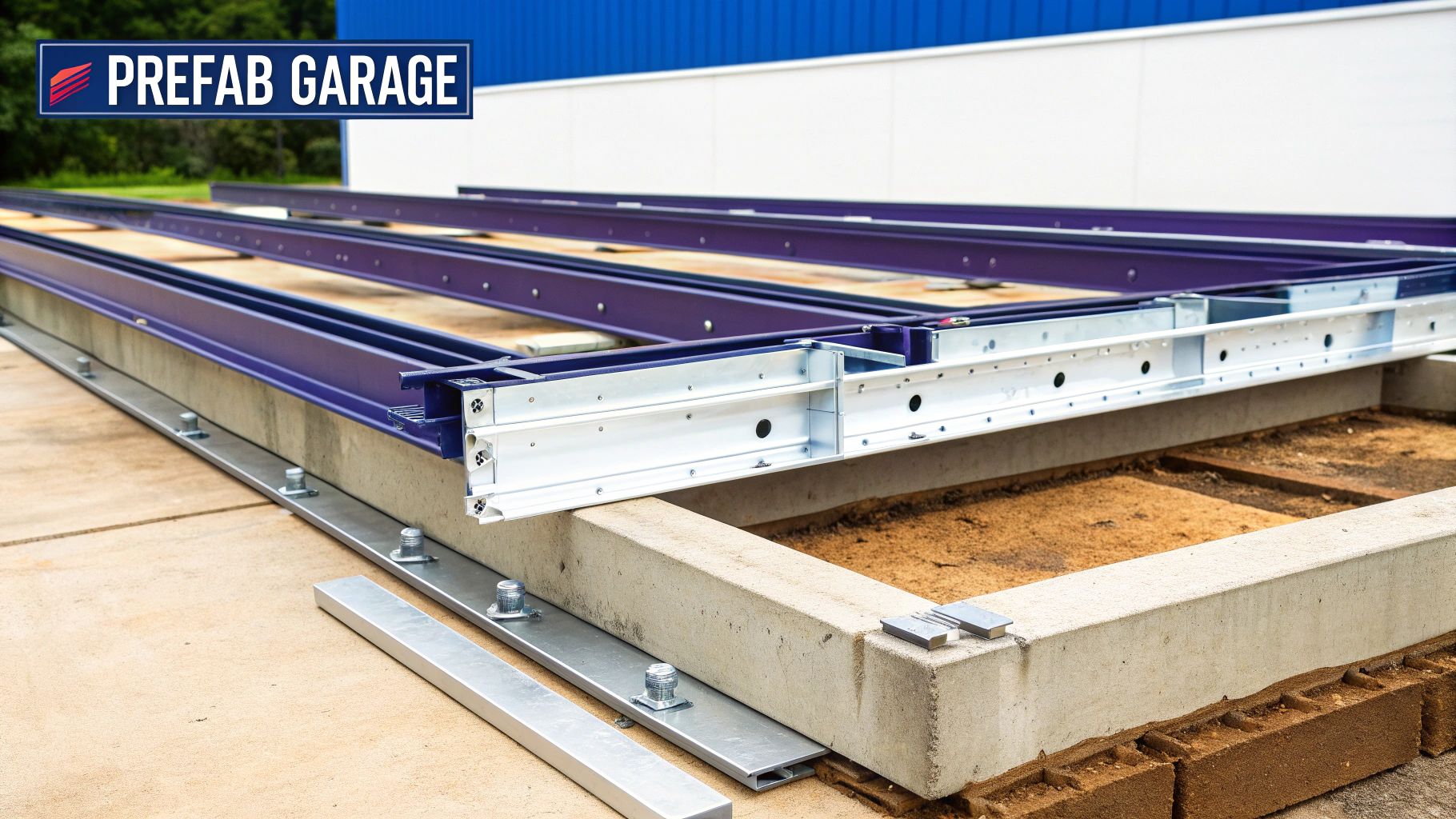
At its heart, a metal garage building kit is an all-in-one package with every pre-cut, pre-drilled, and prefabricated part needed to construct a garage. Forget dealing with raw lumber, endless measuring, and cutting on-site. Every piece arrives ready for assembly.
This all-inclusive method takes the complexity out of the building process, making it a realistic project even for those without a ton of construction experience.
What Comes in a Standard Kit
While you can customize just about anything, a typical kit provides the core structural elements you need to get the job done. When you open up your delivery, you can expect to find:
- Steel Framing: The skeleton of your garage, including all the primary beams, columns, and trusses.
- Wall and Roof Panels: The heavy-duty corrugated metal sheets that create the exterior shell.
- Fasteners and Hardware: Every single nut, bolt, screw, and anchor required for a secure assembly.
- Detailed Blueprints: A full set of plans and step-by-step instructions that guide you through the entire build.
This pre-engineered system cuts out the guesswork and dramatically reduces the chance of making expensive mistakes. Because the components are made with factory precision, you get a tight, secure fit that results in a tough, weather-resistant building.
The core idea behind a metal garage building kit is to shift the complexity of construction from the job site to the controlled environment of a factory. This results in faster build times, reduced waste, and a more predictable outcome for the owner.
Why This Method Is Gaining Popularity
The appeal of metal garage building kits goes way beyond simplicity. This building style is part of a bigger movement toward efficient, sustainable construction. The demand for these materials is blowing up globally.
In fact, the metal building materials market was projected to hit around $125 billion in 2025 and is on track to grow to nearly $150 billion by 2033. This surge is largely driven by urbanization and a growing focus on green building practices.
This growth shows a real shift in how people approach construction projects. Homeowners and businesses are actively seeking solutions that deliver long-term value, unmatched durability, and a smaller environmental footprint. Metal garage kits check all those boxes, offering a practical and powerful alternative to conventional building. You can learn more about the different types of structures available by exploring our guide to prefabricated metal building kits.
The Real Benefits of Choosing a Steel Garage Kit
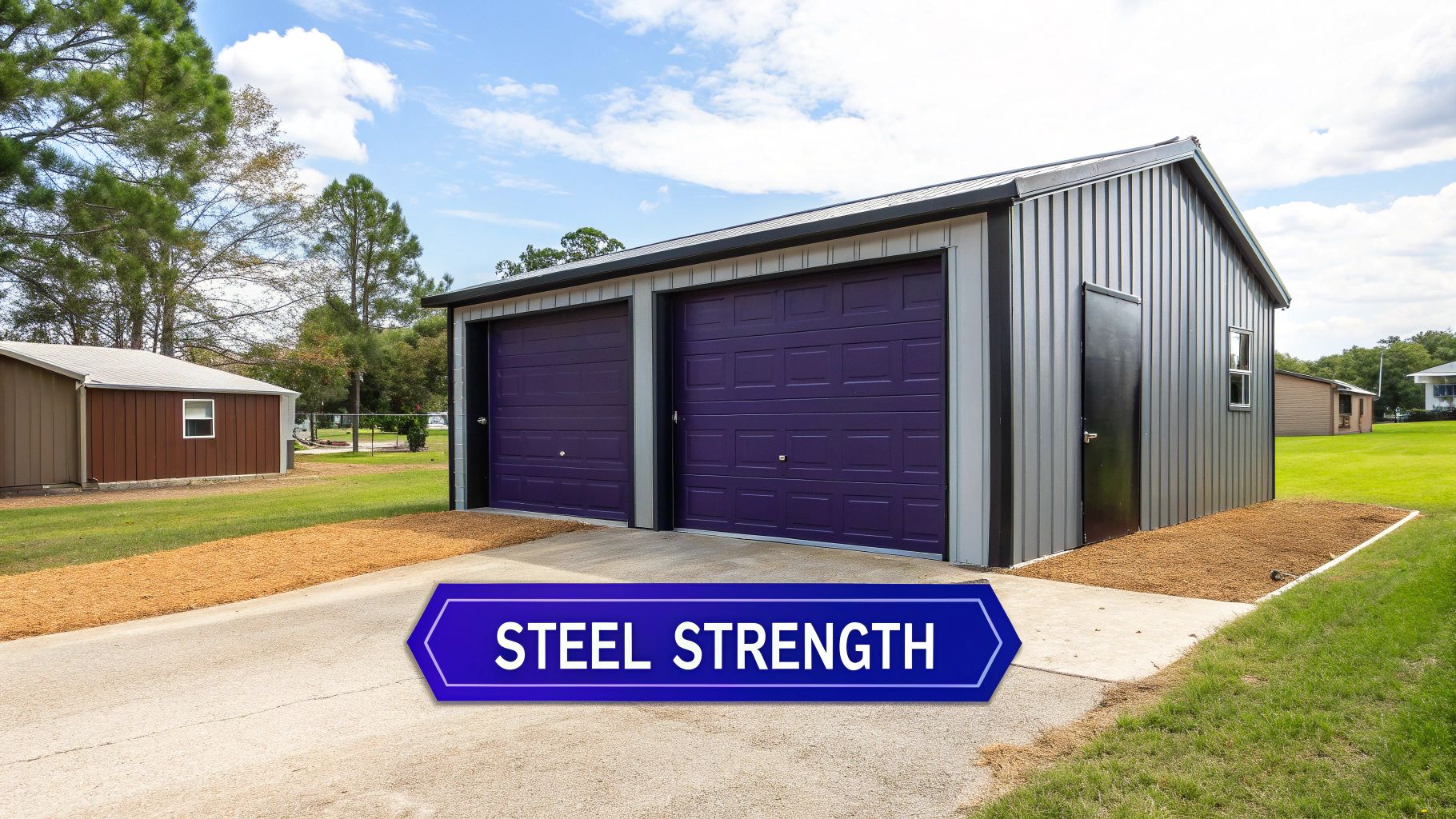
When you're looking at options for a new garage, the choice between traditional wood and a modern steel kit can feel like a big one. But the truth is, a growing number of people are choosing metal garage building kits for some very clear and compelling reasons. They bring together a unique mix of strength, affordability, and convenience that older construction methods just can't keep up with.
The benefits go way beyond just having a place to park your cars. A steel garage is really a long-term investment in durability and your own peace of mind, delivering practical value day in and day out.
Unmatched Durability and Resilience
Steel’s natural strength gives your vehicles and equipment a level of protection that wood simply can't match. Think of it as armor. Unlike a traditional wood-framed garage, a steel structure is naturally immune to all the common threats that cause buildings to break down over time.
This built-in resilience means you get a building that stands strong against rough weather and common pests. You're investing in a structure built for the long haul.
- Pest-Proof: Termites can absolutely devastate a wooden garage, but they pose zero threat to a steel frame. They can't eat it, and they can't live in it.
- Rot and Mold Resistant: Steel doesn't soak up moisture. That means you never have to worry about the rot, mold, or mildew that plagues wood structures, especially in damp climates.
- Fire Resistant: Steel is non-combustible, giving it a massive safety advantage over wood. This extra protection can sometimes even help you get a discount on your homeowner's insurance.
This triple-threat defense protects your investment from the ground up, ensuring your garage stays structurally sound for decades without the weaknesses of organic materials.
Significant Cost Savings Over Time
While the upfront price is often very competitive with wood, the true financial genius of a metal garage building kit shows up over the life of the building. The savings start on day one and just keep adding up for years, making it an incredibly smart financial move.
For starters, the pre-engineered design of the kits slashes construction waste and labor hours. Everything arrives on-site pre-cut and pre-drilled, so assembly is a straightforward process of bolting components together—not spending hours measuring and cutting lumber.
The real economic power of a steel garage isn't just in its purchase price, but in the money it saves you every single year. By eliminating the constant repairs and treatments that come with wood, you free up both your budget and your weekends.
On top of that, the long-term maintenance costs are almost nonexistent. A wooden garage needs regular painting or staining to protect it from sun and rain, not to mention periodic repairs for warped boards or termite damage. With a steel garage, those expensive and time-consuming chores are officially a thing of the past.
The Low-Maintenance Lifestyle
Honestly, one of the best parts about owning a steel garage is the minimal upkeep. It frees you from that endless cycle of scraping, sanding, and sealing that comes with wood. The tough, factory-applied color finishes are designed to resist chipping, fading, and peeling for years on end.
This means your garage will look fantastic with little more than an occasional wash with soap and water. This low-maintenance reality gives you back your time and money to focus on the projects and hobbies you actually enjoy, rather than on tedious building upkeep. Choosing a steel garage kit is a practical decision for a more durable, affordable, and hassle-free building.
Designing Your Perfect Metal Garage
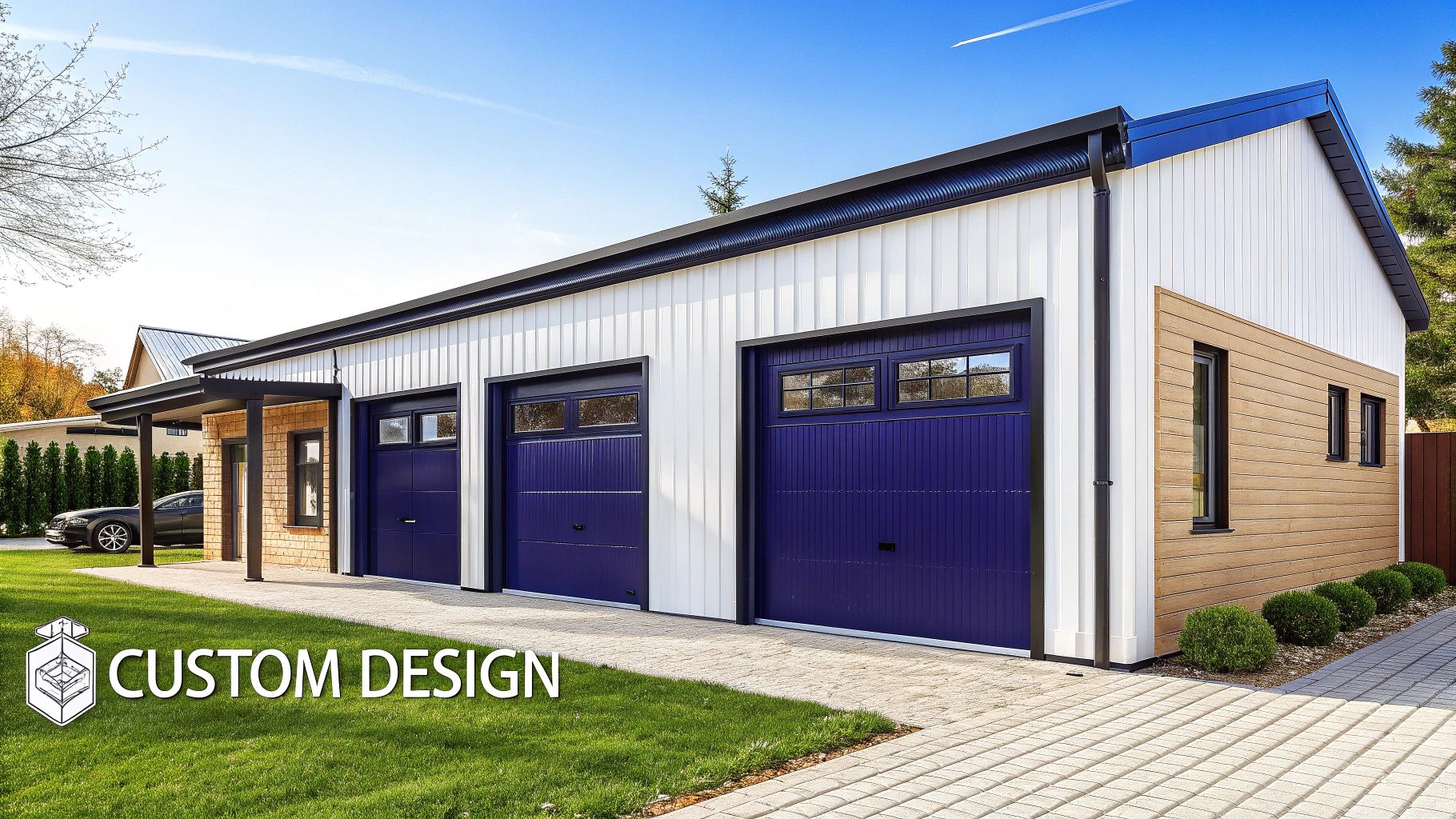
Let's clear up one of the biggest myths about metal garage building kits: the idea that you're stuck with a plain, boring box. Nothing could be further from the truth. The design stage is where a simple steel frame transforms into a building that genuinely reflects your style and handles exactly what you need it to.
Modern steel garages come with a surprising number of customization options. This is your chance to create a building that’s not just practical but looks fantastic on your property. You get to control everything from the roofline to the color scheme, ensuring the final result is a perfect fit.
Choosing the Right Roof Style for Your Climate
A roof does more than just keep the rain out; it’s your garage's first line of defense against whatever Mother Nature throws at it. Picking the right style is a huge deal for long-term durability, especially if you live somewhere with heavy snow or intense rain.
You’ll typically choose from three main roof styles, and each has its own strengths:
- Standard Rolled-Corner Roof: This is your most budget-friendly option, with rounded corners where the roof meets the walls. It's a solid choice for areas with mild weather but isn’t designed to shed heavy rain or snow efficiently.
- A-Frame (Boxed Eave) Roof: This style gives you a more traditional, house-like look with a defined peak and overhanging eaves. It’s a step up in performance, handling moderate rain and snowfall much better than the standard roof.
- Vertical Roof: This is the top-of-the-line choice for performance and longevity, hands down. The roof panels run vertically from the peak down to the eaves, so snow, rain, and debris slide right off. If you're in a heavy snow region, this is the one you want.
Adding Personality with Colors and Trim
Your garage doesn't have to be a single, flat color. The ability to customize the look is a huge reason these buildings have become so popular. In fact, the metal building industry in the U.S. ballooned to $66.7 billion in sales in 2024, partly because of this incredible design flexibility.
A well-designed metal garage isn't just a utility building; it's an extension of your home's aesthetic. The right combination of colors, trim, and features can dramatically increase curb appeal and property value.
You can pick from a whole palette of colors for the roof, walls, and trim, opening up endless combinations to either match your home or create a bold, new look.
- Two-Tone Wainscoting: This adds a really sharp, two-color finish to the lower section of the walls.
- Contrasting Trim: Using a different color for the trim around doors, windows, and corners gives the building a clean, polished feel.
- Color Matching: Many suppliers have colors that can get incredibly close to your home's existing siding or trim.
Common Metal Garage Customization Features
To give you a better idea of what’s possible, here’s a breakdown of some of the most popular customization features people choose for their metal garages. Thinking through these options ahead of time helps ensure your new building is ready for anything you have planned.
| Feature | Description | Best For |
|---|---|---|
| Roll-Up Doors | Economical, space-saving doors that roll into a canister above the opening. | Workshops, storage sheds, and maximizing interior wall space. |
| Overhead Doors | Traditional garage doors that run on tracks; offer better insulation options. | Garages for daily-use vehicles, insulated workshops, residential looks. |
| Walk-In Door | A standard pedestrian door for easy entry without opening the main garage door. | Any garage used frequently, especially as a workshop or hobby space. |
| Windows | Single-pane or insulated windows that can be placed on any wall. | Bringing in natural light, improving ventilation, and workshop visibility. |
| Two-Tone Wainscoting | A decorative panel of a different color on the bottom 3-4 feet of the walls. | Enhancing curb appeal and adding a premium, finished look. |
| Lean-To Addition | An attached, single-slope roof structure added to the side of the main building. | Creating covered outdoor storage for firewood, equipment, or a carport. |
Ultimately, mixing and matching these elements lets you design a building that's perfectly suited to your property and lifestyle.
Functional Upgrades for Doors and Windows
Beyond aesthetics, customization is really about making the garage work for you. Doors and windows are the key functional pieces that dictate how you’ll actually use the space day-to-day. As you plan, think about all the different functionalities a modern garage can offer, from a simple car park to a high-tech workshop or home gym.
For vehicle access, you can choose between roll-up doors, which are simple and cost-effective, or traditional overhead doors that provide better insulation and a more residential appearance. Don't forget a walk-in door—it's a small addition that makes a huge difference, giving you quick access without opening the massive main door every time.
Windows are another game-changer. They let natural light pour in, making the space feel more open and saving you money on electricity during the day. With the right design, you can craft a structure that is uniquely yours, blending tough-as-nails functionality with your personal style. For a deeper look at creating a fully personalized structure, check out our guide on custom steel buildings.
How to Select the Right Garage Size for Your Space
Picking the right dimensions for your new metal garage building kit is probably the single most important call you'll make in the entire process. This isn't just about making sure your car fits—it's about thinking ahead to how you'll actually live with the space for years to come. Get this wrong, and you're in for a daily dose of frustration, whether it's squeezing past your car door or realizing you have zero room for that workbench you always wanted.
Think of it like buying a new pair of shoes. You wouldn't just measure the exact length of your foot and call it a day, right? You need a little wiggle room for your toes and space for socks. Your garage is no different. It needs breathing room around your vehicles so you can open doors, store gear, and just move around without feeling claustrophobic.
Moving Beyond Simple Vehicle Dimensions
A classic mistake is looking up your car's dimensions and assuming a garage that's just a bit bigger will do the trick. A typical sedan is about 6 feet wide, but that number is useless if you can't open the door. You need enough space to get in and out without nicking your paint job on a wall or the other car.
A good rule of thumb is to add at least 4 to 5 feet of clearance on every side of your vehicle. This isn't a luxury; it's a necessity. That buffer is what gives you room to walk with an armful of groceries, store your bikes, and put up shelves without turning your garage into an obstacle course.
The best approach to sizing is to plan for the space you will actually need, not just the space your car will occupy. A functional garage accounts for movement, storage, and future uses beyond simple parking.
This extra buffer zone is what transforms your garage from a glorified parking spot into a truly versatile space that works for you.
Sizing Templates for Common Garage Layouts
To help you visualize what works, let's break down some common garage layouts. These dimensions are designed to give you plenty of functional space, not just enough to park and bail out.
- One-Car Garage: Don't settle for a cramped 12×20 ft box. A much more practical size is 16×28 ft. That gives you more than enough room to swing your car doors wide open and leaves valuable space at the back for a lawnmower, tool chest, or a small workbench.
- Two-Car Garage: A 28×28 ft layout is a great starting point here. It provides a comfortable gap between two cars and leaves plenty of room along the walls for storage cabinets, a deep freezer, or all your outdoor gear.
- Three-Car Garage: If you're looking for maximum flexibility, a 40×28 ft garage is the way to go. It doesn't just hold three vehicles comfortably; it also gives you a huge chunk of real estate that you can dedicate to a serious workshop, a home gym, or just tons of storage.
This visual chart helps put these recommended sizes into perspective, showing you just how much usable space you gain with each upgrade.
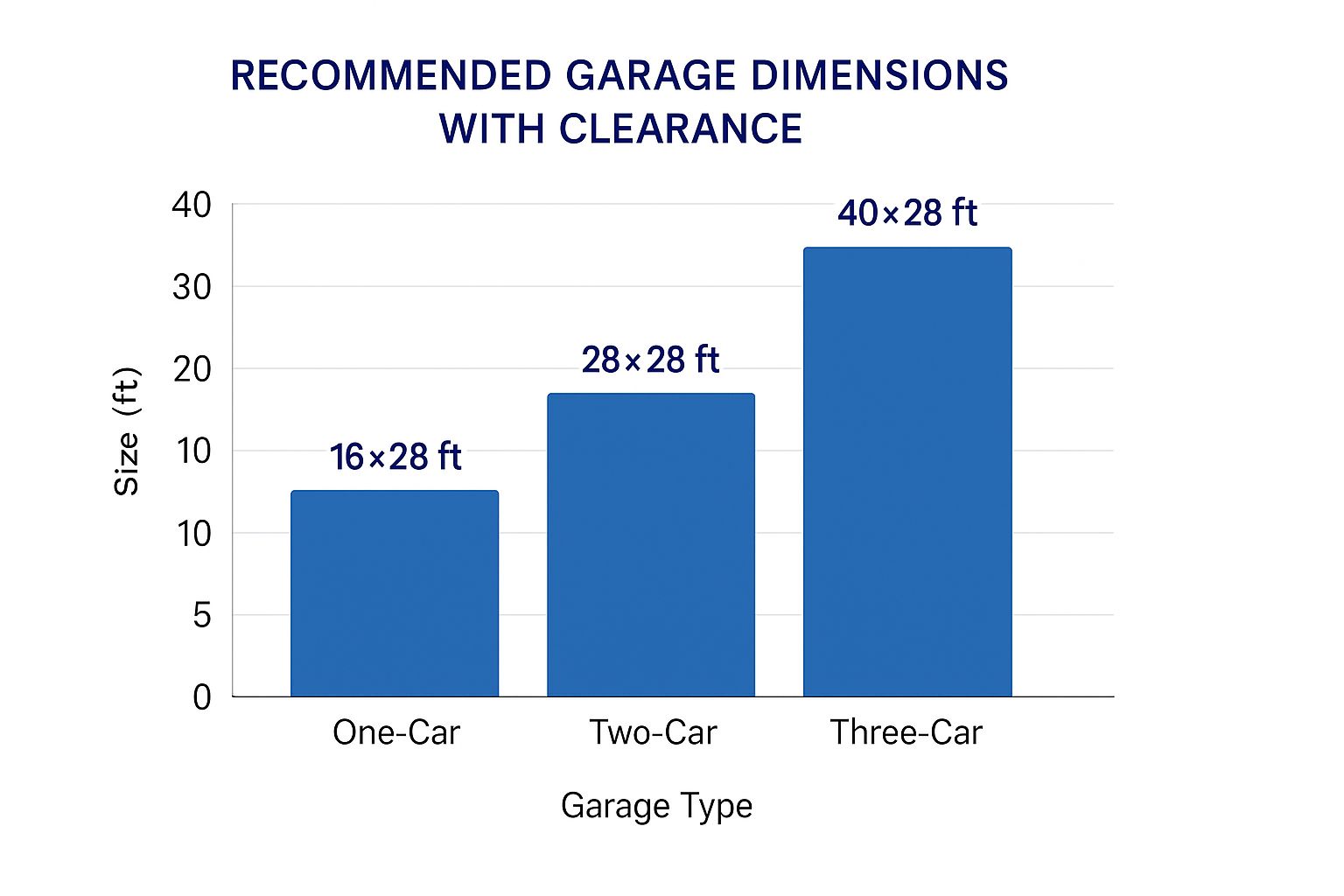
As you can see, jumping up in size adds a ton of functional square footage, giving you far more than just another parking space.
Planning for Taller Vehicles and Workshops
What if your "car" is an RV, a boat on a trailer, or a tractor? Standard garage heights, usually around 8 or 9 feet, are not going to cut it. For taller toys, you need to plan for a taller structure and bigger doors, often requiring a ceiling height of 12 to 14 feet or even more.
The same logic applies if you're building a dedicated workshop. A popular, highly functional size for a combo garage-workshop is a 30×40 metal building kit, which gives you a massive, clear-span interior. That's enough room to lay out big tools like table saws and drill presses while still having space to park a vehicle.
Taking the time to plan your dimensions upfront is the key to making sure your metal garage building kit serves you perfectly for decades.
Understanding the Total Cost of a Metal Garage Kit
When you first start shopping for a metal garage building kit, it's easy to get excited by the initial price tag. But to get a true picture of your total investment, you have to look beyond the cost of the kit itself. The final number is a blend of the structure’s price and several other essential expenses that take your project from a plan on paper to a finished building on your property.
Planning for these additional costs from the get-go is the secret to a smooth, stress-free build. It helps you avoid nasty surprises down the road and ensures your budget is grounded in reality. Think of the kit as the engine of a car; you still need the wheels, chassis, and steering to actually go anywhere.
Breaking Down the Base Kit Price
The listed price for the garage kit is your starting point, and it’s shaped by a few key choices you'll make. These decisions directly impact not just the cost, but the long-term strength and durability of your new garage.
- Size and Dimensions: This one's pretty straightforward. A larger, taller garage will naturally require more steel, which pushes the price up.
- Steel Gauge: The thickness of the steel framing and panels is a critical factor. Remember, a lower gauge number means thicker, stronger steel (for example, 12-gauge is stronger than 14-gauge) and comes at a higher cost.
- Certifications: If you live in an area with heavy snow or high winds, you'll need a certified building. These are engineered to handle specific weather loads, which adds to the price but is non-negotiable for safety and getting your permits approved.
These elements determine the core cost of the materials you’re buying. A beefier, certified building might cost more upfront, but it buys you crucial peace of mind and structural integrity for years to come.
Accounting for the ‘Hidden’ Project Costs
This is where many first-time buyers get caught off guard. The total project budget goes far beyond the price of the steel. They aren't really "hidden" costs so much as necessary parts of any construction project that you absolutely must plan for.
The most accurate way to budget for a metal garage is to see the kit as just one piece of a larger puzzle. The foundation, site prep, and labor are equally important pieces that complete the picture and determine the final investment.
Let's break down the major expenses you'll need to factor in:
- Concrete Foundation: A solid, level concrete slab is the most important part of your garage build, period. Foundation costs can vary wildly based on your location and the slab’s size and thickness, but it's a major budget item you can't afford to skip or skimp on.
- Building Permits: Just about every municipality requires a permit for a new structure. These fees can run from a hundred to several hundred dollars, and you'll need this green light before any work can begin.
- Delivery and Shipping: While some companies offer free delivery within a certain radius, others charge based on how far they have to haul it. Always get the shipping costs clarified before you finalize your order.
- Installation Labor: Are you planning to build it yourself? If so, your cost is your time and maybe a few tool rentals. But if you hire a professional crew, labor will be a significant chunk of your budget—though it guarantees a fast, correct assembly.
Putting It All Together in a Sample Budget
So, how does this all add up in the real world?
A good rule of thumb is to expect the kit itself to be about 60% of your total project cost. To give you a clearer picture, here is an example of what a complete budget might look like, breaking down the costs beyond just the building materials.
Estimated Cost Breakdown for a Metal Garage Project
| Cost Component | Average Price Range | Notes |
|---|---|---|
| Metal Garage Kit | $7,000 – $15,000 | For a standard 2-car garage; price varies with size, gauge, & options. |
| Concrete Foundation | $3,000 – $7,000 | Based on a 4-inch slab; costs depend heavily on local concrete prices. |
| Site Preparation | $500 – $2,500 | Includes grading and leveling; more for sloped or rocky land. |
| Installation Labor | $2,000 – $5,000 | For a professional crew; this is zero if you DIY the build. |
| Permit Fees | $100 – $500 | Varies by city and county regulations. |
| Delivery Fees | $0 – $1,000+ | Some suppliers offer free delivery, others charge by the mile. |
| Electrical & Utilities | $1,000 – $4,000+ | Depends on how much wiring, outlets, and lighting you need. |
As you can see, the final investment is much more than the kit's sticker price.
In 2025, the prefabricated steel building kits themselves typically run from $15 to $25 per square foot. But once you factor in the foundation, labor, and other site work, the all-in cost for a fully installed garage is closer to $24 to $43 per square foot. You can find more detailed pricing information in this guide to metal building kit prices to help with your planning.
By understanding every potential expense upfront, you can create a comprehensive budget that reflects the true cost of your new metal garage and ensure your project is a financial success from start to finish.
Navigating the Installation and Foundation Process
Once your design is finalized and your kit is heading your way, the real fun begins. Your project shifts from paper plans to hands-on construction, transforming a patch of bare ground into a fully functional garage. But this whole journey hinges on one absolutely critical element: the foundation.
Think of your garage's foundation like the roots of a mighty oak tree. Without a strong, stable base, the entire structure is compromised. For a metal garage building kit, a professionally poured, perfectly level concrete slab isn't just a suggestion—it's the non-negotiable bedrock for stability, durability, and the long-term health of your investment.
The Foundation: A Non-Negotiable First Step
A proper foundation does way more than just give you a floor to park on. It anchors the entire building, distributes its weight evenly, and stops it from shifting or settling over time. Skimping here is one of the most expensive mistakes you can make, leading to misaligned doors, warped panels, and even serious structural failure down the road.
Most local building codes have specific rules for your slab's thickness and reinforcement. This is why we strongly recommend working with a professional concrete contractor. They'll make sure it meets all the standards and is perfectly level. You can get a detailed overview of what’s involved by reading our guide on steel building foundation requirements.
The quality of your entire garage build rests, quite literally, on the quality of its foundation. A solid, level concrete slab isn't an optional upgrade; it is the essential starting point for a successful and long-lasting structure.
After your concrete has cured and is ready for action, the assembly of your metal garage building kit can begin. This is where the pre-engineered design really shines, turning what looks like a massive construction job into a manageable, step-by-step process.
The DIY Assembly Path
Got some decent DIY skills and a few friends willing to help out? Assembling the kit yourself is a totally achievable goal. The whole process is designed to be straightforward, feeling more like a giant mechanical puzzle than traditional, from-scratch construction.
- Constructing the Frame: You’ll start by laying out and bolting together the primary steel frame. The columns, rafters, and girts are all pre-cut and pre-drilled, so it's a matter of matching components to the blueprints and tightening the bolts.
- Attaching Panels: Next up, you'll secure the wall and roof panels to the frame. This part is a bit repetitive but simple, using self-tapping screws to attach the corrugated sheets.
- Installing Doors and Windows: With the shell complete, you’ll fit the walk-in doors, windows, and roll-up garage doors into their pre-framed openings.
- Adding Trim and Finishing Touches: The final step is adding the corner, eave, and base trim. This seals the building from the elements and gives it that clean, polished look.
As you work through assembly, knowing the different types of fasteners and using the right ones is crucial for a secure and durable build.
Hiring a Professional Installation Crew
If a DIY project isn't your cup of tea, hiring a professional installation crew is an excellent choice. Many kit suppliers have networks of trusted installers or can point you toward great local teams.
Going this route guarantees a fast, efficient, and correct assembly, often wrapped up in just a few days. While it does add to the total project cost, the peace of mind and time you'll save can be well worth the investment. By weighing both the DIY and pro installation paths, you can confidently decide which approach best fits your skills, budget, and timeline.
Answering Your Top Questions About Metal Garage Kits
Stepping into the world of metal garage building kits is exciting, but it naturally brings up a few practical questions. Getting straight answers to these common concerns is the key to moving forward with confidence.
Let's dive into the top questions we hear from buyers. We'll cover the essential details you need to know before your project even breaks ground.
Do I Need a Building Permit for a Metal Garage?
In almost every case, the answer is a firm yes.
Most local governments require a permit before you can put up any new permanent structure. This isn't just red tape; it’s a critical step to ensure your new garage is safe and meets local zoning and building codes.
Before you even think about placing an order, your first call should be to your local building department. They’ll give you a checklist of what they need, which almost always includes specific engineering drawings and plans—something any reputable kit supplier will provide. Trying to skip this step can lead to big fines or, worst-case scenario, a legal order to tear the whole thing down.
How Long Will a Metal Garage Actually Last?
This is where your investment really starts to shine. A well-maintained, high-quality metal garage can easily last for 30 to 50 years, and it’s not unheard of for them to stand strong for much longer.
The lifespan really boils down to two things: the thickness (gauge) of the steel and the quality of its protective coatings.
A metal garage is a long-term asset. Its longevity is built right into its DNA. Galvanized steel coatings act as a shield against rust and corrosion, guaranteeing decades of reliable service with very little upkeep.
Simple, proactive maintenance goes a long way. Things like checking that the fasteners are tight after a few seasons and giving the panels a good wash once a year will maximize its life and protect your investment for decades to come.
Are Metal Garages Loud When It Rains?
The classic image of rain drumming on a tin roof is a legitimate concern, but it’s a problem with a surprisingly simple fix: insulation.
Sure, an uninsulated metal building can be noisy during a downpour. But adding a layer of insulation almost completely cancels out the sound.
Most owners find that installing either spray foam or standard fiberglass batt insulation does the trick perfectly. It not only dampens the noise to a gentle hum but also delivers the huge bonus of regulating the temperature inside. That makes your garage a far more comfortable and useful space all year round.
Ready to build a garage that lasts a lifetime? At Icon Steel Buildings, we provide top-tier, American-made metal garage kits designed for durability and easy customization. Explore your options and get a free quote today at https://iconsteelbuildings.com.