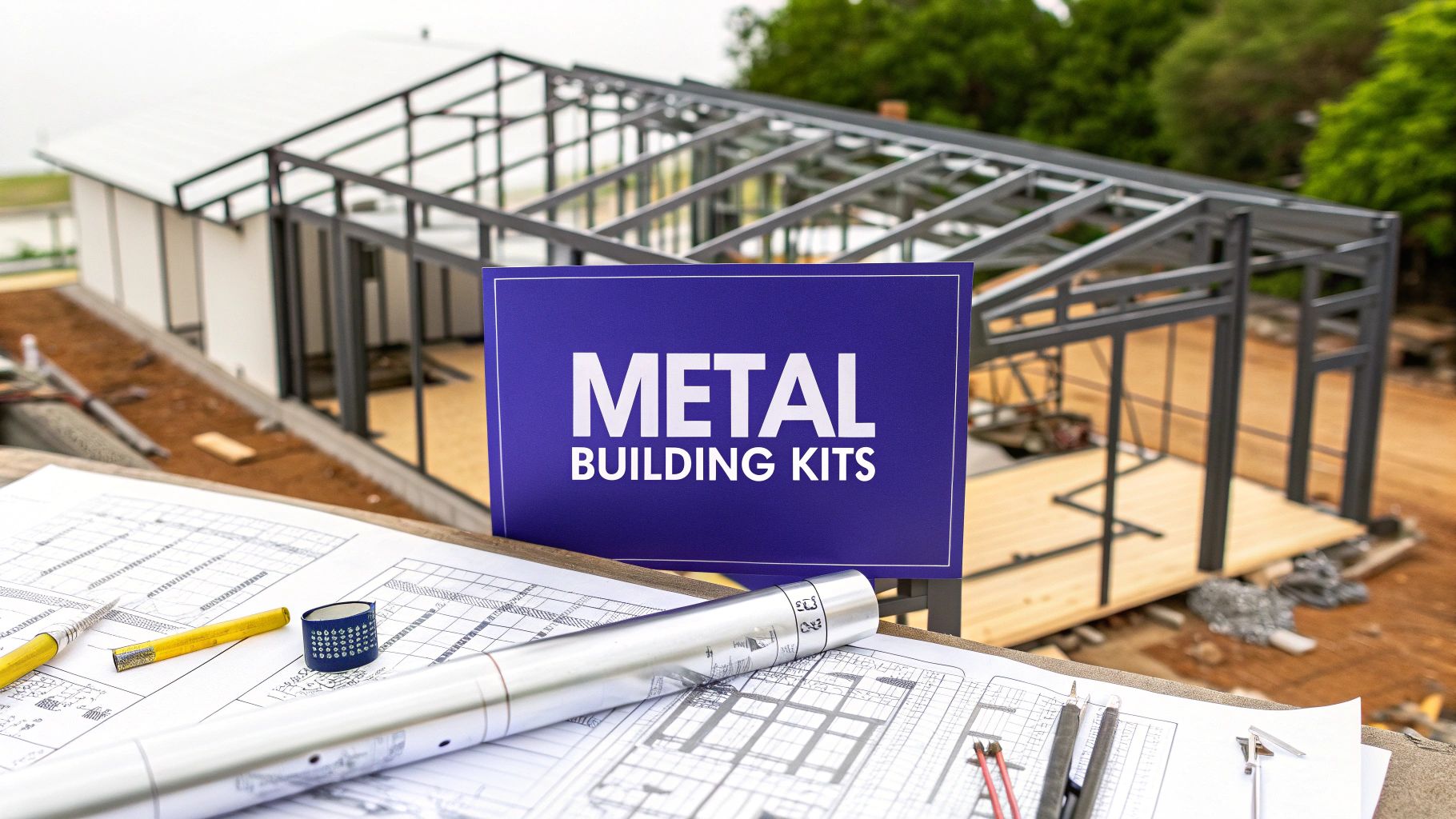
Think of prefabricated metal building kits as a life-sized, high-performance construction set. Every single piece, from the massive main frames down to the smallest bolt, is engineered and manufactured off-site to fit together perfectly. This approach transforms what is often a complicated construction project into a far more predictable and straightforward process.
It’s all delivered directly to your site, ready for assembly.
The Anatomy of a Building in a Box
Imagine opening a massive package that contains your future workshop, garage, or warehouse. You won’t find a jumbled pile of raw materials that need to be measured, cut, and welded. Instead, you get a meticulously organized system where every component has a specific job, all precision-made in a controlled factory environment.
This "building-in-a-box" concept is what makes these kits so incredibly efficient.
All the guesswork and frustrating delays common in traditional construction are eliminated right from the start. Since the primary structural parts are pre-made to exact specifications, you save a massive amount of time on-site. A project that might take months with conventional methods can often be fully assembled in just a matter of days or weeks.
What’s Included in a Standard Kit
While every kit can be highly customized, most start with a standard set of components that create the building's core skeleton and protective shell. Knowing these parts helps you see how the whole system comes together so quickly.
A typical kit includes:
- Primary Framing: These are the heavy-duty I-beams that form the rigid backbone of the building. They’re the workhorses, engineered to handle your specific local snow and wind load requirements.
- Secondary Framing: This network includes girts (for the walls) and purlins (for the roof). They span between the main frames and provide the mounting surface for the exterior panels.
- Wall and Roof Panels: This is the durable steel sheeting that creates the building's envelope. It comes in various colors and profiles to protect your structure from the elements.
- Fasteners and Hardware: Every nut, bolt, and screw you’ll need is included. You get the right hardware for every connection, ensuring a secure and solid assembly.
- Engineered Blueprints: You get a complete set of detailed drawings and plans that provide a step-by-step guide for both the foundation and the building assembly.
The real magic is in the pre-engineering. Because every component is designed from the ground up to work together, the structural integrity is locked in and guaranteed. This removes the variables and on-site surprises that can derail a traditional build.
This system isn't just for simple boxes, either. When you explore the different types of steel buildings, you’ll see how this modular approach applies to everything from agricultural barns to complex commercial facilities. Each kit provides the foundation for a durable, long-lasting structure designed for its intended purpose.
The Real Benefits of Building with a Kit
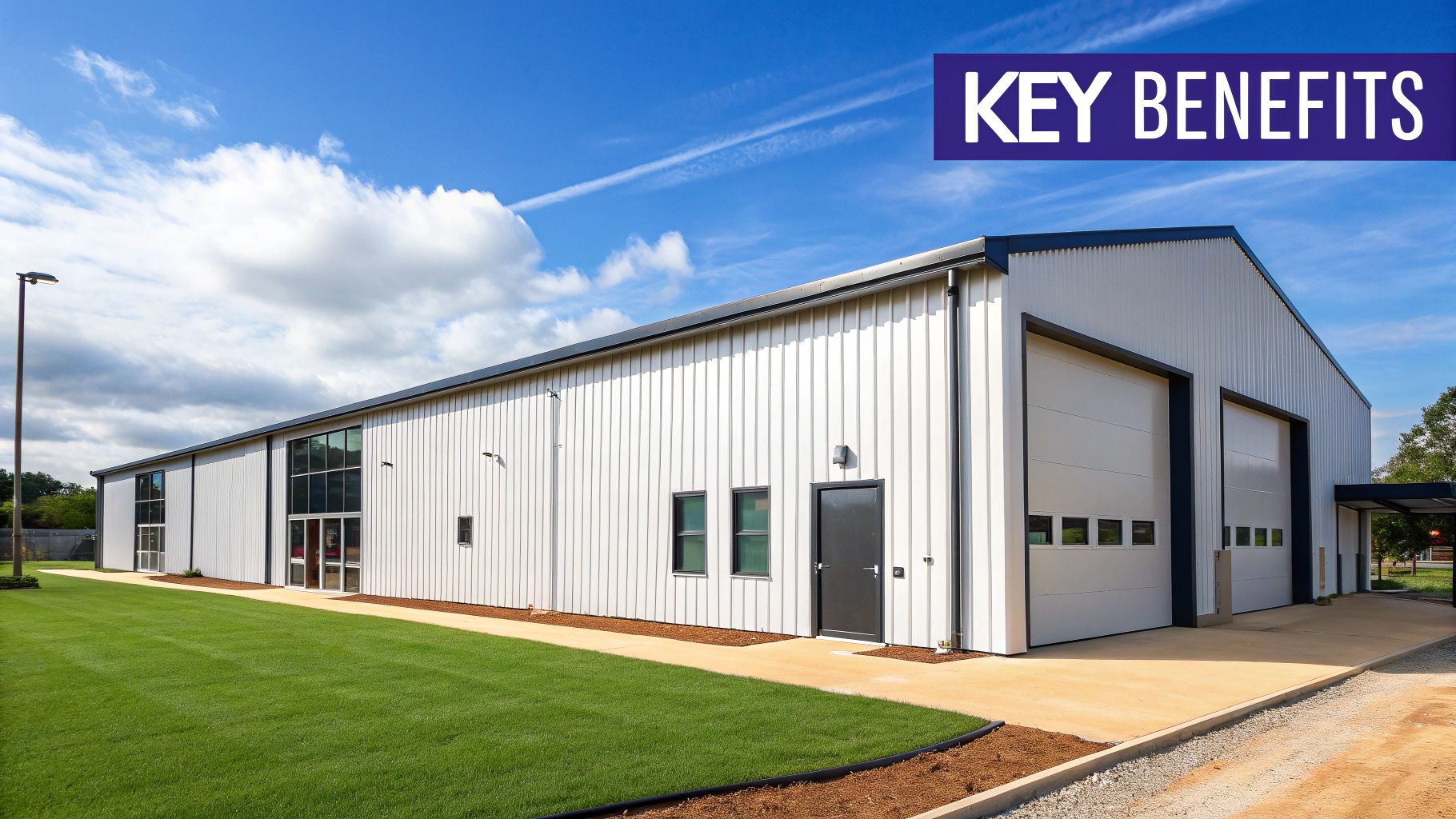
Choosing a prefabricated metal building kit isn’t just about putting up four walls and a roof; it's a strategic move. The real value is in how the benefits—speed, cost-efficiency, and rock-solid durability—all work together to deliver something traditional construction just can't touch.
The most immediate advantage you'll notice is the incredible speed of assembly. Because every single component is precision-engineered and cut in a factory, the on-site work is drastically shorter. This isn't just a minor perk—it translates directly into massive savings on labor costs, which are often one of the biggest chunks of any construction budget.
Long-Term Financial Advantages
The initial savings are just the tip of the iceberg. The real financial genius of a steel building reveals itself over years and decades of ownership. Steel's natural resilience means you're not constantly battling the elements or pests. Unlike wood, it's non-combustible and completely impervious to termites, rot, and mold, practically eliminating the need for expensive repairs and ongoing treatments.
This built-in toughness is also recognized by insurance companies. They know steel structures are far less susceptible to common hazards like fire and storm damage, which is why they often reduce premiums by 30% or more.
When you look at the total cost of ownership, prefabricated metal building kits truly pull ahead. The combination of faster construction, minimal maintenance, and lower insurance costs creates a powerful financial case that only gets stronger over time.
Even the roofing plays a big part in the long-term value. For anyone weighing their options, understanding the cost difference between metal and shingle roofs can shed light on how durability impacts your bottom line. All these savings add up, making steel an incredibly smart choice. For a complete financial picture, check out our guide on why steel building construction is the most affordable choice.
Unmatched Durability and Strength
A metal building is engineered for one thing: to last. The high-strength steel frames are designed from the ground up to meet or exceed your local building codes for wind, snow, and seismic activity. This ensures your investment is secure, no matter what mother nature throws at it.
Here’s what that durability looks like in the real world:
- Weather Resistance: Steel buildings can handle hurricane-force winds and heavy snow loads far better than a typical wood-frame structure.
- Pest and Rot Proof: You will never lose sleep worrying about termites eating away at your building's frame or rot compromising its safety.
- Fire Resistance: As a non-combustible material, steel dramatically reduces fire risk, protecting your assets and, more importantly, the people inside.
This level of resilience makes prefabricated metal building kits the go-to solution for everything from commercial warehouses protecting valuable inventory to a personal workshop full of expensive tools.
A Sustainable and Efficient Choice
Modern steel production is a surprisingly green industry. As one of the most recycled materials on the planet, a huge percentage of any new steel building is made from recycled content. This circular lifecycle cuts down on the need for virgin resources and minimizes construction waste.
The efficiency of this model is fueling major growth. The US metal building system market is set to hit USD 22.48 billion in 2025 and is projected to climb to USD 49.40 billion by 2032. This boom is driven by a demand for sustainable infrastructure and innovations like automated factories that can slash waste by up to 30%.
On top of that, these buildings are designed for superior energy efficiency. When you pair the airtight steel shell with a high-quality insulation package, you create a building that holds its temperature, leading to lower heating and cooling bills all year long. This makes a kit building a responsible choice for both your wallet and the environment.
Versatile Uses from Workshops to Warehouses
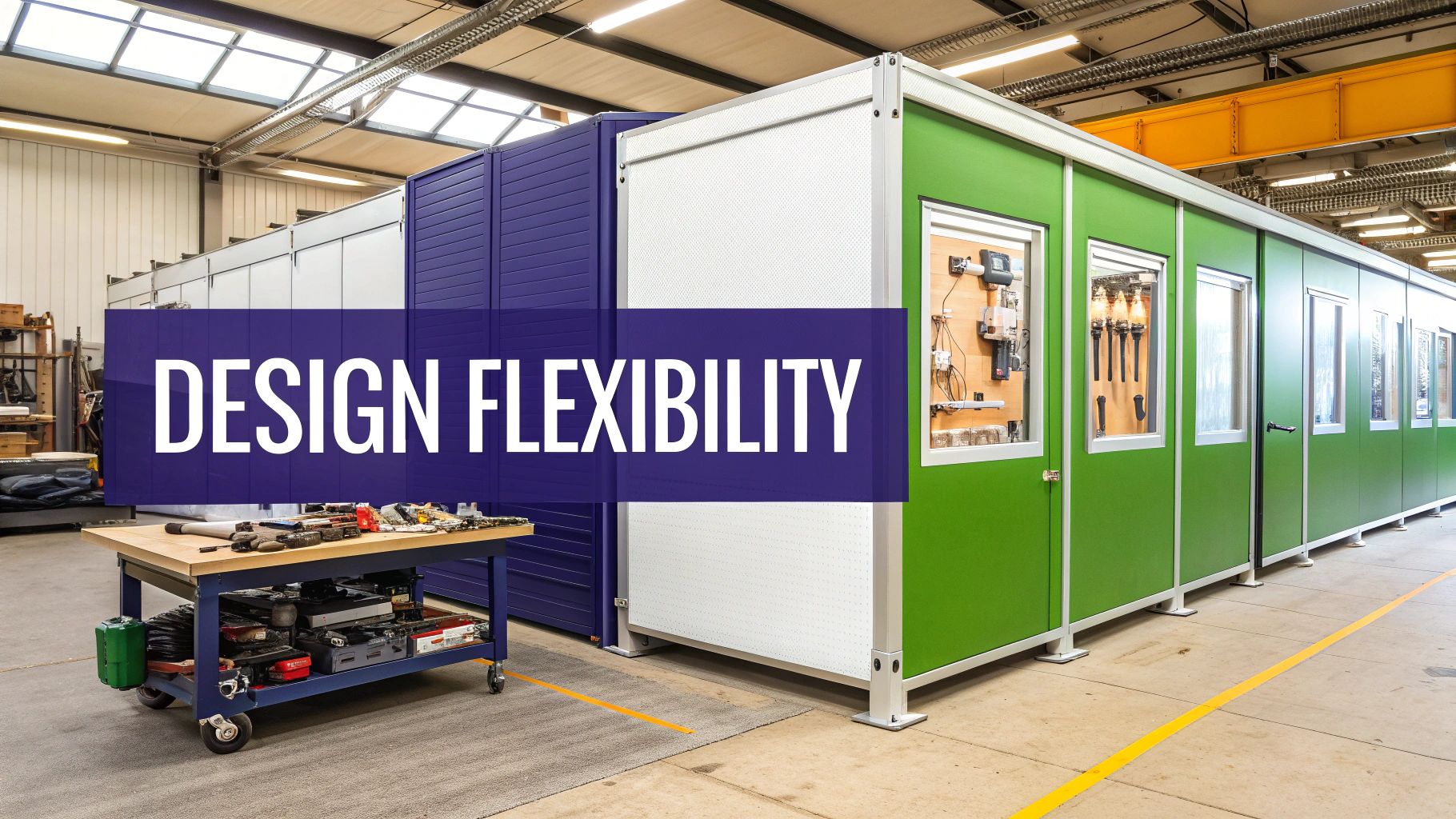
When you hear "prefabricated metal building kits," it's easy to picture a simple shed or a basic garage. While they're great for that, their real potential goes way beyond the backyard. The engineered strength and clear-span design of these buildings create an incredibly adaptable foundation for a surprising range of uses in just about every industry.
From busy commercial hubs to quiet farm fields, these kits are becoming the smart choice for anyone who needs durable, customizable space. This flexibility completely shatters the myth that prefab means one-size-fits-all. Instead, think of it as a blank canvas, ready to be shaped for your exact needs.
Commercial and Industrial Powerhouses
In the business world, time and efficiency are money. Prefab metal building kits deliver on both, making them a perfect fit for everything from retail storefronts and offices to massive warehouses and distribution centers. The wide-open interior, totally free from support columns, gives you maximum usable square footage—a must-have for storing inventory or laying out heavy equipment.
This design freedom is a true game-changer. Businesses can set up their space for the perfect workflow, whether that means creating dedicated production lines in a factory or designing an open-concept showroom for a car dealership. The tough steel construction also provides a secure shell to protect valuable assets and equipment.
The biggest advantage is the ability to create huge, unobstructed spaces quickly and affordably. A metal building kit can provide clear-span widths of up to 300 feet, something that’s incredibly difficult and expensive to pull off with traditional wood framing.
Agricultural and Equestrian Solutions
Farmers and ranchers have always known the value of tough, low-maintenance structures. Metal buildings are a natural fit for the demands of an agricultural environment, offering secure, weather-resistant shelter for everything from expensive farm machinery and hay bales to livestock.
Their use in this sector is all over the map:
- Durable Barns: Unlike traditional pole barns that can rot or get eaten by pests, steel barns are built to last a lifetime with almost no upkeep.
- Spacious Riding Arenas: That clear-span design is ideal for creating massive indoor arenas for year-round training and equestrian events.
- Equipment Storage: Protect tractors, combines, and other vital machinery from the elements in a secure, fire-resistant building.
The fact that steel is non-combustible adds some serious peace of mind, and the tightly sealed building keeps crops and feed safe from pests and moisture.
Personal Garages and Hobby Shops
Beyond the big commercial and ag uses, we're seeing a huge trend of people using prefabricated metal building kits for personal projects. Homeowners are realizing these kits are the perfect way to build the ultimate garage, workshop, or hobby space they’ve always dreamed of.
These buildings offer more than enough room for car collectors, woodworkers, or anyone who just needs more space than a standard garage can offer. You can easily add big roll-up doors for RVs or boats, install car lifts, and set up different zones for all your activities.
For those looking to blend living and working spaces, these kits are also the foundation for modern "barndominiums." Learn more about combining these functions in our guide to the metal building home and shop. This adaptability makes it possible to design a building that perfectly fits your passion project or small business.
Designing a Building That's Uniquely Yours
One of the biggest myths about prefabricated metal building kits is that they’re all the same—just boring, cookie-cutter boxes with zero personality. That couldn't be further from the truth.
In reality, "prefabricated" just describes the smart, efficient manufacturing process, not a limit on your design. Think of it less like buying a pre-built model car and more like designing a custom vehicle from the chassis up. You’re in the driver's seat, crafting a structure that’s a true extension of your needs, whether it's a commercial storefront designed to draw in customers or a personal workshop meant to inspire your next big project.
Starting with the Structural Blueprint
Every great design starts with a solid foundation. For a metal building, that means locking in its core dimensions. These are the foundational choices that define your space before you even think about colors or doors.
Your primary structural decisions boil down to three key things:
- Width and Length: This is all about the total square footage. With modern clear-span designs, you can create massive open interiors up to 300 feet wide without a single interior support column. That kind of freedom offers unmatched flexibility for any layout you can dream up.
- Height: The eave height dictates your vertical clearance. This is a critical factor if you plan on installing car lifts, stacking inventory high, or operating large machinery inside.
- Roof Pitch: This is simply the angle or slope of your roof. A steeper pitch is perfect for areas with heavy snow and rain, while a lower pitch can deliver a more modern, streamlined aesthetic.
These three elements create the basic "envelope" of your building. Getting them right is the first and most important step toward creating a space that feels truly custom-built for its purpose.
The beauty of pre-engineered steel is that these foundational choices are not restrictive. Instead, they create a robust and highly adaptable canvas, allowing you to fine-tune every other detail to match your vision perfectly.
Adding Functionality with Doors and Windows
Once the building's shell is defined, it's time to bring in the light and create access. The placement and style of your doors and windows are crucial for both the building's day-to-day usability and its overall look. You're not stuck with a few standard options here; the choices are extensive.
For instance, you can pick from a huge array of door types, each serving a specific purpose.
- Roll-Up Doors: These are the workhorses for garages, warehouses, and storage units. They come in all sorts of sizes to accommodate everything from a small tractor to a large RV.
- Walk-In Doors: Essential for personal access, these can be placed almost anywhere on the building's perimeter to create convenient entry and exit points.
- Overhead Doors: Often insulated and more robust, these are common for commercial jobs where security and climate control are top priorities.
Windows and skylights are just as important. Strategically placed windows can flood your workspace with natural light, cutting down on electricity costs and creating a much more pleasant environment. Skylights are a fantastic option for lighting up the center of large buildings where wall windows can't reach.
Defining Your Building's Character and Climate
The final layers of customization are where your building's unique personality really comes to life. This is where you move beyond pure function and into aesthetics and comfort. The color palette alone offers dozens of choices, allowing you to match existing structures on your property or create a bold, modern statement.
Beyond looks, you'll want to think about functional upgrades that ensure your building is comfortable and efficient all year long. An insulation package is one of the most important additions you can make. It helps regulate interior temperatures, slashes energy bills, and prevents condensation. You can also add ventilation systems like ridge vents or louvers to maintain air quality—a must-have for workshops or agricultural buildings.
Finally, you can shape the interior with partitions. These interior walls let you section off different areas to create dedicated offices, restrooms, or storage rooms within the larger structure.
To help you visualize the possibilities, here’s a quick breakdown of common customization features.
Key Customization Features for Your Metal Building Kit
A summary of the most common customization options available, helping you decide which features are essential for your project.
| Feature Category | Common Options | Primary Benefit |
|---|---|---|
| Structural Frame | Clear-Span, Multi-Span, Tapered Beam | Maximizes interior space, supports heavy loads, or provides a cost-effective design. |
| Dimensions | Custom Width, Length, and Height | Ensures the building is perfectly sized for its intended use, from storage to manufacturing. |
| Roof & Walls | Multiple Pitches, Panel Profiles, Color Options | Enhances drainage, improves aesthetics, and allows for brand or property matching. |
| Access Points | Roll-Up Doors, Overhead Doors, Walk-In Doors | Provides convenient and secure access for vehicles, equipment, and personnel. |
| Lighting & Ventilation | Windows, Skylights, Ridge Vents, Louvers | Improves natural light, reduces energy costs, and maintains healthy air circulation. |
| Climate Control | Insulation Packages (Various R-values) | Regulates temperature, prevents condensation, and significantly lowers heating/cooling bills. |
| Interior Layout | Partitions, Mezzanines, Interior Liners | Creates separate functional zones like offices or storage within the main structure. |
| Exterior Finishes | Gutters, Downspouts, Wainscoting, Trim | Adds architectural detail, protects the foundation, and improves the building's finished look. |
By exploring all these options, you can create fully custom steel buildings that are anything but standard. The end result is a structure designed by you, for you.
Your Project Timeline from Design to Assembly
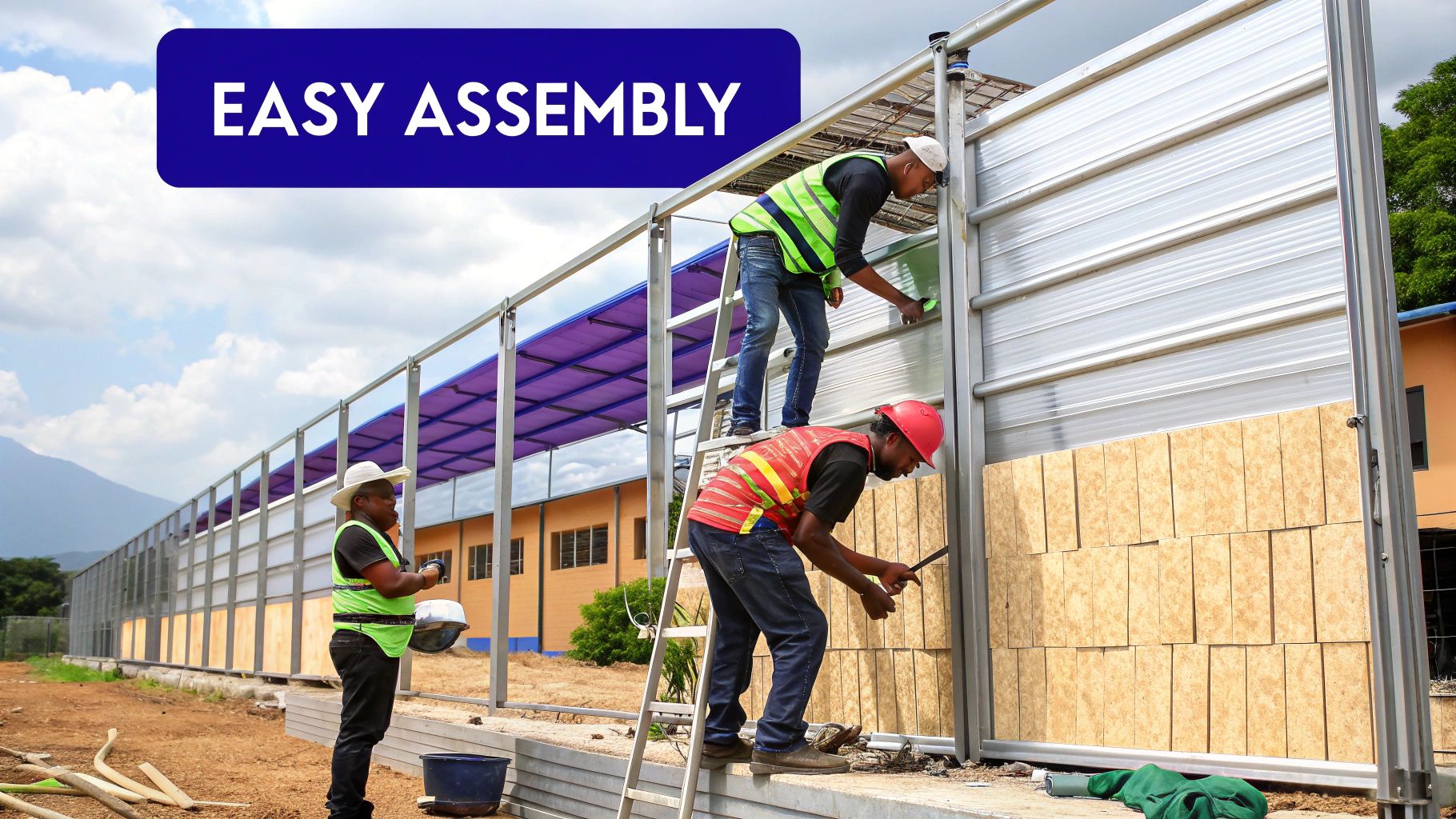
Starting a new building project can feel like a huge undertaking. But one of the biggest strengths of prefabricated metal building kits is how they turn a complex process into a clear, predictable roadmap from your initial idea to the finished structure.
Unlike traditional construction that’s often full of surprises and delays, the prefab method is broken down into a series of logical, manageable phases. This helps demystify the entire journey, giving you a solid grasp of what’s happening every step of the way.
Phase 1: Design and Engineering
This is where your vision really starts to come alive. You’ll work hand-in-hand with your supplier’s design team to translate your needs into a set of detailed, engineer-stamped blueprints. It’s a collaborative effort where every detail gets locked in—from the building’s overall dimensions and roof pitch to the exact placement of every door, window, and opening.
During this stage, the engineers also make sure your building design meets or exceeds all local building codes for wind, snow, and seismic activity. This upfront planning is what makes the whole system work; it guarantees the structural integrity of your building before a single piece of steel is even cut. The final output is a complete set of plans that acts as the playbook for the rest of the project.
Phase 2: Permitting and Site Preparation
With your final blueprints ready, it’s time to shift from the drawing board to your actual property. This phase runs on two parallel tracks: getting the necessary building permits from your local authorities and getting the site ready for construction. Submitting your engineered drawings is a huge part of the permit process, as it proves to the city or county that your building is safe and up to code.
While you're waiting for the permits to be approved, the site work can get started. This usually includes:
- Clearing and Leveling: The ground for your building has to be cleared of any debris or vegetation and graded so it’s perfectly flat.
- Foundation Work: Using the specs from your blueprints, a concrete contractor will come in and pour the foundation. This isn't just a simple slab; it's an engineered foundation that anchors the entire structure.
You can't cut corners here. A solid, level foundation is absolutely critical for a smooth and secure assembly.
The efficiency of prefabricated construction is driving significant market expansion. The global market is projected to grow from USD 12.22 billion in 2025 to USD 22.64 billion by 2035, a trend fueled by reduced installation times and consistent quality. This growth, particularly in the residential sector, highlights the increasing trust in these streamlined building systems. Discover more insights about prefabricated building systems on Future Market Insights.
Phase 3: Kit Delivery
Once all the components for your building have been fabricated, they get bundled up, loaded onto a flatbed truck, and shipped right to your prepared job site. This is a pretty exciting day—it’s the first time you get to see the physical parts of your project. The delivery includes everything: the main I-beams, the secondary framing, wall and roof panels, and all the nuts, bolts, and screws needed to put it all together.
Make sure you have a plan for unloading and organizing the materials. You'll almost certainly need a forklift or similar equipment to handle the heavy framing. Staging the components logically near the foundation will make the assembly process go much faster.
Phase 4: Assembly
This is the final, and most satisfying, part of the process. It’s where your building seems to shoot up out of the ground in no time. Because every component was pre-engineered to fit perfectly, the whole thing just bolts together, making the erection process way faster than stick-built construction.
For smaller, simpler kits, a skilled DIYer with a few helpers and the right equipment can often handle the assembly themselves. For bigger or more complex buildings, though, hiring a professional crew is the way to go. Their experience ensures everything goes up safely, correctly, and efficiently. To get a better feel for what this final stage involves, check out our detailed guide on professional metal building installation. This is where all that careful planning pays off, as you watch a kit of parts become your finished building.
How to Choose the Right Building Kit Supplier
Picking a supplier for your prefabricated metal building kit is probably the single most important decision you'll make in this entire process. Don't think of it as just a purchase; this is the start of a partnership. The right company isn't just selling you steel and fasteners—they’re providing the expertise, support, and peace of mind you need to get the project done right.
Your real goal here is to find someone who not only delivers a top-quality product but also stands behind it completely. That means you have to look past the price tag and really dig into their reputation, their experience, and the quality of the materials they're using. A bit of due diligence now will save you from massive headaches down the road.
The demand for these buildings isn't slowing down. Valued at around USD 2.01 billion in 2024, the market for prefabricated steel building systems is projected to hit USD 2.79 billion by 2032. All that growth brings a lot of suppliers into the market, which makes knowing how to spot the good ones even more critical. You can learn more about prefabricated steel building system market trends and see for yourself.
Core Criteria for Vetting Suppliers
Before you even think about signing a contract, you need to run potential suppliers through a few non-negotiable checks. These are the things that separate the seasoned pros from the fly-by-night operators. Think of it as your first-round draft picks.
A solid supplier should have no problem providing:
- Proven Industry Experience: How long have they been at this? You want a company with a deep portfolio of successful projects that look a lot like yours.
- Verifiable Customer Testimonials: Any good company will be eager to show you reviews, case studies, and references. Don’t just take their word for it—check third-party review sites, too.
- Engineer-Stamped Drawings: This is an absolute deal-breaker. They must provide building plans stamped by a licensed engineer for your state. This is your guarantee that the design meets local codes for wind and snow loads.
Essential Questions to Ask Every Supplier
Once you’ve got a shortlist, it’s time to drill down into the specifics. The answers to these questions will tell you everything you need to know about their product quality and the kind of support you can expect. Don't be afraid to press for details.
Here’s what you need to ask:
- What is the gauge of the steel used for the primary framing and the secondary members? It's simple: thicker, lower-gauge steel means a stronger, longer-lasting building.
- What type of warranty do you offer on the paint and coatings? A quality paint job should come with a 20- to 40-year warranty that covers chipping, fading, and peeling.
- What level of support do you provide during the assembly phase? Find out if you'll have a dedicated person to call when your crew inevitably runs into a question or a problem.
A supplier’s transparency is a direct reflection of their confidence in their product. If they are hesitant to provide detailed specifications or straightforward answers, consider it a significant red flag and move on.
The infographic below highlights the simple, proactive steps for taking care of your building long-term—a process that's a whole lot easier when you start with quality materials from a supplier you can trust.
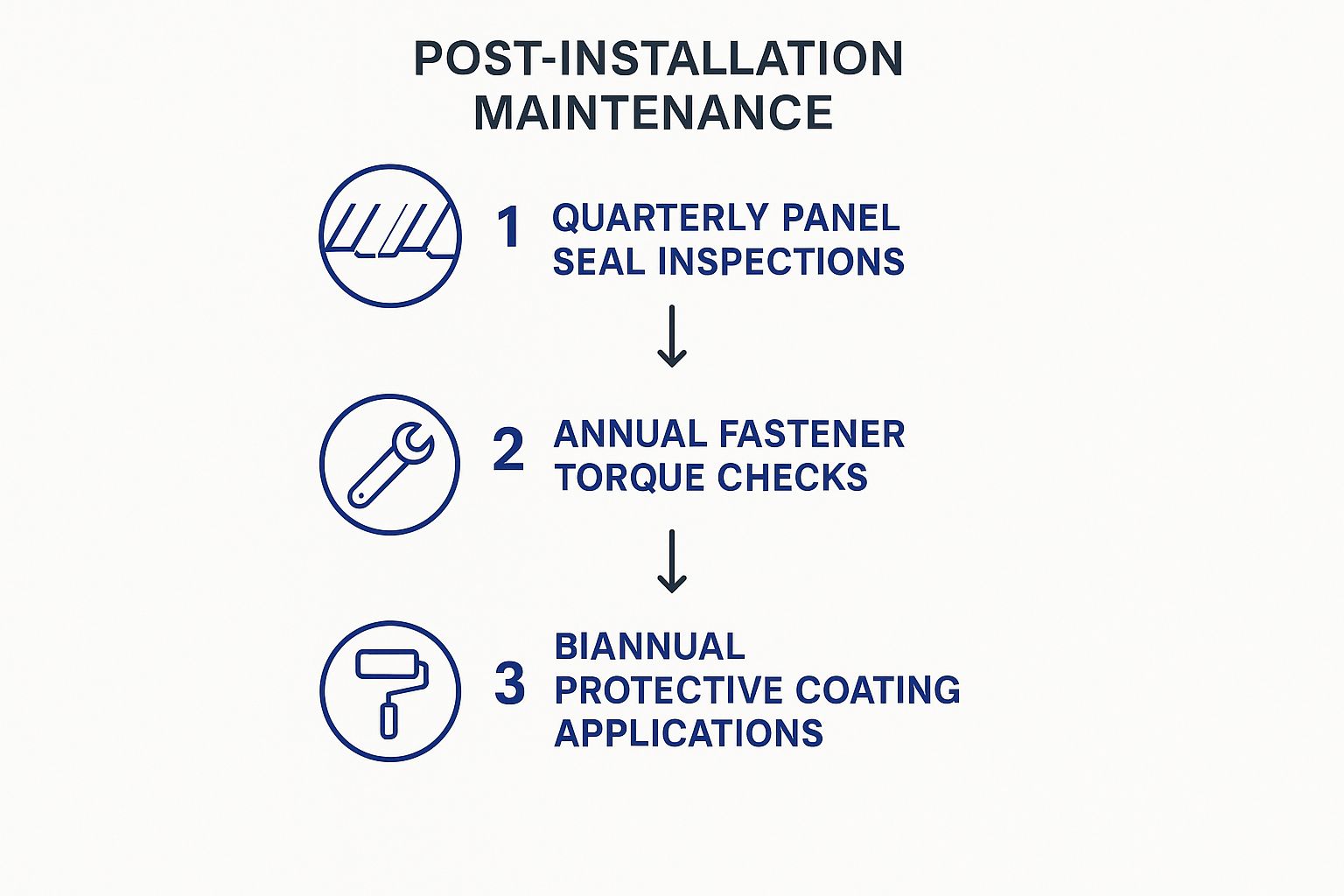
This visual guide shows that maintaining your investment just involves simple, scheduled checks on key areas like seals, fasteners, and coatings.
Common Questions About Metal Building Kits
When you start looking into prefabricated metal building kits, a few questions pop up almost immediately. Getting straight answers is the best way to move forward with confidence, so you know exactly what to expect when it comes to cost, construction, and overall comfort.
Let's tackle the most common questions head-on and clear up any confusion.
What Is the Typical Cost of a Metal Building Kit?
The price of a kit isn't a single flat number; it’s shaped by a few key variables. The building's size, the complexity of your design, and any custom features like doors, windows, and insulation will all impact the final cost. And since steel is a commodity, its market price can fluctuate, which also plays a role.
As a starting point, you can expect the kit package itself to be in the range of $15 to $30 per square foot. Just remember, this doesn't include the foundation or the cost to assemble it. Those are separate but essential parts of your total project budget.
Is a Concrete Foundation Always Required?
Yes, for virtually all prefabricated metal building kits, a professionally engineered concrete foundation is an absolute must. Think of it as the anchor for your entire structure. This is the solid base where the main steel I-beams are bolted down, giving the building the stability it needs to handle wind, snow, and even seismic forces.
A proper foundation does more than just hold the building up; it ensures the structure remains safe, level, and secure for decades. Skipping this step would compromise the building's integrity and void any warranties.
Can I Build the Kit Myself?
That really depends on the size of the project and your own experience. For smaller, simpler structures—like a one-car garage or a small workshop—a handy DIYer with the right tools and a couple of friends can often get the job done. The bolt-together design makes it far more approachable than traditional construction.
However, for bigger or more complex buildings (anything over a few thousand square feet), we strongly recommend hiring a professional erection crew. Their experience ensures the structure goes up safely, efficiently, and correctly, which helps you avoid costly mistakes and potential hazards.
Are Metal Buildings Noisy and Cold?
This is a popular myth, and it usually comes from picturing old, uninsulated tin sheds. Modern metal buildings are a completely different story. The secret to a quiet, comfortable, and energy-efficient interior is a high-quality insulation package.
Good insulation provides excellent thermal performance, keeping the space warm in the winter and cool in the summer, which you'll definitely notice on your energy bills. It also works as a fantastic sound barrier, muffling the noise from heavy rain or wind to create a peaceful environment inside.
Ready to get answers tailored to your project? The experts at Icon Steel Buildings can provide a clear, detailed quote based on your unique vision. Start designing your ideal structure today by visiting https://iconsteelbuildings.com.