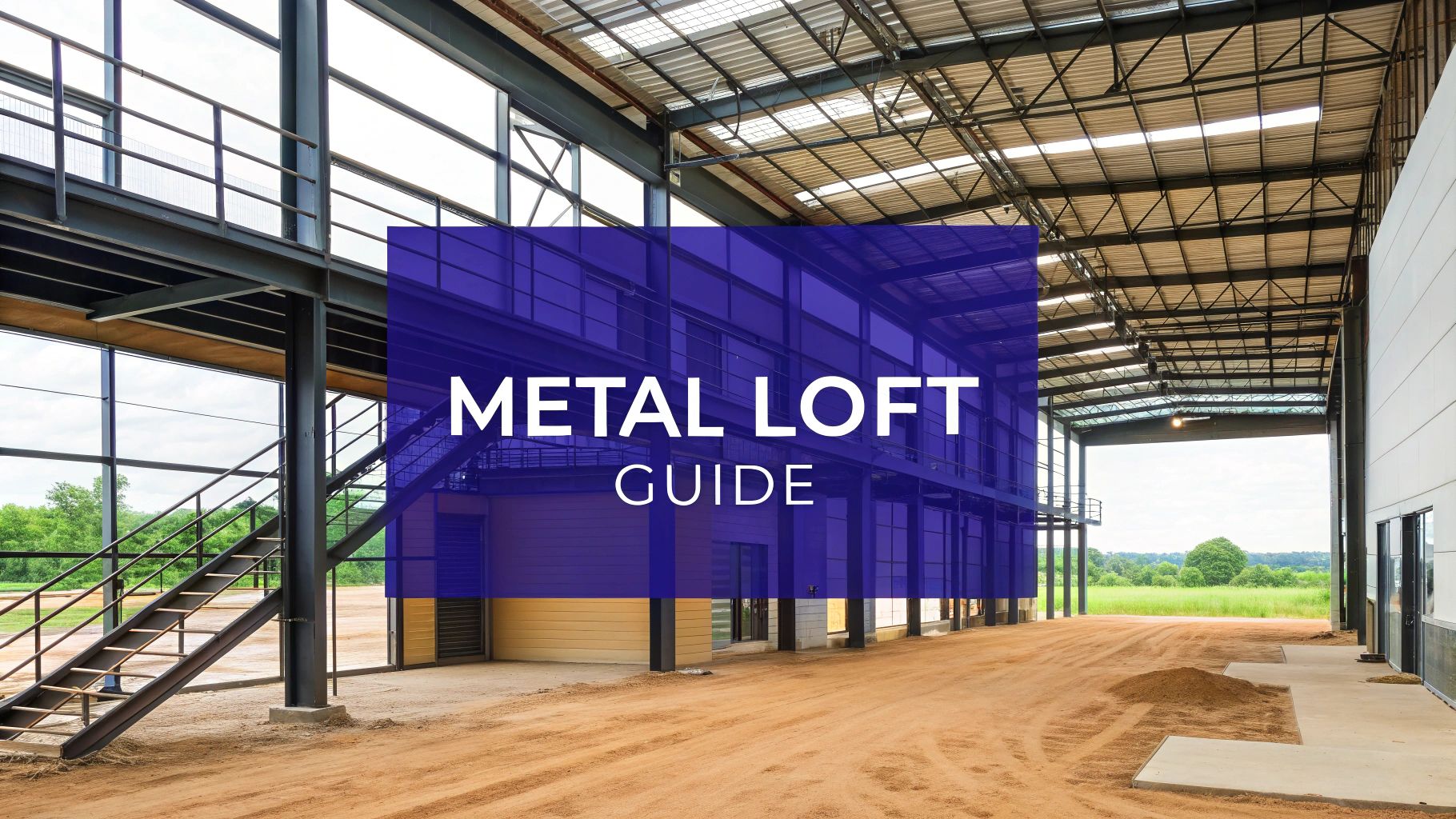
If you still picture a simple steel shed when you hear "metal building," it's time for an update. Today, a metal building with a loft completely redefines the game, blending industrial-strength durability with the kind of comfort and style you'd expect in a modern home or commercial space. This guide is your complete roadmap to designing a practical, personalized space that truly works for you.
The New Age of Metal Buildings With Lofts
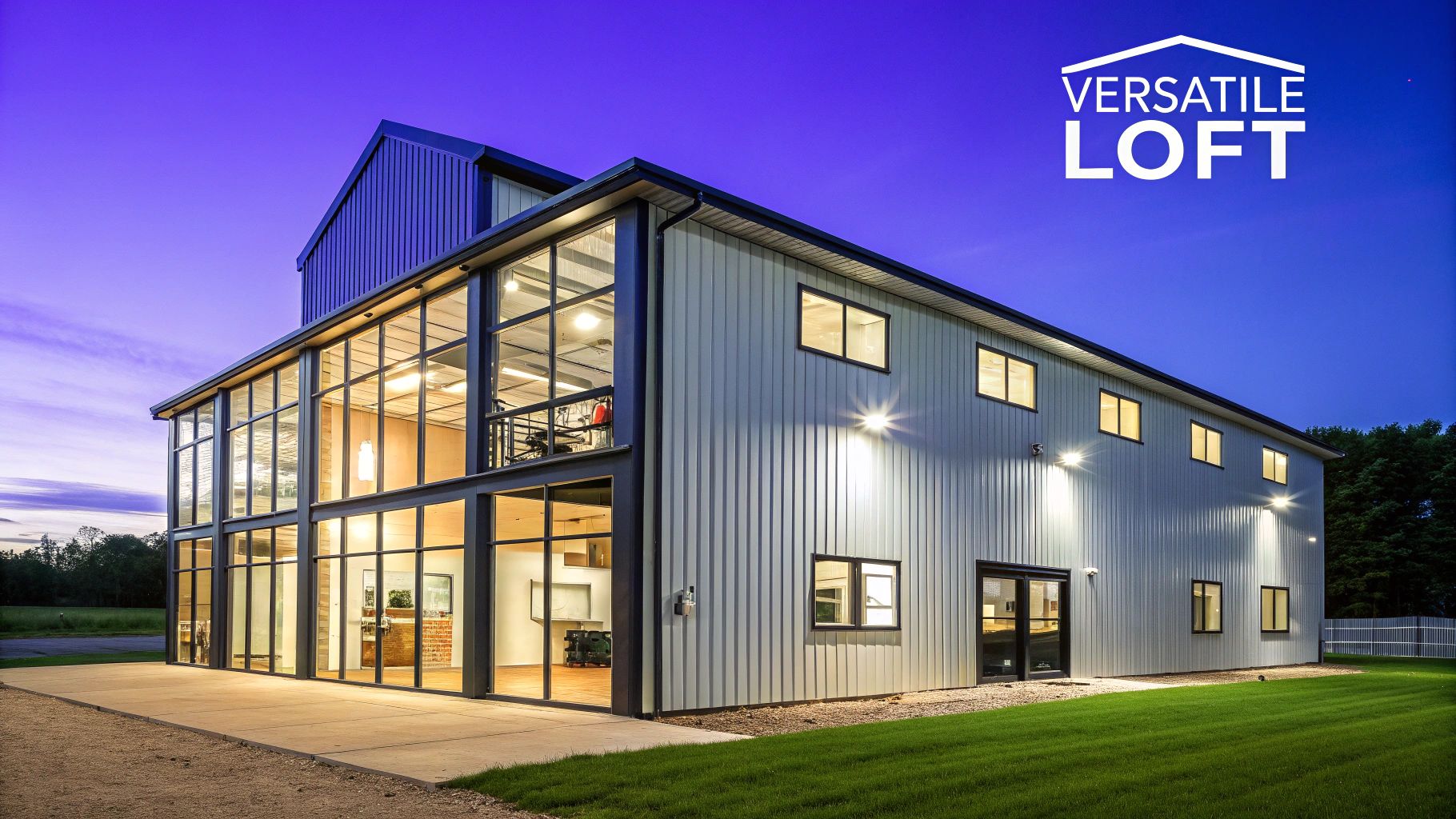
The whole concept of a metal building has moved far beyond basic storage. By adding a loft, you essentially get two floors of function without taking up any more ground space. This smart use of vertical real estate is exactly why these buildings are becoming so popular for all sorts of projects.
Think of it as starting with a blank canvas that already has a second story built in. This approach opens up a world of creative and efficient possibilities, turning what could be a standard structure into a dynamic, multi-purpose environment. Whether for personal or professional use, the options are endless.
Unlocking Versatile Spaces
The real magic of a metal building with a loft is its incredible adaptability. You're not just tacking on extra square footage; you're creating distinct, dedicated zones for different activities. This natural separation of space makes for a more organized, productive, and enjoyable setting, no matter how you use it.
Here are just a few of the popular ways people are putting this versatility to work:
- Workshop with an Office: Keep your tools, machinery, and messy projects on the main floor. Your quiet, clean office for managing the business is just a staircase away.
- Garage with an Apartment: This is a classic. You get a full residential unit sitting right on top of your vehicle storage—perfect as a rental property, a guest suite for family, or even your own place.
- Art Studio and Gallery: Use the wide-open ground floor as your creative space. The loft becomes a mezzanine-style gallery, perfect for displaying your finished pieces to clients or guests.
This isn't just a niche trend; it's part of a massive shift toward smarter, more sustainable construction. In fact, the global market for prefabricated buildings was valued at USD 248.0 billion in 2024 and is expected to hit USD 396.6 billion by 2033. This growth is fueled by innovations in building technology and a demand for eco-friendly options. You can dive deeper into this growing market over at imarcgroup.com.
A metal building with a loft is more than just a structure; it's a strategic investment in multi-functional space. By building up, you unlock potential for living, working, and creating that a single-story design simply can't match.
Ultimately, this approach gives you the power to design a space that grows and changes right along with your needs. If you're ready to get inspired, check out our guide on metal building design ideas.
Why Steel Is the Smart Choice for a Loft Project
When you're planning a building with a second level—whether it's for extra storage, a home office, or a full-blown apartment—your choice of framing material is one of the most important decisions you'll make. For centuries, wood was the default. But today, steel offers a set of real-world advantages that make it a smarter, stronger choice for any metal building with loft project.
Think of it this way: steel framing is like giving your building a high-performance skeleton. It has an inherent strength that wood just can't match, creating an incredibly stable and resilient foundation for a heavy, functional loft. That strength translates directly into peace of mind for decades to come.
Unmatched Durability and Low Maintenance
One of the biggest wins for steel is its natural immunity to all the common headaches that plague wood structures. Steel sidesteps the natural enemies of wood entirely.
- Pest-Proof: Termites, carpenter ants, and other wood-boring pests cause billions in property damage every year. Steel is inorganic—they can't eat it. Your building is permanently off the menu.
- Rot and Mold Resistant: Moisture is wood's worst nightmare, leading to rot, warping, and dangerous mold. Steel doesn't absorb moisture, so it will never decay or support fungal growth, giving you a healthier building and preserving its structural integrity.
- Fire Resistant: As a non-combustible material, steel has an extremely high melting point. This can dramatically slow the spread of a fire, a safety feature that often results in lower insurance premiums.
This built-in durability means you’ll spend far less time and money on maintenance and repairs over the life of your building. No surprises, no hidden costs.
To really see the difference, it helps to put the two materials side-by-side. Here’s a quick breakdown of how steel and wood framing compare when you’re planning a loft.
Metal vs Wood Framing for Buildings With Lofts
| Feature | Metal Building | Traditional Wood Building |
|---|---|---|
| Loft Support | Superior strength-to-weight ratio easily supports heavy loads without extra columns. | Requires thicker beams, posts, and often interior columns, limiting open space. |
| Pest Resistance | 100% immune to termites, carpenter ants, and other wood-boring insects. | Highly vulnerable to infestations, often requiring chemical treatments and repairs. |
| Moisture/Rot | Impervious to moisture. Will not rot, warp, or support mold growth. | Absorbs moisture, leading to rot, decay, warping, and potential mold issues. |
| Fire Safety | Non-combustible, significantly slows fire spread, and may lower insurance costs. | Combustible and can fuel a fire, increasing risk and structural failure speed. |
| Maintenance | Virtually maintenance-free. No need to treat for pests or worry about rot. | Requires ongoing maintenance, sealing, and inspections for pests and decay. |
| Construction Speed | Prefabricated kits assemble quickly, reducing labor time by 30% to 50%. | Slower, stick-built construction requires more on-site cutting and fitting. |
| Design Flexibility | Clear-span design allows for completely open, column-free interiors. | Interior support posts are often necessary, restricting floor plan layouts. |
As you can see, steel provides a clear structural and long-term value advantage, especially when a second-story loft is part of the plan.
The Clear-Span Advantage for Lofts
This is where steel buildings really pull away from the pack for loft projects. Pre-engineered steel buildings use clear-span framing, a design that creates massive, wide-open interior spaces without needing any pesky interior support columns.
This is a complete game-changer for designing a loft. With no columns cluttering the ground floor, you get total freedom to lay out your workshop, garage, or retail space exactly how you envision it. That open-concept potential extends right up to the loft, giving you a spacious and unobstructed second level.
Imagine trying to maneuver cars, RVs, or heavy equipment around awkwardly placed wooden posts. A clear-span design makes those frustrations disappear. For a deeper dive into these structural benefits, check out our full comparison of steel buildings vs. wood buildings.
Faster Construction and Cost Efficiency
In any building project, time is money. This is where pre-engineered metal buildings truly shine. Every component is precision-cut and pre-drilled in a controlled factory setting, arriving at your job site as a complete kit, ready for assembly.
This streamlined process drastically cuts down construction time. In fact, the Metal Building Manufacturers Association notes that putting up a steel building shell can take 30% to 50% less time than traditional construction. That massive reduction in labor hours directly lowers your overall project cost. The bottom line? Your metal building with loft will be up and ready to use far sooner, whether it's your new home, business, or a income-generating rental unit.
How to Design Your Perfect Loft Layout
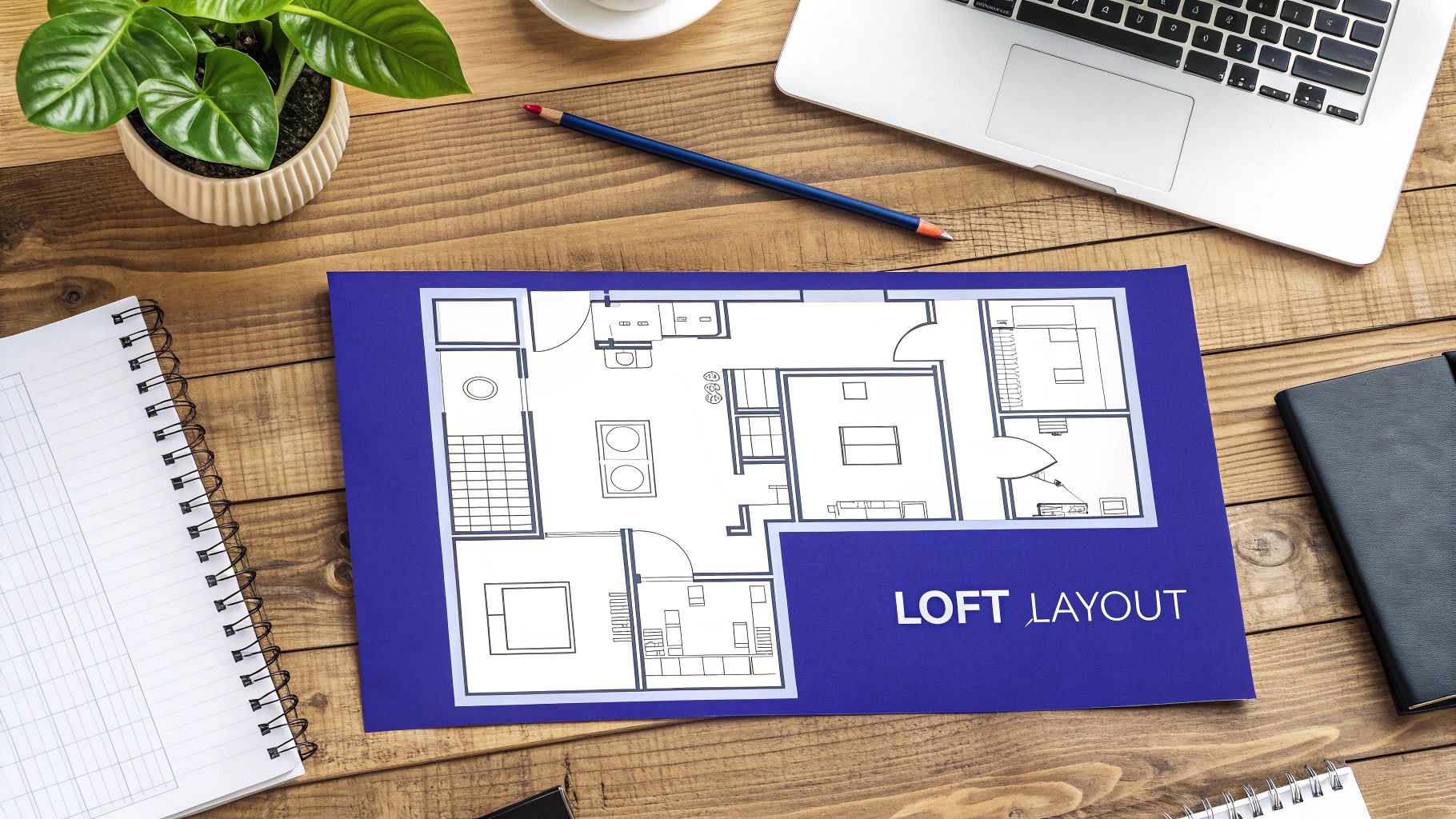
This is where the real fun starts—turning your big idea into a solid, workable plan. Designing the layout for your metal building with loft is a hands-on process where you get to balance your vision with the practical needs of the structure. It’s your chance to shape a space that does exactly what you need it to, whether that's a cozy apartment, a productive office, or just some serious storage.
Think of yourself as the architect of your own space. The first big decision is the overall style of the loft. Are you picturing a full-length mezzanine that nearly doubles your building’s usable footprint? Or maybe a smaller, partial loft that creates a dedicated zone without giving up those incredible high ceilings on the ground floor?
The right answer depends entirely on how you're going to use it. For a really deep dive into the design, you might consider leveraging Building Information Modeling (BIM), a powerful digital tool that helps you see and tweak every last detail of your perfect loft layout.
Matching Your Loft Style to Its Purpose
What you plan to do in your loft is the single most important factor driving its design. A loft meant for stashing holiday decorations has completely different requirements than one being built out as a full-time apartment. Let's break down how the purpose shapes the design.
Popular Loft Styles:
- Full-Length Mezzanine: This style stretches the entire length of the building, maximizing every inch of square footage. It's the perfect setup for creating a complete second story, ideal for a barndominium apartment or a large office suite sitting above a workshop.
- Partial Loft: This option covers only a part of the ground floor, which means you still get that open, airy, high-ceiling feel of a clear-span building. It’s a fantastic choice for a dedicated home office, a quiet reading nook, or a storage platform that leaves the main floor open for big equipment.
- U-Shaped or L-Shaped Loft: These creative layouts wrap around two or three walls, almost like a gallery walkway that overlooks the main floor below. This design adds a ton of architectural character and is great for separating different zones, like a lounge area and a private workspace.
The beauty of a metal building is its structural simplicity, which gives you incredible freedom. Unlike traditional construction, you're not forced to design around load-bearing walls, allowing you to create a loft layout that is truly open and customized.
This design flexibility is a huge reason why the pre-engineered metal building (PEMB) market is absolutely booming. The U.S. PEMB market was valued at USD 12.98 billion in 2024 and is expected to skyrocket to USD 27.10 billion by 2033. A lot of that growth is coming from sectors like e-commerce and retail, which need massive, adaptable warehouse spaces—often with mezzanines for their operations.
Understanding Load-Bearing Capacity
Once you've got a style in mind, the next critical piece of the puzzle is load-bearing capacity. Put simply, this is how much total weight your loft floor can safely hold. And it's not just about your furniture—it has to account for people, equipment, and even the weight of the building materials themselves.
A structural engineer calculates this using two types of loads:
- Dead Load: This is the permanent, fixed weight of the structure itself. Think steel joists, subflooring, and any interior walls or fixtures that aren't moving.
- Live Load: This is all the temporary, changing weight the loft will have to support. That means people walking around, furniture, boxes of stored goods, and even snow on the roof that transfers its weight down through the frame.
For instance, a loft built for light storage might be engineered for a live load of 40 pounds per square foot (PSF). But a residential living space needs to meet much stricter building codes, often requiring 50-60 PSF or more. Getting this number wrong isn't an option—it's a fundamental issue of safety.
Choosing the Right Loft Access
So, how are you getting up there? The way you access your loft is both a practical necessity and a design choice. What you pick will directly affect the flow and usability of the space on your ground floor.
Common Access Options:
- Traditional Staircase: This is the safest and most comfortable choice, especially for a residential loft or an office you'll use every day. The downside? A standard staircase has the biggest footprint, eating up valuable real estate on the ground floor.
- Spiral Staircase: A very stylish and space-saving alternative. Spiral stairs bring a cool, industrial-chic vibe but can be tricky to navigate, especially if you’re carrying anything bulky.
- Ship's Ladder or Alternating Tread Stairs: These are much steeper than regular stairs and take up very little room. They’re a great solution for utility lofts or storage areas you won't be accessing all the time.
- Permanent Ladder: The most basic and space-efficient option. A ladder is really only suitable for lofts used purely for occasional storage access and won't pass residential building codes for living spaces.
Your choice of stairs has a huge impact on the safety and function of your loft. By carefully thinking through these key layout elements—style, load capacity, and access—you can create a metal building with loft that isn't just beautiful but is perfectly built for you. For some help bringing these ideas to life, check out our guide on custom steel buildings and see how a tailored design can make all the difference.
Customizing Your Building From the Ground Up
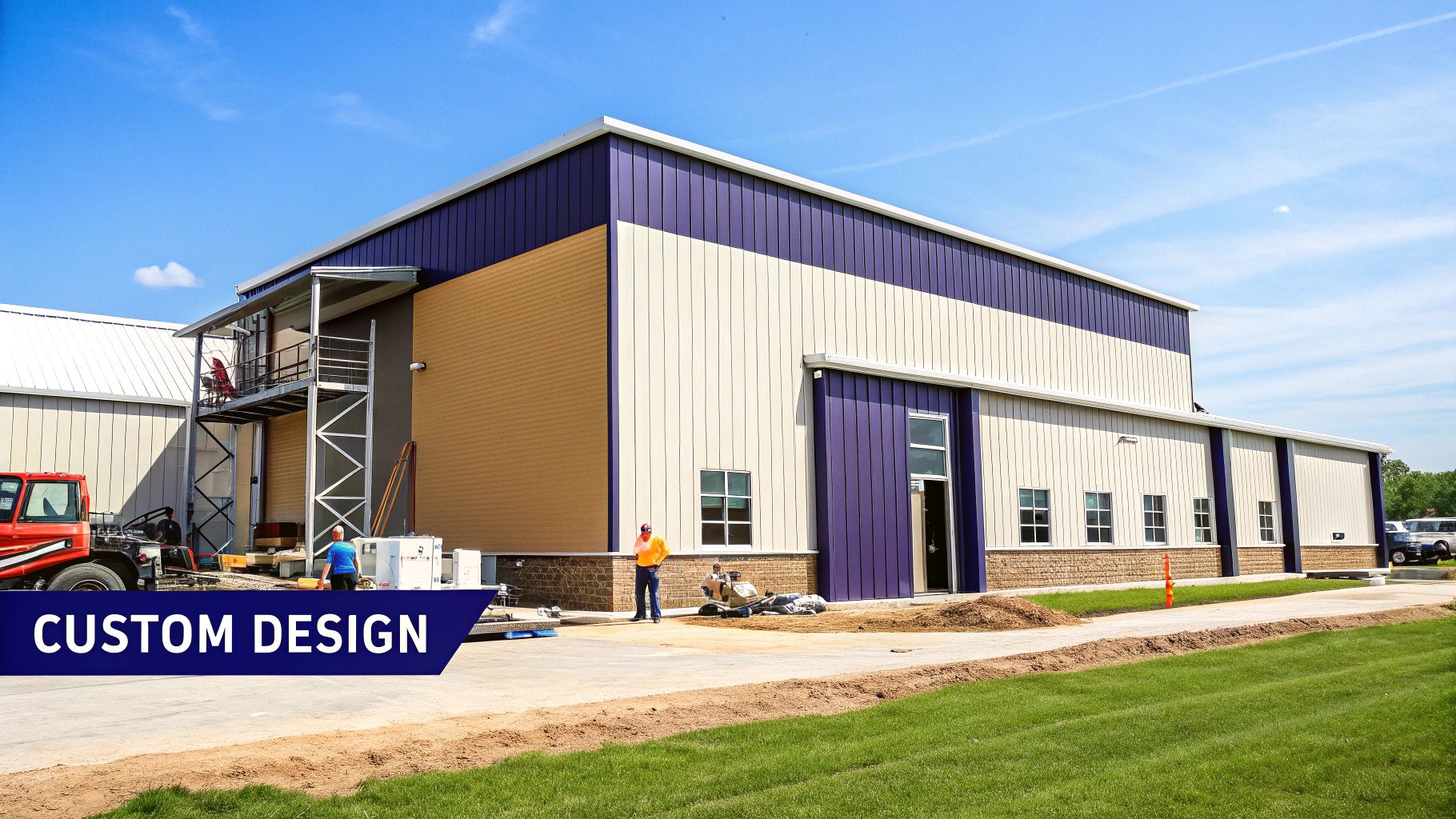
Let's clear up one of the biggest myths about steel buildings: they do not all look like simple, industrial boxes. The truth is, a modern metal building with loft is a blank canvas. It’s ready for you to create a space that’s completely, uniquely yours. Every single element, from the ground up, can be selected to match your personal taste or brand.
Think of the steel frame as the unbreakable skeleton of your project. The real personality comes from the "skin" you put on it and the features you add. With the materials and techniques available today, your metal building can blend right into a quiet residential neighborhood or stand out as a piece of stunning modern architecture.
Crafting Your Building's Exterior Identity
The exterior finish is your first—and best—chance to break away from that standard industrial look. You can completely change the character of your building by combining the strength of steel with the timeless look of traditional materials. This is how you create a structure that feels both permanent and inviting.
Here are a few popular ways to customize your building's facade:
- Faux Stone or Brick Veneers: These products give you the classic, textured appearance of masonry without the incredible weight and high cost. You can apply them to the lower portion of your walls (a technique called wainscoting) or cover entire sections to achieve a rustic or stately look.
- Wood-Grain Steel Panels: Get the warm, organic beauty of wood with absolutely none of the maintenance headaches. These specialty steel panels are designed to mimic different wood species, giving you a perfect finish for a modern barndominium or a stylish commercial storefront.
- Stucco or EIFS: For a clean, contemporary look, Exterior Insulation and Finish Systems (EIFS) or traditional stucco can be applied right over the steel siding. This gives your building a smooth, solid appearance that fits perfectly in many suburban and commercial settings.
Letting the Light In with Windows and Doors
The right windows and doors do so much more than just provide an entrance and a view. They define your building's character and flood the inside with natural light. This is especially crucial in a metal building with loft, where well-placed windows can make both the ground floor and the upstairs feel bright, open, and spacious.
Consider these strategic options:
- Large Picture Windows: Perfect for the main living area or office, these huge windows frame your view and forge a strong connection to the outdoors.
- Dormer Windows: Adding dormers to the roofline not only breaks up a long, plain stretch of metal roofing but also brings vital light and extra headroom into the loft itself.
- Skylights: Placed right over a central area, skylights can illuminate the core of your building, cutting down on the need for artificial lighting during the day.
And don't forget the foundation. It's another critical component that is anything but one-size-fits-all. A properly engineered base is essential to support both the structure and all its unique customizations. You can dive into the different options in our detailed guide on steel building foundation requirements.
Finishing the Interior for Comfort and Function
Once the exterior shell is up, the interior customization begins. This is where you transform a rugged structure into a comfortable, fully functional living or working space. The decisions you make here will directly impact your building's energy efficiency, sound levels, and daily comfort.
A well-insulated and properly finished interior is what makes a metal building feel like a home or a high-end commercial space. It's the critical final step in bridging the gap between industrial strength and everyday livability.
Key interior systems to plan for include:
- Insulation: Spray foam insulation is a top choice for metal buildings. It creates a complete air and moisture barrier, which stops condensation in its tracks and delivers exceptional thermal performance. The result? It can lower your energy bills by up to 30%.
- Drywall and Finishes: Hanging drywall is the fastest way to get that traditional interior feel. From there, you can paint, add wood paneling, or use any other finish you’d find in a conventional building.
- Electrical and Plumbing: Before the drywall goes up, a licensed electrician and plumber will run all the wiring and pipes throughout the walls. This integrates all the modern conveniences you need for a fully equipped and livable space.
Breaking Down the Costs of a Metal Building Loft
Figuring out the total investment for a metal building with a loft goes way beyond the sticker price of the steel kit. It’s best to think of your budget in three distinct phases: buying the building, getting the site ready, and then turning that empty shell into a space you can actually use.
This infographic lays out those three main cost stages for you.
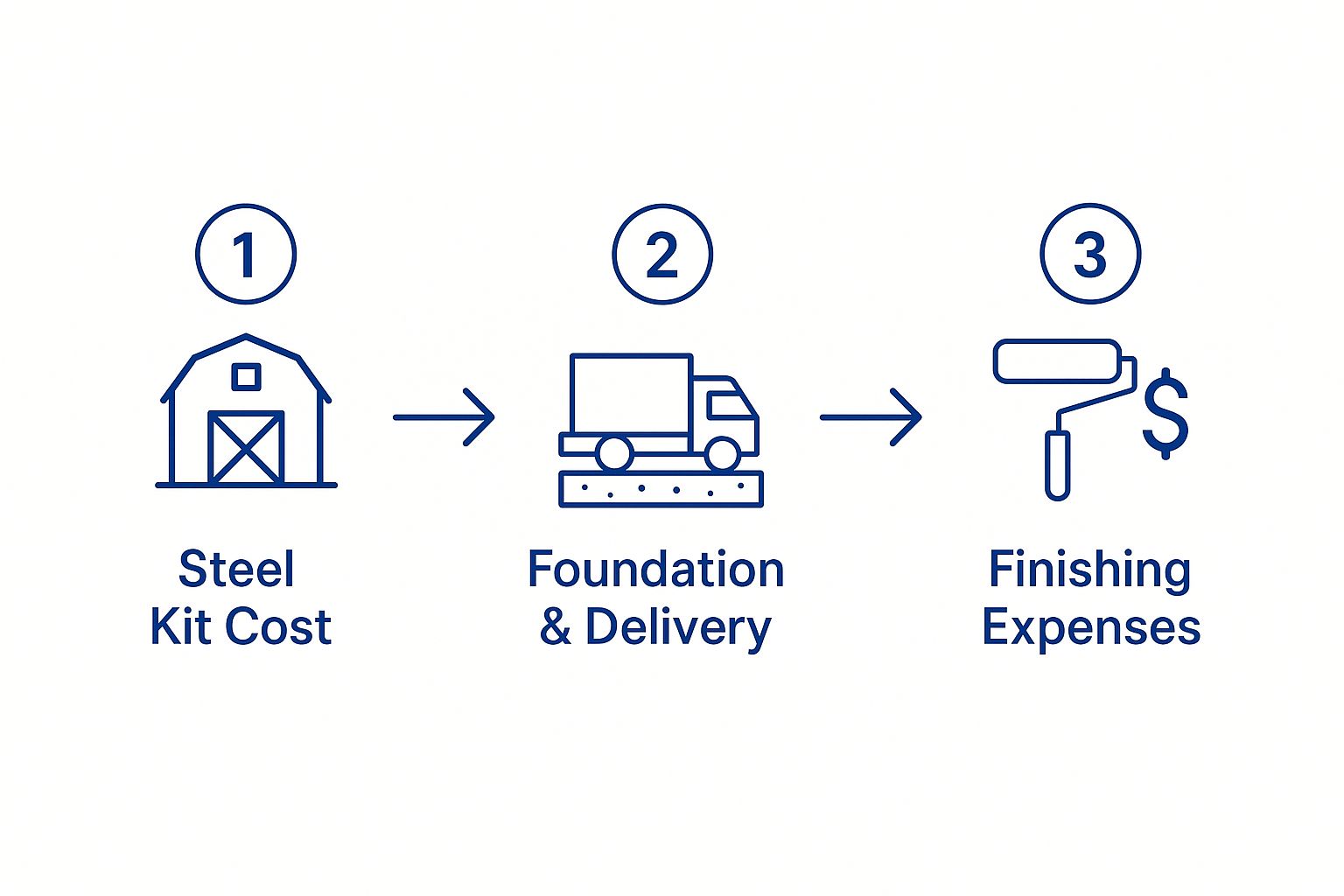
As you can see, the project flows naturally from purchasing the kit, to preparing the site, and finally, completing the interior. Each of these steps adds a crucial layer to your overall budget.
The Core Costs: Steel Kit, Foundation, and Delivery
Your first major outlay is for the pre-engineered building kit itself. The final price tag is a moving target, influenced by a few key variables. The building's overall size is the biggest driver, of course, but the gauge—or thickness—of the steel also plays a huge part. If you're in an area with heavy snow or high winds, you'll need a heavier gauge, and that will cost more.
Next up are the critical "soft costs" that get your site ready for construction. These aren't optional upgrades; they are non-negotiable requirements for a safe, legal, and stable build.
- Concrete Foundation: This is quite literally the bedrock of your project. The cost will depend on the slab's thickness, which must be specifically engineered to handle the extra weight of a loft.
- Delivery Fees: Your kit is made off-site and has to get to you somehow. These fees are based on how far you are from the factory and the size of the truckload.
- Construction Labor: Unless you're a seasoned pro tackling a DIY build, you'll need to hire an erection crew. Labor rates can vary wildly from one region to another.
We've put together a detailed guide on the average cost of a steel building that dives deeper into how these elements come together.
Budgeting for Finishing Expenses
This is the final stretch, where you take a bare steel shell and transform it into a functional environment. These costs can swing dramatically depending on what you're planning. A simple storage loft is one thing, but a fully finished residential apartment is a completely different ballgame with a much higher price tag.
Don't underestimate this phase. Finishing costs can often equal or even exceed the cost of the steel kit and foundation combined. Planning for them upfront is the key to avoiding budget overruns.
Here are the essential finishing costs you'll need to account for in your financial plan:
- Insulation: Good insulation, like spray foam, is non-negotiable for energy efficiency and comfort.
- Electrical and Plumbing: This covers everything from wiring and outlets to light fixtures and all the pipes needed to make the space functional.
- HVAC Systems: You'll need a heating, ventilation, and air conditioning system for proper climate control.
- Drywall and Interior Finishes: This is the aesthetic part—walls, paint, trim, and anything else that makes the space look complete.
- Flooring: The cost here depends entirely on your choice, from polished concrete on the low end to hardwood, vinyl plank, or carpet.
The move toward metal building systems is a global trend, really, all driven by how cost-effective and quick they are to build. While North America's market share is projected to hit around 30.4%, this growth just reflects a worldwide appreciation for smarter, more efficient construction. You can find more details on these global construction trends on databridgemarketresearch.com.
Your Step-by-Step Construction Roadmap
Bringing your metal building with loft to life is an exciting process, but it all hinges on a clear, well-organized plan. The path from an empty lot to a fully functional structure is a series of logical steps, and it starts long before the first piece of steel ever shows up. This roadmap will walk you through the entire journey.
The real work doesn't begin with a shovel—it begins with paperwork. The pre-construction phase is easily the most critical part of the project because it sets the stage for everything that follows. Getting this right ensures your building is legal, safe, and built to last. Skipping these steps is a surefire way to run into costly fines, frustrating delays, and massive headaches down the line.
Navigating Codes and Permits First
Before you do anything else, you need to become an expert on your local building codes and zoning regulations. These aren't just suggestions; they are the rules that will dictate everything from how far your building must sit from the property line to the structural strength required to handle local weather, like heavy snow loads or high winds.
Once you have a handle on the local rules, your very next task is to apply for the necessary permits. This part is completely non-negotiable.
Think of your building permit as the official green light for your entire project. Trying to build without one is a recipe for disaster, often leading to stop-work orders or, in the worst-case scenario, being forced to tear down what you've already built.
The Construction Sequence Unpacked
With your permits secured, the physical work can finally kick off. Construction follows a specific, proven sequence where each stage properly builds upon the last.
- Site Preparation: The first thing the crew will do is clear and level the land. This creates a stable, properly graded area for your foundation to rest on.
- Pouring the Foundation: Next comes the concrete. A reinforced slab, specifically engineered to handle the extra weight of the loft, is poured and left to cure.
- Erecting the Steel Frame: This is where things get exciting. The pre-engineered steel columns and rafters are bolted together, forming the skeleton of your building. You'll be amazed at how quickly this part moves.
- Installing Roof and Walls: With the frame up, the exterior panels and roofing are attached. This is the step that officially encloses the structure and makes it weathertight. This is also the ideal time for properly installing loft insulation to ensure your new space is comfortable and energy-efficient.
DIY Build vs. Hiring a Professional
One of the last major decisions you'll face is whether to erect the building yourself or bring in a professional contractor. A DIY approach can save you a good chunk of change on labor, but don't underestimate the challenge—it demands serious skill, the right equipment, and a whole lot of your time.
Hiring a professional crew will cost more upfront, but what you're really paying for is expertise, speed, and peace of mind. These teams handle heavy steel components every day, so they know how to do it safely and efficiently. They can often get the job done in a fraction of the time, minimizing the risk of costly mistakes and ensuring your metal building with loft is assembled to the highest possible standard.
Common Questions About Metal Buildings With Lofts
Even after you've got a solid plan in place, a few questions always seem to pop up right before starting a metal building with loft project. Getting straight answers to these common sticking points can give you that last bit of confidence you need. Let’s clear up a few of the most frequent questions we hear from customers.
How Strong Does the Foundation Need to Be?
A building with a loft puts way more stress on its foundation than a simple single-story structure. Because of that, it needs a much beefier foundation—usually a reinforced concrete slab that's both thicker and stronger than what you'd use for a basic garage.
But this isn't a one-size-fits-all situation. The exact specs will depend on your building’s size, what you plan to use the loft for (light storage is very different from a full apartment), and even the type of soil on your property. It's absolutely crucial to work with a structural engineer. They'll design a foundation that not only meets local codes but safely supports all that extra weight.
Can I Add a Loft to an Existing Metal Building?
Yes, you often can! Retrofitting a loft into an existing clear-span metal building is one of the huge benefits of its column-free design. Just keep in mind, this is far from a simple weekend project and demands a professional assessment first.
An engineer has to check out the building's original foundation and frame to make sure they can handle the heavy additional load. This process, often called adding a mezzanine, might mean reinforcing the existing structure. In some cases, you may even need to pour new concrete footings inside the building to support the loft’s columns directly, making the new addition structurally sound on its own.
The ability to add a loft later on highlights the incredible flexibility of steel buildings. An open warehouse can be transformed into a two-story workspace, or a simple garage can become a garage-apartment combo as your needs change.
What Is the Best Way to Insulate for Residential Use?
When you’re turning a metal building into a place you'll actually live in, good insulation isn't optional—it's everything. For residential use, closed-cell spray foam insulation is hands-down the best choice. And it does a lot more than just keep the temperature steady.
Spray foam creates a seamless air and moisture barrier, which is vital for preventing condensation—a notorious headache in metal buildings. While it costs more upfront than something like fiberglass batts, the long-term payoff is huge. You get significant energy savings and superior moisture control, making it a smart investment for a healthy, comfortable, and efficient living space in your metal building with loft.
Do I Need Special Permits for a Residential Loft?
Absolutely. The moment a metal building is meant to be lived in, it falls under the same residential building codes as any traditional house. These types of structures, often called barndominiums, require a full permitting process.
You'll have to get permits for all the major systems—foundation, structural frame, electrical, plumbing, and HVAC. It's so important to work closely with your local building department right from the start. This ensures your project is fully compliant with all the safety and construction standards for residential living.
Ready to design your own multi-functional space? The team at Icon Steel Buildings is here to help you create the perfect custom metal building with a loft to fit your exact needs. Get a free quote today!