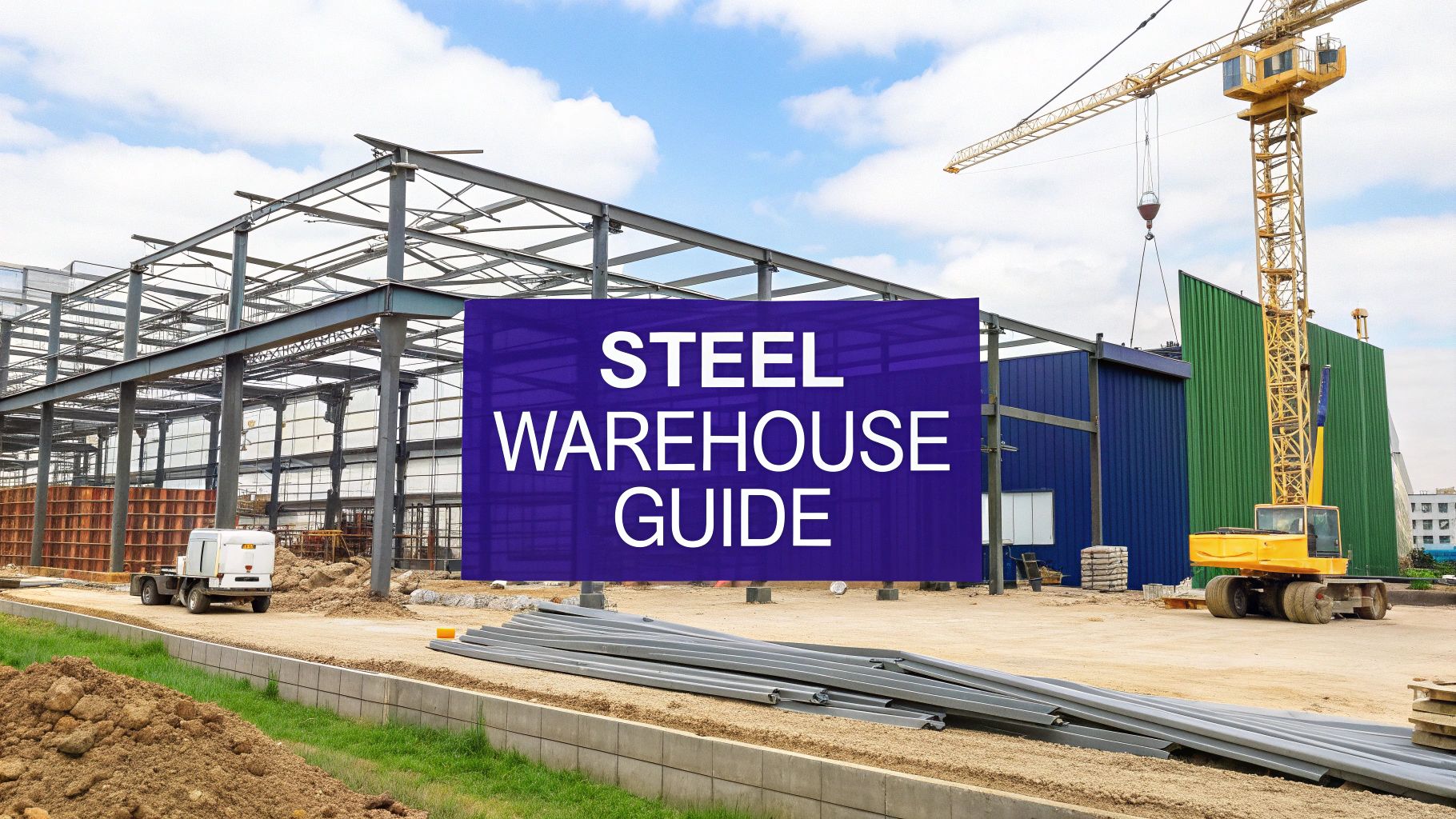
A steel building warehouse is a prefabricated structure built from high-strength steel, designed for quick assembly and built to last. It’s a smart, cost-effective, and highly flexible solution for industrial storage, logistics, and manufacturing, giving it a serious edge in construction speed and operational agility over traditional buildings. Don't think of it as just another building—think of it as a strategic asset for modern business.
Why a Steel Building Warehouse Is the Modern Gold Standard
In the world of industrial infrastructure, your choice of building is a massive business decision. For decades, the only real option was traditional construction using concrete, brick, and wood. But that approach is a lot like building a custom server from scratch—sure, it's powerful, but it’s also slow to get going, expensive, and completely inflexible once it's built.
On the other hand, a steel building warehouse is the modern equivalent of deploying a scalable cloud solution. It's fast, flexible, and fundamentally more cost-effective.
These structures are so much more than just metal boxes. They represent a real competitive advantage for businesses in logistics, e-commerce, manufacturing, and even agriculture. The core appeal comes down to a potent mix of efficiency and resilience that older building methods just can't match. Once you understand the full value, from the first design sketch to long-term maintenance, you'll see why steel has become the gold standard.
Unpacking the Core Advantages
The big shift toward steel is happening for a reason. It’s driven by tangible benefits that directly boost a company's bottom line and operational muscle. This guide will walk you through everything you need to know, breaking down the key areas that show why a steel warehouse is the superior choice.
Here's a quick look at what we'll cover:
- Unmatched Durability: We’ll explore how steel’s incredible strength-to-weight ratio allows for massive, column-free interiors while offering superior protection against fire, pests, and severe weather. To see how it stacks up against other materials, you can read our comparison of steel buildings vs. wood buildings.
- Deep Customization: From integrating heavy-duty crane systems and mezzanines to picking specific insulation packages and door placements, you’ll learn how to design a facility that fits your exact workflow like a glove.
- Transparent Cost Analysis: We'll break down the complete financial picture, covering not just the building kit, foundation, and labor, but also the significant long-term savings you'll pocket down the road.
- Streamlined Construction: You'll see how the prefabricated nature of steel components slashes construction time, getting your operations up and running months sooner than you'd expect.
The global market for prefabricated building and structural steel is a clear sign of this trend. Valued at approximately USD 248.0 billion in 2024, it is projected to skyrocket to around USD 396.6 billion by 2033. This incredible growth highlights the rising global demand for efficient and sustainable construction solutions. Discover more insights about the prefabricated steel market and its future.
By the end of this guide, you’ll have a crystal-clear understanding of why a steel building warehouse isn’t just a structure—it's a smart, forward-thinking investment for any growing business.
Unpacking the Structural Benefits of Steel
When you look at a massive steel building warehouse, it's easy to be impressed by its size. But the real magic isn't just the scale—it's the science that makes it all possible. The secret ingredient is steel's incredible strength-to-weight ratio, a property that completely rewrites the rules of construction.
Think about it like this: a solid oak beam is strong but incredibly heavy. Now, picture a high-performance bicycle frame made from carbon fiber—it’s feather-light but unbelievably rigid and strong. Steel plays a similar role in construction, delivering immense structural power without the sheer mass of materials like concrete or timber.
This single characteristic unlocks one of the biggest advantages a steel warehouse offers: huge, wide-open interior spaces.
Maximizing Space with Column-Free Interiors
In traditional construction, a large building needs a forest of interior support columns just to hold up the roof. These columns chop up the floor plan, creating frustrating obstacles that dictate your workflow and limit how you can use the space.
A steel building warehouse is a completely different animal.
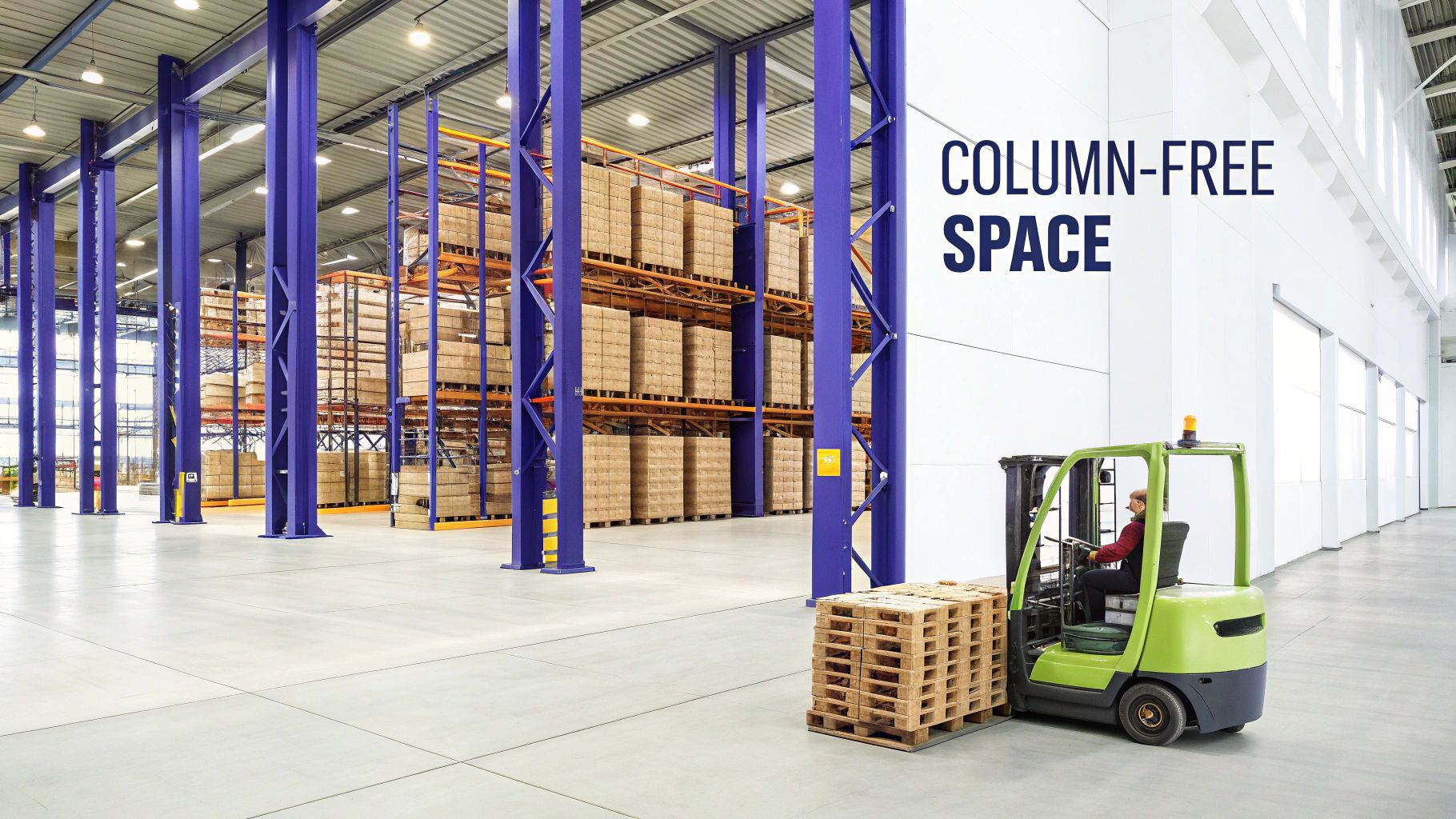
Thanks to that strength-to-weight advantage, steel framing can handle enormous roof spans—often more than 200 feet—without a single interior column in sight. This is called a clear span frame, and it creates a cavernous, totally unobstructed interior. For a warehouse, that's a total game-changer.
Imagine your entire operation with zero posts getting in the way.
- Forklift operators can move around freely, which means a safer and more efficient workplace.
- Automated robotic systems get clean, unrestricted paths to do their jobs.
- Pallet racking and shelving can be laid out for pure density, not arranged around permanent obstacles.
This gives you total freedom to configure—and reconfigure—your workflow as your business grows. The entire internal volume is yours to use, which means more storage capacity and smoother day-to-day operations. For a closer look at how these frames are engineered, you can learn more about different metal building frame designs.
Built-In Resilience Against Common Threats
Beyond just giving you more room, steel offers a level of durability that protects your investment from day one. Unlike wood, steel is an inorganic material, making it immune to a long list of problems that plague other buildings. This natural toughness means a longer lifespan and way fewer maintenance headaches.
A well-maintained steel structure is engineered to last for 50 to 100 years. Its longevity isn't just a promise; it's a direct result of steel's resistance to rot, mold, pests, and fire, which means fewer headaches and lower insurance premiums over the building's lifetime.
Steel's non-combustible nature is a huge safety plus. It won't catch fire or add fuel to a blaze, which can dramatically slow the spread of flames and minimize structural damage. It’s no surprise that insurance companies often offer lower premiums for steel buildings compared to their wood-framed cousins.
On top of that, steel is impervious to pests like termites that can chew through the integrity of a wood structure. It also doesn't absorb moisture, so you'll never have to worry about rot, warping, or mold. This powerful mix of strength and resilience makes a steel building warehouse a smarter, more durable, and financially sound choice for the long haul.
Designing Your Ideal Warehouse Layout
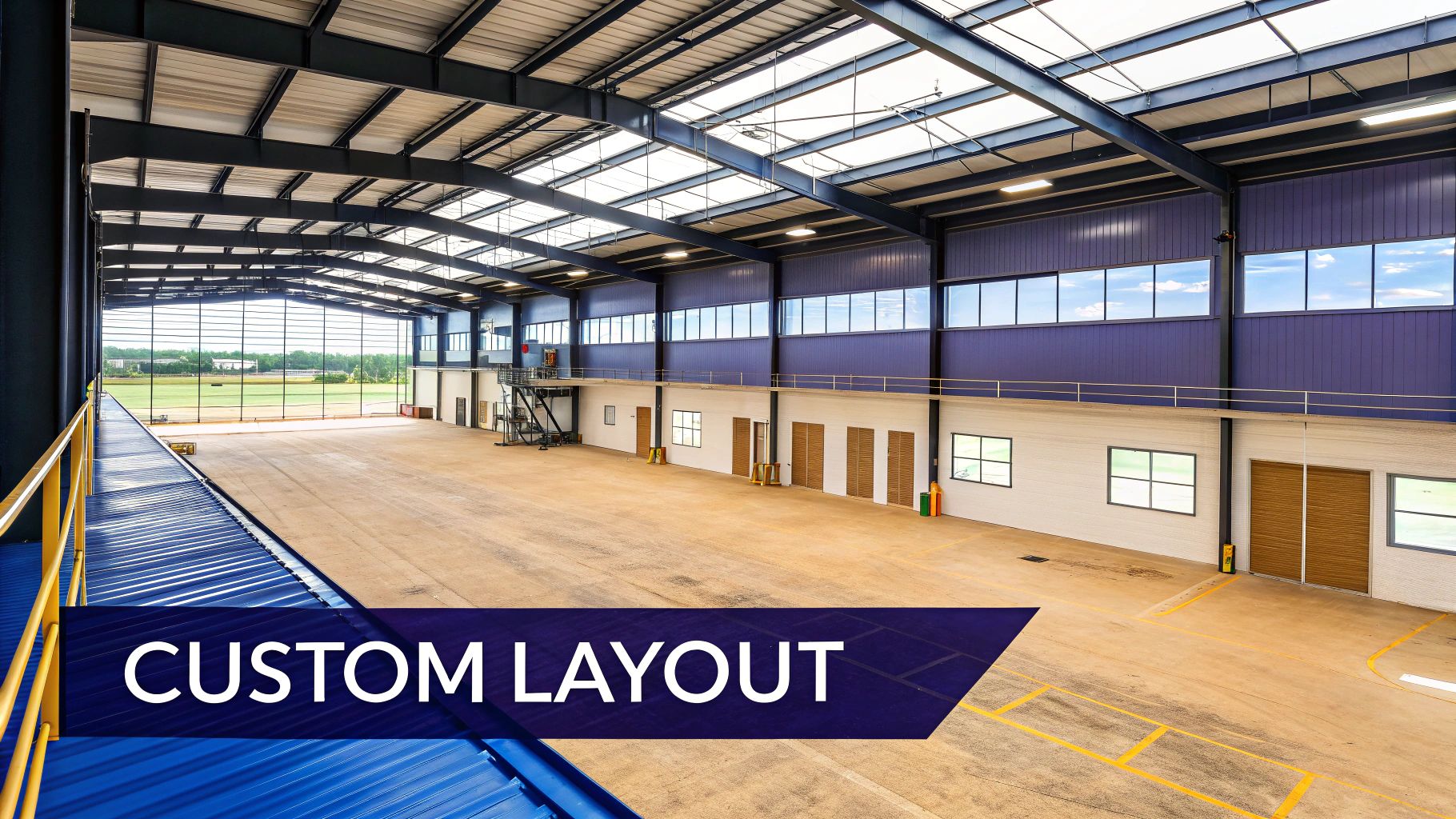
One of the biggest myths about a steel building warehouse is that you’re stuck with a generic, one-size-fits-all box. The truth is actually the complete opposite. Modern steel buildings are all about design flexibility, giving you the power to craft a high-performance facility that fits your operation like a glove.
Think of the steel frame as your blank canvas. Every single detail—from insulation and ventilation to where you place the doors and lights—can be specified to boost workflow, drive efficiency, and cut your long-term operating costs. This isn't just about building a structure; it's about creating a strategic business asset.
Core Customization for Operational Efficiency
The choices you make early in the design phase will have the biggest ripple effect on your day-to-day operations. These are the workhorse features that dictate how your team moves, how your product flows, and how well your assets are protected. Nail these, and you’re well on your way to a warehouse that works for you, not against you.
- High-Performance Insulation: This is about so much more than just temperature control. A properly insulated building can slash energy consumption by up to 50%, stop condensation in its tracks, and even muffle outside noise. Your options range from traditional fiberglass blankets to advanced insulated metal panels (IMPs) that wrap insulation and cladding into one sleek, high- R-value package.
- Strategic Door and Bay Placement: The movement of goods is the heartbeat of any warehouse. You get to call the shots on the exact number, size, and type of doors you need. We’re talking massive roll-up doors for loading docks and simple personnel doors for staff. Placing them thoughtfully minimizes forklift travel time and smooths out the entire shipping and receiving dance.
- Targeted Ventilation Systems: Good air quality isn't a luxury—it's a necessity, especially if you're dealing with chemicals or running heavy machinery. You can pick from ridge vents, wall louvers, and powered exhaust fans, all positioned to create the ideal airflow to pull out heat, fumes, or moisture.
Of course, a smart layout also demands strong security. Factoring in modern commercial building security systems from day one is the best way to protect your inventory and your people, ensuring your security measures are built-in, not bolted-on.
Advanced Features to Maximize Functionality
Once you’ve locked down the fundamentals, you can start looking at advanced features that truly unlock your warehouse’s potential. These are the additions that help you integrate office space, manage heavy materials, or just make smarter use of your vertical space.
The true power of a custom steel warehouse lies in its ability to adapt to specialized operational demands. Integrating features like mezzanines or crane systems isn't an afterthought; it’s a planned strategy to maximize every square foot of your investment.
These advanced integrations are what elevate a building from a simple storage space to a purpose-built operational hub.
Expanding Vertically with Mezzanines
Why build out when you can build up? A mezzanine is essentially a partial second floor built right inside your warehouse, taking full advantage of the high ceilings that come standard with a clear span design. It’s an incredibly smart and cost-effective way to add more usable square footage without expanding the building’s footprint.
Mezzanines are perfect for:
- Office Space: Set up administrative offices, break rooms, or conference areas that overlook the main warehouse floor.
- Light Storage: Create an extra level for storing smaller parts, inventory, or equipment that doesn't require heavy machinery.
- Observation Decks: Give managers a safe spot to oversee operations from a bird's-eye view.
Integrating Heavy-Duty Crane Systems
For businesses in manufacturing, fabrication, or heavy logistics, an integrated crane system is non-negotiable. Steel buildings are perfect for this because the support structure for a bridge crane can be engineered directly into the building’s main framing. This guarantees the structure can safely handle the specified load capacities, from small one-ton hoists all the way up to 50-ton industrial workhorses.
Integrating a crane from the start is far more efficient and structurally sound than trying to retrofit one into a building that wasn't designed for it. To get a better feel for what’s possible, exploring different metal building floor plans can spark some great ideas and provide helpful technical guidance for your project.
Breaking Down Steel Warehouse Costs
Figuring out the real cost of a steel building warehouse is a lot more involved than just looking at a price-per-square-foot number. While that figure gives you a ballpark idea, the complete financial picture is made up of several key pieces that come together to form your final budget.
Think of it like buying a car—the sticker price is just the beginning. The final cost includes the base model (the building kit), the engine and tires (the foundation), and the labor to put it all together. To build a realistic budget and truly appreciate the long-term value of steel, you have to understand each part of this puzzle. When you look at the total cost over the building's entire life, you'll see how that initial investment pays off for decades.
The Three Pillars of Your Initial Investment
Your upfront investment really boils down to three main categories. Each one is a major part of the total project budget, and knowing how they work together is key to smart financial planning.
-
The Building Kit: This is the heart of your purchase, making up about 40-50% of the total project cost. It includes all the pre-engineered steel parts: the main I-beams, secondary framing like girts and purlins, wall and roof panels, and all the nuts and bolts. The price of the kit itself can shift based on steel market prices, building size, and any custom features you add.
-
The Concrete Foundation: A solid foundation isn't optional—it's the bedrock of your entire structure. The cost for the slab, including materials and labor, can be anywhere from 15-20% of your total budget. What you'll actually pay depends on your local soil conditions, how thick the slab needs to be, and what labor rates are like in your area.
-
Construction and Labor: This is what it costs to actually put the building up. Since steel components are designed for quick and easy assembly, labor costs are way lower than with traditional construction. You can often save up to 30% on labor alone. This piece of the pie usually accounts for 25-35% of the final cost.
The growing shift toward steel is clear in the market's health. The global structural steel market, which is central to warehouse construction, was valued at USD 110.74 billion in 2023 and is projected to hit USD 174.51 billion by 2030. This boom is driven by massive investments in logistics and industrial infrastructure. You can read the full report on the structural steel market to see how these global trends are shaping the industry.
Factors That Influence Your Final Price Tag
Beyond those three main pillars, a few other variables can move your total cost up or down. These are often tied to your project's specific location and how you plan to use the building, so it’s smart to think about them early on.
Your geographic location is a huge driver. It determines the local building codes you have to follow, especially for snow and wind loads. A warehouse built in a hurricane zone is going to need heavier-gauge steel and beefier framing than one in a calmer climate, which directly affects the cost of the kit.
The level of customization also plays a big part. Adding features like mezzanines for extra storage, overhead crane systems, high-end insulation packages, or a bunch of large roll-up doors will raise the initial price. But, they also boost the building’s functionality and long-term value. For a closer look at these variables, check out our guide on commercial metal building costs.
A quick cost comparison helps put the numbers in perspective.
Steel vs Traditional Construction Cost Comparison
This table offers a snapshot of how cost factors for steel warehouses stack up against traditional construction methods like concrete and wood over the building's lifecycle.
| Cost Factor | Steel Building Warehouse | Traditional Construction (Concrete/Wood) |
|---|---|---|
| Initial Materials | Moderate; steel prices fluctuate but are competitive. | Can be high; subject to lumber and concrete market volatility. |
| Labor & Construction | Lower; up to 30% savings due to pre-engineered, faster assembly. | Higher; requires more skilled labor and longer on-site time. |
| Foundation | Moderate; requires a standard concrete slab. | Can be more extensive and costly, depending on the design. |
| Maintenance | Minimal; resistant to pests, rot, and fire. Repainting is infrequent. | Higher; wood requires treatment for pests/rot; concrete can crack. |
| Insurance Premiums | Lower; steel's fire resistance often leads to better insurance rates. | Higher; wood is combustible, increasing risk and premium costs. |
| Lifecycle (50+ years) | Excellent ROI due to low maintenance and high durability. | Good, but long-term maintenance costs can add up significantly. |
While the upfront material cost for steel might seem comparable, the real savings come from faster construction and dramatically lower long-term expenses.
Looking Beyond Upfront Costs to Long-Term Value
The true financial edge of a steel building warehouse really shines when you consider the total cost of ownership. The faster construction time means your facility is up and running—and generating revenue—months sooner than a traditional build could ever be.
On top of that, steel's natural resistance to fire, pests, and rot means you'll pay a lot less for insurance and spend next to nothing on maintenance over the building's 50- to 100-year lifespan. These operational savings are a massive part of the equation, making steel a smart, forward-thinking investment.
The Steel Warehouse Construction Process
You might think that putting up a massive steel building warehouse is a complex, drawn-out affair, but it’s actually far more streamlined than you’d expect. The magic is in the pre-fabrication. Long before a single truck arrives on your property, every part of your building—from the huge I-beams down to the last nut and bolt—has been precision-engineered, cut, and drilled in a controlled factory setting.
This completely changes the game. Your job site becomes less of a construction zone and more of an assembly line. Think of it like putting together a giant, professional-grade erector set. This methodical approach is a game-changer, drastically cutting down on-site labor, minimizing waste, and speeding up the entire project timeline. The result? Your warehouse is up and running much, much faster.
Laying the Groundwork: Site Preparation and Foundation
Before any steel goes up, the site itself has to be perfect. This phase is non-negotiable because the foundation is the literal bedrock of your building, ensuring it stays stable and secure for decades. The process kicks off with clearing, leveling, and grading the land to create a perfectly flat base.
Next, concrete footings are poured at precise points where the primary columns will be anchored. These footings are carefully engineered to distribute the building's immense weight and lock it firmly to the ground. Finally, a reinforced concrete slab is poured to form the warehouse floor. The slab's thickness and reinforcement are specifically calculated based on your building's size and what you plan to put on it, whether that’s light inventory or heavy-duty machinery.
Assembling the Steel Skeleton
Once the foundation has had time to fully cure, the real fun begins: erecting the primary framing. This is where the main I-beam columns and rafters are raised to form the building's skeleton. A small crew with a crane or lift can get these massive pieces into place, bolting them together according to a detailed set of blueprints.
With the main frame standing tall, the crew moves on to the secondary framing. This involves installing girts, which run horizontally along the walls, and purlins, which span the roof. This secondary grid doesn't just provide support for the wall and roof panels; it adds another layer of strength, reinforcing the entire structure against powerful winds and heavy snow loads.
The prefabricated nature of a steel building warehouse is its greatest asset during construction. Because every piece arrives pre-cut and pre-drilled, there is virtually no on-site fabrication required. This precision assembly process minimizes human error, reduces labor costs by up to 30%, and significantly shortens the construction schedule.
This infographic breaks down where the money goes when bringing a steel warehouse project to life.
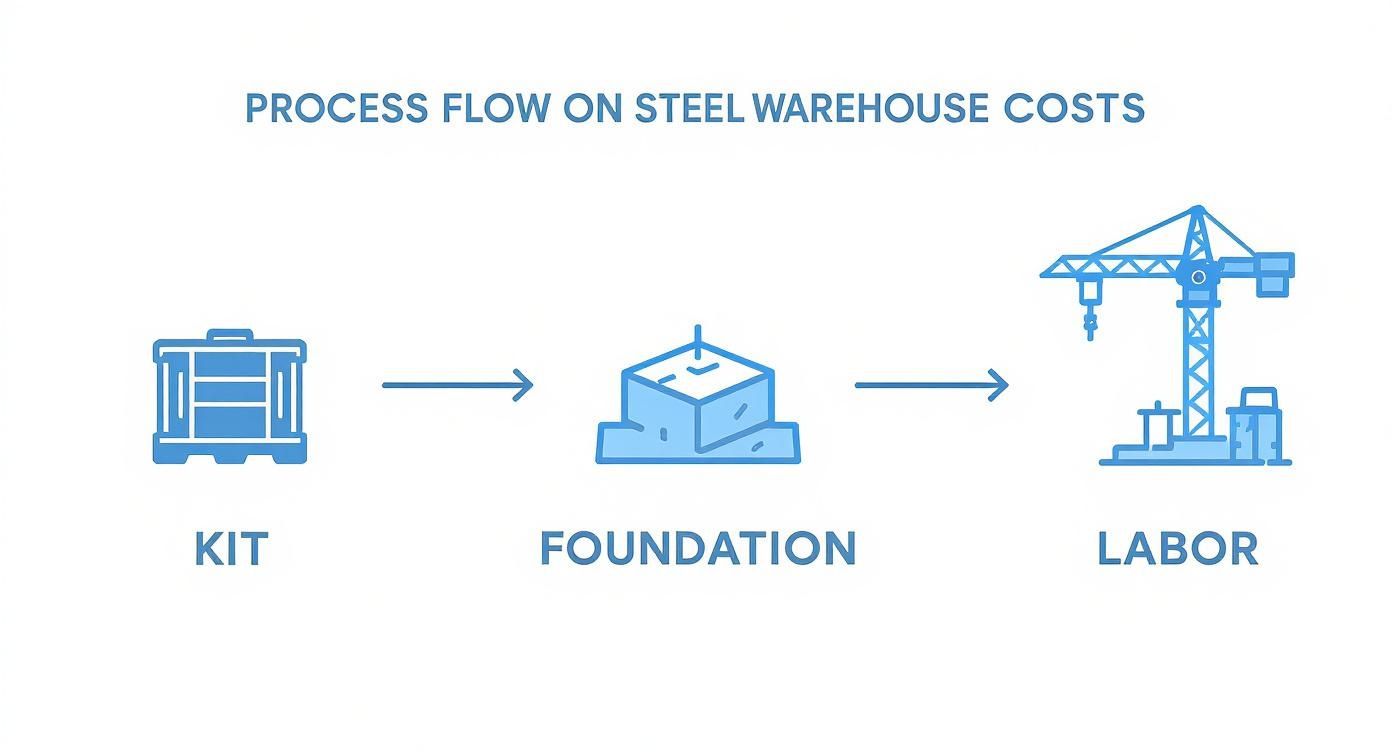
As you can see, the total investment is a balance between the building kit itself, the crucial foundation work, and the labor needed to put it all together.
Enclosing the Structure and Final Touches
The last major construction step is called "sheeting." This is where the crew attaches the durable exterior wall and roof panels to the secondary framing. The panels are layered and sealed to create a weather-tight envelope that protects everything inside from the elements. This is also the stage where insulation, windows, doors, and other custom accessories are installed.
Once the building is fully enclosed, the work moves inside to focus on finishing and systems installation. This typically includes:
- Electrical and Plumbing: Running all the necessary conduits and pipes.
- HVAC Systems: Installing heating, ventilation, and air conditioning units.
- Lighting: Setting up both interior and exterior light fixtures.
- Finishing Touches: Adding gutters, downspouts, and any architectural trim to complete the look.
This step-by-step system makes the entire build incredibly efficient. If you're planning a project, it's wise to get familiar with the full metal building installation process to ensure everything goes smoothly from day one.
Steel Warehouses in Action Across Industries
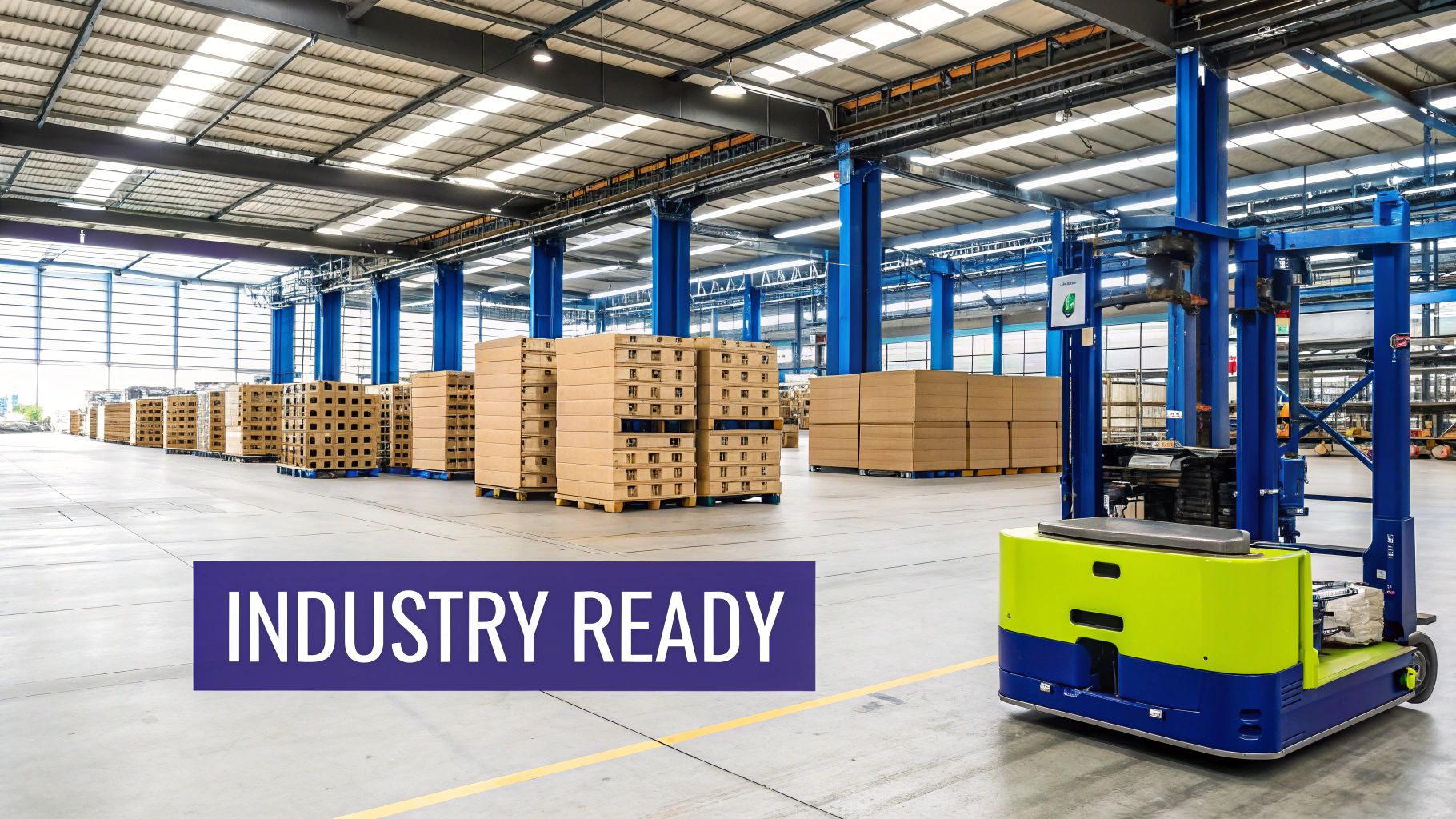
The real magic of a steel building warehouse shines when you see just how adaptable it is across different sectors. These buildings are so much more than just big empty boxes for storage. They are high-performance hubs engineered to meet the very specific demands of modern business, from the lightning-fast world of e-commerce to the highly regulated field of chemical storage.
This incredible versatility is a huge reason the market is growing so fast. The prefabricated steel building systems market was valued at USD 2.01 billion in 2024 and is expected to climb to USD 2.79 billion by 2032. The physical storage segment—which covers warehouses and logistics centers—accounted for a massive 55.7% revenue share in 2024, proving just how essential these structures are to today's supply chains.
E-Commerce and Logistics Fulfillment
In e-commerce, it's all about speed and efficiency. A steel warehouse is the perfect stage for this fast-paced world, offering enormous, column-free interiors. This open space is absolutely critical for automated robotic systems and complex conveyor networks that need clear, unobstructed paths to zip around.
These facilities are built from the ground up for high-volume throughput. Think strategically placed loading docks for a constant flow of trucks, soaring ceilings for vertical racking, and tough concrete floors that can handle the constant wear and tear of forklift traffic. For this industry, smart cargo theft prevention strategies are also a top priority, and the natural strength of a steel building provides a formidable first line of defense.
Specialized Industrial and Chemical Storage
Let's be clear: not all storage is created equal. When you're dealing with hazardous materials, you need a facility built to incredibly strict safety standards, and this is another area where steel truly excels.
A steel warehouse designed for chemical storage can be outfitted with all sorts of critical safety features. These aren't afterthoughts; they're built right into the design.
- Specialized Coatings: We're talking corrosion-resistant coatings applied directly to steel panels to fend off chemical spills and corrosive fumes.
- Advanced Ventilation: Powerful ventilation systems can be installed to manage air quality and safely pull hazardous vapors out of the building.
- Containment Curbs: The design can include integrated concrete curbs and sloped flooring to contain any spills and prevent them from contaminating the environment.
In fact, the chemical storage sub-segment is predicted to see the fastest growth in the steel building market, with an anticipated 8.9% CAGR between 2025 and 2032.
One of the biggest wins with steel is the ability to engineer the building for specific operational loads. Whether you need to integrate a 20-ton overhead bridge crane for a light industrial workshop or reinforce the frame for heavy manufacturing equipment, the design process ensures the building is a perfect fit for its job.
Agriculture and Climate-Controlled Facilities
The agricultural industry also leans heavily on steel buildings to protect its most valuable assets. A steel warehouse can easily be turned into a climate-controlled environment for storing sensitive crops, keeping them safe from temperature swings, moisture, and pests.
Beyond crop storage, these structures are commonly used as massive equipment sheds. They protect expensive tractors, harvesters, and other machinery from the harsh elements year-round. The clear-span design makes it simple to maneuver even the largest equipment inside without a single column getting in the way.
From bustling fulfillment centers to secure agricultural storage, the steel building warehouse proves its worth time and again as a flexible, tough, and reliable solution for almost any industrial need you can throw at it.
Answering Your Top Questions About Steel Warehouses
When you're looking at a major investment like a new warehouse, it's smart to have questions. You want to know about the long haul—how the building performs, what it costs to own, and if it can adapt to your future needs. Getting straight answers is key to feeling confident about your decision.
We hear the same questions pop up time and again, so let's tackle them head-on.
How Long Does a Steel Building Warehouse Last?
This is a big one, and the answer is simple: a long, long time. A well-kept steel warehouse is an asset that can easily last 50 to 100 years.
Think about what wears down traditional buildings. Rot, mold, termites, and fire are constant threats that degrade materials like wood. Steel, on the other hand, is inherently resistant to all of it. It’s built for longevity right from the start.
The secret to hitting that 100-year mark comes down to two things. First, it starts with a high-quality factory coating that protects the steel from rust. Second, a simple, consistent maintenance routine—like making sure fasteners are tight and gutters are clear—will keep your structure in prime shape for decades to come.
Can I Expand My Steel Warehouse in the Future?
Absolutely. In fact, this is one of the biggest reasons business owners choose steel. The modular design of these buildings makes expansion incredibly straightforward.
Trying to add on to a conventional building can be a messy, expensive nightmare involving complex structural work. But with a steel warehouse, the process is clean and efficient.
To add more space, a crew simply removes the panels from an end wall, erects the new framework to your desired length, and puts the original end wall back on. This "add-a-bay" method is much faster and more cost-effective, allowing your facility to grow right alongside your business.
Ready to build a warehouse that grows with you? Icon Steel Buildings offers durable, customizable, and easy-to-expand solutions designed for your success. Learn more about our steel building solutions.