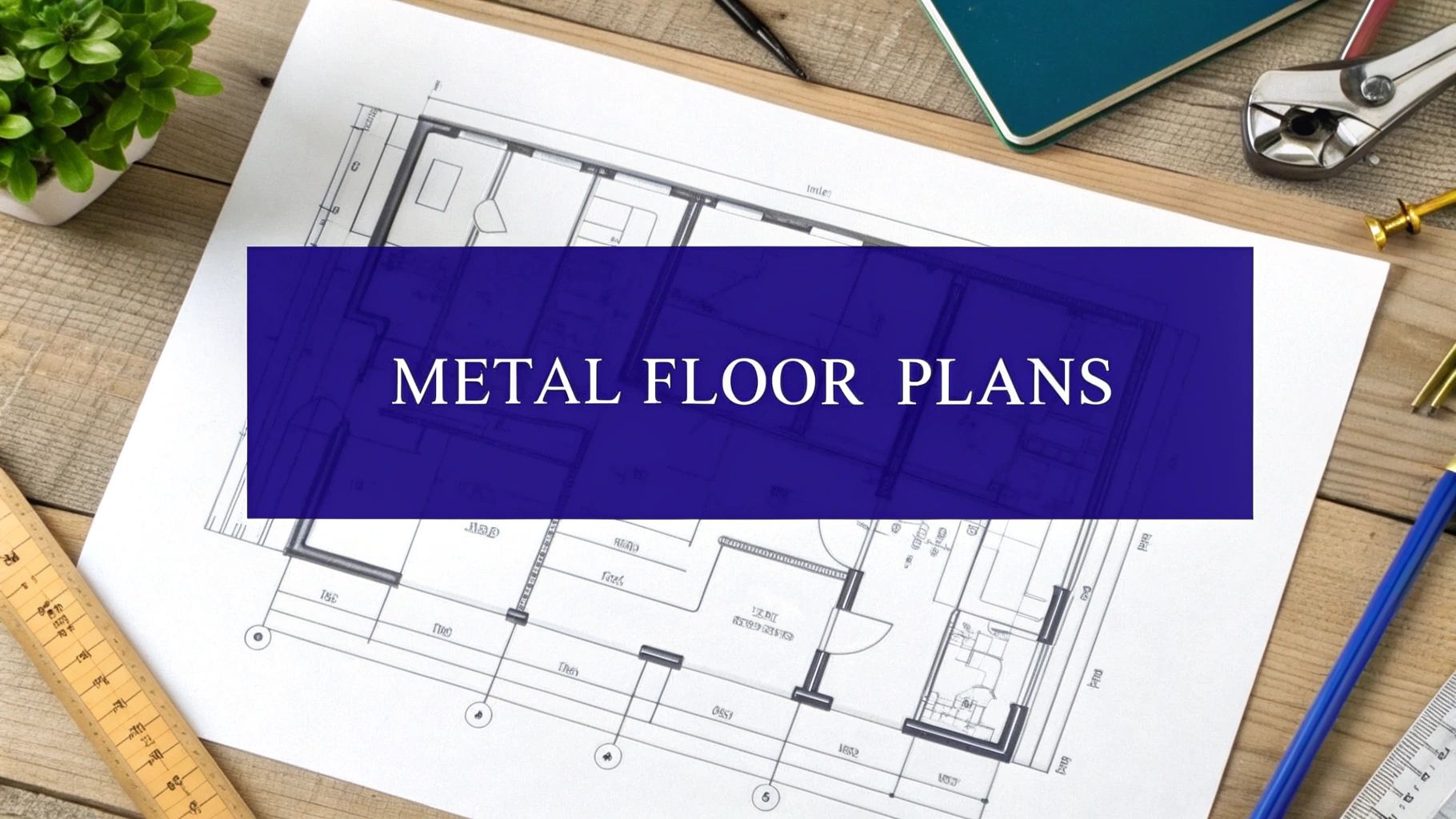
A metal building floor plan is much more than a simple drawing. It's the strategic blueprint that defines your structure's layout, workflow, and future potential. Think of it as the master recipe for creating a space perfectly engineered for its purpose, whether it's a sprawling warehouse or a cozy workshop.
Your Blueprint for a Smarter Build
Deciding on your metal building's floor plan is probably the single most critical decision you'll make during the entire project. It's the foundational document that dictates not just where walls and doors go, but how efficiently your business will run, how comfortably your family will live, or how easily you can expand down the road. This is the stage where your vision gets translated into a practical, buildable reality.
Unlike traditional construction that often boxes you in with rigid constraints, metal buildings give you an incredible amount of design freedom. This flexibility is a huge reason they’ve become so popular across commercial, industrial, and even residential projects.
A well-designed floor plan is an investment in efficiency. It anticipates movement, storage needs, and future growth, preventing costly retrofits and operational bottlenecks down the line. It transforms a simple structure into a high-performance asset.
The Power of a Strategic Layout
The time you invest in your floor plan pays off in massive ways, impacting every stage of your building’s life. A thoughtful layout isn't just about looking good; it's about creating a smarter, more effective space from the ground up.
Here are a few of the key advantages:
- Optimized Workflow: A logical layout creates a smooth flow for people, equipment, and inventory. This directly boosts productivity and cuts down on wasted time.
- Maximized Space: By carefully planning every square foot, you can get rid of dead zones and make sure all your available space serves a real purpose.
- Cost-Effectiveness: Figuring out utilities, door placements, and structural supports upfront saves you from making expensive changes during or after construction. A solid plan is the best tool you have for keeping your budget in check.
- Future-Proofing: Good design always thinks ahead. Building in elements like removable walls or planning for future additions makes it simple and affordable to scale your operation later.
This kind of adaptability is fueling major growth in the construction world. The global market for prefab metal buildings—which depends heavily on smart floor plans—is expected to hit a massive $150 billion by 2025. This boom is driven by the need for faster project completion and lower labor costs, both of which are direct results of a well-executed plan.
Of course, a truly smart build also considers long-term operating costs. For instance, incorporating principles from energy-efficient house plans can dramatically slash your heating and cooling bills over the building's lifetime. With the right blueprint in hand, you can create fully custom steel buildings that are perfectly aligned with both your operational and financial goals.
Decoding the Language of Your Floor Plan
To get the most out of your metal building project, you need to speak the language of its floor plan. These blueprints are more than just lines on paper; they represent the critical decisions that dictate how your building will function for years to come. Getting a handle on a few key terms will empower you to have better, more productive conversations with your design and construction teams.
Think of it like learning the basics of a new language. Once you grasp the essential vocabulary, you can start building sentences and sharing your vision clearly. The same goes for your building's design.
This concept map breaks down just how much your floor plan impacts your project's workflow, potential for growth, and bottom line.

As you can see, every choice made on the blueprint creates a ripple effect, influencing everything from daily operations to your long-term return on investment.
Clear-Span vs. Modular-Frame Designs
The first major decision you'll face is the structural frame—the very skeleton of your building. The two most common options are clear-span and modular-frame, and they serve completely different purposes.
A clear-span design is exactly what it sounds like: a vast, open interior with zero support columns getting in the way. Picture an aircraft hangar, an indoor riding arena, or a massive warehouse. This design relies on heavy-duty overhead trusses to carry the full weight of the roof, creating an enormous, uninterrupted space perfect for large machinery, manufacturing lines, or high-piled storage.
On the other hand, a modular-frame design (sometimes called a multi-span frame) uses interior columns to help support the roof. This is the go-to choice for buildings that need to be divided into smaller spaces, like an office building, a retail store with a stockroom, or a barndominium with separate living areas. These columns efficiently distribute the roof's weight, making it a more economical option for wider buildings that require interior walls anyway. If you want to get into the engineering nitty-gritty, you can learn more about how a metal building frame is constructed.
To help you decide which structural approach is the right fit, here's a quick breakdown of how they stack up.
Comparing Clear-Span and Modular-Frame Designs
| Feature | Clear-Span Design | Modular-Frame Design |
|---|---|---|
| Interior Layout | Completely open, no columns | Contains interior support columns |
| Best For | Warehouses, hangars, sports arenas | Offices, retail, barndominiums |
| Flexibility | Maximum, layout can be changed easily | Layout is planned around columns |
| Cost | More expensive for very wide spans | More cost-effective for wide buildings with interior walls |
Ultimately, the choice comes down to your building's primary purpose. One isn't inherently better than the other; they're just different tools for different jobs.
Choosing between clear-span and modular isn't about which is "better," but which is right for the job. The goal of your floor plan dictates the necessary structure, not the other way around.
Understanding Bay Spacing and Eave Height
Once you've picked a frame type, you'll start hearing terms like "bay spacing" and "eave height." These dimensions are absolutely critical for mapping out your interior and making sure the building can do what you need it to do.
Bay spacing is simply the distance between the main support columns running down the length of the building. This is a huge deal for warehouse operations, as it determines your pallet racking layout and forklift navigation paths. In any type of building, it directly impacts where you can place interior walls, machinery, and other fixtures.
Eave height measures the distance from the finished floor to the bottom of the eaves, which is where the roofline meets the wall. While it isn't the total interior height, it's the most important vertical measurement you'll work with. A mechanic's shop needs enough eave height to accommodate vehicle lifts, while a warehouse needs it to determine the maximum height for stacking inventory.
Getting these fundamentals right is the key to a successful project. For a wider look at how these concepts apply across different building types, check out this complete guide to commercial building floor plans for more valuable insights.
Proven Layouts for Popular Building Uses
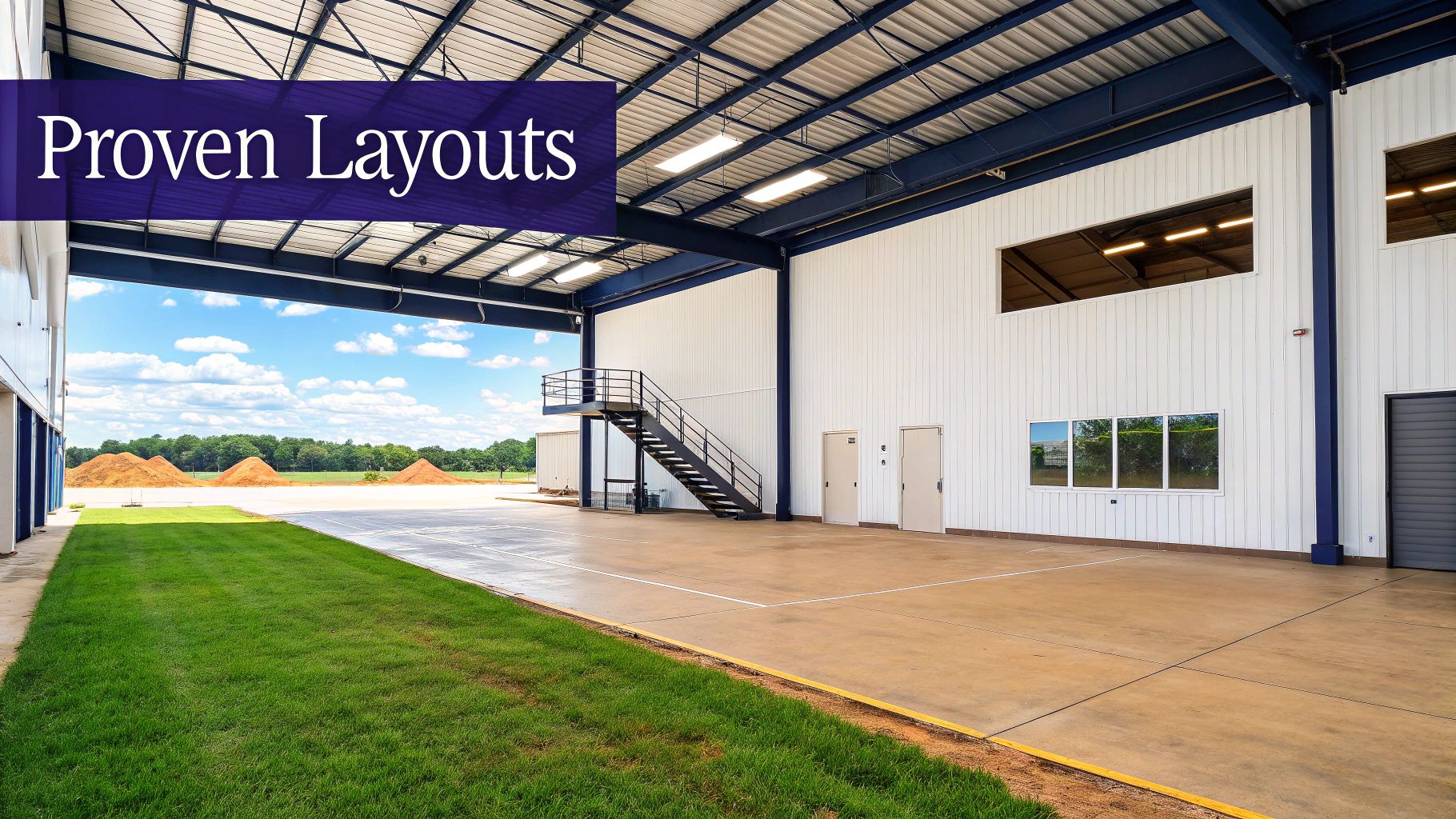
It’s one thing to understand the pieces of a metal building floor plan, but it's another thing entirely to see them come together in the real world. A great layout isn't just a drawing—it's a solution. It solves real problems for specific uses.
Let's move past the theory and step inside a few common building types. We’ll look at the "why" behind their designs to help you picture how a floor plan directly creates a more productive warehouse, an organized workshop, or a comfortable home.
The High-Efficiency Warehouse Layout
In logistics, the floor plan is your moneymaker. The mission is simple: get goods in, store them safely, and ship them out fast. To do that, a clear-span design is almost always the starting point.
This open layout gives you a massive, unobstructed interior perfect for a few key things:
- Optimized Racking: You can run long, uninterrupted rows of pallet racking, which lets you maximize every inch of vertical storage.
- Unrestricted Movement: Forklifts and other equipment can move freely without having to navigate around interior columns. This isn't just faster—it's safer.
- Strategic Staging Areas: You can create dedicated zones for receiving and shipping right next to the loading docks without structural obstacles getting in the way.
A smart warehouse plan also maps out the loading bays with precision. By placing them on opposite ends, you create a "flow-through" design that keeps incoming and outgoing truck traffic from becoming a bottleneck.
The Hybrid Office and Workshop Plan
So many businesses need a building that pulls double duty: a clean, professional space for office work and a rugged, functional area for production or repairs. This is where a modular-frame layout really proves its worth, creating a smart division of space without breaking the budget.
A common hybrid floor plan puts the office right at the front, often with its own entrance for customers. This section is framed with interior walls to create individual offices, a reception area, and restrooms. A firewall or an insulated partition then creates a hard separation between the clean office and the workshop in the back.
The success of a hybrid floor plan lies in its ability to create distinct environments under one roof. It isolates noise, dust, and heavy activity from the administrative side, ensuring both parts of the business can operate at peak efficiency without interference.
This setup is a favorite for auto repair shops, small manufacturers, and contractors. The workshop gets the benefit of high eave heights for vehicle lifts and heavy equipment, while the office stays quiet and comfortable.
The Customer-Focused Retail Storefront
In retail, a floor plan is more than just a map—it's a sales tool. The layout needs to feel welcoming while strategically guiding shoppers past your most important products.
A retail metal building typically uses a modular design to section off a back stockroom, break areas, and restrooms. This leaves the main sales floor as open and flexible as possible.
Key layout considerations for retail include:
- Creating a "Power Wall": This is the first wall customers see when they walk in. The layout ensures this spot has high visibility to showcase new arrivals or high-margin items.
- Designing Clear Pathways: Aisles are planned to lead customers on a natural journey through the store, encouraging them to explore without feeling trapped or crowded.
- Placing the Checkout Counter: The register is usually near the exit but positioned so the staff has a clear line of sight to the entrance and the sales floor.
The Modern Barndominium Design
"Barndos" have taken the housing world by storm, perfectly mixing rustic charm with modern living. Their metal building floor plans are a fascinating blend of residential comfort and practical utility space.
A popular approach is to devote one part of the building to a large garage, workshop, or hobby area, while the other portion is finished out as the main living quarters. The living space often features an open-concept layout—combining the kitchen, dining, and living rooms—to make the home feel huge.
With an average build cost of $60 to $160 per square foot, barndominiums are opening up a more affordable path to homeownership. The sheer versatility of steel building kits for residential and commercial use lets families design a home that fits their life perfectly, whether that means including a huge workshop, horse stalls, or just some extra storage space.
Critical Questions to Ask Before Finalizing Your Design
A great floor plan doesn't just appear out of thin air. It's the result of asking tough questions and thinking hard about how the space will function—not just on day one, but years down the road. Before you sign off on your metal building floor plans, you need to pause and think like a city planner for your own little metropolis.
This is the moment to move beyond a simple layout. It's about considering the dynamic, living aspects of your building. Think of it less like a checklist and more like a framework for turning a good design into a truly exceptional, functional, and future-proof space. Getting this right is a huge part of the process when you're buying a metal building.
How Will People and Equipment Move Through the Space?
First things first: map out the daily workflow. Seriously, imagine the paths that people and equipment will take hundreds of times a day. For a warehouse, that means tracing the journey from the loading dock to the racking and then over to shipping. Are there any obvious bottlenecks? Is a forklift going to have to cross a busy pedestrian path?
The same logic applies to an auto shop. How will cars enter the service bays, get to a lift, and then exit without creating a traffic jam in the middle of the floor?
- Identify High-Traffic Zones: Pinpoint where people or machinery will cluster and make sure there’s enough breathing room to operate safely and without tripping over each other.
- Create Logical Paths: Design clear, direct routes for common tasks. A winding, convoluted path is just wasted time and an open invitation for accidents.
- Separate Incompatible Activities: You don’t want your welding station right next to the front office or customer reception area. Keep the messy, loud work away from the clean zones.
Thinking through these movements now prevents the kind of daily frustrations that slowly kill productivity and make a workplace miserable.
Where Will Your Utilities Go?
Planning for utilities from the very beginning is one of the biggest money-savers you can find. Trying to retrofit plumbing, electrical, and HVAC systems into a finished metal building is a nightmare—it's messy, disruptive, and incredibly expensive.
So, ask yourself now: where will you need power, water, and climate control? A manufacturing floor needs heavy-duty electrical outlets placed just right for machinery. An office space needs a ton of wiring for computers and data ports. A barndominium needs plumbing stubbed out for kitchens and bathrooms long before the concrete is poured.
Never treat utility planning as an afterthought. Integrating plumbing, electrical, and HVAC systems into the initial floor plan is vastly cheaper and more efficient than cutting into concrete and finished walls later. Plan for your needs today and anticipate the needs of tomorrow.
Is Your Design Ready for the Future?
Let’s be realistic: your needs are going to change. A successful small business will grow. A hobby might turn into a full-blown operation. Your storage requirements could easily double. A smart floor plan doesn't just work for today; it anticipates that growth.
Think about building in features that make future expansion a breeze:
- Expandable Endwalls: Design at least one wall as a non-load-bearing endwall. That way, it can be easily removed to add more bays down the line.
- Knock-Out Wall Panels: You can include framed openings that are covered with siding for now but can be quickly turned into future doorways or windows when you need them.
- Utility Scalability: Make sure your electrical panel and plumbing systems can handle more demand in the future without requiring a complete, and costly, overhaul.
Does Your Plan Meet Local Codes?
Finally, and this is a big one, you have to ensure your design is compliant with all local building codes and zoning ordinances. These aren't suggestions—they're rules that dictate everything from building setbacks and eave heights to fire safety requirements and energy efficiency standards.
Government initiatives promoting sustainable construction have also started to influence building plan choices. For instance, metal roofing—a core component of prefab designs—is now used in over 50% of new industrial builds in some regions because its solar reflectivity can slash cooling loads by up to 20%. It's just one more reason to pay close attention to the rules and take advantage of modern building science.
From Standard Plan to Custom Space
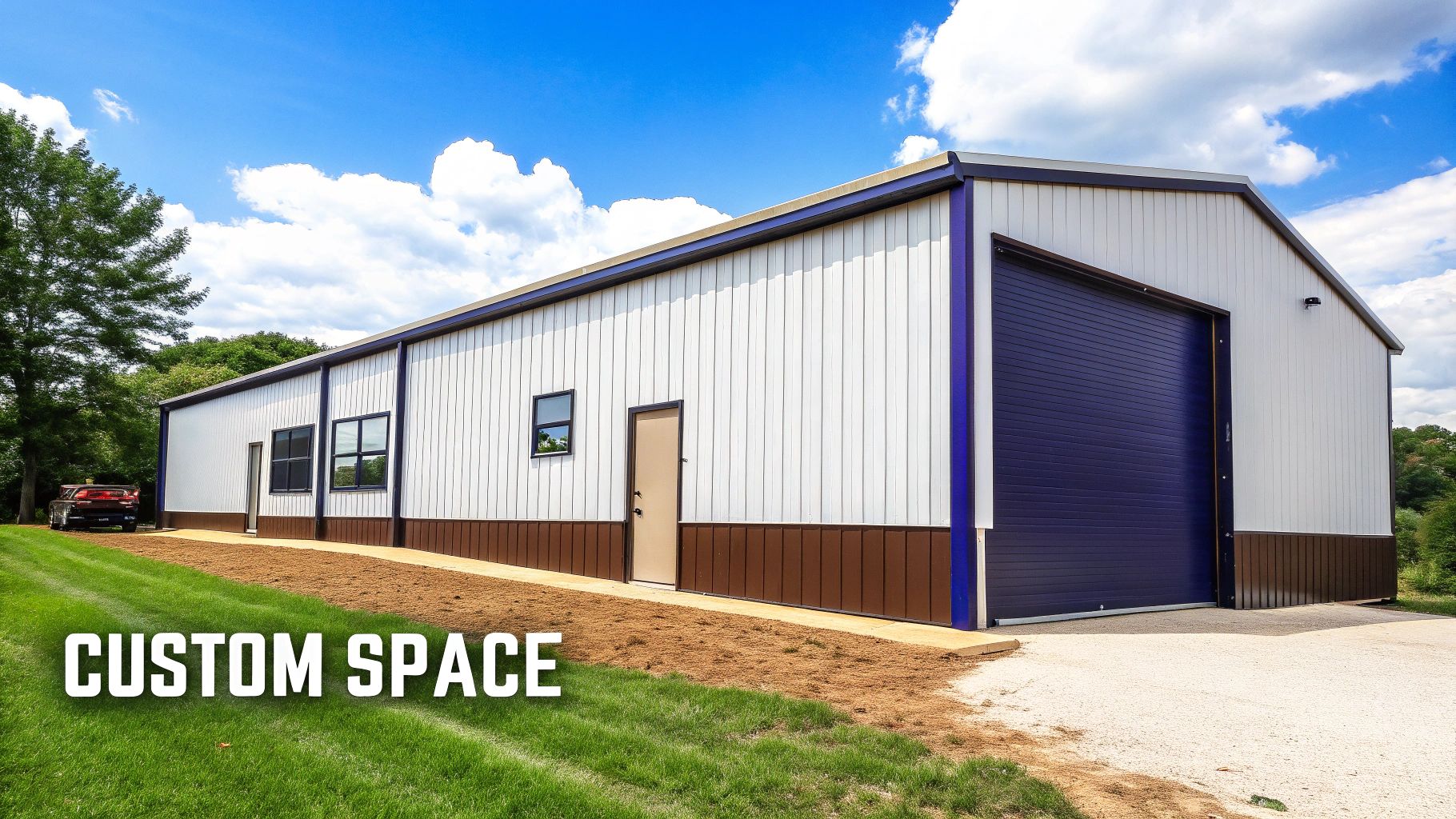
There’s a common myth floating around that metal buildings are just generic, boxy shells. But the truth is, a standard metal building floor plan is only a starting point. The real magic happens when you start customizing that blueprint to fit your exact vision. This is where you elevate a basic structure into a high-performance space built for your specific goals.
Think of that initial floor plan as the sturdy, reliable chassis of a truck. The customizations you add—the engine, cab features, and bed configuration—are what turn it into the perfect vehicle for the job. The core structure provides the strength, but the details deliver the function.
Expanding Your Usable Square Footage
One of the smartest ways to customize a floor plan is by thinking vertically. Many businesses and homeowners eventually find they need more room than their initial footprint provides, and adding structural elements is the perfect solution.
A mezzanine, for example, is a partial second story built inside the main structure. It’s an incredibly cost-effective way to nearly double your usable floor space without touching the building's foundation. This opens up a world of possibilities, creating the perfect area for things like:
- Administrative Offices: You can build a full suite of offices above a workshop or warehouse, keeping operations and administrative tasks neatly separated.
- Light Storage: Mezzanines are ideal for stashing parts, inventory, or equipment that doesn’t require heavy-duty floor loading.
- Break Rooms or Lounges: An elevated space offers a quiet spot for employees to relax, away from the hustle of the main work area.
Adding Functional Doors and Natural Light
Don't underestimate the impact of doors and windows. How people and equipment move in and out of your building dictates daily efficiency, so customizing your access points is a critical step in turning a generic plan into a well-oiled machine.
Think about installing different types of doors based on their purpose. You can add large roll-up doors for vehicle access or loading docks while placing standard personnel doors in strategic spots for employees and customers. You can explore various metal building design ideas to see just how much door placement can improve workflow.
At the same time, incorporating skylights or translucent wall panels is a brilliant move. These features flood the interior with natural light, which can slash electricity costs for lighting by up to 40% and make for a much more pleasant working environment.
The adaptability of metal building floor plans is a primary driver of their popularity. It allows for single or multi-story layouts, open spans, and modular additions, which is why they are so widely adopted across industries.
This flexibility has been a game-changer. A 2021 industry analysis found that nearly 60% of contractor revenue in the U.S. construction sector came from metal structures. Even more telling, a remarkable 79.1% of those contractors planned to keep investing in metal building projects, with floor plan efficiency being a top reason.
Enhancing Comfort and Curb Appeal
Finally, customization extends to the building's climate control and its looks. A basic metal shell can be transformed into a comfortable, energy-efficient space with a comprehensive insulation package. This is non-negotiable for office buildings, retail stores, and barndominiums where maintaining a stable indoor temperature is a priority.
You can also completely reinvent the exterior of your building. Forget the plain siding look—you can add finishes like:
- Brick or stone veneer
- Stucco finishes
- Wood-look siding panels
- Wainscoting in a contrasting color
These options allow your metal building to blend seamlessly with existing structures or match any architectural style you can dream up, proving once and for all that a metal building can be as beautiful as it is functional.
Costly Floor Plan Mistakes and How to Avoid Them
Even the sharpest metal building floor plans can have hidden flaws that only show up after the concrete is poured and the walls are up. These common mistakes can turn a dream project into a source of daily frustration, leading to expensive retrofits, operational logjams, and missed opportunities. The smartest way to guarantee your design works from day one is to learn from the pitfalls others have fallen into.
Underestimating Future Space Needs
The most common error we see? Simply not planning for growth. A business owner designs a perfect workshop for their current three-person team, only to find themselves hiring two more people a year later. Suddenly, that once-spacious layout is cramped and inefficient, with no easy way to expand. This mistake effectively landlocks your success, forcing you into a costly move or a disruptive, expensive renovation.
The fix is all about proactive planning. Don't design for today; design for where you'll be in five or ten years.
- Plan for expandable endwalls from the very beginning. This makes adding more bays down the road a simple process.
- Designate "flex space" on your floor plan. These are areas with no fixed purpose that can adapt as your needs evolve.
- Rough-in utilities for future additions now. It's far cheaper than jackhammering a finished concrete floor later.
Overlooking Workflow and Daily Operations
Another critical mistake is creating a layout that looks perfect on a blueprint but completely fails in the real world. Imagine a manufacturing facility where the raw materials receiving dock is on the complete opposite side of the building from the production line. Every single day, crews waste time and energy hauling materials across the entire facility, creating a permanent bottleneck that absolutely kills productivity.
This happens when a floor plan is designed without a deep, practical understanding of the actual workflow. The key is to map out every single process from start to finish.
A floor plan isn't just an arrangement of rooms; it's a map of your daily processes. If that map leads you in circles, your efficiency will always suffer. Smart design puts logical flow above all else.
Put on your process engineer hat for a moment. Trace the physical path of people, inventory, and equipment. Where do they start? What's the next logical step? Optimizing these paths creates a building that works for you, not against you. A simple tweak, like relocating a door or widening a hallway, can save thousands of hours over the life of the building.
Ignoring Site-Specific Conditions
Finally, a floor plan can't exist in a vacuum. It has to work with its physical environment, not fight it. Forgetting to account for site-specific details like sun exposure, prevailing winds, and drainage patterns is a recipe for long-term headaches. For example, putting huge windows on the west-facing wall of a building in a hot climate will lead to scorching afternoon temperatures and eye-watering air conditioning bills.
Likewise, failing to consider the site's drainage can cause water to pool around your foundation or loading docks, leading to structural damage and serious safety hazards.
Before you lock in your design, get out there and do a thorough site analysis. Watch how the sun moves across the property during the day and throughout the year. Understand the natural slope of the land and figure out where water will flow during a heavy downpour. When you align your metal building floor plans with these natural conditions, you can slash long-term utility and maintenance costs while creating a more comfortable and resilient building.
Got Questions About Your Floor Plan Design? We’ve Got Answers.
Even with a great idea in mind, you’re bound to have some questions pop up when designing your metal building. Getting clear, straightforward answers is the best way to move forward with confidence. Here are some of the most common questions we hear about metal building floor plans, with real-world, practical advice.
How Much Does a Fully Custom Floor Plan Really Cost?
This is probably the number one question we get. The short answer? It depends on how "custom" you want to go.
Simple tweaks to a stock plan, like shifting a door opening or adding a non-load-bearing interior wall, might barely move the needle on cost. But if you’re dreaming up a floor plan from a completely blank slate, it’s going to be a bigger investment.
As a rule of thumb, expect a fully custom floor plan to add 15% to 25% to the design phase of your project compared to a standard plan. That extra cost covers the additional hours of engineering and drafting needed to bring your unique vision to life. While it's more money upfront, a purpose-built space designed around your exact needs often pays for itself in efficiency and usability down the road.
Can I Change the Floor Plan After the Building Is Up?
The short answer is yes, but it’s a lot harder—and more expensive—than getting it right the first time. The ease of post-construction changes really depends on what you want to modify.
- Interior Non-Load-Bearing Walls: This is the easiest fix. Adding or removing these walls is a common and relatively simple modification.
- Adding New Doors or Windows: This is definitely manageable. It involves cutting new openings in the wall panels, which just requires careful planning and execution.
- Moving Structural Components: This is where things get complicated. Shifting a load-bearing column or expanding the building’s footprint is a massive job. It means re-engineering the structure, pouring new foundation work, and spending a lot of money.
Think of it this way: a metal building is adaptable, but its core structure is engineered to work as a complete system. Major changes after the fact are far more disruptive than finalizing your layout before the concrete is poured.
Should I Hire an Architect or Use the Supplier’s Design Team?
For the vast majority of standard metal building projects, your best bet is to work directly with the supplier’s in-house design and engineering team. They’re the experts on their own systems—they know exactly what the structure can and can’t do, which ensures your plan is both safe and cost-effective. Plus, it keeps everything under one roof, which makes communication a whole lot simpler.
However, there are times when bringing in an independent architect makes sense. If your project is exceptionally complex, has very specific aesthetic goals, or needs to blend seamlessly with an existing traditional building, an architect can offer a valuable design perspective. Just make sure they have proven experience with pre-engineered metal buildings. The last thing you want is a beautiful design that’s impractical or wildly expensive to actually build.
Ready to turn your vision into a reality with a perfectly designed floor plan? The experts at Icon Steel Buildings are here to help you create a durable, affordable, and fully customized metal building for any application. Explore your options at https://iconsteelbuildings.com.