When you're trying to figure out the cost of a steel building, the first thing to know is that prices generally fall into two buckets: the building kit price and the fully installed, or "turnkey," price.
A basic steel building kit will usually run you somewhere between $15 to $25 per square foot. If you want a move-in-ready building where a crew handles everything, you're looking at a range closer to $24 to $43 per square foot. That bigger number accounts for everything from the concrete slab to the final screw, and the final price tag really depends on your specific design, location, and the cost of labor in your area.
Understanding the Average Cost of a Steel Building
So, how much do steel buildings really cost? The most important step in budgeting is understanding the difference between buying the kit and paying for a turnkey project. Getting this right from the start sets you up for a smooth project without any surprise costs down the road.
Think of it like buying a new grill. You can go to the store and pick up a big, flat box—that's your "kit." You get all the parts and a manual, but you're the one spending Saturday afternoon putting it all together. Or, you can pay a little extra for the store's assembly and delivery service. They show up with a fully built grill, roll it onto your patio, and you're ready to cook. That's the "turnkey" option.
Kit vs. Turnkey Cost Explained
The steel building kit price covers the core components you need to get the structure's frame and shell up. This is a great route for seasoned DIYers or general contractors who have their own crews lined up for the job.
A standard kit almost always includes:
- Primary Framing: The big I-beams that create the building’s skeleton.
- Secondary Framing: The smaller girts and purlins that support the walls and roof.
- Wall and Roof Panels: The metal sheeting that closes in the structure.
- Fasteners and Hardware: Every last nut, bolt, and screw needed for assembly.
A turnkey project, on the other hand, covers the whole shebang. It’s the perfect choice if you want a hands-off experience where one company manages the entire build from start to finish. This price includes the kit plus all the labor, foundation work, and other materials required to make the building usable. These costs can climb depending on how custom you get, a topic we cover in our guide to commercial metal building costs.
Across the United States, the total installed cost for most steel buildings lands somewhere between $18 and $30 per square foot. For example, a 40×60 ft building kit might start around $43,200 ($18 per sq. ft.). But once you factor in the concrete foundation, delivery, and a professional installation crew, that final number often climbs to between $24 and $43 per square foot, all depending on your project's details. For a closer look at what goes into these figures, BuildingsGuide.com offers some great pricing breakdowns.
Key Factors That Drive Your Final Building Price
The base price per square foot is really just a starting point. Think of it like buying a new truck—the sticker price gets you the base model, but adding four-wheel drive, a bigger engine, or a premium sound system will change the final number. The same thing happens with steel buildings.
Several key variables can swing your project quote one way or the other. Let's walk through the most important factors that will shape your budget so you can build a realistic financial plan.
Building Size and Design Complexity
This one’s pretty straightforward: the bigger the building, the more it costs. A larger footprint demands more steel, more materials, and more labor. Simple enough.
But it’s not just about the raw square footage. The complexity of the design is just as big a deal. A plain, rectangular warehouse with a standard roof pitch? That's your most economical option, hands down. The moment you start adding custom touches, the price tag starts to creep up.
These design choices add material and engineering costs:
- Unusual Shapes: If you move away from a simple box to an L-shaped or T-shaped layout, you'll need extra framing and more complex engineering to make it work.
- Multiple Stories: Tossing in a second floor or a mezzanine is a game-changer. It dramatically increases the amount of structural steel needed to handle all that extra weight.
- Custom Roof Pitches: Steeper rooflines or unique angles look great, but they add to the material bill and make the installation a bit trickier.
This isn't unique to steel, either. Even with other projects, these same principles apply. For instance, digging into the different asphalt driveway cost factors shows how size, materials, and labor drive prices across the board. Every choice you make has a real impact on the bottom line.
Geographic Location and Local Codes
Where you plan to build is just as important as what you plan to build. Your location affects costs in a few big ways, mostly thanks to local building codes and labor rates.
Snow and wind load requirements are the perfect example. A building on the Florida coast has to be engineered to survive hurricane-force winds. That means heavier-gauge steel and beefier bracing compared to a building in a calm, inland area. Up north, a structure needs a roof strong enough to hold a massive amount of snow.
Meeting these specific codes isn't optional, and it directly adds to your material costs.
Key Takeaway: Your local building department has the final say on how strong your structure needs to be. These codes are all about safety, and they dictate the amount of steel required, making your location a huge piece of the pricing puzzle.
Custom Features and Finishes
Here’s where you give your building its personality—and where a good chunk of the cost comes from. A standard kit is just a shell. The features you add are what turn it into a usable space, and every single customization adds to the total.
Think about these common add-ons:
- Doors and Windows: The number, size, and style of your doors and windows all factor in. Big roll-up garage doors will naturally cost more than a simple walk-in door.
- Insulation: If you plan on heating or cooling the building, insulation is a must. There are tons of steel building insulation options available, each with different R-values and price points to fit your climate and budget.
- Aesthetics: Want to boost the curb appeal? Things like wainscoting, custom paint jobs, and decorative overhangs look fantastic but will add to your material and labor expenses.
Decoding Raw Steel Price Volatility
The single biggest factor that sways the final cost of a steel building is the raw price of steel itself—a number that's always in motion. To really get a handle on the quote you receive for your project, you need to understand the 'why' behind these price swings, which connects huge global market forces directly to your bottom line.
Think of it like the price of gas. You know it changes from week to week based on things completely out of your control, like global oil production, political drama, or supply chain snags. The steel market works in a very similar way, reacting to a complex web of international factors.
What Makes Steel Prices Change?
A handful of key elements create this constant fluctuation. A disruption in a major steel-producing country can tighten the global supply and send prices soaring. New international trade policies, like tariffs, can add immediate costs that get passed straight down the line. And of course, general economic inflation plays a huge role, pushing up the cost of everything from mining the raw materials to shipping them across the country.
These forces create a dynamic and sometimes wild market. Just look at the last few years.
Between 2022 and early 2024, the steel market saw extreme volatility, with price swings sometimes exceeding 50% year-over-year. Following sharp drops in the first half of 2024, the market has remained sensitive to global demand, supply chain issues, and geopolitical tensions. You can find more insights on these steel price updates on Gordian.com.
This volatility brings up a crucial point for anyone looking to buy: the quote you get today might not be the same next month, or even next week. This is why many suppliers can only guarantee a price for a short window of time. It’s not a sales gimmick; it’s a direct reflection of the unstable market they have to navigate every single day.
The constant movement in steel pricing can be a lot to track. Here’s a simple breakdown of the major factors at play and how they can affect the final cost of your building.
Impact of Market Factors on Steel Prices
| Market Factor | Potential Impact on Price | Recent Example |
|---|---|---|
| Global Supply & Demand | High demand or low supply drives prices UP. Low demand or oversupply pushes prices DOWN. | A post-pandemic construction boom increased demand, causing a price spike. |
| Trade Policies & Tariffs | Tariffs on imported steel make domestic steel more competitive, often raising prices UP. | Section 232 tariffs imposed on steel imports in the U.S. led to higher domestic prices. |
| Raw Material Costs | Increased costs for iron ore and coal (key ingredients for steel) drive prices UP. | Fluctuations in Australian iron ore mining have directly impacted global steel costs. |
| Geopolitical Events | Conflicts or instability in major steel-producing regions can disrupt supply, pushing prices UP. | The war in Ukraine, a major steel exporter, created supply chain chaos and price increases. |
| Energy Prices | Steel production is energy-intensive, so higher energy costs lead to higher steel prices (UP). | Rising natural gas prices can significantly increase the operational costs for steel mills. |
| Economic Inflation | General inflation increases costs across the board—from labor to transport—driving prices UP. | Widespread inflation in 2022-2023 contributed to record-high steel prices. |
Understanding these dynamics is key to making a smart investment. When the market is unpredictable, knowledge is your best tool.
Why Locking In Your Price Is a Smart Move
Knowing about these external forces puts you in the driver's seat. When you get a quote for your steel building, you're essentially getting a snapshot of the market at that exact moment. If prices are favorable, locking in that quote can shield you from surprise increases down the road.
This is especially true when you consider where your steel is coming from. Choosing domestically sourced steel often provides more price stability and a guarantee of quality. You can learn more about the benefits of why we only use US-made national steel in our detailed guide. By staying informed, you can make a strategic, timely decision that secures the best possible price for your investment.
Breaking Down Your Total Project Cost
So, you're asking, "How much do steel buildings cost?" That's the big question, but the answer goes way beyond the price tag on the building kit itself. Think of that initial quote as just one piece of a much larger puzzle. To get a real handle on your budget and dodge those nasty, unexpected costs, you need to look at everything it takes to turn a pile of steel into a finished, functional building.
It’s a bit like buying a new car. The sticker price gets you the vehicle, but it doesn’t cover the insurance, registration, or even the gas you need to drive it off the lot. Your steel building project works the same way—there are several other crucial expenses that are absolutely essential to get the job done right.
Preparing the Groundwork
Before a single beam goes up, your land has to be ready to go. This first phase, called site preparation, is the foundation—literally—for your entire project. It's not glamorous, but it's non-negotiable.
- Excavation and Grading: Your build site needs to be perfectly level and clear of any junk. This usually means bringing in heavy machinery to move dirt, pull out trees or rocks, and make sure water drains properly away from your future foundation.
- Utility Connections: You'll need hookups for water, sewer, electricity, and maybe natural gas. The cost here can swing wildly depending on how far your building site is from the main utility lines.
Getting this stage right from the start prevents some major headaches and structural problems down the road. It really sets the tone for a smooth construction process.
And speaking of costs, the price of steel itself can be a moving target. The chart below gives you a clear picture of just how much steel prices can fluctuate, which directly impacts the cost of your kit.
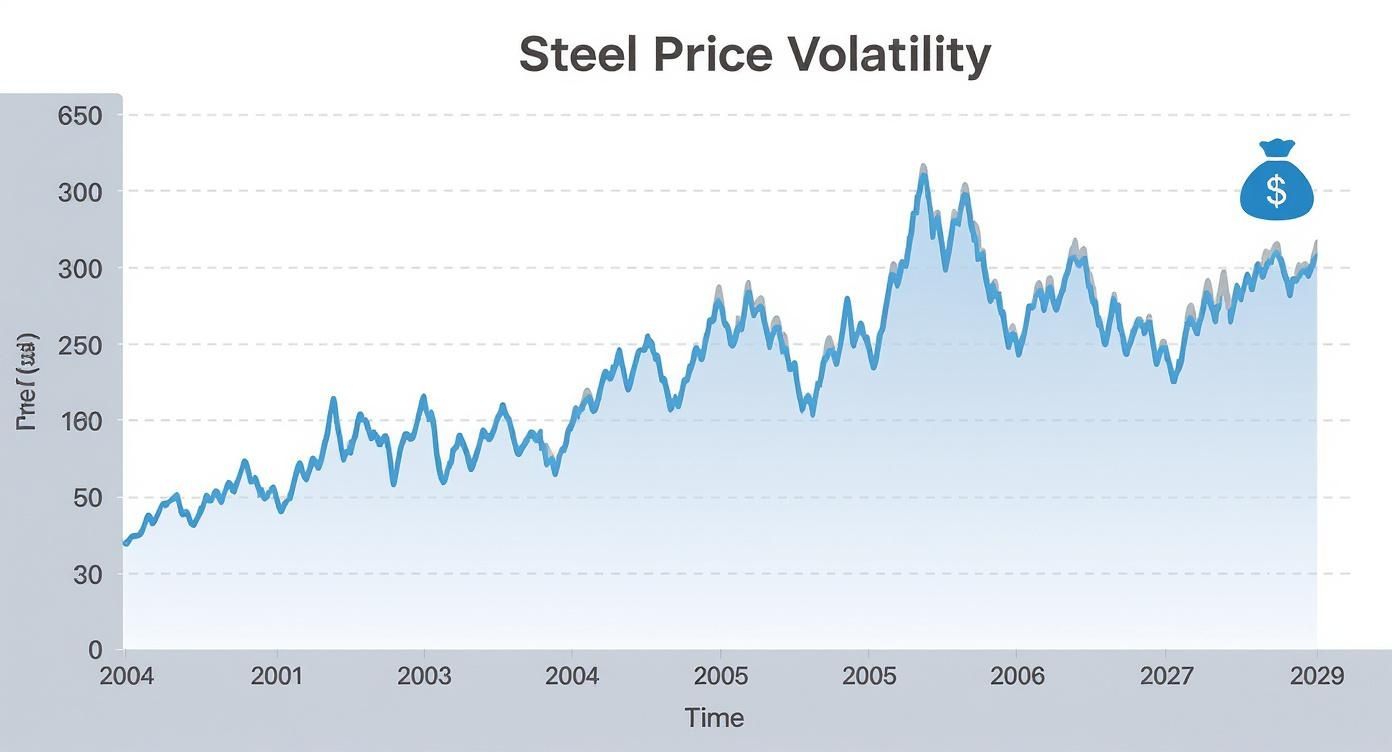
This is exactly why locking in your quote is so important. A market swing from one month to the next could significantly change what you pay for materials.
Foundation and Construction Labor
With the site prepped, your next two big-ticket items are the foundation and the crew to put the building together. The concrete slab is the literal base for your entire structure, and its cost will depend on the size, thickness, and what concrete goes for in your area.
For bigger projects, getting a firm grasp on the costs for commercial concrete foundations is a must for accurate budgeting. Outside of the building kit, this is often one of your single largest expenses.
Then comes the actual construction. While a few brave souls might go the DIY route, most projects need a professional crew to handle the assembly.
Key Consideration: Erection costs—that’s the industry term for assembly—typically add 30-60% of the kit price to your total budget. That fee covers the skilled crew, machinery rentals like cranes or lifts, and the project management needed to put your building up safely and correctly.
Hiring an experienced team is an investment in quality, safety, and your own peace of mind. To see what that process really involves, you can learn more about professional metal building installation and why it's such a critical part of the budget.
Finally, don’t forget the smaller—but still important—costs like delivery fees, permits, and inspections. Getting all that heavy steel shipped to your site isn't free. Your local city or county will also require building permits before you start and will send inspectors to make sure everything is built to code. These administrative fees are just a necessary part of any legitimate construction project.
How Global Trade Policies Impact Your Quote
It might seem strange, but the price you pay for a steel building here at home is often decided in government offices halfway across the world. More than just local supply and demand, international trade policies—especially tariffs—can send shockwaves through the industry, causing sudden and sharp price hikes.
Think of a tariff as a tax slapped on imported steel. When a government puts a tariff in place, foreign steel instantly becomes more expensive. This kills competition and gives domestic steel mills the green light to raise their own prices. That extra cost doesn't just stay at the mill; it trickles down the entire supply chain, from the manufacturer to your building provider, and finally, right to your quote.
It’s no different than when a new tax hits something like gasoline. The gas station doesn't just eat that cost—they pass it straight to you at the pump. The exact same thing happens with your steel building.
The Ripple Effect of Tariffs on Steel Prices
These policies create a ripple effect that throws the market into a state of uncertainty. We saw a perfect example of this not long ago when a 25% global tariff on steel was introduced. Almost overnight, it sent prices for steel building projects climbing. The situation got even more intense when that tariff was doubled to 50% in the U.S., putting massive pressure on suppliers.
As a result, steel prices hovered in the mid-$800s per short ton for a while, with experts warning that the tariffs and growing demand would keep pushing them higher. You can see more data on these steel price fluctuations and their impact on DirectMetalStructures.com. This kind of volatility is exactly why the price you’re quoted today might not be the same next week.
Why Your Quote Has an Expiration Date
This direct link between global politics and raw material costs is the real reason why steel building quotes almost always have an expiration date. Suppliers can only lock in a price for a very short time—often just a few days or a couple of weeks—because they have absolutely no control over what the next big trade announcement will be.
Once you understand this, you’ll see that a time-sensitive quote isn’t a high-pressure sales tactic. It’s a necessary reaction to a market that can change in a heartbeat. Acting quickly on a good quote can shield your budget from unpredictable price jumps triggered by forces you can’t control.
Common Questions About Steel Building Costs
Even after you've run the numbers, a few key questions almost always come up before you feel ready to pull the trigger. Getting straight answers to these common hang-ups is the last step in feeling confident about your project. Let's tackle them head-on.
Steel vs. Wood: Which Is More Cost-Effective?
Looking only at the initial price tag, a traditional wood-framed building might seem like the cheaper option. But that's just the beginning of the story. The real cost of ownership almost always tips the scales in favor of steel.
Wood is vulnerable to rot, termites, fire, and warping, which means you're signing up for a lifetime of maintenance and higher insurance premiums. Steel, on the other hand, is an inorganic material that’s immune to those problems. That durability translates directly to lower maintenance costs and, often, better insurance rates. When you look at the total cost over decades, steel delivers a far better return on your investment.
Can a DIY Installation Really Save Me Money?
The idea of rolling up your sleeves and assembling a steel building kit yourself is definitely appealing. For someone with the right skills, tools, and construction experience, going the DIY route can absolutely cut down the final cost. You’re essentially eliminating the labor fees, which can account for 30-60% of the building kit's price.
But it’s critical to be honest with yourself here. Putting up a steel building is a serious undertaking that requires precision, heavy equipment, and a solid understanding of structural engineering. One mistake can lead to expensive repairs, a voided warranty, or even a building that isn't safe. For most people, hiring a professional erection crew is the smarter, safer bet to make sure the job is done right the first time.
Expert Insight: Before you commit to a DIY build, do a serious gut check on your skills. If you've never managed a large-scale construction project, the potential savings probably aren't worth the risk. A professional install guarantees your building is safe and built exactly to its engineered specifications.
How Does Financing Work for Steel Buildings?
Financing a steel building works a lot like financing any other type of construction project. The options you'll have depend on your credit history, financial situation, and what you plan to use the building for.
- Traditional Bank Loans: If you have strong credit, this is often the go-to choice for competitive interest rates.
- Specialized Lenders: Many building suppliers have partnerships with lenders who get the prefab construction process, which can help speed things up.
- SBA Loans: If the building is for a small business, loans backed by the Small Business Administration (SBA) can offer great terms and lower down payments.
What Is the Best Way to Get an Accurate Quote?
Getting a truly accurate quote comes down to one thing: details. A ballpark estimate is easy to get, but a firm number requires you to have your project specifics nailed down. For a more complete breakdown, check out our guide on how much metal buildings cost.
To get a quote you can actually budget with, be ready to provide:
- Exact Dimensions: Length, width, and eave height.
- Job Site Location: The full address is needed to calculate shipping and local engineering loads (like for snow and wind).
- Custom Features: How many doors and windows do you need? What kind? Are you adding insulation?
- Intended Use: This helps determine the specific building codes and design features your structure will need.
The more information you can give your supplier upfront, the more accurate your quote will be—and the fewer surprises you'll have down the road.
Ready to turn your vision into a reality with a structure built to last? Icon Steel Buildings offers high-quality, American-made steel buildings designed to meet your exact specifications. Get your free quote today!