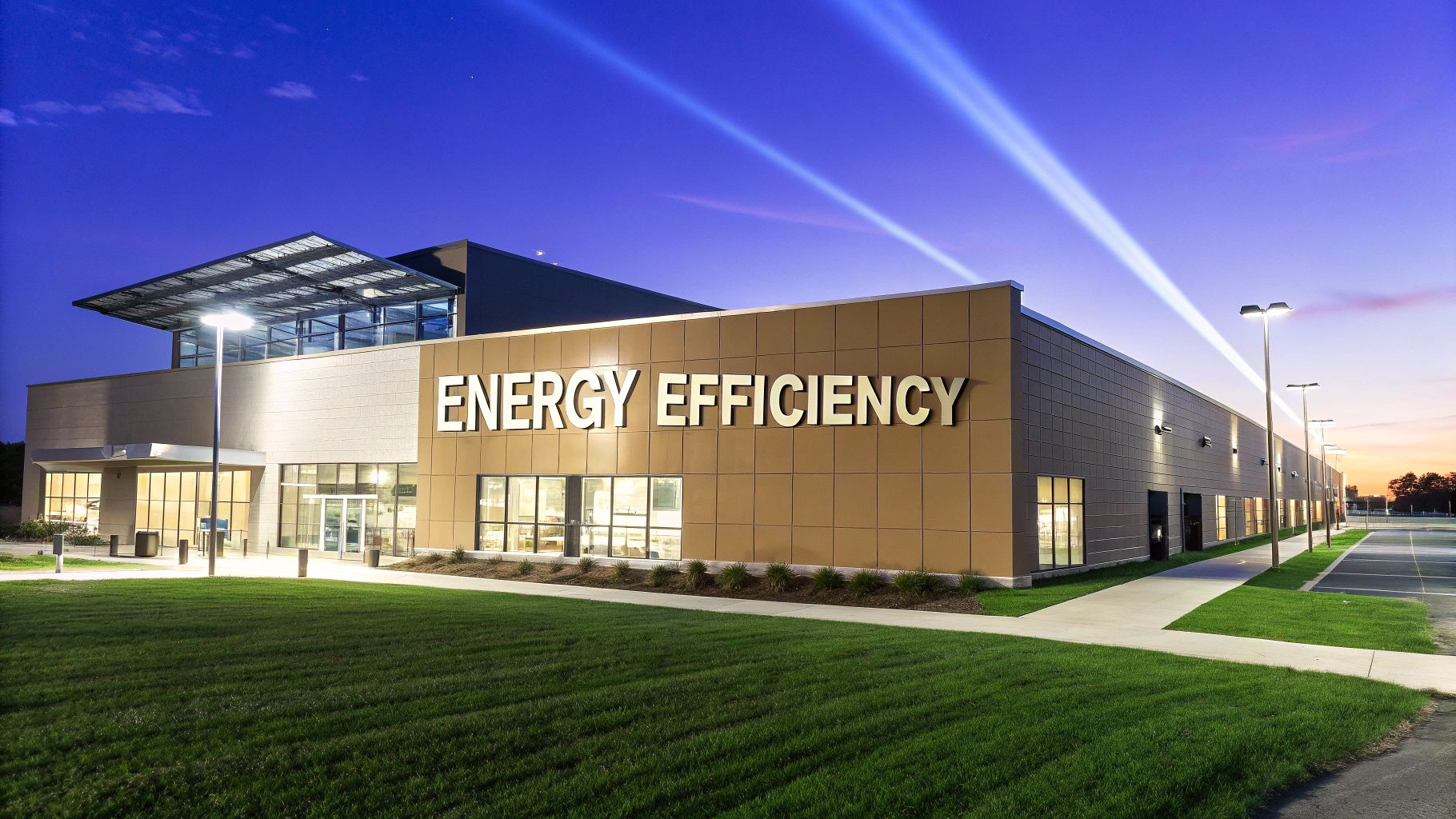
The first step to unlocking your property's true potential is to see it as more than just a structure. True energy efficiency in commercial buildings isn't just a tactic to shave off a few dollars from the utility bill—it's a core business strategy. It transforms a building into a high-performance machine that boosts asset value, keeps tenants happy, and polishes your brand's reputation.
The True Value of Building Performance
Think of your commercial building as a complex ecosystem. Every component—the roof, walls, windows, heating, cooling, and lighting systems—has to work in harmony. They aren't separate parts; they're an interconnected, dynamic machine.
When one part is inefficient, it puts a strain on everything else. The result? Wasted energy, higher operating costs, and uncomfortable occupants. But when you take a holistic approach, you create a powerful ripple effect of benefits that touches every corner of your business.
By focusing on energy efficiency, you're investing directly in your bottom line. Energy is one of the biggest operating expenses for commercial properties, often eating up up to 30% of total costs. Smart, strategic upgrades can slash that expenditure, freeing up capital for other investments and directly improving profitability.
Beyond Simple Cost-Cutting
But the real value goes far beyond the utility bill. A high-performing building creates a superior indoor environment, which is a massive draw for attracting and retaining top-tier tenants. The advantages are clear:
- Enhanced Occupant Comfort: Consistent temperatures, better air quality, and great natural lighting make for a more productive and pleasant space for employees and customers alike.
- Increased Asset Value: Energy-efficient buildings are magnets for investors. They command higher rental rates, sell for better prices, and are seen as modern, well-maintained, and future-proof assets.
- Strengthened Brand Reputation: Showing a real commitment to sustainability elevates your public image. It's a powerful message for environmentally conscious clients, partners, and employees.
A building that operates efficiently is a resilient one. It’s less vulnerable to unpredictable energy prices and better equipped to meet changing environmental regulations, securing its value for the long haul.
Achieving this level of performance starts with a basic understanding of how all these systems interact. The building envelope—its outer shell—determines how hard the HVAC system has to work. Inefficient lighting generates extra heat, forcing the AC to run overtime. Every element is connected.
This is why proactive strategies and consistent upkeep are so critical for maintaining that balance. A great starting point is to follow a comprehensive commercial building maintenance checklist to keep your property in peak condition. This kind of hands-on approach is what turns your building from a simple expense into a valuable, performance-driven asset.
Diagnosing Your Building's Energy Footprint
Before you can fix the leaks, you have to find them. The first step toward achieving real energy efficiency in commercial buildings isn't about buying new equipment—it’s about a clear-eyed diagnosis of where your money is going. Think of it like a financial audit, but instead of tracking dollars, you're tracking kilowatts and BTUs to see exactly where they’re being spent and, more importantly, where they're being wasted.
This "energy audit" process uncovers the hidden culprits behind high utility bills. It can pinpoint everything from tiny air gaps in the building envelope to outdated equipment that’s silently gobbling up power 24/7. Without this hard data, you’re just guessing, potentially sinking money into upgrades that don’t actually solve the core problem.
A proper assessment shifts your strategy from hopeful assumptions to data-driven action. It tells you exactly which systems are your primary energy hogs, letting you prioritize the improvements that will give you the biggest and fastest return on your investment.
Pinpointing Major Energy Consumers
Most commercial buildings have a few usual suspects that account for the lion's share of their energy consumption. The U.S. commercial sector is a massive energy user, with its 5.9 million buildings spending a staggering $141 billion on energy in a single recent year. A huge chunk of that goes to just a handful of systems. Space heating, for instance, often accounts for nearly a third of total consumption, making it the biggest single demand. You can dig into more detailed statistics on commercial building consumption from the U.S. Energy Information Administration.
Knowing where to look is half the battle. The most common energy-hungry areas that need your attention include:
- HVAC Systems: Heating, ventilation, and air conditioning are almost always the top energy consumers, working constantly to keep the indoor environment comfortable.
- Lighting: Inefficient bulbs, old fixtures, and a lack of smart controls can easily inflate your electricity bills month after month.
- Plug Loads: This is the "everything else" category—computers, printers, monitors, and all the other devices plugged into outlets. Individually they're small, but together they add up fast.
- Building Envelope: Leaks through poorly sealed windows, doors, roofs, and walls force your HVAC system to work overtime just to keep up.
This infographic breaks down how improving your building's performance is about more than just trimming costs—it directly boosts profits, occupant comfort, and your company's image.
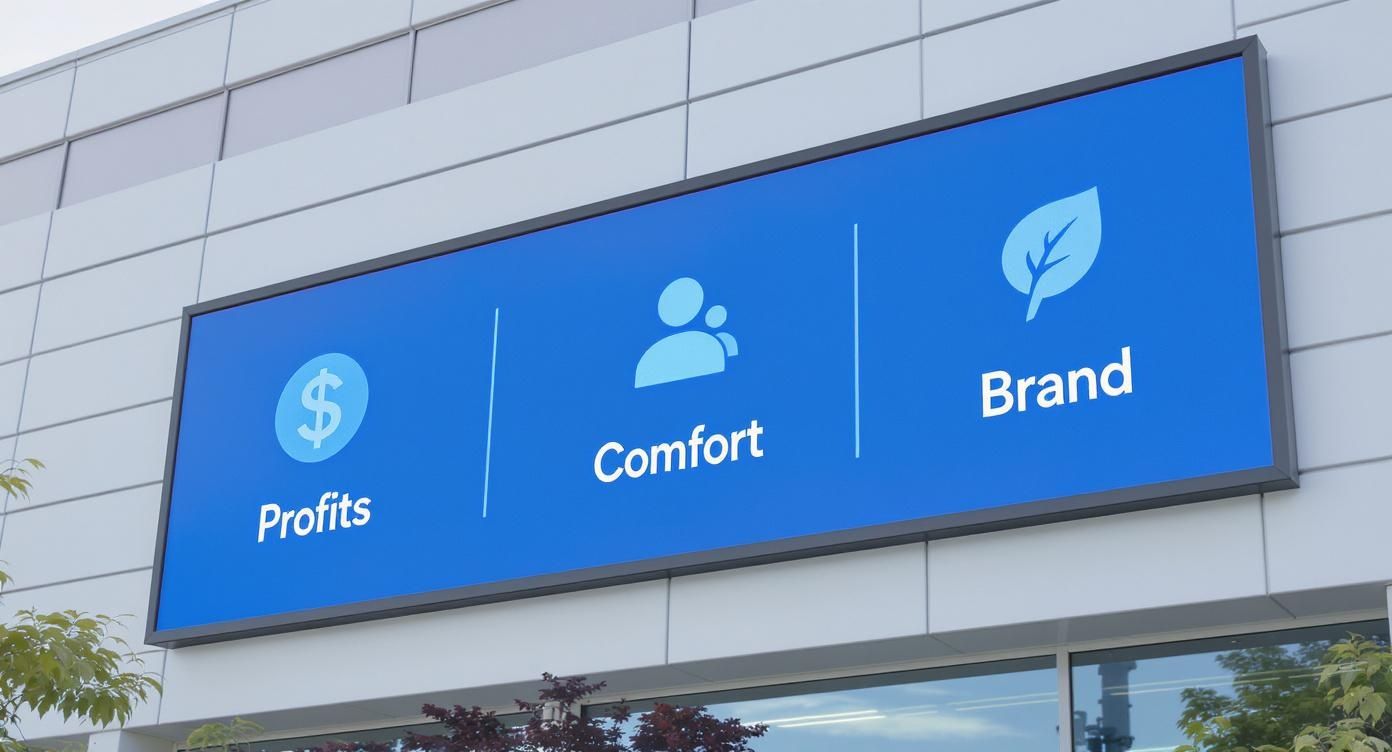
As you can see, energy efficiency isn't just an operational tweak; it’s a powerful strategy for creating a more valuable, sustainable, and profitable asset.
Below is a typical breakdown of where all that energy goes in a commercial building. This table highlights the biggest opportunities for savings.
Primary Energy Consumers in Commercial Buildings
| End-Use Category | Average Percentage of Total Energy Use | Key Efficiency Strategies |
|---|---|---|
| Space Heating | 32% | High-efficiency furnaces, proper insulation, smart thermostats |
| Lighting | 11% | LED retrofits, occupancy sensors, daylighting controls |
| Ventilation | 11% | Demand-controlled ventilation, energy recovery systems |
| Cooling | 10% | High-SEER AC units, cool roofs, regular maintenance |
| Refrigeration | 9% | ENERGY STAR appliances, proper sealing, regular coil cleaning |
| Water Heating | 8% | Tankless heaters, insulated pipes, lower temperature settings |
| Plug Loads | 7% | Smart power strips, energy-efficient office equipment, power management |
| Other | 12% | Varies by facility (e.g., cooking, industrial processes) |
Understanding this distribution is the key. Why spend thousands on new windows if your ancient HVAC system is the real energy monster? This data helps you focus your efforts where they'll have the most impact.
From Diagnosis to Action Plan
Once your audit has laid bare the problem areas, you can build a smart, targeted action plan. This roadmap should rank potential upgrades based on their cost, projected savings, and how easy they are to implement. Often, sealing air leaks and upgrading to LED lighting are fantastic first steps—they’re relatively low-cost but deliver a high impact right away.
An energy assessment provides the foundational knowledge you need. It turns a complex building into a clear set of opportunities, allowing you to invest smartly in upgrades that truly matter.
This structured approach makes sure that every dollar you spend improving energy efficiency in your commercial building is a direct investment in long-term performance, lower operating costs, and a more comfortable, productive space for everyone inside.
Mastering the Building Envelope
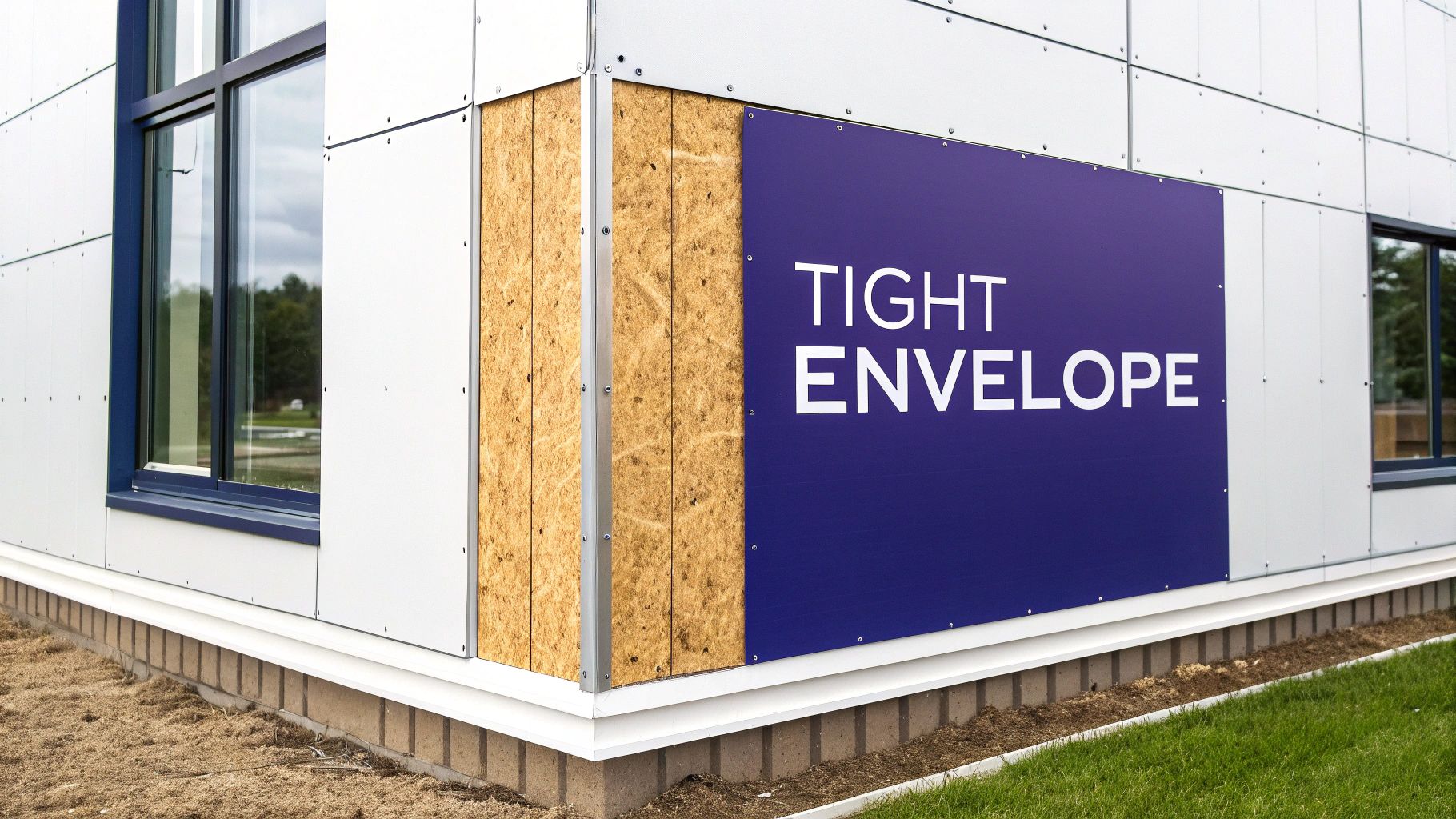
Your building's envelope is its first and most important line of defense against the elements. Think of it as a high-tech thermal jacket, wrapping your entire structure to protect the comfortable interior from the harsh world outside. This "jacket" includes the roof, walls, windows, doors, and foundation—basically, everything separating the conditioned inside from the unconditioned outside.
A high-performance envelope is the absolute cornerstone of energy efficiency in commercial buildings. When this protective shell is weak—riddled with air leaks, poorly insulated, or fitted with cheap windows—your HVAC system is forced into a constant, expensive battle against the weather. It works overtime in the summer to fight off heat and runs nonstop in the winter to chase away the cold.
This constant struggle is a massive drain on resources. In fact, heating and cooling can devour over 40% of a commercial building’s energy budget. By mastering the building envelope, you drastically reduce this workload and create a stable interior that requires far less energy to maintain.
Sealing the Cracks and Gaps
One of the biggest energy thieves in any building is uncontrolled air leakage. You might not see them, but tiny gaps around windows, doors, pipe penetrations, and material joints act like open doors, letting your conditioned air escape while outside air infiltrates.
This is where a meticulous air sealing strategy comes in. Using simple materials like caulk, weatherstripping, and spray foam to close these gaps creates an airtight barrier. This one step prevents your expensive heated or cooled air from leaking out, immediately easing the strain on your mechanical systems.
The Power of Continuous Insulation
Insulation is the core material of your building’s thermal jacket, but the way it's installed makes all the difference. The most effective approach by far is continuous insulation—an uninterrupted layer that wraps the entire building without breaks.
This method is crucial for stopping a phenomenon called thermal bridging. Thermal bridges are like holes in your jacket. They happen where structural elements like steel studs or concrete slabs punch through the insulation, creating a direct path for heat to escape.
A well-designed envelope with continuous insulation acts as a fortress against energy loss. It effectively eliminates these thermal weak points, ensuring your building's protective layer performs as a single, cohesive unit.
Mastering the envelope starts with getting the big surfaces right, and a critical component of this involves optimizing roof insulation to create a solid thermal cap. Choosing the right materials and ensuring a complete, unbroken installation is key. There are many fantastic steel building insulation options designed specifically to eliminate thermal bridging and maximize R-value.
Advanced Glazing and High-Performance Windows
Finally, never underestimate the role of windows. Older, single-pane windows are notorious energy drains. Modern high-performance windows, on the other hand, act as smart gatekeepers for heat and light.
Key features to look for include:
- Double or Triple Panes: Multiple layers of glass with an inert gas like argon trapped between them create a powerful insulating barrier against heat transfer.
- Low-E Coatings: These microscopically thin coatings reflect infrared heat, keeping warmth inside during the winter and outside during the summer, all without blocking visible light.
By combining robust insulation, airtight sealing, and advanced window technology, you create a building envelope that works for you, not against you. This proactive approach is the single most effective way to lock in deep, lasting energy savings.
Upgrading Your Core Energy Systems
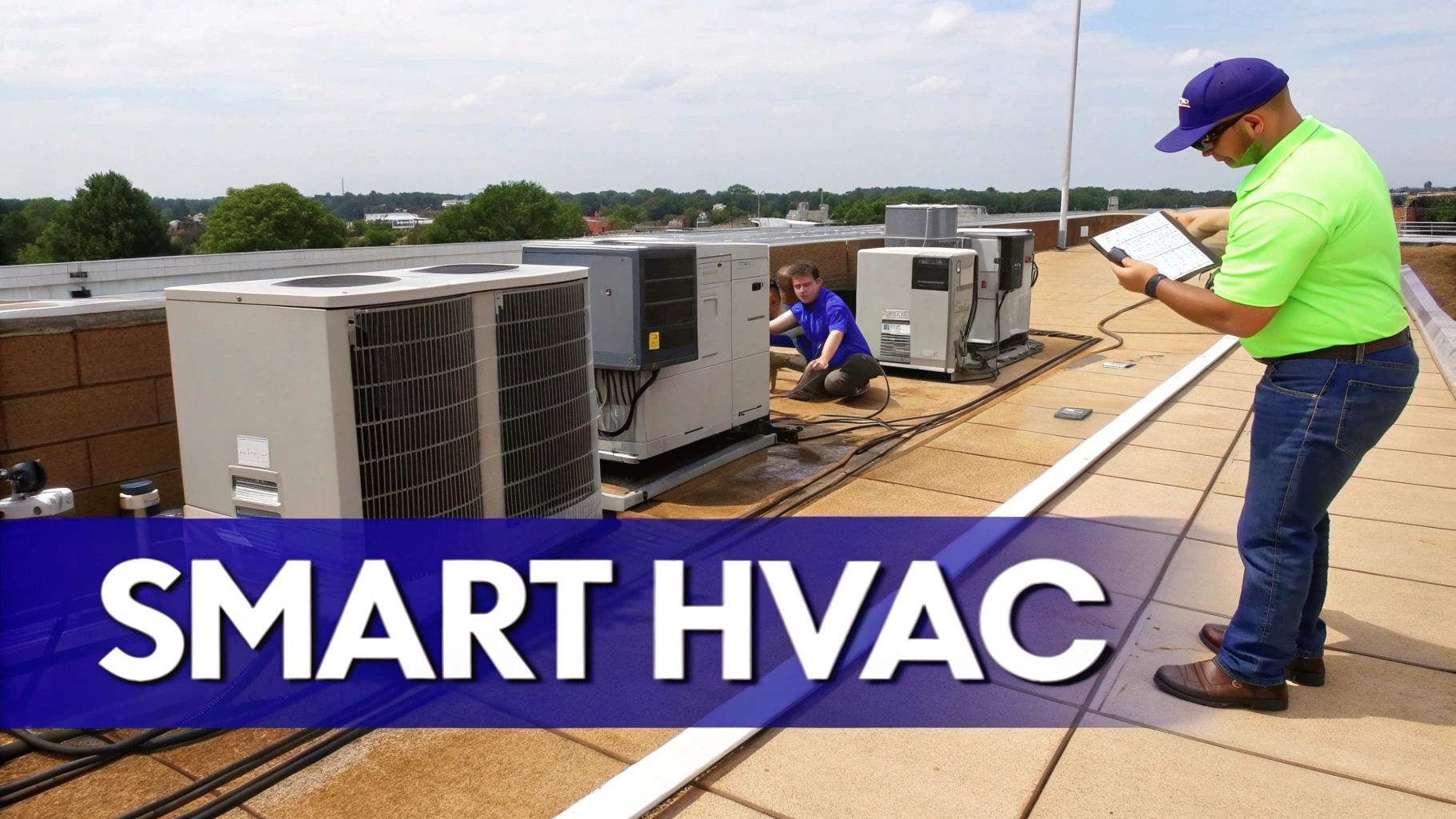
If the building envelope is the body's armor, then the HVAC and lighting systems are its heart and lungs. These core systems are the workhorses, but they're also usually the biggest energy hogs. That makes them the perfect place to focus your upgrades for some serious, measurable returns.
Investing in modern systems isn't just an operational expense; it's a strategic move that pays dividends in energy efficiency in commercial buildings. Old, outdated systems are brute-force energy wasters, blasting conditioned air everywhere regardless of whether a space is even being used. Today's technology takes a much smarter, more surgical approach.
Modern HVAC for Targeted Comfort
The real breakthroughs in HVAC technology are all about precision. A perfect example is the Variable Refrigerant Flow (VRF) system. Think of it like a smart climate control grid for your entire building. Instead of one giant, all-or-nothing central unit, a VRF system uses multiple smaller indoor units. This allows it to heat one zone while simultaneously cooling another, delivering exactly what's needed, right where it's needed.
Another game-changer is the Energy Recovery Ventilator (ERV). As an ERV pushes stale air out of the building, it cleverly captures the heat or coolness from that exhaust. It then transfers that captured energy to the fresh air coming in. This simple exchange pre-conditions the incoming air, dramatically cutting down the work your main HVAC system has to do.
By upgrading to intelligent HVAC technologies like VRF and ERVs, you stop wasting energy on empty rooms and unoccupied zones, leading to potential energy savings of 30% or more on heating and cooling costs.
Intelligent Lighting Systems
Lighting is another low-hanging fruit when it comes to efficiency. Switching from old fluorescent bulbs to LEDs is a fantastic start, but the real magic happens when you add intelligent controls. The goal is simple: only use light when and where you actually need it.
Two key technologies make this possible:
- Daylight Harvesting: These systems use sensors to measure the amount of natural light flooding into a space. As the sun gets brighter, the system automatically dims the artificial lights. It saves a ton of electricity without anyone even noticing.
- Occupancy and Vacancy Sensors: This one is straightforward but incredibly effective. Sensors automatically turn lights on when someone enters a room and, more importantly, turn them off when they leave. It completely eliminates the energy wasted by lights left on in empty offices, break rooms, and hallways.
When you pair these system upgrades with on-site energy generation, like rooftop solar panels, you can slash your utility bills even further. Of course, to keep those savings coming, you have to ensure peak performance of your solar panels with regular maintenance. Combining smarter energy consumption with clean energy production is the hallmark of a truly high-performance building.
Why Metal Buildings Excel in Energy Performance
When we talk about energy efficiency in commercial buildings, you can’t ignore the built-in, engineered advantage of a metal building. Forget the old myths about drafty, bare-bones warehouses. Today’s metal structures are precision-designed to create an incredibly high-performing building envelope, making them a savvy choice for any developer with an eye on the future.
Their design naturally solves some of the biggest energy-wasting problems in construction. It’s an advantage that’s catching on, too. The global Commercial Building Energy Efficiency market was estimated at USD 47 billion in 2024, a massive leap from USD 29.83 billion just two years ago. That kind of growth shows a clear trend toward smarter building materials. You can find more details about this expanding market and its drivers here.
Eliminating Thermal Bridging
One of the biggest strengths of a metal building is how it’s designed to be insulated. The structural frame creates deep, uninterrupted cavities between the exterior panels and the interior supports, ready to be filled.
This setup is perfect for installing continuous insulation, which is the key to stopping thermal bridging. Thermal bridging is a huge energy drain where heat escapes through conductive materials like wall studs. By creating a consistent thermal blanket with no gaps, the building maintains a steady indoor temperature without forcing the HVAC system to work overtime. It's a massive improvement over traditional construction, where the framing constantly breaks up the insulation.
A well-insulated metal building works just like a thermos. The structure is specifically designed to hold a thick, unbroken layer of insulation, keeping the inside comfortable no matter what the weather is doing outside and slashing heating and cooling bills.
Reflective Roofing and Airtight Construction
Beyond superior insulation, metal buildings have a few other tricks up their sleeve. A great example is the use of "cool-metal" roofing with highly reflective coatings. These roofs can bounce a huge portion of the sun's rays back into the atmosphere, lowering surface temperatures by as much as 50°F. This simple feature takes a massive bite out of the building's cooling load during hot summer months.
On top of that, metal building components are prefabricated with incredible precision, so they fit together with exceptionally tight tolerances. The result? A remarkably airtight building envelope that minimizes the uncontrolled air leakage that plagues so many other building types. A tight seal is fundamental to making any HVAC system run efficiently. To see a detailed breakdown of how materials compare, you can explore the key differences between a steel building vs. a wood building and understand how their structures affect long-term performance.
It's this powerful combination of superior insulation, reflective surfaces, and an airtight shell that makes metal buildings such an effective platform for achieving peak energy efficiency.
Navigating Energy Codes and Certifications
Energy standards like LEED and ENERGY STAR are much more than just fancy plaques to hang in the lobby. Think of them as proven roadmaps—validated by third-party experts—to achieve real energy efficiency in commercial buildings. They provide a clear, structured framework that transforms a vague goal like "going green" into a tangible, high-performance asset.
Following these established pathways isn't just about checking a box for compliance. It’s about unlocking serious business value. A certified building is a credible one. It tells the market your property meets tough standards for quality, sustainability, and operational smarts, which pays off in both your reputation and your bottom line.
The Real-World Benefits of Certification
Pursuing a recognized certification is a strategic move that delivers returns long after the construction dust settles. The very process of hitting these benchmarks forces you to build a better, smarter, and more efficient building from the ground up.
Here’s what that looks like in practice:
- Higher Property Valuations: Certified green buildings don't just feel good; they consistently fetch higher sale prices and command better rental rates.
- Increased Tenant Demand: Today's tenants are actively looking for sustainable and healthy places to work. Certified buildings are simply easier to lease.
- Streamlined Regulatory Approvals: Proving you're already compliant with a program like LEED can often smooth out the local permitting and approval headaches.
These frameworks provide a clear, credible path for designing and operating a genuinely high-performance commercial building. They validate your commitment to quality and transform an abstract goal like "sustainability" into a measurable, marketable achievement.
This commitment to high standards is a big reason why North America has pulled ahead in this space. The region’s commercial energy-efficient building market absolutely dominated in 2022, grabbing 45.80% of the total revenue share. This success is largely thanks to the widespread adoption of tough energy codes. You can learn more about the growth of the commercial energy-efficient building market. Of course, none of this is possible without proper construction. Meeting these strict standards hinges on every component fitting together perfectly, which is why a precise metal building installation process is so critical for creating that tight, efficient envelope.
Your Energy Efficiency Questions Answered
When you start digging into energy efficiency for commercial buildings, a lot of practical questions bubble up. Getting clear, straightforward answers is the best way to move from the drawing board to confident action. Let's tackle some of the most common questions we hear from building owners and managers.
What Is the First Step to Improve My Building's Energy Efficiency?
The best place to start is with a professional energy audit. Think of it as a complete physical for your building. An audit gives you a detailed diagnosis of where energy is being wasted and pinpoints the most cost-effective fixes, giving you a data-driven roadmap for your upgrades.
Are Energy Efficiency Upgrades Affordable for Older Buildings?
Absolutely. Many upgrades pay for themselves surprisingly fast through lower utility bills. You can always start with low-cost, high-impact improvements like air sealing and switching over to LED lighting.
For bigger projects like an HVAC overhaul or major insulation work, there are tons of government and utility incentives, rebates, and tax credits available. These can dramatically cut the upfront investment, making efficiency upgrades a realistic goal for almost any property.
How Does Energy Efficiency Benefit My Tenants?
A more efficient building is simply a more comfortable one. Better insulation and modern HVAC systems mean consistent temperatures and improved air quality, which leads to a happier, more productive workforce. It also sends a clear signal that you're a responsible landlord committed to sustainability—a huge selling point for many modern businesses.
What Is the Difference Between LEED and ENERGY STAR?
These two programs both validate a building's performance, but they serve different, complementary purposes:
- ENERGY STAR is laser-focused on certifying that a building performs in the top tier for energy efficiency when compared to similar buildings across the country.
- LEED is a much broader green building certification system. It looks at everything from energy and water use to indoor environmental quality and the sustainability of your building materials.
Getting a great ENERGY STAR score is often one key piece of the puzzle to achieving a full LEED certification. For more answers to common questions, check out our detailed metal building FAQs to learn more about construction, maintenance, and performance.
Ready to build a structure that’s designed for peak performance from day one? Contact Icon Steel Buildings to get a quote for a durable, cost-effective, and highly energy-efficient metal building. https://iconsteelbuildings.com