
So, what exactly is a metal shop with living quarters? You might have heard people call it a "shouse"—a simple mashup of "shop" and "house." At its core, it's a single steel building that pulls double duty, seamlessly blending a fully functional workshop or garage with a comfortable, modern home.
It's the ultimate live-work setup, designed for anyone who wants to ditch the commute and have their passion right outside their living room door.
The Modern Fusion of Work and Home
Think of it like a high-performance hybrid vehicle. You get the raw power and utility of a heavy-duty truck combined with the comfort and polish of a luxury sedan. A metal shop home operates on the same principle, bringing together the rugged, no-nonsense functionality of a steel workshop with the warm, inviting feel of a home.
This isn’t just about convenience; it’s a lifestyle. It’s for the entrepreneurs, artists, mechanics, and makers who want their work and life integrated, not separated by miles of traffic.
This idea has actually been around for a while, evolving from the prefabricated steel structures of the mid-20th century. The concept really took off with the Quonset hut. During World War II, the military produced around 170,000 of these versatile buildings. Each one offered roughly 960 square feet of adaptable space that could be used for just about anything. After the war, surplus huts were sold to the public, introducing civilians to the incredible durability and potential of metal buildings with integrated living spaces.
Why Is This Building Style So Popular?
Today's metal shop homes are lightyears ahead of their early predecessors. They deliver a unique mix of benefits that appeals to a huge range of people. The appeal really boils down to a few key advantages.
Here’s a quick look at what makes this building style a top choice for so many.
| Feature | Benefit |
|---|---|
| All-in-One Structure | Combines your home and workspace under one roof, dramatically cutting down on construction costs, foundation work, and permitting fees compared to building two separate structures. |
| Unmatched Durability | Built from steel, these homes are incredibly resistant to fire, pests, and severe weather, meaning less maintenance and more peace of mind for you. |
| Total Design Freedom | The clear-span interior of a steel building means no load-bearing walls inside. You get a completely open canvas to design the perfect shop and home layout. |
| Work-Life Integration | Your commute is just a few steps. This setup provides a dedicated, professional space for your business or hobbies without ever having to leave home. |
These core benefits make the "shouse" an incredibly practical and attractive option for modern living.
- Cost-Effectiveness: When you combine two buildings into one, you immediately slash your overall construction costs. You're pouring one foundation, running one set of utilities, and pulling fewer permits.
- Unmatched Durability: Steel is just plain tough. It stands up to fire, pests, and extreme weather far better than traditional wood framing, giving you a building that lasts for generations with minimal upkeep.
- Design Freedom: This is where it gets really fun. The clear-span interior of a metal building gives you a wide-open floor plan with no interior support columns getting in the way. You have total control over how you lay out your shop and your living space. For some great ideas, check out our guide on using metal buildings for residential use.
In the end, a metal shop with living quarters is more than just a building—it's a smart solution for a modern way of life. It gives you a dedicated space for your business or passion projects just steps from your kitchen, striking the perfect balance between productivity and personal comfort. It’s the ultimate expression of work-life integration.
How to Design Your Ideal Live-Work Layout
This is where the fun really begins—turning your vision for a live-work space into a practical, functional blueprint. Getting the layout right is probably the most critical part of the entire process, as it dictates how you'll live and work for years to come. The secret to a great design? It’s all about balance.
The very first decision you need to make is your shop-to-living-space ratio. There’s no magic formula here; it's a personal call based on what you actually need. Think of your building as a pie. How big of a slice does your work need, and how much is left for your home life?
For example, a classic car enthusiast might dedicate a massive 80% of their 50' x 80' building to the shop, leaving a perfectly comfortable but smaller apartment. On the other hand, someone with a home-based craft business might only need 30% of a 40' x 60' space for their studio, making a spacious family living area the priority.
Finding the Right Floor Plan for You
Once you have a general idea of your ratio, you can start digging into floor plans. The beauty of a steel building is its clear-span design, which gives you incredible freedom. Still, most layouts tend to fall into a few popular camps.
This simple concept map shows how the workshop and home combine to create the ideal metal shop with living quarters.
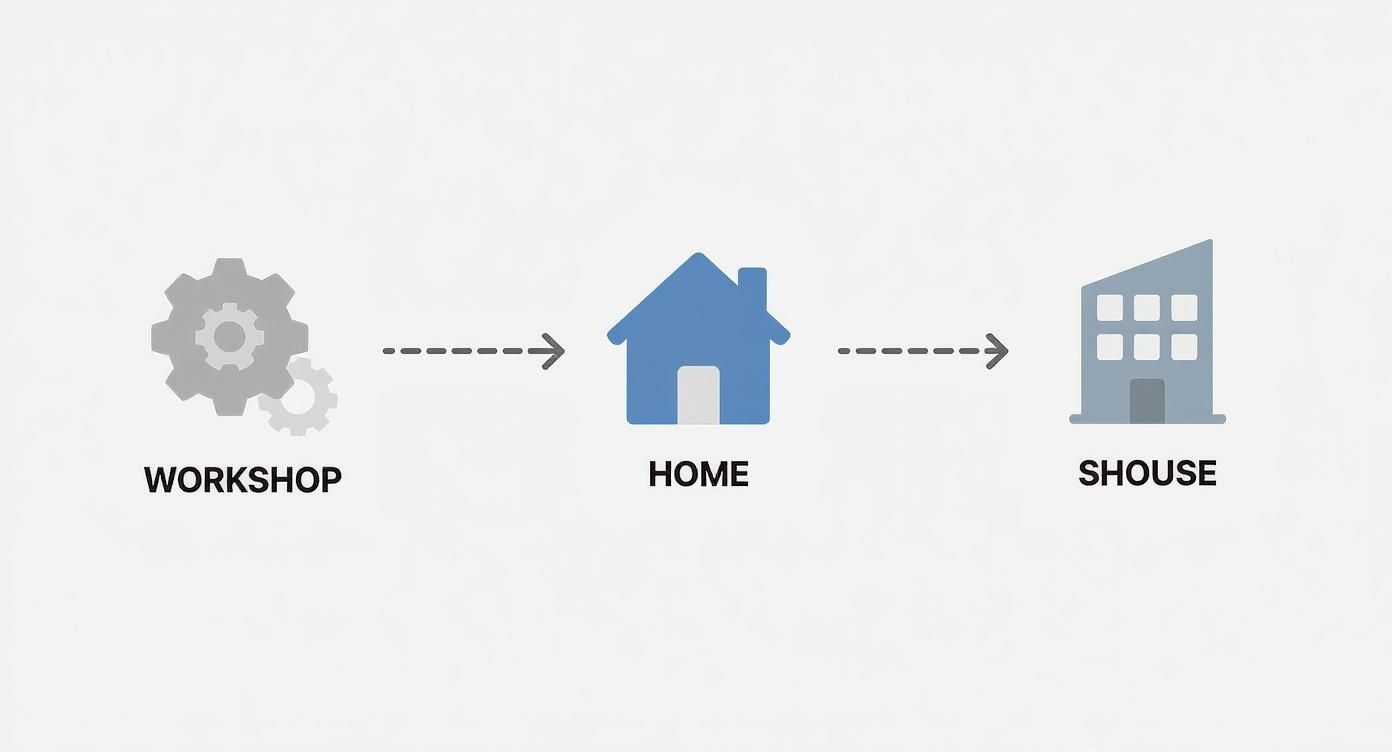
As you can see, the core idea is blending these two very different zones into one cohesive building—the essence of a "shouse." Your choice of layout is what makes that blend work.
- Single-Story Layouts: These are often the most practical and budget-friendly option. Placing the living quarters and shop side-by-side simplifies everything from plumbing to electrical. This setup is perfect if you want seamless, stair-free access between your home and workspace.
- Two-Story and Mezzanine Designs: If you're working with a smaller footprint but need more square footage, building up is the way to go. A second-story apartment or a mezzanine loft perched above the shop creates a natural, distinct separation between work and life. It's a fantastic way to carve out a cozy bedroom or a private office away from the noise and bustle of the shop floor.
To get your own ideas flowing, it's always helpful to browse a variety of metal building floor plans and see how other people have tackled their designs.
Strategic Placement for Peace and Quiet
Let's be honest: one of the biggest challenges of a live-work building is noise. The sound of an angle grinder or air compressor can kill the vibe in your living room pretty quickly if you don't plan ahead. This is where smart room placement becomes your best friend.
A well-designed layout acts as a natural sound barrier. By placing non-essential rooms like closets, laundry rooms, and pantries along the shared wall between the shop and the living area, you create a buffer zone that helps keep your home quiet.
Think of it as building a "sound lock." This buffer absorbs noise and vibrations before they ever reach your main living spaces.
Here are a few key things to keep in mind when placing your rooms:
- Bedrooms and Living Rooms: Try to position these on the far side of the building, as far away from the workshop as possible. If you’re going with a two-story design, putting the bedrooms upstairs is an excellent move for noise reduction.
- Kitchen Placement: The kitchen can work well as a transitional space. While having it next to the shop can be convenient, you'll want to avoid sharing a wall with the loudest corner of your workshop.
- Garage Door Location: Make sure any large roll-up shop doors aren't situated right below your bedroom windows. The sound of those doors opening and closing, plus vehicle traffic, can be a real nuisance early in the morning or late at night.
A little forethought in the layout stage ensures your home remains a peaceful retreat, even when your shop is running at full tilt just a few feet away.
Navigating Building Codes and Permit Requirements
Once you’ve sketched out the dream layout for your live-work space, it’s time to tackle the administrative side of things. Let’s be honest—navigating building codes and permits can feel like trying to solve a puzzle in the dark. But it's a non-negotiable step that ensures your new shop home is safe, legal, and built to last.
Trying to sidestep this process is a recipe for disaster. It can lead to massive fines, orders to tear down your new building, and headaches you wouldn’t wish on your worst enemy.
Before you even think about buying a building kit, your first phone call should be to your local building authority or planning department. Seriously. Regulations can change drastically from one county line to the next, so what’s perfectly fine in one town could be completely forbidden just a few miles away. This single conversation will save you a world of trouble down the road.
Why Your Local Building Authority Is Key
Think of the local building department as the referee for your project. They hold the official rulebook, setting the specific requirements for everything from the depth of your foundation to the type of electrical wiring you can use.
Getting them involved early ensures your plans are compliant right from the start. That means no expensive redesigns or delays after you've already invested time and money.
When you call, you'll want to get answers to a few critical questions:
- Zoning Restrictions: Is a residential structure combined with a workshop even allowed on your property?
- Setback Requirements: How far back does your building need to be from property lines, roads, or other structures?
- Permit Application Process: What exact documents, plans, and fees do they need for a submission?
- Inspection Schedules: At what stages of construction will an inspector need to come out and sign off on the work?
This initial diligence is the true foundation of a smooth and successful build.
The single biggest mistake a new builder can make is assuming their land is ready for construction without checking local regulations. A quick call to the planning department clarifies everything and sets your project on the right path.
Understanding Engineering and Load Requirements
Building codes aren't just there to create red tape; they exist to keep you and your family safe. For a metal building, two of the most critical factors are the wind and snow load ratings. These ratings determine just how strong your building needs to be to handle the typical weather patterns in your specific area.
A building designed for the mild winters of Texas simply won't hold up to the heavy snowfalls in Colorado. In the same way, a structure built for a calm inland area needs completely different reinforcement than one on the hurricane-prone coast of Florida.
This is where certified, engineered plans become absolutely essential. These aren't just rough sketches—they are highly detailed blueprints that have been reviewed and stamped by a licensed engineer. That stamp is their professional guarantee that your building’s design meets or exceeds all local safety and structural codes. Without them, most building departments won't even look at your permit application.
This is why partnering with a reputable manufacturer is so important. Companies like Icon Steel Buildings provide these engineered plans, which are specifically tailored to your location’s requirements. This not only makes the permitting process much easier but also gives you the confidence that your metal shop with living quarters is built to stand strong against whatever Mother Nature throws its way.
When you're vetting providers, make sure they can meet your local codes. It's a key thing to confirm when you're looking for a metal shop building near me. By getting these administrative details right from the start, you can build with the peace of mind that your new space is both safe and fully compliant.
Getting the Guts Right: Insulation, HVAC, and Utilities
Turning a steel shell into a real home comes down to what you put inside it. Think of the raw building as just the skeleton. The real magic—the stuff that makes it a comfortable, energy-efficient metal shop with living quarters—happens with the core systems. Getting the insulation, HVAC, and utilities planned out from the start is absolutely essential for year-round comfort and keeping your energy bills in check.
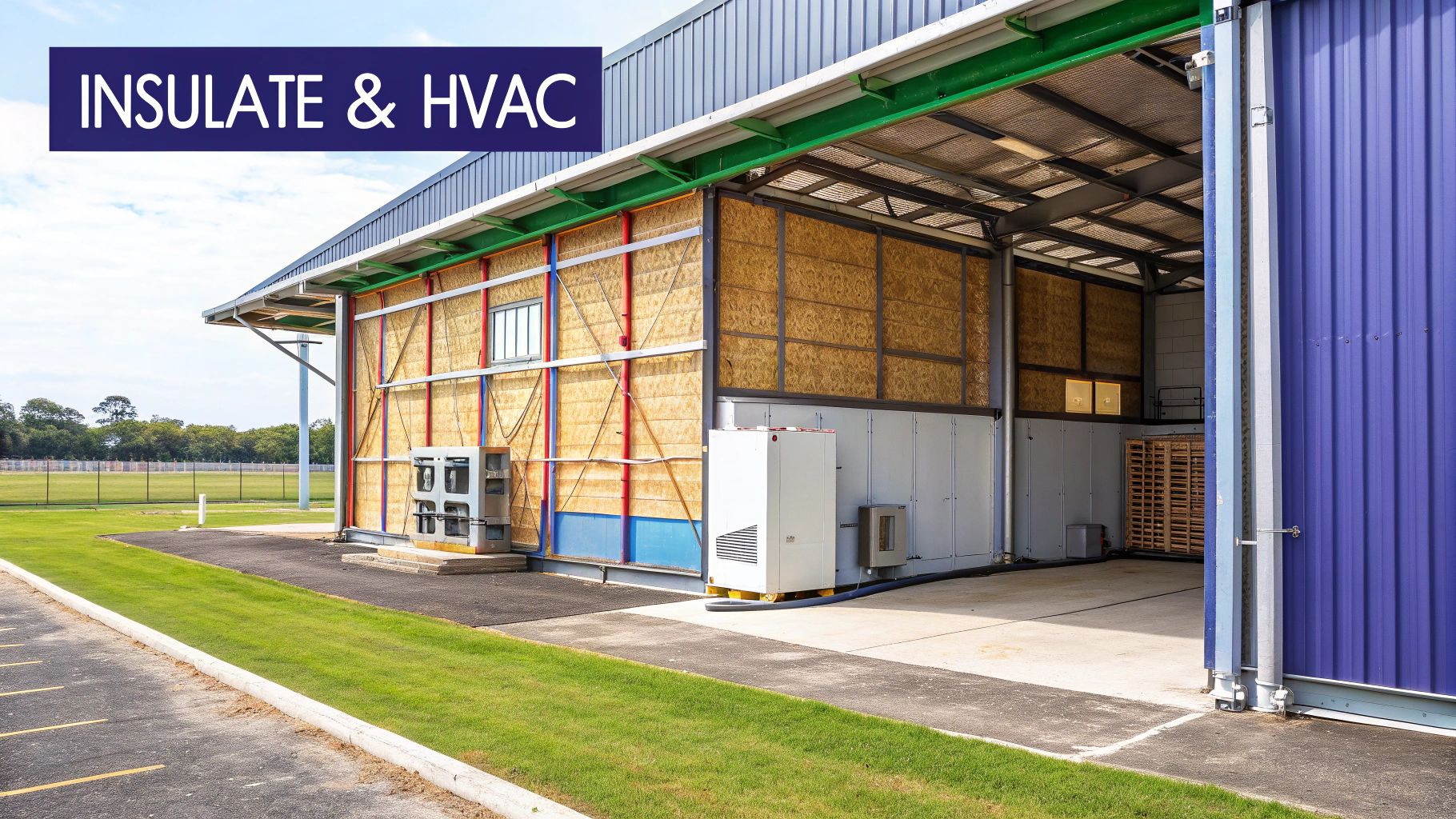
Insulation is your building's thermal armor. Steel is an amazing conductor, which is great for some things but terrible for keeping a stable temperature. Without good insulation, your shop home would feel like a pizza oven in July and a walk-in freezer in January. More importantly, it’s your number one defense against condensation, which is the mortal enemy of a steel building, leading to rust and mold.
Choosing the Right Insulation
This is probably the single most important decision you’ll make for the long-term health and efficiency of your shop home. The right choice depends heavily on your climate and budget.
- Spray Foam Insulation: This is the top-shelf option for a reason. Closed-cell spray foam creates a monolithic air and vapor barrier, clinging directly to the metal panels. It seals every crack and crevice, which completely stops "thermal bridging"—that's when heat sneaks out through the steel frame itself. It costs more upfront, but the long-term energy savings can be massive.
- Rigid Foam Boards: A great choice for the hands-on builder. These big, stiff panels offer fantastic thermal resistance and are pretty straightforward to install. They create a continuous insulated layer, but you have to be meticulous about taping the seams to prevent air leaks.
- Fiberglass Batts: This is the classic, budget-friendly route. Fiberglass can work well, but it has to be installed correctly inside a framed wall. The non-negotiable part? You absolutely must pair it with a separate, high-quality vapor barrier to manage moisture. That's a critical step in any steel structure.
For a deeper dive, check out our breakdown of steel building insulation options to see what makes the most sense for your project.
Smart HVAC Solutions for Dual-Use Spaces
Heating and cooling a building that's part home, part workshop is a unique puzzle. You need a system that can handle the cavernous, high ceilings of a shop while keeping your living room cozy, all without sending your utility bills through the roof.
One of the most popular and efficient solutions today is a ductless mini-split system. These units let you create separate temperature zones. You can crank the A/C in your living quarters without wasting a dime cooling the entire shop space you aren't using. They’re flexible, easy to install, and skip the need for complicated ductwork.
If you live where it gets genuinely cold, radiant floor heating is an incredible luxury for the living area. It provides a silent, consistent warmth that rises from the floor up. A perfect hybrid setup is often radiant heat in the home combined with a tough, separate unit heater for the shop. If you do go with a traditional ducted system, this guide to ductwork installation is a great resource for understanding the process.
The key is to think of your HVAC not as one system, but as two distinct systems working in harmony. Zoning your heating and cooling is the most effective way to maintain comfort while keeping utility costs under control.
Planning Your Plumbing and Electrical Systems
Finally, let's talk utilities. This is where a little foresight goes a long way. When you're laying out the plumbing, try to cluster the rooms that need it—bathrooms, the laundry room, the kitchen. Creating a "wet wall" simplifies all the pipe runs, which cuts down on both material and labor costs.
Your electrical system needs to be a real workhorse, ready for both household appliances and heavy-duty shop tools. It’s a very smart move to install a separate sub-panel just for the shop. That way, firing up a big welder or air compressor won't trip the breaker powering your refrigerator. For most shouses, a 200-amp service is the bare minimum, but a qualified electrician can help you calculate the exact load your specific setup will demand.
Understanding the Costs and Financing Your Build
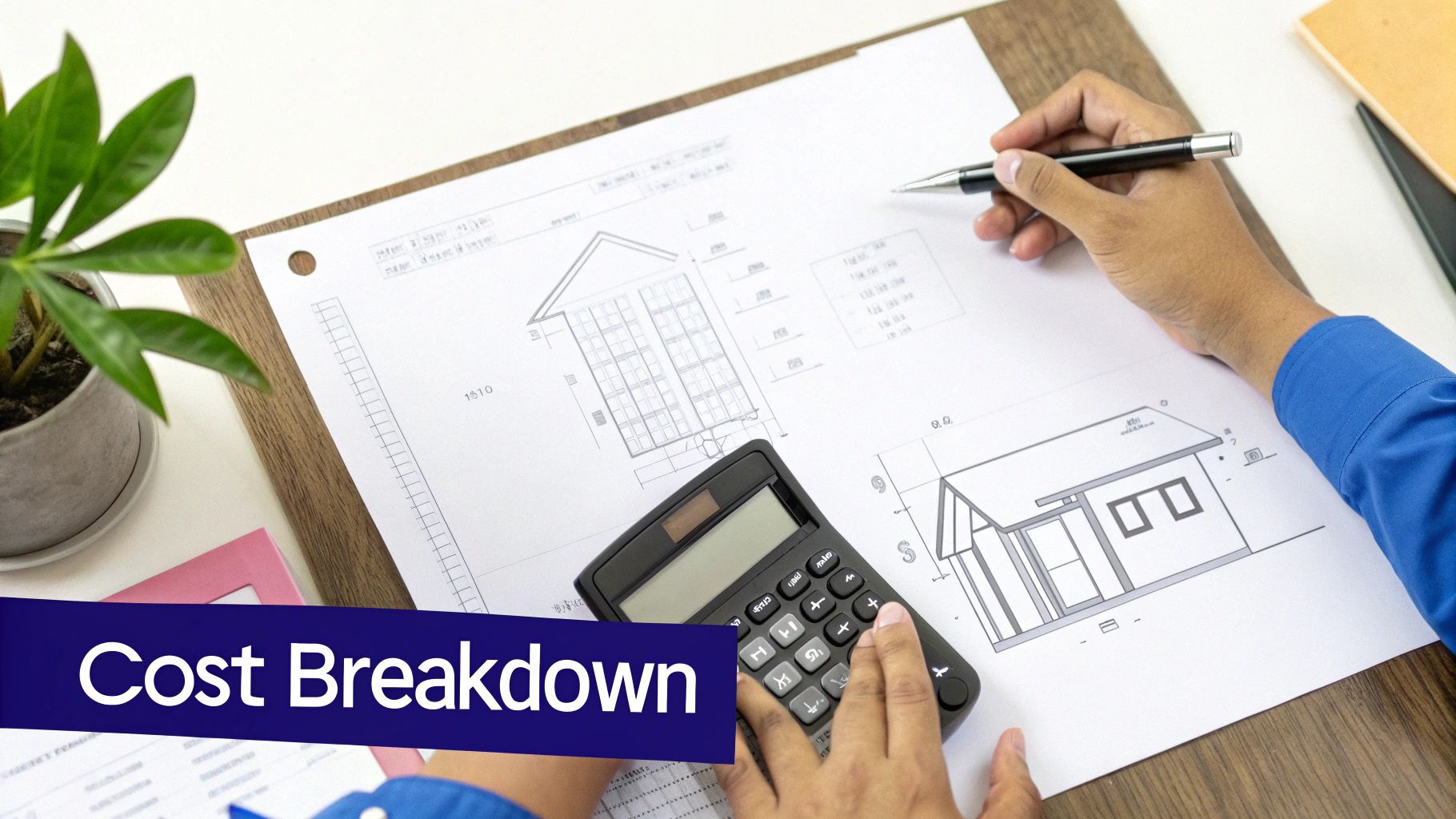
Before you can break ground, you need a solid budget. Figuring out the total investment for a metal shop with living quarters is about more than just the price of the steel kit. You need the full picture—everything from clearing the land to hanging the last light fixture.
A classic mistake is getting fixated on the building package price. While the steel kit is a huge part of it, it typically only makes up about 30-40% of your total project cost. The true number comes to light when you add up all the other things that turn a steel shell into a place you can actually live and work in.
Breaking Down the Total Project Cost
The best way to budget is to think in terms of a "turnkey" price. This covers every single thing required to get your shouse move-in ready, preventing those nasty financial surprises down the road.
Here’s a realistic look at the major expenses you need to plan for:
- The Building Kit: This is your foundation purchase. It includes all the steel framing, the roof and wall panels, and any extras like roll-up doors or windows you order directly from the manufacturer.
- Foundation Work: A solid concrete slab isn't optional. This cost covers excavation, grading, formwork, pouring the concrete, and any rebar or reinforcement your local codes demand.
- Construction Labor: You'll need a crew to put the steel building together. Whether you bring in a general contractor or act as one yourself, labor is a major line item.
- Interior Finishing: This is where the magic happens and a building becomes a home. We're talking about framing interior walls, putting up drywall, installing flooring, painting, and adding all the cabinets, countertops, and fixtures that make up your living space.
Part of what makes these buildings so affordable is the incredible progress in steel manufacturing. Over the last 50 years, global steel production has more than tripled, and automation has led to building systems that can slash construction costs by up to 60% compared to old-school methods.
Securing Financing for Your Shouse
Getting a loan for a non-traditional home like a metal shop with living quarters can feel tricky, but it’s completely doable if you approach it the right way. Some lenders might scratch their heads at terms like "barndominium" or "shouse," so your job is to present it as a well-planned, permanent home.
Lenders will absolutely want to see detailed, engineered blueprints and a comprehensive budget. They need to feel confident that the finished structure is a valuable asset. To get a handle on the financial side of things, it’s smart to explore different financing options for your build.
Pro Tip: When you're talking to loan officers, try using terms they understand, like "custom home with an attached garage" instead of "shouse." Framing it this way helps them fit your project into a more conventional lending box.
One of the best loan types for a build like this is a construction-to-permanent loan. It's a single loan that covers the entire construction phase and then automatically converts into a standard mortgage once the build is finished. This approach is much simpler, saving you time and money by only having one closing process. For more on this, check out our guide on how to finance commercial property, as a lot of the same ideas apply.
Why Shop Houses Are Gaining Popularity
If you're looking into a metal shop with living quarters, you're on to something big. This isn't just some niche idea anymore; it's a major shift in how people think about homes and workspaces. These versatile buildings, often called shop houses or "shouses," are going from a fringe concept to a mainstream solution for some very good reasons.
At its core, the move toward shop houses is all about getting more for your money while building a lifestyle that actually works. With housing costs going through the roof and more people needing functional, self-sufficient properties, combining a home and a workshop under one roof just makes sense. It’s a practical, modern answer to today's challenges.
The Economic and Lifestyle Drivers
So, what’s really behind this trend? It comes down to a few powerful factors that are resonating with everyone from small business owners and entrepreneurs to hobbyists and families who just need more space to breathe.
- A Smarter Way to Build: A shop house is almost always more cost-effective than building a separate house and a standalone workshop. You're pouring one foundation and putting up one structure. That means saving a ton on materials, labor, and the headache of multiple permits.
- The Zero-Commute Dream: More people are running businesses from home than ever before. A shop house gives you a dedicated, professional-grade workspace just steps from your living room—but still completely separate. It's the perfect setup for work-life balance without ever hitting rush hour traffic.
- Space That Does More: Today's property owners want their land to be functional. A metal shop home is a blank canvas for anything you can dream up—a place to restore classic cars, run a woodworking business, store heavy equipment, or even build a personal gym, all attached to a comfortable home.
This isn't just talk; the numbers back it up. The pre-engineered metal building industry is exploding. It was valued at around USD 12.2 billion in 2024 and is on track to nearly double by 2030. Here in the United States, metal construction projects jumped by almost 13% in a recent year, blowing past the overall construction growth rate of about 4%. You can find more industry insights on sites like SteelCoBuildings.com.
The growing popularity of the shop house isn't just a trend; it's a smart, forward-thinking investment. It reflects a practical demand for durable, affordable, and highly functional properties that are built to adapt to the future of living and working.
Choosing a metal shop with living quarters means you’re adopting a modern, efficient approach to building that solves a lot of today's biggest problems. You’re not just putting up four walls; you’re creating a flexible, valuable asset built for whatever comes next.
The Big Questions: Answering Your Final Concerns
As you get closer to pulling the trigger, it’s natural for a few last-minute questions to pop up. Thinking about the long game—from insurance policies to what the property might be worth down the road—is a smart move. Let's tackle some of the most common uncertainties we hear from people just like you.
Consider this your quick-fire FAQ for the realities of owning a metal shop with living quarters. It’s here to clear up those final "what ifs" and give you total confidence in your decision.
Are These Buildings a Hassle to Insure?
This is a big one for a lot of people, but the short answer is usually no. Getting a metal shop home insured is typically pretty straightforward, but the key is finding an insurance company that gets what a "shouse" is and doesn't just try to fit a square peg in a round hole. Many big-name insurers will cover them with a standard homeowner's policy, especially when they're professionally built and up to all local codes.
The absolute most important thing is to be upfront with your agent. You need to clearly state that the building is for both residential living and has a workshop. This makes sure you're covered for everything from a kitchen fire to a mishap with a project in the shop.
What's the Real Resale Value?
The days of shouses being a niche curiosity are over. The resale value for a well-built metal shop with living quarters is getting stronger every year, often competing head-to-head with traditional homes. This is especially true in rural and suburban spots where people are desperate for properties that offer both a home and serious workspace.
A professionally finished shouse that doesn't feel like a temporary setup can easily appraise right alongside a conventional home of the same size and quality.
Here’s the secret sauce: the interior finish is everything. When a potential buyer walks in and sees quality drywall, great flooring, and modern fixtures, any mental block they had about a "metal building" just melts away. They start seeing the home for its incredible benefits.
Factors that really pump up the value include:
- The quality of the interior finish (this is non-negotiable)
- A layout that just makes sense
- Curb appeal (landscaping, siding choices, a nice porch)
- A desirable location (same as any home!)
How Long Do These Buildings Actually Last?
This is where steel buildings leave traditional stick-builds in the dust. A properly erected and maintained metal building will easily last 50 years or more, and that's a conservative estimate. Steel just doesn't have the same weaknesses as wood—it won't rot, termites can't eat it, and it's incredibly fire-resistant. It’s built for the long haul.
Of course, "properly maintained" is key. That means starting with high-quality steel panels that have protective coatings to prevent rust. It also means building on a correctly engineered foundation, which is the bedrock of the whole structure. From there, it’s just simple upkeep—like touching up any deep scratches in the paint so moisture never gets a chance to meet the raw steel. Do that, and your building will stand strong for decades.
Ready to see what's possible for your own live-work retreat? The crew at Icon Steel Buildings is here to help you design a custom metal shop with living quarters that nails your vision and fits your budget. Get your free quote today!