A farm steel building is a modern agricultural structure built from pre-engineered steel parts. Compared to old-school wood barns, they offer far better durability, require almost no maintenance, and provide a level of versatility that's hard to beat.
Think of these buildings as a strategic investment. They’re designed to protect your valuable equipment, livestock, and harvests from the elements while giving you adaptable, long-lasting space to get the job done.
Why Modern Farms Run on Steel
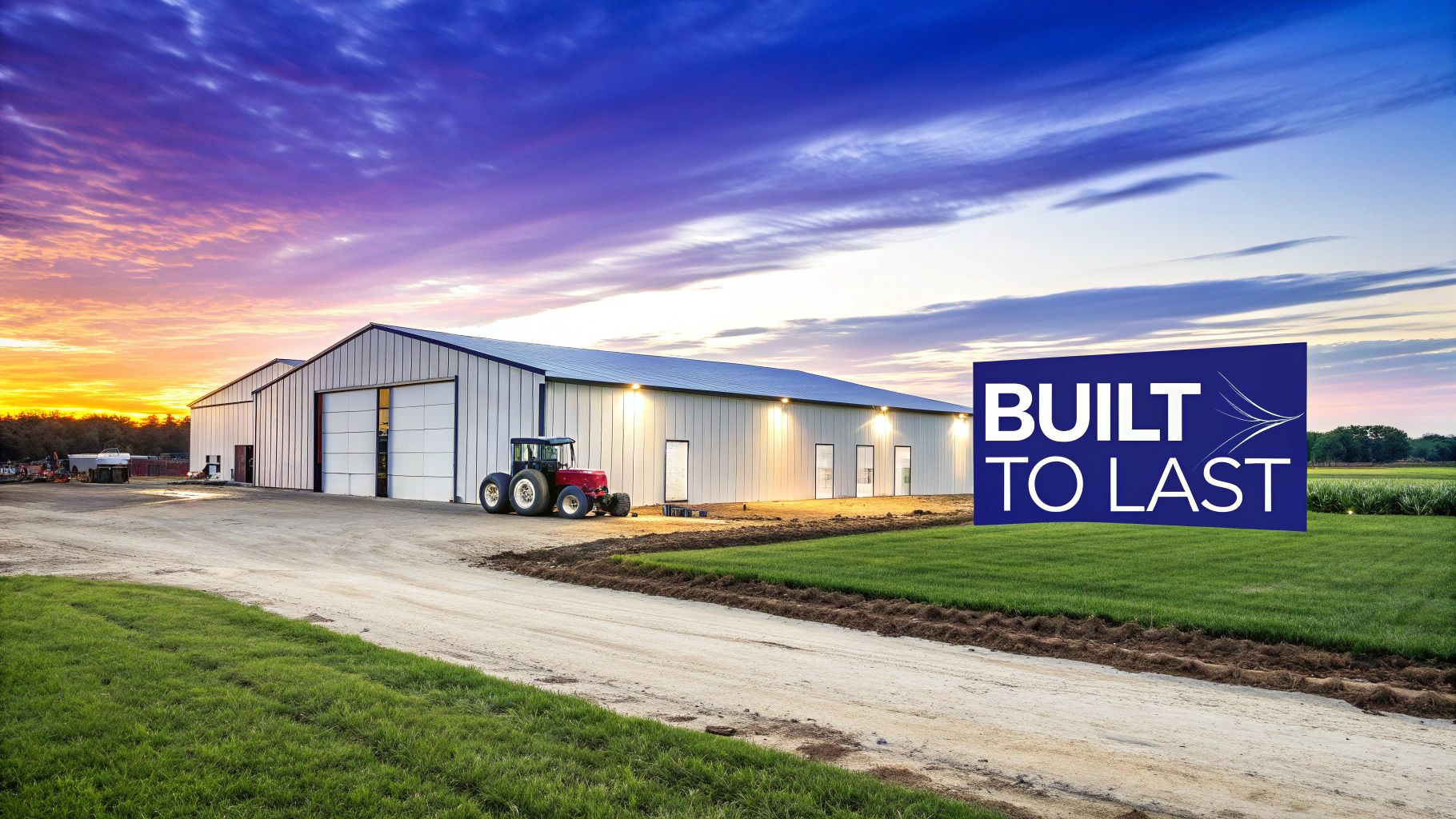
On a modern farm, every single asset has to earn its keep—and that includes the buildings. The classic image of a rustic wood barn is slowly being replaced by the practical, powerful silhouette of steel, and for good reason. A farm steel building isn't just a shed; it's a high-performance tool engineered for efficiency, resilience, and growth.
The logic is simple: you wouldn't use an outdated plow when a modern tractor gets the job done faster and better. The same thinking applies to your farm's infrastructure. Steel buildings are a massive leap forward, giving you a secure, controlled environment that traditional construction just can't match.
The Core Advantages of Steel in Agriculture
This shift to steel isn’t a passing trend. It’s a smart move driven by clear benefits that directly impact your farm's bottom line. The global market for prefabricated buildings and structural steel has hit USD 248.0 billion, largely because industries like agriculture see the huge advantages over old methods. Faster construction, lower labor costs, and incredible durability are just the start.
For any farming operation, the key advantages are impossible to ignore:
- Unmatched Durability: Steel is non-combustible. It’s also completely resistant to rot, mold, and pests like termites that eat away at wood structures over the years. This strength ensures your assets are protected from common threats that can cost you dearly.
- Weather Resistance: Engineered to meet specific local building codes for wind and snow loads, a farm steel building is built to handle whatever mother nature throws at it. From heavy snowfalls to high winds, it will stand strong when a conventional barn might not.
- Low Maintenance: Unlike wood, steel never needs to be painted, stained, or treated for rot. Just think of the countless hours and significant money you’ll save over the building's lifespan. You can focus on farming, not fixing things.
- Faster Construction: Pre-engineered parts show up at your site ready to be assembled, which dramatically cuts down construction time. That means your new building is up and running sooner, whether you need it to store a harvest or shelter livestock before winter hits.
A well-built steel structure is a one-time investment in peace of mind. It’s the confidence that comes from knowing your six-figure combine, your herd, and your livelihood are shielded by the strongest material available.
Choosing between materials can feel complicated, but it’s the long-term value that really counts. For a closer look, our detailed comparison of steel versus wood buildings breaks down how these materials stack up over decades of use. Ultimately, investing in a steel building is an investment in your farm's sustainable and profitable future.
Matching Your Building to Your Farm's Needs
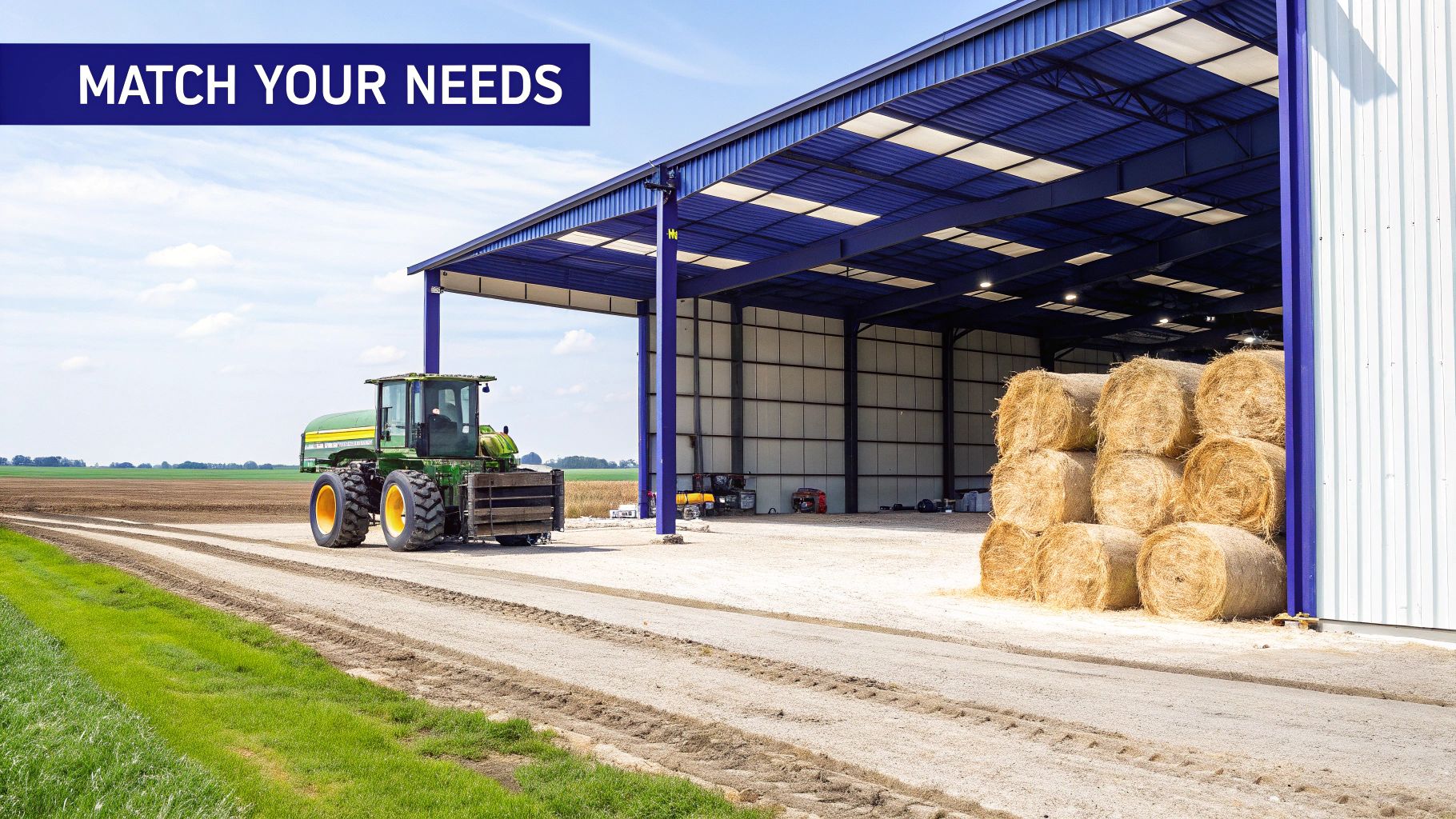
Choosing a farm steel building isn't a one-size-fits-all deal. It's about matching the structure's design to the specific jobs it needs to do on your land. When you get it right, the building becomes a true workhorse—a seamless extension of your operation that boosts efficiency and protects your most valuable assets.
Think of it like buying a new tractor. You wouldn't pick a small utility model to pull a massive air seeder, right? The same logic applies here. The building you need for equipment storage will have completely different requirements than one designed for livestock. Let’s break down the most common uses so you can start picturing how a steel structure fits into the daily rhythm of your farm.
To help you visualize, here's a quick look at the most common applications for farm steel buildings and what makes them tick.
| Building Type | Primary Use | Key Design Feature |
|---|---|---|
| Machinery Shed | Storing tractors, combines, and implements | Clear-span interior with no columns and oversized doors |
| Livestock Shelter/Barn | Housing cattle, horses, poultry, or other animals | Insulation and ventilation for climate control and health |
| Commodity Storage | Protecting hay, grain, feed, and other crops | Weatherproof seals and good airflow to prevent spoilage |
Each of these designs solves a different problem on the farm, so let's dig into the details of what makes each one so effective.
Equipment Storage and Machinery Sheds
Modern farm equipment is a massive investment. Combines and tractors can easily run into the hundreds of thousands of dollars. Leaving that kind of machinery exposed to sun, rain, and snow is just asking for trouble. It accelerates wear and tear, leading to expensive repairs and a much shorter operational lifespan. This is exactly why a dedicated steel machinery shed isn't a luxury—it's essential.
The single most important feature for equipment storage is a clear-span design. This just means the interior is wide open, with zero support columns getting in your way. Trying to maneuver a combine with a wide header is hard enough without having to dodge posts. A clear-span layout gives you all the room you need.
Beyond that, you’ll want to focus on these critical elements:
- Massive Door Openings: Roll-up or sliding doors need to be wide and tall enough to get your biggest piece of equipment in and out without a hassle.
- Plenty of Vertical Clearance: The ceiling height has to accommodate the equipment itself, plus any room you need for maintenance that involves lifting or extending parts.
- Rock-Solid Durability: The steel frame and panels give you superior protection from the elements, stopping rust and UV damage from eating away at your high-value assets.
Livestock Housing and Shelters
When you're housing animals, the building’s job shifts from simple storage to creating a controlled, safe, and healthy environment. A well-designed steel barn can seriously improve animal welfare, which directly impacts your operation's bottom line. Unlike old-school wood barns, steel is non-porous and incredibly easy to clean, which helps cut down the risk of disease.
The primary goal for livestock housing is creating a stable environment. Steel buildings can be easily insulated to regulate temperature, keeping animals cooler in the summer and warmer in the winter, which reduces stress and improves growth rates.
Proper ventilation is also a game-changer. It helps you manage moisture and ammonia levels, ensuring the air quality stays high. Plus, the sheer durability of steel stands up to the daily abuse from animals, resisting damage that could compromise a weaker structure over time. For a deeper dive into specific layouts, you can explore different types of metal agricultural buildings to get ideas for your own livestock needs.
Hay and Commodity Storage
Protecting your harvest is every bit as critical as growing it. Hay, grain, and other commodities are extremely vulnerable to moisture, which quickly leads to mold, spoilage, and a huge financial loss. A weatherproof steel building is your best defense against those threats.
The whole game here is creating a dry, secure envelope. The interlocking design of steel panels, combined with proper sealing at the base and joints, keeps rain and snowmelt out. Good ventilation is also a must to stop condensation from building up inside, especially if you're in a humid climate.
And once again, that clear-span interior is a huge advantage. It makes stacking bales or piling grain incredibly efficient and gives you easy access with loaders and other equipment. A sturdy steel structure makes sure your valuable feed and harvest stay in prime condition until you're ready to use or sell them.
Designing Your Ideal Agricultural Building
This is where the vision for your new farm building really starts taking shape. Designing the right structure isn't just about picking a size from a catalog; it's about mapping out a highly efficient workspace that serves you today and has the flexibility to grow with your operation for decades to come. A little strategic thinking now pays off in a big way down the road.
The whole process kicks off by answering a few honest questions about the building's purpose. What's its primary job? Who needs to get in and out, and with what kind of equipment? How will you move machinery, animals, or feed through the space? Getting these answers down on paper helps you create a functional blueprint that makes every square foot count.
To get the ball rolling, it's smart to look at practical designs and materials that are proven to work. Exploring resources like a complete guide to small farm sheds in NSW can give you a solid understanding of common layouts and features that are popular in real-world agricultural settings.
Planning for Size and Future Growth
One of the most common regrets I hear from farmers is building something that's only big enough for their current needs. Agriculture never stands still, and your operation is bound to change. A building that feels just right today can feel frustratingly tight in just five years.
You have to plan with the future in mind. If you know you're eyeing a new, wider planter next year, will it actually fit through the doors you're planning today? If you're thinking about adding to your herd, will your livestock shelter have enough space to keep them comfortable without causing stress?
Think of your building's footprint not just as length and width, but in three dimensions. Vertical clearance is every bit as critical as floor space, especially for modern combines with tall augers or for a workshop that needs a vehicle lift.
Here are a few key things to nail down when you're figuring out the size:
- Current Inventory: Make an exhaustive list of every single piece of equipment, every animal, or all the commodities that need a roof over them right now.
- Workflow Patterns: Walk through your daily tasks in your mind. Map out how you'll move around inside, making sure to leave plenty of room between parked machinery for safe and easy access.
- Future Projections: Be realistic about where you'll be in the next 5-10 years. It is far, far cheaper to build a little bigger now than it is to tack on an expensive extension later on.
Mastering the Interior Layout
The interior layout is where efficiency is either won or lost. When it comes to the inside of a farm steel building, two concepts are absolutely central: clear-span and multi-span design.
A clear-span building is exactly what it sounds like—a massive, wide-open interior with zero support columns getting in the way. Picture an indoor arena or an aircraft hangar. This design is the undisputed champion for machinery storage because it lets you park and maneuver big equipment like combines and air seeders without having to navigate around posts.
A multi-span building, on the other hand, uses interior support columns to help hold up the roof. This is often a more budget-friendly route for extremely wide buildings. While it's not the best for parking a 16-row planter, it works perfectly for livestock barns where the columns can be neatly integrated into stall dividers, or for workshops where you can easily plan your workflow around them. Taking a look at different metal building floor plans is a great way to get inspiration for both clear-span and multi-span setups.
Strategic Door and Window Placement
Finally, don't treat doors and windows as an afterthought. Their placement, size, and style will literally dictate how usable your building is on a daily basis.
For equipment sheds, oversized roll-up or sliding doors are non-negotiable. It's also a smart move to place doors on multiple walls to create a drive-through design. That simple feature completely eliminates the headache of trying to back long implements into a tight space. In a livestock barn, well-placed windows or translucent wall panels can flood the space with natural light and improve ventilation, creating a much healthier environment for your animals.
The demand for these kinds of thoughtfully designed buildings is skyrocketing. The North American pre-engineered steel building market is already valued at US$ 4.0 billion, and agricultural use is projected to grow at an impressive 8.8% CAGR. This trend makes it clear: more and more farmers are choosing steel for modern, hardworking infrastructure. By carefully planning your layout from the start, you ensure your farm steel building will be a valuable asset for years and years to come.
Understanding Your Building's Core Components
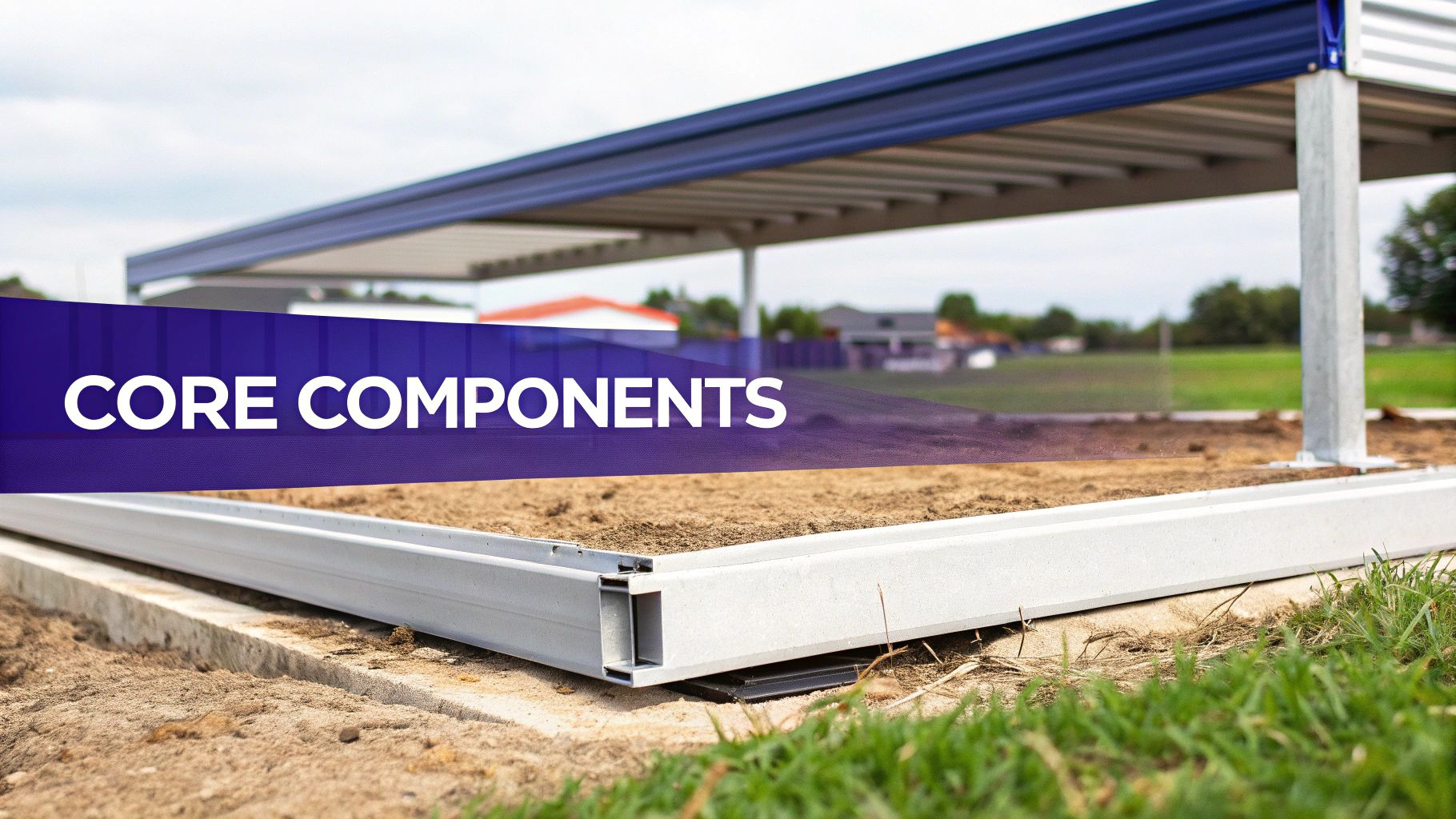
A farm steel building is a lot like a heavy-duty piece of equipment—its performance and longevity come down to the quality of its parts. Knowing what those core components are helps you make smart decisions, ensuring your structure is strong, reliable, and a perfect fit for your farm's unique demands.
Think of it as looking under the hood. You don’t need to be a certified engineer, but understanding the basics of the frame, panels, and foundation helps you have confident conversations with suppliers. It puts you in the driver's seat.
The Steel Frame: The Backbone of Your Building
The structural frame is the skeleton of your farm steel building, giving it fundamental strength and shape. This is where you’ll hear terms like I-beam construction and steel gauge—and they’re simpler than they sound.
An I-beam frame is the gold standard for strength, engineered to handle serious loads without buckling. The thickness of this steel, its gauge, is a critical factor. Here’s a key tip: a lower gauge number means thicker, stronger steel. That’s essential for any area that gets heavy snow or high winds.
Selecting the right frame isn't just about meeting minimum building codes. It's about building a structure with a safety margin that can withstand unexpected weather events, protecting your assets when it matters most.
The way these frame parts connect is also a big deal. Unlike wood structures held together with nails that can loosen, steel frames use high-strength bolts. This creates an incredibly rigid connection that won’t weaken over time, locking in the building's structural integrity for decades. To see how it all comes together, you can learn about the different types of metal building frame systems engineered for maximum durability.
Wall Panels and Roofing: The Protective Shield
If the frame is the skeleton, then the wall and roof panels are the building’s protective skin. These are your first line of defense against rain, snow, sun, and wind, so their design and material coatings play a huge role in how the building performs over the long haul.
The best material for these panels is Galvalume® steel, a premium product coated with an alloy of zinc and aluminum. This coating offers far superior corrosion resistance compared to standard galvanized steel, meaning it will stand up to rust for a very long time. It’s why high-quality buildings often come with panel warranties lasting up to 40 years.
Beyond the material itself, the roof pitch is a simple but critical design choice.
- Steeper Pitches: Perfect for shedding heavy snow and rain quickly, which reduces the load on the entire structure.
- Lower Pitches: Often more budget-friendly and perfectly suitable for milder climates with less precipitation.
Matching the pitch to your local weather is one of the easiest ways to boost your building's resilience.
The Foundation: Anchoring Your Investment
Finally, every great building needs a solid foundation. For a farm steel building, that almost always means a concrete slab. This isn't just a floor; it's the anchor that secures the entire steel frame to the ground, giving it the stability to stand up to powerful winds and ground movement.
The foundation has to be engineered correctly to support the building’s weight plus any heavy machinery or commodities you plan to store inside. Concrete is a core part of this, and you can learn more about the versatility of concrete slabs for various structures to see how they apply. Proper site preparation and a professionally poured foundation are non-negotiable—they’re what guarantee the safety and longevity of your investment.
Creating a Realistic Project Budget
A successful farm building project doesn’t start when the first piece of steel arrives on your property—it starts with a solid, realistic budget. Taking the time to understand all the costs involved from the get-go helps you sidestep nasty surprises and ensures your investment is a smart one. The initial price for the building kit is just one piece of the puzzle; a good financial plan covers everything from raw land to the finished structure.
Thinking through your budget is a lot like mapping out your planting season. You don't just buy the seeds and call it a day; you plan for fertilizer, fuel, and labor. In the same way, a building project has several key costs that all need to be factored in for a smooth outcome.
Breaking Down the Primary Building Costs
The price of your farm steel building kit is naturally the biggest and most obvious expense. This cost is directly tied to a few key variables, and knowing how to adjust them can help you align the project with your budget. The biggest driver, of course, is the size of the building—its width, length, and height.
Beyond sheer size, the complexity of the design plays a huge role. A simple, rectangular equipment shed is going to cost less per square foot than a structure with multiple lean-tos, varied roof pitches, or a complicated interior layout. Custom features will also add to that base price.
- Doors and Windows: The number, size, and type of doors (like roll-up versus sliding) and windows you choose will all affect the final cost.
- Insulation: Adding an insulation package is a fantastic investment for climate control, especially in livestock barns or workshops, but it's an upfront cost you need to account for.
- Custom Finishes: Things like gutters, downspouts, or premium color coatings all contribute to the total price of the kit.
Planning for Costs Beyond the Kit
This is where a lot of budgets can go off the rails. The price tag on the steel building kit is important, but it's definitely not the final number. You have to include several other essential expenses to get a true picture of your total project cost. Ignoring these can put you in a serious financial bind down the road.
The key to a successful project is understanding that you’re not just buying a building kit; you’re managing a full-blown construction project. Planning for site work, foundation, and labor is every bit as crucial as picking the right building size.
These often-overlooked costs include:
- Site Preparation: This means clearing and leveling the land. Depending on your property's current condition, this can be a pretty substantial cost.
- Foundation: A professionally poured concrete foundation is non-negotiable for a structure like this. The cost will depend on its size, thickness, and the going rate for concrete in your area.
- Shipping and Delivery: The steel components are big and heavy. You’ll need to budget for the freight charges to get them from the manufacturing plant out to your farm.
- Construction Labor: Unless you have the experience and heavy equipment for a DIY build, you’ll need to hire a professional erection crew to put the structure together.
This kind of forward-thinking is exactly why the pre-engineered metal building market, valued at USD 12.98 billion in the U.S., just keeps growing. Farmers and ranchers appreciate the predictability and design flexibility that lead to better financial planning and operational control. In fact, the market is projected to hit USD 27.10 billion by 2033.
When you account for every phase, you turn a long list of expenses into a predictable, manageable investment. To get a more detailed breakdown, our guide on how much steel buildings cost offers deeper insights into pricing. This financial clarity is what makes a farm steel building such a smart, sound investment for the future of your operation.
Your Project Timeline from Start to Finish
Taking your farm steel building from an idea on paper to a finished structure on your land is a surprisingly straightforward journey. Unlike traditional construction that can get bogged down with unexpected delays, the pre-engineered process is all about efficiency. When you know what each phase involves, you can manage the project with confidence, fully aware of what’s happening every step of the way.
Think of it like a well-planned harvest. There are distinct stages—preparing the ground, planting, and finally, bringing it all in. Each step logically sets up the next one. The timeline for a steel building works the same way, breaking down what seems like a massive undertaking into a series of clear, manageable steps.
Phase 1: The Groundwork
Long before any steel shows up, the most important work begins: preparing the site. This is more than just clearing a patch of dirt; it's about creating a solid, level base that will support your building for decades to come.
This first stage usually involves grading the earth to ensure proper drainage—you absolutely want water flowing away from your foundation, not toward it. It’s also the time to get all your necessary local permits in order.
Navigating the permitting process can feel like a headache, but your building provider can typically supply the engineered drawings your local authorities need for approval. Getting this paperwork handled early on is crucial to keeping your project on track. Once the site is prepped and the permits are secured, it’s time to pour the concrete foundation.
A professionally engineered and poured concrete foundation is the anchor for your entire investment. It’s what transfers the building's load to the ground, providing the stability needed to withstand high winds and heavy snow, ensuring the structure remains safe and secure for its entire lifespan.
Phase 2: Delivery and Assembly
This is when things get exciting and your vision starts taking shape. After the concrete has had time to fully cure, your pre-engineered building kit is delivered right to your farm. Every single piece, from the massive I-beams and wall panels down to the last nut and bolt, arrives clearly marked and ready to go. It’s almost like a life-sized construction set.
This pre-engineered approach is exactly why the timeline is so much faster than old-school methods. There's no cutting or welding on-site. Instead, a professional erection crew simply bolts the precision-made components together following a detailed set of plans. It’s a systematic process that slashes labor time and minimizes the chance of errors.
This infographic illustrates the streamlined construction process, from initial site work to the final assembly of your farm steel building.
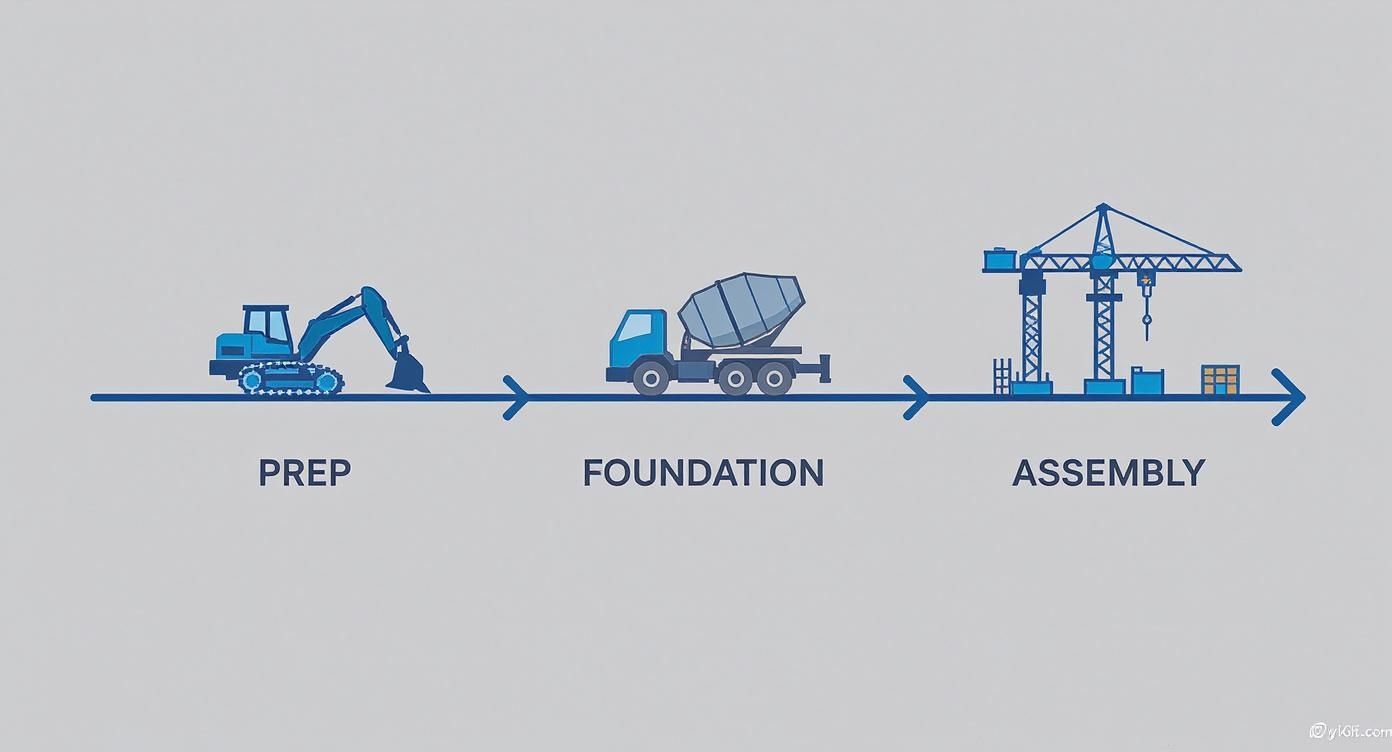
The key takeaway here is how efficient and sequential each step is, which cuts down on downtime and gets you to a finished building much faster.
Phase 3: Final Touches and Completion
With the main frame standing tall, the crew moves quickly to enclose the structure. They’ll install the wall panels first, then move on to the roofing system. This is the stage where the building really starts to look like a building, becoming a weatherproof shield for your valuable equipment and assets.
Once the shell is sealed up, the final phase involves installing all the features you chose during the design process. This includes:
- Doors and Windows: Adding heavy-duty roll-up doors for machinery, standard walk-in doors for people, and windows to let in natural light.
- Insulation: If it’s part of your design, insulation will be installed now to help you control the climate inside.
- Finishing Details: Attaching gutters, downspouts, and any other trim to give the building a clean, finished look.
The entire process, from the day you break ground to tightening the last bolt, is remarkably quick. For a small to medium-sized farm steel building, an experienced crew can often have the assembly done in just a few days or weeks. That’s a tiny fraction of the time a traditional wood-frame barn would take, meaning your new building is ready to go to work for you much, much sooner.
Common Questions About Farm Steel Buildings
When you’re looking at a major investment like a new farm building, you’re going to have questions. And that’s a good thing—it’s how smart decisions get made. Here are some straightforward answers to the questions we hear most often from farmers thinking about adding steel to their operation.
How Long Will My Farm Steel Building Last?
A well-maintained farm steel building isn't just a purchase; it's a generational asset. You can expect a high-quality steel building to easily last for 50 years or more, which is a lifetime compared to traditional wood structures that might need major work after just 20-30 years.
The secret is in the materials. Our buildings are made from high-quality American steel with a protective Galvalume® coating that stands up to rust and corrosion like nothing else. This coating is an advanced blend of aluminum and zinc, giving it far better barrier protection than standard galvanized steel.
It's because of this incredible durability that the panels on a premium steel building often come with warranties lasting up to 40 years. You get peace of mind knowing your building will stay weather-tight and reliable for decades.
Can I Build a Steel Building Kit Myself?
The thought of a DIY build is definitely tempting, but it’s crucial to be realistic about what it takes. If you’re putting up a small, simple structure—think a two-car garage or a little workshop—and you have the right tools, equipment, and a good bit of construction experience, you might be able to tackle it yourself.
For a typical farm-sized building, though, hiring a professional erection crew is almost always the way to go. These projects are big. They require heavy machinery like cranes or lifts just to get the massive I-beam frames into place safely. A professional crew has the expertise to make sure everything is assembled exactly to spec and anchored correctly, which is non-negotiable for safety and the long-term integrity of your building.
Are Steel Buildings Better Than Wood Barns?
When you put them head-to-head for modern farming needs, a steel building comes out on top with some clear, practical advantages. A classic wood barn has its charm, for sure, but its weaknesses can turn into expensive problems down the road.
At its core, steel is just a tougher, more resilient material.
- Pest and Rot Proof: Steel is completely impervious to termites, rot, and mold. That means no chemical treatments and no surprise repair bills for rotted posts or boards.
- Fire Resistant: As a non-combustible material, steel offers far superior protection for your high-dollar equipment, hay, and livestock. This often translates to lower insurance premiums—sometimes by 30% or more.
- Lower Maintenance: Forget about scraping and painting every few years or replacing warped siding. A steel building just needs an occasional power wash to look its best.
While the upfront cost for a steel building might be a bit more than a basic pole barn, the long-term savings on maintenance, insurance, and repairs make it a much more predictable and cost-effective investment for your farm’s future.
Ready to design a building that works as hard as you do? The team at Icon Steel Buildings can help you create a custom, American-made structure built to last for generations. Explore your options and get a free quote today at https://iconsteelbuildings.com.