

Building a new garage is a serious undertaking, but it’s a lot more manageable when you break it down into logical phases. Think of this guide as your roadmap, taking you from an empty patch of grass to a fully functional extension of your home.
We'll start where every successful project begins: planning. This means nailing down your garage's core purpose, figuring out the local building codes, and comparing construction methods to find the right fit for your budget and timeline.
Your Blueprint for a Successful Garage Build
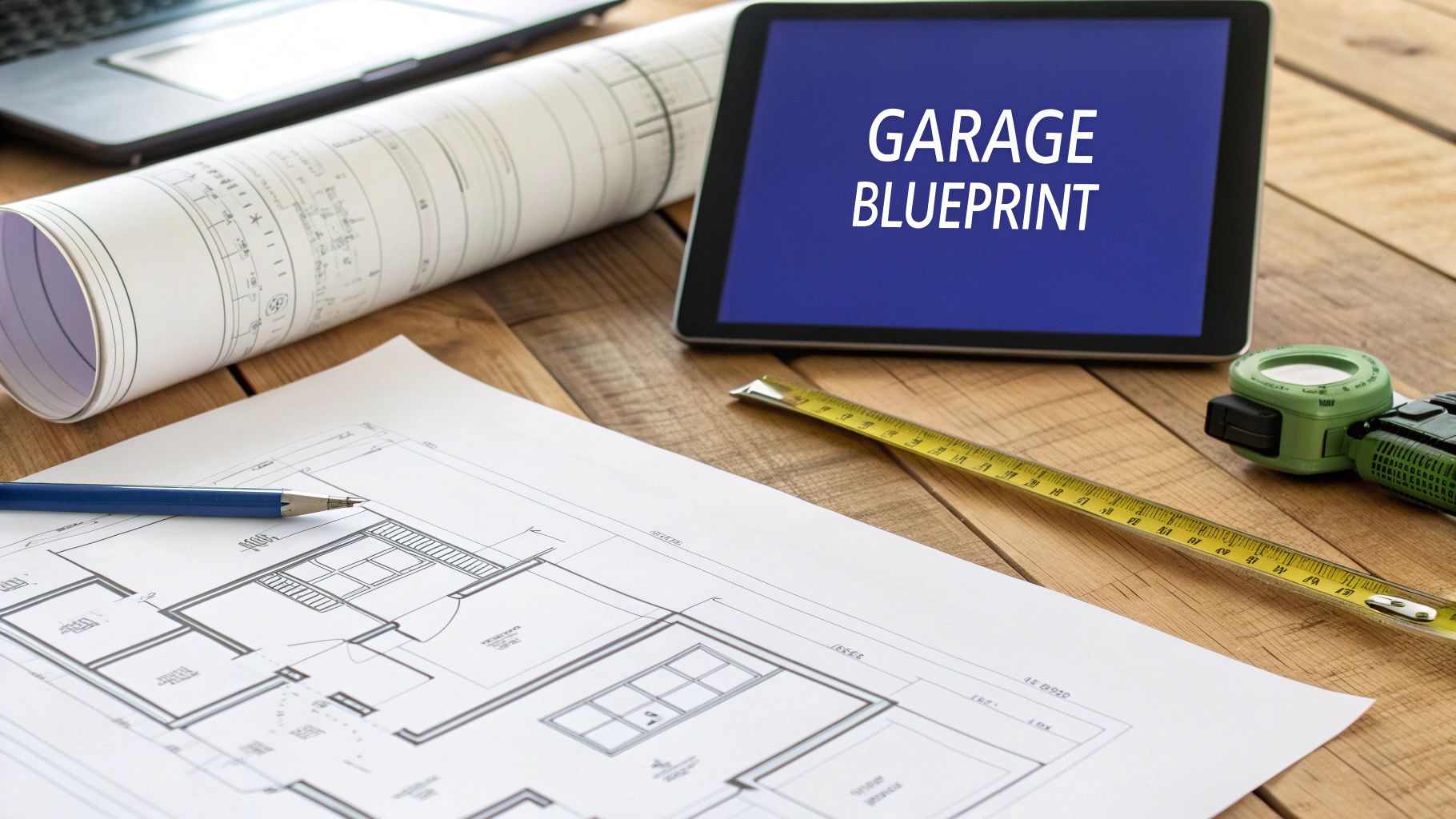
The real work of building a garage starts long before the first shovel hits the dirt. This initial planning stage is hands-down the most critical part of the entire project, setting the tone for everything that follows.
If you rush this part, you're setting yourself up for expensive mistakes, frustrating delays, and a finished product that just doesn't quite hit the mark. It’s all about creating a detailed blueprint—translating that vision in your head into a concrete plan that considers every angle, from daily function to legal requirements.
Defining Your Garage's Core Purpose
First things first, you need to ask a simple but crucial question: What is this garage actually for? Your answer will shape every single decision you make, from the dimensions and layout to the materials you end up choosing. Don't just settle for "a place to park the car." You need to dig a little deeper.
- Vehicle Storage: Is this for one car? Two? Or are you housing an oversized truck, an RV, or a boat? This directly impacts the width, depth, and especially the ceiling height you'll need.
- Workshop Space: Are you a woodworker, a mechanic, or a hobbyist who needs a dedicated zone? You'll have to factor in extra square footage for workbenches, tool chests, and other bulky equipment.
- Storage and Organization: Will this be the new home for your lawnmower, holiday decorations, and the kids' sports gear? Thinking about a loft or designing extra-deep bays for shelving now will save you a world of hassle later.
- Multipurpose Use: Could this space double as a home gym? A potting shed? What about a future guest suite? Planning for insulation, plumbing, and proper electrical from the start is infinitely easier than trying to retrofit it down the road.
A well-planned garage adds serious value to your property. By clearly defining its purpose from the get-go, you ensure the structure isn't just another building, but a truly functional extension of your home.
Navigating Local Building Codes and Permits
Once you have a clear vision, your next stop is the local planning or building department. Let me be clear: this step is non-negotiable. Trying to build without the right approvals can lead to massive fines or, in the worst-case scenario, an order to tear it all down.
Before you even think about breaking ground, you need to understand what a development application (DA) entails and get all the necessary approvals locked in.
You’ll need to ask about specific local rules, which almost always include:
- Setbacks: The minimum distance your garage has to be from property lines, your house, and the street.
- Size Limitations: Many areas have restrictions on the total square footage or height of any accessory buildings.
- Foundation Requirements: Your local code will have specifics on the type and depth of the foundation needed for your soil and climate.
- Material and Design Codes: If you live in a historic district or a neighborhood with an HOA, there might be strict rules about exterior finishes and roof styles.
Dealing with the bureaucracy upfront saves you major headaches later. Trust me on this one.
Comparing Garage Construction Methods
With your purpose defined and the local rules understood, you can finally decide how you're going to build this thing. The three most common methods each come with their own set of pros and cons.
A quick comparison of the three most common garage construction types can help you decide which is right for your project.
Garage Construction Methods Compared
| Feature | Metal Prefab Kit | Wood Frame | Concrete Block |
|---|---|---|---|
| Speed | Fastest | Moderate | Slowest |
| Cost | Most Affordable | Moderate to High | Highest |
| Durability | High | Good | Excellent |
| DIY Friendliness | High | Moderate | Low |
| Customization | Good | Excellent | Limited |
| Maintenance | Low | Moderate | Low |
Prefabricated metal garage kits offer the most streamlined and often the most affordable path. Traditional wood-frame construction gives you that classic look and endless design flexibility. For ultimate durability against the elements, a concrete block garage is tough to beat. Your choice will come down to a balance of budget, your desired timeline, and how much of the work you plan to do yourself.
This is a booming market for a reason. The global garage and overhead doors market jumped from $7.27 billion to an expected $7.57 billion in just a single year, largely because of residential demand for secure, functional spaces just like the one you're planning.
Choosing Your Garage Kit and Materials
With your approved plans in hand, the theoretical part of building a garage is officially over. Now it's time to get your hands dirty, shifting your focus to the steel, fasteners, and panels that will bring your vision to life. The decisions you make here are crucial—they'll impact not just how smoothly the build goes, but how well your garage holds up for decades to come.
For most people, the most straightforward path is a prefabricated kit. Forget the flimsy, one-size-fits-all sheds from the past. Modern kits give you a surprising amount of control. You can tweak dimensions, pick roof styles, and dictate exactly where doors and windows go, ensuring the final structure looks like it was always meant to be on your property.
The Power of Prefabricated Steel
The real beauty of a steel structure is its raw resilience. Unlike wood framing, steel sidesteps a lot of the common headaches that plague homeowners. It won't rot or warp from moisture, termites want nothing to do with it, and it's non-combustible. That last point can bring some serious peace of mind and might even get you a discount on your insurance premiums.
This inherent durability is a huge reason the prefabricated garage market is booming, on its way to becoming a $5 billion industry. The trend isn't just about saving money; it's about how we use our garages now—as home offices, gyms, or workshops. You can get a better sense of the market by checking out these insights into prefab garage trends.
As you shop around, you'll see the term "steel gauge" a lot. It’s just a simple way of measuring the steel's thickness. The key thing to remember is that a lower number means thicker, stronger steel.
A 14-gauge frame is a solid, common standard that works well for most climates. But if you live somewhere that gets hammered with heavy snow or faces high winds, upgrading to a thicker 12-gauge frame is a no-brainer. It's a smart investment in the building's long-term structural integrity.
When comparing kits, resist the urge to just look at the price tag. Dig deeper. Check the steel gauge, the quality of the included fasteners, and the warranty. Paying a little more upfront for thicker steel and better components is an investment in a building that will actually last.
Understanding Your Material Options
Even after deciding on a metal building kit, you still have choices to make that will affect both the look and function of your garage. Getting familiar with these is key to ending up with a structure you're truly happy with. If you want to dive deep into the specifics, Icon Steel Buildings has an excellent breakdown of their metal garage building kits that lays out all the available options.
Here are the main components you’ll need to decide on:
- Framing: As we covered, this is usually 14-gauge or 12-gauge galvanized steel. Your choice here directly impacts how well the building can handle local snow and wind load requirements.
- Roof Style: You generally have three choices: Regular (with rounded corners), A-Frame Horizontal (also known as boxed-eave), and A-Frame Vertical. The vertical roof is the top-tier option because it's designed to shed rain, snow, and debris most effectively, meaning less maintenance for you down the road.
- Siding Panels: This is the "skin" of your garage. Most panels are 29-gauge steel, but some suppliers offer a beefier 26-gauge option for better dent resistance and overall durability.
- Doors and Windows: You can have the kit designed with standard openings to fit doors and windows you buy yourself, or you can order them directly with the kit. If you plan on heating or cooling the space, make sure to consider insulated garage doors.
Estimating for a Traditional Build
Decided to go with a traditional wood-frame garage instead? Your process for getting materials will be much more hands-on. You'll need to create a detailed shopping list right from your blueprints, calculating the exact amount of lumber for studs, rafters, and headers. You'll also need to figure out the quantity of sheathing, siding, and roofing you need.
A pro tip: always add a 10-15% contingency to your order to account for cuts, waste, and the inevitable mistake. Trust me, it’s far less painful to have a little extra lumber sitting there than to bring the whole project to a grinding halt while you wait for a small, last-minute delivery. Careful planning here keeps the momentum going.
Site Prep and Pouring a Solid Foundation
Every great structure, from a skyscraper to your new garage, depends entirely on what lies beneath it. The work you put in before any walls go up is what ensures your building will stand strong for decades, resisting shifting soil and seasonal weather. This is where your garage plans jump off the page and into the real world—and getting it right is non-negotiable.
Proper site preparation is about much more than just clearing a flat space; it's about actively managing the land. You'll start by clearing all vegetation, rocks, and topsoil from the garage footprint. More importantly, you need to establish a grade that slopes away from the foundation on all sides. A good rule of thumb is a drop of at least six inches over the first ten feet. This simple step directs rainwater away from your structure and prevents a world of headaches down the road.
Staking Out and Squaring Up
Once the site is cleared and graded, it’s time to mark the exact location of your garage. Using stakes and string lines, you'll create a precise outline of where the foundation will sit. Trust me, this is a moment where meticulous measurement pays off.
One of the oldest tricks in the book is the 3-4-5 method for ensuring your corners are perfect 90-degree angles. From a corner stake, measure three feet along one string line and four feet along the perpendicular line. The diagonal distance between those two points should be exactly five feet. If it’s not, your corner isn't square. Keep adjusting until it is.
This infographic breaks down the key decisions involved in getting from a simple idea to a ready-to-build project.
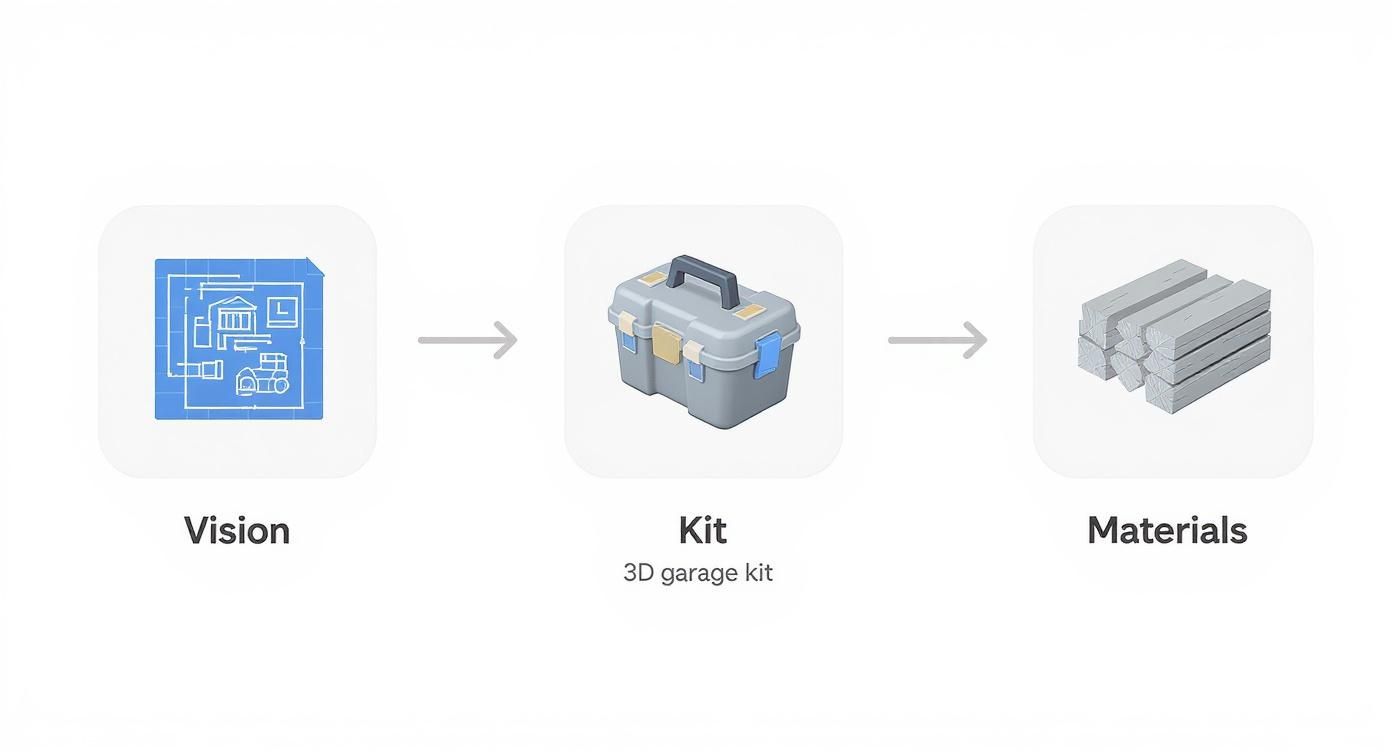
As you can see, your initial vision directly influences whether you choose a complete kit or source materials individually—a decision that shapes the entire project from here on out.
Choosing the Right Foundation Type
Not all foundations are created equal. The best choice for your garage depends on your soil type, climate, and local building codes. Your local inspector will have the final say, but it helps to walk in knowing your options.
- Monolithic Slab: This is the most common and cost-effective choice for a standard garage. The footing and the slab are poured as one single, continuous piece of concrete, which saves a ton of time and labor.
- Floating Slab: Often used in colder climates, this foundation "floats" on a bed of gravel. This allows it to move slightly with the ground during freeze-thaw cycles without cracking.
- Stem Wall Foundation: This method is a bit more involved. It requires pouring a concrete footing below the frost line, then building a short "stem wall" of concrete blocks up to the slab level. It’s more complex but offers superior stability in areas with deep frosts or unstable soil.
For a truly durable and level base, understanding how to properly pour concrete slab foundations is absolutely essential for your garage project.
Pouring the Concrete Slab
With your footprint marked and foundation type chosen, the next step is building the formwork—usually with 2×6 or 2×8 lumber—to contain the wet concrete. Inside this frame, you'll lay down a vapor barrier and a grid of steel rebar or wire mesh. This reinforcement is what gives the concrete its tensile strength, preventing it from cracking under pressure.
Calculating your concrete needs is pretty straightforward: multiply the length, width, and depth of your slab in feet to get the cubic footage, then divide by 27 to get cubic yards. Always order about 10% extra to account for any uneven ground or spillage. Better to have it and not need it.
When the concrete truck arrives, it's all hands on deck. You have a limited window to get the concrete spread evenly within the forms before it starts to set. Don't be afraid to ask the truck driver to move the chute as you work to distribute the concrete more evenly.
After pouring, you'll use a screed board to level the surface, a bull float to smooth it, and finally, a steel trowel to create a hard, dense finish. The final, crucial step is curing. Covering the slab with plastic sheeting or applying a curing compound for several days lets the concrete hydrate slowly, which allows it to reach its maximum strength and minimizes cracks. If you're going with a steel structure, it's worth learning more about specific steel building foundation requirements to ensure your base is perfectly suited for the frame.
Framing the Structure and Closing It In
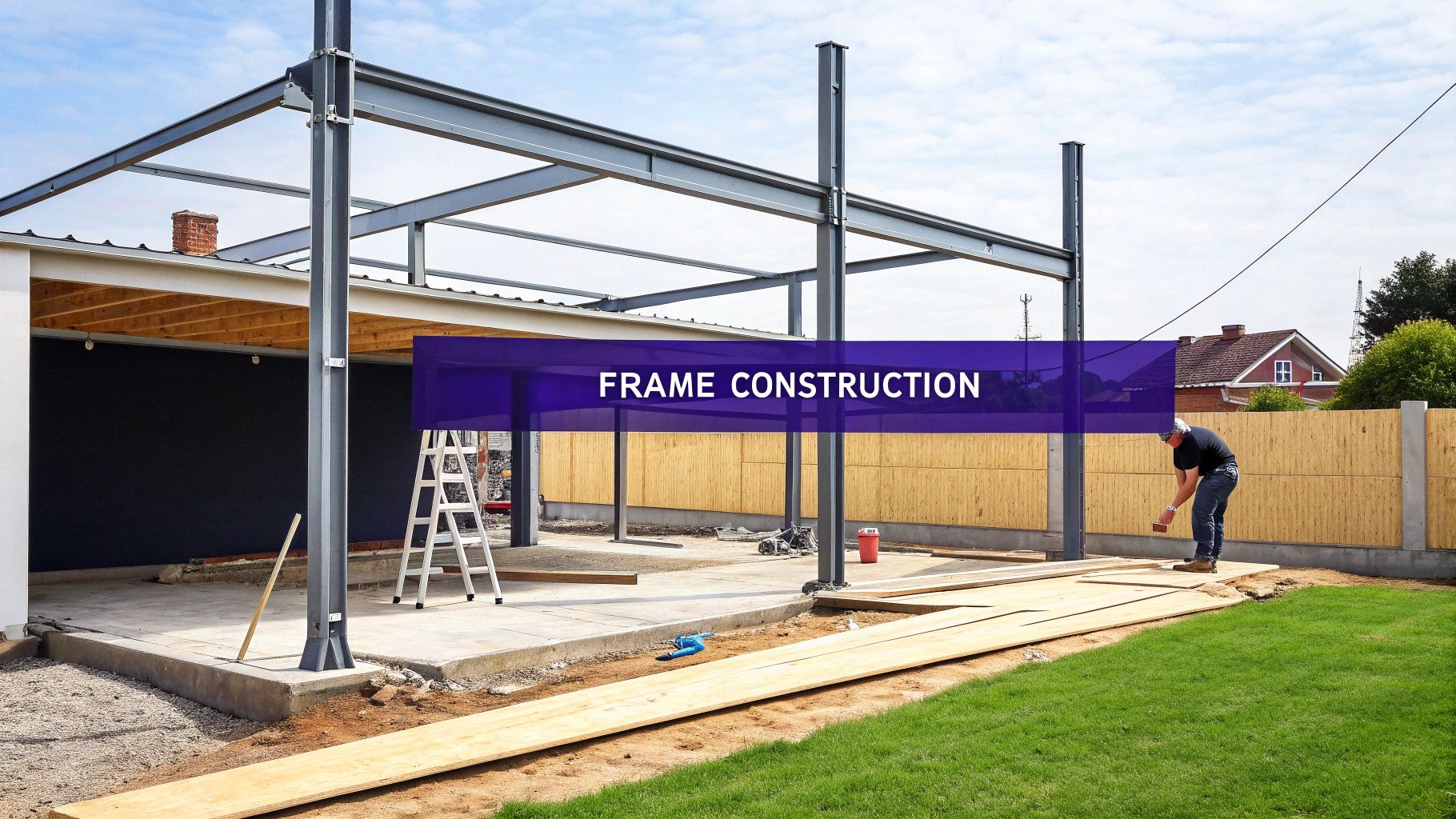
With a perfectly cured concrete slab under your feet, it’s time for the most rewarding part of the job. This is where your garage starts to take shape, rising from the foundation to become a real, three-dimensional structure. If you’re using a pre-engineered steel garage kit, think of this as assembling a giant, high-stakes erector set.
The key to a smooth process here is organization. Before you even think about lifting a column, get all your components unboxed and laid out. Check everything against the packing list and group like-items together—all the trusses in one spot, all the girts in another. This simple bit of prep work will save you hours of frustration later.
Erecting the Main Frame
Consider your assembly manual your new best friend. Read it cover-to-cover before you start, and then read it again. Manufacturers have very specific sequences for a reason, and following them is crucial for both safety and structural integrity. Most builds begin by anchoring the base rails to your concrete foundation.
These rails form the exact footprint of your garage, so precision is everything. Use the anchor bolts provided in your kit, measure twice (or three times!), and make sure everything is perfectly square before you tighten anything down.
Once the base rails are secure, you can start putting up the main frame. This usually means bolting the vertical columns to the rails and then hoisting the roof trusses or rafters into place. This is not a one-person job. You'll need a helper, and for larger buildings, renting a scissor lift for a day can make things dramatically safer and more efficient.
Pro Tip: As you assemble the frame, only hand-tighten the bolts at first. This gives you some wiggle room to nudge and align all the different pieces. If you torque the bolts down too soon, you can easily pull the frame out of square, which becomes a massive headache when it’s time to install the panels.
After the primary frame is standing, you’ll install the secondary framing. These are the horizontal supports known as girts for the walls and purlins for the roof. They run between the main columns and rafters, adding serious rigidity and giving you a surface to attach your siding and roofing. When every piece is in place and you've confirmed the entire structure is plumb and square, then you can go back and tighten every bolt to the manufacturer's torque specs.
Before you start raising steel, it's a good idea to have a clear picture of the tools you'll need. Nothing slows down a project like having to run to the hardware store mid-task.
Essential Tools for Your Garage Project
Having the right equipment on hand makes all the difference between a frustrating build and a smooth one. Here's a quick checklist broken down by the major phases of the project to help you get organized.
| Project Phase | Essential Tools | Helpful but Optional Tools |
|---|---|---|
| Foundation Prep | Shovel, rake, tape measure, level, string line, stakes | Plate compactor, laser level |
| Frame Assembly | Impact wrench, socket set, crescent wrenches, C-clamps, ladders | Scissor lift, scaffolding |
| Panel Installation | Screw gun (impact driver), tin snips, caulk gun, utility knife | Nibbler tool, power shears |
| General & Safety | Safety glasses, gloves, hard hat, first-aid kit, extension cords | Magnetic sweeper, portable work lights |
Remember, this list covers the basics. Your specific kit might have unique requirements, so always check your manual first.
Sheeting the Walls and Roof
With the skeleton of your garage fully assembled, it’s time to give it a skin. This is the moment it truly transforms into a building. You’ll generally start with the wall panels, picking a corner and working your way around.
Pay close attention to how the panels overlap—this is critical. Each panel is designed with a specific edge that interlocks with the next to create a weatherproof seal. If you overlap them in the wrong direction, you're basically creating a gutter that channels water into your building.
Here’s a quick-hit list to get your panels on right:
- Start at the Bottom: Always install wall panels from the base of the garage and work your way up.
- Plumb the First Panel: Use a level on your very first panel to get it perfectly vertical. Every other panel will align with it, so a small mistake here will get bigger and bigger down the line.
- Use the Right Screws: Your kit includes self-drilling screws, usually with neoprene washers. Those washers are non-negotiable—they compress to form a watertight seal.
- Don't Overtighten: Drive screws into the "flat" part of the panel, not the raised rib. Be careful not to crank them down too hard, as this can dimple the panel or damage the washer.
The roof follows a similar process, but with an added emphasis on safety. Always work from a secure ladder, scaffolding, or a lift. Roof panels should be installed starting from the eave (the bottom edge) and moving up toward the ridge cap. This ensures the upper panels overlap the lower ones, allowing water to shed properly.
This part of the build can feel intimidating, but it's really just a logical sequence of steps. For a more in-depth look, our guide on how to erect a metal building provides extra tips and visuals to make sure everything goes off without a hitch. Taking your time here is what ensures you get a durable, leak-free garage that will last for decades.
Installing Doors, Windows, and Finishing Touches
With the roof on and the walls up, your project is starting to look less like a kit of parts and more like a real garage. Now for the fun part: adding the details that turn a weatherproof shell into a functional, secure, and polished building.
This stage is all about sealing the envelope by installing your doors and windows, then adding the trim that gives it that sharp, finished look. Forget the heavy lifting—this is where precision counts. A door that’s even slightly off can be drafty and a pain to open, while a crooked window will annoy you forever. Take your time here. It's the difference between a building that’s just strong and one that’s a pleasure to use every single day.
Framing and Setting Your Openings
Before you can hang anything, you need to frame out the rough openings. In a metal building, this typically means adding J-trim or similar framing components around the pre-cut holes in your wall panels. This trim doesn't just look clean; it provides a solid surface to fasten your door or window frame against.
Follow the manufacturer’s instructions to the letter. A level is your best friend here. Make sure the trim is perfectly square and plumb, because even a small mistake will come back to haunt you during installation.
Once the opening is framed, installing a side entry door or windows is pretty straightforward:
- Do a Dry Fit: Pop the unit into the opening without any sealant to check the fit. You're looking for a small, consistent gap all the way around.
- Lay Down Sealant: Run a generous bead of high-quality silicone caulk along the exterior flange of the window or door frame. This is your number one defense against leaks.
- Set and Secure: From the outside, press the unit firmly into the opening. Use shims on the inside to get it perfectly level and plumb before you drive any screws. Once it's right, fasten it through the pre-drilled holes in the frame and into the steel structure.
Mastering the Garage Door and Opener
The main garage door is the centerpiece. Getting it right takes patience. Start by laying out all the track system pieces and carefully following the instructions. The vertical tracks have to be perfectly plumb, and the horizontal tracks need just the right amount of slope toward the back of the garage so the door operates smoothly.
After the track is up, you can start assembling the door panels, working from the bottom up. Once the door is installed and the torsion spring is tensioned, you're ready for the opener.
Fair warning: Tensioning a torsion spring can be dangerous if you don’t know what you're doing. If you're not 100% confident, this is a job best left to a professional.
The opener is what makes your new garage so convenient. The global garage door openers industry was valued at $2.48 billion for a reason—homeowners want smart, automated solutions. You can discover more insights about the garage door openers market and see just how big this trend is.
An opener is more than just a motor. Think about a quiet belt-drive model if the garage is attached to your house. Or better yet, get a smart opener that connects to Wi-Fi. You’ll be able to open, close, and check the status of your door right from your phone, no matter where you are.
Installing the opener involves mounting the motor to the ceiling, connecting it to the door, and wiring up the wall control and safety sensors. Don't gloss over those little sensors at the base of the track—they’re a critical safety feature that stops the door from closing on an object, a pet, or a person. Test them repeatedly.
Final Trim and Weatherproofing
The last real construction step is adding the trim that protects your building and gives it that professional, buttoned-up look. This includes corner trim, eave trim, and gutters. These pieces cover the raw edges of the steel panels, creating clean lines while preventing water from sneaking behind the siding.
Gutters are especially important, so don't be tempted to skip them. They channel all the rainwater from your massive roof surface away from the foundation. Without them, you risk soil erosion that can eventually compromise the integrity of your concrete slab. It’s a simple addition that provides serious long-term protection for your new garage.
With all that hard work done, you'll want to make sure the space is comfortable. Now is the perfect time to learn more about how to insulate a metal garage and get it ready for year-round use.
Common Questions About Building a Garage
Even with the best plans laid out, building a new garage always brings up a few last-minute questions. It’s completely normal. Let's walk through some of the most common things people ask, so you can clear up any final uncertainties about cost, timelines, and just how much of this you can tackle yourself.
Getting these details ironed out beforehand means you can move forward with confidence, knowing exactly what to expect from start to finish.
How Much Does It Cost to Build a Garage?
This is always the million-dollar question, and the honest answer is: it depends. The final price tag can swing wildly based on size, materials, your location, and how much of the work you hire out.
For a simple, single-car metal garage kit, you might be looking at a starting price around $7,000 for just the materials. On the other end of the spectrum, a custom-built two-car garage with high-end siding, full electrical, and professional labor can easily climb past $50,000.
Your biggest budget drivers will be the foundation work, whether you go with a prefab kit or a traditional build, and the going rate for labor in your area. For a much deeper dive into the numbers, this complete guide on the cost of a metal garage is a fantastic resource.
Here's a pro tip I always share: set aside a 15-20% contingency fund. This isn't for "what ifs," it's for "whens." When you hit unexpected rock during excavation or material prices jump overnight, this buffer keeps a minor hiccup from becoming a project-ending disaster.
Can I Really Build a Garage Myself?
Absolutely, if you have solid construction experience and the right tools. A DIY garage build is a very achievable project for the handy homeowner. This is especially true for prefabricated metal kits, which are literally designed for user-friendly assembly with pre-cut, pre-drilled parts.
But you have to be honest with yourself about your limits. Some jobs are just better left to the pros. Pouring a large concrete slab, for instance, is a race against the clock that requires real expertise to get right. Likewise, any serious electrical work needs a licensed electrician to ensure everything is safe and up to code. Subcontracting specific stages can save you massive headaches and prevent expensive mistakes.
Do I Need a Building Permit?
Almost certainly, yes. For a permanent structure this size, pretty much every town, city, and county is going to require a building permit.
This isn't just red tape—it's a critical step that protects you. Permits ensure your garage meets local zoning laws, structural codes, and property line setbacks. Your very first call, before you even think about buying materials, should be to your local building department. They'll give you a checklist of what they need, which usually starts with a set of detailed plans.
Trying to fly under the radar without a permit can lead to huge fines, work-stop orders, or even being forced to tear the whole thing down. It’s a non-negotiable step that secures your investment.
Ready to turn your vision into a reality with a structure built to last? The team at Icon Steel Buildings is here to help you design the perfect metal garage for your needs. Explore our customizable options and get a free quote today!