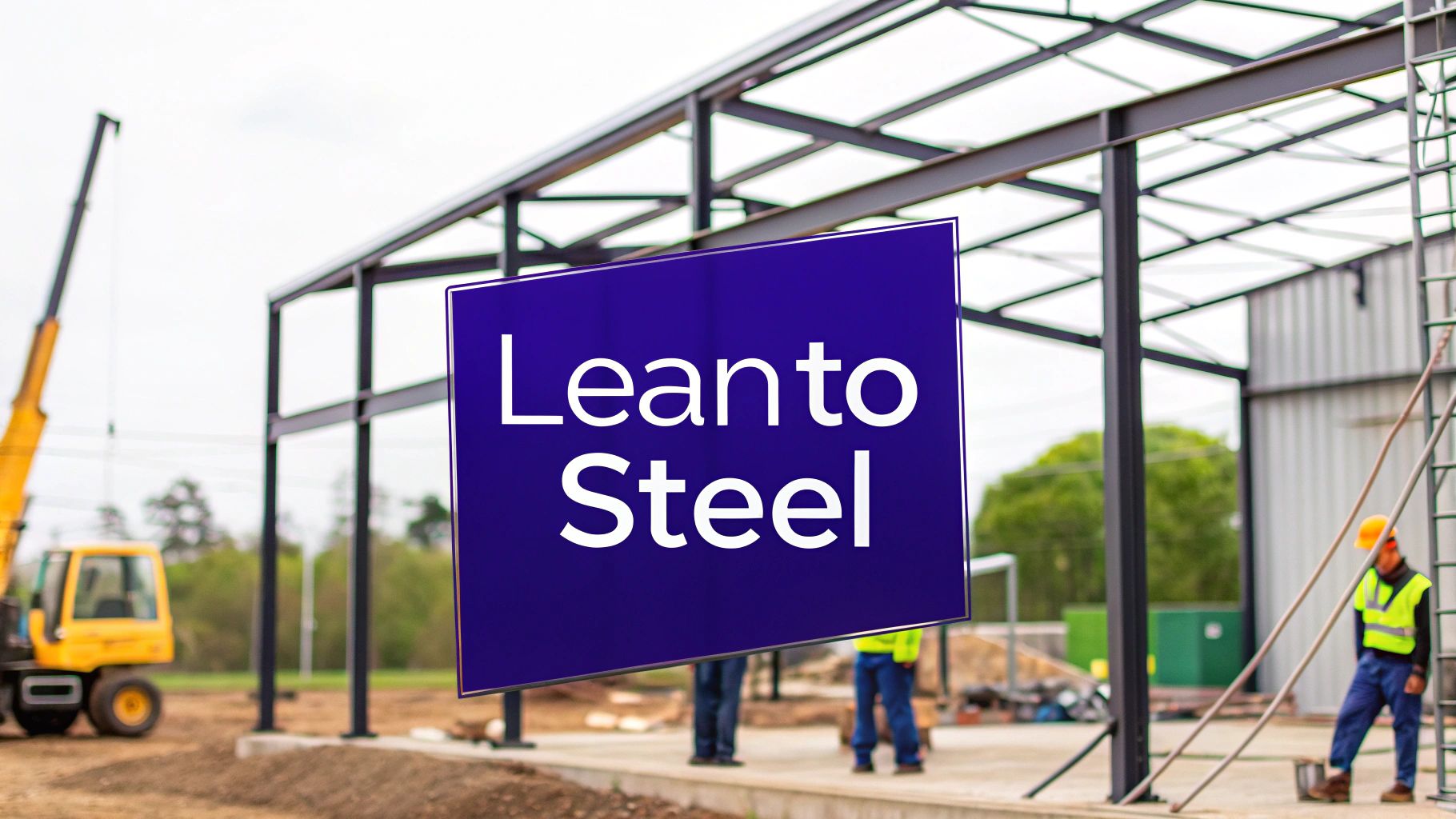
A lean to steel building is one of the smartest and most cost-effective ways to add space to your property. Think of it as a strong, streamlined extension with a single-sloped roof that attaches right onto an existing, taller building. It's like adding a sturdy backpack to your main structure—giving you valuable extra room without the headache and expense of a full-blown, standalone construction project.
The Smart Solution for Seamless Expansion
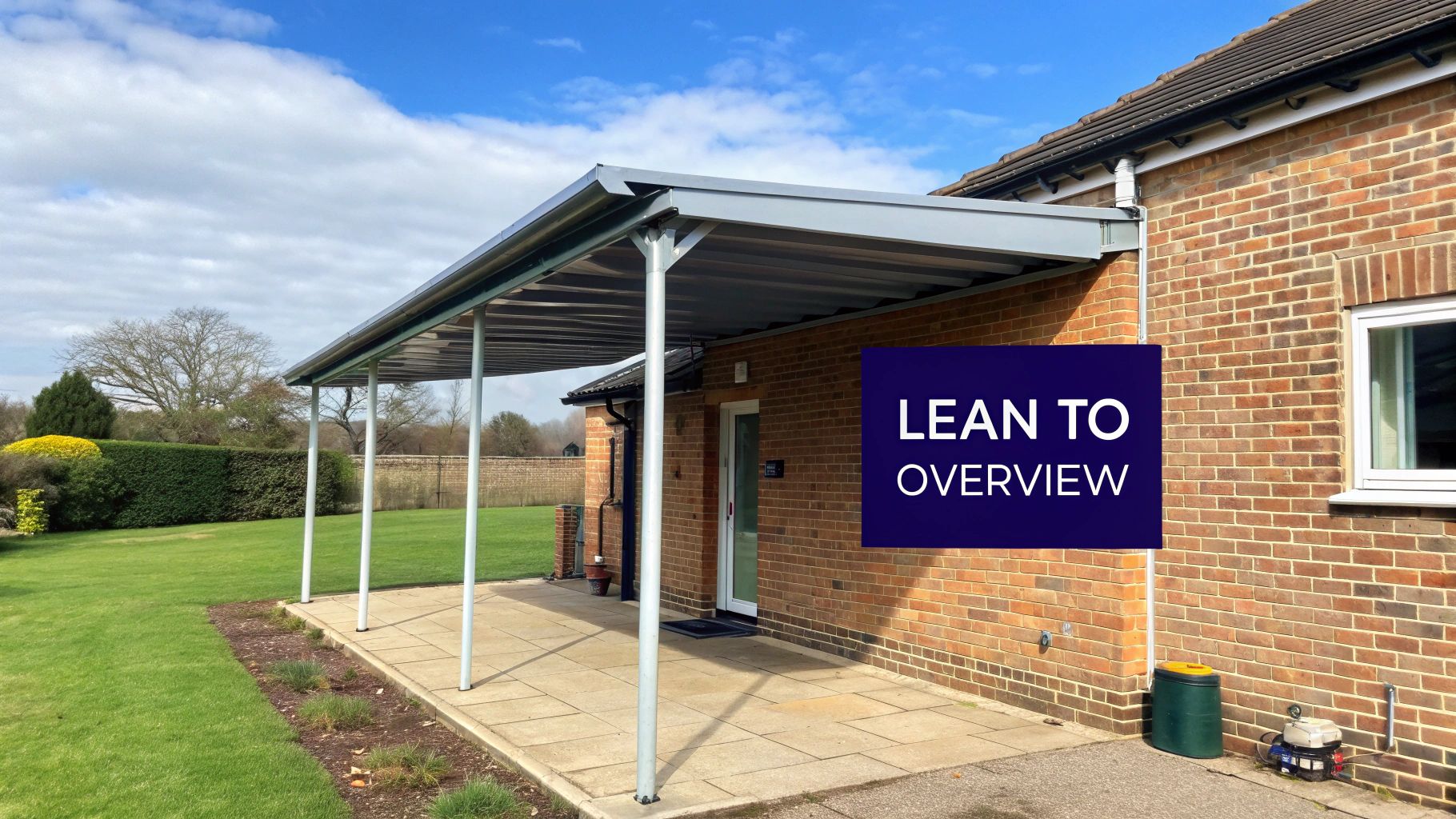
A lean to is all about practical, efficient expansion. Its defining feature is that single-slope roof, which starts high on the wall of the host building and angles down and away. This simple but brilliant design ensures rain and snow drain clear of the main structure, protecting both your original investment and your new addition.
Because it relies on the existing building for support along one entire side, you immediately slash material and foundation costs. You’re essentially only building three walls instead of four, instantly creating a functional, protected space. It’s no wonder they are a go-to choice for adding:
- Covered Storage: Get your expensive equipment, firewood, or raw materials out of the elements.
- Workshops or Garages: Carve out a dedicated space for projects or secure vehicle parking.
- Livestock Shelters: Offer a simple run-in shelter for horses or other animals on agricultural land.
- Expanded Warehouse Space: Quickly add much-needed square footage for inventory or operations.
How a Lean To Steel Building Works
The concept couldn't be more straightforward. A pre-engineered steel building kit comes with everything you need—the steel frames, wall panels, and roofing—all designed to fit together with precision. The rafters of the lean-to are securely fastened to the structural columns of the main building, creating a unified, durable, and seamless extension.
To give you an idea of a lean-to's core features, here’s a quick breakdown:
Key Features of a Lean To Steel Building at a Glance
| Characteristic | Description | Primary Benefit |
|---|---|---|
| Attached Structure | Connects directly to an existing, taller "host" building on one side. | Reduces material costs (only needs 3 walls) and simplifies foundation work. |
| Single-Slope Roof | The roof has one continuous slope, starting high against the host building and angling downward. | Promotes effective drainage of rain and snow away from both structures. |
| Pre-Engineered Design | Components are fabricated off-site for precise fit and rapid assembly. | Ensures structural integrity and dramatically speeds up construction time. |
| Steel Framework | Built with high-strength steel columns, beams, and girts. | Offers superior durability against weather, pests, and fire compared to wood. |
This table shows why the lean-to is such a popular choice for so many applications.
Because they are a type of pre-engineered system, their popularity has soared. The North American pre-engineered steel building market hit a value of US$ 4.0 billion in 2024 and is expected to climb to US$ 7.5 billion by 2035. That growth speaks volumes about their efficiency. While lean-tos are perfect additions, you can also explore our guide on the different types of steel buildings to see the full range of options available.
The Strategic Benefits of Choosing a Lean To
Opting for a lean-to steel building isn't just about adding more space; it's a strategic move that pays off in cost, time, and sheer durability. These additions are cleverly designed for maximum efficiency, using your existing structure as a backbone to give you the most impact for the least investment.
The first thing everyone notices is how incredibly cost-effective they are.
By attaching directly to a host building, a lean-to completely eliminates the need for one entire wall. That simple design tweak immediately slashes the amount of materials, foundation work, and labor needed. It's like getting all the function of a four-walled building while only paying for three.
Speed and Simplicity in Construction
Beyond the upfront savings, the construction timeline for a lean-to steel building is refreshingly fast. The components are pre-engineered, meaning they show up at your property already cut, drilled, and welded to exact specifications. The on-site work feels more like assembling a giant, high-strength kit than traditional construction. This precision cuts down on delays and makes the whole process smooth and predictable.
This rapid construction brings a few key advantages:
- Reduced Labor Costs: A faster build means fewer billable hours for the construction crew, which directly lowers your project costs.
- Minimal Disruption: Your business or home life can continue with far less interruption.
- Quicker ROI: The sooner your new space is ready, the sooner you can start using it for storage, production, or recreation.
A pre-engineered lean-to can often be erected in a fraction of the time it takes to build a traditional wood-frame or masonry addition, turning a weeks-long project into a matter of days.
Unmatched Durability with Low Maintenance
Let's be blunt: steel is simply stronger and more durable than wood. A lean-to steel building gives you superior protection against common headaches like pests, fire, and rot. Unlike lumber, a steel frame won’t warp, crack, or twist over the years, ensuring your structure stays solid and secure for decades.
This built-in resilience translates to minimal maintenance. You can forget about periodic painting, staining, or calling an exterminator. A quick wash-down now and then is usually all it takes to keep your building looking sharp, saving you a ton of time and money in the long run. For a deeper dive, check out our article on why steel building construction is the most affordable choice in today's market.
Another huge plus is the seamless integration. A lean-to can be designed to perfectly match the color, roofline, and overall look of your main building. The final result doesn't look like an afterthought—it looks like a planned, cohesive part of your property that enhances both its function and its curb appeal. This blend of smart affordability, speed, and lasting strength makes it an intelligent choice every time.
Common Applications and Real World Uses
The true value of a lean-to steel building really comes to life when you see it in action. Its brilliant simplicity makes it one of the most adaptable structures out there, solving everyday space problems for farms, businesses, and even homeowners. Let's move past the theory and look at how these practical additions actually perform on the ground.
For farmers and ranchers, a lean-to is a workhorse. It’s the perfect way to create a covered shelter quickly and without breaking the bank, protecting valuable assets from the elements.
- Hay and Feed Storage: Keep your bales dry and stop spoilage in its tracks. A simple, open-sided lean-to attached to your main barn ensures your feed stays high-quality and safe for livestock.
- Equipment Shelter: Your tractors, combines, and other machinery are huge investments. A lean-to gives them immediate protection from sun, rain, and snow, which goes a long way in extending their operational life.
- Livestock Run-In: Give horses or cattle a shaded, dry place to get out of rough weather. An open-front lean-to attached to a stable lets animals move in and out freely, keeping them comfortable and healthy.
A well-placed lean-to can make a huge difference in the daily flow of a farm. It creates dedicated, protected zones for specific tasks without the cost and hassle of putting up a whole new building.
Commercial and Industrial Expansion
Businesses often hit a point where they need more space—and they usually need it fast. A lean-to steel building is the perfect answer for quick, cost-effective expansion that won't shut down your operations for weeks on end. This kind of adaptability is a big reason the metal building system market, valued at USD 22,475.4 million in 2025, is set to keep growing. If you're interested, you can learn about the trends in the metal building market and see the data for yourself.
You'll commonly see these structures used for:
- Warehouse Additions: Seamlessly tack on more square footage to your existing warehouse for extra inventory. It’s a straightforward way to grow without launching a massive construction project.
- Covered Loading Docks: Protect your goods, and your employees, from the weather during loading and unloading. This simple addition improves safety and keeps your products in top condition.
- Protected Walkways: Connect two separate buildings with a covered walkway. This ensures your team can move between locations comfortably and safely, no matter what the weather is doing.
Practical Solutions for Homeowners
The usefulness of a lean-to steel building isn't just for big operations. Homeowners are finding they are incredibly handy for adding functional, stylish space to their properties. They offer a durable, low-maintenance alternative to traditional wood structures that just can't stand up to the same level of wear and tear.
Popular residential uses include sturdy carports to shield vehicles from sun and hail, or spacious, enclosed workshops perfect for hobbies and DIY projects. Many people also use them to design inviting covered patios for outdoor entertaining. These kinds of additions really enhance both a property's value and your day-to-day life. For more inspiration, check out our guide on metal buildings for residential use and see how they can transform your home.
Understanding Lean To Steel Building Costs
Figuring out the budget for a lean to steel building is more straightforward than you might think, but a few key variables will shape the final price tag.
Think of it like buying a new truck. The base model has an attractive starting price, but once you start adding a bigger engine, premium finishes, or a tow package, the cost adjusts. It's the same with your lean-to—your choices in size, materials, and custom features are what drive the final investment.
The biggest factor, hands down, is the sheer size. A larger footprint means more steel, more roofing, and more labor, all of which naturally increase the price. But here's the upside: the cost per square foot often drops as the building gets bigger, giving you more bang for your buck on larger projects.
Core Factors That Influence Price
Beyond the basic dimensions, several other design choices will steer your budget. Each of these elements adds to the building's performance and appearance, so it’s all about balancing cost with your specific needs.
Here are the key variables that move the needle on price:
- Steel Gauge: Thicker, lower-gauge steel provides serious strength and durability, especially if you're in an area with heavy snow or high winds. It does, however, come at a higher price.
- Roof Pitch: A steeper roof might be necessary to meet local building codes for shedding snow or to match the aesthetic of your main building. This can affect material and labor costs.
- Customizations: The number and quality of doors, windows, and skylights you add will directly impact the total. High-end roll-up doors or insulated windows are fantastic additions that also affect the budget.
- Insulation: While it's an upfront cost, adding insulation is a smart long-term play for saving on energy bills and keeping the space comfortable.
This infographic breaks down some of the most common uses for lean-to buildings across different industries.
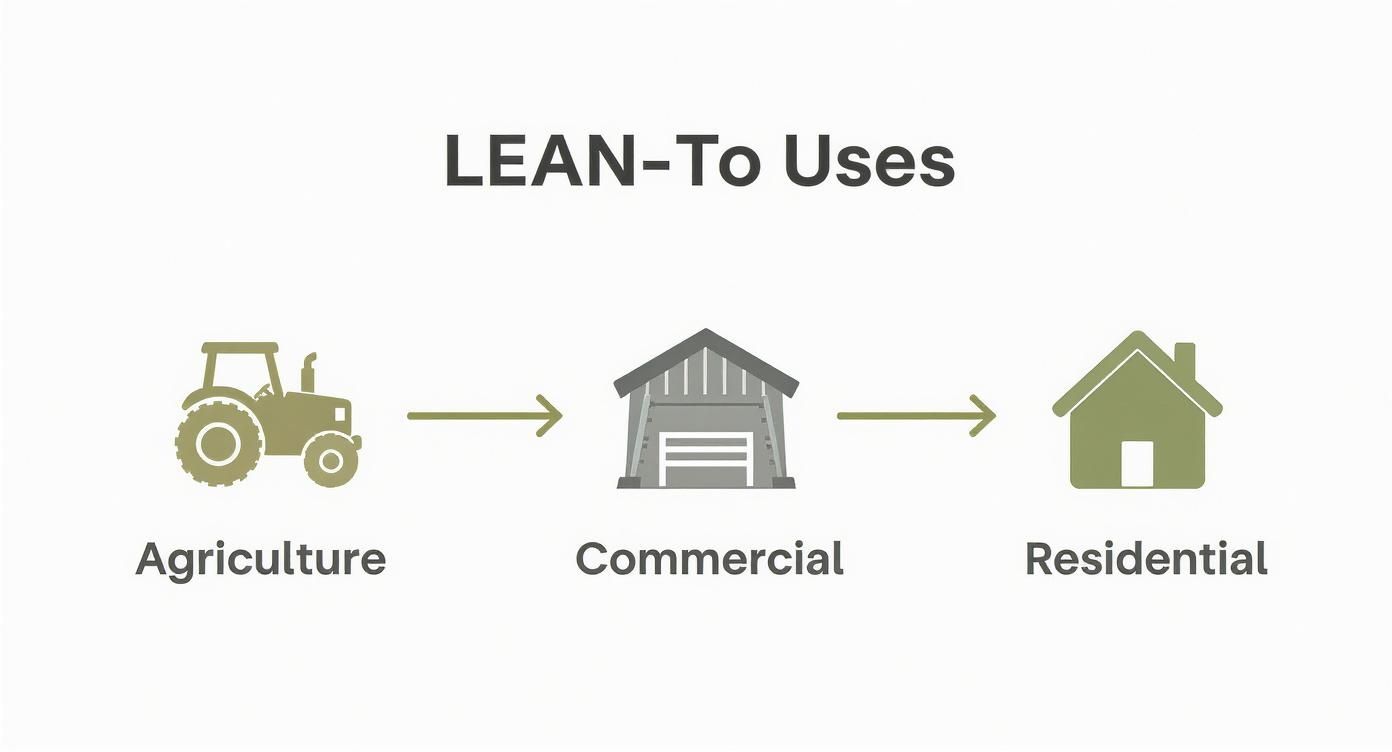
As you can see, the adaptability of these structures is incredible. They fill essential roles in agricultural, commercial, and even residential settings.
Looking at the Numbers
To get a clearer picture of what to expect, let's talk about some typical price ranges.
For a prefabricated steel building kit—a very popular choice for lean-to designs—you're generally looking at $15 to $25 per square foot for just the materials. Once you add professional installation, site prep, and any custom touches, the total cost for a fully installed lean-to usually lands between $24 to $43 per square foot.
The table below breaks down the primary cost factors influencing the final price of a lean-to steel building project.
Estimated Cost Breakdown for a Lean To Steel Building
| Cost Component | Typical Price Range (per sq. ft.) | Key Influencing Factors |
|---|---|---|
| Building Kit/Materials | $15 – $25 | Steel gauge, building size, roof pitch, coatings |
| Foundation (Concrete Slab) | $5 – $10 | Slab thickness, soil conditions, local labor rates |
| Professional Installation | $4 – $8 | Project complexity, crew accessibility, location |
| Custom Features | Varies | Windows, doors, insulation, vents, skylights |
This gives you a solid starting point for budgeting, but remember that every project is unique.
Don't forget to account for "soft costs" that go beyond the building itself. These include expenses for building permits, foundation work like a concrete slab, and any necessary site grading or utility connections.
These are the kinds of expenses that can sneak up on you if you're not prepared. Your geographic location also plays a huge part, as local labor rates and building code requirements can vary quite a bit, influencing both material specs and construction costs.
For a complete picture, be sure to read our comprehensive article on the cost of steel buildings to plan your project with confidence.
Key Design and Customization Options
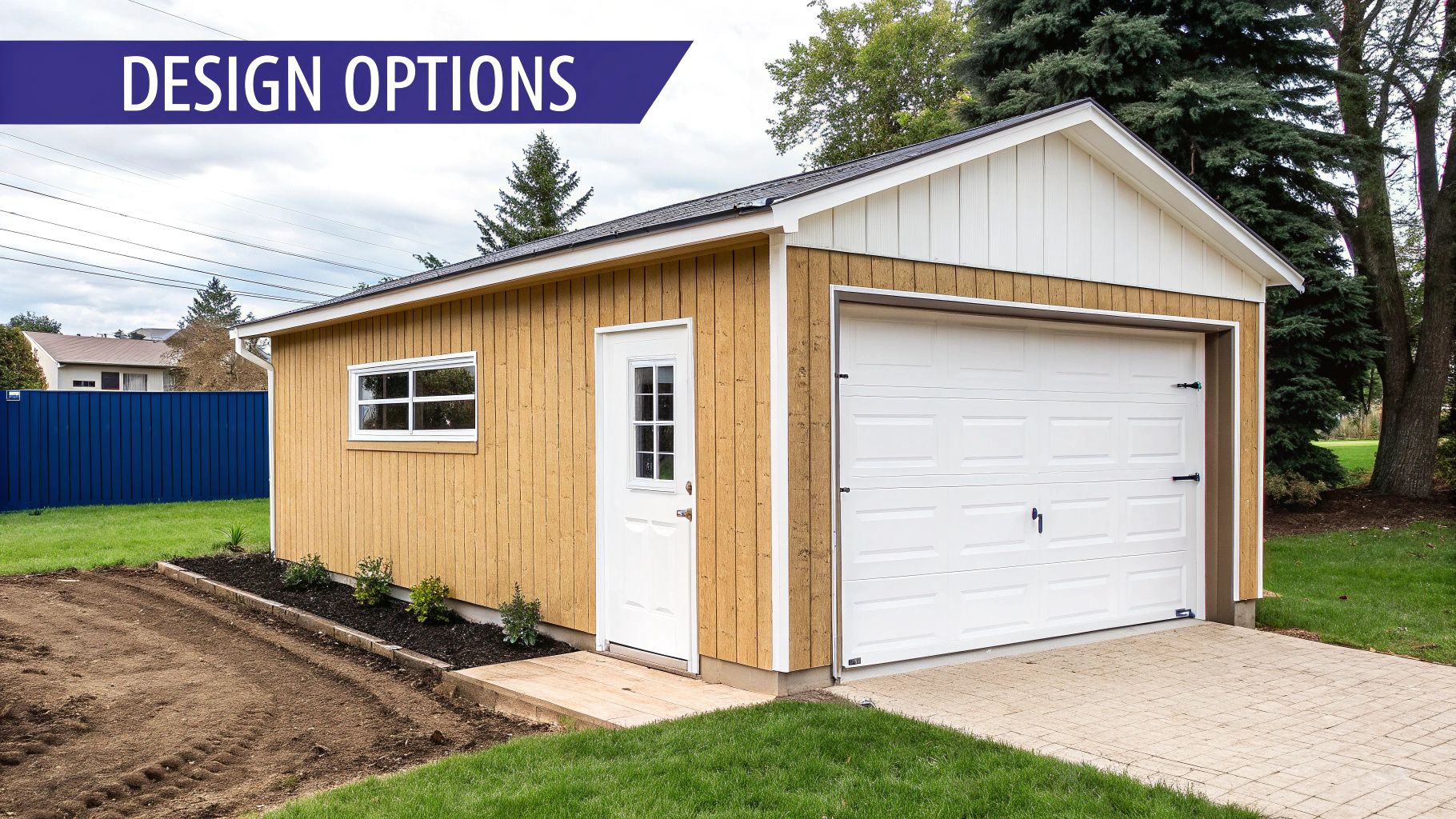
A lean to steel building is anything but a one-size-fits-all product. Think of it more like a blank canvas, ready for you to tailor it perfectly to your needs. The real value comes from the design choices you make, which dictate everything from its day-to-day function to the way it looks next to your main building.
One of the first things you'll decide on is the roof pitch. This is way more than just an aesthetic detail—it’s a practical decision that helps the building handle the weather. A steeper pitch is brilliant for shedding heavy snow and rain, which is a must-have in certain climates. It also helps you match the roofline of your existing structure, creating a seamless, professional look.
Functional Enhancements for Daily Use
Beyond the basic framework, the real magic happens when you add the features that turn a simple shelter into a hard-working space. You can outfit your lean-to with all sorts of access points and practical add-ons to make it perfect for its job.
Here are some of the most popular functional upgrades:
- Roll-Up Garage Doors: These are essential if you need wide access for vehicles, heavy equipment, or bulky inventory. They’re a game-changer for workshops, garages, and warehouse extensions.
- Walk-In Doors: For simple, secure access for people, a standard walk-in door is non-negotiable. It’s perfect for office add-ons or any workshop you’ll be in and out of all day.
- Windows and Skylights: Letting in natural light can completely transform a space. It makes the interior feel more open and can slash your electricity bill by reducing the need for artificial lighting.
You can even plan for the future. If you're thinking about sustainable energy, you can learn more about mounting solar panels on a roof to see what structural considerations might be needed upfront.
Customization is all about making the building work for you. Whether that means adding a small window for ventilation in a hobby shop or a massive roll-up door for a commercial loading bay, the right features are what make the building truly useful.
Aesthetic Choices for a Seamless Look
Finally, you get to dial in the look of your lean-to so it perfectly complements your main building. You're not stuck with a generic metal shed look. Steel panels come in a massive palette of colors, so you can either match your existing structure exactly or choose a complementary accent color.
You also have control over the panel profiles themselves, from traditional ribbed designs to sleek, modern flat panels. These choices ensure your lean to steel building doesn't just add space—it actually enhances your property’s curb appeal and overall value.
By carefully thinking through these elements, you can create an addition that feels like it was always meant to be there. Take a look at our full gallery of custom steel buildings to get inspired by the incredible range of possibilities.
Navigating the Installation Process
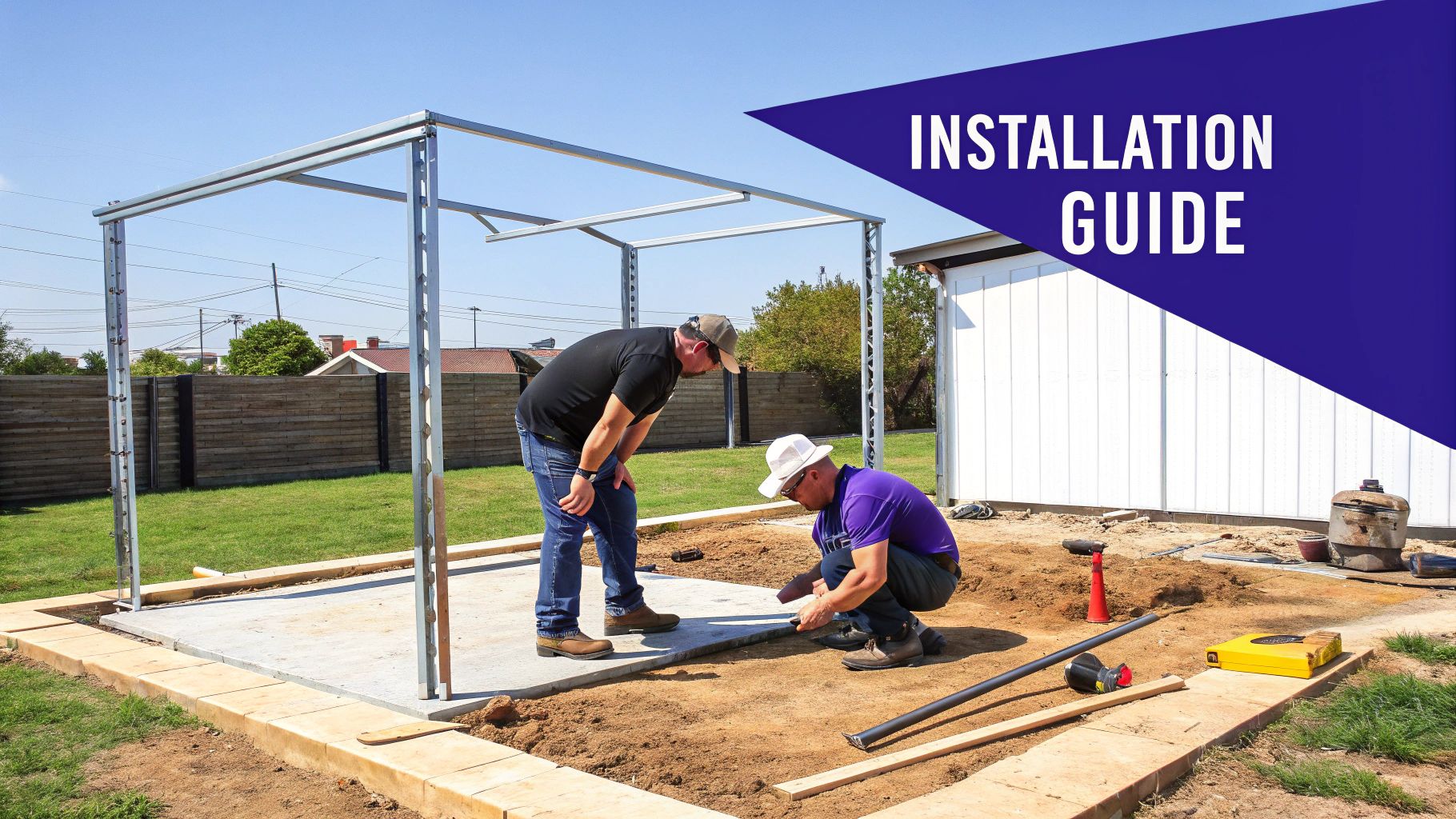
Watching your lean to steel building come to life is an exciting time, but a smooth build starts long before the first steel beam goes up. The real secret to success is in the prep work. What you do in the planning phase is just as important as the physical assembly itself.
Your first move? Tackle the pre-installation checklist. This journey always begins with securing the right building permits from your local government. Since codes vary wildly from one place to another, this is a non-negotiable step that will save you from major headaches down the road. At the same time, you'll need to get your site ready for a stable, long-lasting structure.
Preparing Your Foundation
Think of the foundation as the literal anchor for your entire project. For a lean to steel building, you're typically looking at one of two options: a solid concrete slab or concrete piers strategically placed under key structural points.
The best choice hinges on your building's size, what you plan to use it for, and your local soil conditions. Getting the ground properly graded and perfectly level is absolutely critical for the integrity of the whole build.
DIY Assembly Versus Professional Installation
Sooner or later, you’ll face a big decision: should you build it yourself or hire a professional crew?
Pre-engineered steel building kits are designed to be pretty straightforward, making a DIY approach totally possible if you have some construction know-how and the right equipment. Going this route can definitely save you a good chunk of money.
On the other hand, bringing in an experienced team offers peace of mind and ensures the job gets done right—and fast. Pros know the assembly sequence inside and out and can often finish the project in a fraction of the time, letting you focus on other things.
Key Insight: While DIY saves on labor costs, professional installation often includes workmanship warranties and ensures your building meets all structural specifications from day one, potentially saving you from costly mistakes.
The assembly itself is a logical, step-by-step process. It kicks off with erecting the main steel framework and bolting it securely to the host building. Once the skeleton is up, the secondary framing—the girts and purlins—are installed.
After that, the wall and roof panels are attached, followed by the finishing touches like doors, windows, and any other custom features you've chosen. To keep everything transparent and documented, leveraging onsite media like professional site photography can be a great way to track progress from start to finish.
Got Questions? We've Got Answers
Even after you've done your homework, a few questions always pop up when you're considering a lean-to steel building. We get it. Here are some of the most common ones we hear, with straightforward answers to help you make your decision with confidence.
Can a Lean-To Be Added to Any Building?
Not quite. While lean-tos are incredibly versatile, they can’t be attached to just anything. The host building needs to be strong enough to handle the extra weight of the lean-to’s frame, plus any snow that might pile up on its roof.
This is why buildings made of steel, concrete, or masonry are perfect partners. They’ve got the structural muscle needed. If you’re thinking about attaching one to a standard wood-frame structure, you’ll definitely need a professional to take a look first to make sure it can handle the load.
Always consult with a structural engineer before attaching a lean-to. They're the ones who can give you the green light, confirming your host building is up to the task and detailing exactly how to connect everything safely. It’s a step you can't afford to skip.
What Is the Typical Lifespan of a Steel Lean-To?
Think of a well-built steel lean-to as a long-term investment. Because steel doesn't rot, isn't on the menu for termites, and won't burn, these structures can easily last 30 to 50 years—and often much longer.
Most of the time, the manufacturers back this up with solid warranties on the important stuff, like the steel panels and paint finishes. That’s a lot of peace of mind packed into one structure.
Do I Need a Permit for a Lean-To Steel Building?
More than likely, yes. Since a lean-to is a permanent addition that ties into another building, most local authorities will want to see a building permit.
This isn't just red tape. The permit process ensures your new structure is designed to meet local building codes, especially for things like wind and snow loads. It’s a crucial step that protects your investment and makes sure your addition is safe and built to last.
Ready to expand your space with a durable, cost-effective addition? The team at Icon Steel Buildings can help you design the perfect custom lean-to solution for your property. Get your project started by visiting us at https://iconsteelbuildings.com.