
Think of a lean-to structure as the ultimate, practical add-on. It's a simple yet incredibly effective way to expand your usable space without breaking the bank. At its core, it’s a building that 'leans' on a larger, existing structure for support and features a distinct single-slope roof designed to shed rain and snow with ease.
Breaking Down the Basics of Lean-To Structures
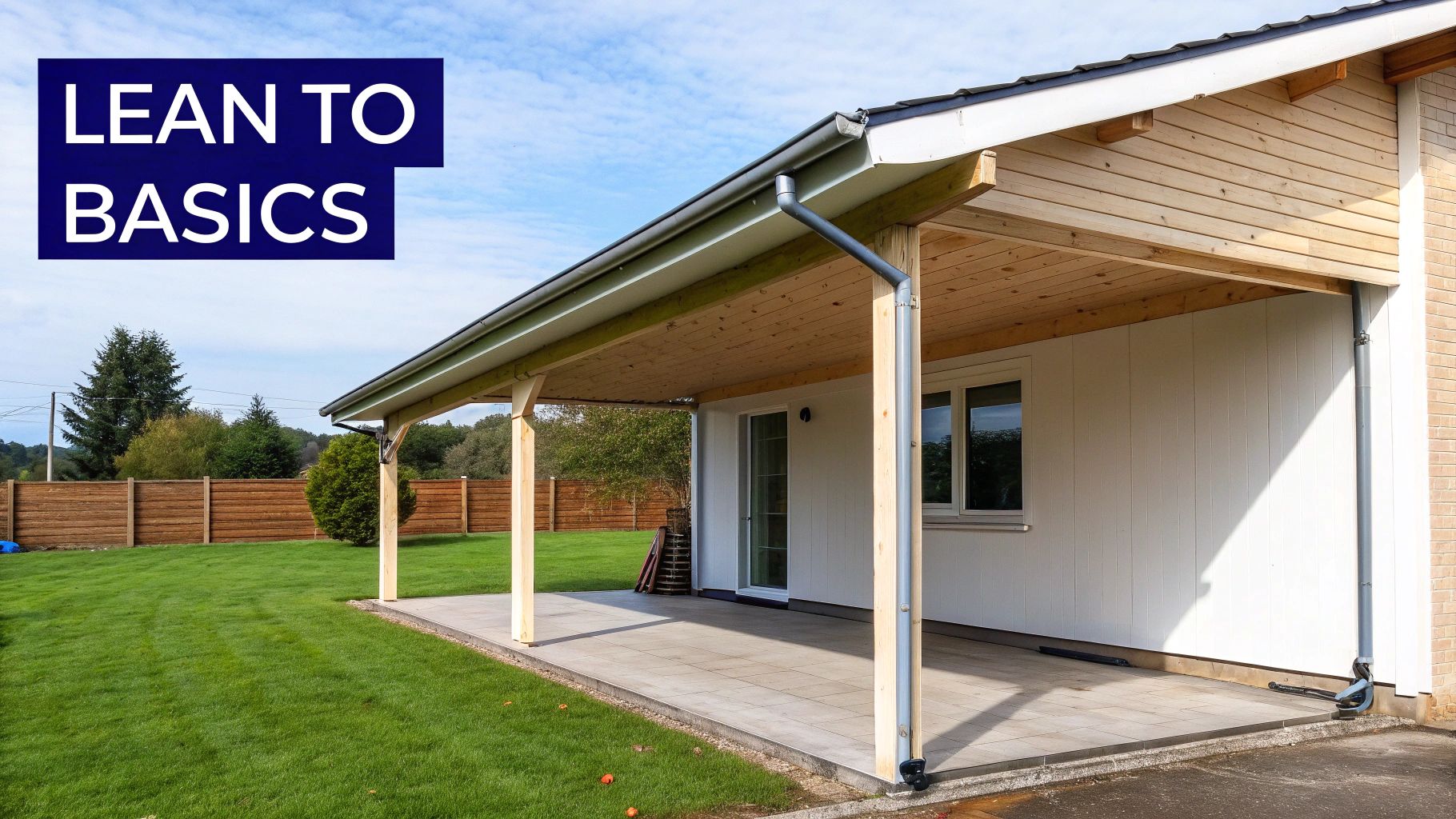
Let's say you have a garage but you're running out of room for your boat or lawnmower. Instead of building a whole new shed from scratch, you could just add a lean-to. It uses one wall of your existing garage for support, which immediately saves you a ton on materials, time, and labor.
This simple, efficient concept is exactly what makes these buildings so versatile and popular. They integrate seamlessly with what you already have to create something new, functional, and useful.
The Two Main Variations
While the core idea is straightforward, lean-to structures generally come in two primary flavors. Each one serves a slightly different purpose, and understanding the difference will help you pick the right one for your property.
- Attached Lean-To: This is the classic design. It connects directly to an existing building—like a house, barn, or commercial warehouse—and shares a common wall. It's the perfect solution for creating a seamless extension for a covered patio, carport, or extra storage space.
- Freestanding Lean-To: This version mimics the iconic single-slope roof but stands entirely on its own, supported by four (or more) posts. It's an excellent choice when you need a standalone shelter away from another building, like a picnic cover in a park or a small equipment shed out in a field.
Core Components of a Lean-To
Every lean-to, whether it's attached or freestanding, is built from a few fundamental parts that work together to give you reliable shelter. The main components include the single-slope roof panels—critical for shedding water—and the support columns or posts that carry the weight.
Connecting it all are the beams and purlins that create the structural frame. If you want to dive deeper into how these parts come together, exploring the different types of steel buildings can give you a better feel for the engineering behind a sturdy structure.
The real genius of the lean-to is its efficiency. By using an existing wall for support, it dramatically cuts down on structural complexity and material costs. You get maximum utility from a minimal footprint, making it one of the most cost-effective ways to add functional, protected space to any property.
Common Uses for Lean-To Structures
Lean-to structures are the unsung heroes of the building world. With a brilliantly simple design, they adapt to just about any need you can throw at them, providing affordable and practical shelter across residential, agricultural, and commercial properties.
For homeowners, the possibilities are practically endless. Think about adding a sturdy steel carport to the side of your garage—suddenly, your vehicles are shielded from brutal sun, damaging hail, and heavy snow. It’s not just about protecting your car's paint job; it’s about the simple convenience of not getting soaked while unloading groceries in a downpour.
But it doesn't stop at cars. These structures are perfect for creating covered patios for year-round outdoor living or a dry, easy-to-reach spot for stacking firewood and storing garden tools. The sloped roof is designed to channel rain and snow away from your home's foundation, giving you an extra layer of protection.
Agricultural and Farming Applications
On a farm, lean-to structures are absolute workhorses. They provide crucial shelter for livestock, offering a cool spot of shade in the summer heat and a solid barrier against biting wind and rain. This simple addition can make a real difference in animal welfare and reduce stress on your herd.
Farmers also rely on them to protect expensive equipment. A lean-to attached to a barn is the perfect covered parking spot for a tractor, harvester, or ATV, keeping them out of the elements and extending their lifespan. They're also an ideal solution for storing hay bales, keeping them dry and preventing costly spoilage.
The real genius of a lean-to on a farm is its efficiency. You get critical protection for valuable assets—whether it’s animals or machinery—for a fraction of the cost and hassle of a full-blown barn. It’s all about maximizing your space and your budget.
Commercial and Business Solutions
Businesses are always looking for smart ways to optimize space and keep things running smoothly, and lean-to structures are a seriously affordable solution. You can add one to a warehouse to create a covered loading dock, allowing your crew to load and unload trucks without being at the mercy of the weather.
The same idea works for expanding storage. An attached lean-to can become a secure, covered area for raw materials or finished products, freeing up priceless interior floor space. For workshops or manufacturing plants, it can serve as a sheltered outdoor area for tasks like cutting or assembly, adding a new level of flexibility to your operations. Figuring out the right setup is even easier when you understand the parts that go into it, which are covered in guides to metal carport components.
Choosing The Best Materials For Your Lean To
The material you choose for your lean-to is easily the biggest decision you'll make. It’s the one choice that directly impacts how long the structure lasts, how well it performs, and how much it’s worth down the road.
Think of it like this: you wouldn't build a car frame out of wood if you wanted it to be safe and last for decades. The same logic applies here. The right material ensures your structure can handle whatever life—and mother nature—throws its way.
A Look at Traditional Options
Wood is what usually comes to mind first. It has that classic, rustic look that many people like, but it comes with a long list of problems. Wood is a magnet for rot, termites, and warping from moisture. It needs constant painting, sealing, and general upkeep just to keep it from falling apart.
Aluminum is another common choice, mainly because it's lightweight and doesn't rust. The trade-off is its lack of strength. It’s just not a great fit for places with heavy snow or high winds, as it can dent easily and won’t provide the structural backbone needed for larger lean to structures.
The Unmatched Strength of Steel
This is where pre-engineered steel completely changes the game. Steel delivers a level of durability that wood and aluminum can't even touch. It's engineered from the ground up to handle heavy snow loads, fight back against high winds, and take decades of harsh sun without breaking a sweat.
A huge advantage is its incredible strength-to-weight ratio. You get a tough, resilient frame without it being overly bulky or heavy. If you want to get into the nuts and bolts of it, you can learn more about the different types of a metal building frame and see what makes it so reliable.
This infographic shows just how versatile a sturdy lean-to can be.
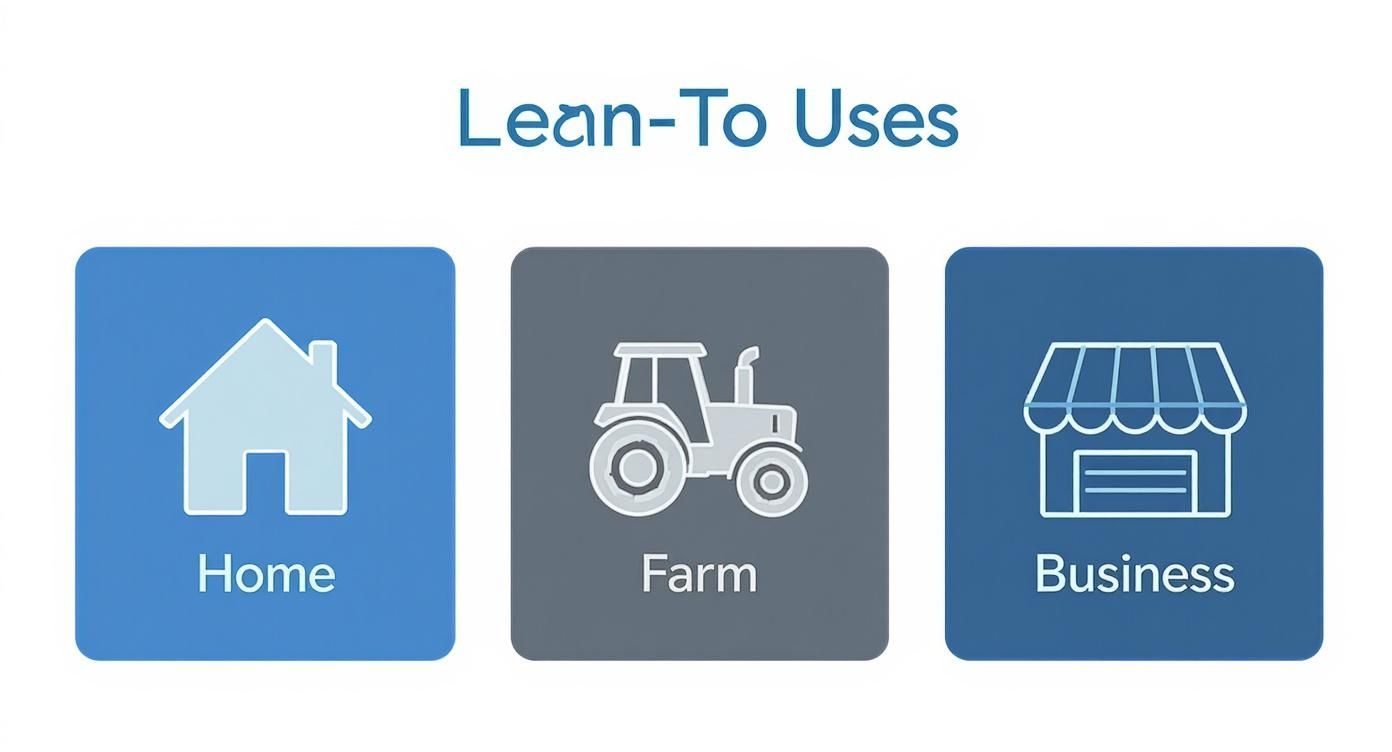
As you can see, these structures are used for everything from simple residential carports to massive agricultural and commercial shelters, where toughness is an absolute must.
Material Comparison for Lean To Structures
To make the choice clearer, here’s a quick side-by-side look at the most common materials. This should help you weigh the pros and cons based on what matters most for your project.
| Material | Durability & Strength | Maintenance Level | Weather Resistance | Typical Cost |
|---|---|---|---|---|
| Steel | Excellent; highest strength-to-weight ratio. Resists impacts, heavy loads. | Very Low; factory coatings prevent rust. No sealing or painting needed. | Excellent; engineered for high winds, heavy snow, and fire resistance. | Moderate |
| Wood | Fair to Good; strong but vulnerable to rot, termites, and warping. | High; requires regular sealing, painting, and inspections. | Poor; susceptible to moisture damage, fire, and pests. | Low to High |
| Aluminum | Poor to Fair; lightweight and rust-proof but dents easily and lacks strength. | Low; resistant to corrosion. | Good; handles rain and sun well but bends under heavy wind/snow. | Low to Moderate |
While wood and aluminum have their uses, steel consistently comes out on top for anyone looking for a long-term, hassle-free solution.
Steel is a 'set it and forget it' solution. Its factory-applied coatings protect against rust and corrosion for years, meaning you spend your weekends enjoying your new space, not maintaining it. This low-maintenance quality delivers unmatched long-term value.
It's also worth thinking about the environmental side of things. When you're looking into sustainable building materials, steel stands out. It's 100% recyclable, which dramatically shrinks its environmental footprint at the end of its very long life.
When you add it all up—the raw strength, the minimal maintenance, and the sustainability—steel is clearly the best choice for any modern lean to structure.
How to Design and Customize Your Lean To
Designing the right lean-to is all about finding that perfect balance between pure function and how it looks on your property. It’s a process that lets you create a structure that solves your specific problem, whether that’s finally getting your boat under cover, setting up a new workshop space, or adding a sheltered patio for year-round use.
It always starts with the measurements. Your key dimensions—width, length, and height—are the blueprint for everything that follows. Really think about what you plan to store or do under it. If you’re parking an RV or a tractor, you need enough clearance not just to pull it in, but to comfortably open doors and move around it. Don't eyeball it; break out the tape measure.
Planning for Durability and Function
Once you've nailed down the size, the next big decision is the roof pitch. The slope of your roof isn't just for looks; it's a critical feature for channeling rain and snow away from both the lean-to and your main building's foundation. A good rule of thumb is that a steeper pitch works better in areas that get heavy snowfall.
This is also when you have to get real about your local weather. Your design absolutely must handle the typical wind and snow loads for your region. Thankfully, modern steel lean-to kits are engineered to meet specific local building codes, which takes the guesswork out of building a structure that’s both safe and resilient. A well-designed structure also considers things like the importance of roof ventilation to stop moisture from getting trapped and ensure your investment lasts for decades.
Bringing Your Vision to Life with Customization
Now for the fun part. Pre-engineered steel building kits offer a surprising amount of customization, letting you match your new lean-to to your existing property so it looks like it was always meant to be there. The efficiency you get with these kits is just a modern spin on time-tested construction principles.
The Empire State Building, constructed between 1929 and 1931, showcased early lean principles by building one floor per day, finishing under budget and ahead of schedule. Modern pre-engineered lean-to structures apply similar efficiency, streamlining the path from design to completion.
You get to control all the little aesthetic and functional details that turn a basic frame into a polished, seamless extension of your property.
Here are some of the most popular ways you can make it your own:
- Roof Style: Pick a roof that complements your main building. You can go with a simple, continuous slope or something with a bit more character.
- Gabled Ends: Adding gabled ends closes off the sides of the roof overhang. It creates a more finished, barn-like look that also adds a surprising amount of structural strength and curb appeal.
- Color Matching: Modern steel panels are available in a huge range of colors. You can easily find a shade that perfectly matches the trim or siding on your home, barn, or shop.
- Wall Panels: Are you just looking for a roof, or do you need more protection? You can leave it open or add side and end walls for a partially or fully enclosed space that keeps the weather out completely.
By thinking through these elements, you’ll end up with a structure that is incredibly practical and a beautiful addition to your property. If you're ready to see what's possible, you can learn more about crafting your own custom steel buildings and see just how every detail can be fine-tuned to your vision.
Preparing Your Site for Installation
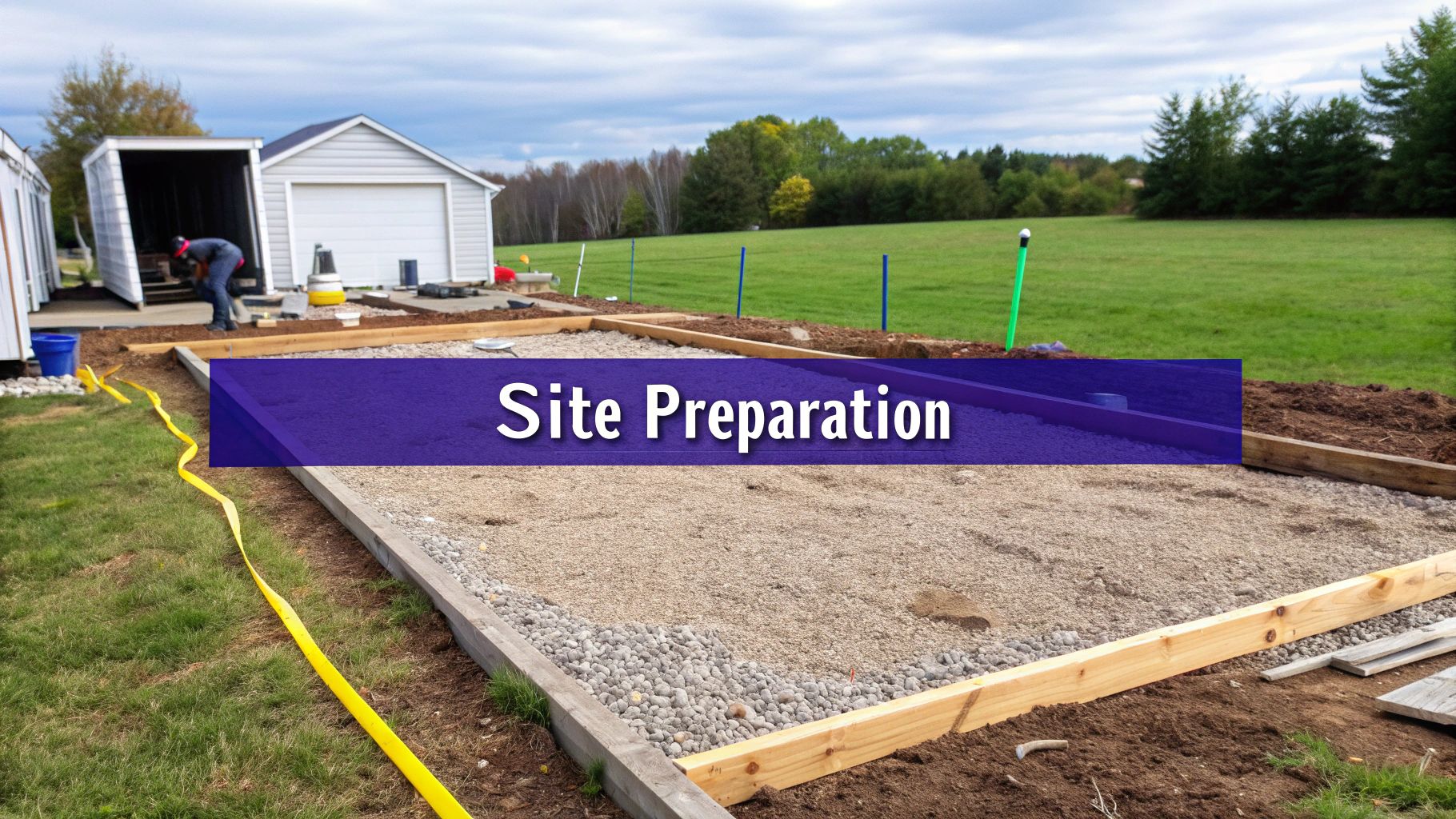
A successful build starts from the ground up, long before your lean-to kit ever arrives. Think of it this way: proper site prep is the single most important factor in making sure your structure is stable, durable, and safe for decades. It's all about setting the stage for a smooth, headache-free installation.
The very first job is to create a perfectly level surface. An uneven base puts uneven stress on the frame of your lean to structure, which can lead to misaligned panels, doors that won’t close right, and even long-term structural strain. This means clearing out all the vegetation, rocks, and debris from the spot you've picked out.
Foundations and Groundwork
Once the site is clear and level, it's time to think about the foundation. This is the bedrock of your project, and the right choice really depends on your structure's size and what you plan to use it for. While simple ground anchors might work for smaller, lighter shelters, most steel structures need a much more robust solution.
A concrete slab is the gold standard for permanent, heavy-duty lean to structures. It gives you a solid, level, and secure base that anchors the building and stops it from shifting over time. Getting a handle on steel building foundation requirements is absolutely essential for a stable, long-lasting installation.
A strong foundation does more than just hold the building up; it protects your investment. It ensures the structure can effectively transfer wind and snow loads to the ground, guaranteeing stability through any weather.
Navigating Permits and Building Codes
Before you even think about breaking ground, you have to tackle the world of permits. This is a step people often overlook, but ignoring it can cause major headaches down the road. Most towns and counties have specific zoning laws and building codes that dictate what you can build, where you can build it, and how it needs to be constructed.
Start by calling your local building authority. They’ll give you all the details on setback requirements (how far the structure has to be from your property lines), required foundation specs, and any specific engineering standards your structure must meet. Getting this sorted out early ensures your project is safe, legal, and hassle-free from start to finish.
DIY vs. Pro: Who Should Assemble Your Kit?
Once your pre-engineered steel kit arrives, you’ve got a big decision to make. Do you roll up your sleeves and build it yourself, or do you bring in the pros? This choice really comes down to a trade-off between your budget, your timeline, and how comfortable you are with a wrench in your hand. Both paths get you to a finished structure, but the journey is completely different.
Going the DIY route gives you a huge sense of satisfaction and can save you a good chunk of change on labor. Our modern lean to structures are designed from the ground up for straightforward assembly, with pre-drilled holes and instructions that actually make sense. Think of it like a giant Erector Set for adults; if you have the right tools and a little patience, a great-looking build is totally within reach for the average homeowner.
Of course, it's important to be real about what a DIY build actually involves.
Thinking About the DIY Option
Jumping into a DIY installation takes more than just weekend enthusiasm. You'll need to set aside a solid block of time, have basic tools like drills and ladders ready, and most importantly, have at least one other person to help you safely lift and position the panels and beams. The biggest payoffs are the money you save and the pride of having built it with your own two hands.
The real magic of a modern steel kit is how accessible it makes the building process. All the tricky parts—the measuring, cutting, and drilling—are already done for you at the factory. This takes the biggest risks and headaches off the table and makes a successful DIY outcome a real possibility.
Making the Case for Professional Installation
On the other hand, hiring a professional crew offers something you can't put a price on: peace of mind. Bringing in an experienced team gives you some serious advantages.
- Speed and Efficiency: A pro crew can often get the entire structure up in a fraction of the time it would take a first-timer. That means less disruption on your property and a finished building, faster.
- Expert Precision: An experienced team knows all the tricks to get every component perfectly aligned, squared, and tightened down to spec. This guarantees your building's long-term structural integrity.
- Warranty and Accountability: Professional installers almost always back their work with a workmanship warranty. If anything goes wrong with the assembly, they're on the hook to come back and fix it.
So, what's the right call? It all depends on you. If you’ve got the time, the tools, and a reliable helper, DIY is a fantastic and rewarding way to go. But if getting it done fast, getting it done right, and having a guarantee is your top priority, hiring a professional is a smart investment.
Your Lean To Structure Questions Answered
Whenever you're planning a new building, questions are bound to pop up. We get it. This section is all about giving you clear, straightforward answers to the most common things people ask about lean to structures, so you can move forward with total confidence.
How Much Does a Lean To Structure Cost?
That’s the big question, isn't it? The final price tag for a lean to can vary quite a bit, depending on its size, the materials you go with, and any custom features you add. A simple, smaller open-air kit might start in the low thousands, but a large, fully enclosed steel structure is naturally going to be a bigger investment.
A few key things will move the needle on cost: the gauge of the steel, the complexity of the roof style, whether you add walls, and what kind of foundation it needs. The best way to get a real number for your budget is to request a custom quote based on your exact specs.
Can I Attach a Lean To to Any Building?
For the most part, yes—but there’s one huge catch. The wall of the host building has to be structurally sound enough to handle the extra load. And we’re not just talking about the weight of the lean to itself, but also the potential stress from heavy snow and high winds.
It is absolutely critical to have a professional engineer assess the existing wall to confirm it can handle the connection safely. This isn't a step to skip. It's vital for the long-term safety and integrity of both your new lean to and the original building.
What Maintenance Does a Steel Lean To Require?
Honestly, this is one of the best parts about choosing steel: it’s incredibly low-maintenance. Wood needs constant attention, but steel won’t rot, warp, or become lunch for termites. Your upkeep checklist is refreshingly short.
- Occasional Cleaning: A quick wash-down with soap and water is usually all it takes to keep it looking sharp.
- Routine Checks: Every so often, take a walk around and make sure all the fasteners and bolts are still tight, especially after a season of heavy storms.
- Clear Debris: Make sure leaves and branches aren't clogging up your roofline or gutters so water can drain properly.
The factory-applied finish on our steel panels is engineered to fight off rust and corrosion for decades, giving you a durable, worry-free structure. Of course, a solid foundation is the key to that longevity, preventing the kind of settling that causes problems down the road. Just think about the Leaning Tower of Pisa—it started tilting way back in the 1170s because of an unstable foundation on soft ground, a mistake modern engineering has learned to avoid. You can read more about how its foundation was finally stabilized on Britannica.com.
At Icon Steel Buildings, we provide high-quality, durable lean to kits designed for easy assembly and long-lasting performance. Explore our building options today!