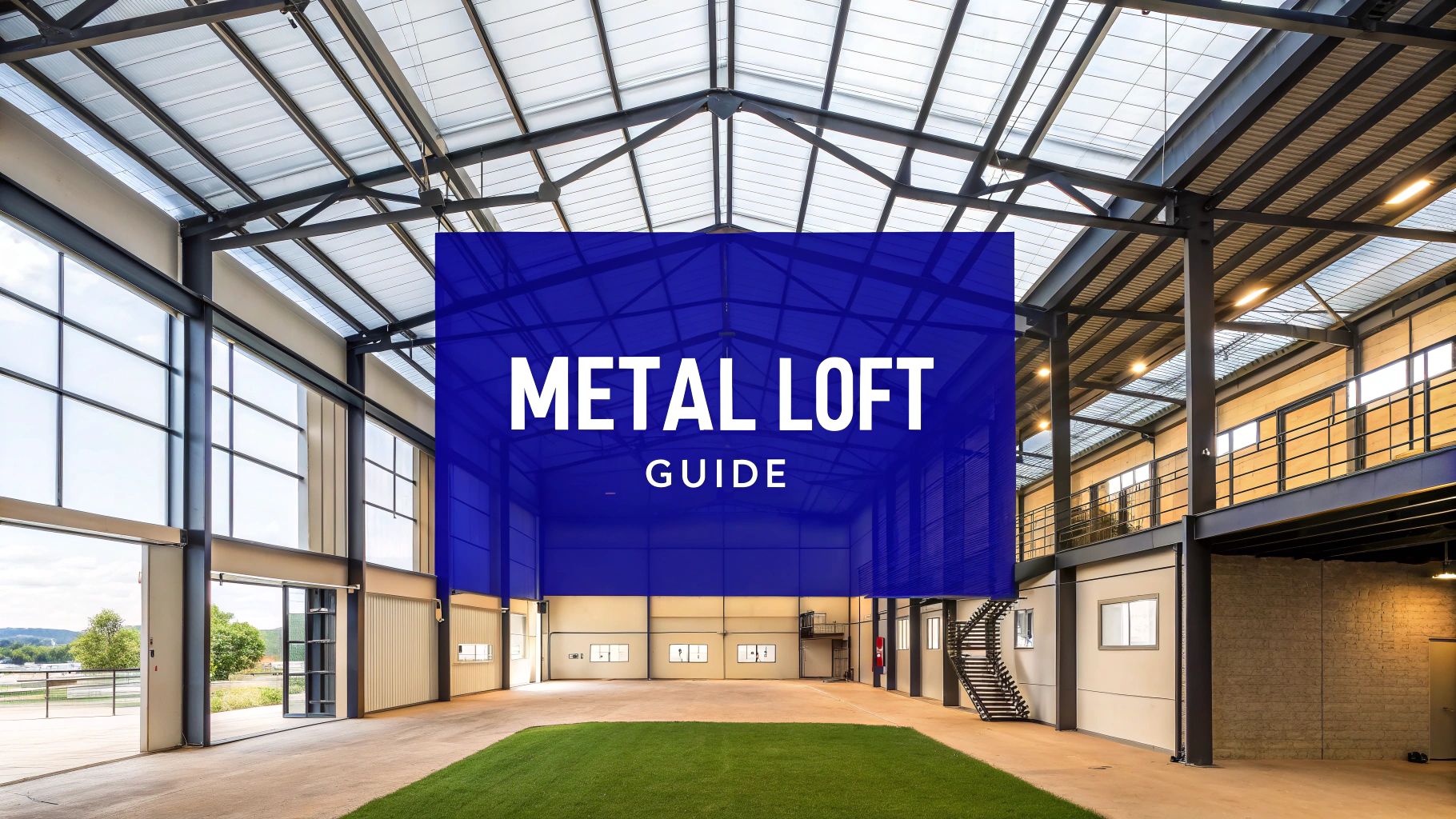
So, what exactly is a metal building with a loft? Picture a huge, open structure built with the rugged strength of steel—almost like an artist’s blank canvas. Now, imagine adding a second level inside that doesn’t close off the airy, wide-open feel of the ground floor. That’s the core idea.
These aren’t your grandpa’s old tin sheds. We’re talking about sophisticated building systems that combine a powerful steel frame with a custom-designed mezzanine. This setup unlocks incredible versatility, turning a simple shell into a dynamic, multi-use space ready for just about anything you can dream up.
The Power of Clear-Span Design
The real magic behind all this is the clear-span design that’s fundamental to most steel buildings. Traditional wood construction needs interior support columns to hold everything up, cluttering the floor plan. Steel I-beams, on the other hand, are engineered to span massive distances all on their own.
Think of it like having a bridge built right into your roof’s framework. This incredible structural strength means you can easily add a heavy upper floor—complete with furniture, equipment, and people—without a single column getting in your way on the main level. It’s this freedom that makes adding a loft so practical and effective. This approach is a cornerstone for many different types of steel buildings and what they can do.
More Than Just Extra Storage
Sure, a loft is a fantastic place for storage, but that’s just scratching the surface. People are using them in incredibly creative ways, usually to separate different functions within the same building.
- Residential Barndominiums: The loft can become a cozy master suite, a playroom for the kids, or a home office that overlooks a dramatic, open-concept living area below.
- Workshops and Garages: You could put a clean office or a quiet breakroom on the mezzanine, keeping it safely separated from the dust and noise of the main workshop floor.
- Commercial Spaces: A retailer might use the ground floor for their showroom and customer interactions, while the loft handles inventory and back-office administrative work.
This dual-level functionality is the biggest reason these buildings have become so popular. A metal building with a loft isn't just a structure; it's a smart solution for getting the most out of every square foot you own. It gives you a perfect blend of industrial-grade strength and the flexibility you need for your home or business.
Why Steel Frames Are Ideal for Loft Designs
Adding a loft isn't just a design choice—it's an engineering one. You need a frame that can handle the massive weight of an entire second level, plus everything you plan to put on it. This is exactly where steel framing shines, making metal buildings with lofts not just a cool idea, but an incredibly practical and safe one.
The real magic behind it is a concept called clear-span construction. If you tried to build a wide-open room with traditional wood framing, you’d quickly run into a problem. You’d need a forest of interior columns or load-bearing walls just to hold up the roof and any upper floors, completely killing the open-concept vibe.
Steel framing blows that limitation out of the water.
The Engineering Magic of I-Beams
At the core of every metal building’s strength are massive steel I-beams. These aren't just hunks of metal; they're engineered with an incredible strength-to-weight ratio. In simple terms, they can support enormous loads over huge distances without breaking a sweat.
Think of an I-beam as a miniature bridge built right into your building's skeleton. Its unique "I" shape is designed to distribute weight perfectly across its entire length. This is what allows for those vast, column-free interiors that are an absolute must for a functional and beautiful loft. The whole structure works in harmony, a topic we dive into deeper in our guide to the metal building frame.
This infographic really brings to life how a clear-span design opens up your space, giving you a perfect blank canvas for your loft.
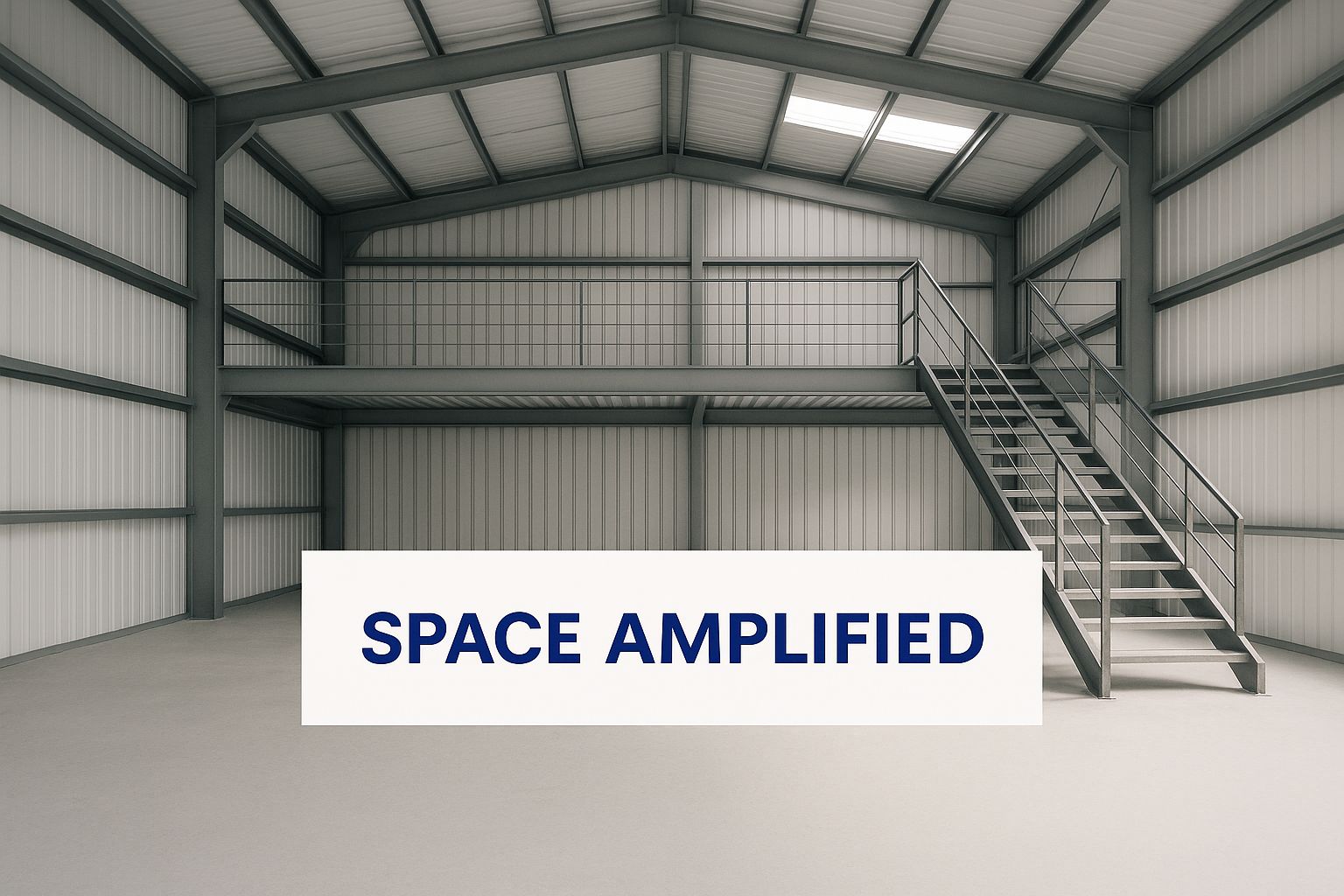
As you can see, getting rid of interior columns makes the ground floor feel huge and allows the loft to feel like a natural, integrated part of the design instead of a cramped addition.
Unlocking Unprecedented Design Freedom
Because the steel frame does all the heavy lifting, you have almost total freedom to design your interior. The loft doesn't need to be awkwardly positioned over specific support walls below. This opens up a ton of creative possibilities.
To help you visualize the options, we’ve put together a quick comparison of common loft styles.
Loft Design Options in Metal Buildings
This table breaks down a few popular loft configurations. Notice how the inherent strength of steel makes each of these layouts structurally straightforward, giving you more creative control over your space.
| Loft Style | Best For | Structural Consideration |
|---|---|---|
| Partial Loft | Creating a cozy bedroom or office overlooking a dramatic, double-height living room or workshop. | Easily supported by the main frame, allowing for open railings and a spacious feel. |
| Full Mezzanine | Doubling your usable square footage for a complete second story with multiple rooms. | Requires heavier I-beams and a foundation engineered for the increased load, but is standard for steel frames. |
| L-Shaped or U-Shaped Loft | Designing dynamic walkways and distinct zones for different activities, like a library and a lounge area. | The steel frame’s flexibility accommodates complex shapes without needing extra interior columns. |
| Freestanding Loft | Adding a separate, raised platform for storage or a small workspace within a large, open area. | Can be built as an independent steel structure, offering maximum flexibility in placement. |
Ultimately, the strength of a steel frame gives you architectural freedom that’s tough and expensive to replicate with other materials. The robust support system is already built-in, ready to bring your vision to life.
This growing preference for adaptable construction is a big reason the structural metal products market, valued at USD 510.3 billion, is projected to hit USD 764 billion by 2030. It’s a clear signal that builders and homeowners are moving toward stronger, more versatile solutions.
Key Takeaway: The strength of steel isn't just about durability; it’s about opening up possibilities. It tears down the structural walls that limit traditional construction, giving you a true blank canvas to design a multi-level space that’s perfect for living, working, or playing.
Popular Uses for Metal Buildings with Lofts
The real magic of a metal building with a loft isn't in the blueprints—it's in how that extra space completely transforms what you can do with it. Homeowners, entrepreneurs, and hobbyists are all tapping into this incredible adaptability. These aren't just buildings; they're blank canvases for living, working, and creating.
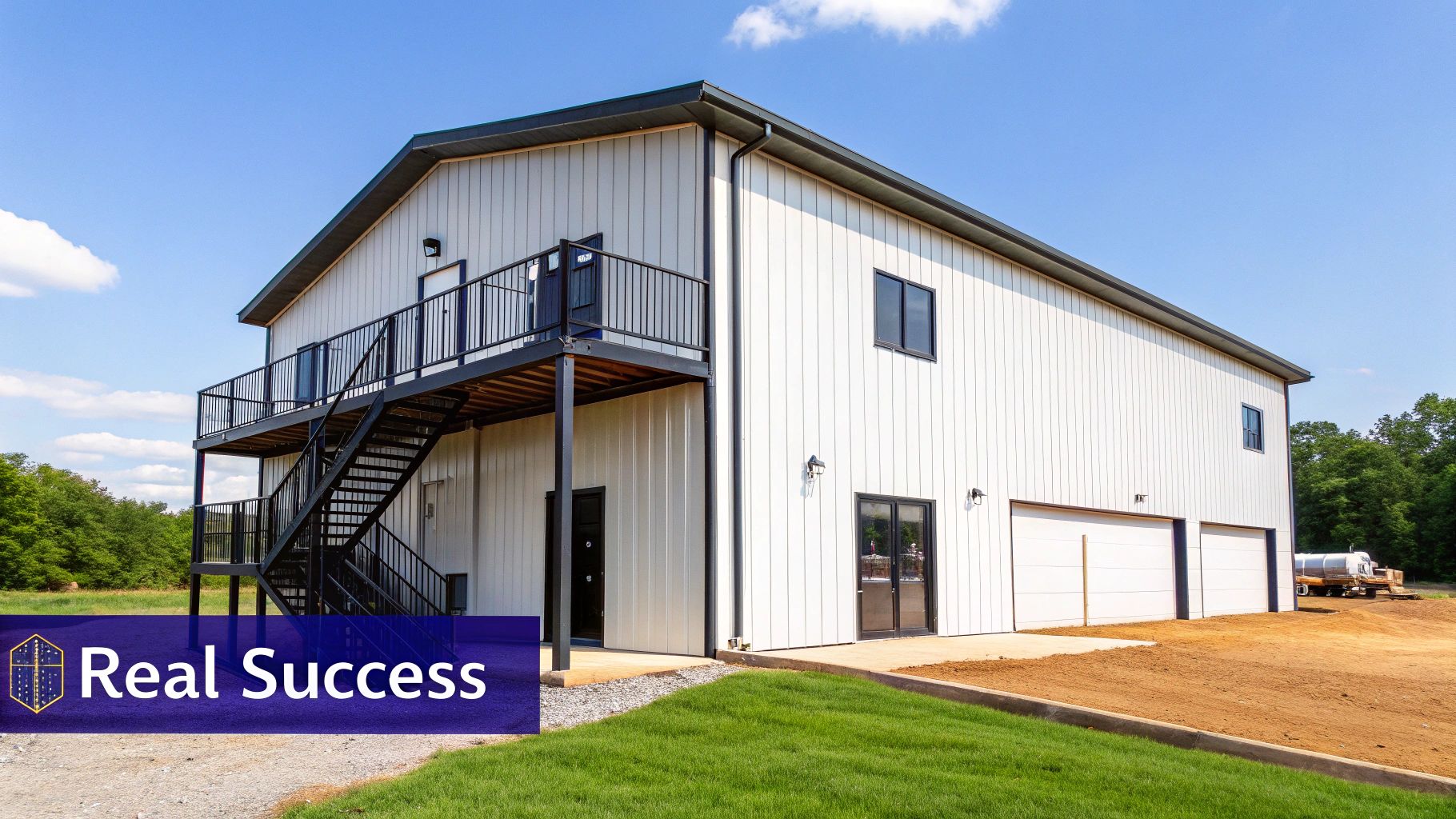
The most popular example everyone is talking about is the modern "barndominium." It has completely reshaped what rural and suburban living can look like. Imagine a family home where the loft is a private master suite, tucked away with its own bathroom and walk-in closet. This elevated retreat overlooks a grand, open-concept living area below, creating a stunning architectural feature that smartly separates private quarters from the bustling family space.
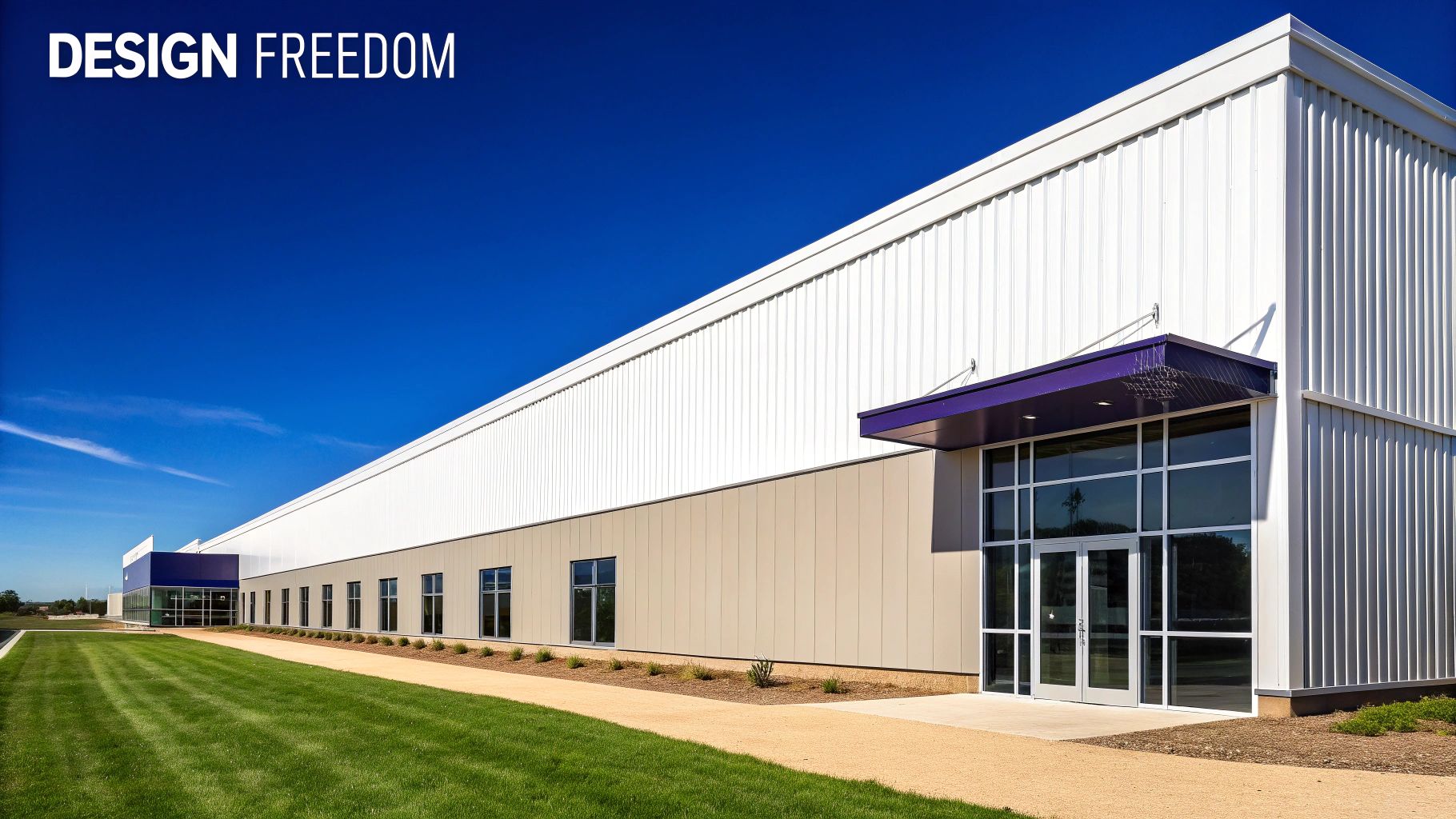
This residential use perfectly illustrates one of the loft's greatest strengths: smart spatial separation. You can see just how versatile these homes are by exploring the different options for metal buildings for residential use.
The Workshop and Home Office Solution
This idea of separating spaces is a game-changer for small businesses and commercial use. Picture a skilled woodworker or mechanic who needs a serious workshop. The ground floor gives them that wide-open, column-free space perfect for heavy machinery, tools, and project assembly.
Upstairs, far from the noise and sawdust, a clean, quiet mezzanine office is the perfect spot for handling paperwork, meeting clients, or just taking a well-deserved break. This vertical layout keeps the business running smoothly, separating the hands-on work from the crucial planning and admin tasks. It’s a genius way to get the most out of a single footprint.
A loft creates distinct zones within one structure. It allows for a quiet office above a busy workshop or a private living space above a communal area, all without the cost or complexity of constructing two separate buildings.
Hobby Garages and Agricultural Innovation
For hobbyists, especially car collectors, a metal building with a loft is the dream garage. The main floor can easily house a prized collection, with plenty of room for maintenance and detailing. The loft then becomes a versatile hub for everything else:
- Secure Storage: The perfect spot to keep valuable parts, tools, and memorabilia safe and organized.
- Lounge Area: A comfortable "man cave" or "she shed" with a sofa and TV, overlooking the beautiful machines below.
- Viewing Deck: Some of the best designs even feature exterior balcony mezzanines, creating a unique spot to relax or entertain during events.
This same logic applies to modern farming. While haylofts are nothing new, today's metal barns use engineered steel lofts for so much more. They provide incredibly durable, pest-resistant storage for feed and equipment, or even serve as a farm office with a bird's-eye view of livestock pens or machinery. Because the steel frame can handle immense weight, it's a safe and long-lasting solution for any modern agricultural operation. Each use case proves how a simple second level can dramatically multiply a building’s value.
Personalizing Your Metal Building and Loft
Your metal building kit provides the strong, reliable bones of your new space, but the real personality comes alive in the details. Think of the steel shell as a blank canvas. This is where you get to transform a functional structure into a place that’s comfortable, stylish, and uniquely yours—whether it's a home, office, or workshop.
This process goes way beyond just picking a paint color. It’s about making thoughtful choices that shape how you live, work, and interact with the space every single day. These customizations are what give the building its character.
Creating Your Ideal Loft Environment
The loft itself is a prime spot for customization. How you get up there, what the floor feels like under your feet, and how light fills the area are all critical decisions that set the tone.
One of the first choices is how to access the loft. A classic set of traditional stairs gives it a familiar, residential feel and is easily the safest option if the loft will be a bedroom or a high-traffic zone. On the other hand, if you're going for an industrial vibe or just trying to save space, a spiral staircase can become a stunning architectural feature all on its own.
Once you’re upstairs, the flooring is key. Your options are wide open:
- Durable Hardwoods: These offer a warm, classic look that creates a beautiful contrast with the modern steel structure.
- Engineered Wood or LVP: Perfect for workshops or hobby spaces, they provide incredible durability and moisture resistance.
- Cozy Carpeting: If you want a quiet bedroom or lounge, carpeting adds warmth and helps dampen sound.
The railing design is another major decision. Sleek cable railings keep the space feeling open and modern, while rustic wood or ornate wrought iron can introduce a completely different style. The final touch? Windows. Pairing these choices with smart window placement is key. Large windows can flood both the loft and the main floor with natural light, making the entire building feel bigger and more inviting. Our guide to designing custom steel buildings dives deeper into how these elements work together.
Enhancing Both Interior Comfort and Exterior Appeal
Don't forget that personalization extends outside, too. Exterior finishes can dramatically change your building's look, helping it blend into its surroundings or stand out as a modern statement piece. Something as simple as adding a stone or brick wainscot to the lower walls can bring in a touch of traditional charm and texture.
Inside, practical upgrades are just as important. A solid insulation package is non-negotiable for any space you plan to heat or cool. High-quality insulation doesn't just keep you comfortable year-round; it also makes your building far more energy-efficient, which means lower utility bills.
Customization is all about striking the right balance between how your space looks and how it works for you. The right choices in access, materials, and finishes are what transform a standard kit into a purpose-built space that perfectly fits your style and needs.
This drive for personalization is a huge reason the market is growing. The global prefabricated buildings market, which includes versatile structures like metal buildings with lofts, is projected to jump from USD 269.06 billion to USD 380.73 billion by 2030. This boom is fueled by the demand for faster, more sustainable construction that doesn't force you to sacrifice custom touches. You can dig into more market insights over at MordorIntelligence.com.
Ultimately, every choice you make—from the loft stairs to the exterior siding—plays a part in turning that functional steel shell into a space you’ll be proud to call your own.
Breaking Down the Costs of a Lofted Metal Building
Let's talk numbers. Figuring out the final price tag is a huge piece of any project, and a metal building with a loft is no different. Your total investment is way more than just the price of the steel frame. Having a clear financial roadmap from the start helps you budget right and dodge those nasty surprises down the road.
Think of it like building a custom car. You start with the chassis—that’s your basic building kit. But the final cost really comes down to the engine you choose, the interior package you add, and all the other upgrades that make it yours. Your building's total cost is a mix of that core structure and all the specific features you need.
The Four Primary Cost Components
The total budget for a lofted metal building really boils down to four main buckets. Each one is a pretty big slice of the pie, and knowing what they are is the first step to creating a realistic financial plan.
-
The Base Building Kit: This is the heart of your structure. It covers the heavy-duty stuff like the primary steel framing (your I-beams and columns), the secondary framing (girts and purlins), plus all the wall panels, roofing, fasteners, and sealants. The price is tied directly to the building's overall size—its length, width, and height.
-
The Loft System: The loft isn't just part of the kit; it’s an integrated system of its own. This cost includes the beefy steel joists that will support the upper floor, the decking material (like corrugated steel or heavy-duty plywood), and of course, the staircase to get you up there. A bigger loft or one engineered to hold serious weight is naturally going to cost more.
-
The Concrete Foundation: A solid foundation is completely non-negotiable. This part of the budget covers preparing the site, excavation, pouring the concrete, and laying all the rebar for reinforcement. The size and thickness of your slab will depend on your building's footprint, local soil conditions, and what your building codes require.
-
Assembly and Labor: This is simply the cost to put it all together. You can hire a professional crew to handle everything, or if you’re handy and have the experience, you could manage the project yourself and cut down on labor costs. Just remember, labor rates can vary wildly depending on where you are and the crew's expertise.
For a deeper dive into how these factors play out, our guide on commercial metal building cost offers some great insights that apply to all sorts of projects.
Key Variables That Influence Your Budget
Beyond those four main components, a few outside factors can make your final cost jump around. Steel is a global commodity, so its market price can change and directly affect the cost of your kit. Your location also plays a massive role, influencing everything from labor rates and delivery fees to the price of materials like concrete.
A good rule of thumb to keep in mind is that the foundation and the construction labor can each cost as much as the building kit itself. Factoring these in from day one is the key to a successful project.
The level of customization is another big one. If you want upgraded insulation, high-end windows and doors, or custom exterior touches like wainscoting, those will all add to the bottom line. This all fits into a booming industry. In the United States, the pre-engineered metal building market was valued at USD 12.99 billion and is expected to grow at an 8.4% CAGR through 2030. That growth is being fueled by the demand for structures that are both energy-efficient and highly adaptable. You can read more about this market trend on Nexdigm.com.
To help you visualize where the money goes, we've put together a table that breaks down how a typical budget gets allocated.
Estimated Cost Breakdown for a Lofted Metal Building
This table illustrates the main cost components and what percentage of the total budget they usually represent. It's a great tool for understanding exactly where your investment is going.
| Cost Component | Percentage of Total Budget (Approx.) | Key Influencing Factors |
|---|---|---|
| Metal Building Kit | 30% – 50% | Building size, steel prices, custom features |
| Concrete Foundation | 15% – 25% | Slab size, thickness, local material costs |
| Loft System | 10% – 20% | Loft square footage, load capacity, stairs |
| Assembly & Labor | 20% – 30% | Geographic location, crew size, project complexity |
By breaking down the total cost into these smaller, more manageable pieces, you can put together a much more accurate and realistic budget for your metal building with a loft.
The Building Process from Foundation to Finish
Watching your metal building with a loft take shape is an incredible experience, and knowing what to expect makes the whole journey feel a lot smoother. Unlike conventional construction that can seem to drag on forever, a pre-engineered metal building comes together in a logical, step-by-step sequence that's surprisingly fast. And it all begins with a solid base.
The absolute first—and most critical—step is pouring the concrete foundation. Long before a single piece of steel shows up, your site needs to be properly prepped. That means clearing, grading, and leveling the ground. Once it's ready, a concrete slab is poured, specifically engineered to handle the immense weight of the steel frame, the loft, and everything you plan to fill it with. This isn't just a floor; it's the anchor for your entire structure.
From Steel Skeleton to Enclosed Shell
Once the foundation has cured, the real show begins: erecting the primary steel frame. Massive I-beams are bolted together, forming the skeleton of your building and instantly defining its height and overall footprint. Because every component is pre-cut and pre-drilled at the factory, the assembly process moves incredibly quickly, often taking just a few days.
With the main frame bolted down, the crew moves on to the secondary framing, followed by the wall panels and roofing. This is the moment your building really starts to look like a building, transforming from a skeletal frame into a fully enclosed, weather-tight shell.
The efficiency you get with a pre-engineered system is a huge plus. Because all the components arrive on-site ready to be bolted together, construction timelines can be cut by as much as 30% compared to old-school building methods. That means lower labor costs and getting to use your new space that much sooner.
Assembling the Loft and Interior Finishes
Now, the action moves inside to create the loft itself. The crew installs the heavy-duty steel joists that will support the second level, followed by the floor decking. This step creates the actual platform for your new elevated space, whether you've planned it as a bedroom, a home office, or just extra storage. As you gear up for this phase, checking out a comprehensive guide to planning a home renovation can give you some great ideas for making the interior work perfectly.
The final stretch is all about the finishes that turn a bare structure into a comfortable, functional space. This is where your building truly comes to life.
- Insulation Installation: High-performance insulation is rolled out and fitted between the framing to keep the building comfortable and energy-efficient year-round.
- Interior Framing: If you have separate rooms in your design, this is when interior walls are framed up using either traditional wood or light-gauge steel studs.
- Rough-ins: Before any drywall goes up, electricians and plumbers get to work running all the wires, pipes, and ductwork through the walls and floors.
- Finishing Work: Finally, it's time for drywall, flooring, paint, and installing all the fixtures like lights, outlets, sinks, and faucets.
This straightforward process really demystifies construction, showing exactly how metal buildings with lofts can go from a bare patch of dirt to a finished, move-in-ready space with impressive speed and precision.
Common Questions About Metal Buildings with Lofts
Starting any new building project is going to come with a lot of questions. That’s just part of the process. When it comes to metal buildings with lofts, a few key concerns tend to pop up time and again.
Getting these practical points sorted out early on helps you move forward with confidence, knowing you’ve covered all the important bases. From the engineering nuts and bolts to local building rules, clear answers are a must. Let's tackle some of the most common questions to demystify the process and set your project up for success.
How Much Weight Can a Metal Building Loft Hold?
This is one of the first things people ask, and for good reason—it’s all about safety. The short answer is: it depends entirely on the engineering. A loft’s load capacity isn't a standard, off-the-shelf number; it’s specifically calculated based on how you plan to use the space.
A loft designed for light attic storage is built very differently from one meant to be a master bedroom, a home gym, or a spot to store heavy equipment. The key factors that determine its strength are all engineered:
- Joist Size and Spacing: Thicker, stronger steel joists placed closer together can support a whole lot more weight.
- Decking Material: The thickness and type of flooring you choose contribute directly to the overall load-bearing capability.
- Column Support: The size and placement of the main building columns are designed to transfer the loft’s weight safely down to the foundation.
This is why it's so important to communicate your exact plans to your building provider. An engineer will take that information and calculate the precise specifications needed to safely meet—and usually exceed—your requirements. That’s how you get a secure and durable structure you can trust for years.
When properly engineered, a steel loft can be designed to support almost anything you need. From residential living spaces to heavy-duty industrial storage, the system is customized to handle the specific live and dead loads required for your application.
Do I Need a Special Permit for a Loft?
In pretty much every case, the answer is yes. Adding a loft or any mezzanine level is a major structural change. It increases the building’s usable square footage and changes its occupancy potential, which means your local building department will definitely want to review it.
To get that approval, your permit application will need to include detailed, stamped engineering plans. These official documents prove to the authorities that your loft design is structurally sound and complies with all local building codes. This includes critical safety regulations for things like staircases, railings, and emergency exits.
Are Lofts More Expensive Than a Single-Story Design?
If you're comparing a loft building to a single-story building with the same footprint, then yes, the initial cost will be higher. You’re adding more materials—steel joists, decking, stairs, railings—which naturally raises the price of the building kit and the labor to put it all together.
But that’s not the whole story. A loft is often far more cost-effective than expanding the building’s ground-floor footprint to get the same amount of square footage. Building up instead of out allows you to double your usable space without paying for a larger concrete foundation or a bigger, more expensive roof system.
For many people, this trade-off makes metal buildings with lofts a much smarter long-term investment for maximizing space on a given piece of land.
Ready to explore the possibilities of a custom metal building with a loft? The team at Icon Steel Buildings can help you design a structure that perfectly fits your vision and your needs. Get a free quote today!