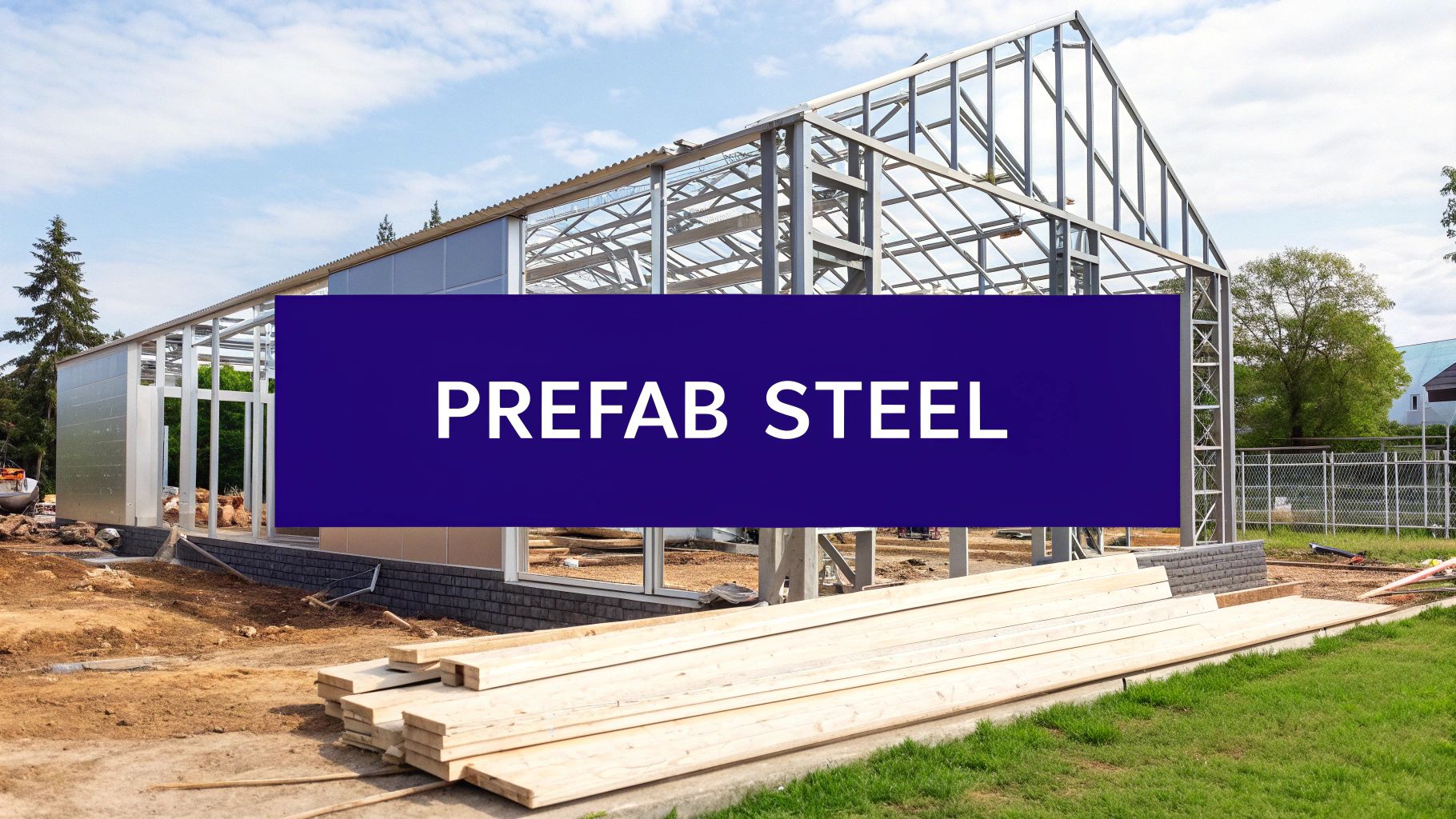
Ever built with an Erector Set or LEGOs as a kid? Imagine that same concept, but on a massive, super-strong scale. That’s the best way to think about prefabricated steel building kits. They are fully engineered building systems where every single component is manufactured in a factory and then shipped to your site, ready to be put together.
What Are Prefabricated Steel Building Kits
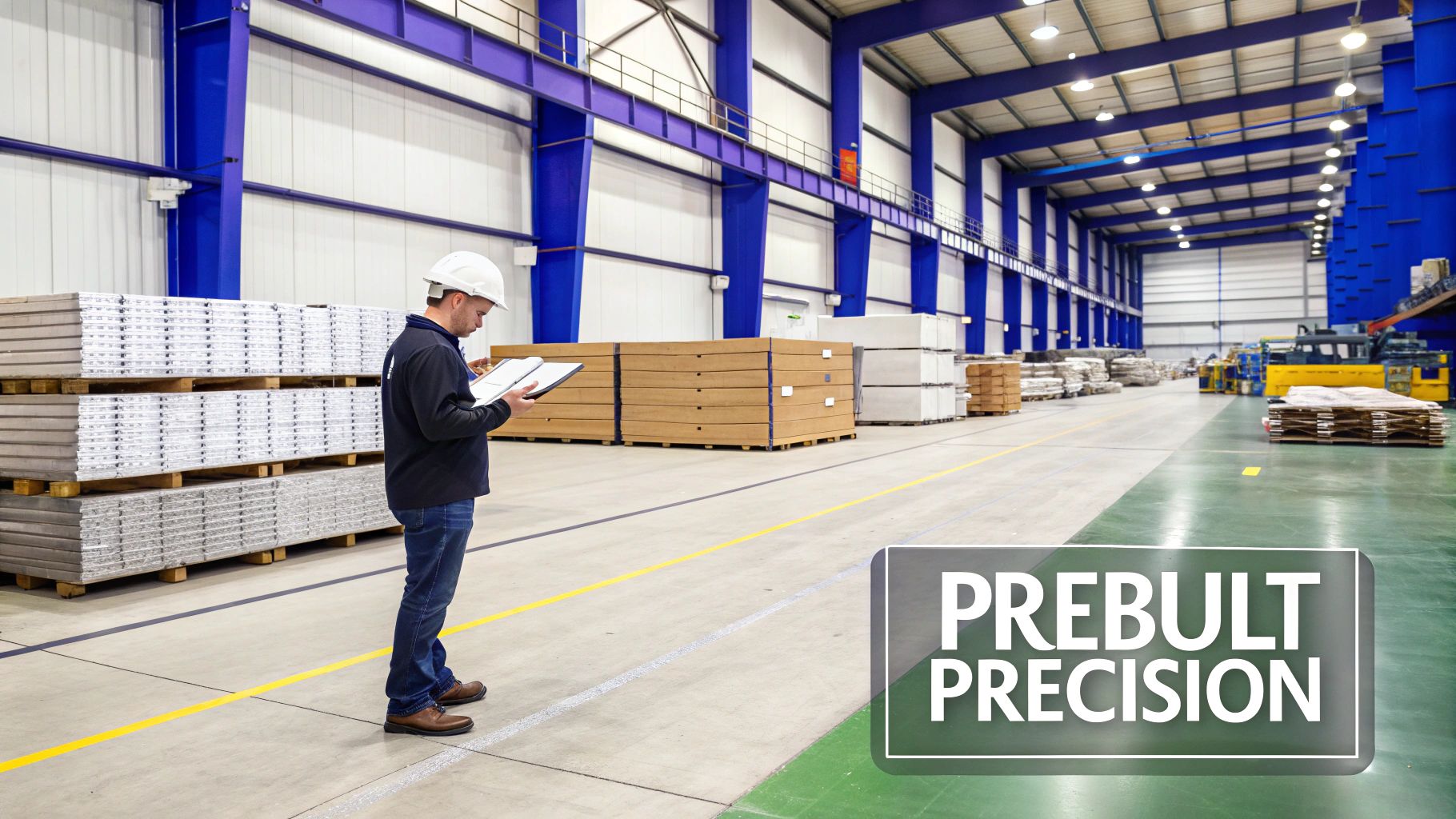
With traditional construction, your property becomes a chaotic workshop of cutting, welding, and framing. A prefab steel building kit flips that script. It shows up as one complete, meticulously organized package where every beam, panel, and bolt has been designed, cut, and drilled with laser precision in a controlled factory setting.
This factory-first process is what makes all the difference. It ensures every piece fits together flawlessly, eliminating the on-site guesswork that so often leads to delays and surprise costs with conventional building methods. What you get is a construction process that’s more predictable, efficient, and much, much faster.
The numbers don’t lie. The global market for prefabricated building systems was valued at around US$12.22 billion in 2025 and is expected to more than double to US$22.64 billion by 2035. That’s a steady 6.3% annual growth rate, proving that more and more builders are catching on to the clear advantages of this approach.
How the Kit Comes Together
Think of it as a detailed, professional-grade blueprint where all the parts have already been made for you. Since all the complex engineering is done beforehand, the work on your property is purely assembly. It’s a systematic approach that’s at the heart of how modern steel buildings are constructed so efficiently.
This method is also incredibly versatile, whether you’re putting up a small two-car garage or a massive commercial warehouse. The core components in a typical kit include:
- Primary Framing: The heavy-duty I-beams that create the building’s skeleton.
- Secondary Framing: Lighter steel components (girts and purlins) that run between the main frames, providing support for the walls and roof.
- Sheeting and Panels: The exterior steel panels for the walls and roof, which come in a variety of colors and styles.
- Fasteners and Hardware: Every last nut, bolt, screw, and clip needed to assemble the structure.
A prefabricated kit transforms construction from a highly variable craft into a predictable science. By shifting the complex work to a controlled factory setting, you gain control over quality, timelines, and costs in a way that’s nearly impossible with on-site construction methods.
The Impact on Your Project
For you, this system dramatically simplifies the entire construction timeline. Instead of trying to coordinate different crews for framing and exterior work over weeks or even months, the main structure can often be erected in just a few days. This streamlined process doesn’t just save a ton of money on labor—it gets your building up and running far sooner.
To get a better feel for the possibilities, you can explore the various types of steel buildings that start from these kits. This pre-engineered foundation is what makes them such a powerful and flexible solution for almost any application you can imagine.
Prefab Steel Kits vs Traditional Construction at a Glance
So, how does this method really stack up against old-school building techniques like wood framing or masonry? Let’s break down the key differences.
| Feature | Prefabricated Steel Building Kits | Traditional Construction |
|---|---|---|
| Speed | Very Fast. Components arrive ready for assembly, often erecting in days. | Slow. Requires extensive on-site labor, cutting, and fitting. Weather dependent. |
| Cost | Predictable. Costs are largely fixed upfront with minimal surprise expenses. | Variable. Prone to budget overruns from labor, material waste, and delays. |
| Labor | Minimal. Requires a smaller, less specialized crew for assembly. | Intensive. Needs multiple skilled trades (carpenters, welders, masons). |
| Waste | Very Low. All materials are pre-cut in the factory, virtually eliminating on-site waste. | High. Significant material waste from on-site cutting and fabrication. |
| Durability | Extremely High. Resistant to fire, pests, mold, and rot. | Varies. Wood is susceptible to rot, termites, and fire; masonry can crack. |
| Quality Control | Excellent. Manufactured in a controlled factory environment to tight tolerances. | Inconsistent. Quality depends heavily on the skill of on-site crews and conditions. |
As you can see, the pre-engineered approach offers significant advantages in just about every critical area of a construction project, from your timeline to your bottom line.
Key Benefits and Practical Drawbacks to Consider
When you’re looking into prefabricated steel building kits, it pays to see the full picture—the good and the not-so-good. While the advantages are genuinely compelling and driving their boom in popularity, being aware of the potential drawbacks helps you make a smart, informed decision that truly fits your project. It’s all about setting the right expectations from day one.
The numbers don’t lie. The structural steel market is exploding for a reason. In 2024, the global market hit an incredible USD 248.0 billion, and it’s projected to soar to USD 396.6 billion by 2033. This isn’t just a fad; it’s a worldwide move toward smarter, more sustainable, and efficient construction.
The Compelling Advantages of Steel Kits
The benefit that gets everyone’s attention first is the unmatched construction speed. Think about it: every single component is precision-cut and engineered in a controlled factory setting. That means the on-site work is really just assembly. A building that would normally take months of traditional construction can be standing in just a few days or weeks. This isn’t just fast—it slashes your labor costs and gets your building up and running sooner.
Then there’s the incredible durability and longevity. Steel naturally shrugs off the common headaches that plague other materials.
- Pest-Proof: Termites and other wood-boring insects have nothing to chew on. Your frame is completely safe.
- Fire-Resistant: As a non-combustible material, steel gives you a higher level of fire safety, which can often translate into lower insurance premiums.
- Weather-Resistant: These buildings are engineered from the ground up to handle whatever nature throws at them—high winds, heavy snow, and even seismic events.
That built-in toughness leads directly to minimal long-term maintenance. You can forget about worrying about wood rot, warping, or creeping mold. Usually, a simple power wash now and then is all you need to keep your building looking great for decades. It’s a huge factor when you compare the total costs in a steel building vs. a wood building.
Choosing a steel kit is an investment in a low-maintenance asset. The time and money you save on repairs and upkeep over the building’s lifespan deliver a massive return on your initial investment.
Finally, steel is a genuinely sustainable option. Most of the steel used today is made with a high percentage of recycled content, and at the end of its long life, the entire structure is 100% recyclable. The factory-first manufacturing process also means there’s almost zero material waste on your job site, making it a cleaner and more eco-friendly way to build.
Understanding the Practical Drawbacks
Of course, no solution is a perfect fit for every single project. The main limitation you might run into with some prefabricated steel building kits is architectural flexibility. While you can customize the size, layout, and features extensively, creating highly complex or ornate designs with things like curved walls or intricate rooflines can be tougher and more expensive than with traditional construction.
The upfront cost of the kit can also appear higher than an initial quote for wood-frame materials. But this is where you have to look at the total project cost. That initial figure is almost always offset by massive savings on labor, a much shorter construction timeline, and dramatically lower lifetime maintenance costs. It’s critical to grasp the importance of investing in quality and understanding the long-term value to avoid bigger problems later on.
Lastly, you’ll need heavy machinery for assembly. Even though the bolt-together design makes construction straightforward, you’re still dealing with heavy steel I-beams and wall panels. You’ll need equipment like a forklift or a crane to lift them into place, which is an important cost and logistical factor to plan for at your site.
Exploring Real-World Applications for Steel Kits
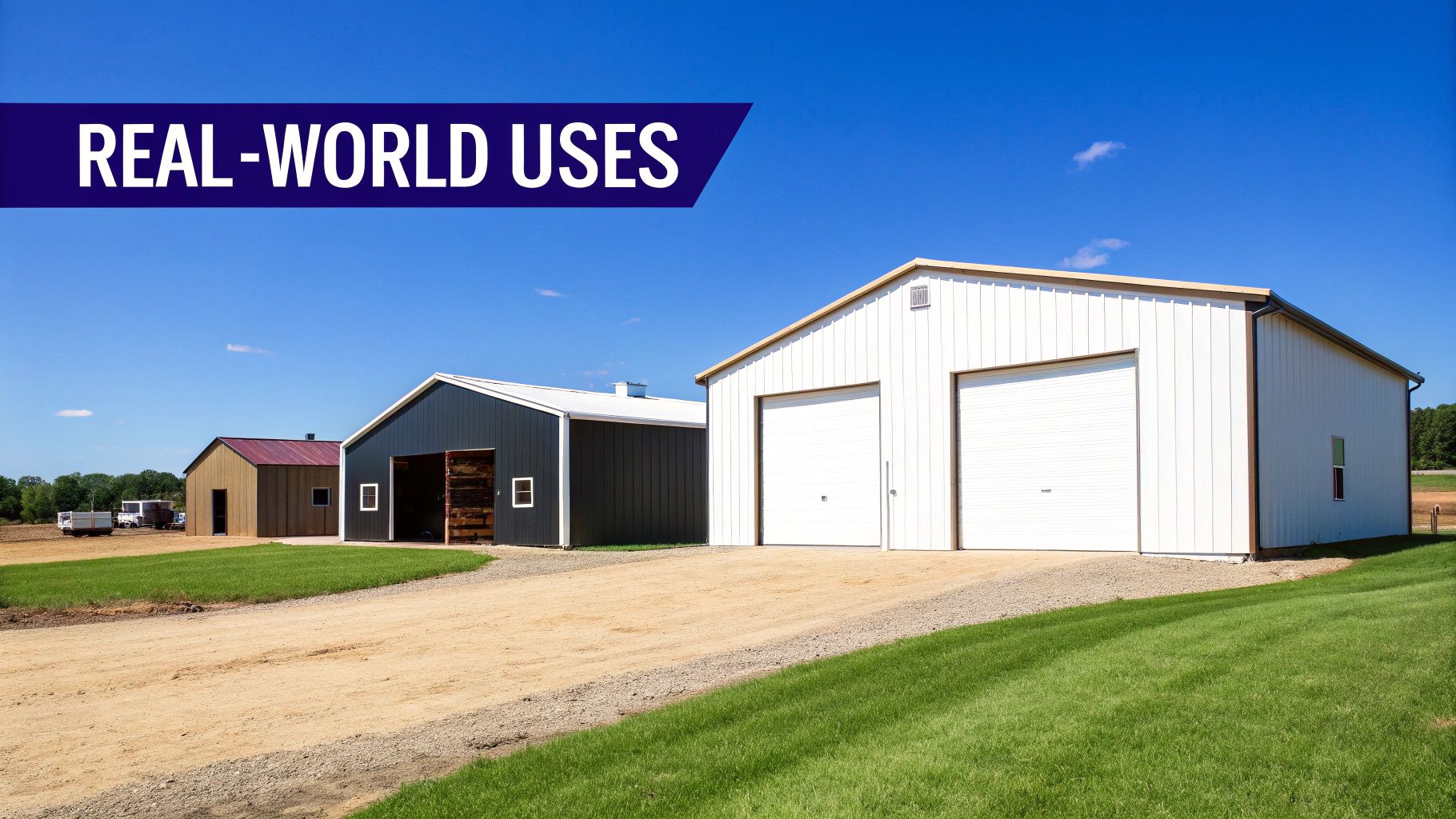
This is where the true value of prefabricated steel building kits really comes alive—when you see how they solve problems for real people and businesses. Their adaptability is what makes them such a powerful solution, whether you’re looking at residential, commercial, or agricultural projects. It’s time to move past the technical specs and explore the stories behind these structures.
Each use case plays to a core strength of steel construction. Need wide-open space for a workshop? No problem. How about rugged durability for a barn that has to withstand the elements? Steel has you covered. These aren’t just buildings; they are practical, purpose-built solutions.
This incredible versatility is a huge reason the global prefabrication market is booming. Projections show the industry growing from USD 173.5 billion in 2025 to a massive USD 302.0 billion by 2035. That growth is driven by the urgent need for everything from e-commerce warehouses to new housing. You can dig deeper into these numbers by checking out insights on the modular prefabrication market.
Residential Havens and Hobby Shops
In the residential world, steel kits have officially broken free from the “it’s just a shed” stereotype. One of the most popular uses we see today is the modern barndominium, a beautiful blend of a living space and a workshop that combines a rustic look with an industrial-strength frame. The clear-span design of steel is perfect here, allowing for massive, open-concept living areas without any annoying interior support columns getting in the way.
Another go-to application is the ultimate personal workshop or garage. We work with car collectors, woodworkers, and artists who choose steel because it gives them an incredible amount of unobstructed floor space. For example, a 40×60 foot steel building provides a whopping 2,400 square feet of column-free real estate, perfect for installing vehicle lifts or laying out large machinery.
Key residential uses include:
- Spacious Garages and Workshops: Finally, a space big enough for your RV, boat, or that dream hobby setup you’ve always wanted.
- Modern Barndominiums: Get the best of both worlds by combining your living quarters and functional workspace under one tough roof.
- Secure Storage Buildings: The perfect way to protect valuable equipment, tools, and personal belongings from theft and the elements.
Commercial and Industrial Powerhouses
For any business owner, time is money. That’s precisely why prefabricated steel building kits have become a favorite in the commercial world. From retail stores and auto repair shops to breweries, the quick construction timeline means you can open your doors and start generating revenue much faster than with traditional building methods.
Think about what a small manufacturing facility or a distribution center needs. They require high ceilings for vertical pallet racking and completely open floor plans so forklifts can move freely. Steel buildings deliver this effortlessly, providing a durable, low-maintenance environment built for high-traffic operations.
The commercial advantage of a steel kit is crystal clear: it’s a cost-controlled, predictable asset that starts generating revenue faster. Less time spent on construction translates directly to a quicker return on your investment.
Mini-storage facilities are another perfect example. The modular design of steel makes it simple for owners to erect long rows of secure units quickly. On top of that, steel’s natural resistance to pests and fire gives both the facility owner and their customers total peace of mind that their stored goods are well-protected.
Agricultural Workhorses
The farming community has trusted steel buildings for decades, and it’s easy to see why. Whether it’s sheltering six-figure farm equipment or housing livestock, steel provides the ultimate defense against harsh weather. The fact that steel is non-combustible also adds a critical layer of fire safety—a must-have when you’re storing hay, feed, and other flammable materials.
Common agricultural applications:
- Equipment Sheds: Protecting tractors, combines, and other valuable machinery from sun, rain, and snow dramatically extends their operational life.
- Durable Barns: Steel barns won’t rot or warp like wood and are completely impervious to termites, ensuring a safe, clean, and long-lasting environment for livestock.
- Indoor Riding Arenas: For year-round equestrian training, the ability to create massive clear-span structures makes steel the only practical choice.
In every one of these scenarios, the core benefits of a steel kit—its strength, speed of assembly, and column-free design—are perfectly matched to the owner’s specific goals. This unmatched adaptability is what makes a prefabricated steel building more than just a structure; it’s a powerful tool for bringing your vision to life.
How to Customize Your Prefab Steel Building
Let’s clear the air on one of the biggest myths about prefabricated steel building kits: the idea that you’re stuck with a generic, one-size-fits-all box. Nothing could be further from the truth. Modern prefab steel buildings are more like a blank canvas, offering a surprising amount of freedom to design a structure that fits your exact needs, both inside and out.
Think of the pre-engineered steel frame as the strong, reliable skeleton of your project. While the core engineering is standardized for strength and efficiency, almost everything else is up to you.
Nailing Down the Core Structure
Before you start picking out colors or door styles, you have total control over the building’s footprint. These first decisions are the most important, as they define the space you’ll live, work, or store your valuable equipment in.
You get to decide the exact:
- Width: How wide does the building need to be? This is a key factor for achieving that wide-open, clear-span interior you might be looking for.
- Length: Steel buildings are modular, meaning you can extend them to nearly any length in set increments. This is perfect for anything from a small two-car garage to a massive warehouse.
- Eave Height: This number dictates your vertical clearance. It’s a critical dimension if you need to accommodate tall RVs, install a vehicle lift, or even add a second-story mezzanine.
Beyond the basic footprint, you can also customize the roof pitch. A steeper pitch is a lifesaver in snowy climates because it helps shed heavy snow loads, while a lower pitch provides that classic commercial or workshop profile. Each choice plays a direct role in how your building performs and looks.
Adding Functional and Aesthetic Elements
Once the skeleton is locked in, the real fun begins. This is where you turn a simple steel shell into a space that’s truly yours. You can place doors and windows strategically to create the perfect workflow, maximize natural light, and ensure easy access.
For example, you might want a massive 14-foot roll-up door on the front for vehicle access and a standard walk-in door on the side for everyday entry. Adding a few windows doesn’t just brighten up the inside; it can slash your electricity bill by reducing the need for artificial lighting. These aren’t just add-ons; they’re essential parts of a smart design.
Customization isn’t just for show—it’s about engineering a building that works for you. The power to choose the exact size, type, and location of doors and windows ensures your building is perfectly suited for its job from day one.
And forget about being stuck with boring industrial gray. We offer a huge palette of colors for wall panels, roof panels, and trim. This allows you to either match existing buildings on your property or create something with a bold, modern look. You can see just how sharp these structures can be by exploring a gallery of custom steel buildings.
Elevating Your Building’s Curb Appeal
If you want to move beyond a simple, single-color design, you’ve got plenty of options to create a more refined look. Wainscoting, which adds a different color or material to the lower portion of the walls, is a really popular choice. That simple two-tone effect breaks up the visual space and makes even a large building feel more grounded and stylish.
You can also get creative by mixing traditional materials with your steel structure. Many of our clients add brick, stone, or stucco facades to the front of their buildings. This creates a high-end, classic look that blends right in with residential neighborhoods or commercial business parks. It’s the perfect way to get the strength and cost-efficiency of steel with the timeless appeal of conventional construction—and it completely shatters the myth that a metal building has to look like one.
Your Project Roadmap From Purchase to Completion
Turning a patch of land into a fully functional building might seem like a huge project, but with prefabricated steel building kits, the path is much clearer and more predictable than you might imagine. We’ve broken down the whole process into five straightforward phases, giving you a step-by-step plan from the moment you finalize your design to the day you open the doors to your new space.
Think of it less as one giant task and more as a series of manageable stages. Each phase has its own goals, making sure you move forward with confidence. The journey starts long before the first piece of steel arrives, beginning with good old-fashioned planning.
Phase 1 Design and Engineering
This is where your vision really starts to take shape. You’ll work closely with our team at Icon Steel Buildings to lock in every detail. We’ll nail down the exact dimensions—width, length, and height—and figure out the best roof pitch for your local climate and personal style.
This is also the time to decide where everything goes. You’ll strategically place roll-up doors, walk-in doors, and windows to get the best workflow and natural light. Once every customization is confirmed, our engineers draft a detailed set of blueprints. These plans ensure your building meets all local codes and can handle specific wind and snow loads. These certified plans are the official playbook for your entire project.
Phase 2 Permitting and Site Preparation
With your engineered plans in hand, the next big step is getting the right permits from your local government. A critical part of the process is successfully navigating construction permit requirements to stay in full compliance. This can vary a lot from one town to the next, so it’s smart to get the ball rolling on this early.
While you’re waiting for the permits to come through, you can get the site ready. This usually involves a few key jobs:
- Clearing and Grading: The land needs to be cleared of any trees, rocks, or debris and then graded to create a perfectly level spot for your building.
- Foundation Work: This is when the concrete foundation is poured, following the exact specs from your engineered plans. The most common types are slabs, piers, or perimeter walls.
- Utility Access: If your building needs water, sewer, or electricity, now is the time to run those lines to the site.
Getting the site prep right is non-negotiable. A solid, level foundation is the key to a smooth and successful assembly.
Phase 3 Kit Delivery and Inventory
After your foundation is fully cured and the permits are approved, your prefabricated steel building kit is delivered straight to your property. All the components will show up bundled together and clearly labeled to match your construction drawings.
Before you even think about starting the build, you need to do a thorough inventory. Lay everything out and check it against the packing list. This simple step ensures every last beam, panel, and screw is accounted for, which prevents frustrating delays later on. If you notice anything missing or incorrect, report it right away.
Taking a few hours to organize and inventory your kit when it arrives is one of the smartest things you can do. It can literally save you days of headaches down the road.
Phase 4 Erection and Assembly
This is the exciting part—where your building finally comes to life. Since every component is already pre-cut, pre-drilled, and ready to go, the job is all about assembly. You’ve got two main options here: you can either tackle it yourself (DIY) or hire a professional crew. Many of our customers with some construction experience successfully put up their own kits with a few friends and the right equipment, like a forklift or a small crane.
For those who’d rather leave it to the pros, hiring an experienced steel erection crew is a great choice. These teams are experts and can often get the main frame and sheeting up in just a few days, ensuring the whole process is safe and efficient. If you’re trying to figure out the best path for you, our guide on buying a metal building has some great insights to help you decide.
This diagram shows the main stages of construction once the primary frame is standing, focusing on how the building gets closed in.
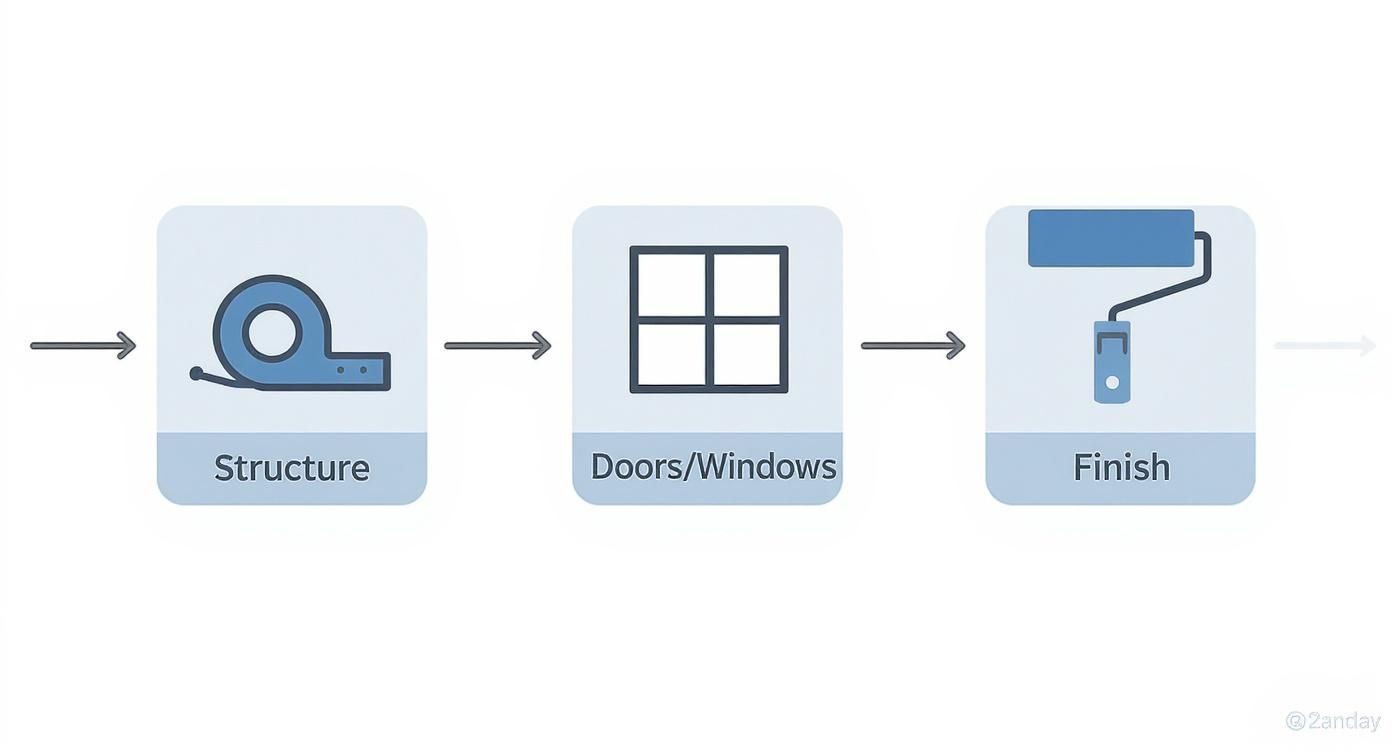
The image breaks down the progression from the core structure to adding doors, windows, and the final exterior finishes that complete the building’s shell.
To help you keep track of everything, here’s a quick checklist summarizing the key steps and considerations for each phase of your project.
Project Phase Checklist and Key Considerations
| Phase | Key Actions | Pro Tip |
|---|---|---|
| 1. Design & Engineering | Finalize dimensions, roof pitch, and door/window placements. Approve engineered blueprints. | Think about future use. It’s easier and cheaper to add a door opening now than to cut one in later. |
| 2. Permitting & Site Prep | Submit plans for permits. Clear, grade, and level the site. Pour the concrete foundation. | Start the permit process as early as possible. Bureaucracy can sometimes move slowly. |
| 3. Kit Delivery & Inventory | Receive the building kit. Carefully check all components against the packing list. | Organize parts by assembly sequence (e.g., primary frames, secondary framing, sheeting) to speed up erection. |
| 4. Erection & Assembly | Assemble the main steel frame. Install wall and roof panels. Install doors and windows. | Renting the right lift equipment (forklift or scissor lift) is a must for safety and efficiency. |
| 5. Interior Finishing | Install insulation, electrical, and plumbing. Frame interior walls. Add drywall and flooring. | Plan your interior layout before the shell is up to make running utilities much simpler. |
This table acts as a high-level guide to ensure you’re prepared for each step of the journey, turning a big project into a series of achievable milestones.
Phase 5 Interior Finishing
Once the steel shell is up, the inside is a blank canvas waiting for your personal touch. This final phase is all about turning that empty space into a functional environment built for your exact needs. This is where you bring in the specialized trades to complete the job.
Key finishing steps usually include:
- Insulation: Adding the right insulation is a game-changer for controlling the climate inside and keeping energy bills down.
- Framing Interior Walls: If your plan includes offices, rooms, or separate areas, this is when interior stud walls go up.
- Electrical and Plumbing: Licensed electricians and plumbers will run all the wiring and pipes for lights, outlets, and fixtures.
- Drywall and Finishes: Finally, the drywall goes on, the interior gets a coat of paint, and flooring and final fixtures are put in place.
By following this five-phase roadmap, you can confidently take your project from a simple idea to a finished building, ready for you to use and enjoy.
Answering Your Most Common Questions
Even after you’ve got a good handle on the benefits and the general process, it’s totally normal to have questions. A prefabricated steel building kit is a big investment, and we want you to feel confident every step of the way. To help with that, we’ve put together some of the most common questions we hear from customers, along with direct, practical answers.
What Is the Typical Cost of a Steel Building Kit?
This is usually the first thing people ask, but there’s no single, simple answer. The price of prefabricated steel building kits depends on a handful of key factors that can really swing the final cost. Think of it like buying a truck; a basic, no-frills model costs a lot less than a fully-loaded 4×4 with all the bells and whistles.
The biggest things that will impact your price are:
- Size and Dimensions: Naturally, the building’s width, length, and height are the primary cost drivers. A bigger footprint and taller walls require more steel, and that’s reflected in the price.
- Design Complexity: Are you adding a unique roof pitch, multiple large door openings, or engineering for a second-floor mezzanine? Customizations like these will add to the final ticket.
- Geographic Location: Every building has to be engineered for local weather. A structure in a hurricane-prone area or a region that gets heavy snow needs a beefier, more expensive frame than one in a mild climate.
- Steel Market Prices: Steel is a global commodity, and its price goes up and down with supply and demand. This can affect the cost of your kit at the exact moment you buy.
The key takeaway is that your building’s final cost is a direct reflection of its size, strength, and specific features. It’s a customized investment, not an off-the-shelf product with a fixed price tag.
To get a much clearer idea of what your project might cost, it’s a good idea to dig into the variables that make up steel building kit prices and see how each choice affects your budget.
Can I Assemble a Steel Building Kit Myself?
Absolutely. A huge advantage of a prefab kit is its simple bolt-together design, which makes a DIY assembly a very real option for many people. If you have some basic construction experience, are comfortable with power tools, and can rent the right equipment (like a forklift or a scissor lift), you can definitely erect your own building.
But, you have to be realistic about the job. Putting up a small garage is a world away from erecting a massive commercial warehouse. For bigger or more complicated buildings, hiring a professional erection crew is often the smarter move. They have the experience and specialized gear to get the job done quickly, safely, and correctly, saving you a ton of time and potential headaches.
What Foundation Is Required for a Steel Structure?
Every single steel building needs a solid concrete foundation to anchor it securely to the ground. Our engineers will determine the exact type and dimensions based on your building’s size, its weight, and the soil conditions at your site. The blueprints you get from us will include a detailed foundation plan for your concrete contractor to follow to the letter.
The most common types of foundations we see are:
- Slab Foundation: This is a single, thick layer of concrete poured over the building’s entire footprint. It’s the go-to choice for workshops, garages, and warehouses.
- Pier Foundation: This involves a series of concrete columns, or piers, set at key load-bearing points. You’ll often see this on sloped lots or for open-air structures like carports.
- Perimeter Wall Foundation: A continuous concrete wall is poured around the edge of the building, often with a slab poured inside. This is common for buildings that need a crawl space.
Proper foundation work is non-negotiable. It’s the critical base that guarantees your building’s structural integrity and ensures it will last for decades.
What Is the Average Project Timeline?
The timeline, from placing your order to having a finished building, happens in a few distinct phases. Each one takes a different amount of time.
- Design and Engineering (2-4 weeks): Once you’ve locked in your design, our engineers get to work creating the detailed blueprints needed for both manufacturing and permitting.
- Manufacturing and Delivery (6-10 weeks): This is usually the longest part of the process. The factory fabricates every single component of your custom kit. Delivery time can shift depending on production schedules and your location.
- Permitting and Site Prep (Varies widely): Here’s the wild card. Getting local permits can take just a few weeks or drag on for several months. The good news is that you can usually get your site prep and foundation work done while your kit is being made.
- Assembly (1-3 weeks): An experienced crew can often put up the main structure of a mid-sized building in about a week. Bigger or more complex projects will naturally take longer.
All in, you can generally expect the entire process to take 3 to 6 months. The single best thing you can do to keep your project on schedule is to start the permit process as early as possible.
At Icon Steel Buildings, we’re committed to giving you more than just a high-quality building. We’re here to provide the clarity and support you need at every single step. If you have more questions or you’re ready to start designing your perfect structure, our team is ready to help.