
When you start looking up steel building kit prices, you’ll see numbers that usually fall between $15 and $30 per square foot. That price gets you the base kit, but it’s crucial to understand that’s only the starting point. The final price to get your building fully constructed and ready to use will be quite a bit higher.
Decoding Your Steel Building Quote
Think of buying a steel building like buying a new truck. You see the sticker price for the base model, but that doesn't include the upgraded engine, the premium interior, or the delivery fees. The final price you pay to drive it off the lot is always different.
In the world of steel buildings, we call these two figures the base kit price and the turnkey price. Getting a handle on what each one covers is the key to building a realistic budget and avoiding any nasty surprises down the road.
What The Base Kit Price Really Covers
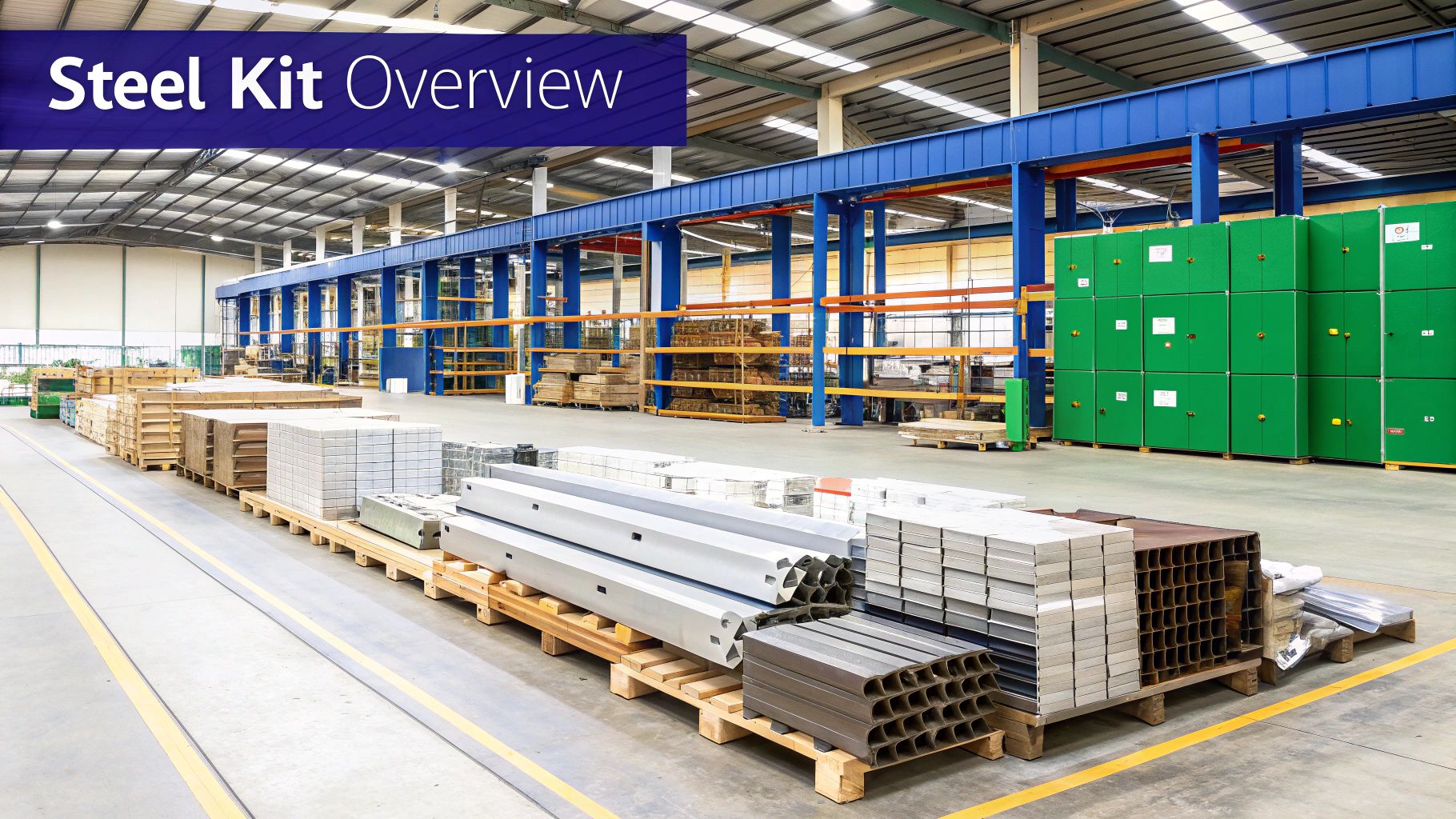
The base kit price is exactly what it sounds like—it’s the cost of the core materials needed to put up the building's skeleton and shell. It gets the essential components delivered right to your job site.
This typically includes:
- The main I-beam steel framing
- Secondary framing pieces like girts and purlins
- Metal sheeting for the walls and roof
- Every last nut, bolt, and fastener needed for assembly
What it doesn't include is the land, the concrete foundation, the labor to put it all together, or any of the interior work that makes it a usable space.
From Kit To Complete: Understanding The Turnkey Price
The turnkey price is the all-in figure. It’s the total cost to take that pile of steel beams and panels and transform it into a fully functional, move-in-ready building.
This price accounts for everything beyond the kit itself, from pouring the concrete slab and hiring a construction crew to installing insulation, doors, windows, and running electrical and plumbing.
To give you a clearer picture, we've broken down the average costs in this table:
Average Steel Building Kit Price Ranges Per Square Foot
This table gives you a quick snapshot of the cost difference between the basic kit and a fully finished, or 'turnkey,' project.
| Project Type | Average Price Per Square Foot | What's Included |
|---|---|---|
| Base Kit Only | $15 – $30 | The core steel structure: primary and secondary framing, wall and roof panels, and all necessary fasteners. Delivered to your site. |
| Turnkey Project | $35 – $60 | The base kit plus all additional costs: foundation, labor, insulation, doors, windows, electrical, plumbing, and interior finishing. |
As you can see, the final investment is significantly more than the initial kit price.
The single biggest mistake people make when budgeting is focusing only on the kit price and underestimating everything else. A successful project is planned around the full turnkey cost from day one.
Understanding this difference puts you in control of your budget. For a deeper dive into navigating the entire purchasing journey, check out our complete guide on buying a metal building. Arming yourself with this knowledge ensures you can forecast the true financial commitment and build your project with confidence.
Breaking Down the 7 Core Cost Factors
Trying to nail down the price of a steel building kit is a bit like building a custom truck online. You start with a base price, but every upgrade—from the engine to the paint job—changes the final number on the screen. Your building kit is no different. There are seven key factors that really shape the final quote.
Think of these as levers that can be pulled to adjust your final investment. When you understand how each one works, you can make smarter trade-offs between your dream features and your budget. No more sticker shock when the proposal arrives.
1. Building Dimensions
This one’s the most straightforward: size drives cost. The width, length, and height of your building dictate how much raw steel is needed, and that forms the very foundation of your price.
For example, a taller building needs beefier, thicker columns to handle the extra vertical load. That means more steel and a higher price tag. Likewise, a wider building that needs a clear span—meaning no interior support columns—requires massive steel beams to bridge that open space. It’s why a 60-foot wide structure will often cost more per square foot than a 30-foot wide building, even if they have the same total square footage.
This infographic gives you a quick visual breakdown of how prices scale with size.
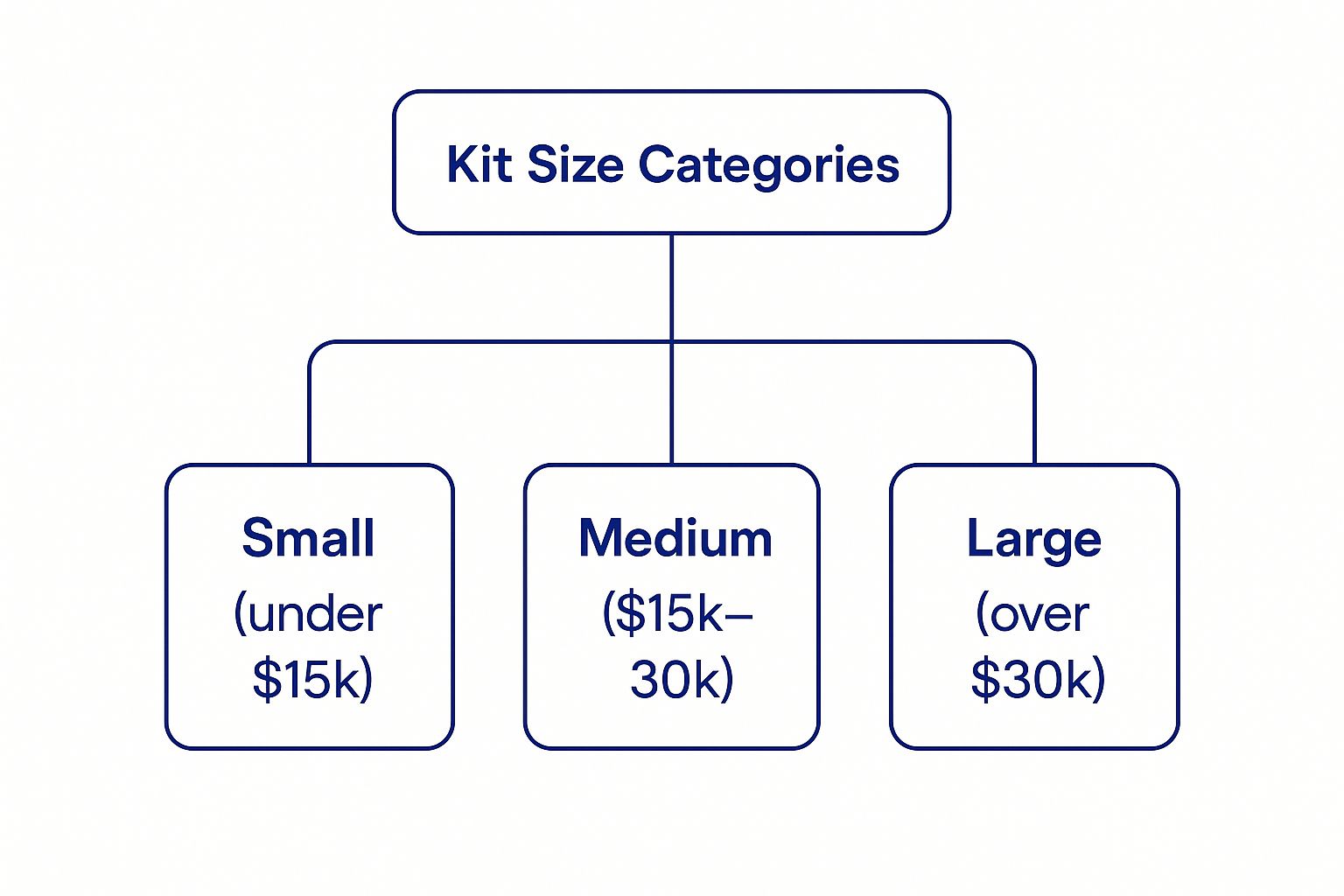
As you can see, costs climb steadily as you move from a small workshop to a large commercial warehouse. It's a handy reference point for seeing where your project might land.
2. Design Complexity
A simple, rectangular "box" is always going to be your most budget-friendly option. The moment you start adding architectural flair, the engineering gets more complex and the price tag follows.
Here are a few common design choices that add to the cost:
- Roof Pitch: A steep roofline looks great, but it requires more material and more complex engineering than a standard low-slope roof.
- Overhangs and Canopies: These are perfect for protecting doorways from the elements and adding visual appeal, but they require extra framing and materials.
- Custom Layouts: Moving away from a simple rectangle into L-shapes or other unique footprints means custom fabrication and engineering, which naturally costs more.
3. Steel Market Prices
Steel is a global commodity, which means its price can fluctuate daily based on supply and demand. Things like a global construction boom, new trade policies, or shifts in the economy can all nudge the cost of raw steel up or down, directly impacting steel building kit prices.
You can’t control the market, but you can control your timing. Most suppliers will lock in a quote for a set period. Once you commit, you’re protected from any sudden price spikes that might happen while your project is getting underway.
4. Geographic Location
Where you plan to build is a huge factor. Every region has its own building codes designed to make sure structures can handle local weather challenges, whether that’s a mountain of snow or hurricane-force winds.
A building in Colorado, for instance, needs a much stronger frame to support a heavy snow load on its roof. Down on the coast, a structure has to be engineered for a much higher wind load to stand up to hurricanes. Meeting these safety codes means using more steel and more robust engineering, which increases the price.
5. Doors, Windows, and Accessories
Your basic kit is just the shell. Every window, door, and vent you add contributes to the final tally. A massive overhead hangar door is a completely different line item than a simple walk-in door.
Other common add-ons include:
- Windows and skylights to bring in natural light
- Vents and louvers for proper air circulation
- Gutters and downspouts to manage rainwater
6. Foundation and Labor
These two are often the biggest wild cards in the budget because they happen outside the kit purchase. The concrete foundation is a completely separate cost that hinges on local material prices and labor rates.
Similarly, the cost to erect the building can vary wildly. Are you hiring a professional crew or tackling it yourself? For a closer look at these and other expenses on a commercial project, our guide to the commercial metal building cost is a great resource for planning your budget.
7. Insulation Choices
Finally, your choice of insulation will affect the upfront cost. It’s an added expense, for sure, but skimping here is almost always a mistake. Investing in quality insulation pays for itself over and over again in lower heating and cooling bills for the life of the building. It’s one of the smartest long-term investments you can make.
Real Price Estimates for Common Building Sizes
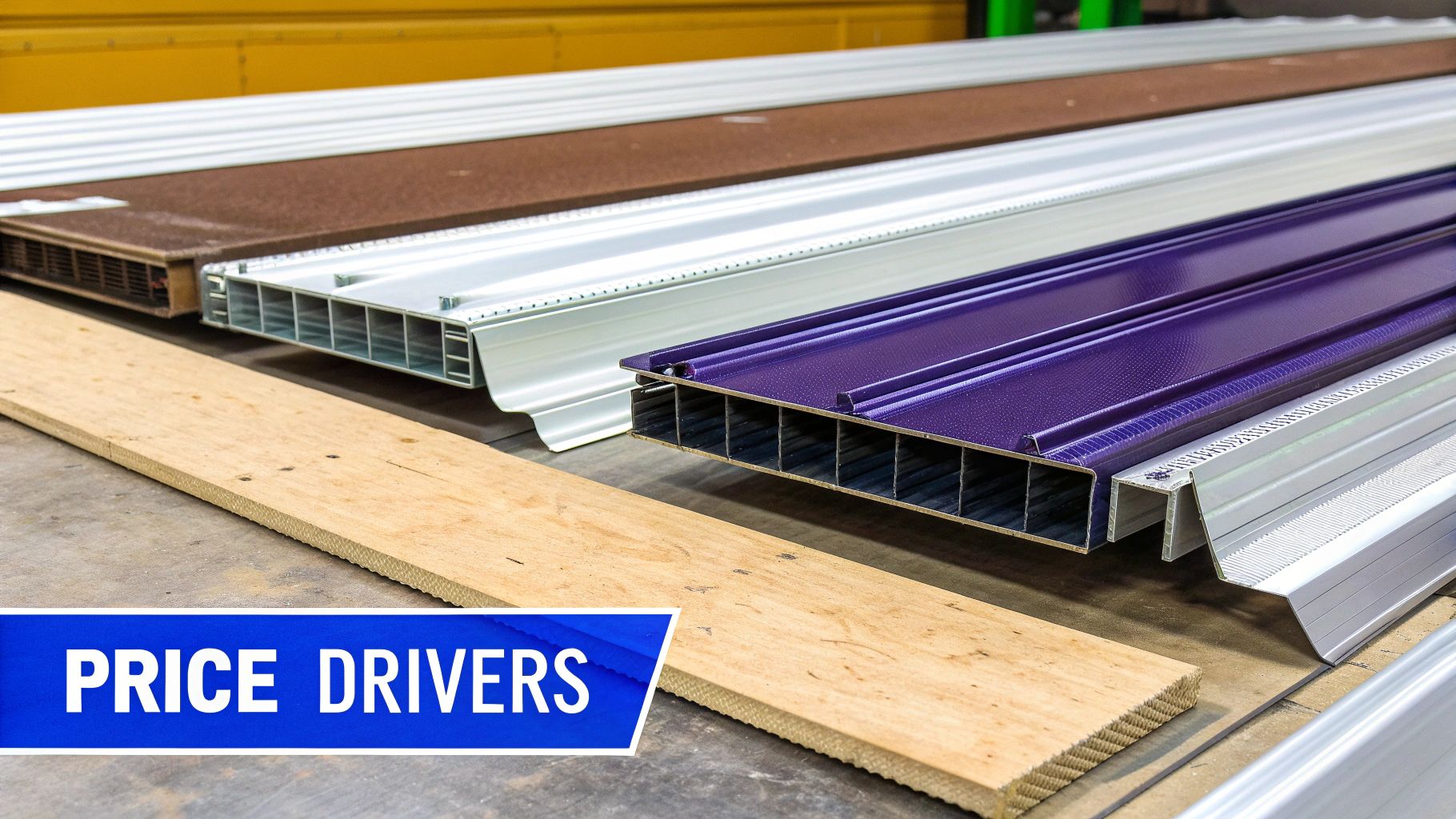
Abstract numbers are one thing, but seeing real-world examples makes budgeting much more concrete. To help you get a feel for your own project, let's break down the typical steel building kit prices for three of the most popular sizes out there.
We'll look at the base kit cost and then the all-in turnkey price for each. This should help turn the theory into a practical tool you can use to set realistic expectations right from the start.
To give you a quick overview, here's how the numbers typically break down for popular building dimensions. This table provides a snapshot of the estimated costs for both the basic kit and the complete, move-in-ready project.
Estimated Price Ranges for Popular Steel Building Sizes
| Building Size (ft) | Common Use | Estimated Base Kit Price Range | Estimated Turnkey Project Price Range |
|---|---|---|---|
| 30 x 40 | Two-Car Garage, Workshop | $18,000 – $25,000 | $42,000 – $60,000 |
| 50 x 80 | Small Commercial, Auto Shop | $48,000 – $64,000 | $140,000 – $195,000 |
| 60 x 100 | Agricultural Barn, Warehouse | $72,000 – $96,000 | $210,000 – $285,000 |
These ranges give you a solid baseline. Remember, your final quote will shift based on your specific design choices, local labor rates, and any accessories you add to customize your building. Now let's dive into the details for each size.
The Two-Car Garage or Workshop (30×40 ft)
A 30×40 ft building is a homeowner's favorite, giving you 1,200 square feet of usable space. It’s the perfect footprint for a roomy two-car garage, a serious backyard workshop, or a hobby shed that can actually fit all your gear. Its straightforward design helps keep the costs down.
For a structure like this, here's what you can generally expect:
- Estimated Base Kit Price: $18,000 – $25,000
- Estimated Turnkey Price: $42,000 – $60,000
That turnkey cost usually covers the concrete slab, labor, insulation, and a couple of garage doors. This size is incredibly versatile, and you can learn more about all the features and options available for a 30 x 40 metal building kit in our detailed guide.
The Mid-Size Commercial or Storage Building (50×80 ft)
When you step up to a 50×80 ft building, you get 4,000 square feet of clear-span space. This is where you start getting into small commercial operations—think auto repair shops, light manufacturing facilities, or multi-unit storage businesses.
The bigger footprint naturally requires more substantial steel framing, which you'll see reflected in the price. It also means pouring a larger foundation and more hours on the clock for the assembly crew.
For any commercial project, the turnkey price is the number that really matters. It’s the true capital investment you need to get the doors open and start generating revenue.
- Estimated Base Kit Price: $48,000 – $64,000
- Estimated Turnkey Price: $140,000 – $195,000
The Large Agricultural Barn or Warehouse (60×100 ft)
At a massive 6,000 square feet, a 60×100 ft structure is a common workhorse for agricultural and industrial applications. It's ideal for storing large farming equipment, housing livestock, or serving as a regional distribution warehouse.
The sheer volume of steel needed and the engineering required to support a 60-foot clear span make this a significant investment. As you'd expect, foundation and erection costs also scale up considerably.
- Estimated Base Kit Price: $72,000 – $96,000
- Estimated Turnkey Price: $210,000 – $285,000
How Global Markets Influence Your Local Quote
It’s easy to think the price on your steel building quote is set locally, but the reality is much bigger. The final number you see is tied to a massive, interconnected global market. It’s a lot like the price of coffee—a drought in Brazil or a sudden spike in European demand can change what you pay for your morning cup. Steel operates on the exact same principles.
When you buy a steel building, you're not just buying a product; you're buying a global commodity. The raw materials are pulled from the earth, refined, and traded on international markets long before they ever reach a factory to be shaped into your kit. This means economic shifts happening thousands of miles away can directly impact the quote you get from a supplier right here at home.
The Ripple Effect of Global Demand
One of the biggest drivers of steel prices is construction activity in rapidly growing parts of the world. When countries like China or India kick off enormous infrastructure projects—building entire cities, bridges, and factories—their appetite for steel explodes. This puts everyone in competition for the same raw materials, and that increased demand can push prices up for U.S. manufacturers and, ultimately, for you.
You can see this trend reflected in the prefab metal building market. It was valued at around $150 billion in 2025 and is expected to grow by a steady 7% each year through 2033. Much of that growth is fueled by urbanization in the Asia-Pacific region, which perfectly illustrates how international development shapes what materials cost across the globe.
This is a huge reason why sticking with domestically sourced materials is so critical. By focusing on U.S.-made national steel for your American barndominium or steel structure, suppliers can create a buffer against the most volatile swings of the international market.
Innovation and Industry Growth
It’s not just about what’s happening overseas, either. The rising popularity of modular and prefabricated construction right here is also moving the needle. As more builders recognize just how fast, efficient, and sustainable steel systems are, the overall demand for these kits naturally goes up.
This heightened demand is a double-edged sword. While it drives competition among suppliers—which can be great for buyers—it also puts more pressure on the supply chain, which can influence steel building kit prices.
Your project is part of a much larger economic story. Understanding these global forces gives you a clearer picture of why prices can fluctuate from one month to the next. It helps you see beyond the numbers on a page and appreciate the complex, dynamic market you're navigating.
Budgeting for Costs Beyond the Base Kit
One of the biggest pitfalls when planning a new steel building is tunnel vision. It’s so easy to get fixated on the initial sticker price of the kit itself, but that number only tells part of the story. The reality is, the base kit price is just the first line item on a much longer list of expenses needed to turn a pile of steel into a finished, functional building.
Think of it like planning a road trip. The cost of the car is your starting point, but you also have to account for gas, insurance, food, and lodging to actually complete the journey. Ignoring these "other" costs will leave you stranded. The same principle applies here—a complete budget is your best defense against costly surprises down the road.
The Foundation Your Budget is Built On
Before a single beam can go up, the ground it will sit on needs to be properly prepared. This is a critical first step that often involves significant costs that aren't part of the steel building kit prices.
These initial expenses typically include:
- Site Preparation: This is all about clearing the land of trees, rocks, and any debris. It might also require grading to create a perfectly level building pad, which is absolutely essential for a stable structure. Costs can range from a few hundred to several thousand dollars depending on your land's current condition.
- Concrete Foundation: A steel building needs a robust concrete foundation to anchor it securely to the ground. The size and complexity of this slab are major cost drivers. For an in-depth look at what goes into this crucial component, you can explore our guide to steel building foundation requirements.
Assembly and Equipment Costs
Once your site is ready and the kit arrives, the next wave of costs involves the actual construction. This is where you'll decide between a hands-on, DIY approach or hiring professional help, each with its own financial implications.
A common budgeting error is underestimating labor. Even a straightforward DIY build requires the right tools and equipment, which can quickly add up if you need to rent them.
Make sure you've factored in these key line items:
- Freight and Delivery: Your kit is heavy and bulky. Shipping it can cost several thousand dollars, depending on how far you are from the manufacturer. Always double-check if this is included in your quote.
- Construction Equipment Rental: For most projects, you'll need to rent equipment like a forklift or a crane to lift the heavy steel beams into place. Those daily or weekly rental fees can definitely impact your budget.
- Labor and Assembly Crew: Hiring a professional crew ensures the building goes up quickly and correctly, but it's a significant expense. A DIY approach saves on labor but requires your time, your tools, and your expertise.
If your steel building is for a commercial venture, robust financial planning for business owners is non-negotiable for managing the initial outlay and ongoing expenses. By mapping out every potential cost—from grading the land to tightening the final bolt—you build a realistic budget that ensures your project stays on track from start to finish.
Your Steel Building as a Long-Term Investment
It’s easy to get fixated on the initial steel building kit prices, but the real story is in the long-term value. Think of a steel building less like a simple purchase and more like a strategic asset that pays you back over its entire lifespan. The construction world is shifting, and smart builders are moving toward solutions that are both durable and efficient—putting steel right at the front of the line.
Unlike a traditional wood structure that demands constant attention—painting, replacing rotten boards, and worrying about pests—steel just stands strong with very little upkeep. This built-in resilience to termites, fire, and rot means your total cost of ownership plummets over the decades.
A Modern Construction Choice
What really pushes steel ahead are the innovations in sustainable building. Most steel components are made from recycled materials and can be fully recycled again if the building is ever taken down. It’s a forward-thinking approach that minimizes environmental impact and is a huge reason the industry is booming.
The numbers don't lie. The global market for prefabricated structures, which includes steel kits, hit a massive USD 248.0 billion in 2024. It’s projected to climb to USD 396.6 billion by 2033. This isn't just a trend; it's a clear signal of growing confidence in steel as a smart, long-term investment. You can learn more about this expanding market and its key drivers.
Viewing your building through the lens of a long-term asset changes the entire financial equation. It’s not about what it costs today, but what it saves you over the next 40 years.
To make sure your steel building venture is a financial success from day one, getting a handle on the financing is key. For a deep dive into funding your project, mastering real estate commercial loans for investors is a great place to start.
Got Questions About Steel Building Kit Prices?
Figuring out steel building kit prices can feel like a maze, but a few straight answers can make all the difference. One of the biggest questions we get is about the real cost difference between a steel building and a traditional wood-frame structure, like a pole barn.
Getting this right is the key to creating a budget that actually works for your project.
Is a Pole Barn Cheaper Than a Metal Building?
On paper, a pole barn kit often looks like the cheaper route, sometimes coming in around 15% less than a similar steel kit. For a basic, no-frills structure, that initial savings can seem pretty tempting. But that’s just the sticker price—it doesn't tell you the whole story of what the building will cost you over its lifetime.
A steel building pays you back over the long haul. Because steel is fire-resistant, you could see your insurance premiums drop by 30% or more. When you add that annual saving to the fact that there are virtually zero maintenance costs, that higher upfront price starts to look a lot more reasonable.
Which Structure Is a Better Long-Term Investment?
A pole barn can get the job done, but a steel building is engineered from the ground up for superior strength and a much longer lifespan. When you look at it from an investment perspective, steel almost always wins.
Here’s a quick breakdown of why steel comes out on top:
- Weather Resistance: Steel buildings are designed to meet your specific local codes for high winds and heavy snow loads. You get a fully sealed structure that keeps the weather out, period.
- Built to Last: Steel is completely immune to rot, termites, and fire. That means you can forget about the common headaches and repair bills that come with owning a wood-framed building.
- Impressive Lifespan: With minimal upkeep, a steel building’s frame is typically warrantied for up to 40 years. That’s decades of security and peace of mind for your investment.
Ready to get a clear, no-nonsense quote for your project? The team at Icon Steel Buildings is here to help you design the perfect structure for your needs and budget.