
Think of your next warehouse not just as a building, but as a strategic tool—something strong, flexible, and perfectly designed for the job at hand. This is the essence of a warehouse steel building, which has quickly become the standard for modern logistics, e-commerce, and manufacturing. They solve the biggest challenge in today's industries: the need for scalable, dependable space that can be built and put to work fast.
Why Steel Buildings Dominate Modern Warehousing
In warehousing and logistics, everything comes down to speed, strength, and cost. While traditional construction methods are familiar, they often can't keep up with the breakneck pace of a growing economy. This is where warehouse steel buildings make their mark, offering a powerful alternative that directly tackles these modern challenges. Their popularity isn't an accident—it's a direct result of solving real-world business problems.
The key advantage is in the pre-engineered design of these steel structures. Unlike a traditional build that depends heavily on on-site labor and is vulnerable to weather delays, steel components are precisely fabricated in a controlled factory setting. This off-site process guarantees higher quality control and allows for incredibly rapid assembly once on site. It’s like using a sophisticated construction kit where every piece fits perfectly, slashing project timelines and getting your operations online months sooner.
Unmatched Durability and Cost Efficiency
Beyond speed, steel delivers incredible durability. It's naturally resistant to common issues like termites, rot, and fire, which means significantly lower maintenance costs and even better insurance premiums over the long haul. This resilience creates a secure, long-lasting home for your inventory and equipment.
The financial upside doesn't stop there. Steel buildings generally require less raw material and produce minimal waste, making them a more sustainable and budget-friendly choice from day one.
This shift in the market is clear from the global growth numbers. The prefabricated building and structural steel market—which includes warehouse steel buildings—is set to grow from USD 257.3 billion in 2025 to USD 381.8 billion by 2034. That surge shows a worldwide move toward smarter, faster, and more cost-effective construction, fueled by industrial growth. You can see the full report from Custom Market Insights for more on this trend.
To give you a clearer picture, here's a simple breakdown of how steel stacks up against traditional methods:
Steel Buildings vs Traditional Construction at a Glance
| Feature | Warehouse Steel Buildings | Traditional Construction (Concrete/Wood) |
|---|---|---|
| Construction Speed | Fast (Prefabricated components, rapid assembly) | Slow (Weather-dependent, extensive on-site labor) |
| Initial Cost | Lower (Less labor, less material waste) | Higher (More labor, material fluctuations) |
| Durability | High (Resistant to fire, pests, rot, and weather) | Variable (Wood is prone to pests/rot, concrete can crack) |
| Maintenance | Low (Minimal upkeep required over its lifespan) | Moderate to High (Painting, sealing, repairs) |
| Design Flexibility | Excellent (Clear-span designs for large open spaces) | Limited (Interior columns often required) |
| Expansion Potential | Easy (Simple to add new bays and extend length) | Difficult & Costly (Complex structural modifications) |
| Sustainability | High (Steel is highly recyclable, minimal site waste) | Lower (Significant construction waste, wood sourcing) |
Ultimately, steel's blend of rapid construction, tough-as-nails durability, and overall cost-efficiency makes it the clear winner for modern warehousing. When you directly compare a steel building vs. wood building, steel's advantages in sheer strength, open-span capability, and long-term value become undeniable. For a closer look, our detailed guide on the topic breaks it down even further.
Choosing the Right Steel Warehouse Design
Not all warehouses are built the same, and picking the right structural design is one of the most critical decisions you'll make for your operational efficiency. It’s like choosing the right tool for a very specific job—what works for a massive distribution hub simply won't cut it for a smaller storage facility. The internal frame and support system you choose will directly impact your workflow, how much you can store, and your ability to expand down the road.
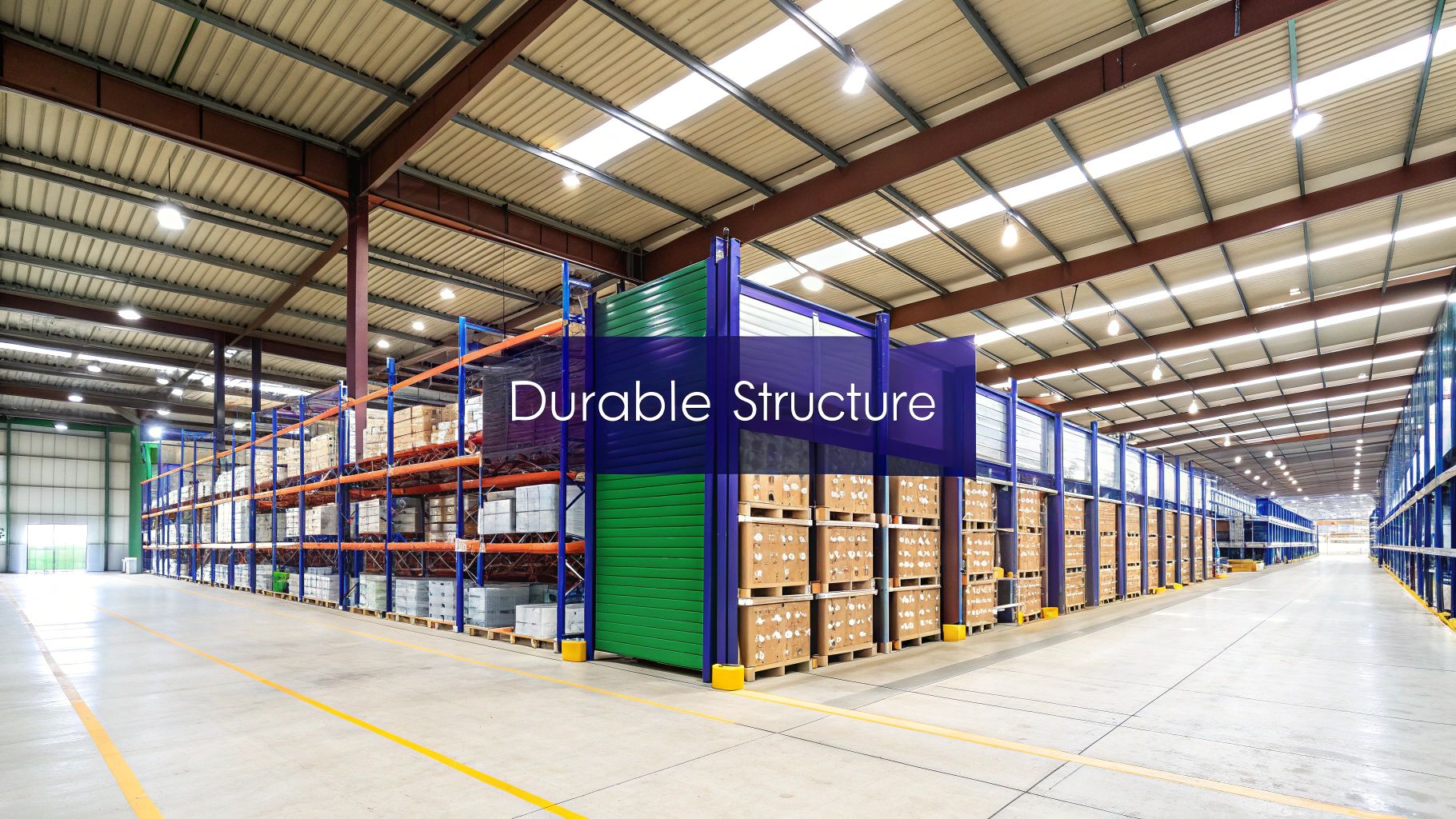
The first step is always to look at what you need to accomplish inside the building. Will you be maneuvering heavy forklifts or other large equipment? Do you need to create separate, dedicated zones for different parts of your business? Answering these questions honestly will point you toward the most effective design for your warehouse.
Clear-Span Designs for Maximum Flexibility
Imagine a massive, open playing field with absolutely no obstacles in the way. That’s a clear-span building. This design uses powerful steel frames to support the entire width of the building, which means there's no need for any interior support columns. The result is a completely unobstructed interior space, perfect for any operation that needs maximum room to move.
A clear-span layout is the gold standard for:
- Large-Scale Storage: It allows you to install complex and towering racking systems without having to work around pesky columns.
- Manufacturing and Assembly: You get plenty of room for bulky machinery, long production lines, and the free movement of materials.
- E-commerce Fulfillment Centers: This layout is ideal for the efficient flow of conveyor belts, robotic systems, and picking carts across a wide-open area.
The biggest benefit here is total freedom. You can organize your floor plan however you want and reconfigure it as your business grows or changes, all without being boxed in by permanent structural elements. That adaptability makes it a smart long-term investment.
Multi-Span Structures for Zoned Operations
A multi-span design, on the other hand, strategically places interior support columns throughout the building. This approach is perfect for exceptionally wide structures where a clear-span design might not be the most cost-effective option. These columns help distribute the roof's weight, allowing for buildings of virtually unlimited width.
Think of a multi-span structure as a partitioned workspace. It's perfectly suited for creating distinct zones for different activities. You could easily separate your bulk storage area from your packing stations and your shipping and receiving docks, all under one roof.
This design is a common choice for:
- Logistics Hubs: Great for creating dedicated zones for sorting, staging, and dispatching goods efficiently.
- Multi-Tenant Warehouses: It makes dividing a huge building into smaller, leasable units for different businesses a breeze.
- Combined Office and Warehouse Space: You can cleanly and efficiently separate administrative areas from your industrial operations.
Getting a handle on the differences between these foundational designs is a huge first step. If you want to get into the nuts and bolts of how these structures are put together, you can learn more about the specifics of a metal building frame to see which option truly supports your business goals. Choosing the right frame isn't just a construction detail—it's a business decision that will define your efficiency for years to come.
Customizing Your Warehouse for Peak Performance
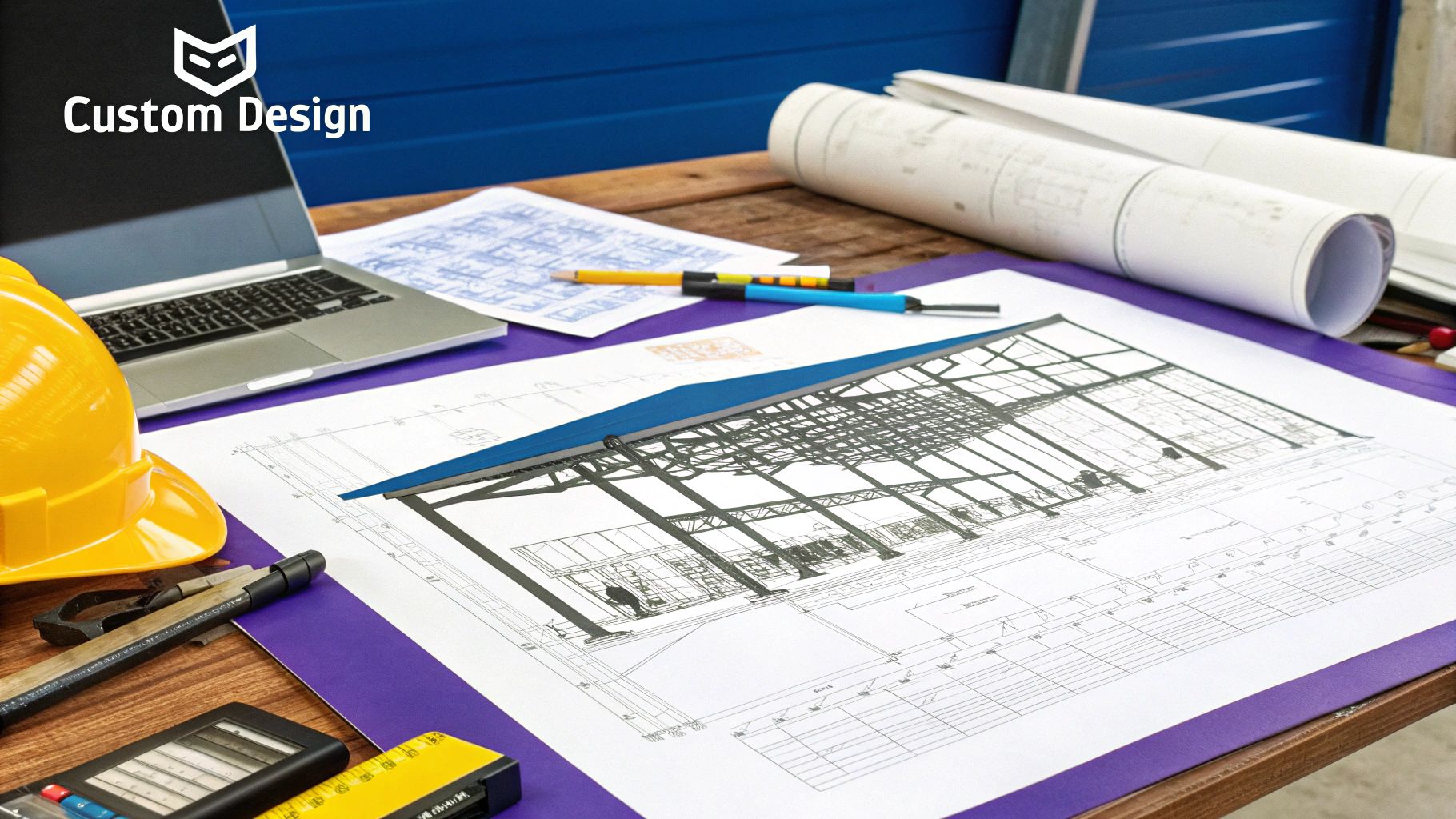
A basic steel structure is just the skeleton. The real magic happens when you transform that empty shell into a workspace that’s perfectly tuned to your business. This is where customization comes in. It’s the difference between a generic box and a purpose-built operational hub designed for your specific workflow, inventory, and future goals.
These aren't just cosmetic upgrades; they're smart investments that directly boost your bottom line. Every choice, from insulation to flooring, impacts energy costs, employee safety, and overall efficiency. This is how a standard steel building becomes a highly productive environment.
Climate Control and Energy Efficiency
Keeping the inside of your warehouse comfortable and stable is a massive operational challenge, especially if you’re storing temperature-sensitive goods or just trying to keep energy bills from spiraling out of control. Your first line of defense is always proper insulation.
Think of insulation as a thermal barrier that keeps your building cooler in the summer and warmer in the winter. This simple addition protects your inventory and dramatically cuts the workload on your HVAC systems, leading to serious energy savings for years to come. The principles behind effective container insulation solutions apply just as well here, focusing on maintaining internal temperatures and preventing condensation.
Key Insight: The right insulation can slash heating and cooling costs by as much as 30-40%. It’s easily one of the smartest customizations you can make, with an incredible return on investment.
Ventilation is the other half of the climate control puzzle. Options like ridge vents and wall louvers are fantastic for creating natural airflow, which stops the air from getting stale, reduces moisture buildup, and makes the whole space healthier for your team.
Access and Interior Functionality
How easily can people, forklifts, and trucks move through your facility? The answer dictates your daily efficiency. Getting the doors and flooring right is absolutely fundamental to a smooth, safe operational flow.
The doors you choose should be a direct match for your traffic. For loading docks, you’ll need large, heavy-duty roll-up or overhead doors that can handle constant use by trucks and forklifts. For your team, strategically placed personnel doors allow for safe and easy movement without getting in the way of logistics.
Flooring might seem basic, but it’s another critical piece. A standard concrete slab is the starting point, but your specific operations might need something more specialized.
- Epoxy Coatings: This gives you a tough, seamless surface that laughs off chemicals, stains, and scuffs. It’s perfect for manufacturing areas or places where spills are common.
- Polished Concrete: A fantastic low-maintenance option that’s dust-free and highly reflective. In fact, it can improve your lighting efficiency by up to 30%, brightening up the space without adding more fixtures.
- Floor Reinforcement: In high-traffic zones or areas where you’ll be parking heavy machinery, adding extra rebar or pouring a thicker slab is a must. It prevents cracking and dramatically extends the life of your floor.
By thinking through these features from the start, you ensure your building is optimized from the ground up. You can dive deeper into the full range of possibilities and see how custom steel buildings can be designed to meet your exact operational needs.
Understanding Steel Warehouse Costs and Budgeting
Figuring out the final price for a warehouse steel building isn't like picking from a menu. It’s more like building a custom truck—there’s a base price, but every option you add, from the engine to the paint job, adjusts the final number. Things like the building’s size, how complex the design is, and even where you’re building it all have a big say in the final cost.
The biggest moving part is the price of raw steel. The global market for structural steel, the very backbone of our industry, was valued at around USD 103.6 billion in 2023. It's projected to climb to USD 143 billion by 2030. But this market can be a rollercoaster, swinging with global demand and production shifts, which can directly throw a wrench in your project budget.
Key Cost Drivers You Control
You can’t control global steel prices, but you absolutely have a handle on several key factors that shape your budget. Getting a grip on these is the first real step to creating a solid financial plan.
- Size and Complexity: It's obvious that a bigger footprint means more steel. But complexity is just as big a deal. A simple, shoebox-style rectangular building will always cost less per square foot than a design with multiple sections, an unusual roof pitch, or an intricate layout.
- Custom Features: Every single customization adds to the bottom line. This includes the number and type of doors (big roll-up doors vs. standard personnel doors), how much insulation you need, and any specialized flooring like protective epoxy coatings. You have to weigh each choice against its real-world benefit to your operations.
- Geographic Location: Where you build matters. Your location affects everything from the cost of shipping materials to the local rates for labor. It also dictates the specific building codes your structure has to meet, which can ramp up engineering requirements and add to the overall expense.
Smart Ways to Manage Your Budget
Putting together an accurate budget for your warehouse steel buildings project is completely doable with a little foresight. One of the smartest things you can do is design your layout to fit standard steel dimensions. This simple trick cuts down on material waste and fabrication time, which translates directly into cost savings for you.
Pro Tip: Make it a rule to get multiple written quotes from different suppliers. This does more than just help you find a competitive price—it gives you a much clearer picture of what different companies include in their standard package versus what they consider a pricey add-on.
By zeroing in on these core cost factors, you can make smart decisions that perfectly balance what your business needs with what your wallet can handle. For a more detailed look at the numbers, check out our guide on understanding the commercial metal building cost for a deeper dive into pricing.
The Steel Warehouse Construction Process from Start to Finish
Taking a steel warehouse from an idea on paper to a fully operational facility is a surprisingly straightforward journey. Unlike the often chaotic and unpredictable nature of traditional construction, the pre-engineered approach to steel buildings brings a level of efficiency and transparency that’s hard to beat. Each phase has a distinct purpose, moving your project forward in a logical, predictable sequence.
This methodical process ensures every component is accounted for and timelines are kept in check. Knowing this roadmap, from initial design to the final bolt being tightened, helps set clear expectations and keeps everyone on the same page.
Phase 1: Initial Design and Engineering
This is where your vision truly begins to take shape. You'll sit down with engineers to translate your operational needs—how big the space needs to be, where the doors should go, what kind of loads it will bear—into a detailed set of blueprints.
These plans are more than just a drawing; they're a technical guarantee that your building will comply with all local codes for things like snow, wind, and seismic activity. Once you sign off on the design, these specs become the bible for the entire project. It’s easily the most critical stage, as it sets the foundation for the structural integrity and day-to-day functionality of your warehouse.
Phase 2: Site Preparation and Foundation
Here’s where the magic of pre-engineered steel really shines. While your building’s components are being fabricated with precision in a factory, the work starts at your actual location. The site is cleared, leveled, and graded to get it ready for the foundation. For most warehouse steel buildings, this means pouring a robust, reinforced concrete slab.
This isn't just any slab of concrete. It’s specifically engineered to anchor the massive steel frame and support the full weight of the building, plus everything you plan to put inside it. A perfectly prepared site and a precisely poured foundation are non-negotiable for the building's stability and long-term health.
Phase 3: Fabrication and On-Site Assembly
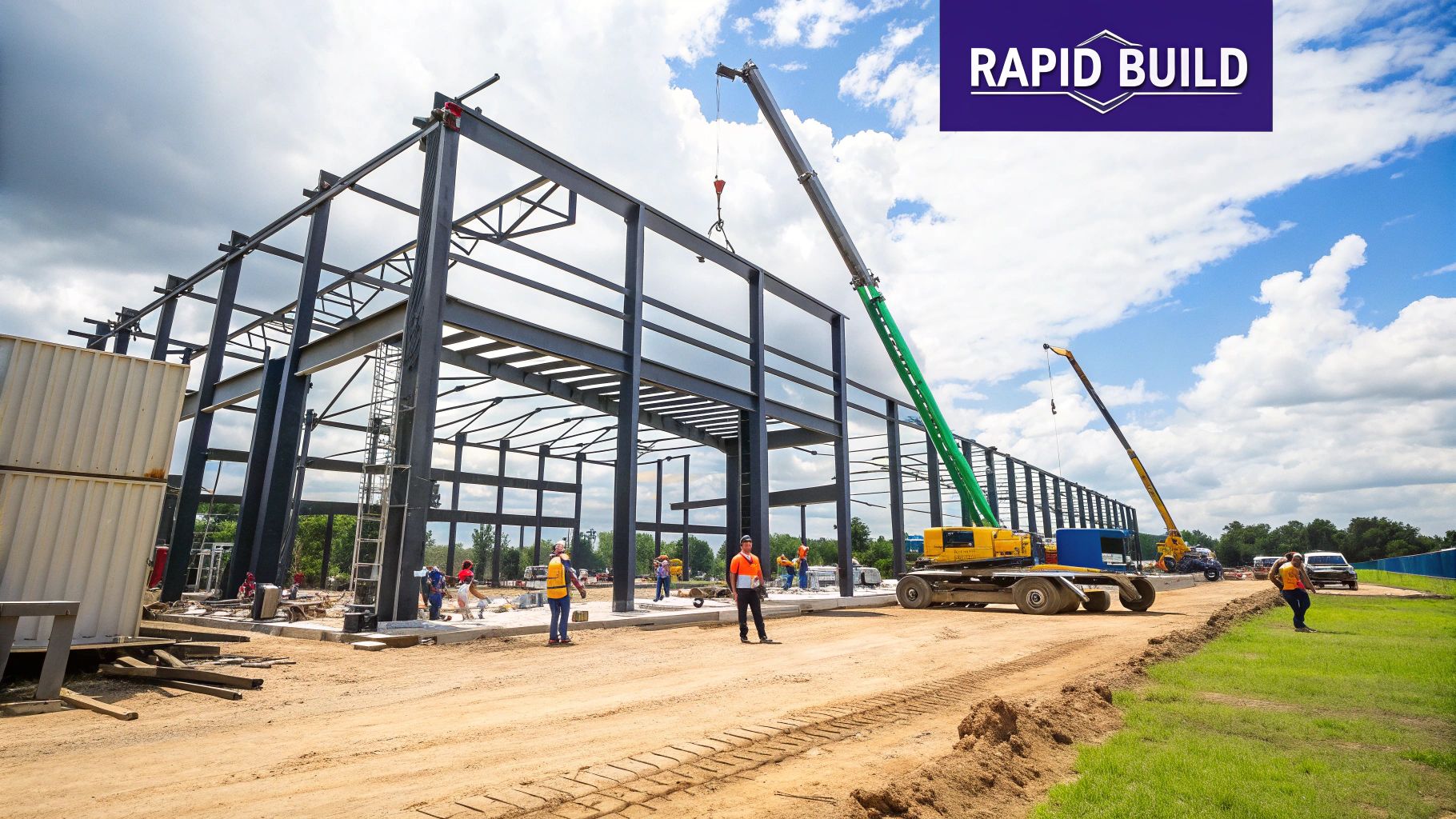
Once the foundation has cured and is ready to go, the prefabricated steel components arrive on-site. Think of it like a giant, industrial-strength model kit. Every piece, from the primary I-beams down to the wall panels and secondary framing, comes pre-cut, pre-drilled, and ready to be put together. This is where you see the incredible speed advantage of steel firsthand.
Crews get to work erecting the main steel frame first, bolting the columns and rafters together to create the building's skeleton. After that, they install the wall girts, roof purlins, and finally the exterior sheeting. The process is systematic and efficient, dramatically cutting down on labor time and construction waste.
For a closer look at what this phase involves, you can learn more about the complete metal building installation process. This efficient assembly is exactly how steel warehouses get built and become operational so much faster than conventional structures.
Ensuring Long-Term Durability and Maintenance
Steel buildings have a well-earned reputation for being tough, but it's important to remember that low-maintenance isn't the same thing as no-maintenance. Protecting your investment for the long haul is surprisingly simple—it all comes down to a proactive approach. Think of it as a quick health check-up for your building to catch small issues before they snowball into expensive headaches.
Following a straightforward maintenance schedule is the best way to maximize the lifespan of your warehouse. A little bit of attention ensures your facility stays safe, secure, and fully functional for decades to come. Key tasks usually involve looking over the roofing panels, making sure gutters are clear, and checking that fasteners are tight to head off any potential leaks or water damage.
Creating a Proactive Maintenance Checklist
The best maintenance plans are the ones you actually stick to—simple and consistent. You don't need a complicated list, just a focus on a few high-impact areas that protect the structural integrity of your building.
- Roof and Gutter Inspections: At least twice a year, take a look for loose panels, failing sealants, or any debris that’s built up in the gutters. Clogged gutters are a primary cause of water issues.
- Corrosion Spot-Checks: Keep an eye out for minor surface rust, especially around fasteners and where panels meet. Catching it early with a quick touch-up paint job stops it in its tracks.
- Operational Checks: Do a quick walkthrough to make sure all your doors, windows, and ventilation systems are working correctly and have a solid seal.
This infographic breaks down a simple, effective workflow for taking care of your building over the long term.
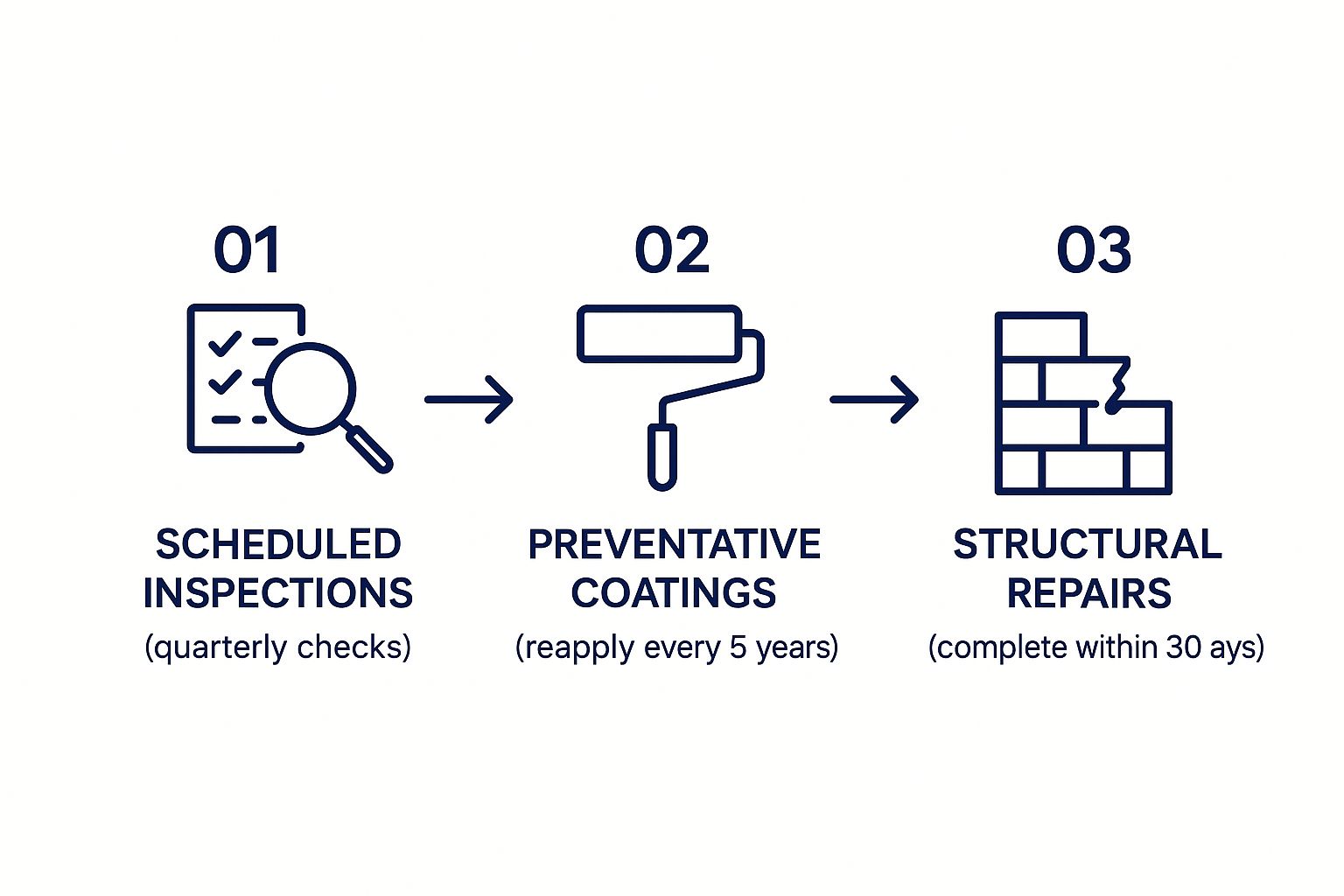
As you can see, it’s all about consistent, scheduled actions. This is what prevents major repairs and keeps your building in prime condition for years.
Maintaining your warehouse isn't just about the structure; it's also a critical matter of safety and compliance. To ensure continuous operational safety, it's vital that all steel warehouses undergo a comprehensive electrical safety inspection periodically.
The demand for durable, long-lasting storage solutions is only getting bigger. Warehouses and other physical storage facilities make up the largest chunk of the prefabricated steel building market, holding a 55.7% revenue share. With the market projected to grow at a 4.20% CAGR through 2032, it's clear that these buildings are valuable assets worth preserving. Proper maintenance is the key to making sure that value endures.
Your Top Questions About Steel Warehouses, Answered
Even the best-laid plans come with questions. It’s a natural part of any big project. To help you move forward with total confidence, we’ve put together answers to some of the most common things people ask us about warehouse steel buildings.
How Do I Handle Building Permits for a Steel Warehouse?
Getting a building permit is one of the very first—and most critical—steps in the process, and it falls on you to get it done. The journey starts with a call to your local building department.
You'll need to tell them about your project and hand over a set of engineered plans for your steel building. You'll also need a site plan that shows exactly where it's going on your property. These officials will check everything against local codes for wind, snow, and seismic loads to make sure it's all up to snuff. The good news? Your steel building provider gives you the engineered blueprints designed to meet those exact local requirements, which helps make the approval process go a whole lot smoother.
How Effective Is Insulation in a Large Steel Building?
Insulation isn't just effective; it's absolutely essential for a steel warehouse. Without it, a metal building can feel like an oven in the summer and an icebox in the winter. This leads to shocking energy bills and can even damage your inventory from condensation build-up.
Key Takeaway: Proper insulation, like spray foam or a high-quality fiberglass blanket system, creates a powerful thermal barrier. It can slash your heating and cooling costs by 30-40%, keep the indoor temperature stable, protect your goods, and make the whole space more comfortable for your team.
Can I Modify or Expand My Steel Warehouse Later?
Absolutely. In fact, the ease of expansion is one of the biggest selling points of warehouse steel buildings. If you think you might need more space down the road, you can plan for it right from the start.
Just ask for "expandable end walls" during the initial design phase. This feature makes it incredibly simple and affordable to add more bays and extend the building's length later. Trying to expand a structure that wasn't designed for it is a much bigger, more expensive headache. A little foresight here is the smartest way to budget for long-term growth.
Ready to build a warehouse that works as hard as you do? The team at Icon Steel Buildings is here to help you design the perfect structure for your needs. Get a free quote today and start your project with confidence.