
When you start looking into the price of a commercial metal building, you'll see a lot of numbers thrown around. The basic building kit itself typically runs between $11 to $20 per square foot. But that’s just the starting point. For a fully finished, ready-to-use project, you’re more likely looking at $20 to $40 per square foot once you include the foundation, labor, and site work.
Deconstructing The Price of Commercial Metal Buildings
Thinking about the cost is a bit like buying a car. You have the base model price, but the final sticker price changes once you add the features you actually need—the better engine, the tech package, the all-weather floor mats. The steel frame, panels, and roof are your base model. They have a clear, straightforward cost.
But the final investment depends entirely on what you build. Every window, door, layer of insulation, or custom color is an add-on that shapes the final cost. To get a realistic budget, you have to look beyond the kit and factor in the concrete slab it will sit on, the crew that will put it all together, and any finishing touches needed to make the space work for your business.
Key Factors Driving Your Final Cost
A few core elements will have the biggest impact on your total investment. The main drivers are always the building's size, the thickness (gauge) of the steel you choose, and the going labor rates in your area. Getting a handle on how these pieces fit together is the first step to building an accurate budget.
This image breaks down how the building's dimensions, material quality, and labor costs form the three pillars of your total project price.
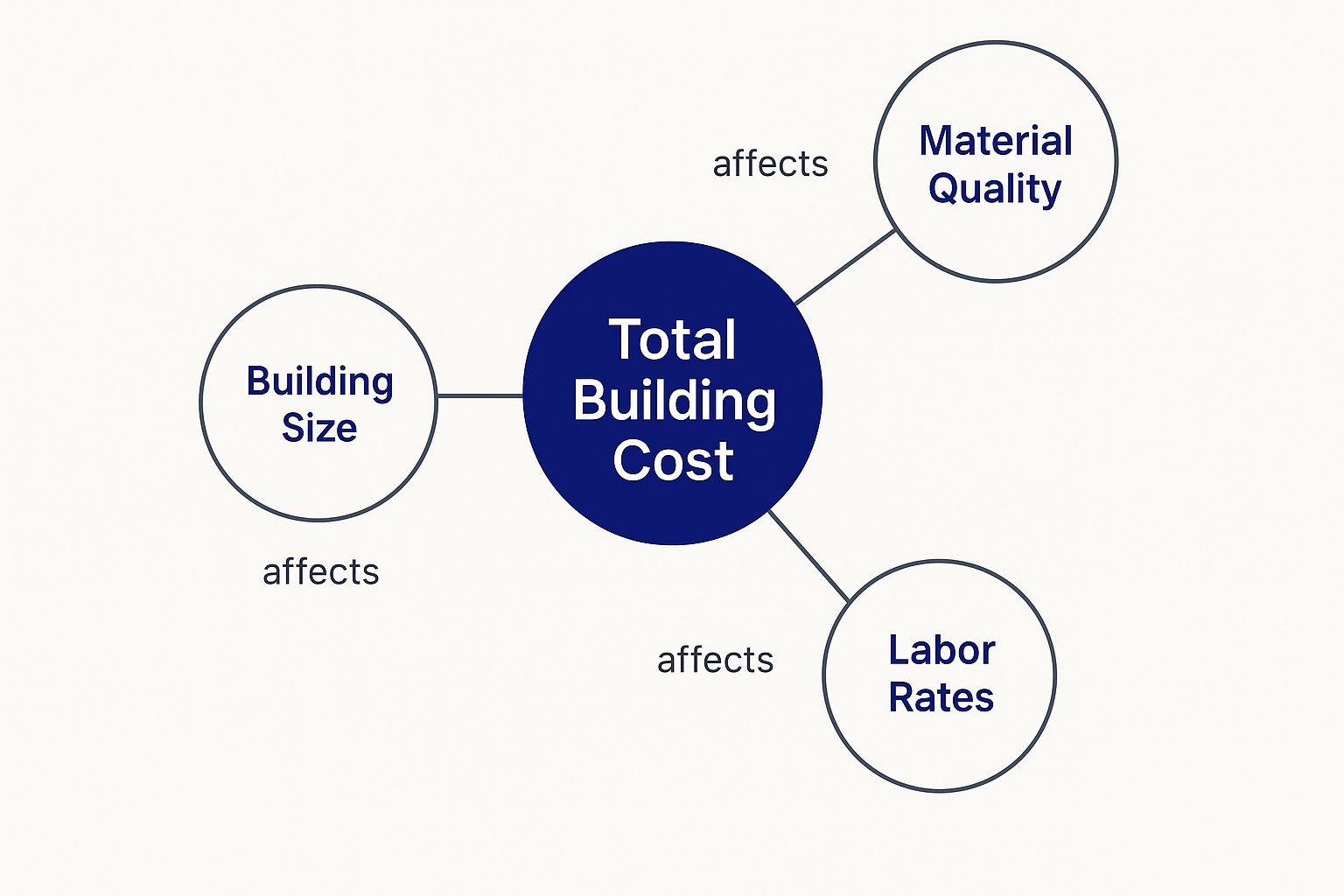
As you can see, tweaking any one of these factors will directly affect the final number on your invoice.
A common mistake is getting fixated on the kit price. In reality, the building kit often accounts for only about 50-60% of the total project budget. The rest goes to the foundation, erection, and finishing.
As of 2025, the raw materials for the building kit average between $11 and $20 per square foot. But don't forget the other costs. Land grading can add another $1 to $2 per square foot, and a solid concrete foundation typically runs between $4 and $8 per square foot.
So, a small 600 sq. ft. building might land somewhere between $10,600 and $19,000 for a complete installation. On the other end of the spectrum, a large 10,000 sq. ft. facility could range from $160,000 to $290,000. You can learn more about how steel price fluctuations impact building projects to stay informed.
Site Preparation And Foundation Costs
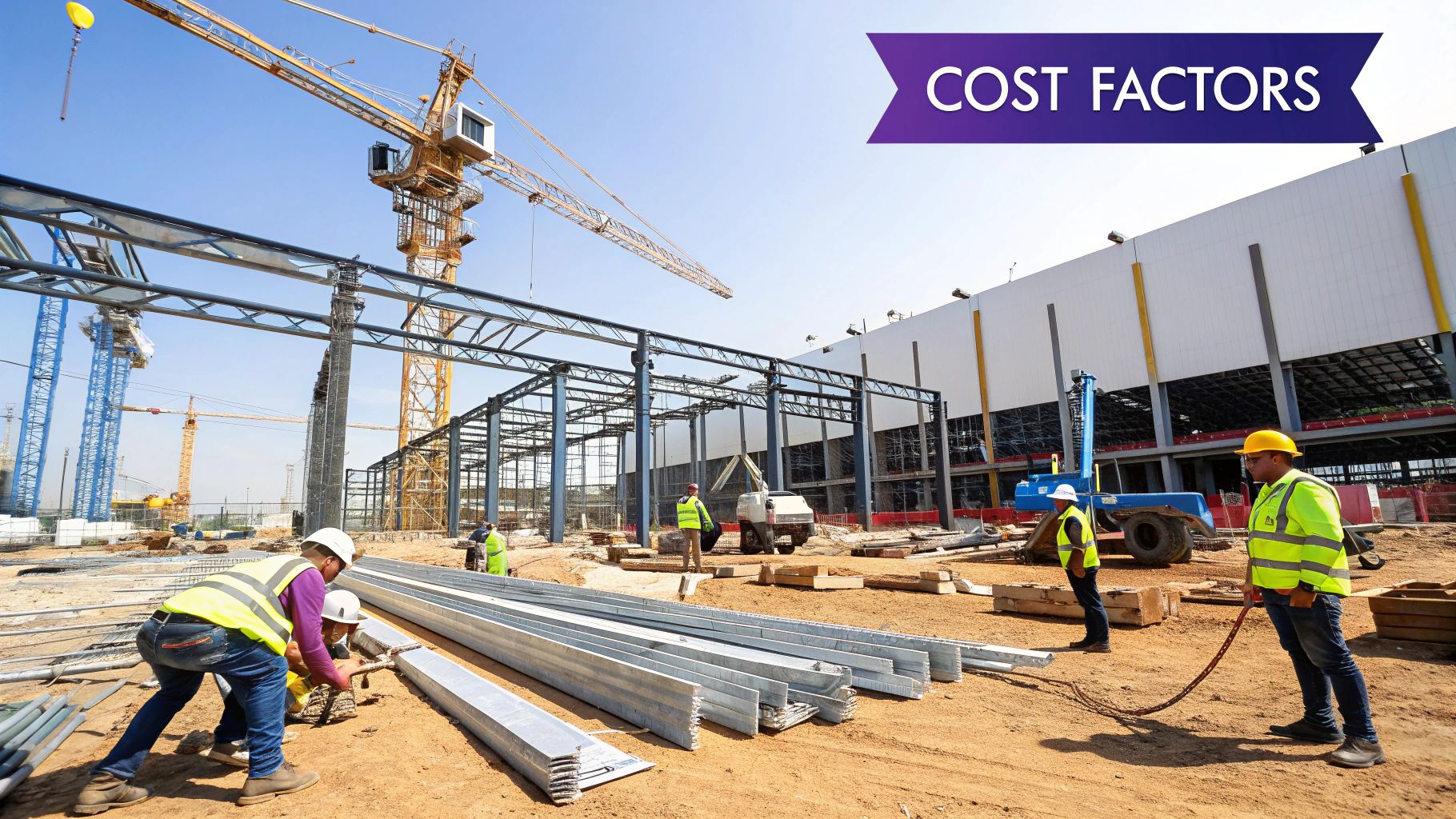
Before a single steel beam goes up, the most important work happens right at ground level. It’s easy to get excited about the building itself, but overlooking site preparation and foundation costs is one of the biggest—and most expensive—mistakes you can make.
Think of it this way: you wouldn't pour the batter for a cake into a dirty, crooked pan and expect a masterpiece. Your building needs a solid, level, and properly prepared base to guarantee its structural integrity for decades to come. These foundational expenses are a huge part of the overall picture, often eating up 10% to 20% of your total project budget. Skimping here can lead to a world of hurt later on, from shifting and water damage to catastrophic structural failure.
Breaking Down The Initial Groundwork
First things first, you need to understand exactly what your land needs before any concrete gets poured. This initial phase involves a few key tasks, each with its own price tag.
- Land Surveying: Before anyone starts digging, a professional survey is essential to map out property lines, identify any tricky topographical features, and stake out the building's footprint. This can run anywhere from $500 to $2,500, depending on how large and complex your lot is.
- Excavation and Grading: This is the heavy lifting—clearing the land of trees, rocks, and debris, then leveling the site to create a perfectly flat, stable pad for your foundation. Costs here typically range from $1,500 to $5,000, though it can be more for bigger sites or land with a serious slope.
- Utility Connections: Getting water, sewer, and electricity to your site is another critical upfront cost. This can vary wildly, from a few thousand dollars to tens of thousands, all depending on how far your build site is from the main utility lines.
These early steps are absolutely non-negotiable. Budgeting for them accurately from the start is the best way to avoid nasty financial surprises down the road.
Choosing The Right Foundation Type
The kind of foundation you’ll need depends on your building's size, what you plan to use it for, local soil conditions, and even how deep the ground freezes in your area. Naturally, each option comes with a different cost.
Concrete Slab Foundations
A monolithic slab is the go-to foundation for most metal buildings, and for good reason—it’s the most common and cost-effective choice. It’s essentially a single, thick layer of concrete poured right onto the graded earth, making it perfect for warehouses, workshops, and retail spaces.
The cost for a standard 4-inch slab usually falls between $4 and $8 per square foot. So, for a 5,000 sq. ft. building, you can expect the foundation to cost somewhere in the neighborhood of $20,000 to $40,000.
Keep in mind that things like thicker edges (footers) required by local codes or the need for a vapor barrier can nudge this price up. To get a better handle on the specifics, it's worth exploring these detailed steel building foundation requirements.
Pier and Beam Foundations
This system is a bit different. It uses concrete piers sunk deep into the ground, which are then connected by beams that support the building's frame. It’s a smarter choice for sloped lots or in areas where the soil is unstable because it elevates the whole structure off the ground.
Because they're more labor-intensive, pier foundations generally cost more, typically running from $7 to $12 per square foot.
How Size And Steel Gauge Affect Cost
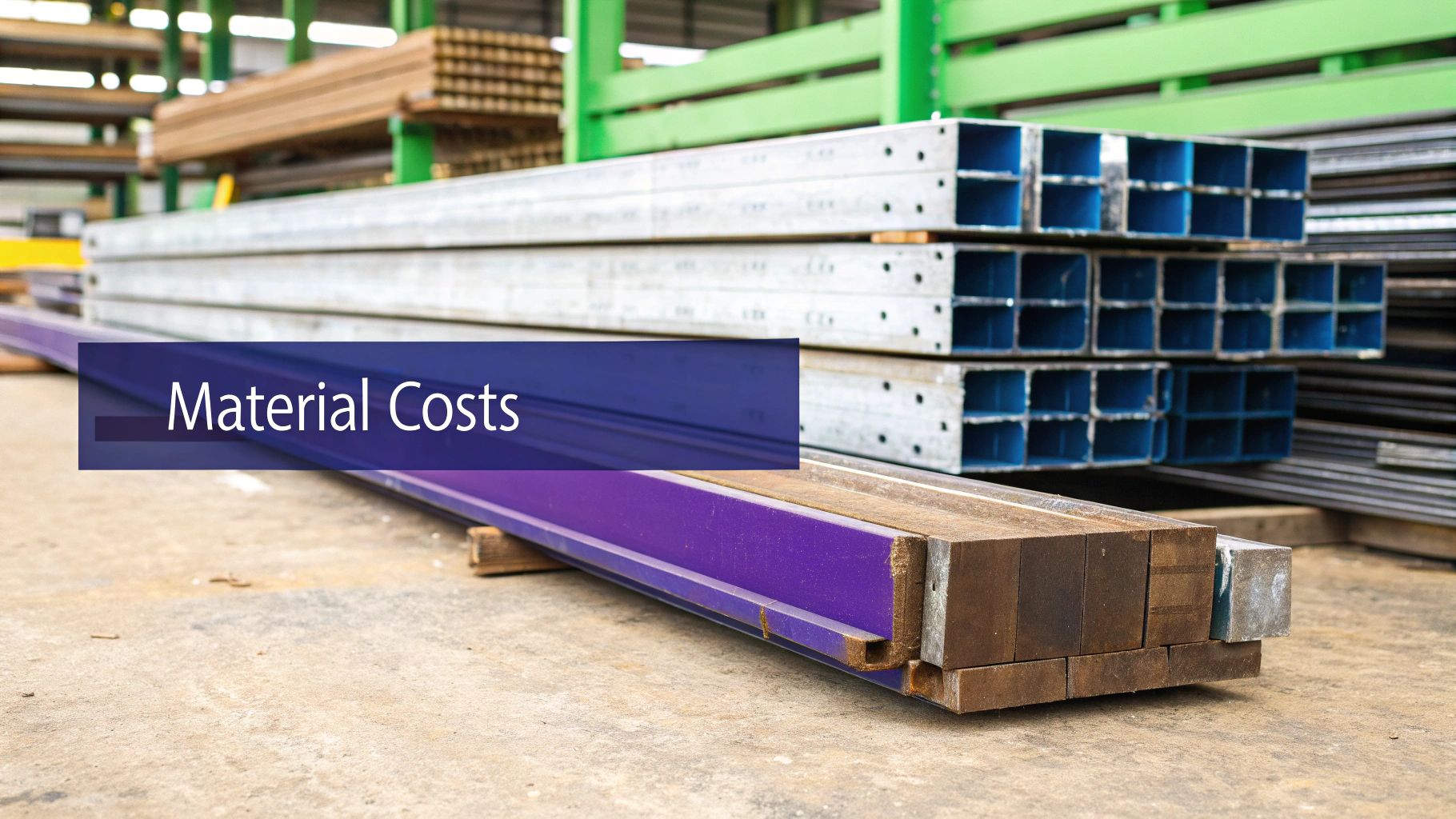
When you start digging into the numbers for your commercial metal building cost, two factors immediately jump out as the biggest drivers of your kit price: the building's dimensions and the thickness of the steel. These are the main levers you can pull to manage your initial investment. Getting a handle on how they work together is the key to making a smart, cost-effective decision.
It's a common mistake to think that if you double the square footage, you simply double the price. The math isn't that simple. A building's width, in particular, plays a massive role in the final cost. Wider buildings that need a clear-span design—meaning no pesky interior support columns getting in the way—require much heavier, more powerful steel trusses to hold up the roof. This engineering reality means a 60-foot-wide building will almost always have a higher cost per square foot than a 30-foot-wide one, even if they have the same total area.
Understanding Building Dimensions And Cost
Think about the difference between a small footbridge and a massive highway overpass. They both get you from point A to point B, but the engineering and raw materials needed for that longer, wider span are on a completely different level. The exact same principle applies to your building's width.
Here’s a quick breakdown of how the three dimensions will shape your budget:
- Width: Like we said, this is the big one. As you go wider, the frames have to get stronger, which means more steel and a higher cost.
- Length: Adding length is usually the most budget-friendly way to get more space. You're just adding more of the same frame sections, not re-engineering the whole support structure.
- Height: Taller buildings need thicker, beefier columns to handle the extra load and stand up to wind. A standard 14-foot eave height is pretty common, but pushing that to 20 feet or more will definitely add to your material costs.
A small auto shop, for example, can get by with a simple frame. But a massive warehouse built to stack pallets high will demand a much more substantial—and expensive—structure. To see how these dimensions play out in a real-world scenario, check out our guide on 30 x 40 metal building kits, which offers a great look at a popular mid-size option.
The Critical Role Of Steel Gauge
The other major factor steering your commercial metal building cost is the steel gauge. This can throw people for a loop because, unlike most things we measure, a lower gauge number means thicker, stronger steel. That's right—a 12-gauge frame is significantly tougher (and pricier) than the standard 14-gauge frame.
Picture it like this: a thin piece of poster board versus a heavy-duty corrugated cardboard box. The cardboard is thicker, giving it way more strength and rigidity. It’s the same with steel. The industry standard for most commercial buildings is a 14-gauge frame (about 2.5mm thick), which is more than enough for most uses in areas with calm weather.
But sometimes, you just need the heavy-duty stuff. Certain conditions demand a thicker, lower-gauge steel:
- Heavy Snow Loads: If your building is in a place that gets buried in snow every winter, local building codes will mandate a stronger frame (often 12-gauge) to handle that immense weight.
- High Wind Speeds: For coastal areas or regions in hurricane paths, you'll face strict wind rating requirements that make thicker steel a must-have for safety.
- Seismic Activity: In earthquake-prone zones, buildings have to meet tough seismic codes, which almost always means using a more robust frame.
Choosing the right gauge isn't just about checking a box for the local inspector. Upgrading to thicker steel is an investment in your building's lifespan and durability. It can even lead to lower insurance premiums and gives you invaluable peace of mind.
While a 14-gauge frame gets the job done for many, stepping up to 12-gauge steel can increase your frame cost by 10-20%. It’s a noticeable jump, but it’s often a necessary one to ensure your building is safe, legal, and ready to stand strong for decades. The best move is always to talk with your supplier about your specific location and how you plan to use the building. They can help you find that perfect sweet spot between cost and strength.
Customization And Finishing Cost Breakdown
A bare steel frame is just the starting point. The real magic—and a huge chunk of your commercial metal building cost—happens when you transform that basic shell into a functional, comfortable, and good-looking workspace. It’s a lot like buying a new car; the base model will get you from A to B, but it's the premium sound system, heated seats, and sunroof that make it your car.
Every door, window, and layer of insulation you add chips away at your budget. These aren't just cosmetic choices, either. They directly influence your building's day-to-day usability, energy efficiency, and long-term operating costs. A simple storage warehouse, for instance, might only need a couple of roll-up doors. But a customer-facing retail space? That’s going to need attractive walk-in doors and big display windows.
These finishing touches can easily add $10 to $50 or more per square foot to your total project cost. The final number really depends on how complex you get and the quality of the materials you choose. A basic finish will land on the lower end, while a fully insulated office with multiple rooms and high-end fixtures will push you toward the higher end of that range.
Essential Functional Upgrades
Before you even think about curb appeal, you need to nail down the features that make the building work. Doors, windows, and insulation are the three pillars of a functional commercial space, and each one comes with its own price tag.
- Doors: The most common choices are big roll-up doors for vehicles and standard walk-in doors for people. A 10×10 foot roll-up door can run you between $800 and $2,500 installed, while a commercial-grade steel walk-in door is typically in the $500 to $1,500 range.
- Windows: Bringing in natural light can completely change a workspace for the better. Standard commercial windows might add $300 to $1,000 per unit, depending on their size and energy efficiency.
- Skylights: For large warehouses or workshops, skylights are a fantastic way to slash your electricity bill. Expect them to cost $500 to $2,000 each to install.
Insulation is, without a doubt, the most critical upgrade you can make for long-term savings. Sure, it adds to the upfront cost, but an uninsulated building is like a sieve for your heating and cooling budget. You’ll just be throwing money away on sky-high energy bills month after month.
Proper insulation is measured in R-value—the higher the number, the better it is at stopping heat from moving in or out. For most commercial buildings, fiberglass blanket insulation is a popular and cost-effective choice. A typical R-19 insulation package might add $1.50 to $3.00 per square foot to your budget. Trust me, this investment can pay for itself in just a few years through lower utility bills.
For a deeper dive into all the possibilities, our guide to custom steel buildings shows how all these features come together.
Aesthetic And Structural Enhancements
Once you've got the functional basics covered, you can start looking at options that improve your building's appearance and add extra durability. The best part is that these features often do both, boosting form and function.
Things like wainscoting—that decorative paneling on the lower part of the walls—can add a sharp two-tone look for around $5 to $10 per linear foot. Overhangs and gutters are also crucial. They don't just look good; they direct water away from your foundation, which can save you from incredibly expensive damage down the road. You can expect to add $5 to $15 per linear foot for these systems.
Beyond the structure itself, you'll need to account for mechanical systems. Things like air conditioning can represent a substantial part of your finishing budget. To get a handle on this expense, it’s a good idea to look into the average cost to install air conditioning for a building your size.
Finally, interior partitions for creating offices or separate work zones can range from simple drywall to complex modular systems, which will definitely influence the final cost. The key is to prioritize these upgrades based on what your business actually needs. That way, you're investing in features that deliver real, tangible value.
Calculating Labor And Construction Expenses
Your commercial metal building kit and the concrete foundation are the big-ticket items, but they certainly don't assemble themselves. The cost of labor and construction is a massive piece of the puzzle, often eating up 20% to 30% of your total project budget.
These are the "invisible" costs that can quickly sink an otherwise solid budget if you don't account for them upfront. Think of it like buying flat-pack furniture. You have all the parts, but the time, tools, and skill needed to put it all together represent a separate, very real expense. For a commercial building, this means bringing in everyone from crane operators and erection crews to electricians and plumbers.
General Contractor Vs. Self-Management
One of the first major decisions you'll face is who will run the show during the construction phase. You really have two main paths: hire a turnkey general contractor (GC) or step into the role of project manager yourself and hire subcontractors directly. Each choice has big implications for your budget and your stress levels.
-
Hiring a General Contractor: A good GC takes care of everything. They pull permits, schedule the crews, manage inspections, and solve problems. It's the hands-off, lower-stress option. You'll pay a premium for this service—typically 10% to 20% of the total construction cost—but what you get in return is professional oversight and peace of mind.
-
Managing Subcontractors Yourself: If you have a background in construction management, this route can save you the GC's fee. But be warned: you become responsible for everything. Hiring, scheduling, quality control—it’s a demanding, full-time job that leaves no room for error.
The right choice really comes down to your experience, available time, and tolerance for risk. For most business owners, the expertise and coordination a qualified general contractor brings to the table are well worth the investment.
No matter which path you take, you'll need a skilled team on-site. Our detailed guide on metal building installation breaks down the entire erection process so you know exactly what to expect from your crew.
Essential Equipment And Permit Costs
Beyond paying for skilled hands on deck, you also have to budget for the heavy machinery needed to lift and place those massive steel beams and panels. Equipment rental is a standard and unavoidable part of any construction budget.
- Scissor Lifts: For smaller crews and lower-height work, a scissor lift rental usually runs between $200 to $400 per day.
- Cranes: A crane is non-negotiable for any large-scale project. You can expect to pay anywhere from $500 to over $1,500 per day, which includes a certified operator.
Coming up with the cash for this equipment can be a hurdle, so it's smart to plan ahead. For more information on funding your machinery needs, you can explore this excellent resource on construction equipment financing.
And don't forget the "soft costs." Building permits can range from $500 to over $5,000, depending on your local municipality and the project's complexity. On top of that, utility hookup fees for water, sewer, and electricity can easily add several thousand dollars to your final bill.
A Sample Budget Breakdown
To give you a clearer picture of how all these numbers come together, let's look at a typical budget allocation for a commercial metal building project. While these percentages will shift based on your specific needs, they provide a solid starting point for financial planning.
Sample Commercial Metal Building Budget Allocation
This table shows a common breakdown of how a project's total budget is distributed across the major cost categories.
| Cost Category | Percentage of Total Budget | Description |
|---|---|---|
| Building Kit | 40% – 50% | Includes the steel frame, wall and roof panels, and all fasteners. |
| Foundation | 10% – 20% | Covers the concrete slab, footers, and any related site preparation. |
| Labor & Erection | 20% – 30% | The cost for the crew to assemble the building structure on-site. |
| Electrical & Plumbing | 5% – 10% | Varies greatly based on use (e.g., an office needs more than a warehouse). |
| Soft Costs & Contingency | 5% – 10% | For permits, fees, and a crucial buffer for unexpected expenses. |
Using this as a guide helps ensure you've accounted for every major expense, from the steel itself to the final permit sign-off, creating a more realistic and manageable project budget.
Smart Strategies To Manage Your Budget
Knowing what drives the cost is half the battle. The other half? Actively managing your budget to get the most building for your money. With a few smart moves, you can lower your commercial metal building cost without cutting corners on quality.
Real savings start well before any dirt is moved on your job site. One of the best tactics is simply timing your purchase. The steel industry has its slow seasons, usually in the late fall and winter. Ordering your building kit then can lead to some serious savings on the raw materials.
Another easy win is to stick with standard designs. Sure, custom is always an option, but choosing standard bay sizes and roof pitches—the stuff manufacturers pump out day in and day out—will slash your engineering and fabrication costs. Think of it like buying a suit off the rack versus getting it custom-tailored. The standard size almost always costs less.
Optimizing For Long-Term Value
It’s a classic mistake to focus only on the upfront price. True budget management means looking at the building’s entire lifecycle. Spending a little more on the right features now can pay you back big time down the road.
- Plan for Future Expansion: If you think your business might grow, design your building with an expandable end wall from the start. Adding this feature during the initial build is a minor cost compared to a massive structural retrofit later on.
- Invest in Quality Finishes: Upgrading to a premium paint finish or a higher R-value insulation might add to the initial ticket, but it’s an investment that pays for itself. Better insulation means lower monthly energy bills, and a superior paint job cuts down on maintenance and repainting costs for years.
A well-insulated building isn't a luxury; it's a financial tool. The energy savings can effectively pay back the initial insulation investment within just a few years, delivering pure savings for decades after.
Tactical Decisions To Lower Upfront Costs
Beyond the long-term game, there are things you can do right now to keep your budget in check. First, getting multiple quotes is non-negotiable. Never take the first price you’re given. Having several bids from reputable suppliers not only shows you the fair market rate but also gives you leverage to negotiate.
You should also see what's available. Suppliers often have massive clearance on steel buildings for standard, pre-fabricated sizes that are ready to go. These deals are one of the fastest ways to get a high-quality building at a rock-bottom price. If you can be a little flexible on your exact dimensions, you can find some incredible value.
Finally, once you’ve picked a supplier, lock in your material prices. Steel costs can swing wildly. A price lock protects your budget from unexpected market spikes and keeps your project on firm financial ground from day one.
Answering Your Questions About Commercial Metal Building Costs
When you’re planning a commercial project, the numbers have to make sense. It’s no surprise that questions about cost are the first thing on everyone’s mind. Let's clear up some of the most common questions to give you a solid foundation for your budget.
Is It Cheaper to Build With Metal Than With Wood?
This is a classic question, and the answer isn't just about the initial price tag. While a metal building kit might look similar in cost to a wood-frame structure upfront, the real savings start piling up once you look at the bigger picture.
Steel's biggest advantage is the speed of construction. Because the components are prefabricated, assembly is dramatically faster, which slashes your labor costs right from the start.
But the savings don't stop there. Steel is built to last. It naturally shrugs off problems that constantly threaten wood, like termites, fire, and rot. This incredible resilience means less maintenance and fewer surprise repair bills down the road. It can even lower your insurance premiums by as much as 40%, making steel a smarter financial decision over the life of the building.
What Is a Kit Price Versus a Turn-Key Price?
Getting this distinction right is probably the most critical part of understanding your quotes. These two prices represent completely different levels of completion, and confusing them can throw your entire budget off track.
- Building Kit Price: This is just what it sounds like—the price for the building in a box. It covers the steel frame, the wall and roof panels, and all the necessary fasteners. That's it.
- Turn-Key Price: This is the all-in, "keys in your hand" price. It bundles the kit with everything else required to get the job done: site prep, pouring the foundation, construction labor, connecting utilities, and finishing touches.
A low kit price can be tempting, but it's only a fraction of the story. Always ask for a detailed breakdown of what’s included. The foundation and labor alone can easily double the initial cost of the kit, so you need to account for that.
How Do Local Building Codes Affect the Cost?
Local building codes aren’t just suggestions—they’re the law, and they have a direct impact on your final price. These regulations are in place to ensure your building is safe and can handle the specific environmental stresses of your location.
For instance, if you're building in a coastal area prone to hurricanes, the code will demand a structure rated for higher wind speeds. In a northern climate with brutal winters? Your building will need to support a much heavier snow load.
Meeting these tougher standards requires stronger materials—thicker gauge steel, extra structural supports, and a more robust foundation design. Every one of these necessary upgrades adds to your material and engineering costs. It's absolutely crucial to ensure your building plan is fully compliant before you buy, or you could face expensive fines and forced redesigns.
Ready to get a clear, accurate quote for your project? The team at Icon Steel Buildings provides detailed estimates that cover every aspect of your build, ensuring there are no surprises. Get your free quote today