Typing “metal shop building near me” into a search bar is easy. The real challenge? Figuring out who to trust from the long list of companies that pops up. The best local supplier isn't just the one at the top of the search results; it's the partner with a solid reputation, transparent pricing, and the right experience for your specific project.
How to Start Your Search for Local Suppliers
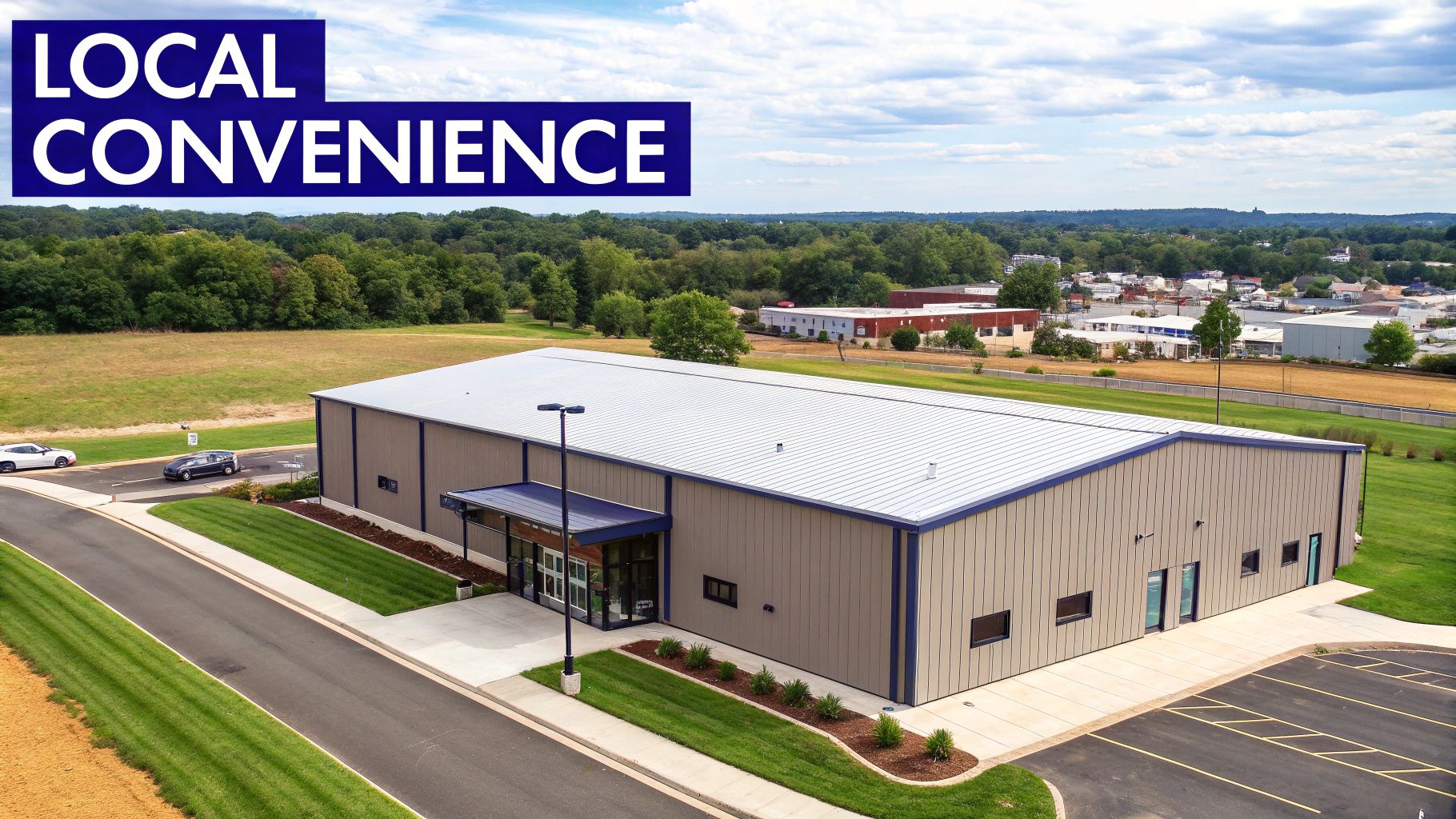
Think of your online search as the first round of interviews. The goal isn't just to find names but to build a shortlist of three to five solid contenders you can confidently call for a quote. A little bit of digital detective work now will save you a world of headaches later on.
A supplier's website is the first checkpoint. Are you seeing crisp, clear photos of actual projects they've built, or is it all generic stock photos and computer renderings? A healthy project gallery shows they’re proud of their work and have plenty of it to show off. If the site feels thin on real-world examples, that's a red flag.
Evaluating Online Presence and Reputation
Once you've checked out their website, it's time to see what other people are saying. Dig into third-party review sites like Google, the Better Business Bureau (BBB), and even construction-focused forums. Don't just glance at the star rating—read the actual comments.
- Good reviews are specific. Look for comments like, "The delivery arrived right on schedule," or "Their project manager, Sarah, was a huge help with the permitting process."
- Bad reviews are telling. Every company hits a bump in the road now and then. What matters is how they respond. Do they own the mistake and offer a solution, or do they get defensive and make excuses?
- Be wary of extremes. A total lack of reviews is strange. So is a sudden flood of vague, five-star ratings that all sound the same. You want to see consistent feedback over time.
This industry is booming, partly thanks to new automation and robotic technologies that are making fabrication more efficient. The global metal fabrication market was valued at USD 24,860 million in 2025 and is only expected to grow. This means new players are constantly entering the market, making your vetting process more critical than ever.
National vs. Local: What's the Difference?
You’ll quickly notice two types of suppliers: big national brands and smaller local fabricators. The national players can often offer standardized kits at great prices because they operate at a huge scale. They’re masters of manufacturing and logistics.
Local fabricators, on the other hand, usually provide a more hands-on, personalized service. They live and breathe the local building codes and can offer custom solutions designed specifically for your area's climate. If you want to see how the major players stack up, our guide to the top steel building manufacturers is a great place to start.
The most important thing is finding a supplier who acts like a partner, not just a salesperson. They should be able to confidently answer your technical questions about engineering, local wind and snow load requirements, and foundation specs. If they can't, they might just be a reseller without the deep knowledge your project requires.
Decoding Quotes to Find the Best Value
Getting a few quotes back for your new metal shop can feel like a major step forward, but this is where the real work begins. The first and most important rule? Resist the temptation to jump at the lowest price. More often than not, a surprisingly cheap quote is hiding compromises in material quality or is missing key components that will end up costing you a lot more later on.
Your main goal here is a true apples-to-apples comparison. That means looking beyond the big number at the bottom and digging into the details. For example, one supplier might quote a 26-gauge steel, while another offers a more durable 24-gauge option for a bit more money. Remember, a lower gauge number means thicker, stronger steel—a critical detail for the building's longevity.
Looking Beyond the Price Tag
A quote isn't just a price; it's a detailed list of what you are—and aren't—getting for your money. I always recommend creating a simple checklist or spreadsheet to compare each offer side-by-side. This methodical approach is the best way to make sure nothing important slips through the cracks.
Here are the key things you need to scrutinize on every single quote:
- Engineering Certifications: Does the quote explicitly state that the building is engineered for your specific location’s wind and snow load requirements? Uncertified plans are a massive red flag and can shut down your project at the permit office.
- Included Components: Are things like roll-up doors, walk-in doors, and windows part of the package, or are they expensive add-ons? You need to clarify the quantity, size, and quality of each one.
- Insulation Details: If insulation is included, what is the R-value? An R-value that’s too low for your climate will mean higher heating and cooling bills for the entire life of the building.
- Delivery Terms: Is delivery included in the price? Are there extra fees for offloading, or is that your responsibility? Surprise freight charges can easily add thousands to your final cost.
This infographic breaks down the essential pre-quote steps to ensure you're fully prepared.
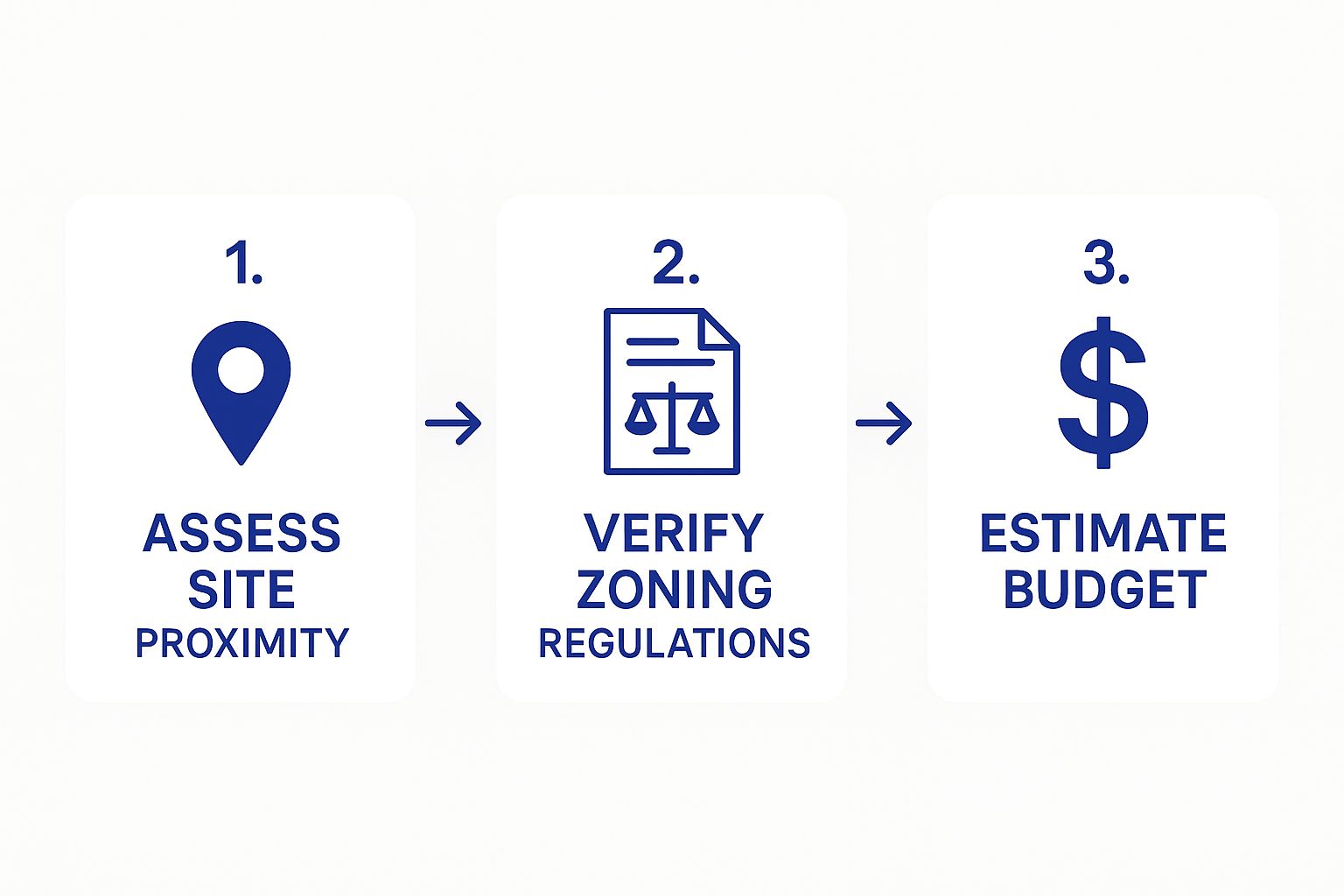
Following this sequence helps you give suppliers all the info they need, which leads to more accurate and comparable quotes from the get-go.
To make this easier, here's a simple table you can use to line up your quotes and spot the differences quickly.
Metal Building Quote Comparison Checklist
| Feature/Component | Supplier A Details | Supplier B Details | What to Look For |
|---|---|---|---|
| Steel Gauge (Roof & Walls) | Lower number is better (thicker steel) | ||
| Engineering | Stamped/certified for your specific address? | ||
| Insulation (R-Value) | Is the R-value sufficient for your climate? | ||
| Doors (Roll-up & Walk-in) | Quantity, sizes, and wind ratings included? | ||
| Windows | How many are included? What size/style? | ||
| Fasteners & Sealants | Are all necessary components included? | ||
| Delivery Cost | Included or a separate charge? Offloading? | ||
| Warranty Details | Paint finish, structural, and panel warranties? |
This isn't an exhaustive list, but it covers the major items where you'll see big differences between suppliers.
Asking the Right Questions
Never hesitate to press suppliers for clarity. Honestly, their willingness to answer detailed questions is a great indicator of their transparency and expertise. If you get vague answers or feel like you're being rushed, that's a warning sign.
A reputable supplier will welcome your questions. They understand that an informed customer is a confident buyer and a future advocate for their business. If you feel rushed or dismissed, it’s best to walk away.
Here are a few specific questions I recommend asking to uncover potential hidden costs:
- What is the warranty on the steel panels, paint finish, and structural frame?
- Are all fasteners, sealants, and trim pieces included in this price?
- Does this quote include stamped engineering drawings ready for my local permit office?
Understanding these variables is essential when locking down your project's finances. For a deeper dive into financial planning, our guide on the commercial metal building cost provides a more detailed breakdown.
By taking the time to meticulously decode each quote, you put yourself in the best position to select a supplier that offers true long-term value, not just the lowest initial price.
Customizing Your Shop for Optimal Workflow
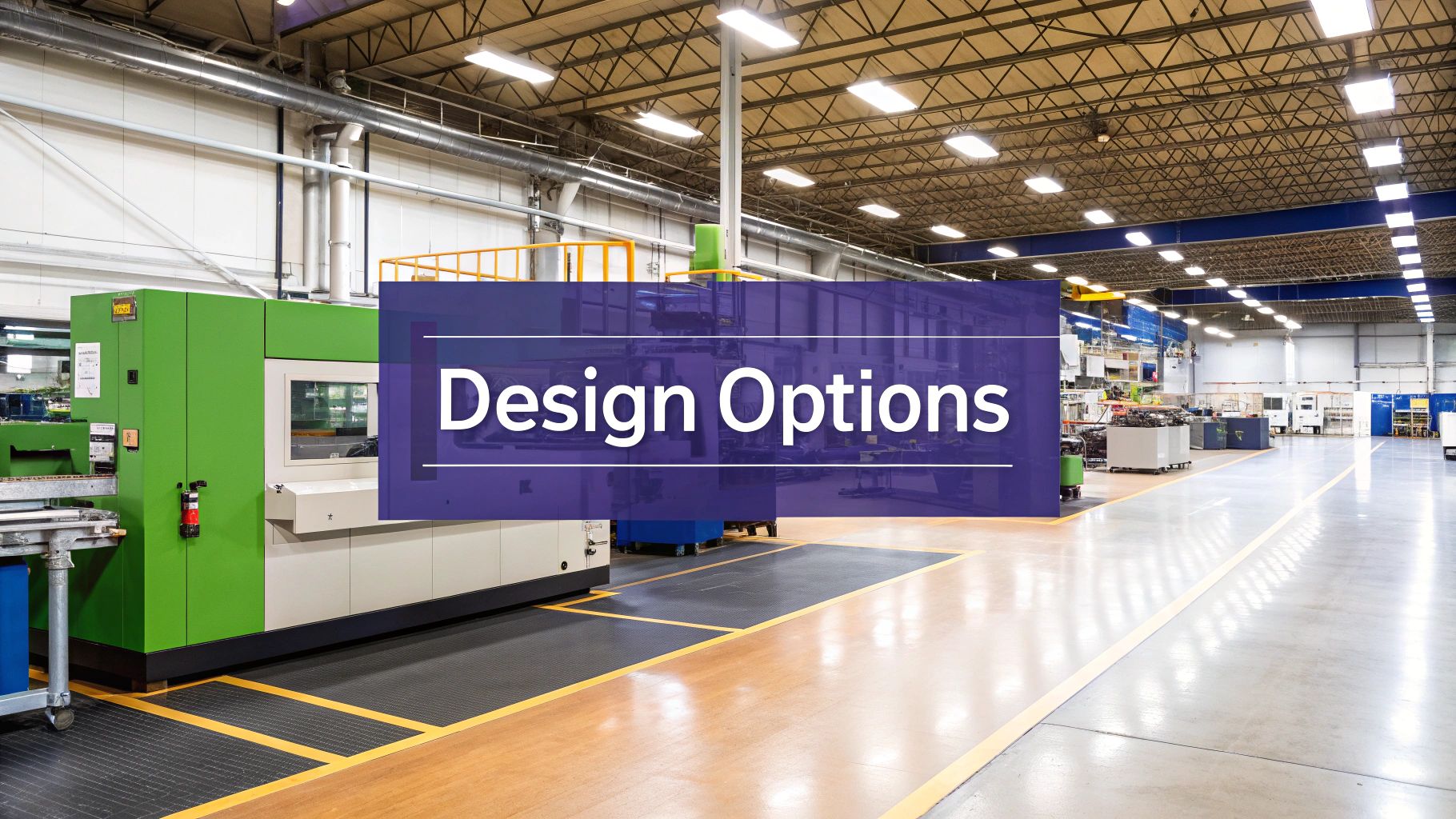
A truly effective metal shop is designed around the work you actually do. While a standard building kit gives you a solid shell, the real magic happens when you customize it to fit your specific workflow. It’s about thinking beyond the basic footprint and working with your supplier to create a space that genuinely boosts your productivity.
The first move is to map out how you move and work. Will you need a dedicated zone for welding, another for assembly, and a clean space for finishing? Sketching this out helps pinpoint the ideal placement for interior walls, electrical outlets, and—most importantly—doors. A thoughtfully placed door can literally save you hundreds of hours of labor over the life of the building.
Planning for Functionality and Comfort
Think about the small details that make a massive difference in day-to-day operations. The type and location of your main access points are critical. While big roll-up doors are standard for vehicle access, adding sectional overhead doors can give you much better insulation and security, especially if you plan on heating and cooling the space.
And don't overlook the power of natural light. Strategically placing windows or translucent roof panels can slash your reliance on artificial lighting, cutting down on electricity bills and creating a far more pleasant work environment. A pro tip is to place windows higher up on the walls to maximize light without sacrificing usable wall space for shelving and equipment.
Your supplier should be a key partner in this process. A good one will ask detailed questions about how you plan to use the building and offer practical suggestions you might not have considered, like reinforcing a specific wall to support a future gantry crane.
Smart Customizations for Long-Term Value
Insulation is one of the single most important customizations you can invest in. Choosing the right R-value for your climate will keep the interior comfortable year-round, protect your equipment from extreme temperature swings, and dramatically lower your energy costs. Ask your supplier about different insulation options, like spray foam versus traditional fiberglass batts, to see what best fits your budget and needs.
Similarly, consider the building's orientation and roof design. A steeper roof pitch is better for shedding heavy snow in northern climates, while a lower pitch might be more cost-effective in milder areas. Planning for these elements from the start ensures your building is perfectly suited to your location. When exploring your options, it's a great idea to see examples of what is possible with custom steel buildings to get ideas for your own project.
Finally, always plan for future growth. Even if your current needs are met by a 40×60 shop, designing one wall to be an easily removable “expandable endwall” is a smart, low-cost feature. This foresight makes it much simpler and more affordable to add another bay or extend the building down the road as your business or hobby grows.
Navigating Local Building Codes and Permits
Let's be honest: dealing with the local building department can feel like a huge headache. But when you're searching for a "metal shop building near me," this is one step you absolutely can't skip. It’s what ensures your new structure is safe, legal, and built to stand the test of time.
A good supplier won’t just sell you a kit and walk away. They’ll provide the certified engineering plans you need to get your permit application approved. These plans are the core of your submission—stamped by a licensed engineer, they prove your building’s design is tough enough for your area’s specific wind, snow, and seismic loads. Trying to build without a permit is a recipe for disaster, often leading to hefty fines, tear-down orders, and major safety hazards.
Understanding Your Local Requirements
Every city and county plays by its own rules. The first thing you need to do is get in touch with your local building and zoning department. A quick search on your municipality's website should give you their contact info and a link to the permit applications.
When you call, ask them for a checklist of everything required for a pre-engineered steel building project. You'll almost always need to provide:
- Certified Engineering Plans: These are the official, stamped blueprints for your specific building.
- Foundation Plans: The concrete foundation needs its own separate plan. You can get more details in our guide on steel building foundation requirements.
- Site Plan: This is just a drawing of your property that shows exactly where the building will sit, including its distance from property lines (setbacks).
The precision engineering behind these buildings is part of a massive industry. The market for metal fabrication fluids, essential for creating high-quality steel components, was valued at USD 14.2 billion in 2022 and is projected to reach USD 22.5 billion by 2035. That growth speaks to the level of engineering your local officials are looking to verify.
The Permitting and Inspection Process
After you hand in your application, a plans examiner will review everything to make sure it complies with local codes. This review process can take several weeks, so be sure to build that time into your project schedule.
Once your permit is issued, you can finally break ground. But it doesn't end there. Inspectors will visit your site at critical stages—usually after the foundation is poured and again after the main structure is up—to confirm the work matches the approved plans.
A great way to prepare is by looking over a comprehensive commercial building inspection checklist. It gives you a clear idea of what the inspectors will be checking for, so you can avoid any surprises.
Pro Tip: Don't think of your local building officials as obstacles. They're your partners in making sure the job is done right. If you have questions, call them before you submit anything. A clean, well-prepared application makes their job easier and almost always results in a faster, smoother approval. A little proactivity can save you weeks of delays.
Preparing Your Site for a Smooth Installation
With your building’s design locked in and the order placed, it's time to shift your focus to the most important pre-construction step: preparing your site. A properly prepared site is the foundation—both literally and figuratively—for a durable, long-lasting metal shop. Getting this part right is the secret to preventing costly delays and ensuring installation day goes off without a hitch.
The very first job is clearing and grading the land. Your building pad has to be perfectly level and completely free of any vegetation, rocks, or debris. Most suppliers will tell you to make the cleared and leveled area at least 5 to 10 feet wider than your building's footprint on all sides. This gives the construction crew the elbow room they need to work safely and efficiently.
Laying the Groundwork and Foundation
Once your site is graded, you can move on to the next major milestone: the foundation. The vast majority of metal shops are built on a concrete slab, which gives you a stable floor and a rock-solid anchor for the steel frame. You've got a few options here, depending on your specific needs and local soil conditions.
- Monolithic Slab: This is the go-to for most projects because it's efficient and cost-effective. The footing (the thicker perimeter that supports the frame) and the floor are poured all at once, creating one single, solid piece of concrete.
- Stem Wall Foundation: This method involves pouring the footings first, then building short "stem walls" on top of them before the main floor slab is poured inside. You’ll often see this approach on sloped lots or in regions with specific frost line requirements.
- Pier Foundation: Instead of a full slab, this foundation uses strategically placed concrete piers to support the building’s main columns. It’s less common for shops but can be a good option if you’re planning on a gravel or dirt floor.
The technology used to create your building's components is incredibly precise. By 2025, the global metal fabrication equipment market was valued at approximately USD 64.64 billion, a testament to the high-tech machinery that makes modern steel buildings possible.
The Pre-Arrival Checklist
Before the delivery truck loaded with your building components pulls up, running through a few final checks is essential to avoid any last-minute chaos. Making sure the site is 100% ready will make the whole process smoother for you and the installation crew.
A huge consideration is site access. The delivery truck is a massive, heavy vehicle that needs a clear, solid path from the road right to your building pad. Are there any low-hanging branches, sharp corners, or soft, muddy ground that could cause a problem? It’s crucial to identify and handle these potential obstacles ahead of time.
A classic mistake is forgetting to look up. Power lines or tree limbs that your pickup truck clears easily can become a serious problem for a tall delivery rig. Walk the entire access route from the road to your site and keep your eyes on the sky.
Finally, getting your site ready goes beyond just the physical ground. As you prepare, it's smart to think about protecting your investment during the construction phase. A good guide on comprehensive construction site security can help you safeguard your materials and equipment.
For a detailed look at how the assembly process works, check out our expert guide on metal building installation. Confirming everything from crew access to foundation curing times is the key to guaranteeing a successful build.
Common Questions About Metal Shop Buildings
When you start digging into a project like this, the questions come fast and furious. It's totally normal. Getting clear, honest answers is the first step toward making a smart investment and avoiding those nasty surprises that can derail a project.
Let's tackle some of the most common questions we hear every day.
So, What Does a Metal Shop Actually Cost?
This is the big one, right? The honest answer is: it depends. There’s no simple price tag because every building is different.
A building’s final cost is a mix of its size, the gauge (thickness) of the steel, your specific location, and any custom features you add. For a rough starting point, a basic 30×40 kit might fall in the $15,000-$20,000 range. But—and this is a big "but"—that price is almost always just for the building kit itself. It typically doesn't cover the concrete foundation, delivery fees, or the labor to put it all together.
Once you start adding essentials like insulation, multiple roll-up doors, windows, or beefier framing to handle heavy snow loads, that initial number can easily double. The only way to get a true picture of your costs is to get a detailed, itemized quote.
Can I Really Install a Metal Building Kit Myself?
Yes, you can! Many of the smaller, more straightforward kits are designed with the capable DIYer in mind. Tackling the installation yourself can definitely save you a good chunk of change on labor.
However, be realistic—this isn't a simple weekend project.
To successfully erect a steel building, you're going to need:
- The right equipment. This includes lifts to handle the heavy steel beams and panels safely.
- A solid grasp of construction basics. Knowing how to keep things square, level, and securely fastened is critical.
- A healthy dose of patience. You have to follow the engineered plans to the letter, no shortcuts.
For bigger or more complex buildings, hiring a professional crew is usually the smarter move. They’ve got the experience to get the structure up quickly and correctly, which is often a requirement to keep your manufacturer's warranty intact.
My rule of thumb? If the building is over 1,500 square feet, the sheer weight and complexity of the materials make a professional crew a wise investment. The decision really boils down to balancing cost savings against your time, skill, and safety.
Should I Go with a National Supplier or a Local Fabricator?
As you search, you'll run into two main types of companies. National suppliers are the big players who manufacture standardized kits in massive facilities and ship them all over the country. Because they work in such high volume, they can often offer very competitive prices on those standard kits.
A local fabricator, on the other hand, is your neighborhood expert. They usually provide more personalized service and have the flexibility to handle truly custom or unique designs. They'll know your local building codes inside and out and might even offer installation as part of a complete package.
The best strategy? Get quotes from both. It's the only way to compare pricing, lead times, and see who can best deliver on your specific vision.
Ready to turn that vision into a real, standing structure built to last? The team at Icon Steel Buildings is here to help you design the perfect metal shop for your needs. Get your free, no-obligation quote today!