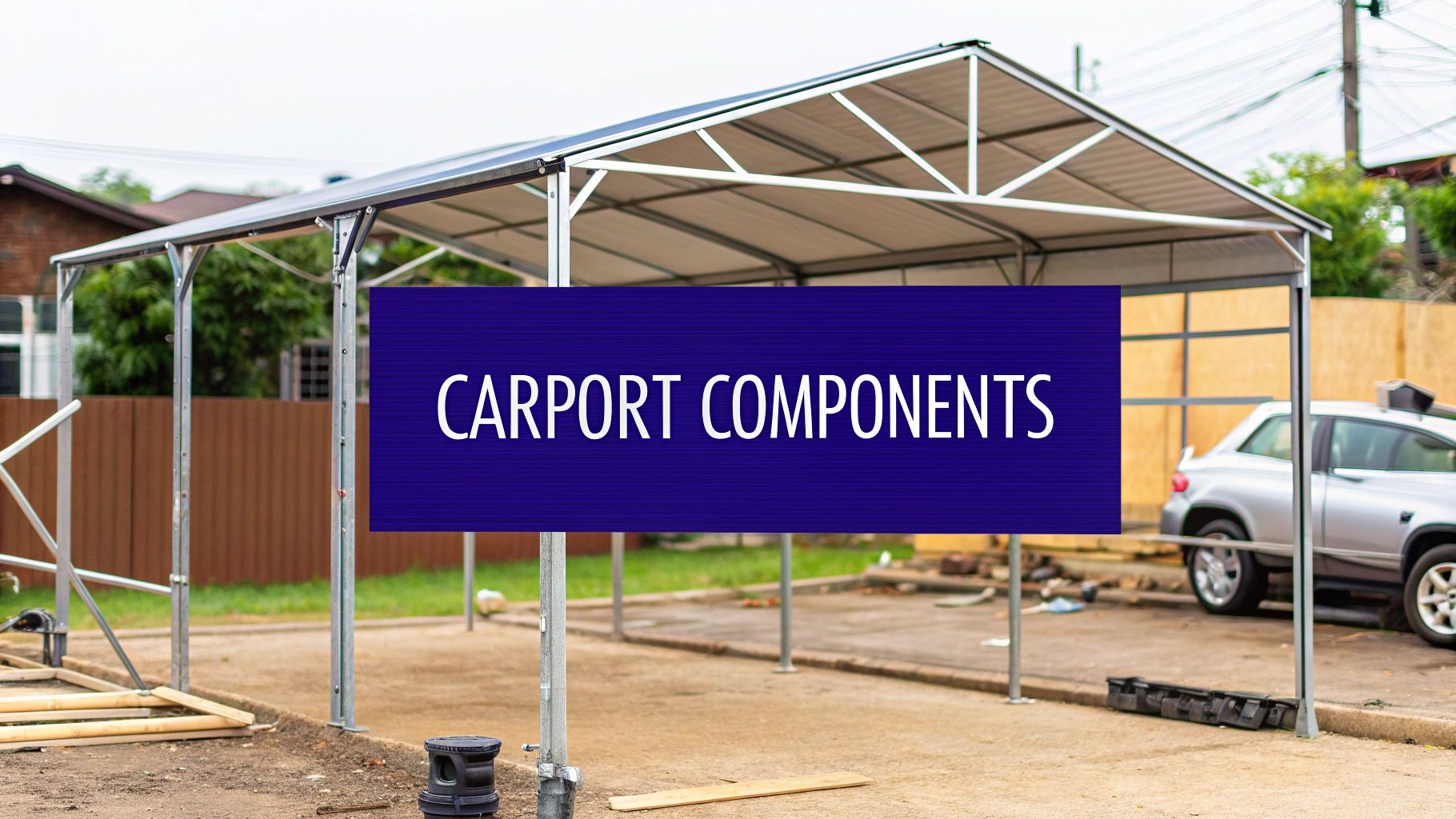
When you think about a metal carport, it's easy to see it as just a simple shelter. But what holds it all together? Every single piece, from the frame to the roof panels and anchors, is an engineered component designed to work in harmony. These parts are typically made from tough materials like galvanized steel or aluminum, all chosen for their strength, durability, and ability to stand up to whatever the weather throws at them.
Your Carport Blueprint: Understanding Each Component
Before you jump into buying or building a metal carport, it’s incredibly helpful to understand its anatomy. Think of it like a simple blueprint for a highly effective structure. Every part has a specific job, contributing to the overall strength and longevity of the finished product. From the ground up, these pieces lock together to form a cohesive unit designed for pure resilience.
This infographic breaks down the main carport components into three core groups: the foundation, the frame, and the roof.
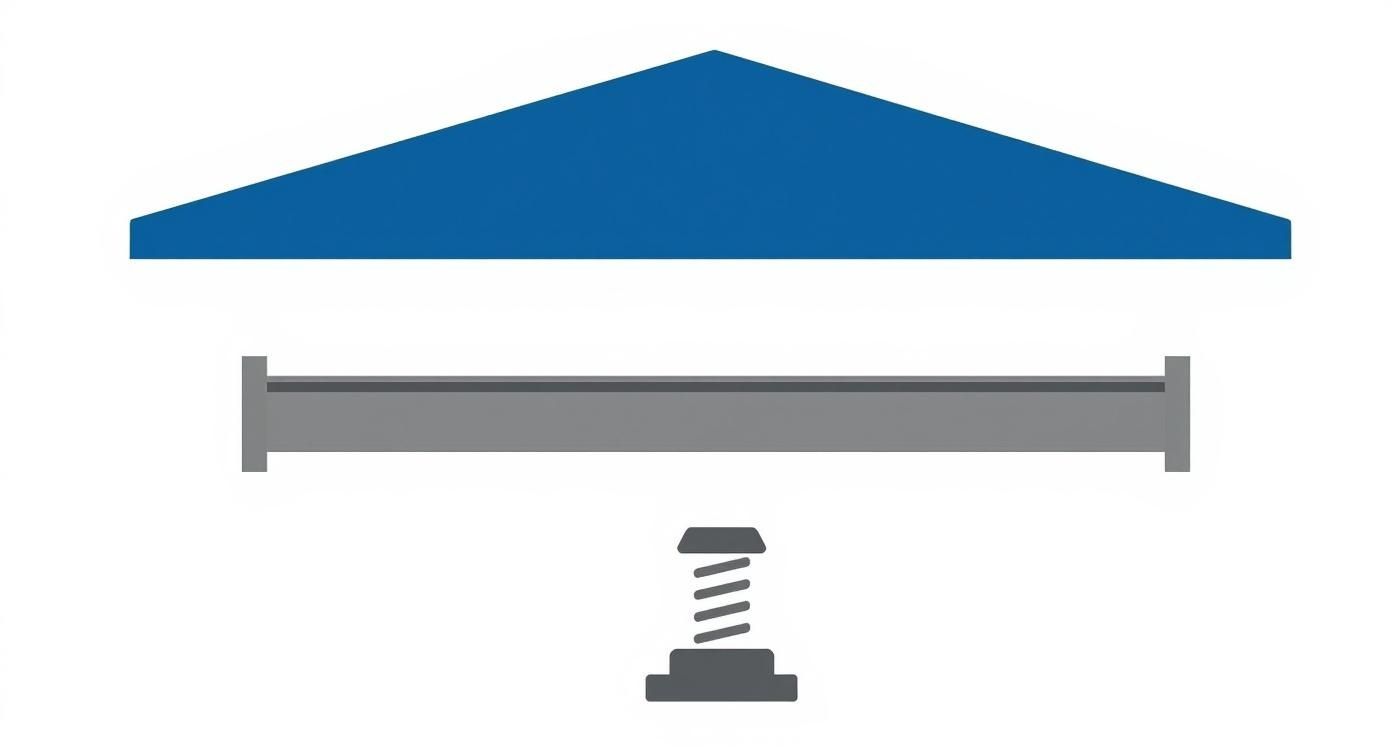
As you can see, each system builds upon the last. It all starts with a solid foundation that supports a robust frame, which in turn holds the protective roof in place.
To give you a clearer picture, here’s a quick-reference table summarizing the key parts and their roles.
Quick Guide to Metal Carport Components
| Component | Primary Function | Location in Structure |
|---|---|---|
| Foundation/Anchors | Secures the carport to the ground, preventing movement. | At the very bottom, connecting the base rails to the ground. |
| Base Rails | Form the perimeter and footprint of the carport. | Along the ground, outlining the structure's base. |
| Legs/Uprights | Provide vertical support and determine the carport's height. | Vertical posts connecting the base rails to the roof frame. |
| Roof Trusses/Bows | Create the roof's shape and support its weight. | The arched or peaked framework that forms the roof skeleton. |
| Panels (Roof/Side) | Shield the interior from sun, rain, snow, and wind. | The "skin" of the carport, covering the roof and optional sides. |
| Braces & Fasteners | Add rigidity and connect all structural components. | At corners, joints, and connection points throughout the frame. |
This table shows how each component fits into the bigger picture, working together to create a reliable and sturdy shelter.
The Anatomy of a Carport
At its core, a carport is a system where every component relies on the others. Let’s take a closer look at the main groups we’ll be exploring:
- Foundation and Anchoring: This is the critical link to the ground. Base rails create the footprint, while anchors are what keep the entire structure firmly planted during high winds. Getting this right is non-negotiable, and understanding your steel building foundation requirements is the first step toward a stable, long-lasting installation.
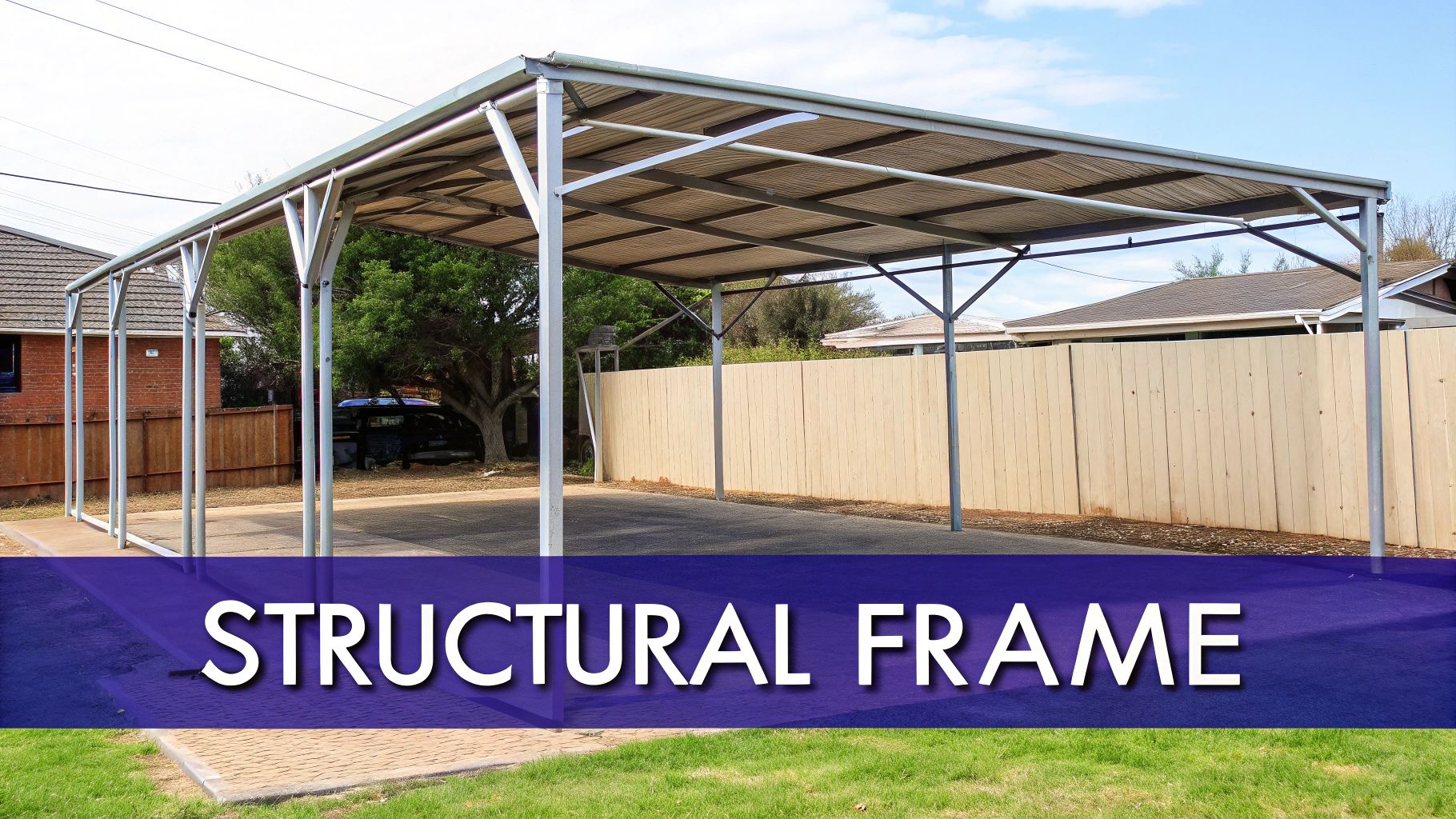
- Structural Frame: This is the skeleton of your carport. It includes the vertical legs that set the height and the roof trusses (or bows) that create the roof's distinctive shape and bear the load from snow or rain.
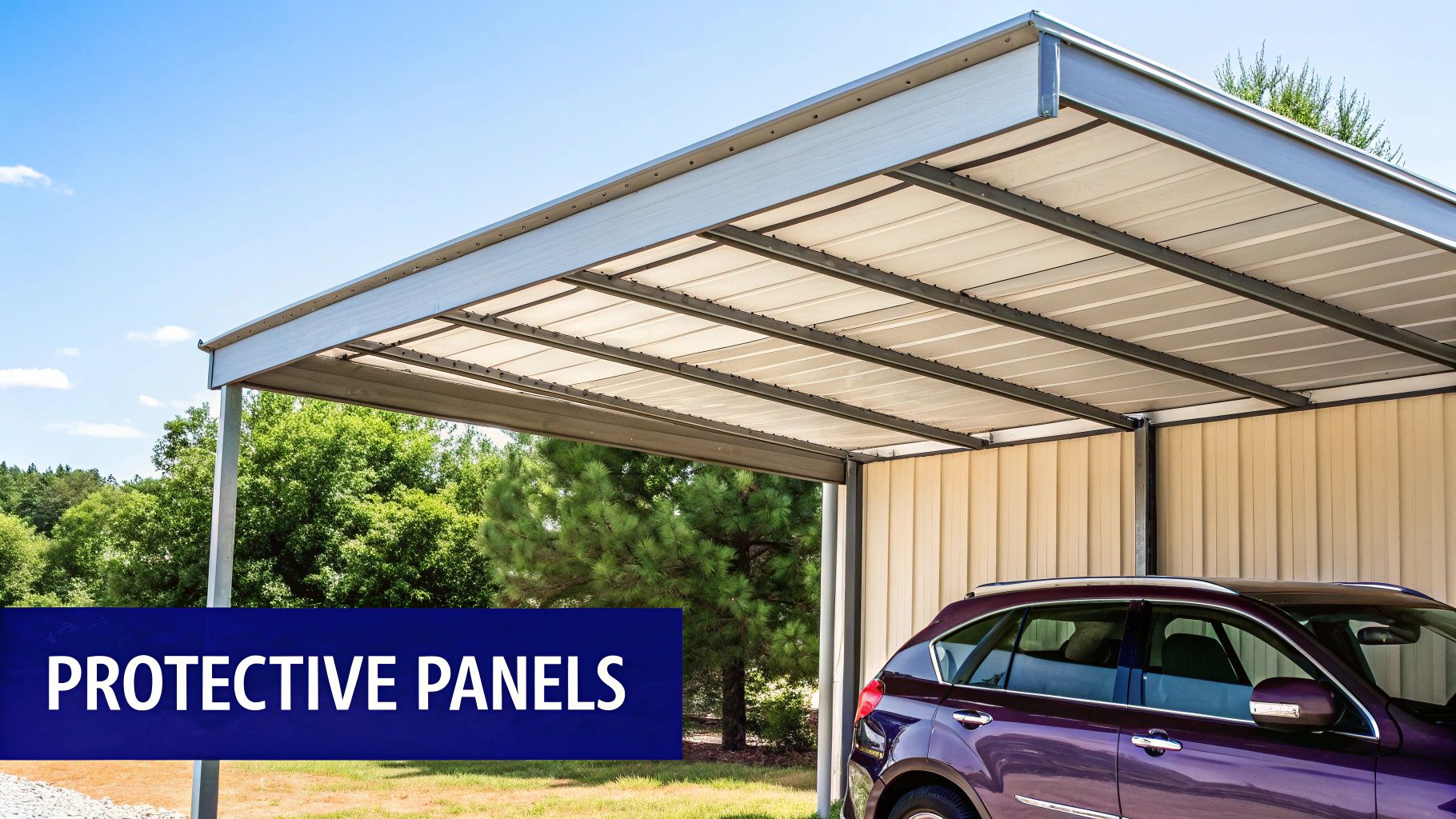
- Protective Shell: Think of this as the "skin." It’s made up of metal roof and side panels that shield your vehicle from the harsh sun, driving rain, and heavy snow.
A carport is more than just a collection of steel parts; it's an engineered system where the frame provides strength, the panels offer protection, and the fasteners ensure unity. Each piece is vital for the structure's long-term performance.
It's no surprise that the demand for this kind of durable vehicle protection is growing. The market for metal carports was valued at USD 40.88 billion and is projected to shoot up to USD 74.56 billion by 2030, largely because more people are looking for reliable ways to protect their assets from extreme weather. With stakes this high, quality components matter more than ever.
The Carport's Skeleton Frame and Support System
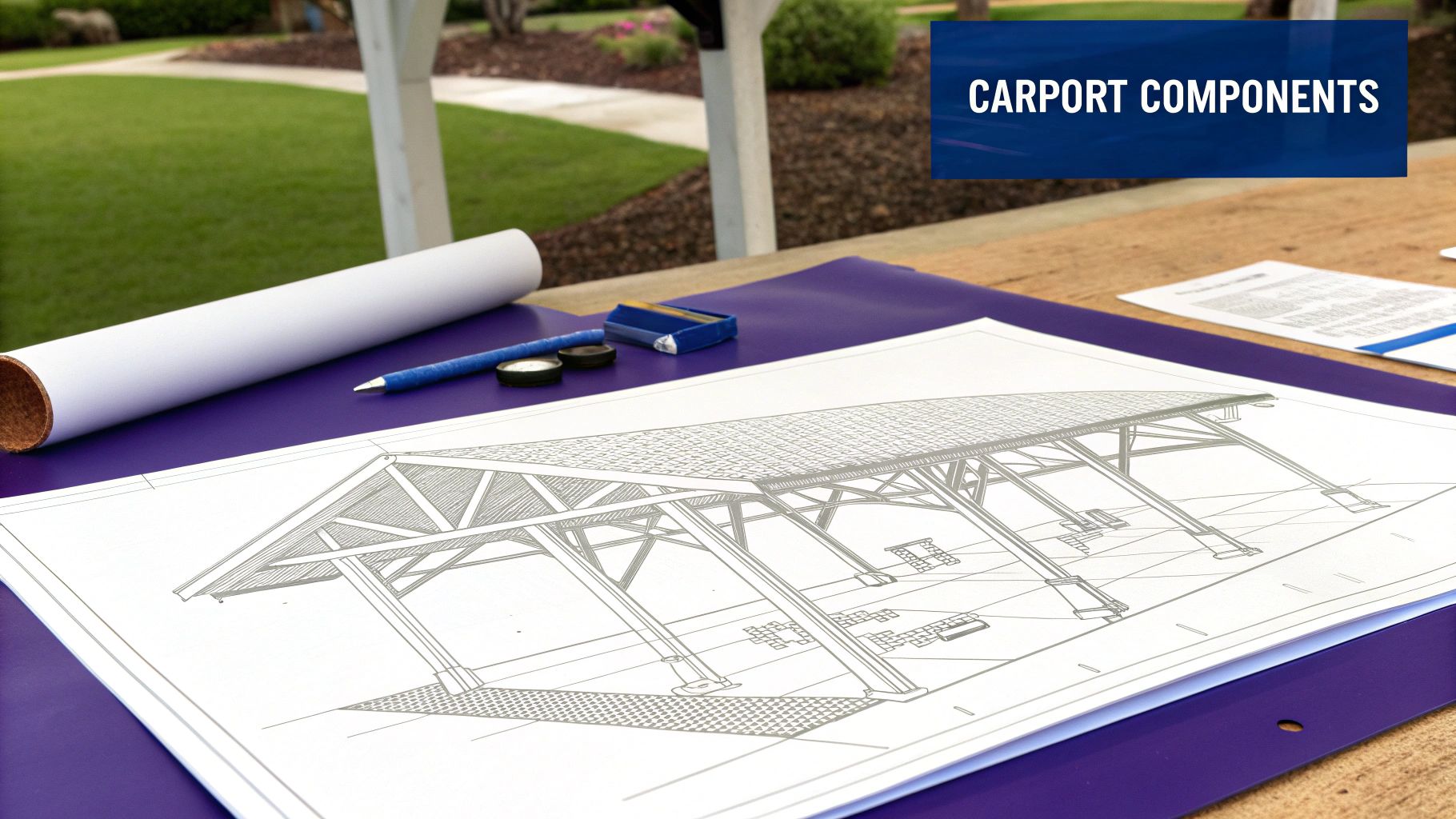
If the foundation is what connects your carport to the ground, the frame is its powerful skeleton. This is the structural system that has to bear the entire weight of the roof, stand strong against wind, and give the shelter its overall shape. It's where the real muscle of the carport comes from, making these metal components absolutely critical for its survival.
The whole thing starts with base rails, which are tough steel tubes that map out the structure's footprint. The vertical legs (or columns) are attached right to these rails, setting the carport's height and holding up the entire roof system.
Understanding Steel Gauge and Frame Strength
When it comes to the frame, the single most important factor is the steel gauge. It’s a bit counterintuitive, but in the world of steel, a lower number means thicker, stronger metal.
- 14-Gauge Steel: This is the industry standard you'll find on many carports. It's a 2 ½-inch square tube that delivers reliable strength for areas with mild weather, making it a solid, budget-friendly choice.
- 12-Gauge Steel: Think of this as the premium upgrade. It's a thicker, 2 ¼-inch square tube that provides a major boost in strength. We highly recommend it for places that get heavy snow or high winds, or for any larger, wider structures.
Choosing 12-gauge steel is a smart investment in durability and peace of mind. It’s often a requirement for certified buildings that need to meet specific local building codes. If you want to dig deeper into structural integrity, you can explore the details of a robust metal building frame to see just how much these choices matter.
Roof Trusses: The Backbone of Support
The trusses (or bows) are what connect the legs and create the shape of the roof. They are expertly engineered to distribute the weight of the roof panels—plus any snow that piles on top—evenly across the entire frame. For wider carports, simple bows aren't enough; you'll see heavy-duty webbed trusses whose triangular design offers far superior strength over long spans.
Your carport's ability to withstand harsh weather is directly tied to its frame. Thicker steel and properly engineered trusses are not just upgrades; they are essential features for ensuring structural integrity in demanding climates.
Finally, the entire skeleton has to be locked down with anchors. The type of anchor used depends entirely on the surface you're building on:
- Concrete Anchors: These are wedge anchors that expand inside the concrete for an unshakeable grip.
- Asphalt Anchors: Special barbed anchors designed to hold firm in asphalt.
- Ground Anchors: Helical, corkscrew-shaped anchors that twist deep into soil or gravel for maximum stability.
Picking the right anchor isn't just a suggestion—it's a non-negotiable step to make sure your carport stays exactly where you put it.
The Protective Shell: Roofing and Side Panels
Once the frame is standing, it’s time to give your carport its skin. This is where the roofing and side panels come in, providing the essential shield that protects your vehicles from sun, rain, and snow. But don't mistake them for simple sheets of metal—these panels are an engineered defense system.
Most panels are made from heavy-duty galvanized steel, a process where steel is coated in zinc to shut down rust before it can even start. On top of that, they're finished with advanced paint systems designed to resist fading from harsh UV rays and prevent chipping or peeling. Those little ribs you see running down the panels aren't just for show, either. They add incredible structural strength, keeping the panels from flexing or buckling under pressure.
Choosing Your Roof Style
Your choice of roof style is one of the most critical decisions you'll make, as it directly controls how well your carport sheds the elements. You've got three main options on the table.
- Regular Roof: This is your most economical choice, featuring rounded eaves and horizontal panels. It works great in areas with mild weather and not a lot of heavy rain or snow.
- A-Frame (Boxed-Eave) Roof: This style gives you a more traditional, house-like appearance with its sharp, clean lines. It also uses horizontal panels, so its performance is similar to a regular roof, but with a more polished look.
- Vertical Roof: This is the top-tier option, and for good reason. The panels run vertically from the peak down to the eaves, creating a natural channel for rain, snow, and debris to slide right off. For climates that see serious weather, this is by far the superior choice.
Before you finalize your decision, it's always smart to weigh the metal roofing pros and cons to ensure you're getting the perfect fit for your needs and location.
A vertical roof isn't just a cosmetic upgrade; it's a functional necessity in places with heavy precipitation. Its design actively sheds water and snow, which dramatically reduces the load on the frame and helps prevent leaks down the road.
The rising popularity of these durable metal carport components is part of a larger trend. The market, currently valued at USD 7.2 billion, is projected to soar to USD 12.5 billion by 2033 as more homeowners look for tough, low-maintenance solutions.
If you need even more protection, you can add optional side panels or gables. These metal carport components help enclose the structure, blocking wind-driven rain and giving it a more finished, complete look—much like the versatile options found in modern prefabricated metal building kits.
The Unsung Heroes: Bracing and Fasteners
A powerful frame and tough panels get all the attention, but a carport is only as strong as its connections. This is where the smallest components—the braces and fasteners—play a massive role. They are the unsung heroes that stop the structure from swaying, add critical rigidity, and make sure everything holds together as one solid unit against wind and snow.
These small but mighty parts are the hidden engineering that transforms a collection of beams and sheets into a shelter you can count on. Without them, even the thickest steel frame would be surprisingly vulnerable.
The Role of Bracing in Structural Stability
Think of braces as the ligaments of your carport's skeleton. They’re strategically placed steel components that provide crucial reinforcement, especially at corners and roof peaks. Their main job is to fight back against lateral forces, like a strong gust of wind, that could otherwise make the structure wobble or shift.
You’ll typically see two key types of braces in a well-built carport:
- Corner Braces: These connect the legs to the roof trusses at a 45-degree angle. This creates a rigid triangle, a shape that’s incredibly resistant to bending and movement.
- Peak Braces: Installed at the very top of the roof's peak, these connect the trusses and add reinforcement right where the structure needs it most.
Using high-quality, properly installed braces is non-negotiable for long-term stability. They are the difference between a carport that stands firm for decades and one that might struggle through its first major storm.
Why Quality Fasteners Matter
Finally, everything is held together by fasteners—the screws, bolts, and anchors that secure every single connection point. Trying to save a few bucks with cheap, uncoated screws is a recipe for disaster. High-quality, galvanized, or ceramic-coated fasteners are designed to resist rust and corrosion, preventing weak spots from ever developing.
Each panel screw should have a neoprene washer that creates a watertight seal, stopping leaks before they start. The bolts used to connect the frame components must be torqued just right to ensure a tight, secure fit that won't loosen over time.
For a detailed look at how these parts come together on-site, our guide on professional metal building installation shows why every connection is so important.
Personalizing Your Carport with Optional Components
While a standard carport frame provides excellent shelter, it’s the optional components that truly unlock its full potential. These add-ons are where you get to transform a basic cover into a highly functional, secure, and personalized space that perfectly fits your needs.
Think of the basic carport as a blank canvas. By adding a few well-chosen elements, you can completely change its purpose and appearance.
From Simple Cover to Secure Building
Adding doors is one of the most common and impactful upgrades. You can incorporate roll-up garage doors for easy vehicle access or add walk-in doors to create a convenient entrance for a workshop or storage area. Installing a few windows is another great touch, bringing in natural light and making the space feel much more inviting.
Even the small details can make a huge difference. For example, adding J-trim along the bottom edges of the side panels neatly conceals the sharp metal. This provides a clean, finished look while also improving safety.
The real value of a metal carport lies in its adaptability. Optional components are not just accessories; they are tools that allow you to customize the structure for security, utility, and aesthetics.
The growing demand for these versatile structures is no surprise. The global metal carports market is already valued at approximately USD 1.8 billion and is projected to grow steadily as more people look for durable, low-maintenance outdoor solutions. You can find more details on this trend in the full research about metal carport growth on verifiedmarketreports.com.
As electric vehicles continue to rise in popularity, you can even future-proof your carport by adding mounting points for EV charger installation services. A little bit of foresight turns your simple carport into a modern, future-ready hub.
Common Questions About Carport Components
As you dive into planning your carport, you're bound to have questions. It’s completely normal. Getting solid answers is the key to feeling confident in your decisions and making sure the structure you build will stand strong for years.
We get these questions all the time, so we've put together some straightforward answers to help you navigate the details. Let's clear up any confusion about steel strength, future upgrades, and upkeep.
What Is the Difference Between 12-Gauge and 14-Gauge Steel?
Understanding steel gauge is one of the most important things to get right, since it's all about your carport’s strength. The main thing to remember is simple: a lower gauge number means thicker, stronger steel.
- 14-Gauge Steel: This is the industry standard for a reason. It offers solid, reliable performance and is a great, cost-effective choice for regions with fairly mild weather.
- 12-Gauge Steel: This is the thicker, premium option that delivers superior strength. We highly recommend it for areas that get heavy snow or high winds. It’s also the go-to for larger buildings or any structure where you want maximum durability.
Think of 12-gauge steel as an investment in long-term resilience. While 14-gauge is perfectly fine for many people, the extra strength of 12-gauge provides essential peace of mind when the weather gets rough.
Can I Enclose My Carport at a Later Date?
Absolutely. This is one of the best things about these buildings—they're designed to be modular. You can easily add side panels, end walls with gables, or even frame in garage and walk-in doors long after the initial build.
If you think you might want to fully enclose it down the road, just give your supplier a heads-up from the start. They can make sure the initial design is ready for a seamless upgrade, which can save you a lot of time and money later on.
What Kind of Maintenance Do Metal Carport Components Require?
Metal carports are famous for being incredibly low-maintenance. For the most part, an occasional wash-down with mild soap and water is all you need to keep it looking sharp.
It's also a good idea to do a quick inspection once a year. Just walk around and check for any loose screws and make sure the anchors are still tight and secure.
If you spot any minor scratches on the panels, a little touch-up with matching paint will stop rust in its tracks and keep your carport looking brand new. For a deeper dive, feel free to explore answers in our FAQs to cover any other questions you might have.
Ready to build a carport with components you can trust? The experts at Icon Steel Buildings are here to help you design the perfect structure with the strength and features you need. https://iconsteelbuildings.com