When you start asking, "how much does a steel building cost," you’re really asking two different questions. First, what’s the price for the building kit itself? And second, what’s the all-in cost once it’s standing on your property? Think of it like buying furniture from IKEA—there's the price for the flat-pack box, and then there's the final cost after you've put it all together.
A basic steel building kit will typically run you between $15 to $20 per square foot. But if you're looking at a fully installed, move-in-ready structure, that number climbs to $18 to $43 per square foot. The final number really boils down to how complex your project is, the level of customization you need, and local labor rates.
Your Quick Guide to Steel Building Costs
Let's break that down. The kit price is pretty straightforward—it covers the prefabricated steel frame, the roof, and the wall panels. That’s your starting point.
The installed price, on the other hand, is the big picture. It wraps in all the other essential expenses: the labor to erect the building, the concrete foundation it sits on, delivery charges, and any other modifications needed to make it work on your specific piece of land.
Breaking Down the Numbers
To give you a clearer picture, the average installed cost for steel buildings in the U.S. lands somewhere between $18 and $43 per square foot. That's a wide range, but it reflects the huge variety of projects out there. At the lower end, you have simple garages and workshops. At the higher end, you'll find more complex commercial or residential structures with all the bells and whistles.
For just the materials, a basic metal building kit generally costs between $15 and $20 per square foot. This visual gives you a simple side-by-side comparison of what you can expect.
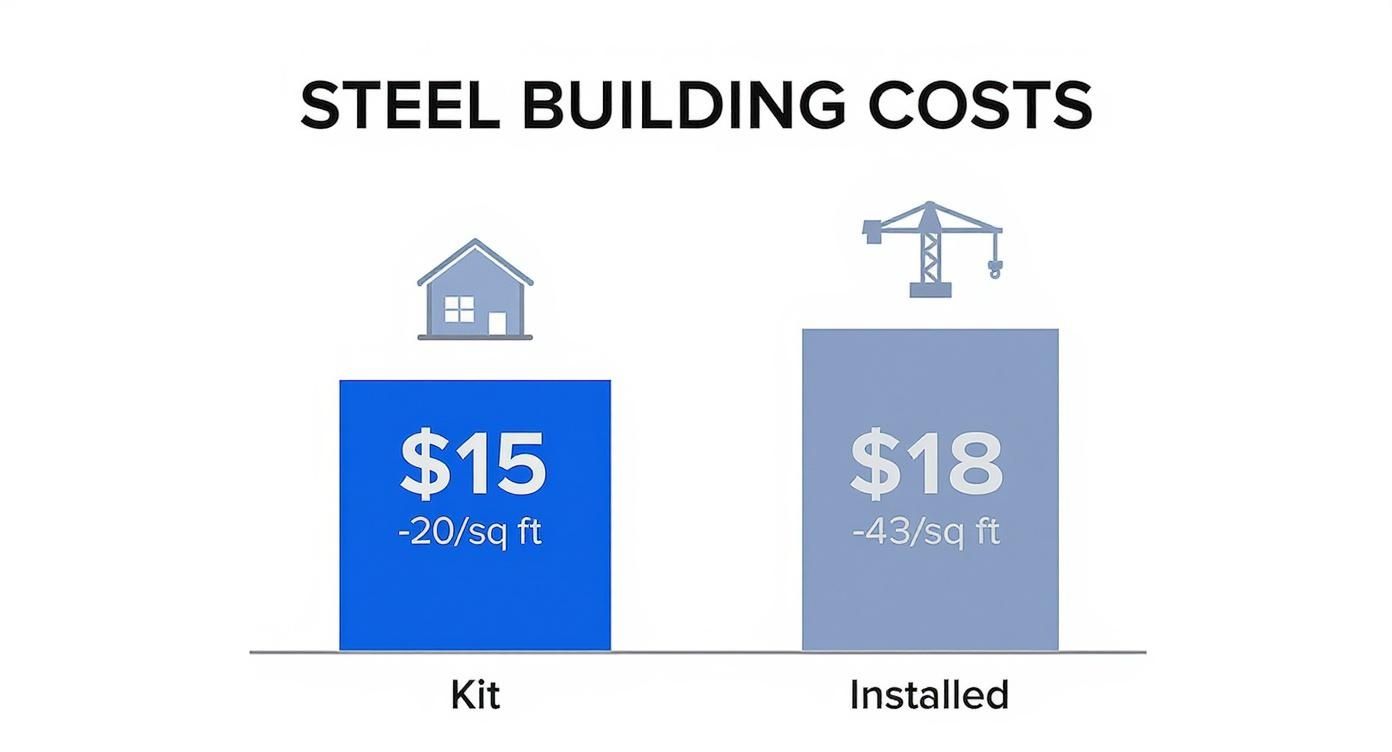
As you can see, the kit itself is just one piece of the financial puzzle. The real story is in the installation and finishing work, which can easily double the cost per square foot.
Real-World Cost Examples
Numbers on a page are one thing, but seeing them applied to common building sizes makes it much more tangible. Here’s a look at what you might expect to pay for a few popular dimensions.
Estimated Steel Building Costs by Size
This table lays out the estimated costs for both the kit alone and the full turnkey project. It’s a great starting point for budgeting.
| Building Size (Width x Length) | Estimated Kit Cost (per sq ft) | Total Estimated Kit Price | Estimated Installed Cost (per sq ft) | Total Estimated Installed Price |
|---|---|---|---|---|
| 30’ x 40’ (1,200 sq ft) | $15 – $20 | $18,000 – $24,000 | $18 – $25 | $21,600 – $30,000 |
| 40’ x 60’ (2,400 sq ft) | $15 – $20 | $36,000 – $48,000 | $20 – $30 | $48,000 – $72,000 |
| 50’ x 100’ (5,000 sq ft) | $15 – $20 | $75,000 – $100,000 | $25 – $43 | $125,000 – $215,000 |
Remember, these are ballpark figures. The final cost will shift based on your location, design choices, and any extra features you add.
For a deeper dive into what drives these numbers, check out our guide on steel building kit prices. And if you're trying to get a handle on all the potential costs for different types of construction, this comprehensive budget guide for building projects is an incredibly useful resource.
The Core Factors That Drive Your Final Price
Figuring out how much a steel building costs is a lot like pricing a new car. You have the base model price, but the final sticker reflects every choice you make along the way—from the engine to the leather seats. Your building’s price works the exact same way, shaped by a handful of core factors that determine your total investment.
Getting a handle on these variables is the key to setting a realistic budget and spotting opportunities to save money. Let’s break down the three biggest drivers: building size, design complexity, and its intended use. Each one adds another layer to the final cost.
Building Size and Dimensions
The most straightforward factor is pure size. A bigger building simply requires more steel, more wall panels, and more roofing material. It's that simple. Every square foot you add contributes to the bottom line for materials, foundation work, and labor.
Think of it like buying fabric—the more you need, the higher the total cost. This is why a 60’ x 100’ warehouse will always be a bigger investment than a 30’ x 40’ two-car garage.
Key Takeaway: While a larger building costs more overall, the price per square foot often goes down as the structure gets bigger. This is because of efficiencies of scale in manufacturing and installation, making larger projects more cost-effective on a per-foot basis.
The building's height also plays a huge role. Taller eave heights demand thicker, stronger steel columns and a beefier structural design to handle wind loads, which naturally adds to the material expense.
Design Complexity and Customization
A simple, rectangular "box" design is always going to be your most affordable starting point. The moment you start adding custom features and complex architectural details, the price tag starts to climb. These customizations require more engineering time, specialized materials, and more skilled labor to get right.
Several design choices can have a big impact on your budget:
- Roof Pitch: A steep roof pitch looks great, but it requires more material and more complex framing than a standard low-slope roof.
- Irregular Shapes: L-shaped buildings or structures with multiple intersecting rooflines look impressive, but they demand custom engineering and fabrication.
- Frame Type: The type of frame matters, too. For instance, you can explore different options for a metal building frame to find the right balance between wide-open space and cost.
- Aesthetics: Adding cosmetic features like wainscoting, custom color schemes, or decorative facades will increase the final price.
Intended Use and Functionality
Finally, what you plan to do inside the building is a massive cost driver. The needs of a simple storage shed are worlds apart from those of a climate-controlled commercial office or a retail storefront.
For example, a building that people will occupy is going to need:
- Insulation: This is essential for climate control and adds significant material and labor costs.
- Framed Openings: Every window, walk-in door, and roll-up door adds to the complexity and price.
- Interior Finishing: Things like drywall, electrical wiring, plumbing, and HVAC systems are major expenses that aren't included in a basic steel building kit.
A simple agricultural barn might just need the shell, keeping costs to a minimum. On the other hand, a commercial space requires a much higher level of finishing, pushing the total project cost far beyond the price of the steel structure itself.
How Steel Market Volatility Impacts Your Budget
The price tag on your steel building isn't set in stone until you sign a contract. Why? Because the raw material—steel—is a global commodity, and its price moves up and down just like the stock market. Getting a handle on these movements is key to understanding the real cost of a steel building, as they directly impact your final quote.
Think of it like booking a flight. The price you see today might be different tomorrow, influenced by things like demand, fuel costs, and global events. Steel prices are no different. They're constantly being pushed and pulled by global supply chains, international trade policies, and the fluctuating costs of raw materials like iron ore and coal.
Why Steel Prices Fluctuate
The cost of steel has seen some serious swings in recent years, driven by a cocktail of powerful market forces.
For example, in 2025, the national average for structural steel hit $2,653.03 per ton in July. That was a 2.06% increase from the previous month, coming after a long period of decline. Earlier that same year, prices had actually dropped 2.85% in January, continuing a trend that saw them fall over 16.5% from their peak. Then, a 25% global tariff on steel products threw another wrench in the works, adding new upward pressure and pushing prices higher again. You can see more insights on how steel prices change on DirectMetalStructures.com.
These shifts show just how fast the market can move. A sudden change in trade policy or a disruption at a major mine can cause prices to spike, potentially adding thousands of dollars to your project cost literally overnight.
The Impact on Your Project
So, what does this mean for your budget? It means the quote you get in April might not be valid in June. Most steel building suppliers can only honor a price for a short time—often 30 days or less—because they simply can't predict where the market is headed.
This volatility makes it really important to be ready to act. Once you have a quote you're happy with, locking it in with a deposit is your best defense against sudden price hikes. The origin of the steel also plays a big role in price stability and overall quality. We've gone into detail about the benefits of using US-made national steel for your structure for this very reason.
Key Takeaway: Timing your purchase can make a real difference. By staying informed about market trends, you can potentially time your purchase to avoid peak pricing, securing a better deal and keeping your project on budget.
Budgeting for Site Prep and Foundation Work
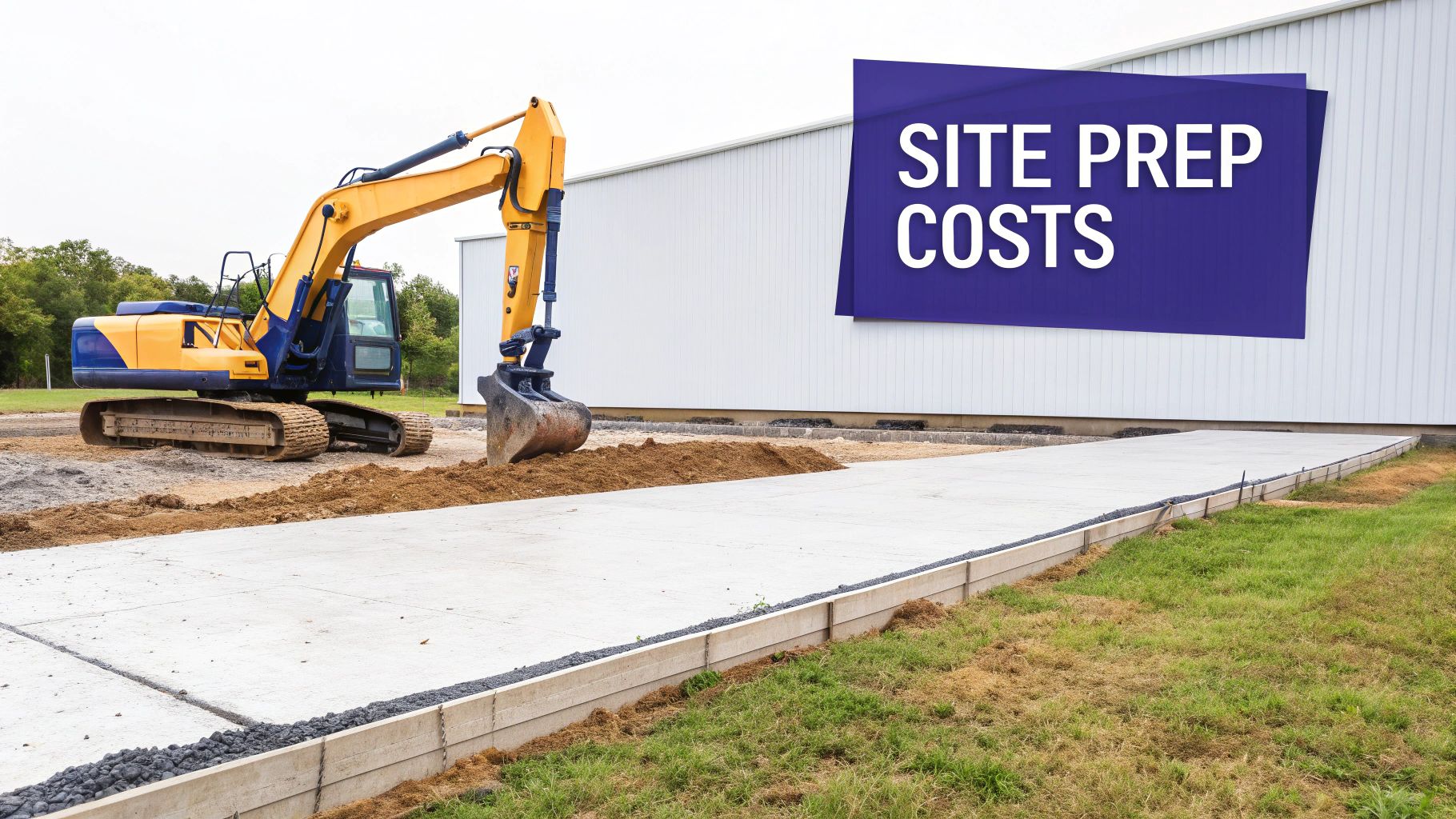
Before a single steel beam goes up, you have to lay the groundwork—literally. The cost of your steel building doesn't start with the kit; it begins with the dirt it will stand on. Site prep and foundation work are the non-negotiable first steps that create a stable base for your entire investment.
Think of it like building a traditional house. You wouldn't dream of putting up walls before ensuring the ground is perfectly level and the foundation is solid. The same exact principle applies here, and these critical preliminary steps can easily account for 10% to 20% of your total project budget. Factoring this in from day one is the best way to avoid nasty surprises that could sink your finances later.
Clearing and Grading the Land
First things first: your build site needs to be cleared of any and all obstacles. This initial phase involves removing trees, hauling away rocks, and getting rid of any debris. After that, the land is graded to create a perfectly flat pad for your foundation.
The cost for this work can swing wildly depending on what your property looks like. A flat, clear lot will be far cheaper to prepare than a sloped, heavily wooded area that demands heavy machinery. You can expect site clearing and grading to run anywhere from $1 to $10 per square foot, depending on how much work is needed. A simple grading job will be on the low end, but extensive tree removal and bringing in new soil will push you toward the higher end of that range.
Pouring the Concrete Foundation
The foundation is, without a doubt, the most critical piece of your site work. It has to support the entire weight of the building and anchor it securely to the ground. For most steel buildings, a concrete slab-on-grade foundation is the go-to choice because it provides a durable floor and a stable base all in one pour.
A strong foundation is non-negotiable. The integrity of your entire structure depends on the quality of the concrete work, making this an area where cutting corners can lead to costly structural problems down the road.
A huge chunk of your foundation budget will go toward the concrete itself, well beyond just the excavation and grading. Getting a solid quote on how much to pour concrete is vital for building an accurate budget. The specific type of foundation you need will also play a big role in the final price tag.
Different buildings have different needs, so understanding the core steel building foundation requirements is essential before you even think about breaking ground. For example, a simple slab works great for a garage or workshop. But a heavy industrial building? That might require reinforced footings or a more complex pier system, and each of those comes with its own cost.
Uncovering the True Cost of Installation and Labor
Getting your steel building kit delivered to your site is a major milestone, but it’s only part of the story. The next big variable in your budget is the cost to actually put it all together. Erection and labor expenses are a huge factor in the final price tag, often adding another 30% to 50% of the kit’s cost to your total project.
It’s a bit like buying a complex piece of furniture from a flat-pack box. You have all the parts, but you still need the right tools, skills, and time to assemble it properly. With a steel building, you have three main paths you can take, and each one has a very different impact on your wallet and your schedule.
Your Three Main Installation Options
How you decide to erect your building is one of the most critical financial choices you’ll make. The best route really depends on your budget, timeline, and how comfortable you are with the nuts and bolts of construction. Let's walk through the most common approaches.
- Full-Service Installation: Many suppliers offer a complete turnkey solution where their own certified crews handle the entire assembly. This is the fastest, most hands-off option, but it also comes with the highest price tag.
- Hire a General Contractor: You can always bring in a local general contractor to manage the erection process. This gives you a bit more control and the benefit of local expertise, though costs can swing quite a bit based on regional labor rates.
- The DIY Approach: For smaller, less complex buildings, a do-it-yourself installation is a very real possibility if you have the right equipment and skills. This route offers the biggest savings on labor, but it demands a serious investment of your own time and effort.
Expert Insight: No matter which path you choose, always confirm that any crew you hire is fully insured and has direct experience with pre-engineered steel buildings. A botched assembly can void your warranty and lead to some serious safety problems down the line.
When you're weighing these options, it's helpful to see them side-by-side to understand the trade-offs between cost, effort, and time.
Comparing Steel Building Installation Options
| Installation Method | Average Cost Range | Required Skill Level | Typical Timeline | Best For |
|---|---|---|---|---|
| DIY (Do-It-Yourself) | $0 – $5,000+ (equipment rental) | High (construction, safety protocols) | Varies Greatly | Small, simple structures & experienced builders. |
| Hire a General Contractor | $5 – $15 per sq. ft. | Moderate (project management skills) | 4-8 weeks | Projects needing local expertise and oversight. |
| Supplier's Crew (Turnkey) | $10 – $25 per sq. ft. | Low (delegated to professionals) | 2-6 weeks | Large or complex buildings & buyers prioritizing speed. |
Ultimately, the right choice balances your budget with your comfort level and timeline. A DIY approach can save thousands, but a professional crew guarantees the job is done right and on schedule.
Factors That Influence Labor Costs
Labor isn’t just a simple, flat fee—it’s a dynamic cost that shifts based on a few key variables. Where your project is located is a massive driver, as labor rates can be dramatically different from one state to the next.
On a global scale, construction costs are on the rise. Projections show an average inflation of 3.9% in 2025, with North America expected to see a steady 3.8% increase. This directly affects what you'll pay for a skilled erection crew.
The complexity of your building’s design also plays a huge part. A straightforward, rectangular workshop is far simpler and cheaper to put up than a multi-story building with a complicated roofline. If your project requires specialized equipment like a crane to lift heavy beams, that will add to the final bill as well.
To get a clearer picture of what the entire process involves, you can explore our detailed guide on professional metal building installation. By carefully weighing all these factors, you can pick the installation method that makes the most sense for your budget and your project's goals.
Smart Strategies to Lower Your Building Costs
Figuring out how much a steel building costs can feel like a tug-of-war between your vision and your wallet. The good news is that steel buildings already have built-in efficiencies working in your favor. But with a few smart moves, you can cut your total investment down even more without sacrificing quality.
These aren't about cutting corners. They're about making informed choices that squeeze every bit of value out of your project. From the first sketch to the final bolt, there are plenty of chances to save if you know where to look.
Optimize Your Building Design
By far, the easiest way to keep costs in check is to stick with a standard design. Prefab steel buildings are most affordable in simple, rectangular shapes. The minute you start adding custom layouts, odd footprints, or complicated rooflines, you add engineering hours and manufacturing complexity—and that drives up the price tag.
Being a little flexible with your dimensions can lead to some serious savings, too. Let's say you need a building that's roughly 48’ x 98’. Your supplier might suggest bumping it up to a standard 50’ x 100’ model. That small change could align your project with their pre-engineered plans and stock material lengths, potentially shaving thousands off your final bill.
Pro Tip: Always ask your supplier about their most popular and cost-effective building sizes. Tapping into their standard models is one of the fastest routes to a lower price per square foot.
Plan Your Purchase Strategically
Timing is everything. The construction world has its peak seasons, usually spring and summer, when demand for materials and crews is through the roof. If you can plan your purchase for the off-season, like late fall or winter, you’ll often find better pricing from suppliers eager to keep their shops busy.
It also pays to keep a casual eye on steel market trends. While you can't predict the market, being aware of major price swings can help you avoid buying right after a big spike. If you notice prices are trending down, that might be the perfect moment to lock in a quote.
Think Long-Term to Save More
Some of the best ways to save money don't lower the upfront cost but slash your long-term expenses.
- Invest in Better Insulation: Spending a bit more on high-quality insulation from day one can drastically cut your heating and cooling bills for decades. It’s an investment that pays for itself over and over again.
- Smart Site Planning: Before you do anything else, walk your property. Choosing a naturally flat spot for your building pad can eliminate the need for expensive and time-consuming excavation and grading. It's a simple decision that can save you a fortune.
Frequently Asked Questions About Steel Building Costs
Even with the best planning, it's natural to have a few lingering questions about how much a steel building costs. This last section is all about tackling the most common queries we get from clients, giving you straight answers so you can budget with confidence and sidestep any surprises.
Are Steel Buildings Cheaper Than Wood Buildings?
For the basic shell of a building, steel almost always wins on price per square foot compared to traditional wood-frame construction. This is especially true when you start looking at larger structures like warehouses, workshops, or big garages.
The real savings come from two places: efficient prefabrication, which dramatically cuts down on-site assembly time, and a massive reduction in material waste. Think about it—there's no cutting and trimming lumber on site. While the final price can even out once you get into complex interior finishing, steel typically gives you a much better upfront value for the core structure.
What Is Not Included In a Standard Kit Price?
This is probably one of the most important questions you can ask, and it’s critical for creating a realistic budget. A standard kit price almost always covers only the essential structural parts.
Key Takeaway: The kit price is your starting line, not the finish line. Always ask for a detailed quote that spells out exactly what is and isn’t included. This is the only way to build an accurate project budget and avoid getting blindsided by extra costs.
Typically, the base kit price will not include:
- The concrete foundation, slab, or any of the necessary dirt work.
- Labor costs for the crew that will actually erect the building.
- Delivery and freight charges to get the materials to your property.
- The cost of pulling building permits and paying for inspections.
- Any interior finishing, like insulation, drywall, electrical wiring, or plumbing.
How Do Local Building Codes Affect the Cost?
Local building codes can have a huge impact on your final cost. It all comes down to where you live. These regulations dictate very specific structural requirements based on your area's climate and environmental risks, like minimum snow load ratings, wind speed resistance, and seismic activity levels.
For example, a building going up in a hurricane-prone coastal area is going to need a much stronger, heavier-gauge steel frame than one in a calm, mild climate. That extra engineering and thicker steel naturally add to the overall cost. Your building must be designed to meet these legal standards, and that directly influences its price tag.
Ready to turn your vision into a reality? The team at Icon Steel Buildings is here to provide a clear, detailed quote for your project, ensuring there are no surprises along the way. Get your free estimate today at https://iconsteelbuildings.com.