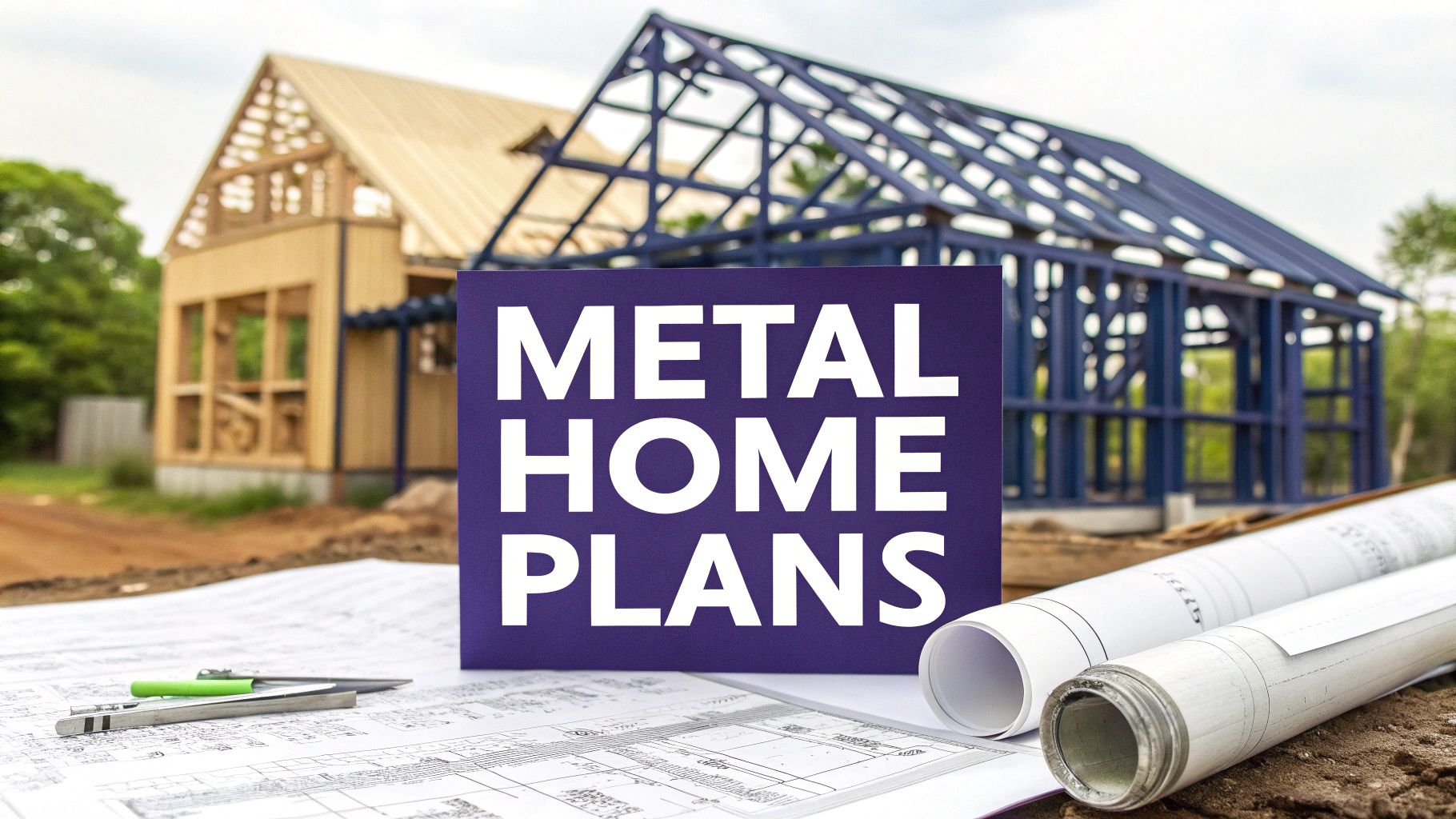
When you hear "metal building," if your mind still jumps to a simple, boxy warehouse, it's time for an update. Today's metal building home plans are the sophisticated architectural and engineering blueprints for modern, durable, and surprisingly flexible dream homes.
These plans lay out every detail for a house built around a high-strength steel frame. The result? A building process that’s faster, more cost-effective, and offers a level of design freedom that traditional construction methods often can't match.
Why Choose a Metal Building Home Plan?
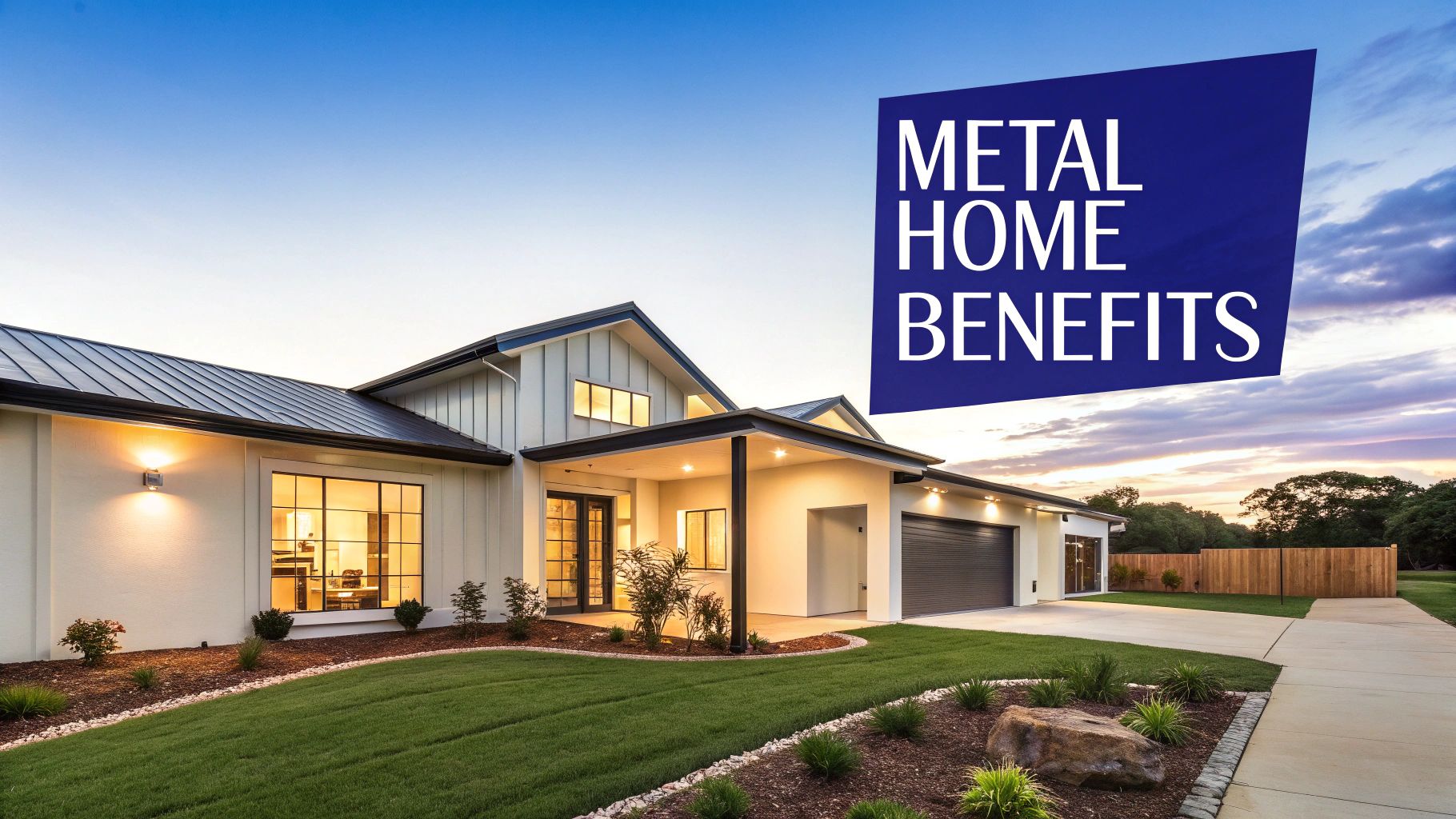
It helps to think of a metal home plan not as a rigid template, but as a high-performance set of architectural building blocks. The heart of the system is a prefabricated steel frame, engineered for maximum strength and straightforward assembly. This "skeleton" creates a wide-open, clear-span interior, completely free of the pesky load-bearing walls that dictate the layout in a typical home.
This "open canvas" approach is precisely why these homes are catching on so quickly. The market doesn't lie—the global prefab metal building sector is on track to hit $150 billion by 2025. It’s a clear signal that homeowners are actively seeking smarter, more adaptable ways to build.
Core Benefits of Steel Frame Construction
The perks go way beyond just an open-concept living room. Homeowners and builders are flocking to steel for a whole host of practical reasons that impact everything from the budget to the home's longevity. These advantages directly challenge the old way of doing things with wood-frame construction.
Here’s what really sets steel apart:
- Accelerated Construction Time: With the main structural parts made off-site, on-site assembly is incredibly fast. That means lower labor costs and moving in months sooner.
- Cost-Effectiveness: Prefabrication cuts down on material waste and the hours your crew needs to be on-site, leading to real, measurable savings on your total project cost.
- Exceptional Durability: Steel laughs at the things that give wood-frame homeowners nightmares—rot, termites, and fire. This natural resilience keeps your home’s structure sound for decades.
- Design Versatility: That super-strong frame makes it easy to have soaring vaulted ceilings, massive great rooms, and just about any interior layout you can dream up without the crazy costs and engineering gymnastics required with other methods.
At its core, a metal home plan delivers a smarter way to build. It separates the structural shell from the interior design, giving you complete creative control over your living space without being limited by the constraints of conventional framing.
This fundamental difference is what makes it a game-changer. If you're weighing your options, getting clear on the distinctions between a metal building vs. stick-built construction will help you see which path truly aligns with your vision and budget. Choosing a metal home plan isn't just about building a house; it's a strategic move toward a modern, durable, and highly personalized home.
What Comes in Your Metal Home Plan Package
When you buy a set of metal building home plans, you're getting far more than a simple layout. Think of it as the complete master recipe for your new home. This package is the detailed instruction manual that turns your dream from an idea on paper into a structurally sound, livable reality. It gives your builders, electricians, and plumbers every single technical detail they need to get the job done right.
Knowing what’s inside this package is your first step toward a smooth build. Each document has a specific, critical job. Together, they ensure the building is safe, help you get the necessary permits, and create a seamless construction process from the ground up.
Architectural and Structural Blueprints
The heart of your plan package is two main sets of drawings: architectural and structural. The architectural plans are the "what" and "where"—they lay out the look, feel, and function of your home.
These drawings show the floor plan, detailing room sizes, where windows and doors go, and the overall flow of your living space. They also include elevations—views of the home from the front, back, and sides—which define its exterior appearance. This is where you see your vision for porches, roof pitches, and exterior finishes come to life.
Structural plans, on the other hand, are all about the "how." These are the highly detailed engineering documents that form the backbone of your home. They specify:
- Steel Column and Beam Placement: This outlines the exact location and size of every piece of the steel frame.
- Connection Details: Shows precisely how each steel component is bolted or welded together.
- Load Calculations: This ensures the structure can safely handle the snow, wind, and seismic forces specific to your region.
These plans aren't optional. They're required by local building authorities to issue a permit and are non-negotiable for safety.
Foundation and System Schematics
Every great home is built on a solid foundation, and your plan package includes a dedicated design just for that. The foundation plan details the concrete slab or basement, including footing dimensions, rebar placement, and the anchor bolt locations needed to lock down the steel frame. It's what ensures your home has a stable base for decades to come.
Beyond the bones of the house, the package provides schematics for all its vital systems. You'll typically find:
- Electrical Layouts: Showing where every outlet, switch, light fixture, and the main electrical panel will go.
- Plumbing Plans: Mapping out all the supply and drainage lines for kitchens, bathrooms, and laundry areas.
- Mechanical Drawings: Detailing the HVAC (Heating, Ventilation, and Air Conditioning) system.
When you're looking at what comes in your metal home plan package, don't overlook the importance of efficient climate control. Understanding things like HVAC duct sizing calculations is key to optimizing your home's energy performance and ensuring it stays comfortable for the long haul.
All these documents come together to form a complete guide for every contractor on the job. If you want to see how these elements combine in a real-world project, checking out a gallery of completed metal building floor plans can offer some great inspiration and a clearer picture of the final product. Having this full set of documents ensures everyone is working from the same playbook, which goes a long way in minimizing mistakes and delays.
Popular Metal Home Styles and Layouts
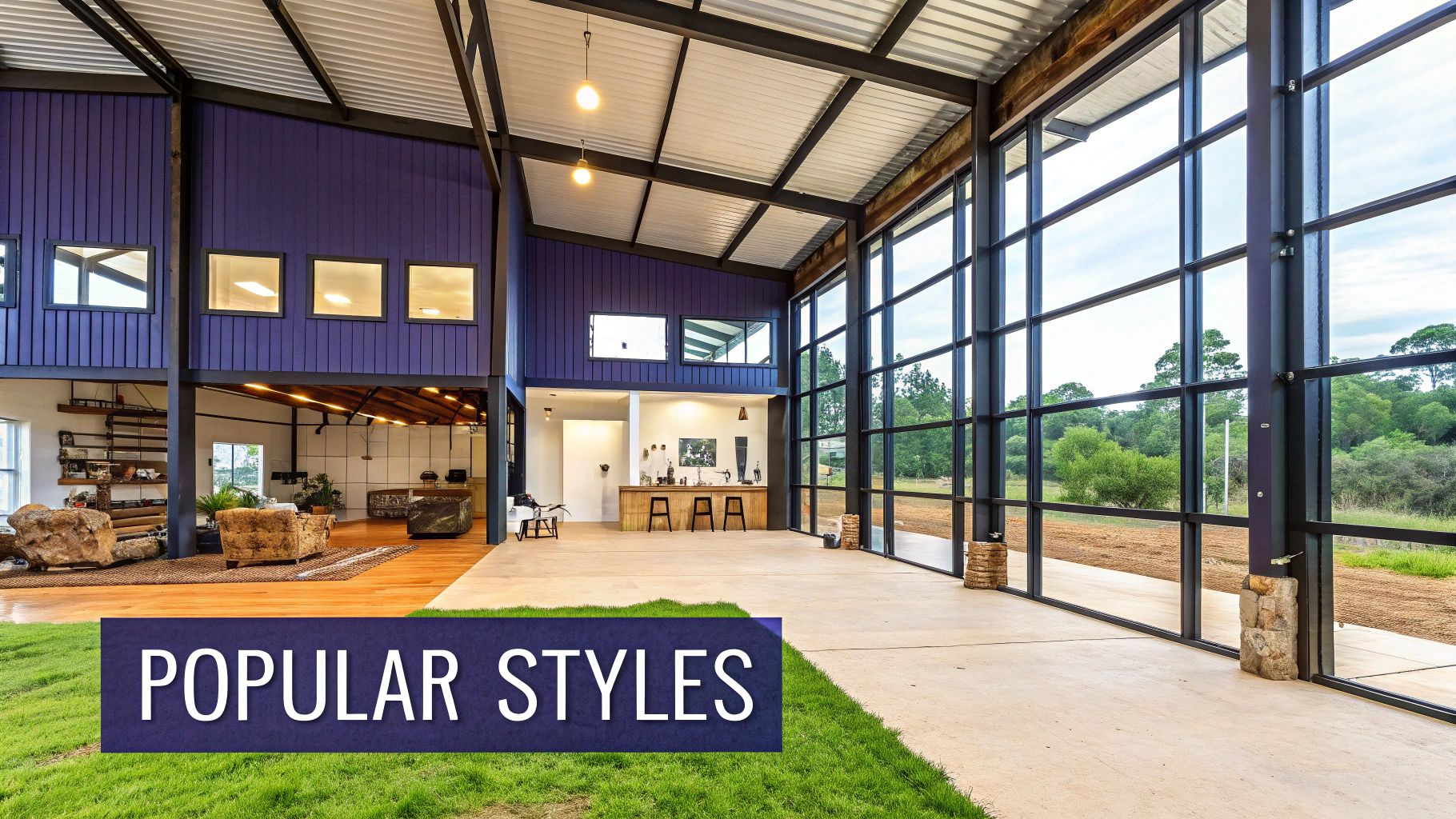
When you hear "metal building home," it's easy to picture a simple, boxy structure. But that's just the starting point. The real magic of steel frame construction is its incredible architectural flexibility. It's less like a cookie-cutter blueprint and more like a blank canvas, ready for you to create a home that perfectly fits your style—from a rustic farmhouse to an ultra-modern retreat.
Because the steel frame carries the entire roof load, the interior walls aren't structural. This is a game-changer. It gives you the freedom to design wide-open, flowing layouts that would be a nightmare (and a budget-breaker) to achieve with traditional wood framing.
Let's dive into some of the most popular styles people are building today.
The Iconic Barndominium
The "barndo" is easily the superstar of the metal home world. It’s the perfect blend of rustic country charm and the comforts of a modern home. The classic barndominium layout features a huge, open-concept living area that flows seamlessly into a large, functional space—think a workshop, massive garage, or even an artist's studio.
- Key Characteristics: Soaring vaulted ceilings, sprawling great rooms, and a simple, classic gable roofline.
- Best Suited For: Families who need a combined live/work space, hobbyists who dream of a huge workshop, or anyone who just loves an open, communal feel.
This style has exploded in popularity, especially where you have a bit of land to spread out. States like Texas and Oklahoma have become barndo hotspots. In fact, Texas alone accounted for over 20% of the nation's commercial real estate spending in 2022, a trend fueled by the speed and value that metal structures offer both homeowners and developers.
Modern Single-Slope Designs
If your taste leans more contemporary, the single-slope (or shed roof) design delivers a clean, minimalist vibe. This style features one roof plane that slopes in a single direction, creating a striking, asymmetrical look. This layout is brilliant for incorporating high clerestory windows on the tall side, flooding your home with natural light without sacrificing privacy.
The simple geometry and sharp lines make single-slope homes a top choice for modern and industrial-inspired designs. They’re efficient to construct and make a bold architectural statement.
Traditional Gable-Style Homes
Love the timeless look of a conventional house but want the power of steel? The gable-style metal home is your answer. It features that familiar triangular roof with two sloping sides meeting at a peak—the quintessential "house" shape that feels instantly welcoming.
With exterior finishes like traditional siding, brick, or stone, a gable-style metal home can look identical to its wood-framed neighbors. The secret is its superior, rot-proof, and pest-proof steel core.
This style is a chameleon, fitting in perfectly everywhere from suburban neighborhoods to rural properties. It’s the ideal framework for a cozy, classic home that secretly packs all the modern benefits of steel construction. And if you're looking to maximize your space, adding a metal building with loft to a gable design is a fantastic way to tuck in extra bedrooms or a private office.
Spacious Two-Story Models
Yes, you can absolutely build up with steel. Two-story metal home plans are gaining traction for good reason, especially for those looking to get more square footage on a smaller piece of land. The incredible strength of a steel frame easily supports a second floor, allowing for traditional layouts with bedrooms upstairs and living spaces down below.
Going vertical has some real perks:
- Maximized Space: You get double the living area without doubling your foundation footprint.
- Design Separation: It creates a natural and practical split between private sleeping areas and the public entertaining zones.
- Better Views: An upper level can unlock amazing views of your property you wouldn't get otherwise.
Comparing Popular Metal Home Styles
To help you visualize which style might be the best fit, here’s a quick comparison of the designs we’ve covered. Each one offers a different blend of aesthetics and functionality.
| Style | Key Features | Best For | Typical Cost Factor |
|---|---|---|---|
| Barndominium | Expansive open-concept living; integrated workshop/garage; high ceilings. | Hobbyists, families wanting live/work space, and lovers of rustic design. | Moderate to High |
| Single-Slope | Sleek, minimalist look; asymmetrical roofline; allows for clerestory windows. | Modern aesthetics, maximizing natural light, and making a unique statement. | Low to Moderate |
| Gable-Style | Classic, traditional home shape; versatile for any exterior finish. | Blending into suburban neighborhoods; achieving a timeless look with steel benefits. | Moderate |
| Two-Story | Vertical space maximization on a smaller footprint; clear separation of living areas. | Smaller lots, larger families, and capturing scenic views. | Moderate to High |
From the sprawling barndominium to a sleek, modern design, it’s clear that metal building home plans are anything but one-size-fits-all. The key is to find the style that not only looks great but also works perfectly for the way you live.
Customizing Your Dream Metal Home
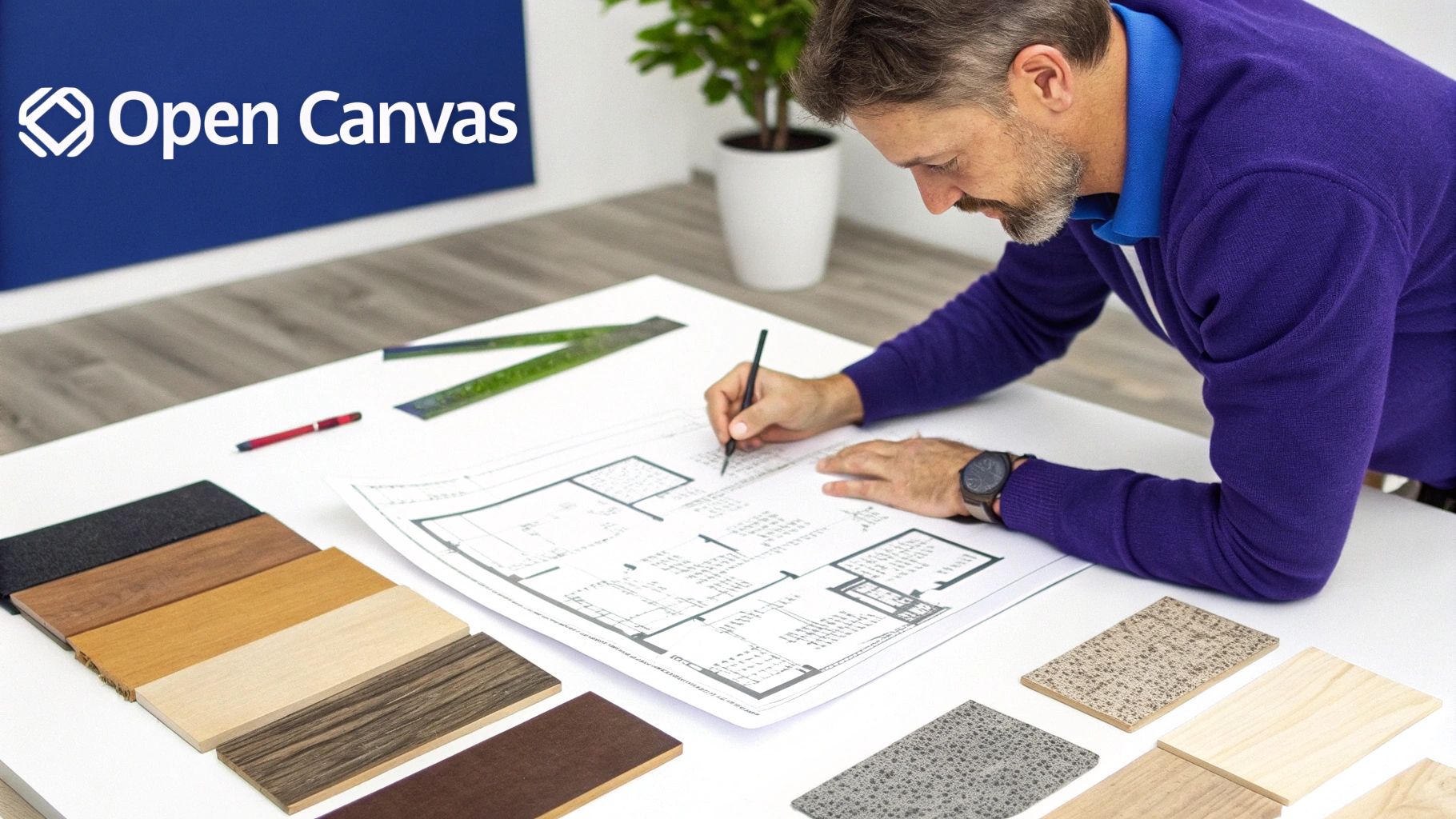
This is where the magic really happens. The most powerful advantage of a steel frame home is its incredible clear-span interior. It’s an engineering marvel that eliminates the need for interior load-bearing walls to hold up the roof.
We call this the "open canvas" advantage, and it’s a game-changer. It gives you absolute freedom when laying out your floor plan. The structural shell is just the start—a strong, protective container waiting for you to pour your personality into every square foot.
In a traditional home, moving a wall is a major structural project. With metal building home plans, you can put rooms, walls, and hallways wherever you want them.
Crafting the Perfect Interior Layout
The "open canvas" isn't just for creating one massive great room. It’s about designing a space that flows perfectly with how you actually live. Without the usual structural roadblocks, you can map out a home that is entirely yours, not one dictated by engineering limits.
Think about your daily routine. Do you dream of a huge kitchen that flows right into the family room? Need a quiet home office tucked away for focus, or maybe a mudroom that connects directly to your workshop?
The true beauty of a clear-span design is its adaptability. Your floor plan can be as open or as partitioned as you desire, allowing for soaring vaulted ceilings, cozy nooks, and functional zones all under one roof.
For instance, you could design a U-shaped layout built around a private central courtyard. Or, you might go for an L-shaped plan that creates a natural separation between the quiet bedrooms and the busy living areas. This level of control is exactly why exploring custom steel buildings opens the door to a home that genuinely fits your life.
Transforming the Exterior Appearance
The customization doesn't end at the front door. One of the biggest myths about metal homes is that they all have to look like industrial sheds. That couldn't be further from the truth.
The steel frame is a structural skeleton that you can dress up in almost any exterior finish you can dream of. This lets you match any architectural style, from a rustic farmhouse to a sleek, modern masterpiece. You are never stuck with just metal siding.
Here are a few popular ways to finish the exterior:
- Stone or Brick Veneer: Gives the home a classic, timeless feel and completely hides the steel structure underneath.
- Wood Siding: Whether it's traditional lap siding, board and batten, or modern cedar planks, wood adds natural warmth and texture.
- Stucco: A great choice for a smooth, modern finish that's durable and popular in warmer climates for Mediterranean or Southwestern styles.
- Fiber Cement Siding: Looks like wood but delivers superior durability. It’s low-maintenance and resists rot, pests, and fire.
Enhancing Your Home with Architectural Features
Beyond the siding, you can personalize your home even further with architectural elements that boost both function and curb appeal. These are the details that turn a simple structure into a home with real character.
Think about how you’ll use your outdoor space. Wraparound porches and covered patios are perfect for extending your living area, creating spots to relax or entertain no matter the weather.
You can also tweak key structural elements for a specific look. Changing the roof pitch from a standard slope to a steeper one can completely transform the home's profile, giving it a more traditional or grand feel. Adding large window packages, skylights, and oversized glass doors doesn't just look great—it floods your home with natural light, making the space feel even bigger and more inviting.
Understanding the True Cost to Build
When you first start looking into metal building home plans, one of the most exciting things is the potential to save some serious money. But it’s easy to get fixated on the price tag of the building kit itself, and that’s only part of the story. To really nail down a budget and avoid nasty surprises down the road, you have to look at the whole picture.
Think of it like buying a car. The sticker price gets you the frame, the engine, and the body, but it doesn't include insurance, gas, or those custom wheels you’ve been eyeing. Similarly, the true cost to build your metal home breaks down into three main pieces. Knowing what they are is the first step to a realistic financial plan.
Breaking Down the Three Core Cost Areas
Your total investment can be split into three distinct phases, each with its own set of expenses. This breakdown helps you see exactly where your money is going and, more importantly, where you have the most control over the final number.
Let's look at the three main budget categories:
- The Plans and Materials Kit: This is your upfront purchase from the manufacturer. It includes the engineered blueprints and all the primary steel components—the heavy-duty columns, beams, trusses, and the metal siding and roofing that form the outer skin of your home.
- The 'Dry-In' or Shell Construction: This is the phase where your kit becomes a building. It covers the labor and materials needed to get your structure assembled and sealed against the elements. The big-ticket items here are the concrete foundation, the crew to erect the steel, and installing your windows and doors.
- The Interior Finishing: This is where the magic happens, turning an empty shell into a place you can actually live. It's almost always the largest and most variable part of your budget. This slice of the pie covers everything inside: insulation, plumbing, electrical wiring, HVAC systems, drywall, flooring, paint, cabinets, and all your fixtures.
The interior finishing phase is where your personal choices have the biggest financial impact. Opting for high-end granite countertops and custom cabinetry will cost significantly more than standard laminate and stock options.
Estimated Budget Breakdown for a Metal Home
To give you a clearer idea of how a typical budget is allocated, here’s a sample breakdown. Keep in mind that these percentages can shift based on your location, design complexity, and the level of finishes you choose.
| Project Phase | Typical Percentage of Total Budget | Key Expenses Included |
|---|---|---|
| Plans & Materials Kit | 25% – 40% | Engineered drawings, steel frame, roofing, siding, fasteners |
| Shell Construction | 20% – 30% | Concrete foundation, erection labor, windows, doors, rough-ins |
| Interior Finishing | 35% – 55% | Insulation, electrical, plumbing, HVAC, drywall, flooring, paint |
| Site Work & Permits | 5% – 10% | Land clearing, excavation, septic/sewer, utility hookups, fees |
This table illustrates why focusing only on the kit price can be misleading. The finishing and shell construction phases together often make up more than half of the total project cost.
Factors That Influence Your Final Cost
While the three-part budget gives you a solid framework, a few other big variables can move the needle on your final cost. Your location is huge. Labor rates, permit fees, and even the cost to get materials delivered can vary wildly from one county to the next.
The complexity of your chosen metal building home plans also matters a lot. A simple, rectangular footprint is always going to be more affordable to build than a sprawling U-shaped design with complicated rooflines.
To make your investment go further, it's smart to look into effective strategies to reduce construction costs that don't cut corners on quality. Simple decisions, like using standard-sized windows or grouping your kitchen and bathrooms to create an efficient plumbing layout, can lead to real savings.
For a deeper dive into the numbers, check out our complete metal building home cost breakdown in our dedicated guide. The key takeaway is this: a truly accurate budget looks beyond the kit and accounts for every single step, from breaking ground to that final coat of paint.
How to Select the Perfect Home Plan
Now that you have a handle on the costs, styles, and customizations available, you're in a great spot to make a solid choice. Picking the right metal building home plan isn’t about finding some perfect, off-the-shelf template. It's really about finding a blueprint that clicks with your budget, your lifestyle, and where you see yourself in the future.
This whole process boils down to asking yourself a few key, practical questions. Getting these answers will help you cut through the noise and zero in on the plans that actually make sense for you.
The very first—and most important—step is to nail down your all-in budget. This isn't just the price tag on the kit. You need to account for everything: the foundation, the construction crew's labor, and all the interior finishing that turns a steel shell into a home. Knowing this total figure upfront keeps you from getting attached to a beautiful plan that’s simply not in the cards financially.
Define Your Core Needs
Next up, let's get specific about how you’re going to live in this space. Don't just think about the number of bedrooms and bathrooms. Think about your daily routines and what you'll need down the road. This is where you translate the way you live into a layout that works.
Here are a few questions to get you started:
- How much square footage do you honestly need? Bigger isn't always better, especially when it means paying to heat and cool rooms you never use.
- What’s the main purpose of this building? Is it purely a home, or do you need a live-work setup with a dedicated workshop or an oversized garage?
- What does your future hold? Are you planning for a growing family, making space for an aging parent, or maybe starting a business from home?
Answering these questions helps you filter plans based on what you actually require, not just what looks good in a picture.
Vet Your Plan Provider and Ensure Compliance
Once you’ve narrowed it down to a few potential metal building home plans, your focus needs to shift to quality and logistics. The truth is, not all plan providers are the same. And where you plan to build is just as critical as the design itself.
Crucial Insight: Your plans absolutely must be engineered for your specific location. This is non-negotiable. It ensures the design meets local building codes and can handle regional factors like snow loads, wind speeds, and seismic activity. A generic, one-size-fits-all plan is a surefire way to get your permits denied and face expensive redos.
This infographic gives you a clear picture of where the money typically goes, highlighting why every phase matters.
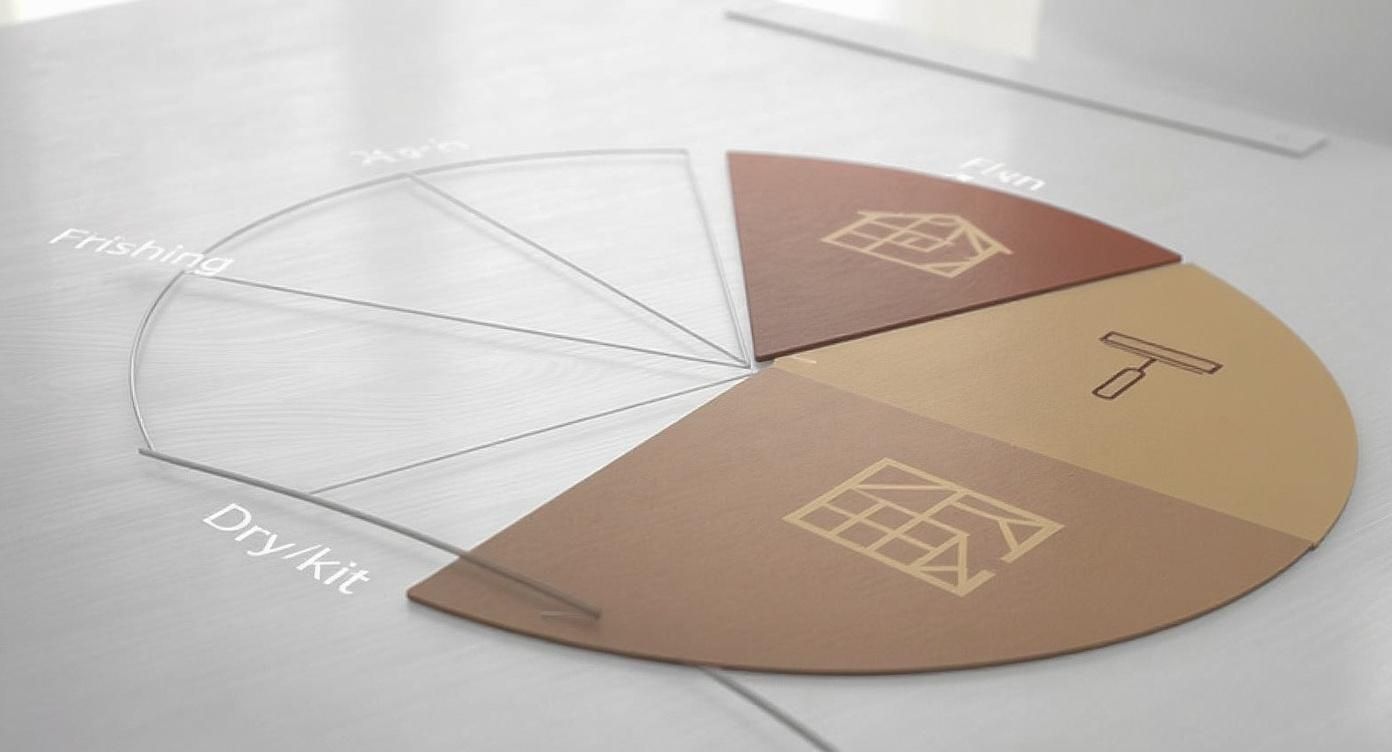
As you can see, the interior finishing often eats up the biggest slice of the pie. The good news? That’s the area where you have the most control over the final cost.
Finally, you’ll need to decide between a pre-designed stock plan or going fully custom. Stock plans are easier on the wallet and get into your hands faster. A custom plan, on the other hand, gives you complete creative control to build exactly what you envision. By carefully working through your budget, your needs, and your local building requirements, you'll land on the perfect plan to set your project up for success from day one.
Frequently Asked Questions
As you get closer to making your dream home a reality, you're bound to have some questions. It’s totally normal. This last section tackles the big ones we hear all the time from people just like you. Getting solid answers now helps you move forward with confidence, knowing you have the real-world info you need for a smooth build.
Let's dig into some of the most common topics, from financing and insurance to keeping your home comfortable for years to come.
Are Metal Building Homes Difficult to Finance and Insure?
This is probably the number one question we get, and the good news is, the game has completely changed. Financing and insuring a metal home (often called a barndominium) is much easier today than it was even a decade ago. Lenders and insurance carriers have caught up to their booming popularity.
Most banks and credit unions now offer standard construction loans and traditional mortgages for these homes. The main thing they want to see is that the house is built on a permanent foundation and meets all local residential building codes. For insurance, you just need to find an agent who gets it. Most major companies will write a policy, but you have to be crystal clear that it's for a "steel-frame residential structure"—not a barn or commercial shed—to get the right coverage.
How Do You Properly Insulate a Metal Home to Avoid Condensation?
Getting the insulation right is a non-negotiable. It's the key to a comfortable home and protecting your investment. By far, the most effective method is closed-cell spray foam insulation, which is applied directly to the inside of the metal panels. It creates a perfect, seamless vapor barrier that completely stops condensation, or "sweating."
Condensation happens when the warm, humid air inside your home hits the colder surface of the exterior metal. Spray foam creates a thermal break, stopping that interaction cold and preventing any moisture buildup that could cause rust or mold problems down the road.
Other options like high-quality rigid foam boards or fiberglass batts can work, too, but they absolutely require a separate, perfectly installed vapor barrier. On top of that, make sure you have good ventilation in high-moisture spots like kitchens and bathrooms to manage the air quality inside.
Can I Build a Metal Home Myself Using a DIY Kit?
While a lot of kits are advertised as DIY-friendly, building a whole house from the ground up is a serious project. For the handy homeowner, putting up the steel frame yourself can be a huge money-saver on labor, provided you have the right tools and focus on safety.
However, some jobs are almost always best left to the licensed pros. These include:
- Pouring the concrete foundation to make sure it's perfectly level and engineered correctly.
- Handling the complex electrical and plumbing work to meet strict safety and building codes.
- Installing the HVAC system to ensure it runs efficiently and is sized properly for the space.
Most people find a hybrid approach works best. You can act as your own general contractor, manage the timeline, and tackle the finishing work like painting, flooring, and trim. Then, you can bring in the experts for the heavy lifting and technical installations.
Ready to turn your vision into a blueprint? The team at Icon Steel Buildings is here to help you design the perfect metal home that fits your life and budget. Explore our customizable plans today.
Find Your Perfect Metal Building Home Plan at iconsteelbuildings.com