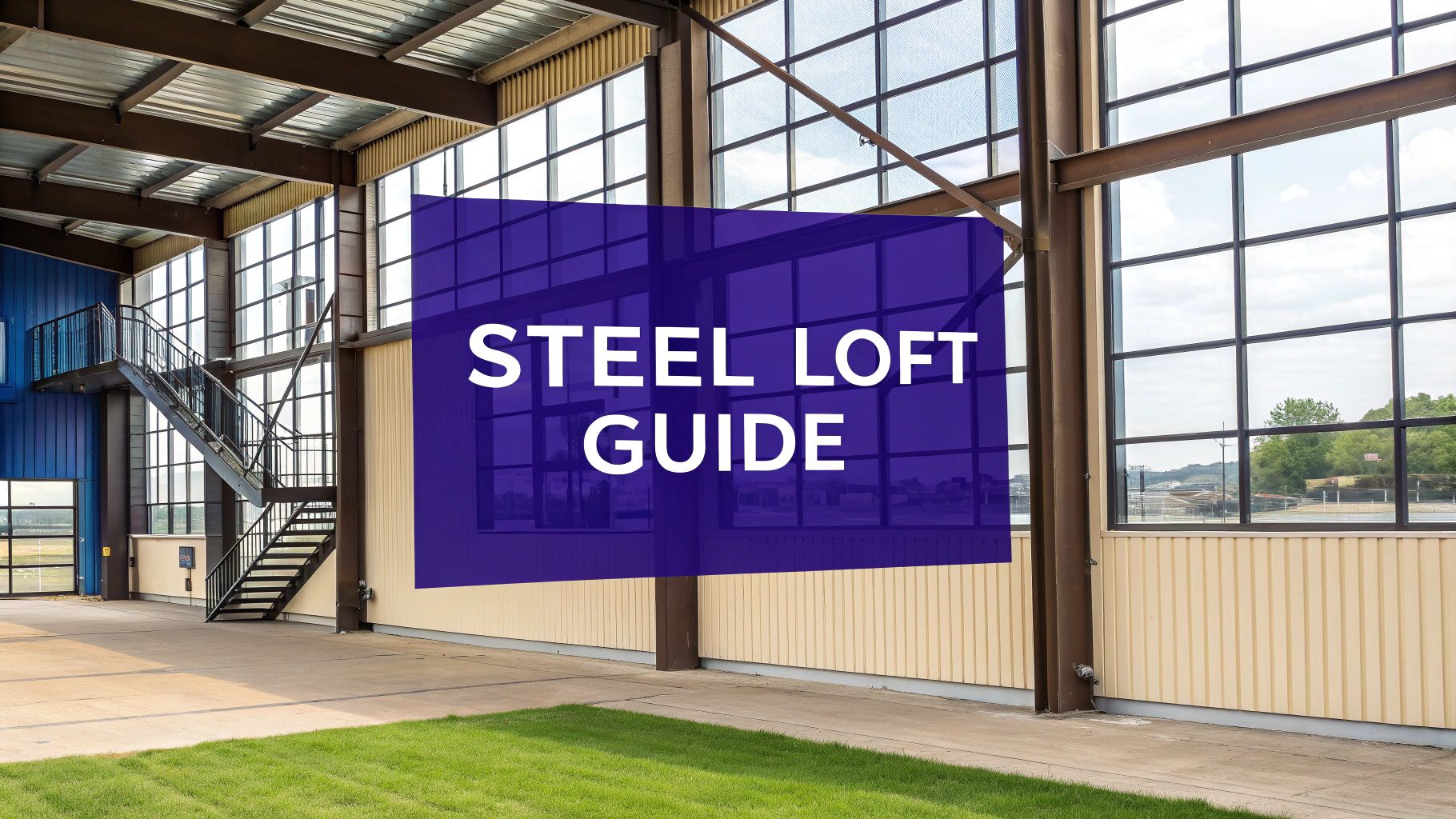
Think of a steel building with a loft not just as a structure, but as a space multiplier. At its core, it's a high-ceilinged steel building that adds a second level—what we call a mezzanine—without the cost and complexity of a full two-story build. This design is all about maximizing your usable square footage on the same foundation, giving you a clever, cost-effective way to get more room from your investment.
Unlocking Vertical Space with a Loft Design
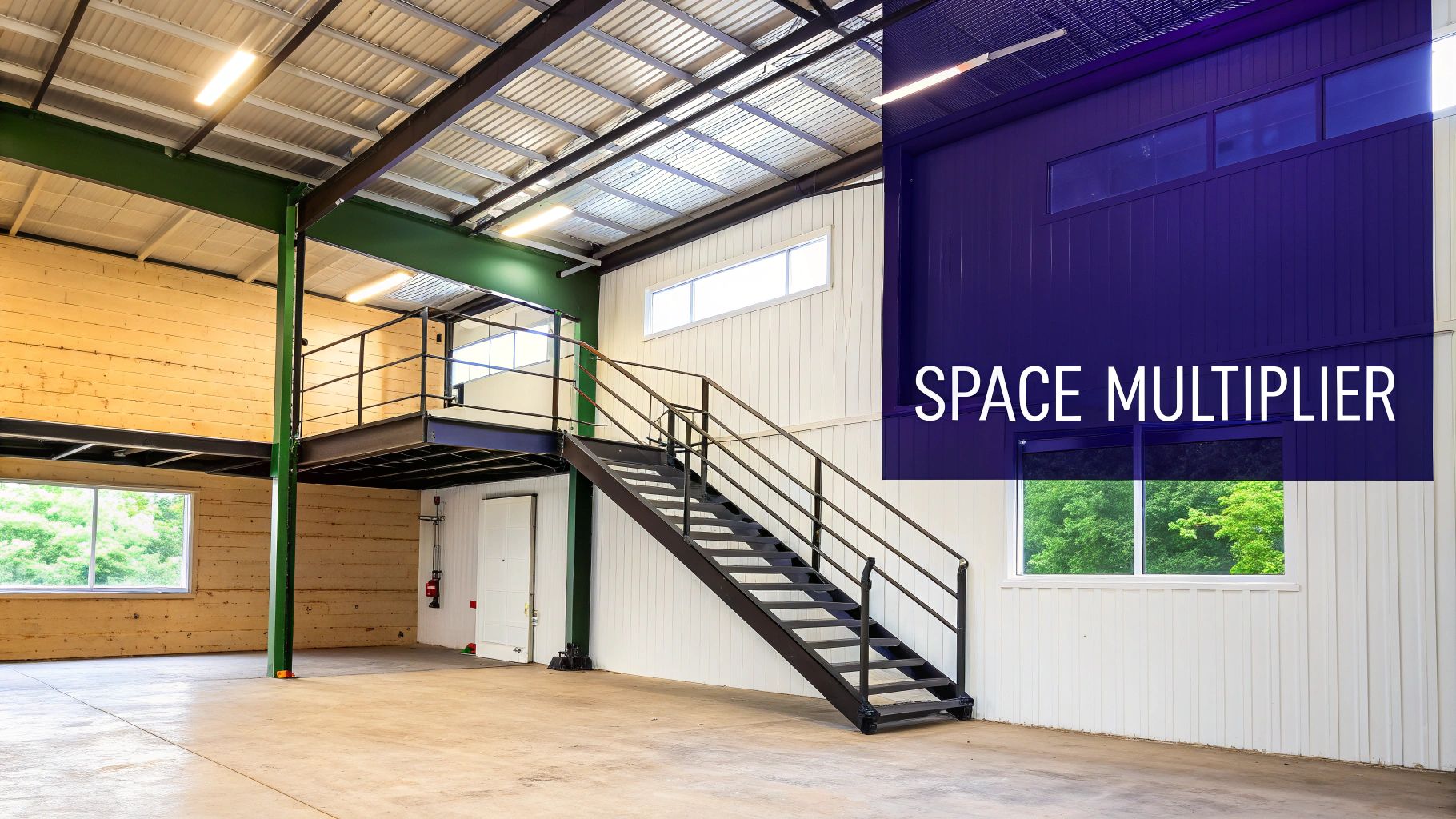
The idea is brilliantly simple but incredibly effective in practice. Imagine a huge workshop where all your tools and projects have a home on the ground floor. Now, picture a clean, quiet office just a staircase away, overlooking the action below. That’s the real power of a steel building with a loft.
This approach completely changes how you think about a building's volume. Instead of letting all that high-ceiling space go to waste, a loft or mezzanine turns it into functional, valuable real estate. It naturally creates distinct zones for work, living, or storage, making it one of the most versatile and efficient designs you can choose.
More Than Just Extra Storage
While a loft is fantastic for stashing away gear, its true potential goes way beyond that. It solves the common problem of separating different activities within the same structure, which is a game-changer for homeowners and businesses alike. That functional separation is really the key to its appeal.
Just think about the possibilities:
- For the Hobbyist: Your main floor is dedicated to restoring cars or woodworking, while the loft becomes a clean space to showcase finished projects or just relax.
- For the Entrepreneur: You can run a retail or production area on the ground level, with all your administrative offices and meeting spaces tucked away on the mezzanine.
- For the Homeowner: An open-concept living area with soaring ceilings feels even grander when complemented by a cozy loft bedroom or family room above.
This incredible adaptability makes a lofted design a top choice for all kinds of building applications. To see the full range of structures that can benefit from this design, you can learn more about the different types of steel buildings available. Adding a loft transforms a standard single-story building into a dynamic, multi-functional space.
By building up instead of out, a steel building with a loft offers a smart, economical way to nearly double your usable space without increasing the environmental or financial footprint of the foundation.
This vertical expansion isn't just about cramming in more square footage; it’s about creating a more organized, efficient, and genuinely useful environment. Whether you're planning a dream workshop, a modern barndominium, or a high-density commercial warehouse, adding a loft unlocks a new level of functionality, proving that smart design can make any space work harder for you.
How People Are Actually Using Lofted Steel Buildings
The real magic of a steel building with a loft is just how adaptable it is. This isn't just about cramming in more square footage; it's about creating smart, dedicated zones that perfectly match how you live and work. Let's get past the blueprints and look at how people are bringing this design to life.
The most popular setups all have one thing in common: they cleverly separate different activities. This turns a single building into a multi-purpose powerhouse, allowing for a clean, quiet office perched above a noisy workshop or a private living space away from a busy garage.
The Ultimate Workshop and Garage Combo
For mechanics, woodworkers, and serious hobbyists, a lofted steel building is a complete game-changer. Picture a main floor with soaring ceilings, giving you all the room you need for car lifts, heavy machinery, and big assembly projects. The clear-span design on the ground level means no columns getting in your way, while the loft becomes the perfect support hub.
This upper level can be anything you need it to be:
- Clean Parts Storage: A place to keep sensitive electronics, components, and valuable inventory organized and far from the dust and grime of the workshop floor.
- A Quiet Office: Manage your books, meet with clients, or sketch out your next project in a calm space with a bird's-eye view of the whole operation.
- An Employee Break Room: Give your team a comfortable spot to unwind with a small kitchen and seating, physically separated from the main work zone.
This division keeps the main floor strictly for production, boosting efficiency and safety without eating up valuable space needed for admin or storage.
Modern Barndominium and Residential Living
The "barndominium" trend has taken off, and the lofted design is a huge part of its appeal. A steel building with a loft is the ideal starting point for a breathtaking, open-concept home with dramatic vertical space and a one-of-a-kind feel. Those high ceilings on the main floor create a sense of grandeur you just can't get with traditional home construction.
In a home, that loft opens up a whole new world of design options.
A loft in a barndominium is more than just an extra room—it's a design statement that gives the home its character. It adds visual flair, separates private areas from public ones, and fuels the expansive, airy vibe that makes these homes so popular.
Homeowners often use the loft space as:
- A Master Bedroom Suite: Tucked away from the main living area, a loft bedroom feels like a private, cozy retreat.
- A Home Office or Studio: The separation from the daily household hustle makes it the perfect spot for focused work or creative projects.
- A Family Room or Kids' Play Area: It can become a secondary living space, keeping toys and entertainment contained while the main floor stays tidy.
This layout frees up the ground floor for a massive great room, kitchen, and dining area, while the cozier, more private spaces are reserved for the upper level.
Efficient Commercial and Retail Hubs
For any business owner, getting the most out of every square foot is the key to staying profitable. A lofted steel building offers a cost-effective way to pack multiple business functions under one roof. The ground floor can be dedicated to customers or operations, while the mezzanine handles all the behind-the-scenes work.
Take a microbrewery, for example. The main floor is where you'll find the big brewing tanks, the canning line, and the public taproom. Up above, the loft can house administrative offices, merchandise storage, or even a small, private event space overlooking the entire production floor. This setup keeps the public and operational areas separate but still connected.
Other smart commercial uses include:
- Retail Showrooms: Use the ground floor for product displays and customer service, with the loft serving as inventory storage or back-office space.
- Fitness Centers: An open gym floor below for equipment and classes can be paired with a loft for offices, locker rooms, or specialized training zones.
- Agricultural Operations: Store bulky equipment and tractors below while using the loft for seed storage, a farm office, or a repair shop for smaller tools.
This two-level approach helps businesses run more efficiently in a smaller footprint, which ultimately cuts down on overhead costs and smooths out the daily workflow.
Key Design and Structural Considerations
Alright, let's move from the exciting big picture to the nuts and bolts of your steel building with loft. This is where your vision gets real—translating ideas into an engineered, solid, and safe structure. Getting these core design elements right from the start is what makes your loft a fully integrated, incredibly useful part of the building, not just an afterthought.
Think of it like building a house. You wouldn't just guess on the foundation, and the same principle applies here. These next few decisions are the bedrock of your loft's performance, cost, and long-term durability. We'll break down the technical side into practical, easy-to-understand choices.
Choosing the Right Mezzanine Type
First things first: you need to decide on the type of mezzanine that will become your loft. Each style connects to the main building in a different way, and each has its own pros and cons depending on what you need. It’s a bit like choosing between a standalone bookshelf, a wall-mounted one, or shelves built right into the wall itself.
- Free-Standing Mezzanine: This is a completely self-supported structure with its own columns and framework. It stands independently of the building's primary support system, offering incredible flexibility. You can install it, move it, or even take it down later without touching the main steel frame.
- Building-Supported Mezzanine: With this design, the loft is tied directly into the building's main steel columns and frame. This approach creates a clean, seamless structure and is usually more space-efficient because you don't need extra support columns eating up your ground-floor space.
- Rack-Supported Mezzanine: You'll see this a lot in warehouses and industrial shops. The loft is literally built on top of heavy-duty shelving or pallet racking systems. It's a brilliantly efficient way to combine high-density storage below with usable floor space above.
Getting a feel for these systems is key. To see how they fit into the bigger picture, it helps to understand the basics of a metal building frame and how it’s designed to handle additions like these.
Calculating Your Loft Load Capacity
Once you've picked a mezzanine style, the next critical step is figuring out its load capacity. This is measured in pounds per square foot (PSF), and it simply defines how much weight the loft floor can safely hold. This isn't a number you guess on; the intended use of your loft dictates the strength you need.
For example, a loft meant for a home office with a few desks and chairs might only need a 125 PSF rating. But if you’re planning to store heavy equipment, pallets of inventory, or machine parts up there, you’ll need a much beefier rating—think 250 PSF or more—to keep everything safe and sound. Over-engineering is smart, but under-engineering is flat-out dangerous and a nightmare to fix later.
Your loft's load capacity is the single most important safety feature you'll decide on. Always plan for the heaviest thing you could ever imagine putting up there to ensure the structure is secure for life.
Planning Access with Stairs and Landings
So, how are you getting up to this awesome new loft? Your answer will impact both safety and the layout of your ground floor. The type of staircase you choose is always a trade-off between how much floor space it uses and how easy it is to climb.
Here’s a quick rundown of the common options:
| Staircase Type | Description | Best For |
|---|---|---|
| Straight-Run Stairs | A single, straight flight of stairs. | Moving large items, high-traffic areas. |
| L-Shaped Stairs | Stairs that make a 90-degree turn with a landing. | Breaking up a long flight, fitting into corners. |
| Spiral Stairs | Stairs that wind around a central column. | Extremely tight spaces where a traditional staircase won't fit. |
Straight-run stairs are the most practical for hauling furniture or equipment, but they have the largest footprint on your ground floor. Spiral staircases are fantastic space-savers, but good luck getting a sofa up one. Playing around with different layouts in architectural rendering software can be a huge help in visualizing how stairs will impact your space before you commit.
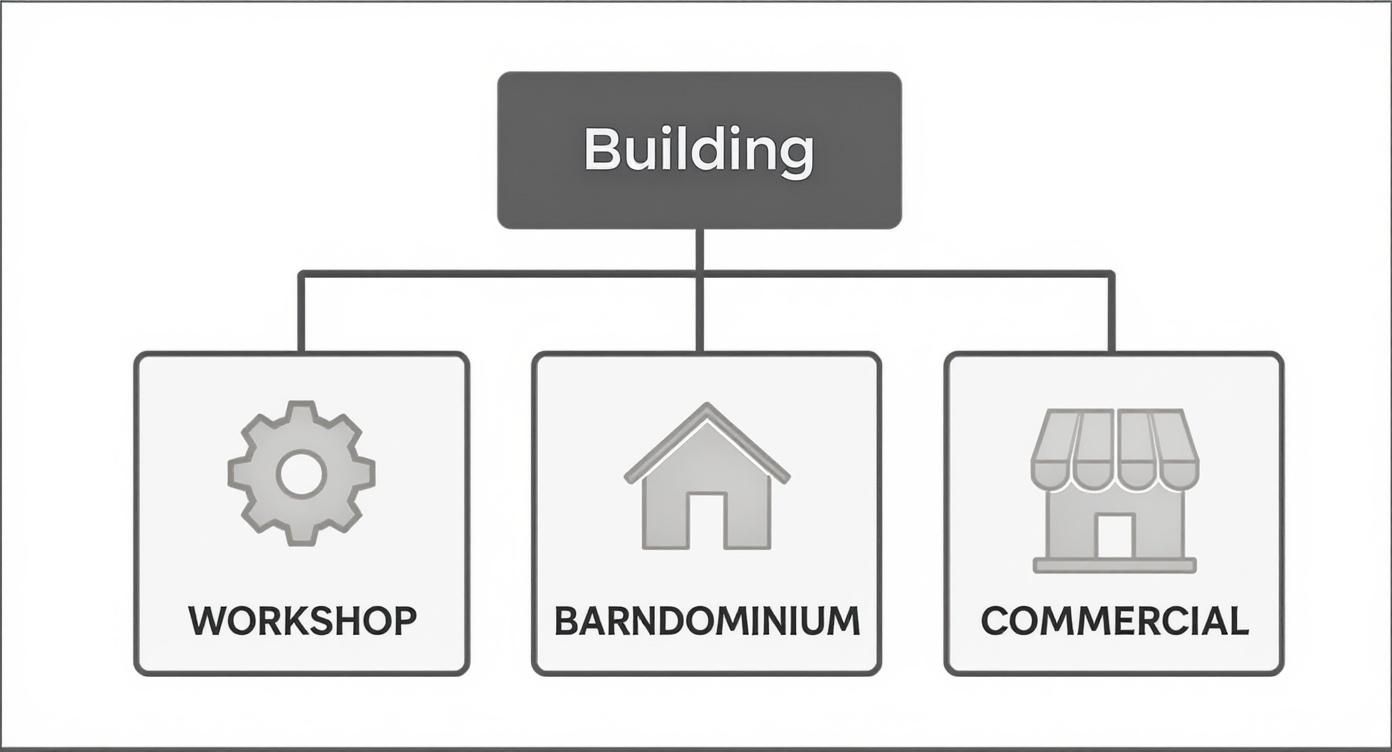
This diagram shows just a few of the most popular uses for steel buildings with lofts, from workshops and barndos to commercial storefronts. It really drives home why design choices like load capacity and stair access are so crucial—what works for a home office won't work for an auto parts depot.
Planning Your Insulation, Lighting, and Ventilation
Adding a loft isn't just about building a second floor; it's about creating two entirely separate environments under one roof. Without a smart plan for your insulation, lighting, and ventilation, you're setting yourself up for that classic "hot upstairs, cold downstairs" headache that can make a loft pretty miserable.
Think of these three systems as the building's lungs, circulatory system, and nerves. They have to work in harmony. Nailing this from the get-go is what transforms a simple steel shell into a comfortable, genuinely usable multi-level space.
Creating a Stable Thermal Envelope with Insulation
First things first: you need a solid thermal envelope. Steel is a fantastic conductor of heat, which is a nice way of saying an uninsulated building will feel like an oven in the summer and an icebox in the winter. This problem is only magnified in a loft, where hot air naturally rises and gets trapped.
High-performance insulation is your best line of defense. It stops heat from passing through the roof and walls, keeping your indoor climate stable all year round. That means more comfort and way lower energy bills. To dive deeper, check out our guide on the best steel building insulation options to see what’s right for your climate and budget.
Some of the most effective choices include:
- Spray Foam Insulation: This creates a perfect, seamless air barrier that plugs every gap and crack. It’s a powerhouse for both thermal performance and moisture control.
- Insulated Metal Panels (IMPs): Think of these as a high-tech sandwich. They combine steel siding, rigid foam insulation, and a finished interior wall into one super-efficient, prefabricated panel.
- Fiberglass Batts: The classic, budget-friendly choice. It fits snugly between the building’s framing and is typically paired with a vapor barrier to keep condensation at bay.
Ensuring Air Quality with Proper Ventilation
Once your building is sealed up tight, you need to make sure it can breathe. An airtight building can trap stale air, moisture, and pollutants—a recipe for stuffiness, especially in a loft where air can stagnate. Good ventilation is non-negotiable for healthy air quality and preventing condensation.
Your strategy can be as simple as passive vents or as robust as a full mechanical HVAC system. A critical step is to accurately calculate air changes per hour, which ensures you’re moving enough air for the building's size and how you plan to use it.
A well-ventilated loft isn't just about comfort; it's about protecting the building's structural integrity. Proper airflow prevents moisture that can lead to rust on steel components and mold growth on interior finishes.
Designing a Two-Tiered Lighting Plan
Finally, you need a lighting plan that thinks on two levels. The area underneath the loft can quickly feel like a dark cave if it's not lit properly. At the same time, the loft itself needs its own lighting to feel bright and functional.
Here are a few strategies to consider:
- Under-Loft Lighting: Recessed can lights, track lighting, or sleek LED fixtures installed on the underside of the mezzanine are perfect for brightening up the ground floor.
- Loft-Level Lighting: Nothing beats natural light. Large windows, skylights, and solar tubes can flood the loft with daylight, making it feel more spacious and inviting.
- Task and Ambient Lighting: Use a mix of general overhead lighting for overall brightness and focused task lights for specific spots like desks, workbenches, or kitchen counters on both levels.
The growing demand for spaces like this is reflected in the market. The global prefabricated building and structural steel market hit USD 248.0 billion in 2024 and is projected to reach USD 396.6 billion by 2033. This boom shows just how much people value smart, efficient construction where features like a well-planned loft turn a good building into a great one.
How to Budget for Your Lofted Steel Building
https://www.youtube.com/embed/U-i58CA-loc
Figuring out the costs for a steel building with a loft is the first real step in getting your project off the ground. It's easy to look for a simple price-per-square-foot, but the truth is, the loft itself is the biggest variable that will shape your final budget.
The best way to think about it is in two parts: you have the basic building shell, and then you have the loft system. The shell has a pretty predictable base cost, but the mezzanine brings in a whole new set of factors. The final price tag gets pushed and pulled by the loft's size, how much weight it needs to hold, the kind of staircase you pick, any special foundation work, and finishing touches like electrical and plumbing.
Yes, adding a loft increases the initial investment. But here's the kicker: it’s almost always far cheaper than expanding the building's footprint to get the same amount of usable space.
The Core Cost Components
Breaking down the budget helps you see exactly where your money is going. The main expenses fall into a few key categories, and understanding them lets you make smart decisions that keep your project on track financially.
Your budget will mostly be made up of these four things:
- The Building Kit: This is the big one. It covers the main steel frame, the secondary framing, all the wall and roof panels, and the nuts and bolts to put the basic structure together.
- The Loft/Mezzanine System: Think of this as its own separate package. It includes the structural steel for the loft floor, the decking, and any built-in supports. The cost is tied directly to how big and how strong you need it to be.
- Access and Safety Features: This covers the staircase, any landings, and the safety railings required for the loft. The price here depends on the style, materials, and how complex the design is.
- Foundation and Erection: Concrete and labor are always significant costs. A loft adds a lot of weight, which might mean you need a thicker concrete slab or reinforced footers. That can bump up your foundation expenses.
Here's the key takeaway for budgeting: building up with a loft delivers way more long-term value. You’re getting that extra square footage at a much lower cost-per-foot than if you had to pour a bigger foundation and put up a larger single-story building.
To help visualize how a loft impacts the overall cost, let's look at a few common building sizes.
Estimated Cost Comparison Steel Building With and Without Loft
This table illustrates the potential cost differences between a standard steel building shell and one that includes a structural loft and necessary access.
| Building Size (Width x Length) | Estimated Base Shell Cost (No Loft) | Estimated Total Cost (With Loft) |
|---|---|---|
| 40' x 60' | $28,000 – $35,000 | $45,000 – $60,000 |
| 50' x 80' | $45,000 – $55,000 | $65,000 – $85,000 |
| 60' x 100' | $65,000 – $80,000 | $90,000 – $115,000 |
As you can see, while the loft adds to the initial price, it provides a substantial amount of extra functional space for a fractional increase in cost compared to expanding the building's footprint.
Market Factors and Your Final Price
Beyond the building parts themselves, outside market forces play a role, too. Steel construction has become incredibly popular for good reason, but that means prices are tied to market dynamics. Staying in the loop can help you time your purchase right. You can get a much deeper dive into these variables in our complete guide to the cost of steel buildings.
Global demand and even domestic policy can nudge material costs up or down. For instance, the price of hot-rolled coil steel—a core component—has seen some big swings, jumping from $650 per ton to around $900 per ton because of things like tariffs and changes in mill output. Even with these shifts, a lot of developers are choosing to lock in their prices now to sidestep future increases, especially for popular designs like lofted steel buildings. If you want to dig into the data, the OECD Steel Outlook 2025 offers a great overview of these trends.
A Buyer's Checklist for Your Lofted Building
Taking your idea for a steel building with loft from a simple concept to a finished project is an exciting process, but it requires a solid plan. Think of this checklist as your roadmap. It’s designed to walk you through the buying journey one step at a time, making sure you cover every critical detail from day one.
Follow these steps, and you’ll move forward with confidence, turning your initial vision into a well-defined project that’s ready for action.
1. Define Your Loft's Purpose
First things first: what are you going to do with the loft? Is it going to be a heavy-duty storage space for equipment? A quiet home office? Or maybe a cozy apartment-style living area? This one decision is the most important one you'll make.
The answer will directly dictate the load capacity requirements for your mezzanine. A loft designed to hold a few desks and chairs has completely different structural needs than one built to support pallets of inventory. Nailing down its purpose is the foundation of a safe, functional, and long-lasting design.
2. Confirm and Measure Your Site
Next up, grab a measuring tape and head outside. Walk the property and pinpoint the exact spot for your new building. Stake out the footprint to get a real-world feel for its size, making sure you leave enough room for construction access and any future landscaping you have in mind.
Getting your site dimensions right from the start saves you from major headaches and unexpected costs down the road. It ensures the building you’ve designed actually fits on your land and meets any setback rules from your property lines.
3. Research Local Building Codes
Time to do a little homework. Get in touch with your local planning department and ask about the specific building codes and zoning regulations in your area. You’ll want to ask about their rules for mezzanines, especially things like egress (exit) requirements, staircase dimensions, and guardrail heights.
Understanding local codes before you finalize your design can save you thousands in revisions and delays. It’s always easier to design a compliant building from the get-go than to fix a non-compliant one later.
4. Sketch Your Ideal Layout
With the loft's purpose and your site dimensions locked in, grab a pencil and paper. It's time to sketch out a rough floor plan. Don't worry about making it perfect—a simple drawing is all you need to start. Think about where the loft should go, where the stairs make the most sense, and how you'll lay out the main floor. This simple visual exercise helps you think through daily workflow and usability.
5. Consult a Building Expert
With your sketch and notes in hand, you're ready to talk to a pro. Reach out to a building expert here at Icon Steel Buildings for a professional quote. This is where your vision starts to become a reality, as we’ll help align your design ideas with your budget and ensure all the structural engineering is sound. For more great tips on this stage, check out our complete guide on buying a metal building.
6. Finalize Your Design Details
This is the fun part! The final step is choosing all the finishing touches that give your building its character. You’ll select your preferred styles for doors, windows, and the roof pitch. You also get to pick out the color scheme for the walls, roof, and trim, giving your new steel building with loft a unique personality that perfectly matches your property.
Frequently Asked Questions
When you're mapping out a steel building with a loft, a few questions always seem to pop up. Getting straight answers to these is the key to making sure your project is safe, comfortable, and up to code right from day one.
Let’s tackle some of the most common things we hear from customers during the planning phase.
How High Should My Ceilings Be for a Comfortable Loft?
This is easily one of the most important measurements you'll decide on. Nobody wants a loft that feels like a cramped attic, so you need enough headroom both upstairs and downstairs. The sweet spot we always recommend is a minimum building eave height of 16 to 18 feet.
That height gives you the room to create about 7 to 8 feet of clearance on each level. It's not just about feeling open and comfortable; that's also the height most building codes require for a space to be considered habitable. Trust me, it's far easier to plan for this height from the start than to try and raise a roof later.
Can I Add a Loft to an Existing Steel Building?
Technically, yes, you can retrofit a loft into a building that's already standing. But it's a complicated and almost always expensive job. It's not as simple as just building a second floor—you'll need a licensed engineer to do a full structural deep-dive to see if the original frame and foundation can even handle that much extra weight.
It's always, and I mean always, more cost-effective and safer to design the loft into the building from the very beginning. When you integrate it from the start, the entire structure is engineered to work together as a single system, which saves you from a world of headaches and costly modifications down the road.
What Are the Key Building Code Requirements for a Loft?
When an inspector walks through your project, their number one concern with a loft or mezzanine is safety. The exact rules can change a bit depending on where you live, but they almost always zero in on a few critical areas to keep everyone safe.
You'll need to be ready to meet specific standards for:
- Guardrail Height: To prevent falls, most places mandate that your guardrails be at least 42 inches high.
- Staircase Dimensions: There are strict rules for stairs, covering everything from minimum width and tread depth to riser height and handrail requirements.
- Load Capacity Signage: You’ll likely need to post a sign that clearly states the loft's maximum load capacity in pounds per square foot (PSF).
- Emergency Egress: If you plan on using the loft as a living space or office, it has to have a proper emergency exit, like a window of a certain size.
Ready to design a versatile steel building with loft that multiplies your space? The experts at Icon Steel Buildings can help you create a custom plan that meets your exact needs and budget. Get your free quote today!