
When you think of a farm building, what comes to mind? For a long time, it was the classic red wooden barn. But times have changed, and so has the technology that keeps a modern farm running.
Today, metal farm buildings are the go-to solution. These aren’t just tin sheds; they’re tough, pre-engineered steel structures built to handle the real-world demands of agriculture. They’re the Swiss Army knife for today’s farmer, providing secure storage for million-dollar equipment, safe shelter for livestock, and a dry, protected space for hay and commodities. This mix of brute strength and flexibility makes them a smart play for any farm, big or small.
Why Modern Farms Are Choosing Metal Buildings
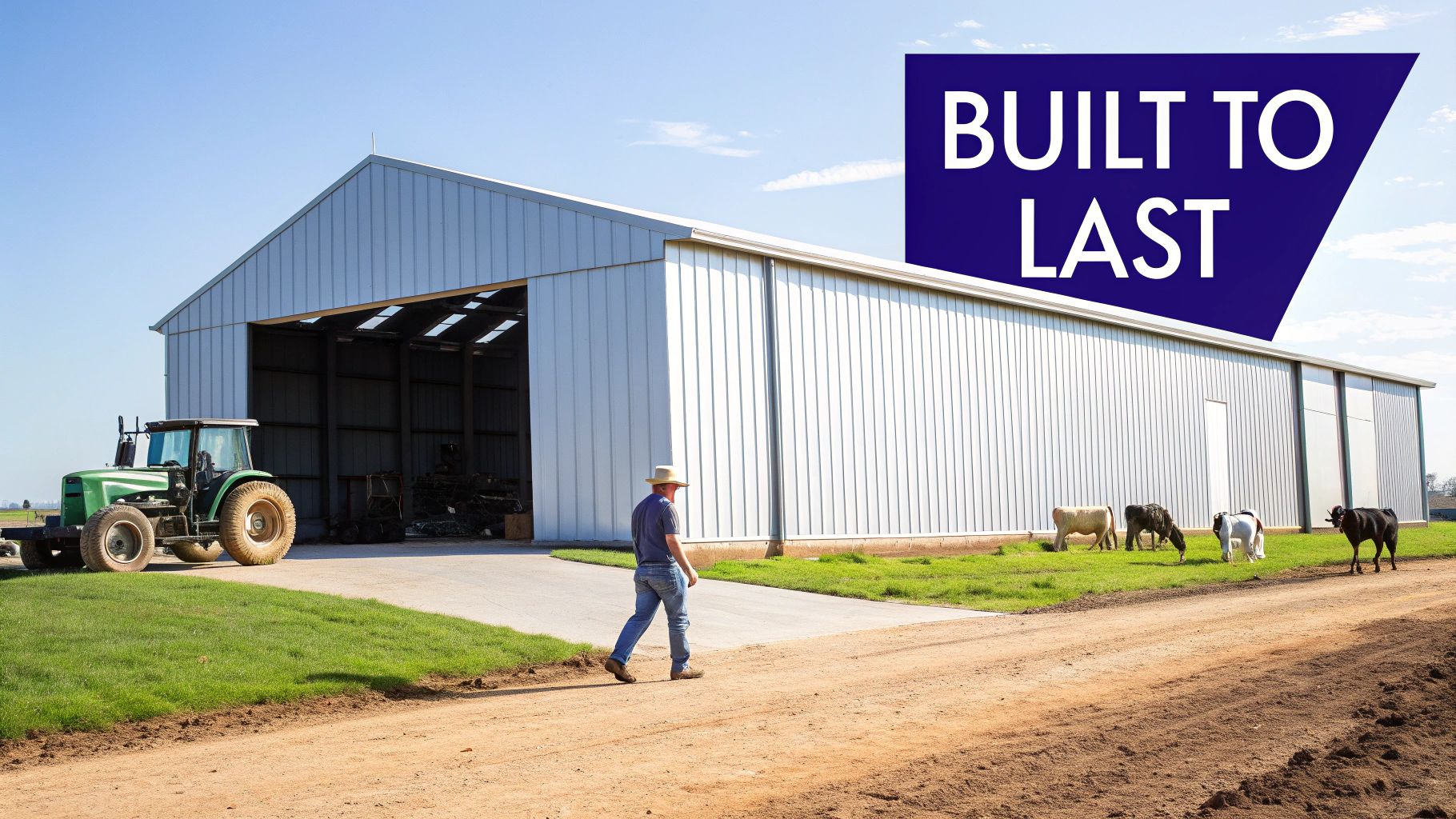
Farming today is all about running a lean, resilient, and profitable business. That’s why more and more farmers are moving away from traditional wood-frame barns that demand constant maintenance and are sitting ducks for pests, rot, and fire. They’re turning to steel as a practical, no-nonsense solution that just makes financial sense.
Think of it like this: a classic wooden barn is like an old, reliable hand tool. It gets the job done, but it takes a lot of care. A modern steel building, on the other hand, is like a brand-new piece of heavy machinery—engineered for performance right out of the gate and built to handle decades of hard work with barely a thought.
The Core Advantages Driving the Shift
This move toward steel isn’t just a fad; it’s a strategic business decision. Farmers need their buildings to work as hard as they do, and steel delivers where it counts.
Here’s why the switch is happening:
- Built Like a Tank: Steel is non-combustible and couldn’t care less about termites, mold, or warping. That means you can stop worrying about the common headaches that come with wood structures.
- Forget the Upkeep: Scraping, painting, and replacing rotten boards are things of the past. A good power wash every now and then is usually all it takes to keep a metal building looking sharp.
- Wide-Open, Usable Space: The clear-span design of modern metal buildings means no annoying interior support columns. You get a massive, unobstructed floor perfect for parking combines, tractors, and other large equipment.
- Up and Running Faster: Because the parts are pre-engineered, they show up at your site ready to bolt together. This slashes construction time compared to building a traditional barn from scratch.
The numbers back this up. The global market for metal building systems is expected to jump from USD 22.48 billion in 2025 to nearly USD 49.40 billion by 2032. That’s a massive vote of confidence from the agricultural and industrial worlds.
This shift makes one thing clear: modern metal buildings aren’t just an expense. They’re an essential tool for boosting a farm’s efficiency, protecting its assets, and securing its financial future.
What Kinds of Metal Buildings Work on a Farm?
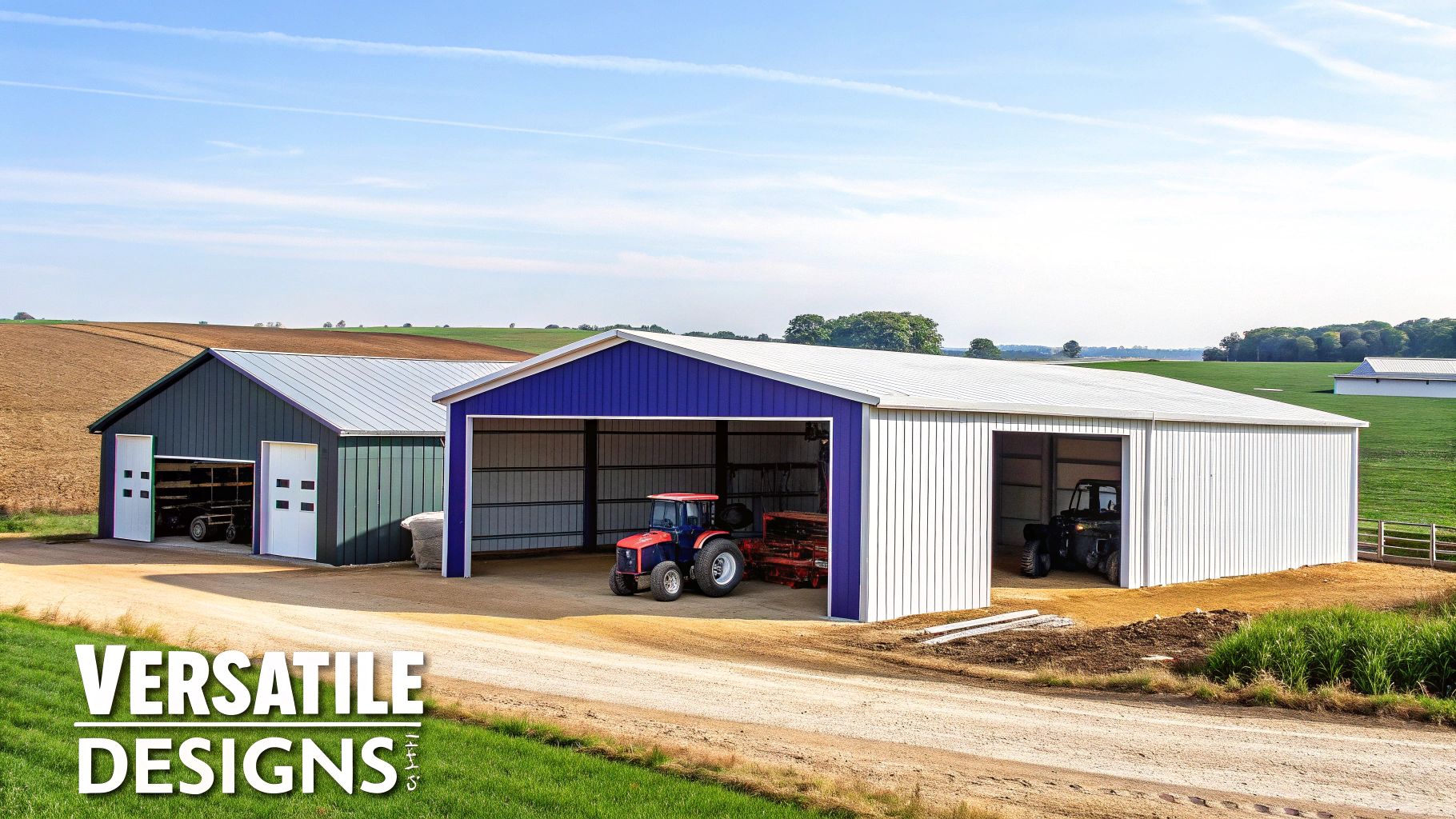
The real power of a metal farm building is its incredible flexibility. This isn’t a one-size-fits-all product; it’s a building system you can mold to fit just about any job on a modern farm. From protecting your most expensive equipment to giving your animals a safe, healthy home, the uses are as diverse as farming itself.
Getting familiar with the most common applications helps you see exactly where a steel structure could plug a hole in your operation. Each type is engineered to solve a specific problem, whether that’s creating a massive, post-free space for machinery or a climate-controlled environment for livestock.
The Modern Metal Barn for Livestock
When you’re talking about livestock, a metal barn is so much more than just a shelter. These buildings are designed from the ground up for animal welfare and your own operational efficiency. Wood can rot, attract pests, and grow mold, but steel gives you a clean, hygienic space that’s a breeze to wash down and sanitize.
Good ventilation is non-negotiable, and metal buildings are perfect for it. You can easily add ridge vents, louvers, and massive door openings to keep fresh air moving. This is huge for preventing respiratory problems in cattle and keeping horses comfortable. Inside, the layout is all yours—customize it with stalls, pens, and feeding stations to make your daily chores faster and more organized.
Securing Your Biggest Investment: Equipment Storage
That new combine or planter is a massive investment, easily running into the hundreds of thousands—or even millions—of dollars. Leaving that kind of money out in the sun, rain, and snow is just not an option. A dedicated metal equipment shed is your best insurance policy against the elements.
This is where the clear-span design really shines. Steel framing can cover huge distances without needing any interior support columns, giving you a wide-open, unobstructed floor. You can drive a massive tractor or combine straight in without worrying about dinging a post.
For a truly functional equipment shed, think about these features:
- Big Roll-Up Doors: Put oversized doors on opposite ends of the building for drive-through access. No more backing in a 50-foot trailer.
- Plenty of Height: Make sure your eave height is tall enough for your biggest machine, even with its attachments lifted all the way up.
- An Integrated Workshop: A lot of farmers will wall off a corner of their equipment building and insulate it for a workshop. It keeps your maintenance and repairs right where you need them, all under one roof.
Specialized Buildings for Every Corner of the Farm
Beyond the standard barns and sheds, the beauty of steel is that you can build almost anything with it. Every structure can be fine-tuned for a specific task to make that part of your operation run smoother. If you want a few more ideas, you can check out all the different types of metal buildings and what they’re used for.
To get your gears turning, here’s a breakdown of how farmers are using specialized steel buildings.
Common Metal Farm Building Applications
| Building Type | Primary Use | Key Design Features | Primary Benefit |
|---|---|---|---|
| Hay & Feed Barn | Storing hay bales and bulk feed | Sealed eave and base conditions, good ventilation | Protects feed from moisture, pests, and spoilage, saving money. |
| Equipment Shed | Protecting tractors, combines, and implements | Clear-span interior, large roll-up doors, high eaves | Maximizes usable space and provides easy access for large machinery. |
| Livestock Shelter | Housing cattle, horses, or other animals | Customizable stalls/pens, integrated ventilation | Creates a healthy, safe, and easy-to-clean environment for animals. |
| Riding Arena | Indoor equestrian training and events | 80-100 ft. wide clear-span, high ceilings, natural lighting panels | Provides a safe, all-weather space for riding without interior obstacles. |
| Commodity Storage | Storing grain, fertilizer, or other bulk goods | Reinforced walls, sealed design to prevent contamination | Securely contains heavy materials and protects valuable commodities. |
These are just the most common examples, but the list goes on. The point is that steel gives you the power to design a building that fits your workflow perfectly.
A well-designed building is more than storage; it’s a tool that actively improves your farm’s workflow. The ability to customize door placement, interior layouts, and building dimensions means your metal structure can be built around your operational needs, not the other way around.
At the end of the day, picking the right building starts with knowing what you need right now and where you want to be in a few years. Whether you’re trying to protect that brand-new tractor or finally expand your herd, there’s a steel building solution ready to help you get there.
Key Design and Material Decisions to Make
Alright, so you’ve got a good idea of the type of farm building you need. Now comes the fun part: diving into the details that separate a decent building from a truly great one.
Think of it like outfitting a new pickup. You wouldn’t just settle for the base model, right? You’d handpick the engine, towing package, and features that match the jobs you need to get done. The same logic applies here. Every choice, from the thickness of your steel panels to the pitch of the roof, is going to have a real impact on how your building performs for years to come.
Getting these decisions right from the get-go is the difference between a structure that just “works” and one that becomes a rock-solid asset for your operation. These choices directly affect how well it stands up to a heavy snow load, what you’ll spend on upkeep, and how easy it is to use every single day.
Choosing Your Steel: The Foundation of Strength
The backbone of any metal farm building is its steel frame and paneling, and believe me, not all steel is created equal. The most important spec to get familiar with is the steel gauge—it’s simply a measure of thickness. It can be a little counterintuitive, but remember this: a lower gauge number means thicker, stronger steel.
For most ag buildings, you’ll be deciding between 29-gauge (thinner and more budget-friendly) and 22-gauge (thicker and much tougher). Investing in thicker, lower-gauge steel gives you far better protection against dents from equipment, high winds, and heavy snow. For anyone in a region with rough weather, it’s an investment that pays for itself. If you want to get a better handle on how the whole structure comes together, digging into the basics of a metal building frame can give you some great context.
Next up is the protective coating on the panels. The two main players here are:
- Galvanized: This is a classic zinc-coated steel that delivers solid, cost-effective protection against rust. It’s a proven workhorse in plenty of rural settings.
- Galvalume®: A more modern coating made from a mix of zinc, aluminum, and silicone. It generally offers superior, longer-lasting rust protection, especially if you’re in a wet or humid climate.
Your building is only as strong as its weakest link. Spending a bit more on a heavier gauge steel and a quality coating upfront is the smartest way to make sure your building stands strong for decades, saving you from a world of expensive repairs down the road.
Selecting the Right Roof Style
The roof does a lot more than just keep the rain out. Its design influences drainage, how much usable space you have inside, and even the building’s overall structural integrity. Each style has its own pros and cons, depending on your needs and local climate.
- Regular Roof: This is your most economical choice, with rounded eaves and horizontal paneling. It’s best for mild climates without much heavy rain or snow, as it doesn’t shed weather quite as efficiently.
- A-Frame Horizontal Roof (Boxed-Eave): With its classic A-frame look and sharp 90-degree corners, this style has a more traditional barn appearance. The panels still run horizontally, making it a solid mid-range option for places with moderate weather.
- Vertical Roof: This is the top-tier choice for performance. The A-frame is beefed up with extra reinforcement, and the panels are installed vertically from peak to eave. This design lets snow, rain, and leaves slide right off, making it the undisputed best option for areas with heavy precipitation.
Customizing for Functionality and Comfort
Once the core structure is dialed in, you can start adding the features that will make the building perfect for its job. These are the customizations that turn a basic metal shell into a highly efficient workshop or a safe, comfortable shelter for your animals.
Think about incorporating these essential add-ons:
- Insulation: This is absolutely critical for controlling the climate inside. Good insulation stops condensation (a major cause of rust), keeps livestock healthy, and makes a workshop usable when it’s freezing or sweltering outside. You’ve got options from spray foam to fiberglass batts and insulated panels.
- Doors: Go big. Oversized roll-up or sliding doors are a must-have for equipment storage so you can easily get combines and large tractors in and out. Don’t forget to add walk-in doors for easy personal access.
- Windows and Skylights: Never underestimate the power of natural light. It cuts down on electricity bills and just makes for a better work environment. A few well-placed windows or translucent roof panels can completely transform the feel of the interior.
- Ventilation: For livestock, proper airflow is non-negotiable. It’s vital for animal health and preventing damaging moisture buildup. Ridge vents, louvers, and even just leaving large doors open are all effective ways to keep fresh air moving.
The durability of these features also hinges on their protective coatings. The global market for metal building materials was valued at around USD 177.55 billion in 2021 and is projected to keep climbing, which shows the worldwide demand for strong, reliable construction. When you’re looking at different protective materials, understanding the pros and cons of options like Graphene Coatings VS Ceramic Coatings is key to making the right call. Taking the time to think through these details ensures your metal farm building won’t just meet your needs today but will be a valuable, low-maintenance asset for generations.
Navigating Your Project From Site Prep to Permits
Before a single steel beam ever goes up, the real work begins on the ground. A successful project is built on a solid foundation—both literally and figuratively. This critical pre-construction phase involves everything from preparing your land and choosing the right foundation to navigating the maze of local permits.
Think of it like plotting a course before a long road trip. Getting the details right at this stage helps you avoid costly detours, surprise roadblocks, and frustrating delays. A little methodical planning here saves a ton of time, money, and headaches down the line.
The process of designing your building involves a few key decision points that flow into one another, as this quick visual guide shows.
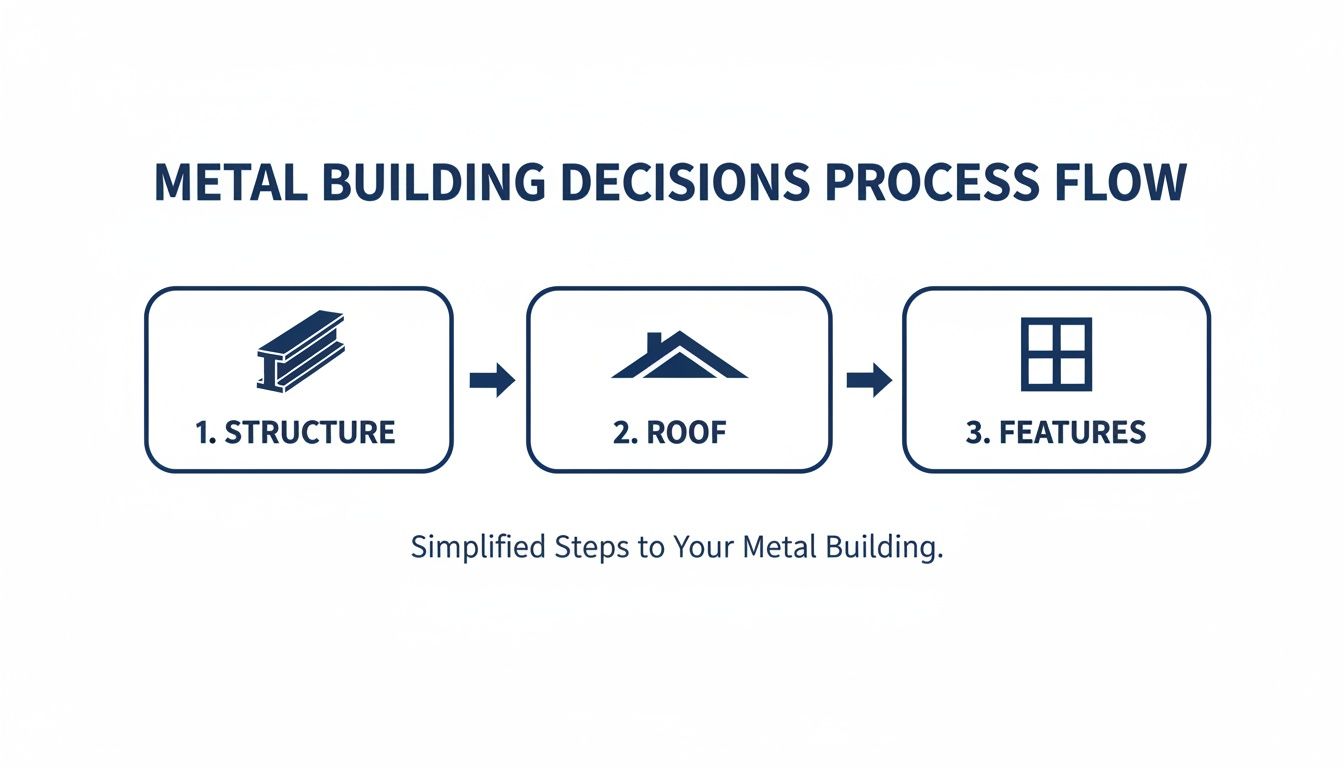
From the basic frame to the roof and custom features, each choice influences the next, ultimately creating a building that works perfectly for you.
Groundwork: The Critical First Step
Proper site preparation is completely non-negotiable for the long-term health of your metal farm buildings. The goal is simple but crucial: create a stable, level, and well-drained surface that will support your structure for decades to come.
First, you’ll need to clear the site of all vegetation, rocks, and debris. The building pad has to be perfectly level and compacted to prevent settling, which can twist the frame and cause problems with doors and windows. Most importantly, you need to ensure the site has excellent drainage. Water pooling around your foundation is one of the biggest long-term threats to any building.
A building is only as strong as the ground it stands on. Investing time and resources into proper site preparation is the single best thing you can do to protect your investment and ensure the structural integrity of your building for years to come.
Choosing the Right Foundation
With your site prepped and ready, the next move is picking a foundation. The right choice depends on your building’s size, what you’ll be using it for, and your local soil conditions. Each type has its own distinct advantages.
Here are the most common foundation options for agricultural buildings:
- Concrete Slab: This is the go-to for workshops, garages, and equipment storage. A monolithic slab gives you a durable, level floor and a powerful anchor for the whole structure, creating a sealed interior that’s easy to clean.
- Piers: For simpler structures like open-sided hay barns or livestock shelters where you’re fine with a dirt or gravel floor, concrete piers are a great cost-effective solution. They are just strategically placed columns of concrete that anchor the building’s support posts right into the ground.
- Perimeter Wall (Frost Wall): If you’re in a colder climate, a perimeter concrete wall that extends below the frost line is often required by code. This stops the ground from heaving during freeze-thaw cycles and provides an incredibly stable base for the building’s frame.
The Permit and Zoning Puzzle
Let’s be honest—navigating local bureaucracy can feel like the most intimidating part of the entire project. But it’s a step you can’t skip. Nearly all new construction requires permits to make sure the building is safe and meets local codes.
Your first call should be to your local planning or building department. They’ll give you a checklist of what they need, which almost always includes engineered blueprints of your building, a site plan showing its exact location on your property, and details about the foundation. Zoning laws will also come into play, dictating where you can place the building, how big it can be, and how you can use it.
The key is to be prepared and organized. Having all your documents in order before you submit your application will make the process much smoother. This planning phase is also the perfect time to consult with experts who know how to get through the red tape. To see how these final stages come together, check out our detailed guide on the metal building installation process.
Breaking Down the Costs vs. the Long-Term Payoff
When you’re looking at a new metal farm building, it’s easy to get fixated on the initial price tag. But that’s only seeing a tiny piece of the puzzle. The smartest way to approach the finances is to see this as a long-term investment in your farm’s future—one that pays you back for decades.
To get a handle on the budget, you need to look at four key parts of the upfront cost. Each one plays a role in the final number, and knowing what they are helps you see exactly where your money is going. We break this down even further in our detailed metal building cost guide.
- The Building Kit: This is the core package—the steel frame, wall panels, roofing, and fasteners. The price tag here usually lands somewhere between $15 to $30 per square foot, depending on the complexity of your design and the materials you choose.
- Foundation: You need a solid base, period. A concrete foundation is non-negotiable, and whether it’s a full slab or just piers, this will typically add another $5 to $10 per square foot to your budget.
- Delivery: Getting a massive steel building kit from the factory to your farm has a cost, which will naturally vary based on how far it has to travel and the sheer size of the components.
- Installation Labor: Unless you’re tackling the build yourself, professional assembly is a must. Plan for around $5 to $10 per square foot for a pro crew to put it all together.
Shifting Focus from Price Tag to True Value
Just looking at that initial expense is like judging a tractor by its paint job—it completely misses the point. The real financial power of a metal building reveals itself over years and decades of hard use. This is where you calculate its Return on Investment (ROI), which is just a straightforward way of measuring how much value the building gives you back compared to what you spent on it.
The ROI on metal farm buildings is incredibly strong, mainly because of how much they save you in areas where traditional wood barns constantly drain your wallet. Steel structures are built for one thing: durability with minimal fuss. That translates directly into money saved and assets protected.
The Real Drivers Behind a Strong ROI
The long-term financial wins aren’t just theoretical; they’re substantial and easy to see. Over the life of the building, these savings will almost always outstrip any initial cost difference you might see when comparing it to a standard pole barn.
- Drastically Lower Maintenance: Forget about scraping, painting, and patching up rotten boards every few years. Steel is immune to termites, rot, and warping, which wipes out the endless cycle of costly upkeep that wood demands.
- Cheaper Insurance Premiums: Insurance companies love steel. It’s non-combustible and stands up to wind, hail, and snow like nothing else. Because of that lower risk, you can often get a break on your premiums—sometimes by as much as 30% or more.
- Longer Equipment Life: This is a big one. Keeping multi-million dollar combines, tractors, and implements out of the sun, rain, and snow is one of the biggest ROI contributors. Proper storage prevents rust, UV damage, and weather-related wear, extending the life of your machinery and saving you a fortune in repairs.
This practical shift toward durable, low-effort infrastructure is why the industry is booming. The U.S. market for pre-engineered metal buildings is on track to grow from USD 12.98 billion in 2024 to USD 27.10 billion by 2033. That growth is being driven by farms and other businesses that need resilient structures that perform for the long haul.
Investing in a metal building isn’t just buying a structure; it’s a strategic financial move to lower your farm’s long-term operating costs and secure its most valuable assets for generations to come.
When you weigh both the upfront numbers and the long-term ROI, the picture becomes clear. A metal farm building isn’t just another purchase—it’s a powerful investment in your operation’s future.
How to Choose the Right Building Supplier
You’re almost there. You’ve planned the use, picked a design, and know the size you need. Now comes the most important decision of all: choosing the company that will bring your metal farm building to life.
This isn’t just about finding the lowest price tag. It’s about finding a true partner—a company that stands behind their product, communicates clearly, and makes sure the entire process is smooth from start to finish. A great supplier is your guide, ensuring your building is a rock-solid investment for decades to come. Don’t rush this step. A few hours of research now will save you from years of potential headaches down the line.
Vetting Potential Suppliers
Before you even start comparing quotes, do a little homework on the company itself. A trustworthy supplier will be proud of their credentials and happy to show you why they’re the right choice. Think of it as a background check for one of your biggest farm investments.
Here’s a practical checklist to get you started:
- Engineering and Code Compliance: Can they prove their buildings are engineered to handle your local wind, snow, and seismic loads? Ask to see their engineering certifications. This is non-negotiable.
- Material Quality: What gauge of steel are they using for the frame? For the panels? A reputable company won’t just throw numbers at you; they’ll explain why they recommend certain specs for your specific climate and use case.
- Warranty Details: A strong warranty shows a company’s confidence in its materials. Look closely at what’s covered, from the steel frame itself to the paint finish, and for how long. The best warranties for high-quality metal farm buildings can last up to 40 years.
Scrutinizing Quotes and Customer Feedback
Once you’ve got a shortlist of qualified suppliers, it’s time to dig into the details. A quote shouldn’t just be a single number on a page; it needs to be a transparent, line-by-line breakdown of exactly what you’re paying for. Vague descriptions or missing items are red flags for hidden costs later on.
A comprehensive quote is a sign of an honest supplier. It should clearly itemize the building kit, delivery charges, and any included accessories, leaving no room for surprise costs.
While you’re comparing quotes, see what actual customers have to say. Don’t just read the glowing testimonials on their website. Search for independent reviews on third-party sites to get the real story on their customer service, communication, and how they handle issues when they pop up. Consistent praise for clear communication and post-sale support is a massive green flag.
Your goal is to find a partner like Icon Steel Buildings, who prioritizes a great customer experience from the first design sketch all the way through delivery, ensuring your project is a success from start to finish.
Still Have Questions? We’ve Got Answers.
Even with all the details, investing in a new farm building is a big decision. You probably have a few more questions rattling around. This is where we tackle the most common ones we hear from farmers and ranchers who are on the fence about going with steel.
Think of this as your final gut check—quick, straight-to-the-point answers to clear up any lingering doubts before you move forward.
Are Metal Farm Buildings Really Better Than Old-School Wooden Barns?
For today’s farming operations, the answer is a resounding yes. Steel buildings just flat-out solve the problems that have plagued wooden barns for centuries—rot, fire, and pests. Forget about the constant, expensive upkeep that comes with wood.
More importantly, steel’s incredible strength allows for massive clear-span interiors. This means no annoying posts or columns getting in the way of your combine or large implements. While a classic wooden barn has its charm, a modern steel building delivers far more durability, a longer lifespan, and way less maintenance. In the long run, it’s simply the smarter financial choice for a working farm.
How Hard Is It to Put Up a Metal Farm Building Kit?
That really depends on two things: the size of the building and your own comfort level with big projects. Our kits are designed to be user-friendly, with everything showing up at your site pre-cut, pre-drilled, and ready to bolt together. A smaller workshop or garage can absolutely be a DIY job for a few capable folks with the right tools.
But when you start talking about a large equipment barn or an indoor riding arena, we strongly recommend bringing in a professional crew. They have the equipment and the know-how to handle the sheer scale and weight of commercial-grade steel safely and efficiently. It’s the best way to make sure your building is assembled correctly, meets all local codes, and will stand strong for decades.
“A common mistake is underestimating the scale of a larger build. While kits are user-friendly, the sheer size and weight of commercial-grade steel components demand professional equipment and expertise to ensure a safe and proper installation.”
Can I Insulate a Metal Building for Livestock or a Workshop?
You bet. Insulating a metal farm building isn’t just possible—it’s one of the smartest things you can do, especially if you have animals or plan to work inside. Good insulation is the key to creating a stable, comfortable environment year-round.
There are several great ways to do it:
- Spray Foam: This gives you the best thermal barrier and creates a perfect air seal, stopping drafts in their tracks.
- Fiberglass Batts: The classic, budget-friendly option that fits neatly between the framing.
- Insulated Metal Panels (IMPs): This is the premium choice, with insulation factory-sandwiched between steel panels for maximum efficiency.
Proper insulation does more than just control the temperature for your livestock or your own comfort. It also stops condensation from forming on the inside of the steel, which is critical for preventing rust and protecting your valuable equipment from moisture damage.
Ready to design a metal farm building that works as hard as you do? The team at Icon Steel Buildings is here to help you configure the perfect structure for your needs. Explore our building options and get a free quote today.