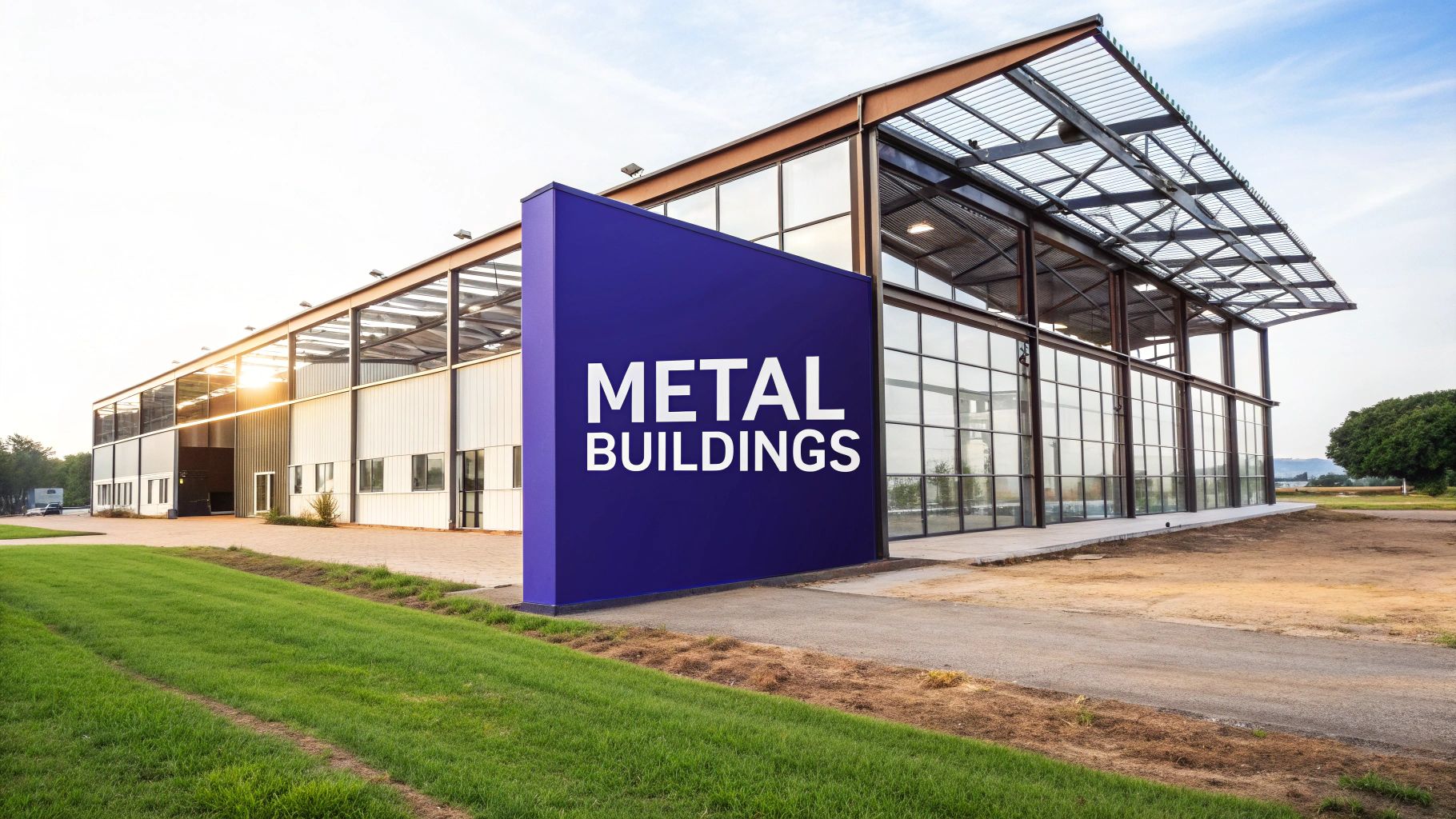
If the words "metal building" conjure up an image of a simple, boxy warehouse or a rusty old barn, it’s time for an update. Today’s modern metal buildings have come a long way from those humble beginnings and now stand among the most architecturally impressive and beautiful structures you can build.
Forget the tin shed. Think stunning custom home or a sleek commercial headquarters.
The Surprising Evolution Of Metal Buildings
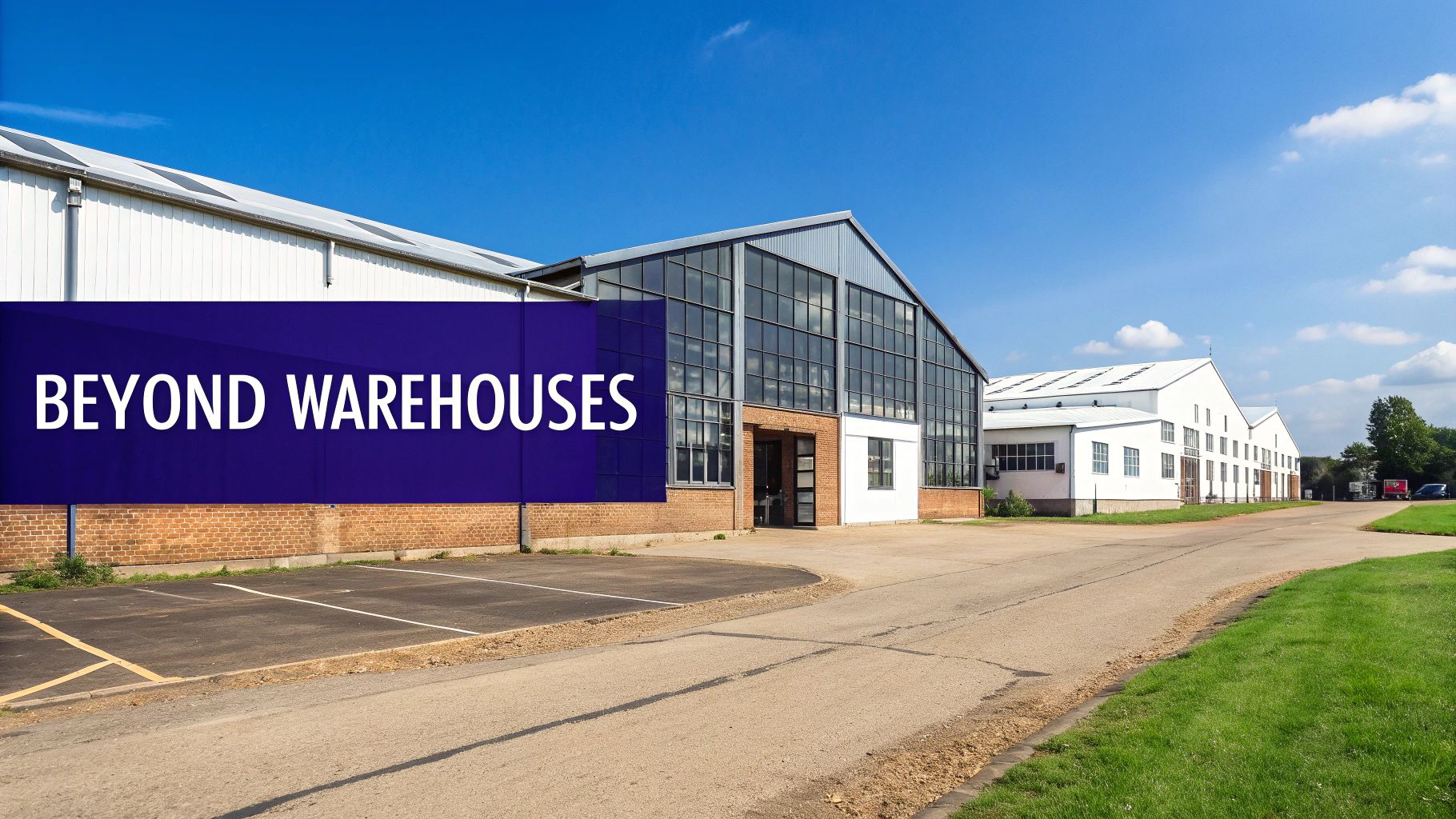
The leap from basic storage sheds to sophisticated architectural statements is one of the biggest stories in modern construction. It’s a lot like how the first cell phones—those clunky bricks that only made calls—morphed into the slim, powerful smartphones we can’t live without today. Just as new tech made phones indispensable, modern metal buildings have absorbed huge advances in materials, engineering, and design.
This progress has completely shattered the old limitations. What was once a purely functional, no-frills option is now a top-tier choice for a massive range of projects. The industry has blown past cookie-cutter designs, offering a level of customization that doesn't just rival traditional construction but often leaves it in the dust.
Challenging Outdated Perceptions
For decades, metal buildings got a bad rap—seen as unattractive, temporary, or cheap-looking. Those old stereotypes still hang around, but they simply don't match up with reality anymore. Today’s steel structures are celebrated for their clean lines, incredible durability, and surprising design flexibility.
The truth is, a modern metal building can be designed to fit virtually any architectural style you can imagine. With options for brick, stone, wood, or glass facades, they can blend seamlessly into any neighborhood while giving you the unmatched strength of a steel frame.
This shift means you’re no longer stuck choosing between looks and performance. You can get the exact aesthetic you want without giving up the practical benefits that make steel such a smart choice.
A New Era of Design and Functionality
But this evolution isn't just about appearances; it’s about what these buildings can do. Innovations in steel manufacturing and pre-engineered design have opened up a whole new world of possibilities, allowing for features that used to be incredibly difficult or expensive to achieve with other materials.
Here’s what this new era brings to the table:
- Unmatched Design Freedom: You can create huge, wide-open interiors with clear-span framing, which gets rid of the need for bulky support columns that get in the way.
- Enhanced Sustainability: Modern steel is frequently made from recycled materials and is 100% recyclable when the building's life is over, making it a genuinely green building practice.
- Superior Efficiency: Advanced insulation systems and components that fit together with incredible precision create an airtight building. That translates directly to lower heating and cooling bills.
This guide will walk you through the new world of modern metal buildings, showing you their incredible potential and why they are a smarter, more adaptable choice for your next project.
What Truly Defines A Modern Metal Building
To really get what makes modern metal buildings so impressive, you have to look under the hood. Their evolution isn’t just one big change, but a series of powerful advancements working together. Think of it like a high-performance engine—it’s not just one part, but the perfect harmony of advanced materials, limitless design, and precision construction that delivers incredible results.
These three pillars are what separate today’s structures from the simple sheds of the past. They work in tandem to create buildings that are stronger, more efficient, and more visually stunning than ever before. Let's break down each of these core components.
The Power Of Advanced Materials
The steel used today is a world away from the old-school sheet metal you might be picturing. Modern manufacturing creates high-tensile steel that is both lighter and significantly stronger than older versions. This strength allows for amazing architectural feats while giving the building superior resistance to corrosion, pests, and fire.
Paired with this is another game-changer: insulated metal panels (IMPs). These aren't just panels with some insulation stuffed behind them. IMPs are sophisticated, factory-made composite panels with a high-performance insulation core chemically bonded between two steel skins. This creates an incredibly efficient, all-in-one building envelope that drastically cuts down on energy use and can slash heating and cooling costs over the building's life.
Finally, modern coatings and finishes add another layer of performance. These aren't just for color; they are engineered to reflect solar heat, resist fading for decades, and shield the underlying steel from the elements, ensuring a long-lasting, low-maintenance exterior.
Limitless Design Through Pre-Engineering
The term “pre-engineered” often gets a bad rap. It doesn’t mean “cookie-cutter.” Instead, it refers to a highly precise design and manufacturing process where every single component of the building’s frame is engineered in a controlled environment before it gets to your job site.
This method is what unlocks true design freedom. Key benefits include:
- Breathtaking Clear Spans: Pre-engineering makes it possible to have massive, wide-open interior spaces without any interior support columns. This is perfect for everything from aircraft hangars and riding arenas to open-concept offices and custom homes.
- Complex Architectural Shapes: Forget simple boxes. Modern systems can easily accommodate complex rooflines, soaring ceiling heights, and unique building footprints.
- Seamless Material Integration: Today’s designs make it easy to incorporate traditional materials. You can have a steel frame finished with glass curtain walls, stone wainscoting, or warm wood accents for a hybrid look that combines the best of all worlds.
The real beauty of pre-engineering is that it delivers custom design results with the speed and cost-efficiency of a systemized process. It’s the ultimate combination of creative freedom and practical performance.
Construction Built On Precision
The final piece of the puzzle is the construction process itself. Because every beam, panel, and bolt is manufactured to exact specifications in a factory, the on-site assembly is remarkably fast and predictable. Components show up ready to be bolted together, which minimizes on-site cutting and waste.
This precision-first approach leads to a tighter building envelope, reducing air leaks and boosting energy efficiency. It also dramatically shortens the construction timeline. In fact, a metal building shell can be put up up to 50% faster than a comparable traditionally framed structure. This incredible speed means lower labor costs, quicker project completion, and a faster return on your investment. The rapid adoption of these systems is reflected in the market's trajectory; projections show the global metal building system market is set to more than double from USD 22.5 billion in 2025 to USD 49.4 billion by 2032.
By understanding these three pillars—advanced materials, versatile design, and precision construction—it becomes clear why modern metal buildings have become such a compelling option. To see how these principles apply across different structures, check out our guide on the primary types of steel buildings available today.
Exploring Popular Styles And Design Trends
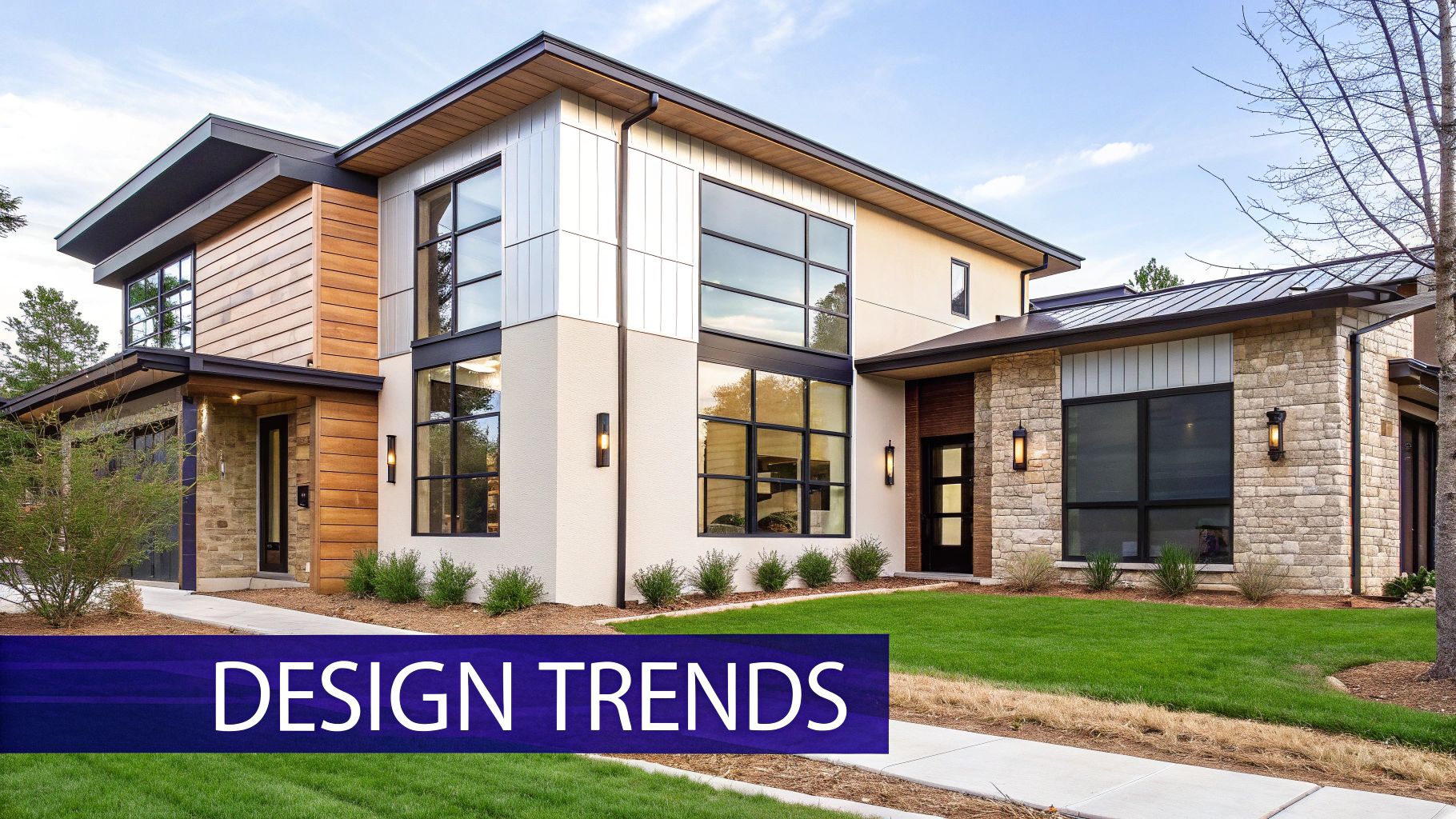
The real magic of modern metal buildings is their chameleon-like ability to fit nearly any aesthetic you can dream up. Forget the days of cookie-cutter steel sheds. Today’s structures are a blank canvas for architects and homeowners to bring their visions to life.
These trends aren't just about looks, either. They're a smart blend of function and design, pairing the raw strength of steel with the warmth and character of traditional materials. Let's dig into a few of the most popular styles to get your own ideas flowing.
The Modern Farmhouse And Barndominium Craze
One of the biggest styles sweeping the nation right now is the modern farmhouse, often brought to life as a "barndominium." This look perfectly captures the appeal of metal buildings by mixing rustic, country charm with clean, contemporary lines. It’s a style that feels both timeless and totally fresh.
So what defines the look? Think classic gable rooflines, like a traditional barn, but topped with a sleek standing-seam metal roof in a bold charcoal or black. This is usually paired with crisp white or light gray vertical siding, creating a sharp, beautiful contrast.
To really nail the modern farmhouse vibe, designers bring in natural elements:
- Warm Wood Accents: Exposed timber beams on porches, cedar-wrapped columns, or wooden shutters add a much-needed organic texture.
- Expansive Windows: Large, black-framed windows, often in a grid pattern, let the light pour in and break up the solid metal exterior.
- Gooseneck Lighting: Classic barn-style light fixtures give the outside a touch of authentic, rustic character.
This style is proof that a metal building can be anything but cold or industrial. By mixing sleek steel with organic textures, the modern farmhouse creates a home that feels as inviting as it is durable and easy to maintain.
Sleek Industrial-Chic Designs
For commercial spaces and urban homes, the industrial-chic style leans into the raw, honest nature of steel. Instead of hiding the building’s bones, this trend celebrates them, turning structural parts into eye-catching features. It’s a minimalist look that screams strength, efficiency, and modern cool.
This style is a huge hit for breweries, creative offices, modern retail shops, and even city lofts. It creates an open, airy feeling that’s both practical and visually striking.
Key elements of industrial-chic include:
- Exposed Steel Beams: The interior steel frame is often left visible and painted a bold color like black or dark gray for dramatic contrast.
- Polished Concrete Floors: Minimalist and incredibly durable, these floors are the perfect complement to the industrial feel.
- Galvanized Metal Finishes: Using unfinished or galvanized metal for siding, ductwork, or interior accents adds an authentic, edgy touch.
- Large Glass Garage Doors: These versatile doors open up the space completely, blurring the line between indoors and outdoors for a patio or showroom.
Contemporary And Mixed-Material Marvels
Pushing the design envelope even further, the contemporary residential style uses the incredible flexibility of a steel frame to create truly one-of-a-kind homes. This approach is all about bold architectural shapes, clean lines, and a masterful mix of materials for texture and visual pop.
A steel frame makes dramatic features possible—things that would be difficult or incredibly expensive with wood. Think soaring cantilevered roofs or massive walls of glass. Because steel handles the heavy lifting, the exterior can be finished with a whole palette of different materials.
You'll often spot these signature elements:
- Mixed-Material Facades: Sleek metal panels are often combined with stone veneer, warm wood siding, and smooth stucco for a rich, layered look.
- Asymmetrical Rooflines: Moving beyond the simple gable, you’ll see complex, multi-pitched, or even flat roof designs.
- Floor-to-Ceiling Windows: The strength of steel allows for enormous glass installations that offer incredible views and connect the home to its surroundings.
Of course, these styles are just a starting point. The customization options are practically limitless. To see more of what’s possible and get some inspiration for your own project, check out this gallery of metal building design ideas.
A Universe Of Applications, From Homes To Hangars
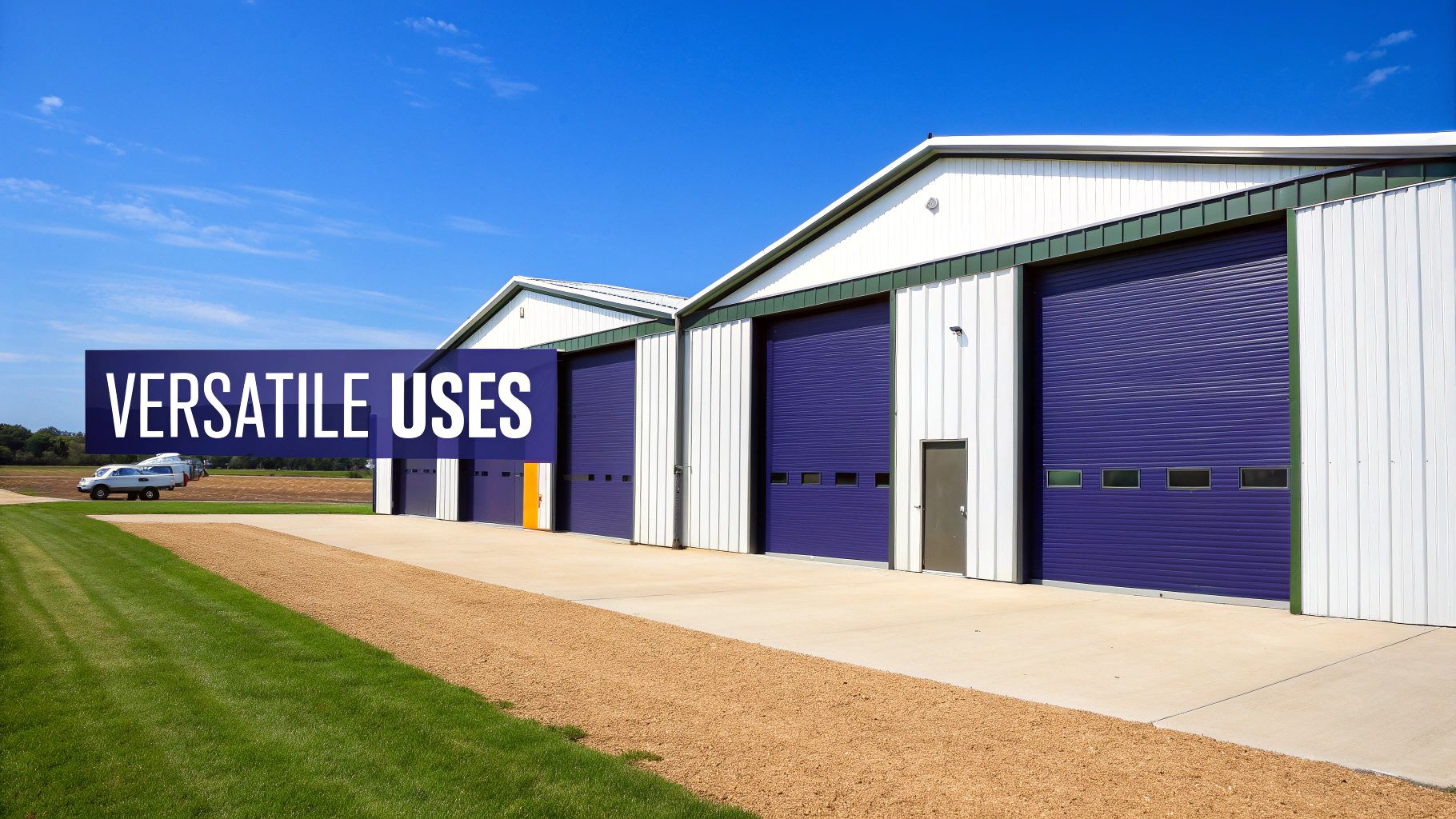
Long gone are the days when metal buildings were just for one specific purpose. Today, they're one of the most versatile construction platforms out there, ready for nearly any application you can dream up. From stylish private homes to massive commercial hubs, steel structures are now designed to meet the unique needs of every sector.
This incredible flexibility is what's fueling the industry’s growth. The global market for pre-engineered buildings is on track to jump from USD 18.79 billion in 2024 to USD 20.21 billion in 2025. In the U.S. manufacturing world alone, metal building systems already command a market share of nearly 34%. It's clear that steel is no longer just an alternative—it's a leading choice.
Residential Sanctuaries And Creative Spaces
Homeowners have really started to unlock the design potential of steel. We're talking about much more than just a backyard shed. People are now building their dream homes, workshops, and multi-purpose "barndominiums" with metal building systems, and the results are both beautiful and incredibly practical.
- Custom Homes and Barndominiums: These buildings combine wide-open living spaces with eye-catching designs, giving you a durable and budget-friendly option compared to traditional home construction. The clear-span framing is perfect for creating those airy, open floor plans everyone loves.
- Workshops and Garages: If you're a hobbyist or an entrepreneur, a metal workshop gives you a secure, spacious, and low-maintenance space for everything from woodworking to restoring classic cars.
- Guest Houses and ADUs: Accessory Dwelling Units (ADUs) built with steel are a fast and smart way to add extra living space to your property, whether it's for family or for generating rental income.
The design possibilities are endless, letting homeowners create a space that perfectly fits their lifestyle. You can get a better sense of how steel is reshaping modern living by exploring our guide to metal buildings for residential use.
The Commercial And Industrial Powerhouse
In the business world, it's all about efficiency, space, and speed. Modern metal buildings check all three boxes, which is why they've become a go-to for a huge range of commercial applications. The clear-span design, in particular, is a game-changer.
The ability to create vast, unobstructed interior spaces makes metal buildings ideal for businesses that require flexible layouts, from retail showrooms to manufacturing floors. This design freedom is a significant competitive advantage.
Here are a few common uses in the commercial space:
- Retail Stores and Breweries: An open layout creates a welcoming vibe for customers, with tons of room for product displays, seating, and specialized equipment.
- Office Buildings: Companies can design modern, collaborative workspaces without having to plan around annoying interior support columns.
- Warehouses and Distribution Centers: Steel delivers the durability and vertical height needed for today’s complex logistics and high-volume storage operations.
The table below breaks down how different applications benefit from specific metal building features.
Modern Metal Building Applications And Key Features
| Application Type | Common Uses | Key Design Features & Benefits |
|---|---|---|
| Residential | Barndominiums, Custom Homes, Workshops, Garages, ADUs | Open-concept floor plans, high ceilings, energy-efficient insulation options, low maintenance, and design flexibility. |
| Commercial | Retail Stores, Offices, Warehouses, Auto Shops | Unobstructed clear-span interiors, cost-effective expansion, rapid construction, and durable, secure structures. |
| Agricultural | Barns, Equipment Storage, Riding Arenas, Loafing Sheds | Weather-resistant materials, protection for livestock and machinery, and spacious layouts for easy access. |
| Recreational | Gymnasiums, Indoor Sports Facilities, Aircraft Hangars | High ceilings for vertical clearance, wide-open spaces for activities, and durable construction for high-traffic use. |
As you can see, the core strengths of steel construction—open space, durability, and speed—translate perfectly across a wide spectrum of needs.
Agricultural And Recreational Solutions
The sheer practicality of steel makes it a perfect match for agricultural and recreational projects. These buildings are engineered to handle tough weather while providing a functional space for whatever they’re designed for.
For farmers and ranchers, that means sturdy barns, massive equipment storage sheds, and covered riding arenas that keep livestock and expensive machinery safe from the elements.
The recreational world has found just as many uses. Think community gyms, indoor soccer fields, and even private aircraft hangars. All of these benefit from the high ceilings and wide-open interiors that are the hallmark of a modern metal building, proving once again that steel is a smart, adaptable solution for just about any goal.
Understanding The Real Costs Of A Metal Building
When you start planning a building project, the first question is always the same: "How much is this going to cost?" With modern metal buildings, a simple price-per-square-foot number doesn't tell the whole story. The real cost is a mix of several factors, and knowing what they are is the key to setting a realistic budget and avoiding any surprises.
It's a lot like buying a car. You see the sticker price for the base model, but that number changes fast once you start adding the options you really want—the upgraded engine, the premium interior, the tech package. A metal building works the same way; your specific design choices and project needs are what truly shape the final price.
Breaking Down The Core Cost Drivers
The price of the building kit is just your starting line. The total investment will come down to the materials you choose, the complexity of your design, and the unique requirements of your property. Understanding these moving parts puts you in control, helping you make smart decisions that fit your budget.
Here are the main things that drive the final cost:
- Building Size and Complexity: This is the biggest one. A larger building or a more complex design—think multiple roof pitches, lean-tos, or custom angles—will naturally use more materials and require more engineering, pushing the price up.
- Steel Gauge and Framing: The thickness of the steel (its gauge) is all about durability and cost. If your building is in an area with heavy snow or high winds, you'll need thicker, stronger steel, which will add to the bottom line.
- Custom Features: Every door, window, and skylight is a line item. High-end roll-up doors, big architectural windows, and custom entryways make your building more functional and look great, but they also adjust the final price.
It’s critical to look past a simple price-per-square-foot. Instead, focus on the total value of the project. A well-built metal building pays you back for years with its durability, low maintenance, and energy savings.
Beyond The Building Kit Itself
The cost of the building shell is only one piece of the puzzle. You'll also need to budget for several other essential expenses that can change a lot depending on your location and property.
Here are some of the additional costs to plan for:
- Foundation: A concrete slab is the standard, and its cost is based on size, thickness, and local labor rates.
- Insulation: Good insulation is your ticket to energy efficiency. You can go with standard fiberglass blankets or upgrade to high-performance insulated metal panels (IMPs), each at a different price.
- Shipping and Delivery: How far you are from the manufacturing plant will impact the freight charges.
- Labor and Construction: The cost to put the building up will depend on how complex the design is and the going rate for labor in your area.
For a deeper dive into all the variables, check out our complete guide on how to estimate your metal building cost.
To help you get a ballpark idea, here are some sample estimates for common building sizes. Remember, these are just for the building shell itself and don't include foundation, delivery, or construction.
Sample Cost Estimates For Modern Metal Buildings (Shell Only)
| Building Type | Typical Size (Sq. Ft.) | Estimated Cost Range |
|---|---|---|
| Workshop/Garage | 1,200 (30'x40') | $15,000 – $25,000 |
| Barndominium Shell | 2,400 (40'x60') | $30,000 – $50,000 |
| Small Warehouse | 5,000 (50'x100') | $55,000 – $85,000 |
| Large Commercial | 10,000 (100'x100') | $90,000 – $140,000 |
These ranges give you a solid starting point for budgeting. Your final costs will lock in once you finalize your design and get a detailed quote.
The good news? Market conditions have recently swung in the buyer's favor. After a few years of high prices, metal building costs have dropped by 10-20% from their pandemic-era peaks. This is thanks to stabilizing demand, more production capacity, and a big drop in galvanized steel costs, which lets us offer much more competitive pricing.
As you plan for the long haul, think about how smart energy solutions can boost your building's efficiency. You can learn more about the costs of integrating solar panels and battery systems to see how you can lower operational costs over the life of your building.
Your Building Journey From Design To Completion
Taking on a building project can feel like a massive undertaking, but a pre-engineered system turns a complex process into a predictable, step-by-step journey. Unlike traditional construction, where timelines can drag on and unexpected issues pop up, the path for a modern metal building is mapped out for efficiency and clarity from day one.
Think of it less like hacking through an unmarked forest and more like following a well-paved highway. Every phase, from your first sketch to the final bolt, is handled in a logical sequence. It all starts with your vision and ends with a finished building, all while keeping surprises to a minimum. Let's walk through the typical lifecycle so you know exactly what to expect.
The Initial Design And Consultation Phase
It all begins with your idea. During the initial consultation, you'll work one-on-one with specialists to turn your vision into a practical, functional plan. This is the fun part—you get to decide on the building's size, layout, style, and features.
We'll nail down everything from where the doors and windows go to your color choices and insulation needs. This collaborative stage is critical for making sure the final design is perfect for you, whether it's a sleek commercial storefront, a cozy barndominium, or a hard-working barn. Getting this right from the start prevents costly changes later.
Engineering Blueprints And Securing Permits
Once you’ve signed off on the design, it heads over to the engineering department. Here, licensed engineers draft the detailed blueprints and structural plans that meet all your local building codes for wind, snow, and seismic activity. These official documents are essential for obtaining the necessary building permits from your local government.
Let's be honest, paperwork can be a headache. Understanding and navigating various permit requirements is a crucial step for keeping the project on track. This phase guarantees your new building isn't just well-designed but also completely safe and fully compliant.
This infographic breaks down the key factors that shape the final cost of a modern metal building, from its size and materials to your specific location.
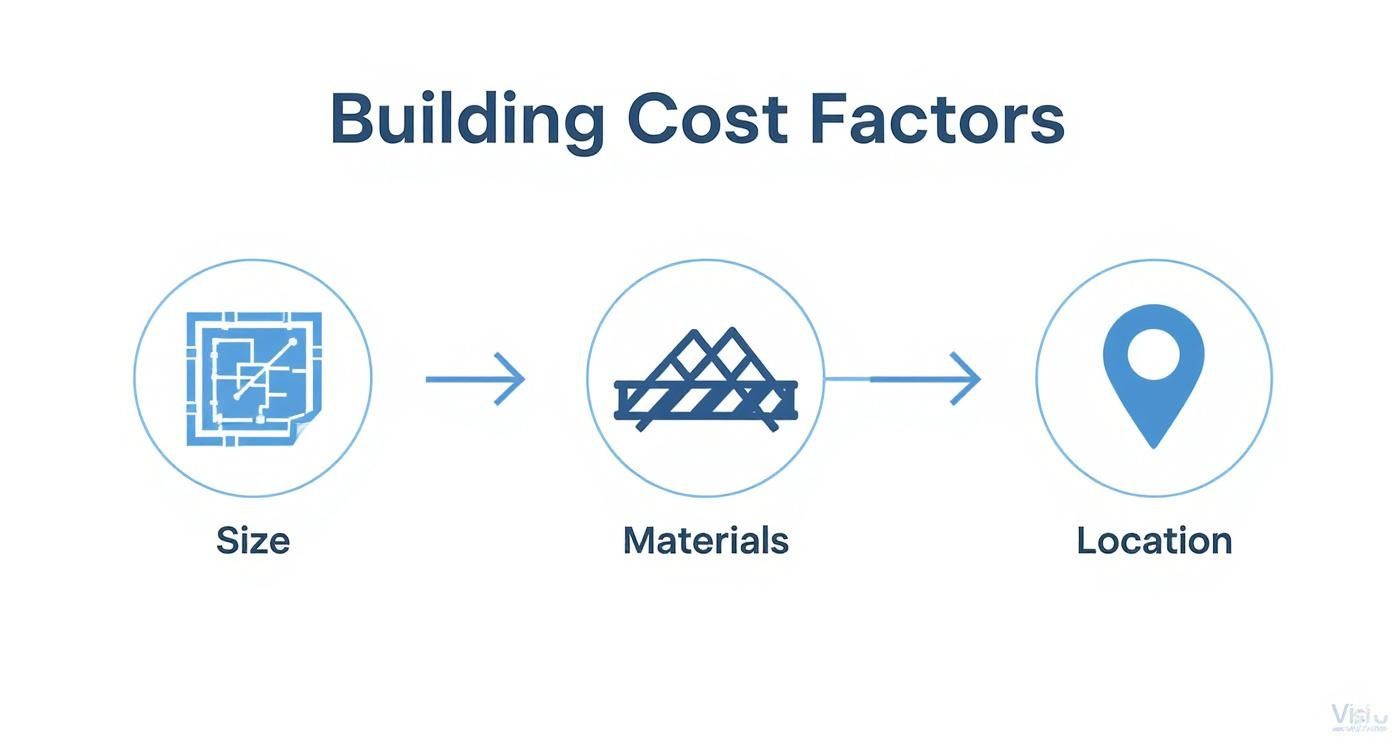
As you can see, these three elements are the biggest drivers of your project's budget, which is why planning ahead is so important.
Manufacturing, Delivery, And Site Preparation
While the permits are getting approved, two key things are happening at the same time. First, every component of your building is being precision-manufactured in a controlled factory environment. Each beam, panel, and piece of trim is cut, welded, and drilled to your project's exact specs.
Simultaneously, your property is getting prepped for construction. This means clearing and leveling the land and, most importantly, pouring the concrete foundation according to the engineered plans. This parallel workflow is a huge advantage of pre-engineered systems, as it dramatically shortens the overall project timeline.
Once the foundation has cured, the prefabricated components are delivered straight to your job site. Every part arrives clearly labeled and organized, ready for a fast and smooth assembly.
On-Site Assembly And Final Completion
This is where your vision truly takes shape. The pre-engineered parts are systematically bolted together by a skilled construction crew right on your foundation. Because everything was designed to fit together perfectly, the building's frame and shell go up in a fraction of the time it takes for conventional construction.
Want to see this last step in more detail? Check out our overview of the Icon Steel metal building installation process.
Once the main structure is standing tall, the finishing work begins. This includes installing doors, windows, and insulation, plus adding any interior framing or exterior finishes like brick or stone. This final phase completes your building journey, turning that initial idea into a solid, ready-to-use reality.
Answers to Your Top Questions About Modern Metal Buildings
Even after you've seen all the benefits, it's completely normal to have a few questions before kicking off a big project. We get it. Below, we’ve put together straight answers to the most common questions we hear about modern metal buildings, so you can feel confident moving forward.
How Energy Efficient Are Metal Buildings?
One of the biggest myths we hear is that metal buildings are freezing in the winter and scorching in the summer. The truth? Modern metal buildings are often more energy-efficient than traditional construction, and it all comes down to the insulation.
The deep wall cavities and roof structure in a pre-engineered steel building are perfect for packing in thick, high-R-value insulation. When you pair that with advanced options like insulated metal panels (IMPs), you create an incredibly tight building envelope that cuts down on air leaks and heat transfer. This means your HVAC system doesn't have to work nearly as hard, saving you a serious amount of money on energy bills every single month.
What Is The Real Lifespan Of A Steel Building?
These buildings are designed to go the distance. Seriously. Thanks to modern galvanized coatings like Galvalume®, which fights off rust and corrosion, these structures are built to stand for decades with very little upkeep.
It’s common for high-quality steel buildings to come with impressive warranties, like a 40-year paint finish warranty and even a 50-year structural warranty. That kind of long-term protection isn't just a promise; it reflects the true durability of steel. A well-cared-for steel building can easily last anywhere from 50 to 100 years.
Can I Customize The Interior Layout?
Absolutely—and this is where steel buildings really shine. By using clear-span framing technology, we eliminate the need for any pesky interior support columns. What you get is a completely open, unobstructed space from wall to wall.
This structural freedom puts you in total control of the floor plan. You can design an airy open-concept home, a massive retail showroom, or an efficient manufacturing floor without a single column getting in your way. And down the road, if your needs change, that open layout makes reconfiguring the space much easier and more affordable.
Is Financing Available For These Projects?
Yes, financing is definitely an option for modern metal building projects, just like it is for any other type of construction. Many of our clients successfully get funding through a few different avenues.
You can look into traditional bank loans, financing from a credit union, or even work with specialized lenders who really understand pre-engineered building systems. If you need a starting point, we can often connect you with trusted financing partners to help find a plan that works for your budget.
Ready to bring your vision to life with a building that's strong, stylish, and built to last? The team at Icon Steel Buildings is here to help you design the perfect structure for your needs. Start your project today by requesting a free quote!