
Your golf cart is more than just a ride around the course or the neighborhood—it’s a real investment. To keep that investment in top shape, a dedicated golf cart storage building is one of the smartest moves you can make. It goes way beyond what a simple tarp can do, offering a secure shelter that will dramatically extend the life and performance of your cart.
Why Dedicated Storage Is a Smart Investment
Think of a purpose-built storage building as an insurance policy for your golf cart. It’s not just about keeping it dry; it’s a strategic play to protect your asset from the things that quietly wear it down over time. The biggest culprits? Sun, moisture, and extreme temperatures.
A simple fabric cover might seem like enough, but it can actually trap moisture against the cart, inviting rust and mold. Meanwhile, constant sun exposure will fade the paint, crack the upholstery, and fry sensitive electronics. A real building eliminates all those risks from day one.
Protecting Your Valuable Asset
A high-quality structure creates a controlled environment that shields your cart from all the harmful stuff. This proactive approach pays off in real, tangible ways for any owner:
- Preserves Resale Value: A cart that’s been stored indoors looks better and runs better, which means it will command a much higher price when you decide to sell.
- Reduces Maintenance Costs: Keeping your cart out of the elements prevents premature wear on the batteries, tires, and body. That means fewer trips to the repair shop.
- Enhances Security: A lockable building is your best defense against theft and vandalism. It’s simple peace of mind.
This is especially true for electric carts, where battery health is everything. Extreme heat and cold can absolutely destroy a battery’s lifespan and efficiency, leading to expensive replacements. A dedicated building is also crucial for proper golf cart winter storage, protecting your vehicle during the off-season.
A Growing Need for Quality Storage
The golf cart market is booming. It was valued at USD 1.86 billion and is expected to hit USD 3.29 billion by 2034. This explosion in ownership means more people are realizing they need a proper storage solution to protect what they’ve bought. In fact, proper sheltering has been proven to cut maintenance costs by up to 30%—a number that makes the decision a financial no-brainer. You can find more insights on the growing golf cart market on thebrainyinsights.com.
By investing in a dedicated structure, you are not just buying a shed; you are building a defense system for your asset that pays for itself over time through lower repair bills and sustained value.
This same logic of protecting your assets applies to bigger toys, too. If you have other recreational vehicles, you might want to check out our guide on durable metal buildings for RVs.
At Icon Steel Buildings, we specialize in tough, American-made steel solutions built for exactly this kind of protection. Our customizable structures offer the ultimate defense against weather, pests, and theft, making sure your golf cart stays in mint condition for years to come.
Finding the Perfect Size for Your Storage Needs
Picking the right size for your golf cart storage building is a lot like designing a good garage—it’s not just about squeezing the vehicle inside. You need room to breathe, to work, and to store your gear without tripping over everything. A building that’s too small is a constant headache, but getting it just right makes life a whole lot easier.
Think of it this way: your golf cart is the main event, but you also need space for everything that goes with it. That means plenty of room to maneuver the cart in and out, a dedicated spot for the charging station, and shelving for coolers, cleaning supplies, and other accessories. The goal here is a functional, organized space, not just a glorified parking spot.
This diagram shows how a dedicated storage building is a multi-faceted approach to protecting your investment through longevity, lower costs, and enhanced security.
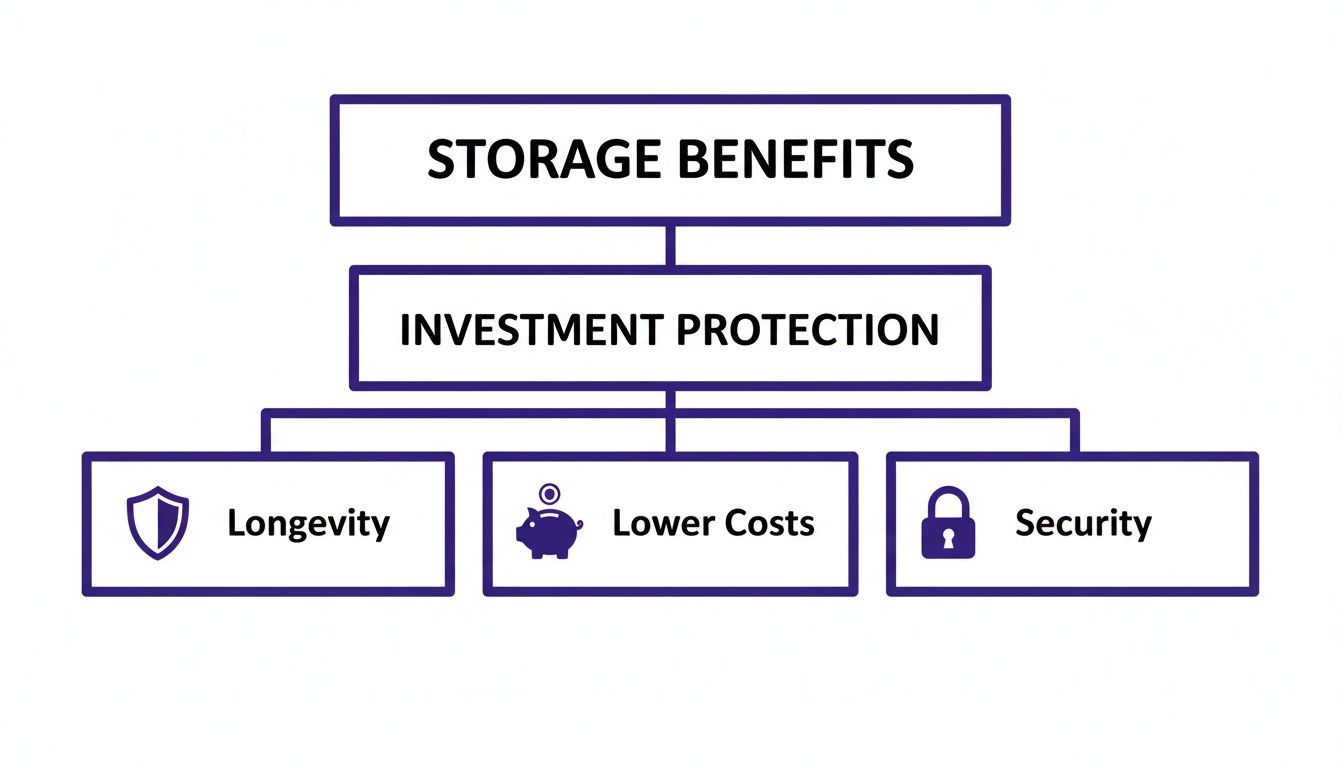
The real takeaway is that the benefits of proper storage build on each other, leading to a smarter, more cost-effective ownership experience in the long run.
Standard Golf Cart Dimensions
Before you start sketching out plans, you need to know the basic footprint of your cart. While models can vary a bit, most golf carts fall into a few standard size ranges.
- Two-Seater Carts: These are the most common and usually measure around 8 feet long by 4 feet wide.
- Four-Seater Carts: With that extra row of seats, these stretch out to about 9-10 feet long.
- Six-Seater Carts: The big “limo” carts can be 12 feet long or even more.
These numbers are just your starting point. Now, let’s talk about adding that all-important buffer space.
Planning Your Building’s Footprint
One of the most common mistakes people make is ordering a building that barely fits their cart. Don’t do it. A good rule of thumb is to add at least 3-5 feet of clearance on all sides of the vehicle. You’ll thank yourself later when you can open the doors all the way, walk around the cart without turning sideways, and easily access the charging port.
For instance, if you have a single 8-foot-long two-seater, a 9-foot-long shed just isn’t going to cut it. You’d want a building at least 13-15 feet long to give you comfortable access from the front and back. For a better sense of how different layouts can work, you can explore various metal building floor plans to spark some ideas.
Remember, it’s always better to have a little extra space you don’t use than to need a little extra space you don’t have. Planning for more room now saves you from major headaches later.
To make things even clearer, we’ve put together a table with our recommended minimum building sizes. These dimensions account for the cart itself, plus that crucial clearance for easy access and storing your accessories.
Recommended Building Sizes for Golf Cart Storage
| Number of Carts | Typical Cart Type | Minimum Recommended Building Size (Width x Length) | Key Considerations |
|---|---|---|---|
| One Cart | 2-Seater or 4-Seater | 12′ x 16′ | Gives you plenty of space for one cart, a small workbench, and storage shelves. |
| Two Carts | Two 2-Seaters | 20′ x 20′ | Allows for side-by-side parking with a comfortable walkway down the middle. |
| Three Carts | Mixed 2/4-Seaters | 24′ x 24′ | This is a standard two-car garage size, offering great flexibility for parking and storage. |
| Small Fleet | 4+ Carts | 30′ x 40′ | Perfect for commercial use, with ample room for multiple charging stations and a maintenance area. |
At the end of the day, the perfect size comes down to your current needs and your future plans. If you think you might add another cart down the road or want some space for a workshop, it’s smart to factor that in now. That’s how you ensure your golf cart storage building will serve you well for years to come.
Choosing Your Building Materials and Custom Features
Once you’ve nailed down the perfect size, the next step is the fun part: deciding what your golf cart storage building will actually be made of and how it will function. This is where you transform a simple shed into a secure, long-lasting structure that truly works for you. We’re not just talking about four walls and a roof; we’re building a permanent home for a valuable asset.
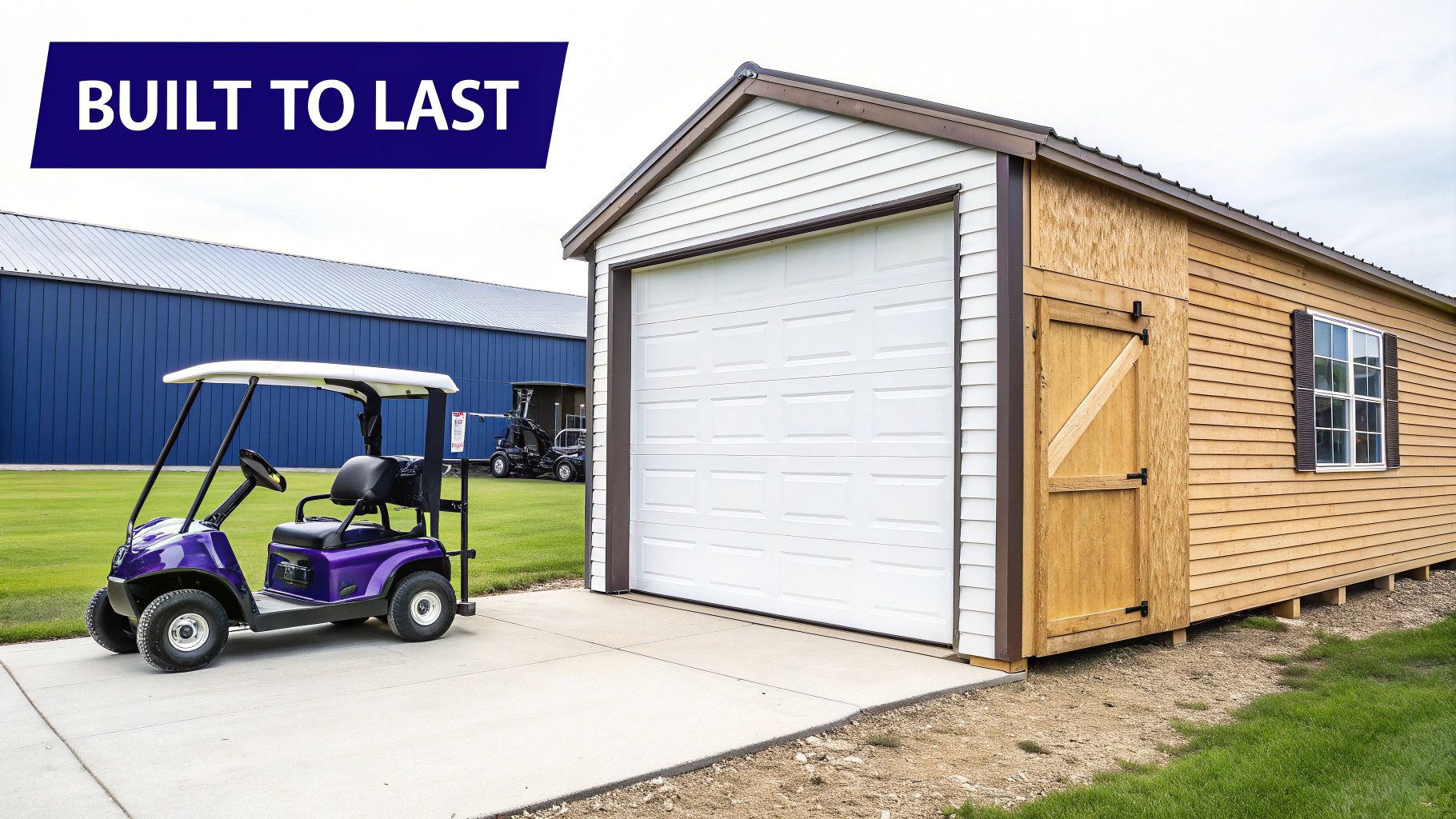
The material you choose is easily the most critical decision you’ll make. Wood sheds are everywhere, but when you look at the facts, modern steel buildings are the clear winner in just about every way.
Why Steel is the Superior Choice
Think of your building material as the backbone of its lifespan. Wood is vulnerable to a whole host of problems that steel simply shrugs off.
- Pest-Proof: Termites, carpenter ants, and other wood-boring insects can turn a wooden structure into sawdust from the inside out. Steel is inorganic—pests can’t eat it. Simple as that.
- Rot and Mold Resistance: Moisture is wood’s worst enemy. It leads to rot, warping, and mold that can compromise the entire building. Steel doesn’t rot or support mold growth, making it a perfect fit for any climate.
- Fire Resistance: Steel is non-combustible. It won’t fuel a fire, offering a level of protection wood could never achieve. This is a huge safety advantage, especially when you’re storing an electric vehicle with its charging equipment.
- Low Maintenance: A steel building is about as “set it and forget it” as you can get. Forget spending your weekends repainting, staining, or replacing rotten planks. A quick wash-down once in a while is all it ever needs.
These advantages add up to a much lower total cost of ownership over the years. You’re not just saving money on repairs and pest control—you’re saving your valuable time.
Functional Design for Your Needs
Beyond the raw material, it’s the custom features that make a storage building truly useful. You’re not just buying a one-size-fits-all box; you’re designing a structure that fits your property and how you plan to use it.
The massive popularity of golf carts in North America, where the U.S. drives 95% of the market’s revenue, has pushed the demand for better storage. As more people invest in high-end, enclosed carts—a market segment growing at 6.50% annually—the need for tough, weatherproof buildings to protect them has skyrocketed.
This is where thoughtful design really pays off.
Doors Windows and Roof Styles
How you get in and out of your building is just as important as its size. You have a few options, and each one makes a big difference in day-to-day convenience.
- Roll-Up Doors: This is the go-to choice for vehicle storage, and for good reason. They’re tough, space-efficient, and give you a wide-open bay for easy maneuvering. No need to worry about clearance for swinging doors.
- Walk-In Doors: Adding a separate pedestrian door is one of the smartest upgrades you can make. It lets you pop in to grab tools or check on your cart without having to open the main vehicle door every single time.
- Windows: Don’t overlook the power of natural light. A couple of well-placed windows can make the space feel bigger and more inviting, plus you won’t need to flip on a light just to find something during the day.
- Roof Styles: You can choose from regular, A-frame (boxed-eave), or vertical roof styles. This lets you match the look of your home or improve how the building sheds rain and snow in harsh climates.
A well-designed building is where practicality meets curb appeal. The right mix of doors, windows, and roof style ensures your new storage building isn’t just functional, but a great-looking addition to your property.
Thinking through these features ahead of time is how you get a building that feels like it was made just for you. With Icon Steel Buildings, you have the freedom to combine these elements to create your perfect setup. To see what’s possible, explore our options for custom steel buildings and start designing a structure that fits your needs perfectly. Our American-made steel ensures that whatever you design, it’s built to last.
Preparing Your Site for a Smooth Installation
A beautiful, strong golf cart storage building is only as good as the ground it’s built on. Before any steel shows up at your door, getting the site prep right is the single most important thing you can do for a smooth, long-lasting installation. It’s a lot like building a house—you wouldn’t put up walls on a muddy, uneven patch of dirt and expect it to last. The same goes for your steel building; a solid start guarantees a structure you can count on for decades.
The whole process boils down to a few key steps, from picking the right spot on your property to handling the local paperwork. Nail these details from the get-go, and you’ll save yourself from some major headaches later on.
Location and Leveling Your Site
First things first, you need to choose the perfect location. Look for a spot that’s easy to get to but also respects your local setback requirements. These are just rules that say how far a building needs to be from property lines, roads, and other structures.
Once you’ve got your spot picked out, the ground needs to be made perfectly level. This isn’t just a suggestion; it’s a non-negotiable for any steel building. A level site ensures the frame goes up straight, the panels line up flush, and the doors swing open and shut just right. Even a tiny slope can throw the whole structure out of whack and cause serious problems down the line.
A level foundation is the bedrock of your building’s integrity. An uneven base puts uneven stress on the frame, which can lead to warped panels, misaligned doors, and a shortened lifespan for the entire structure.
Good drainage is also a must. You don’t want water pooling around your foundation, as it can cause erosion and a whole host of issues. To keep your site high and dry, it’s a good idea to look into expert drainage solutions for yards.
Navigating Permits and Building Codes
Before you even think about digging, you need to have a chat with your local city or county office about building permits. It’s a step people often forget, but it’s absolutely critical. Building without the right permits can lead to hefty fines, or worse, an order to tear your new building down.
Here’s a simple game plan:
- Call Your Local Building Department: Just ask them what kind of permits you’ll need for a storage building of your size.
- Submit Your Plans: You’ll probably need to give them the building plans from Icon Steel Buildings so they can review them.
- Schedule Inspections: They’ll let you know if any inspections are needed while the foundation and building are going up.
Dealing with regulations can feel like a hassle, but your local officials are there to help. Asking questions upfront is the best way to keep your project moving smoothly and ensure everything is built safely and to code.
The Gold Standard: A Concrete Foundation
While you might hear about other options, a poured concrete slab is the undisputed gold standard for any permanent steel building. It gives you a stable, rock-solid base that can easily handle the weight of the structure and your golf carts without ever shifting or settling.
A concrete foundation brings a lot to the table:
- Ultimate Stability: It creates a perfectly flat, rigid surface that locks your building down against heavy wind and whatever else the weather throws at it.
- Moisture Barrier: Concrete is great at keeping ground moisture out, which protects your carts and gear from rust and mildew.
- Durability and Longevity: A professionally poured slab is built to last for decades, giving you a worry-free foundation for years to come.
Getting the slab right is crucial. For a complete rundown on what it takes, check out our article on steel building foundation requirements. It’s a deep dive that makes sure your base is built to last. When you invest in a proper concrete foundation, you’re protecting your new building for the long haul.
Designing for Functionality and Long-Term Value
A solid structure is a great start, but it’s the thoughtful details that turn a simple shed into a high-performance home for your golf cart. To really protect your investment, you need to think beyond just the walls and roof. We’re talking about the features that make daily use a breeze and extend the life of your cart. These aren’t just nice-to-haves; they’re essential for getting real, long-term value.
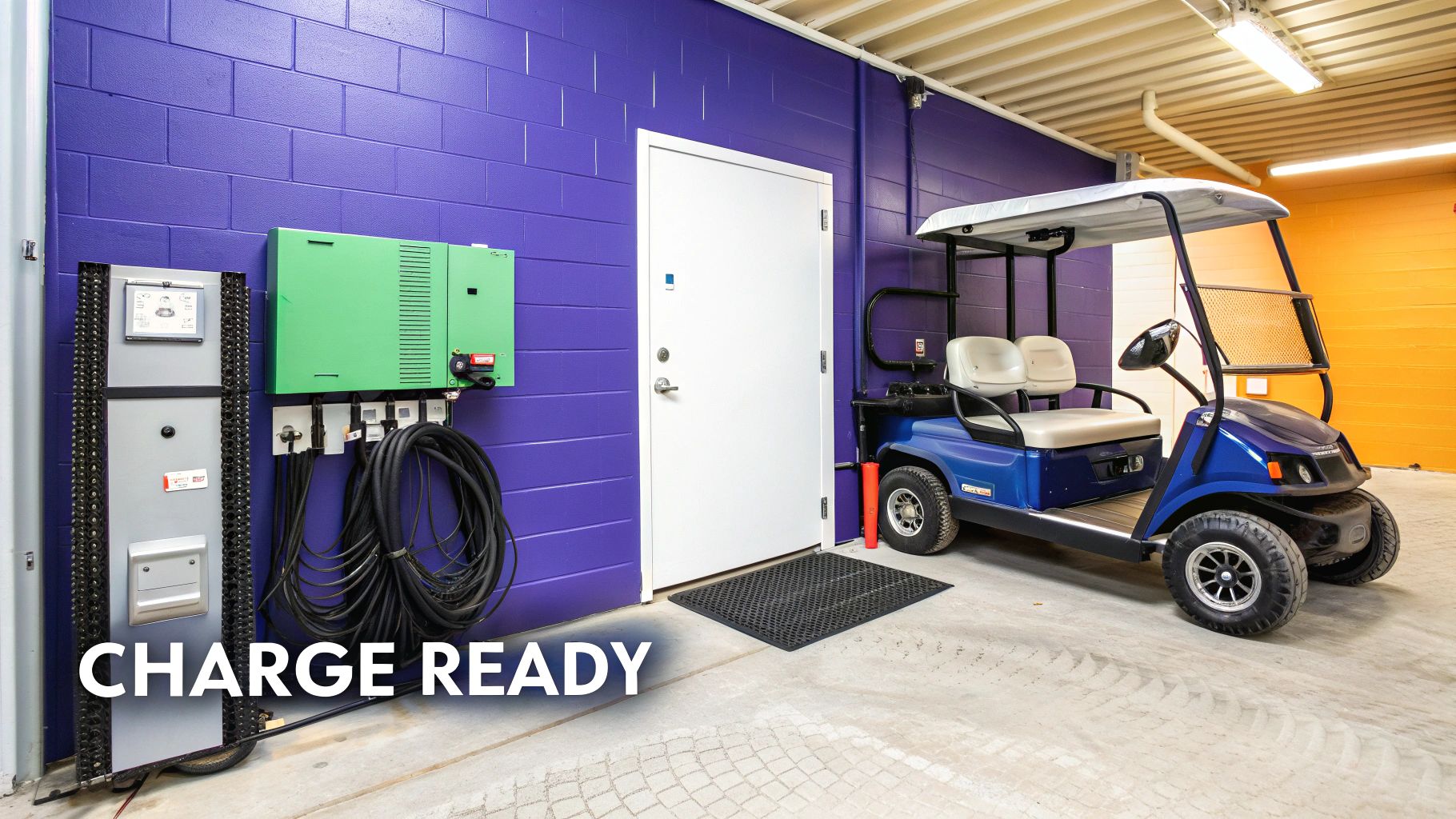
The entire industry is shifting as electric golf carts now make up over 60% of sales in key markets. This isn’t just a trend—it’s completely changing how we need to think about storage. Modern buildings have to be ready for robust charging setups, with some commercial courses needing to power up fleets of 200 carts at a time. To get a better sense of this shift, check out the latest golf cart market research from Grand View Research.
Powering Up Your Golf Cart Storage
For an electric cart, getting the electrical setup right is the single most important upgrade you can make. Just running an extension cord from your house isn’t a safe or permanent fix. A proper, dedicated electrical system is the only way to protect your cart, your batteries, and the building itself.
Here’s how to do it right:
- Dedicated Circuits: Your charger needs its own circuit. This is non-negotiable. It stops you from overloading your home’s system, which can lead to tripped breakers or, even worse, a fire.
- Safe Outlet Placement: Have a professional install GFCI (Ground Fault Circuit Interrupter) outlets at a convenient height. Make sure they are well away from any potential water exposure to keep charging safe and simple.
- Future-Proofing: You might only have one cart today, but what about tomorrow? It costs very little extra to wire for a second charging station while the electrician is already there. Trying to add it later will be a much bigger, more expensive headache.
Hiring a professional electrician is the best move. They can map out the perfect layout and ensure you have the right amperage, whether you’re charging a single cart at home or a handful for your business.
Securing Your Investment
Let’s face it, your golf cart is a valuable piece of equipment. A flimsy door with a cheap padlock is basically a welcome mat for thieves. A secure building gives you the peace of mind that your property is actually protected.
Real security is about creating layers of defense, not just relying on one thing. Combine a few of these upgrades to make your building a truly tough target.
- Reinforced Doors: Go for high-quality roll-up or walk-in doors made from heavy-gauge steel. The best ones have strong locking mechanisms built right into the frame itself.
- Upgraded Locks: Toss that standard padlock. A heavy-duty deadbolt or a disc lock is far more difficult for someone to cut or pick.
- Motion-Sensor Lighting: This is one of the most effective and affordable deterrents out there. Installing motion-activated floodlights on the exterior will send would-be thieves running.
These simple upgrades can transform your storage shed from a vulnerable target into a secure vault for your cart and anything else you keep inside.
Climate Control and Ventilation Essentials
Extreme heat and humidity are silent killers for golf carts. High temperatures can slash your battery’s lifespan and fry sensitive electronics, while damp, stagnant air leads to rust, corrosion, and mold. Your first line of defense is proper ventilation and climate control.
Protecting your golf cart’s battery is paramount. Extreme heat can reduce a lead-acid battery’s lifespan by nearly 50%, turning a long-term asset into a recurring expense.
Even some basic ventilation features will make a world of difference. Here’s what you should consider:
- Ridge Vents: Installed along the peak of the roof, these vents let hot air escape naturally, preventing your building from turning into an oven.
- Louvered Vents: Placed on the walls, these encourage a cross-breeze that keeps the air moving, lowers humidity, and prevents mustiness.
- Insulation: If you live in a place with harsh summers or cold winters, insulation is a game-changer. It regulates the internal temperature, which is absolutely critical for preserving your battery’s health and performance.
By planning for these functional needs from day one, your golf cart storage building will do more than just sit there—it will actively protect your investment for years to come.
Why Choose an American-Made Steel Building
When you’re investing in a structure to protect your golf cart, the origin of the steel and the standards behind its construction really matter. Choosing an American-made steel building from Icon Steel isn’t just about flying the flag; it’s a smart decision for superior quality, durability, and a smooth customer experience from day one.
“American-made” isn’t just a label—it’s a promise. It means your building is fabricated from commercial-grade, US-sourced steel that has to meet incredibly strict quality controls. Unlike some imported alternatives that can be a real gamble on quality, our steel is engineered for maximum strength. That ensures your golf cart storage building will stand up to whatever Mother Nature throws at it for decades.
This commitment to quality is the bedrock of how we treat our customers. We believe getting the right storage solution should be a straightforward, even enjoyable process, not a complicated headache.
The Icon Steel Buildings Advantage
Everything we do starts with a conversation. During our first design consultation, we sit down with you to understand exactly what you need—from the size of your cart (or fleet of carts) to any custom features you’ve been dreaming of. This hands-on approach guarantees the final product is a perfect fit for both your property and your purpose.
Once we nail down the design, our team drafts precise blueprints for a structure that’s not just functional but built like a fortress. This focus on getting it right at every stage brings some key benefits your way:
- Superior Durability: Using high-quality American steel means your building is far more resistant to rust, corrosion, and dings.
- Precision Engineering: Every component is manufactured to exact specifications, which makes the assembly process smoother, faster, and more secure.
- Reliable Support: Because we manage the entire process right here in the US, you get clear communication and dependable support from a team that’s always just a phone call away.
Choosing an American-made building means you’re investing in peace of mind. You’re not just buying a shed; you’re getting a long-term asset backed by domestic quality standards and customer service you can actually count on.
Our dedication to excellence is tied directly to the American steel we use, a topic we dive into deeper in our article on why we only use US-made National Steel.
Ultimately, when you partner with Icon Steel Buildings, you’re choosing a premium, reliable solution designed to protect what’s important to you. From the first call to the final delivery, we’re committed to providing a stronger, longer-lasting structure that gives you total confidence in your investment.
Your Top Questions About Golf Cart Storage Buildings
As you get closer to choosing the right storage for your golf cart, a few questions are bound to pop up. That’s perfectly normal. Getting straight answers is the best way to feel confident about your decision. Here are the most common things we get asked about designing and installing golf cart storage buildings.
We’ll cover everything from the initial budget to the final steps of getting your building up and ready to use.
How Much Does a Steel Golf Cart Storage Building Cost?
There’s no one-size-fits-all answer here—the final cost comes down to the size, features, and where you’re building it. A simple, no-frills garage for a single cart might only run a few thousand dollars, while a large, insulated commercial building is a more serious investment.
The price tag is directly influenced by a few key things:
- The building’s final footprint (width, length, and height)
- The gauge of the steel and the style of roof you choose
- Any customizations, like roll-up doors, walk-in doors, and windows
The only way to get a truly accurate number is to get a custom quote. This way, you’re only paying for what you actually need, with no fluff. At Icon Steel Buildings, we put together detailed quotes based on your exact design.
Can I Put the Storage Building Together Myself?
You absolutely can. Many of our steel building kits are designed with the DIYer in mind. All the parts show up pre-drilled, and the instructions are straightforward, making it a totally doable project for anyone with some basic construction know-how.
Of course, for bigger or more intricate projects, bringing in a professional contractor is always a smart move. The most critical step, whether you build it yourself or hire a pro, is making sure your foundation is perfectly level before a single piece of the frame goes up.
Do I Need a Permit for My Golf Cart Shed?
This is a big one, and the honest answer is: it depends. Whether you need a permit is decided by your local city or county rules and the size of your planned building. A lot of small sheds might fly under the permit radar, but larger golf cart storage buildings almost always require one.
Before you buy a thing or even think about digging, your first call should be to your local planning or zoning department. They’ll give you the specific rules, setback requirements, and any paperwork you need to fill out. Getting this right from the start saves a world of headaches later on.
What’s the Best Foundation for a Metal Building?
For a permanent steel storage building, nothing beats a poured concrete slab. It’s the undisputed champ for providing a stable, level surface that anchors your structure securely against wind, rain, and whatever else nature throws at it.
A concrete slab does more than just hold the building down—it keeps ground moisture from seeping inside and can easily handle the weight of multiple golf carts and other heavy gear. While you might see other options like gravel pads, a concrete slab offers the best long-term strength and protection for your investment.
Ready to design the perfect, secure home for your golf cart? Icon Steel Buildings offers durable, American-made steel solutions that are fully customizable to your needs. Get your free quote today!