
Metal Shop Building Ideas give you a sturdy, easy-to-build workshop that adapts to your needs—whether you’re a homeowner carving out extra storage, a farmer stashing equipment, or a small business expanding operations. Steel frames go up faster than wood or concrete and stand the test of time.
Why Metal Shops Are A Smart Choice
Metal shops shine when flexibility and durability matter most. Homeowners can carve out drive-through bays for landscaping gear or lofted nooks to stash holiday decorations. Meanwhile, farmers and small businesses benefit from clear-span layouts that free up 100% of the floor space—no columns to work around.
Clear-Span Framing In Action
This overview highlights how clear-span framing creates an uninterrupted open area. Spread out heavy machinery, stack pallets high, or lay out your workstations without ever bumping into a support column.
- Faster assembly time compared with wood or concrete
- Low maintenance requirements reduce long-term costs
Market Outlook
The metal building systems market is on a steep climb. Valued at USD 22,475.4 million in 2025, it’s projected to reach USD 49,399.3 million by 2032—that’s an 11.9% CAGR. For a deeper dive into these figures, check out the full report here.
In every scenario, steel shops deliver lasting value—quick to erect, simple to maintain, and built to endure.
Planning Your Shop Layout
Stepping into a well-designed shop feels natural—every tool within reach and every workspace arranged just so. Before sketching the first line, take a moment to envision your workflow. What machines will dominate the floor? Where will you store raw materials and finished projects?
Layout isn’t just walls and doors—it’s the engine that keeps your shop humming.
Understanding User Needs
The decision tree infographic breaks down three primary shop users—homeowners, business operators, and farmers—each with distinct space and equipment demands.
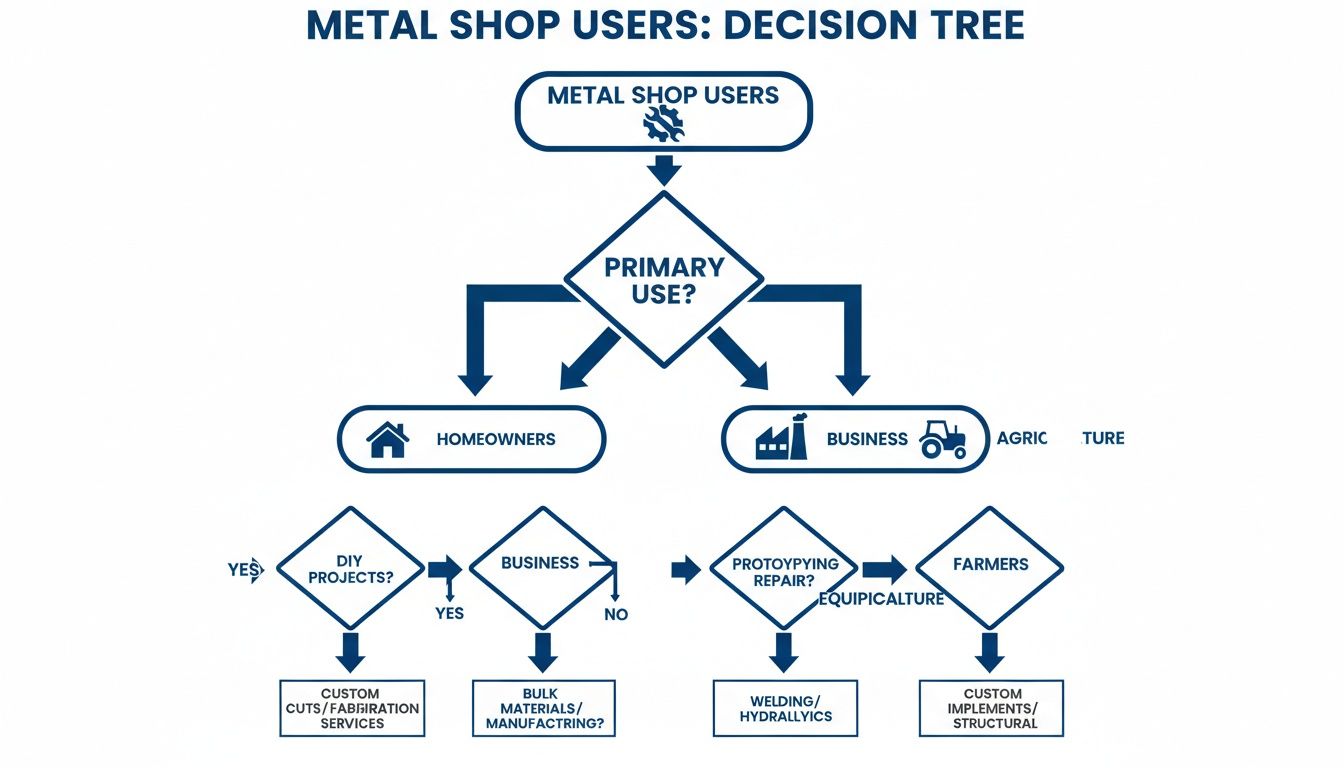
- Homeowners often work in 600–1,000 sq ft, juggling benches, small power tools, and clever storage nooks.
- Business Operators need 1,500–3,000 sq ft to handle heavy machinery alongside clear safety aisles.
- Farmers require 3,000+ sq ft, with drive-through doors and open space for tractors and trailers.
Clear-Span Vs Column-Supported Layouts
Balancing open space against structural support is key. Each approach has its perks:
- Clear-Span Layout
• Completely open floor plans for oversized equipment
• Ideal for cranes or overhead hoists
• Higher upfront framing cost - Column-Supported Layout
• More cost-effective framing with regular support points
• Structural columns that double as mounting stations
• Requires careful aisle planning around each column
Shop Footprint Recommendations
Here’s a quick look at ideal shop sizes based on how you plan to use the space:
Recommended Shop Sizes for Different Uses
| Use Case | Recommended Size | Typical Footprint (sq ft) |
|---|---|---|
| Hobbyist | 600–1,000 sq ft | 600–1,000 |
| Business | 1,500–3,000 sq ft | 1,500–3,000 |
| Agricultural | 3,000+ sq ft | 3,000+ |
Use this as your starting point—then fine-tune for aisle widths, lighting placement, and future expansion.
For a deeper dive into floor plan layouts and customizable options, check out our comprehensive metal building floor plans guide.
Choosing Materials And Structural Features
When you’re planning a metal workshop, picking the right steel gauge and framing approach is crucial—it’s the sweet spot between durability and cost. Pre-engineered kits work wonders for straightforward builds, while custom framing lets you tailor every beam to your space.
Purlin spacing really matters when loads start piling up—think of purlins as the rungs on a ladder that support your roof under heavy snow or gusty winds. And don’t forget corrosion-resistant coatings; they act like a shield, extending the life of your building no matter the climate.
- Clear-span frames free up 100% of your interior floor area, so you can park tractors, stack material, or run forklifts without obstacles.
- Insulated liners can cut heating and cooling costs by up to 50%, making year-round operation a breeze.
The screenshot shows key frame connections and panel joints. These details play a big role in preventing leaks and speeding up construction.
It highlights the precise joint details that keep water out and make assembly straightforward.
38% increase in steel tonnage highlights strong growth.
In 2024, leading contractors averaged 2,394 tons of steel—a 38% jump—and managed 493,040 sq ft of building space. Read more on steel market trends in the Tyler Building report. Discover detailed framing options in our complete metal building frame guide.
Incorporating Doors Windows And Insulation
Few elements shape the daily flow of a metal shop more than its doors. Metal sliding, roll-up, and bi-fold options make moving forklifts, tractors, and tool carts in and out feel effortless.
High-placed windows flood the workspace with natural light while keeping glare and heat at bay. You get a bright interior without turning your shop into a sauna.
Insulated panels—built with foam cores and vapor barriers—can slash your heating and cooling bills by 50%.
The screenshot illustrates insulated panel installation details.
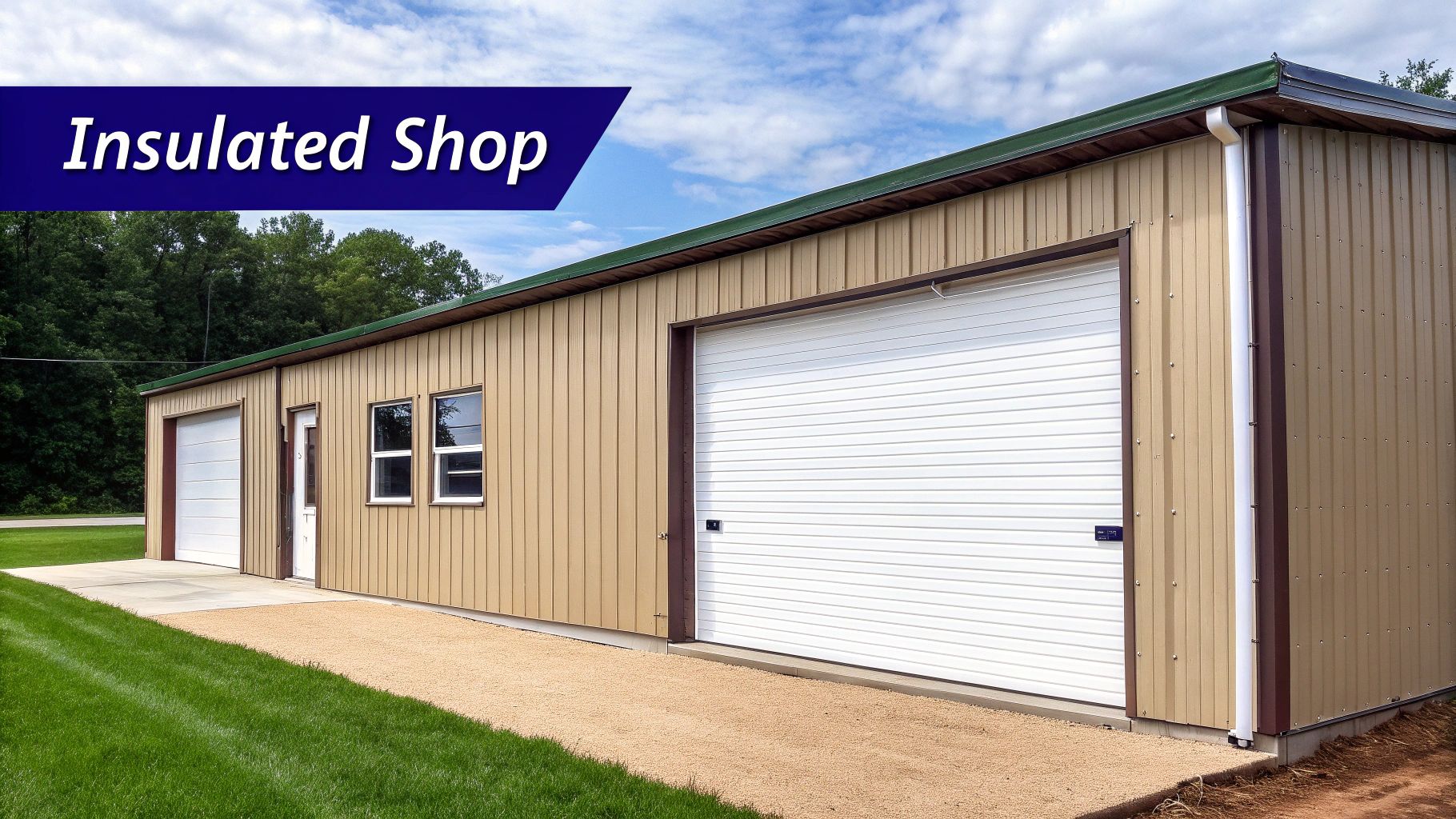
You’ll notice how tight seams and quality seals stop thermal bridging in its tracks.
Balancing Light Ventilation
Fresh air and daylight go hand in hand if you plan carefully. Pair operable windows with vented doors to draw in cool breezes without sacrificing your insulation’s R-value.
A good rule of thumb is a 1:20 window-wall ratio—enough glass for airflow, but not so much that you lose heat on chilly mornings.
- Door Sizes: 12×12 ft roll-up doors are ideal for heavy equipment
- Explore steel building insulation options in our complete guide
Insulated panels have spurred 160% market growth and can trim energy costs by 30–50%. Check out the full growth forecast in this industry report.
Managing Permits And Site Preparation
Getting your head around local approvals early saves headaches down the road. Think of zoning rules, building permits and environmental reviews as the foundation for a smooth build.
Start by:
- Researching zoning codes and setback requirements with local authorities.
- Scheduling soil testing and engineering inspections to confirm ground stability.
- Designing grading plans that include drainage swales to channel runoff.
- Planning out utility hookups and erosion control measures before you grade the site.
Mapping out drainage and erosion control readies your lot for sturdy foundations, whether you opt for a classic concrete slab or pier footings.
The screenshot shows a graded site with barriers and staked points.
Notice how the swales slope away from the build zone and each stake pinpoints a footing location.
By following these steps, you keep your metal shop build on schedule and avoid unwanted surprises.
Evaluating Budget And Material Costs
Nailing down realistic figures for materials, labor, and site work is the foundation of any successful metal shop project. After all, steel costs can swing by as much as 30% annually, so building in a cushion early on will save headaches (and dollars) later.
As soon as you start sketching layouts and sizing your footprint, lock in rough material quotes. Then revisit them whenever market prices shift—ideally every quarter.
Budget Planning Tips
Manufacturers frequently bundle wall panels, framing, and fasteners when you buy a full kit, so always ask about package deals.
Here are a few strategies to keep your budget on track:
- Compare multiple suppliers to spot seasonal discounts.
- Order complete kits for volume pricing on panels and rafters.
- Set aside 5–10% of your budget for price fluctuations.
- Factor in site prep costs: grading, soil testing, and drainage.
For deeper breakdowns on kit pricing, check out our detailed guide on steel building kit prices.
Material Cost Comparison
Before you finalize your design, use the table below to weigh per-square-foot costs against durability ratings. It’ll help you choose the right balance of upfront expense and long-term performance.
Material Cost Comparison
| Material Type | Cost per Sq Ft | Durability Rating |
|---|---|---|
| Standard Panel | $5.50 | Medium |
| Insulated Panel | $9.25 | High |
Even though insulated panels cost about 70% more per square foot, they deliver superior longevity and energy savings. Over a 20-year span, that insulation can slash heating and cooling expenses while reducing upkeep.
Crunch these numbers against projected ROI, and you’ll clearly see where investing a bit more today pays dividends in reduced maintenance and lower utility bills down the road.
Examples Of Successful Metal Shop Designs
We dive into three real-world projects to see how metal shop buildings take shape: a homeowner’s garage, a farm equipment bay, and a commercial fabrication shop.
Each case study walks you through before-and-after photos, detailed floor plans, feature picks, and actual budgets.
Homeowner Garage
Our smallest build clocks in at 800 sq ft, perfect for weekend projects or a personal workshop.
It packs in:
- A clear-span interior for flexible tool and bench layouts
- A 10×10 roll-up garage door for vehicle access
- Full insulation to stay comfortable year-round
This straightforward design wrapped up at $45,000, delivering big value in a compact package.
Farm Equipment Bay
The mid-sized bay spans 30×50 ft, offering a clear-span shell that handles oversized tractors with ease.
In the side-by-side floor plan comparison below, you’ll notice:
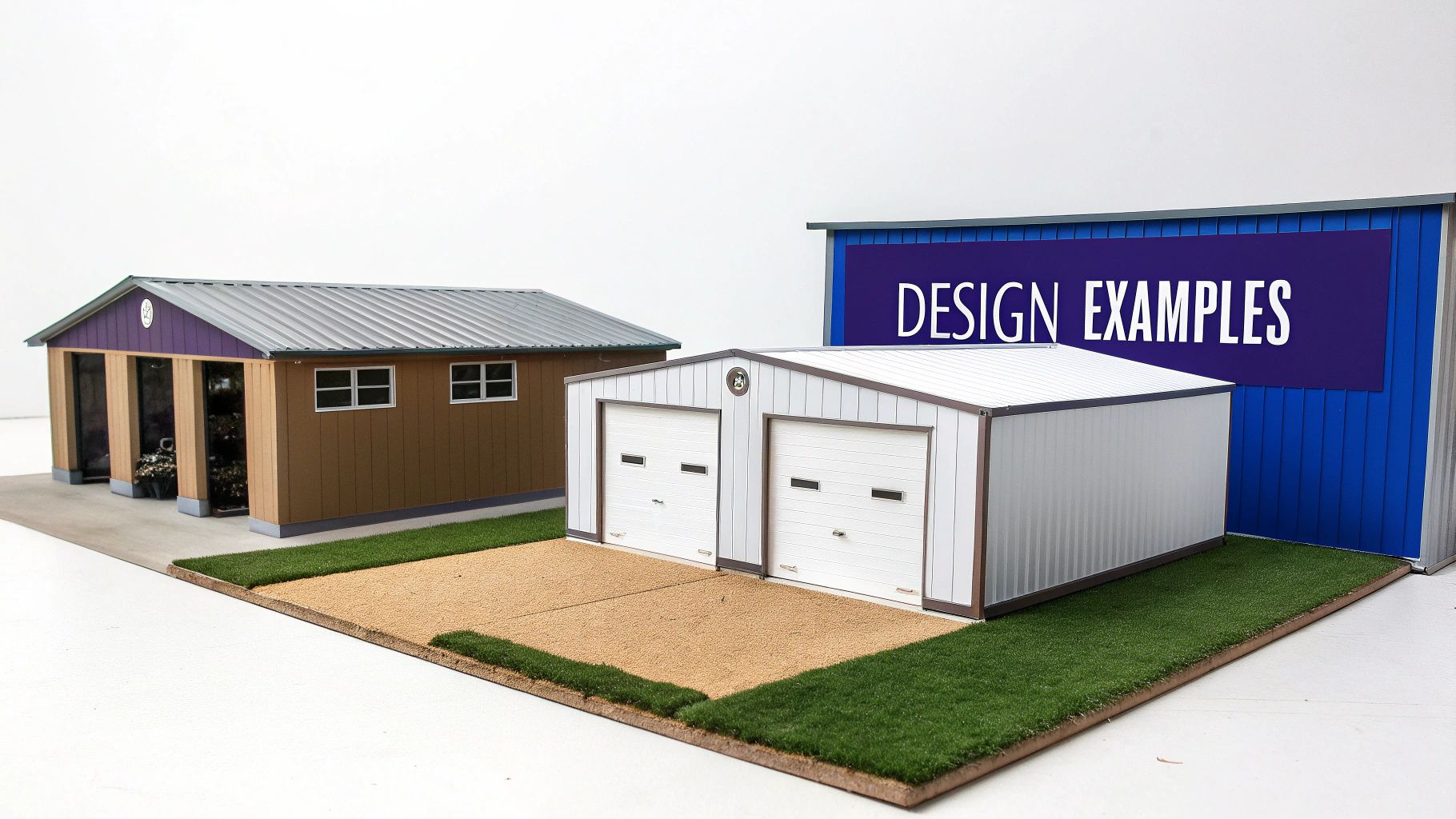
- An extra-wide roll-up door for large machinery
- High eave height to fit tall attachments
- Reinforced concrete floor with integrated wheel tracks
Despite the heavy-duty specs, this bay landed in a mid-range budget bracket.
Commercial Fabrication Shop
For a full-scale operation, we designed a 5,000 sq ft facility complete with a mezzanine office.
Key features include:
- Dual 12×14 overhead doors for simultaneous loading
- A 1,500 sq ft mezzanine for admin, storage, and break areas
- Crane rails and LED high-bay lighting for efficiency
This complex build came in around $300,000, reflecting industrial-grade requirements and code-driven customizations.
Want to see more? Check out our gallery of completed projects for deeper dives into floor plans, budgets, and design tips.
Learn more at https://iconsteelbuildings.com/completed-projects/
Ready to plan your own shop? Partner with Icon Steel Buildings to get started: https://iconsteelbuildings.com