

When you're mapping out a new garage, the numbers can feel a bit abstract. So, what are the standard dimensions of a 3 car garage? Most builders will tell you the sweet spot is around 36 feet wide by 24 feet deep, which gives you a comfortable 864 square feet to work with.
If you're tight on space, a more compact but still functional option is 32 feet wide by 22 feet deep. But just a few extra feet can make a world of difference.
Unpacking the Standard 3 Car Garage Dimensions
Think of choosing a garage size like picking out a t-shirt. Sure, a small might fit, but a large gives you room to breathe and move around comfortably. The same logic applies here—those extra feet are what separate a simple parking spot from a truly functional, multi-use space.
This infographic breaks down what those differences look like in the real world.
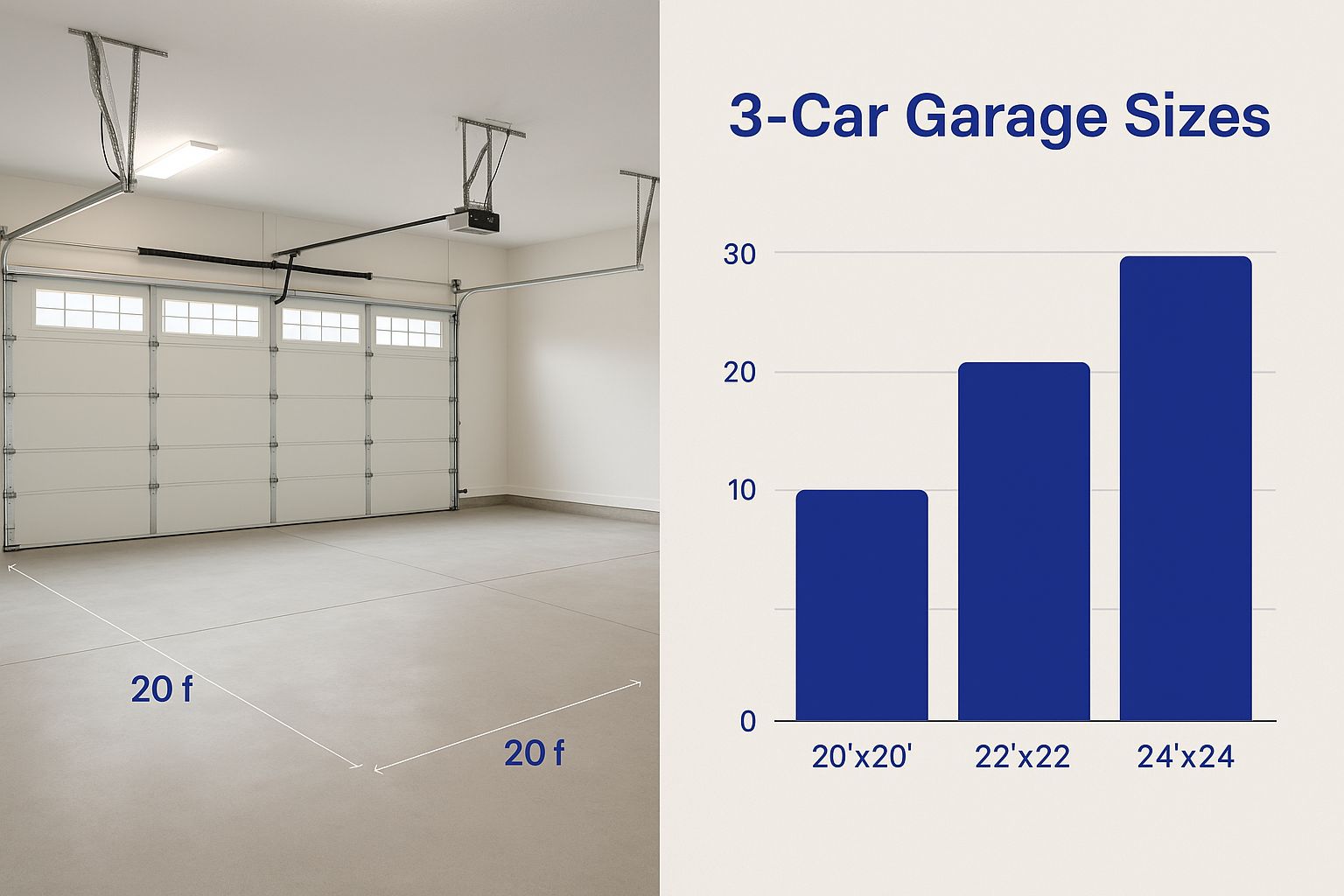
As you can see, the layout you choose directly impacts its utility, taking you from basic parking to an expansive workshop area.
From Minimum to Spacious
Let’s dig into what these different size tiers really mean for your day-to-day use.
- Minimum (30’ W x 20’ D): This is the tightest you'd want to go. It’ll hold three smaller sedans, but you’ll be opening doors carefully. Forget about much storage beyond a few small items hung on the walls.
- Average (36’ W x 24’ D): This is the most common choice for a good reason. It comfortably fits a mix of vehicles, including a larger SUV or truck, with plenty of room to walk around. You can easily add storage shelving or a small workbench without feeling squeezed.
- Spacious (40’+ W x 28’+ D): Now we're talking. A garage this size becomes a true multi-purpose hub. You’ll have enough room for big vehicles, extensive storage systems, a dedicated workshop, and even home gym equipment—all without tripping over anything.
To help you visualize these options, here's a quick reference table.
Comparing 3 Car Garage Dimension Tiers
This table shows how different dimensions translate into usable square footage and what each size is best suited for.
| Size Tier | Typical Width x Depth (Feet) | Approximate Square Footage | Best For |
|---|---|---|---|
| Minimum | 30' x 20' | 600 sq. ft. | Just parking for three small to mid-size cars, with very limited storage. |
| Average | 36' x 24' | 864 sq. ft. | A mix of vehicles (including an SUV), plus room for shelving or a workbench. |
| Spacious | 40' x 28' | 1,120+ sq. ft. | Large vehicles, a full workshop, home gym equipment, and extensive storage. |
This breakdown should make it easier to decide which footprint best matches your needs.
A three-car garage can range from a snug 30' x 20' up to a massive 60' x 30'. Many homeowners find that a spacious layout, like a 30 x 40 metal building, delivers the perfect blend of vehicle storage and functional workspace, giving them the best of both worlds.
Why Your Vehicle Size Dictates Everything
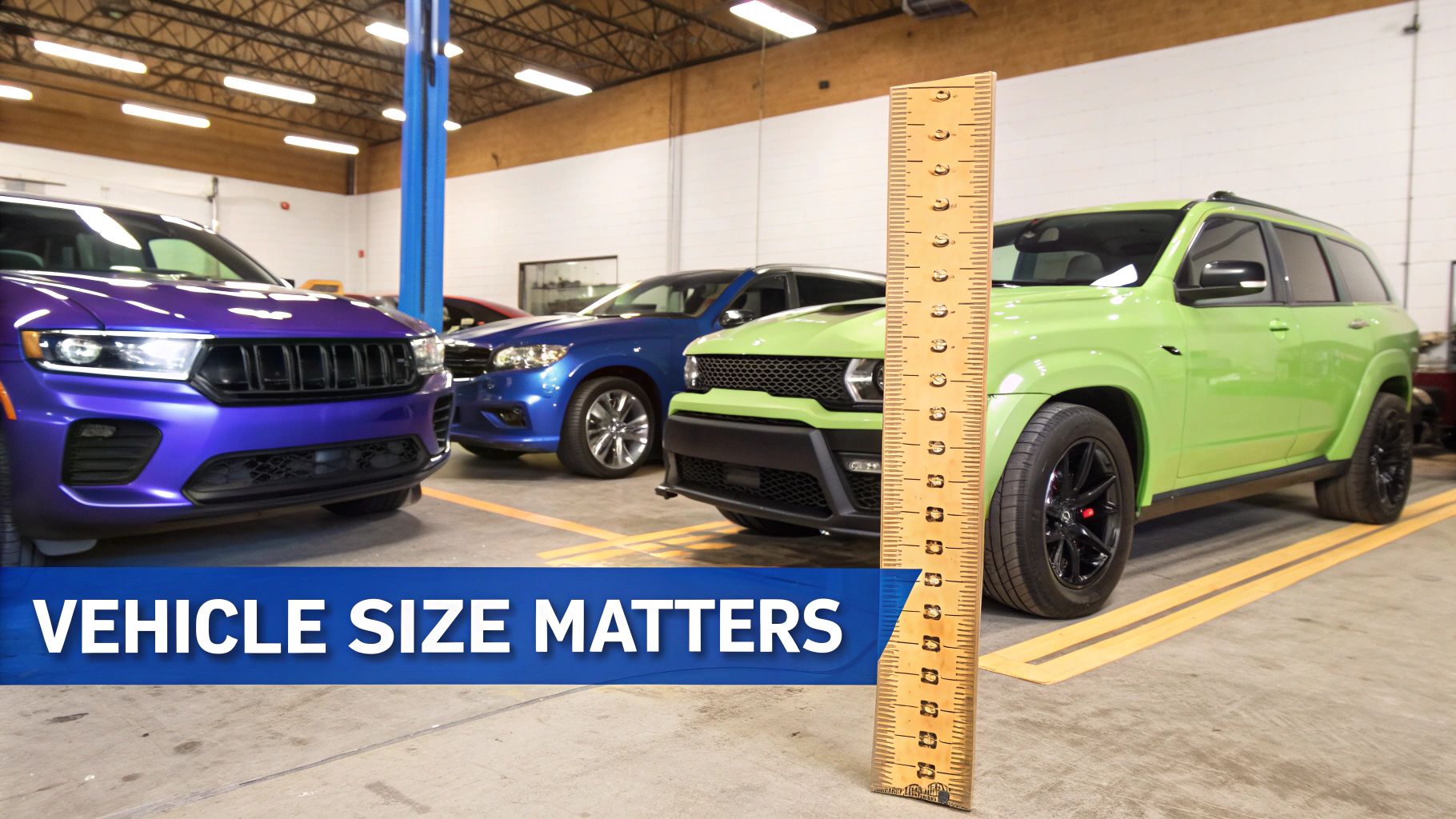
Before you even think about the dimensions of a 3 car garage, you need to take a hard look at what you're parking inside it. A garage designed for a trio of compact sedans is a completely different animal than one built to house a full-size truck, a big SUV, and a crossover. This is one area where one-size-fits-all thinking just doesn't fly.
Imagine trying to cram a Ford F-150, a Chevrolet Suburban, and a Honda CR-V into a space measured for three Honda Civics. It's a recipe for disaster. That F-150 alone is nearly 20 feet long and over 6.5 feet wide before you even flip out the mirrors. This is where those "standard" measurements you see online can get you into trouble, fast.
Beyond Length and Width
The raw numbers on a spec sheet don't tell the whole story. You've got to think about how you actually use the space every single day. This is where a little concept called "door-swing clearance" becomes your best friend.
Door-swing clearance is that crucial, invisible buffer zone you need around each vehicle. It’s the space that lets you open your doors all the way without dinging your paint, scratching your spouse's car, or punching a hole in the drywall. Aim for a minimum of 2.5 to 3 feet between cars and from cars to the walls.
Forgetting this buffer is a classic—and seriously frustrating—mistake. It's the difference between a functional, stress-free garage and a daily parking puzzle that makes you wish you'd just parked on the street.
Planning for Today and Tomorrow
Your current fleet is the starting point, but smart planning means looking ahead. Do you see a bigger truck, a boat, or even an RV in your future? Planning for that extra size now will save you a world of headaches later. This is especially true for specialty vehicles; you can even find detailed guides for something like a metal building for an RV to see just how much more space they demand.
To get this right, just follow these simple steps:
- Measure Everything: Get out the tape measure. Record the length, width (with mirrors out!), and height of your biggest vehicle.
- Add Your Buffers: Tack on at least 5 feet to the total width for door swing and another 3-4 feet to the depth so you can actually walk around.
- Check Door Height: Make sure the garage door opening is tall enough for your highest vehicle, especially if you have a roof rack or plan on getting one.
Measuring your cars isn't just a suggestion; it's the absolute foundation for building a garage that actually works for your life.
Designing a Layout Beyond Vehicle Parking
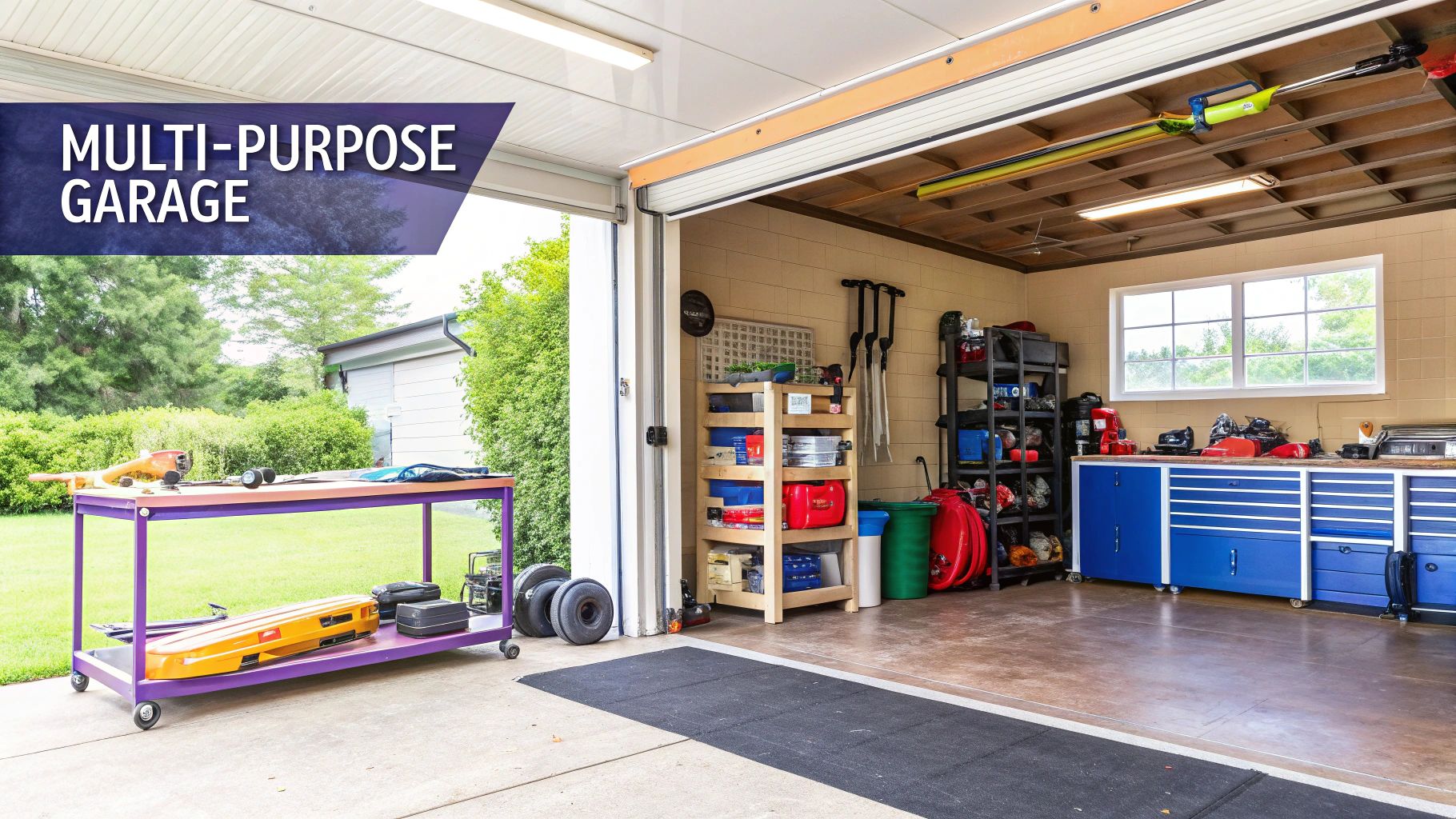
Let's be honest, a modern garage is rarely just a place to park cars anymore. Today, homeowners want that space to pull double-duty as a workshop, a home gym, a massive storage hub—or sometimes all three at once. This means you have to stop seeing it as a parking lot and start treating it like a versatile, multi-purpose room.
The secret to unlocking all that potential is baked into the dimensions of a 3 car garage you choose from the start. A few extra feet in width or depth can completely transform the space, taking it from a tight squeeze into a highly functional area that truly supports your lifestyle.
Creating Functional Zones
Think of your garage layout like an open-concept living room. You wouldn't stick your couch right in the middle of the walkway to the kitchen, would you? The same logic applies here. You need to create distinct "zones" for different activities to keep the space organized, safe, and efficient.
For instance, simply extending the garage depth from a standard 22 feet to 26 feet creates the perfect workshop space along the back wall. That four-foot buffer keeps your expensive tools and workbench safe from car bumpers and gives you a dedicated project area without ever needing to move a vehicle.
Likewise, adding a bit more width is a game-changer for storage. It gives you room for sturdy, floor-to-ceiling shelving along the walls where you can store bulky items like holiday decorations, camping gear, and tools without feeling claustrophobic.
A well-planned garage layout anticipates future needs, not just current ones. By zoning the space for parking, storage, and activities, you create a room that adds significant value and utility to your home.
Practical Layout Strategies
Mapping out your zones doesn’t have to be complicated. Even a quick sketch on a piece of paper can help you visualize the flow and make sure every square foot has a job.
- Workshop Zone: Reserve the back wall for a workbench, power tools, and pegboards. This keeps sawdust and project messes contained and away from your cars.
- Storage Zone: Dedicate one of the side walls to heavy-duty shelving. It's the perfect spot for storage totes, coolers, and other large items you don't need every day.
- High-Traffic Zone: Keep a clear path from your garage door to the entry of your house. This is a non-negotiable for safety and convenience, especially when you're hauling in groceries.
This kind of smart, functional design is a core principle when planning structures like a combined metal building home and shop, where every inch has to be optimized. By applying these simple zoning ideas, your garage becomes an active extension of your home, not just a place to stash your stuff.
Factoring in Garage Doors and Ceiling Height
While the footprint establishes your garage’s width and depth, the entry points and vertical space are what truly define its day-to-day usefulness. The garage doors and ceiling height are critical details that dictate what you can actually fit inside, long after the foundation is poured.
Simply put, getting these vertical dimensions of a 3 car garage right is non-negotiable.
When it comes to the doors, you have a few strategic combinations. Three single doors give a classic, symmetrical look, but a more popular and practical layout combines one double door (typically 16 feet wide) with one single door (8 to 10 feet wide). This setup gives you tons of flexibility, making it easy to park two daily drivers in the double bay while keeping the single bay free for a third car, a workshop, or all your lawn equipment.
When you're planning your layout, it's a good idea to explore the various garage door options available. Their specific design can influence both the width and height you'll ultimately need.
Why Taller is Often Better
A standard garage door is 7 feet tall, which works just fine for most sedans, crossovers, and small SUVs. However, that standard height quickly becomes a major roadblock for bigger vehicles.
If you own a lifted truck, a full-size SUV, or plan on using a roof rack for skis or cargo, an 8-foot-tall door is pretty much essential. That single extra foot of clearance is the difference between smooth sailing and a frustrating, costly accident.
Similarly, the interior ceiling height has a massive impact on the garage's utility. A standard 8-foot ceiling is common, but bumping that up to a 10- or 12-foot ceiling opens up a whole new world of possibilities.
This additional vertical space is a game-changer. It unlocks the potential for high-level overhead storage racks or even an automotive lift, effectively doubling your garage's usable space without increasing its footprint.
This is especially important in structures where the integrity of the vertical supports is key. You can learn more about how the vertical structure contributes to overall strength by understanding the components of a metal building frame. Ultimately, investing a little extra in height at the beginning pays off with long-term flexibility for whatever you need down the road.
How Local Building Norms Shape Garage Size
Ever driven through a new town and noticed the garages just look… different? Maybe they seem huge in one area and almost comically snug in the next. You're not imagining things. The "standard" dimensions of a 3 car garage aren't set in stone; they're heavily shaped by powerful local and regional trends. What’s considered average in one place might be a luxury somewhere else.
This all comes down to land availability and cost. In dense urban or suburban areas where every square foot comes at a premium, you’ll naturally find more compact garage designs. Builders in these spots are focused on maximizing the living space of the home, which often means the garage is built to meet minimum functional needs without an inch to spare.
Regional Preferences and Vehicle Culture
On the flip side, head out to regions with more open space, and you'll see garage sizes expand dramatically. This is especially true in places where larger vehicles are just a part of the local lifestyle.
The demand for three-car garages is statistically higher in certain regions. In the Midwest, for example, spacious garages are far more common due to abundant land and a culture that favors trucks and recreational vehicles.
This cultural factor is a huge deal. If everyone on your block owns oversized trucks, boats, and RVs, a smaller garage won't just feel tight for your own gear—it could actually hurt your home's resale value down the line.
Making sure your garage plans align with local expectations is a smart investment. It’s a crucial step in any building project, particularly if the garage is part of a larger build. Using a comprehensive new home construction checklist can help you nail down these regional factors early in the planning stage.
Thinking through these local trends is a key part of the process, especially when you're buying a metal building. Ensuring your chosen dimensions fit the local character helps your investment make sense for both your needs and your neighborhood.
Common Questions About 3 Car Garages
As you start to nail down your garage plans, a few practical questions always pop up. Getting these sorted out early gives you the confidence to move forward, knowing you’ve covered all the important details.
What Is the Absolute Minimum Size for a 3 Car Garage?
You can technically squeeze a three-car garage into a 30-foot wide by 20-foot deep space. But let's be honest—that's going to be extremely tight. This setup really only works for three small, compact cars, leaving you with virtually no room for storage or even opening your doors without bumping something.
For a size that’s actually usable day-to-day, most builders will tell you to start at 32 feet wide and 22 to 24 feet deep. That little bit of extra space makes a world of difference, saving you from a lot of frustration.
How Much Extra Space Do I Need for a Large Truck?
If you’ve got a full-size truck or a big SUV, you need to think bigger from the start. A standard 22-foot depth just isn't going to cut it. You should be aiming for at least 24 to 28 feet deep to make sure your vehicle fits comfortably and you can still walk around it.
Don't forget about the door, either. A standard 8 or 9-foot wide door will feel cramped, so go for a 10-foot wide door instead. The bay itself should be at least 12 feet wide to give you enough room to maneuver without feeling like you're in a vise.
Planning for a larger vehicle isn't just about fitting it inside—it's about making the space practical. Extra depth and width prevent daily frustrations and protect your investment.
Will I Need a Building Permit for a 3 Car Garage?
Yes, you can pretty much count on it. A garage of this size is a major construction project, and your local authorities will require a building permit. This isn't just red tape; it's a process designed to protect you by ensuring your plans meet current safety codes, zoning rules, and property line setbacks.
Always, always check with your local building department before you start any work. They’ll give you a clear checklist of what’s needed, which helps you avoid costly fines or delays. Skipping this step is a recipe for a massive headache down the road.
At Icon Steel Buildings, we help homeowners design metal garages that perfectly match their vehicle and lifestyle needs. If you’re ready to build a durable, low-maintenance garage with the ideal dimensions, explore your options at https://iconsteelbuildings.com.