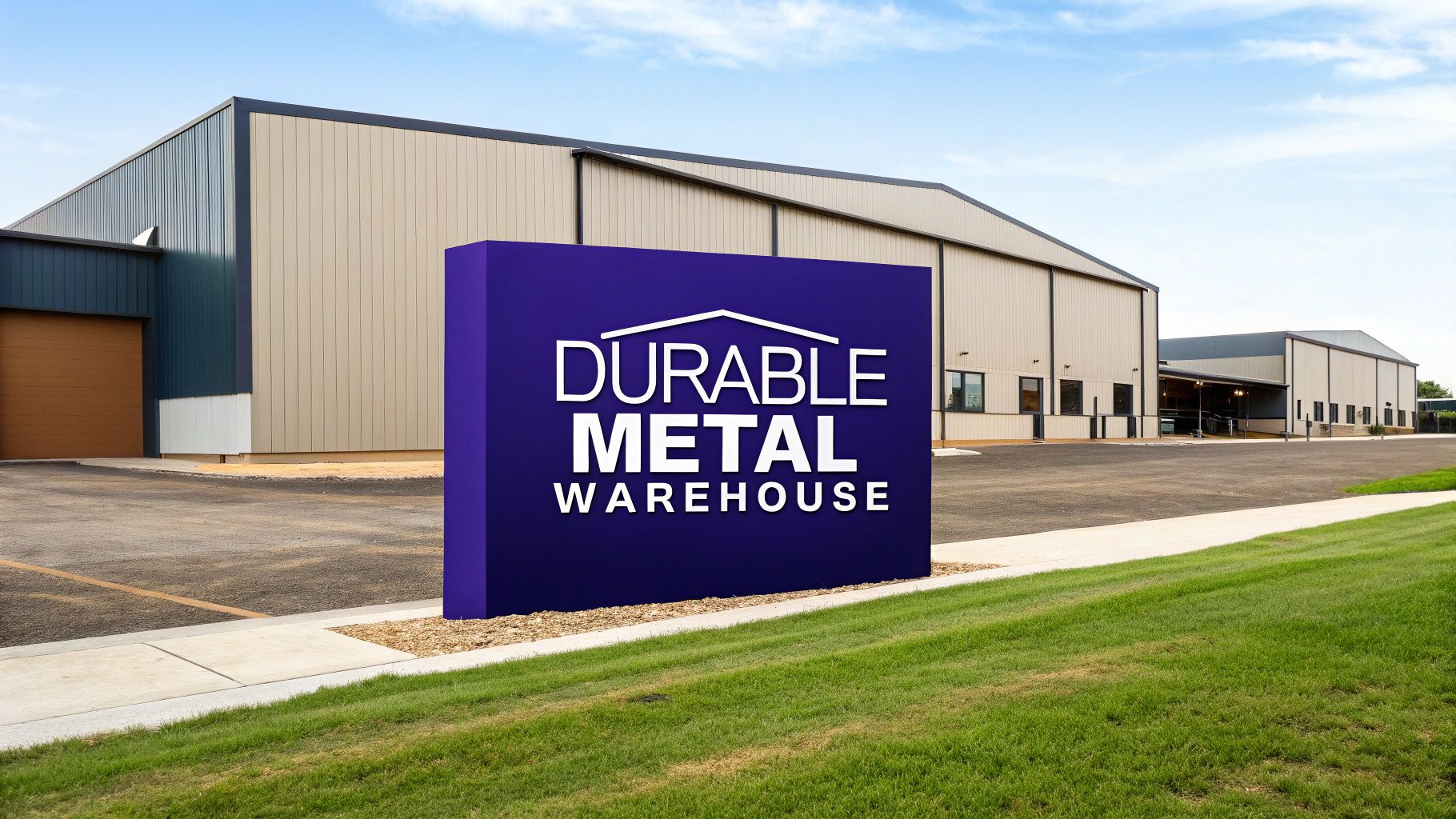
A modern metal building warehouse isn't just a structure; it's a strategic asset built for speed, durability, and serious financial efficiency. Think of it less like old-school construction and more like a high-performance industrial system where every single piece is precision-made. This approach dramatically slashes on-site construction time and labor costs right from the start.
Why Smart Businesses Choose Metal Warehouses
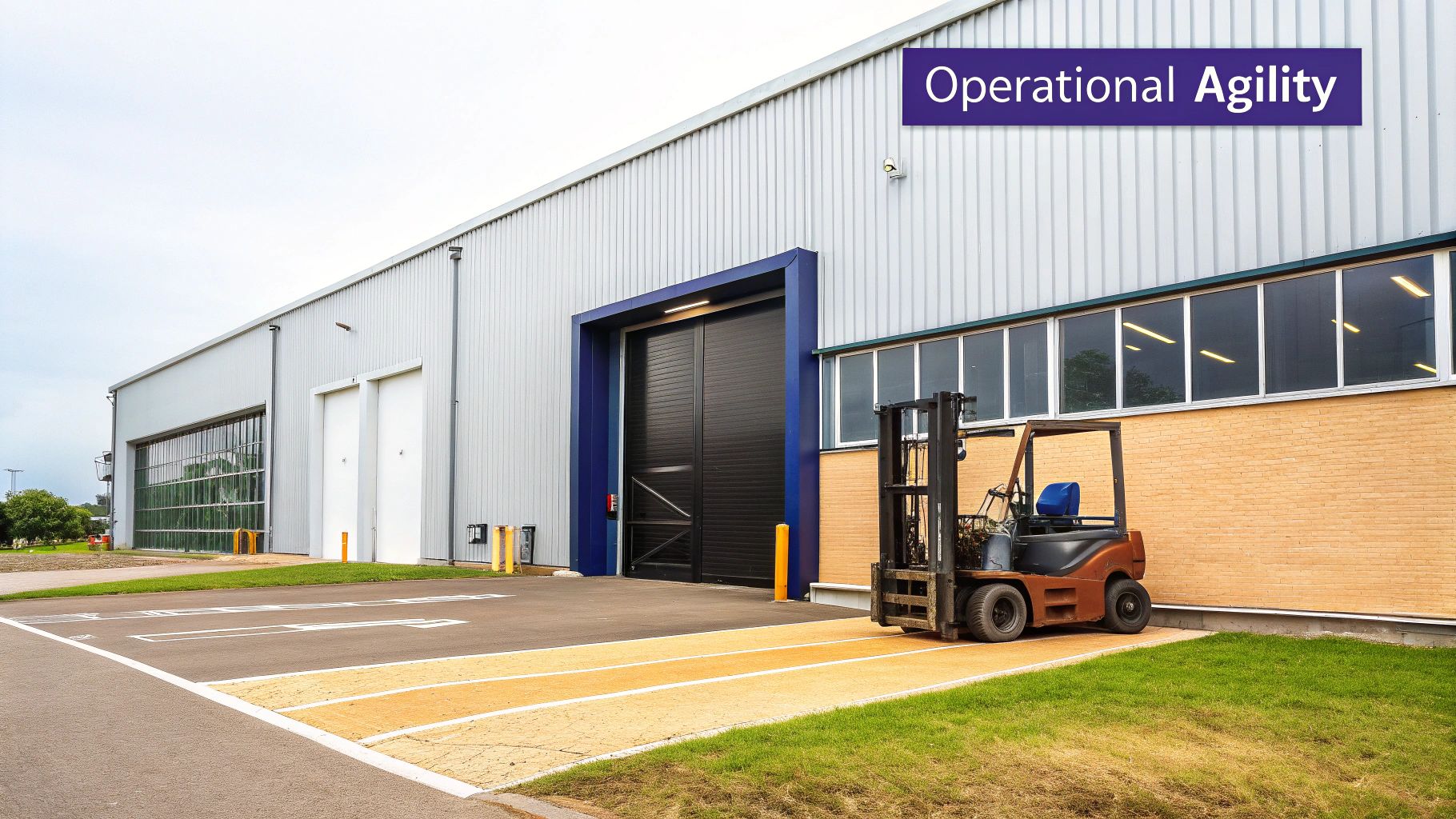
The days of seeing steel buildings as just simple tin sheds are long gone. Today, a pre-engineered metal warehouse gives you a real competitive edge. In industries like e-commerce and logistics where every second counts, being able to get a fully functional facility up and running in a fraction of the time it takes for traditional construction is a complete game-changer. That speed means you can open your doors and start generating revenue much, much faster.
So, how is this possible? It’s all in the manufacturing. The building’s components are made off-site in a controlled factory environment. While your foundation is being prepped, the steel framing, wall panels, and roof systems are already being built with incredible precision. When everything arrives on-site, it’s more of an assembly job than a ground-up build, which cuts down on weather delays and trims those labor hours.
Unlocking Long-Term Financial Efficiency
The financial upside goes way beyond just the initial build time. A metal warehouse is a solid investment in long-term savings and operational stability. Steel is naturally tough, which translates to lower maintenance costs over the life of the building.
- Pest and Rot Resistance: Unlike wood, steel is completely immune to termites, rot, and mold. That means no expensive chemical treatments or repairs down the road.
- Fire Resistance: Steel doesn't burn. This simple fact can lead to significantly lower insurance premiums compared to conventional buildings.
- Structural Integrity: A metal building won’t warp, crack, or split over time. You can count on the structure staying solid for decades with very little upkeep.
All these factors add up to a much lower total cost of ownership, making a metal warehouse a smart financial move for any growing business. The building’s longevity and minimal maintenance protect your investment and free up your cash for other things that matter.
By choosing a steel structure, you are investing in a building designed to last 50-100 years. This long-term durability ensures a stable asset that supports business growth for generations.
The Advantage of Design Flexibility
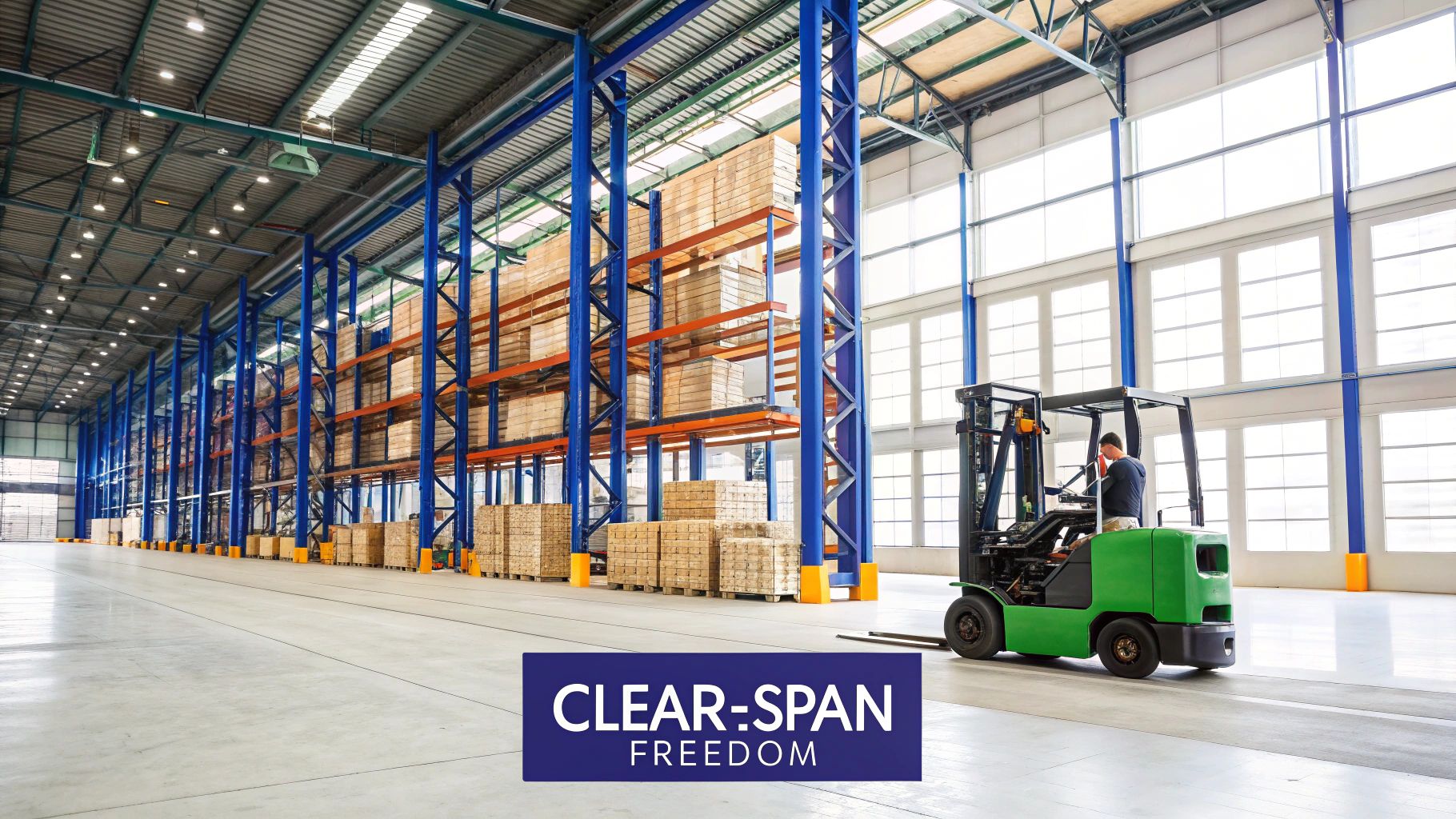
One of the most overlooked benefits of a metal building warehouse is its incredible design flexibility. The era of boring, boxy structures is over. Modern engineering allows for massive, wide-open interiors without any annoying support columns getting in the way—a feature known as clear-span design.
This unobstructed space is a huge plus for warehouse operations. It lets you maximize every square foot of floor space for racking systems, machinery, and forklift traffic. For a deeper look at how different structural options can be customized, you can learn more about warehouse steel buildings and see how they can be tailored to fit specific operational needs.
On top of that, the exterior can be customized to match any company's brand or look. You have options ranging from colored steel panels and brick facades to stucco finishes and large glass entryways. This versatility means your warehouse doesn't just have to be functional—it can also be a sharp, professional reflection of your company. It's this blend of practicality and modern design that makes steel a top choice for forward-thinking businesses.
Understanding Your Structural Design Options
The real magic of a metal building warehouse lies in its structural skeleton. This internal framework is what determines the layout, the workflow, and ultimately, how efficiently your entire operation runs. Getting the design right is like choosing the perfect chassis for a race car—it has to be built for its specific purpose.
This is where the engineering behind your building truly shines. Different frame types offer unique advantages, and understanding them is the first step toward creating a space that works for you, not against you. Let's break down the most common designs and see where they fit.
The Power of Clear-Span Design
Imagine a massive, wide-open space with zero interior columns. Not a single pillar in sight. That’s the essence of a clear-span design. This approach uses powerful overhead trusses to carry the entire weight of the roof across the building's full width, creating a completely unobstructed interior.
This design is the undisputed champion for any facility that needs maximum maneuverability and a totally flexible floor plan. It’s perfect for operations like:
- Large distribution centers where forklifts and other machinery need to move freely.
- Aircraft hangars built to house planes with massive wingspans.
- Indoor sports arenas that need wide-open fields for soccer, tennis, or equestrian events.
With no columns to work around, you have total freedom to arrange your racking, equipment, and production lines exactly as you need them. Every last square foot is usable space.
The core benefit of a clear-span metal building warehouse is its totally unhindered floor space. This design can stretch up to 200 feet or more without needing a single interior support column, offering unmatched operational freedom.
When Multi-Span Makes Sense
Now, let's picture that same huge building, but this time with a handful of interior columns placed in strategic locations. This is a multi-span design. While adding columns might seem counterintuitive, it's actually a brilliant, cost-effective solution for exceptionally wide buildings.
For a massive warehouse—say, something over 200 feet wide—a clear-span design would require enormous, heavy, and expensive steel trusses. A multi-span frame breaks up that distance with interior supports, which allows for a lighter and much more economical structure.
This makes it the go-to choice for:
- Mega-warehouses and enormous manufacturing plants.
- Facilities with fixed layouts that can easily incorporate columns.
- Projects where the main goal is achieving maximum width for the best possible price.
The key is smart placement. The columns are integrated right into the layout, often lining up perfectly with racking aisles or separating different work zones so they never get in the way.
Rigid Frame: The Workhorse Structure
The most common framework you'll find in the metal building world is the rigid frame. This is the versatile workhorse used in both clear-span and multi-span buildings. It's built from massive steel I-beams that are bolted together to create an incredibly sturdy, rigid structure.
This design is engineered to transfer all the roof and wall loads directly down into the foundation, giving the building exceptional strength and stability. It's the secret sauce that allows for the huge open spaces and incredible durability that steel buildings are famous for. To get a better look under the hood, you can explore the different types of metal building frames and see how they're engineered for peak performance.
Ultimately, matching the right structural "skeleton" to your business is one of the most important decisions you'll make. It directly impacts your budget, your daily operations, and your ability to grow and adapt in the future.
Mastering Site Planning and Foundations
The success of your metal building warehouse is decided long before the first steel beam ever goes up. It all starts with the ground itself. You wouldn't build a high-rise on a sand dune, and the same principle applies here—your steel structure needs a perfectly prepared base to stand strong for decades.
This pre-construction phase is your project's roadmap. Getting it right helps you dodge expensive delays, surprise costs, and nagging structural issues down the line. It's all about a smart approach to choosing your site, digging into local rules, and truly understanding the ground beneath your future warehouse. Trying to cut corners here is a recipe for failure.
Think of proper site planning as the ultimate insurance policy for your investment. It’s about more than just finding an empty lot; it's about making sure the land can actually support your vision and handle your day-to-day operations safely and efficiently.
Laying the Groundwork for Success
First things first: a thorough site assessment. This isn’t just about measuring acreage. You need to look at accessibility for big rigs, where your utility hookups are, and what the local zoning laws say. A piece of land might look perfect, but if it's zoned residential or lacks easy access to water and power, it's a logistical nightmare waiting to happen.
Next, you have to untangle the web of local building codes and permit requirements. Every city and county has its own set of rules for things like building height, property setbacks, and even specific wind and snow load ratings. Your metal building warehouse has to be engineered to meet—or, even better, exceed—these local standards. They're in place for a reason: safety.
Finally, soil testing is absolutely non-negotiable. A geotechnical report is like an X-ray of your land, analyzing the soil’s composition, density, and how much weight it can bear. This data is the literal foundation of your foundation design.
A professional soil test can flag problems like poor compaction, a high water table, or unstable soil. Finding these issues early means engineers can design a foundation that compensates for them, preventing a catastrophic failure years from now.
Choosing the Right Foundation Type
Once your site is prepped and you have the soil data in your hands, it's time to pick the right foundation. This is the unsung hero of your building, the part that transfers the entire weight of that massive steel structure safely into the ground. The best choice depends on your soil conditions, the size of your building, and what you’ll be using it for.
Here are the most common foundation systems for a metal building warehouse:
- Slab-on-Grade: This is the go-to for a reason—it's effective and budget-friendly. It’s a single, thick concrete slab poured right onto the prepared ground. It usually includes reinforced edges, called footings, where the main columns will sit. It’s perfect for stable, level ground.
- Pier and Beam: If your soil is less than ideal, this is the system you need. Concrete piers are drilled deep into the ground until they hit solid bedrock or stable soil. Beams are then laid across these piers, creating a level base for the building and completely bypassing the weak surface soil.
Getting this choice right is what ensures your structure will stand the test of time. For a deeper dive, check out our guide on steel building foundation requirements. And don’t forget, once construction starts, keeping the site safe is a top priority. Using professional construction site security can protect your project from theft and vandalism. This entire groundwork phase, from testing the soil to pouring the slab, is what truly guarantees the longevity of your investment.
Decoding the True Cost of Your Warehouse
Figuring out the final cost of a metal building warehouse is a bit like planning a big road trip. The price of the car is just where you start; you still have to account for gas, food, and lodging to see the full picture. It's the same with a warehouse—the initial "kit price" is only one piece of a much larger puzzle. To budget with real confidence, you need to understand every moving part of the total investment.
Looking beyond that sticker price is where you find the true value and long-term return. This kind of transparent approach means no nasty surprises down the road. It lets you plan with financial clarity and see exactly where the real savings are hiding.
Breaking Down the Core Expenses
The total cost of your warehouse is really just the sum of several key parts, and each one plays a critical role in bringing the final structure to life. Getting a handle on these individual line items is the first step toward building a realistic budget.
We can group these expenses into a few main categories:
- The Building Package: This is the core of your cost. It’s the pre-engineered steel structure itself—the primary and secondary framing, the wall panels, and the roof system. The final price tag here is shaped by the building's size, design complexity, and any custom features you add.
- Foundation and Site Work: Long before your building shows up, the ground needs to be ready. This involves grading, excavation, and pouring the concrete foundation. It's a critical expense that locks in the long-term stability of your entire warehouse.
- Shipping and Delivery: Your fabricated steel components have to get from our manufacturing facility to your job site. These logistics costs will naturally vary depending on how far you are from the plant and the total weight of the materials.
The infographic below shows just how important the foundation phase is, as it makes up a significant chunk of your initial project budget.
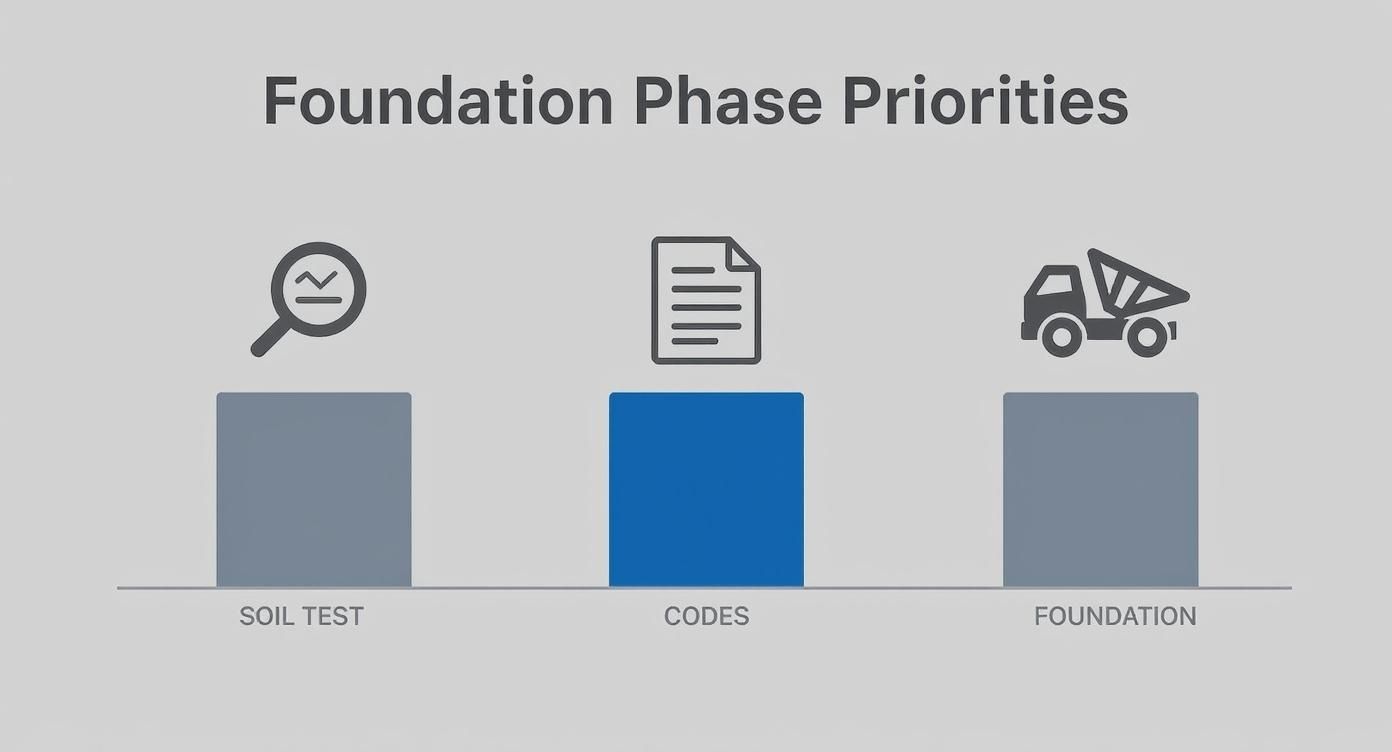
This visual really drives home the point that a solid build starts from the ground up. Every step is essential for a project that's both successful and cost-effective.
Labor and Finishing Costs
Once the building package lands on your site, the last major cost categories come into play. These are often the most variable expenses, depending heavily on local labor rates and just how customized you need the interior to be for your operations.
The erection, or construction labor, is a big one. This is what you pay the crew to assemble your pre-engineered building. But because these systems are designed for ridiculously fast assembly, labor costs are often way lower than with traditional construction, which demands more skilled trades and much longer timelines.
Finally, interior finishing is what turns your steel shell into a fully functional workspace. This covers all the essential systems:
- Electrical wiring and lighting
- Plumbing for restrooms or production lines
- HVAC systems for climate control
- High R-value insulation to keep energy costs in check
A common mistake is underestimating the cost of interior finishing. Budgeting for these elements from the start ensures your metal building warehouse is not just a structure, but a high-performance environment tailored to your business needs.
The Real Financial Advantage
When you add it all up, the financial edge of a metal warehouse becomes crystal clear. Pre-engineered metal buildings can reduce construction costs by up to 30% and slash project completion time by 20% to 40%. That efficiency is a huge advantage, especially in a U.S. industrial building market valued at $43.8 billion in 2024 and still growing.
To give you a clearer picture of how these savings stack up, we’ve put together a comparison for a hypothetical 20,000 sq. ft. warehouse.
Cost Comparison Metal vs Traditional Warehouse Construction
| Cost Component | Metal Building Warehouse (Estimate) | Traditional Construction (Estimate) | Key Advantage |
|---|---|---|---|
| Building Materials | $300,000 | $450,000 | Precision manufacturing reduces material waste. |
| Foundation | $80,000 | $100,000 | Lighter weight requires a less extensive foundation. |
| Labor/Erection | $100,000 | $200,000 | Faster assembly significantly cuts labor hours. |
| Total Project Time | 4-6 Months | 8-12 Months | Faster ROI and operational start. |
As you can see, the savings aren't just in one area—they accumulate across the entire project, from materials to labor to time.
For a more granular look, you can dive into our complete guide to commercial metal building costs to better understand the specifics of your investment.
Customizing Your Warehouse for Maximum Efficiency
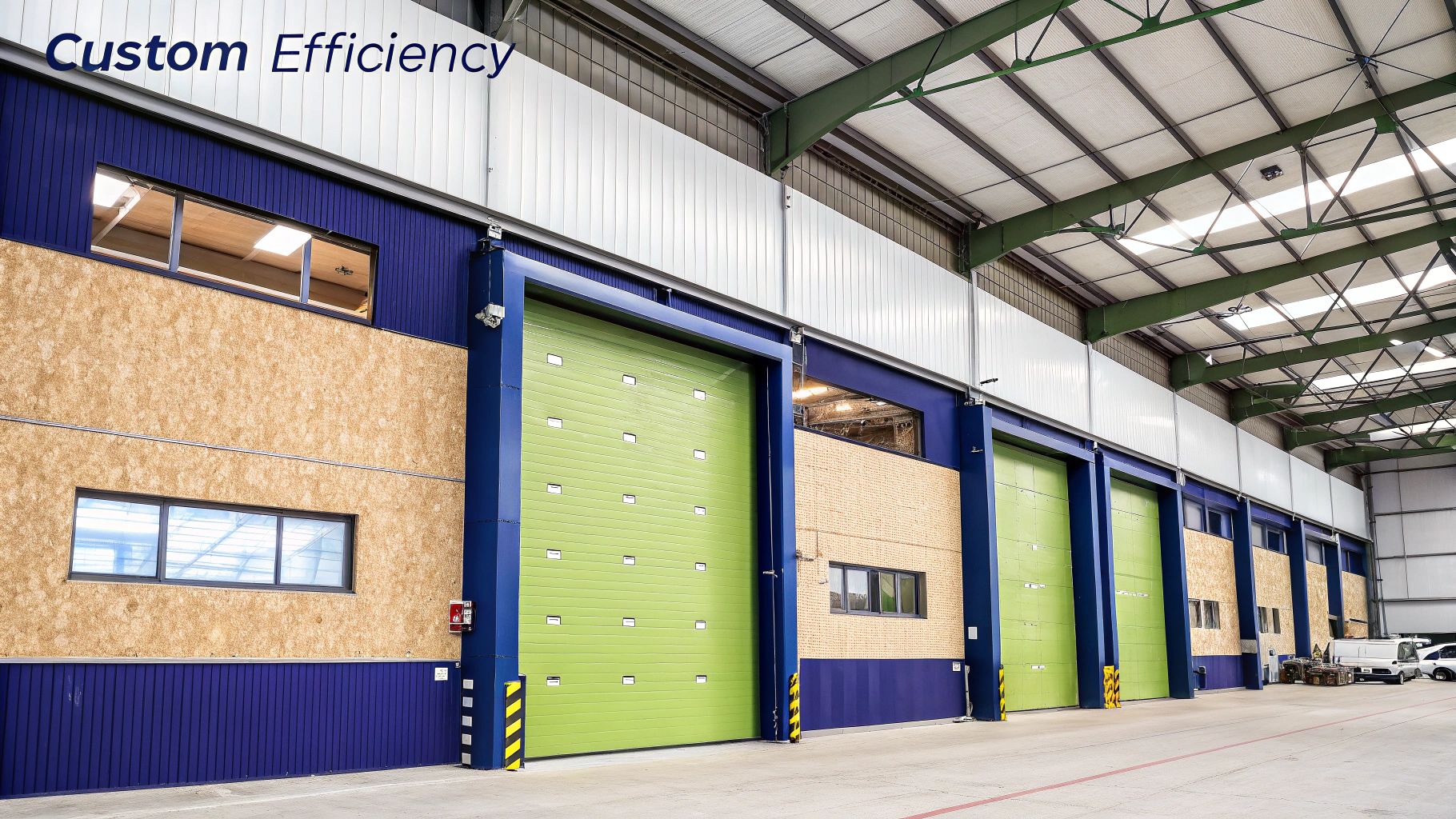
The term "pre-engineered" can be a bit misleading. It might make you think of a cookie-cutter product, but with modern metal warehouses, nothing could be further from the truth. Think of it less like a kit and more like a high-performance system you can tune precisely to your business's workflow.
This is where a standard structure gets its soul. Customization turns a building into a highly efficient operational hub. Every single choice—from the type of insulation you pick to where you place a single walk-in door—has a direct ripple effect on your daily operations, energy bills, and overall productivity. You start with a blank steel canvas and strategically add the features that will transform it into your company's greatest asset.
Functional Upgrades for Peak Performance
In a warehouse, efficiency is all about movement, climate control, and access. Nailing these core functional elements is the first step toward creating a space that actively boosts your bottom line. These aren't just expenses; they're smart upgrades that pay for themselves many times over.
Let's start with insulation. It's one of the most critical upgrades you can make. Opting for a high R-value insulation system will dramatically slash your heating and cooling costs, which are often the biggest line item in a warehouse's operational budget. It also creates a stable interior climate, which is great for protecting sensitive inventory and keeping your team comfortable.
Next up is proper ventilation. This is about more than just moving air around. Advanced systems like ridge vents, louvers, and large-scale fans are crucial for maintaining air quality. They help control temperature, stop moisture buildup before it starts, and clear out fumes—a non-negotiable for manufacturing or specific storage environments.
The right combination of insulation and ventilation does more than just cut energy bills; it fosters a safer, more productive workspace. A well-ventilated building reduces indoor air pollutants and helps maintain consistent temperatures year-round, leading directly to better employee well-being and performance.
Designing Access and Workflow
How smoothly goods and people move in and out of your building dictates its entire rhythm. Getting the doors and access points right is absolutely crucial for a fluid, productive workflow. A smart access strategy is your best defense against bottlenecks.
Think about what your day-to-day looks like:
- Roll-Up Doors: These are the workhorses for standard loading bays. They're durable, secure, and built for frequent use by delivery trucks and staff.
- Overhead Doors: When you're dealing with oversized machinery or massive equipment, you need equally massive overhead doors. They provide the clearance to move big assets without a hitch.
- Personnel Doors: Strategically placed walk-in doors ensure your team can get in and out safely without having to navigate the main loading bays.
As you customize your warehouse for top-tier efficiency, don't forget to integrate all critical safety features. This includes complying with strict emergency exit signage requirements to ensure your facility is as secure as it is productive.
Aesthetic Options That Build Your Brand
Functionality comes first, but the look of your building matters. A lot. The exterior of your warehouse is often the very first impression a client or partner gets of your entire operation. Thankfully, modern customization options mean your building can reflect your brand's professionalism and identity.
Forget the old stereotype of a plain grey box. You have a whole palette of aesthetic enhancements to make your facility stand out. This includes colored wall panels that perfectly match your company's branding, or even architectural touches like brick facades and wainscoting for a more traditional look.
These features prove that a metal building warehouse can be as sharp and visually appealing as it is practical. To get a feel for what’s possible, take a look at the world of custom steel buildings and see just how closely a structure can be tailored to your vision.
How Metal Warehouses Align with Market Trends
Choosing a metal building warehouse isn't just a decision for today; it's a strategic move that puts your business right in the middle of major economic and environmental shifts. Think of it as placing your operations directly in the flow of modern commerce.
The explosive growth of e-commerce and a global push for more resilient supply chains are creating an unprecedented demand for agile, scalable industrial spaces. This isn't a passing fad. It's a fundamental change in how goods are stored, managed, and moved. Businesses need facilities that can go up fast to meet consumer demands for next-day delivery, and a metal building warehouse is designed for exactly that kind of speed. This operational agility is why sectors like logistics, manufacturing, and cold storage are increasingly turning to steel.
Riding the E-commerce Wave
The boom in online retail has completely reshaped the warehousing industry. Companies now need more local and regional distribution centers to get products closer to customers, slashing those critical last-mile delivery times. A metal building warehouse is the perfect tool for this rapid expansion.
Its pre-engineered design allows for incredibly quick construction, letting businesses establish a market presence months faster than with traditional building methods. This speed is a massive competitive advantage. For example, a retailer can set up a new fulfillment center to serve a booming metro area in a fraction of the time, capturing market share while competitors are still stuck looking at blueprints.
This rapid deployment is a primary driver behind the market’s impressive growth. The U.S. pre-engineered metal building market, a key segment for these warehouses, was valued at USD 12.98 billion in 2024. Market forecasts show it climbing to USD 27.10 billion by 2033, fueled largely by this e-commerce expansion. You can dive deeper into this industrial growth trend in detailed market reports.
A Future-Proof Investment in Sustainability
Beyond market demand, choosing a steel structure is also a powerful statement about sustainability. As industries face growing pressure to adopt greener practices, a metal warehouse stands out as an environmentally responsible choice.
Steel is one of the most recycled materials on the planet. A typical metal building frame is constructed with a high percentage of recycled content, reducing the need for virgin resources and minimizing landfill waste from the start.
This commitment to sustainability extends throughout the building's life. Here’s how a metal building warehouse supports green construction goals:
- High Recycled Content: Steel can be recycled over and over again without losing its strength, making it a cornerstone of the circular economy.
- Energy Efficiency: When you pair a steel building with high-quality insulation, you get a tightly sealed envelope that drastically cuts down on heating and cooling costs.
- Reduced Site Disturbance: Because components are manufactured off-site, there’s less noise, traffic, and waste at the construction location.
By selecting a metal warehouse, you’re not just meeting today’s operational needs—you’re making a future-proof investment that aligns with key industry trends and environmental values.
Common Questions About Metal Warehouses
Even after you've seen all the benefits laid out, it's completely normal to have a few lingering questions before making a big investment. Getting those practical concerns sorted out is what gives you the confidence to pull the trigger. We'll tackle the most common questions we hear about the long-term performance and flexibility of a metal building warehouse.
Think of this as the final check-in. We'll cover how they hold up over time compared to traditional buildings, what you can really expect for maintenance, and the exciting potential for future growth.
How Durable Is a Metal Building Warehouse?
Let's cut to the chase: a metal building warehouse is incredibly tough, often outlasting wood or concrete structures by a long shot. Steel is naturally immune to the kind of problems that give other building owners headaches, like termites, rot, and fire.
On top of that, these buildings aren't just generic kits. They are specifically engineered to handle the climate right where you are. That means your building is designed from day one to shrug off heavy local snow loads or stand firm against high wind speeds, keeping your operation safe and running no matter what the weather throws at it.
Wood can warp, split, and crack over time, but steel holds its shape and strength for decades. This fundamental resilience makes a metal building warehouse a rock-solid asset that needs very little structural babysitting.
This built-in toughness is what protects your inventory, your expensive equipment, and your people. It's the peace of mind that comes from knowing your business is housed in a structure that was truly built to last.
What Kind of Maintenance Does a Steel Warehouse Require?
This is one of the best parts. A steel warehouse is remarkably low-maintenance. The upkeep is so simple and straightforward that it saves a significant amount of time and money over the building's life.
For the most part, you're looking at a quick annual inspection. During this yearly walkthrough, you'll just want to keep an eye out for:
- Loose fasteners or bolts that might need a quick tighten.
- Dents or dings on wall or roof panels from equipment bumps or major storms.
- Clear gutters and downspouts to make sure water is draining away from your foundation.
The paint finishes on modern steel panels are incredibly advanced, factory-applied to resist fading, chalking, and chipping for 20-40 years. You can forget about the constant repainting and resealing that traditional buildings demand. That's capital you can put back into your business.
Can I Expand My Metal Warehouse in the Future?
Absolutely. In fact, easy expansion is one of the core strengths of a pre-engineered metal building. As your business grows, your building can grow right alongside it, without the massive cost and disruption that comes with trying to expand a traditional structure.
The modular design makes it surprisingly simple. In most cases, the process involves removing an end wall of the current building and just adding new bays to extend its length. The new section integrates perfectly, creating a seamless expansion that looks like it was there from the start.
This is a far more cost-effective and faster approach than trying to knock down a brick or concrete wall. It's this unmatched flexibility that ensures your investment keeps paying off for years, giving you a scalable solution that's ready for whatever comes next.
Ready to build a warehouse that grows with your business? Contact Icon Steel Buildings today to explore your options and get a custom quote. Visit us at https://iconsteelbuildings.com to start your project.