
When you picture a farm, what comes to mind? For most people, it's the classic red wooden barn. It’s a charming image, but that tradition is quickly giving way to a far more practical and resilient solution. Modern farming is all about efficiency, and steel farm buildings are the new standard for farmers who need structures that work as hard as they do.
Why Steel Is the New Standard for Modern Farms
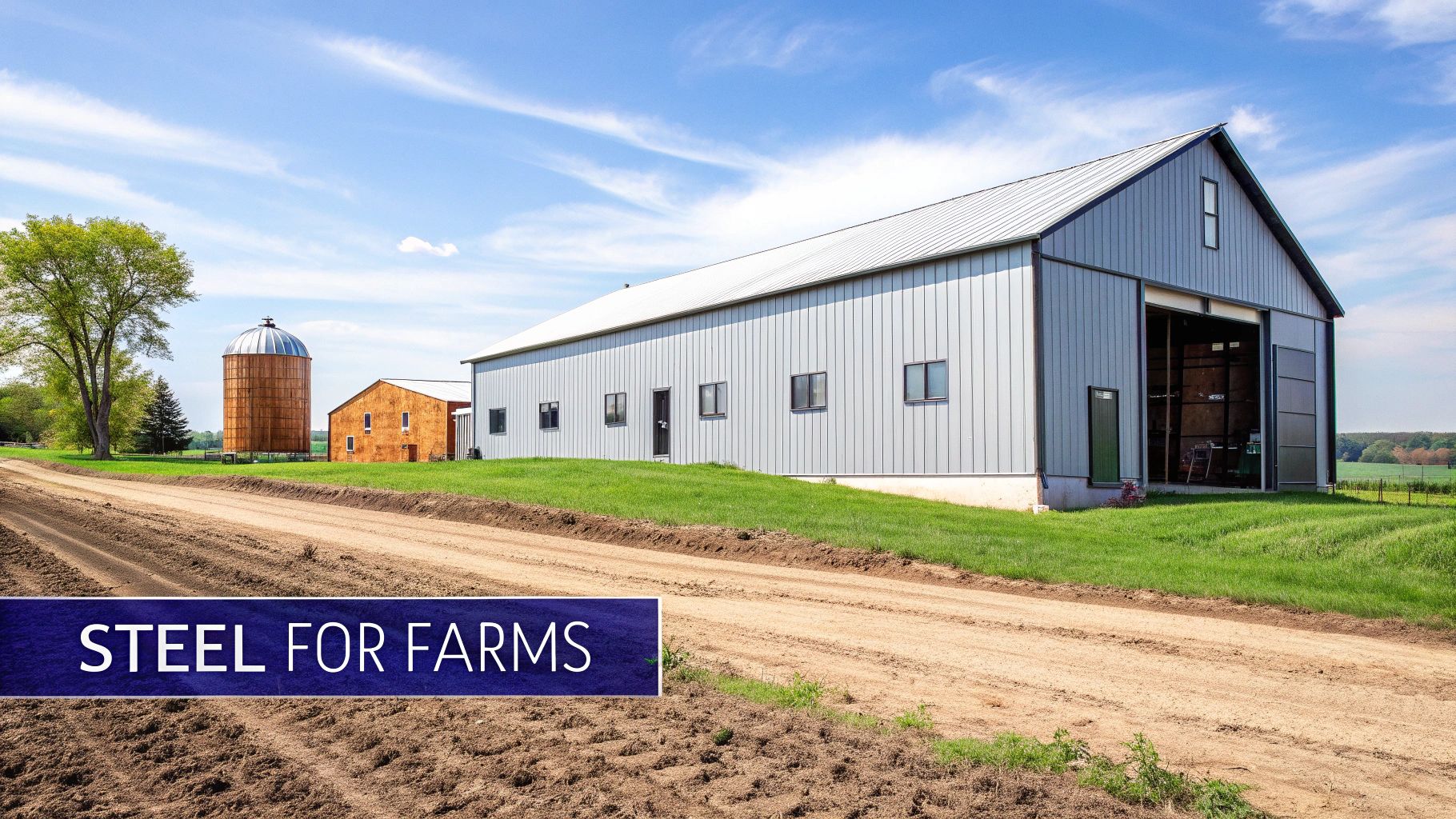
Making the switch to steel is like upgrading from an old plow to a GPS-guided tractor. It’s a massive leap forward that brings immediate and long-term benefits to almost every part of your operation. Unlike wood, steel has a set of built-in advantages that are a perfect match for the tough, demanding world of agriculture.
The Clear Advantages of Steel Construction
The number one reason farmers choose steel is its incredible durability. These buildings are engineered from the ground up to handle whatever mother nature throws at them, from crushing snow loads and hurricane-force winds to hail and relentless sun. That strength gives you peace of mind, knowing your expensive equipment, livestock, and harvested crops are safe and sound.
On top of that, steel is completely immune to all the headaches that come with wooden structures.
- Pest-Proof: Termites, carpenter bees, and rodents can chew through wood, but they can’t make a dent in a steel frame. You can forget about costly pest control treatments.
- Rot and Mold Resistant: Steel doesn’t absorb moisture, which means it will never rot, warp, or grow unhealthy mold and mildew. This is a game-changer for maintaining a healthy environment for livestock and keeping stored grain dry.
- Fire-Resistant: Steel is non-combustible. This dramatically lowers the risk of fire—a critical safety factor on any farm—and can often lead to lower insurance premiums.
With a steel structure, you're getting a predictable, low-maintenance asset. This reliability lets you spend less time and money on building repairs and more time on the work that actually matters—running your farm.
This isn't just a trend; it's a fundamental shift. The global market for metal building framing, valued at US$ 515 million in 2025, is expected to hit US$ 654 million by 2031, with steel frames leading the way. To see a direct comparison, check out our detailed guide on a steel building vs a wood building.
Speed and Efficiency from Day One
Another huge win for steel is how fast it goes up. Most steel farm buildings are prefabricated, which means all the parts are cut, drilled, and welded with precision in a factory setting. This controlled environment ensures every piece is perfect and radically speeds up the on-site assembly.
A prefab kit arrives at your property ready to be bolted together. This can slash construction time from several months down to just a few weeks. That means lower labor costs and, more importantly, a new barn, workshop, or storage shed that's ready to use much sooner, giving you a faster return on your investment.
Finding the Right Fit for Your Farm Operations
A steel building isn't just a structure; it's a critical piece of equipment designed to solve specific challenges on your farm. The real key is matching the building’s design to the day-in, day-out demands of your operation.
Whether you're safeguarding multi-million dollar machinery or creating a healthy environment for livestock, the beauty of steel farm buildings is their ability to be configured for virtually any agricultural task. By looking at how these buildings perform in the real world, you can start to see how a well-planned structure will boost your workflow and protect your most valuable assets. Let's dig into some of the most common applications.
Protecting Your High-Value Equipment
Modern farm equipment is a massive capital investment. A new combine or high-horsepower tractor can easily cost more than a house, and leaving that kind of asset exposed to the elements is a gamble you just can't afford to take. Sun, rain, snow, and hail will quickly degrade your machinery, leading to rust, faded paint, and expensive mechanical failures down the road.
A steel equipment shed is your best line of defense, providing a completely secure, weather-tight enclosure.
- Massive Doorways: Steel buildings can be engineered with enormous roll-up or sliding doors. This makes it simple to move large equipment like combines, sprayers, and planters in and out without a headache.
- Clear-Span Interiors: The incredible strength of a steel frame allows for huge, open interiors with zero interior support columns getting in your way. This obstruction-free space is absolutely essential for maneuvering large vehicles and attachments safely.
This design gives you every square inch of usable floor space, ensuring you can park your entire fleet under one roof and still have plenty of room for maintenance and repairs.
One of the biggest advantages is safety. Steel is non-combustible, which is a game-changer for equipment storage and maintenance. Sparks from welding or grinding are far less of a fire hazard compared to a traditional wooden barn, giving you critical peace of mind.
Housing Livestock Safely and Humanely
The health and productivity of your animals are directly linked to their living conditions. Steel barns provide a far superior environment that's cleaner, safer, and easier to manage than old-school wood-frame structures.
Because steel doesn't absorb moisture, it won’t rot or harbor the mold and mildew that can cause serious respiratory issues in your animals. The smooth, non-porous surface of steel wall panels is also incredibly easy to wash down and sanitize, which helps you control the spread of disease—something that’s especially important in dairy operations, poultry houses, and equestrian facilities where hygiene is everything.
You can also easily integrate sophisticated ventilation systems, like ridge vents and louvers, to guarantee constant fresh air circulation. This helps regulate temperature and humidity, keeping your animals comfortable and reducing stress all year long.
Securing Grain and Hay Storage
Protecting your harvest is every bit as important as growing it. Steel buildings are the perfect solution for storing grain, hay, and other commodities because they shield them from the two biggest threats: moisture and pests.
The tightly sealed construction of a steel building keeps rain and snow out, preventing the mold that can ruin an entire season's worth of hay or grain. And unlike wood, steel offers no entry points or nesting material for rodents and insects, ensuring your stored feed stays clean and safe for your animals.
The wide-open, column-free interior of a clear-span steel building also makes it easy to operate loaders and stack bales efficiently, maximizing every bit of your storage capacity. To get a better idea of how a structure can be designed for your unique needs, you can learn more about our custom steel buildings and see what's possible.
Comparing Steel Building Designs and Styles
Once you've decided a steel farm building is the right move for your operation, the next step is picking the right design. It's not a one-size-fits-all situation. Think of it like choosing between a heavy-duty pickup and a nimble ATV—each is perfect for specific jobs but not so great for others.
The two main players you'll come across are the rigid frame (what we call I-beam buildings) and the arch-style (you might know it as a Quonset hut). Each has its own strengths and is built for different farm tasks. Getting this choice right is crucial for making sure your investment works for you day in and day out, from how you lay out the interior to its long-term usefulness.
This map breaks down how a central steel building can serve all the core functions of a modern farm.
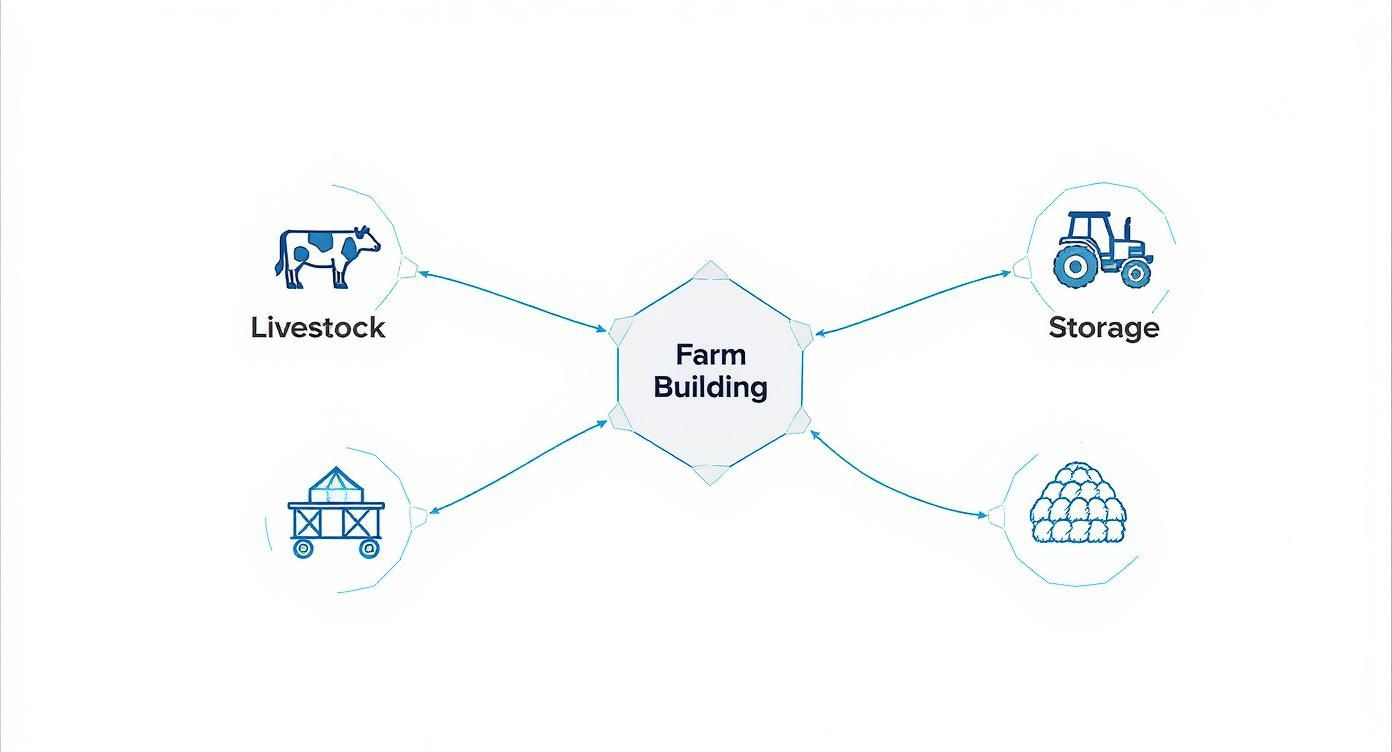
As you can see, the versatility is incredible, branching out to everything from livestock and equipment to massive storage needs.
The Workhorse: Rigid Frame I-Beam Buildings
Rigid frame construction is, without a doubt, the most popular and flexible choice for modern agriculture. This design uses solid steel I-beams to create a powerful, self-supporting skeleton. The result? A building with perfectly straight walls and a massive, wide-open interior with zero columns—what’s known as a clear-span design.
This style is the undisputed champion when you need to squeeze every last drop of usable space out of your building.
- Equipment Storage & Workshops: Straight walls mean you can park huge machinery like combines and tractors right up against the sides. No wasted space.
- Livestock Barns & Arenas: The vertical walls and high ceilings are ideal for installing stalls, pens, or even an indoor riding arena without any pesky columns getting in your way.
- Hay & Commodity Storage: Stack bales or pile grain higher and more efficiently, thanks to the tall, straight sidewalls.
The rigid frame gives you unmatched flexibility. You can easily add standard doors, windows, and insulation. Plus, the straight walls make it simple to finish the interior with liner panels or even frame out an office.
While they often need a more substantial concrete foundation, the structural integrity and design freedom make rigid frames the go-to for most steel farm buildings. If you want to see what's possible, you can find a ton of great metal building design ideas to get your imagination going.
The Efficient Arch-Style Quonset Hut
You know an arch-style building, or Quonset hut, the second you see one. Their classic semi-circular design is made from corrugated steel panels bolted together, creating an incredibly strong structure that needs no interior beams, trusses, or columns at all. This simple, efficient design makes them a very cost-effective option.
Their curved shape is naturally great at shedding snow and resisting high winds, making them tough survivors in harsh climates. The trade-off, however, is that the curved walls cut into your usable headroom and floor space near the sides.
This makes arch-style buildings perfect for things like:
- Bulk Grain & Commodity Storage: The curved shape is excellent for piling up loose materials.
- Basic Equipment Shelters: They provide solid protection for smaller tractors, tools, and vehicles where you don't need to maximize every inch of wall height.
- Hay Storage: They offer great protection from the elements for hay bales, though stacking isn't quite as efficient as in a rigid frame building.
Making the Right Choice for Your Farm
So, how do you pick? It really boils down to balancing usable interior space against your initial budget. To help make that decision a bit easier, here’s a quick comparison of the most common styles.
Comparing Steel Farm Building Styles
| Building Type | Best For | Key Advantages | Potential Considerations |
|---|---|---|---|
| Rigid Frame (I-Beam) | Equipment storage, workshops, livestock barns, riding arenas, large-scale commodity storage. | 100% usable interior space, straight walls for easy finishing, highly customizable with standard doors/windows. | Higher initial cost, may require a more substantial foundation. |
| Arch-Style (Quonset Hut) | Bulk grain/feed storage, basic equipment shelters, and hay storage. | Extremely durable, great in high winds/snow, very cost-effective and simple to erect. | Reduced usable space and headroom near the curved walls. |
Choosing the right structure is an important decision, but by thinking through your daily operations and what you'll need down the road, you can select a steel building design that will be a valuable asset for decades to come.
Your Step-By-Step Project Planning Guide
A successful build doesn’t just happen when the trucks roll up. The real work starts long before that. Planning your steel farm buildings properly is a lot like mapping out a harvest—you need to consider every detail upfront, from the type of seed to the condition of the soil, to ensure you get the best possible outcome. This is the stage where your ideas and needs become a real, efficient, and cost-effective structure, saving you from expensive headaches later on.
First things first, you have to nail down the right size and layout. Don’t just think about the equipment you own right now. Where do you see your operation in five or even ten years? It's always cheaper to build a little bigger from the start than to deal with a major expansion project down the road. Take some time to sketch out your ideal workflow. Think about how tractors, combines, and trucks will move in and out of the building. Smooth, safe traffic flow is key.
A good rule of thumb we've seen work time and again is to add at least 15-20% more space than you think you need today. This buffer is your secret weapon for future growth, making sure you don't outgrow your new building too fast.
Choosing Your Core Materials
With a layout in mind, it's time to talk materials. This is about more than just picking a color; it's about selecting components that are engineered to handle your specific climate and daily workload.
- Steel Gauge: This is simply the thickness of the steel panels. It's a bit counterintuitive, but a lower number means thicker, stronger steel. For most farms, a standard 26-gauge does the job beautifully. But if you're in an area with heavy snow or high winds, stepping up to a tougher 24-gauge is a smart move for extra peace of mind.
- Protective Coatings: The coating on your steel panels is what stands between them and the elements. Galvalume, which is a mix of zinc and aluminum, provides far better long-term rust protection than old-school galvanized steel. For most farm settings, it's the clear winner.
For any agricultural operation, steel's toughness and value are hard to beat, especially for buildings that have to stand up to rough conditions. And with sustainability being more important than ever, steel is a great choice. It's highly recyclable and has a long lifespan, which cuts down on environmental impact compared to other materials.
Essential Customizations and Accessories
Here's where a steel building really shines—its flexibility. This is your chance to fine-tune the structure so it works perfectly for your farm, turning a basic shell into a high-functioning asset. Before you get too far, it's crucial to get a handle on navigating building codes and regulations in your area, as they'll dictate some of your design and feature choices.
Here are a few key accessories to consider:
- Insulation Packages: In most climates, good insulation is a must-have, not a nice-to-have. It keeps your workshop comfortable in the winter, protects anything that's sensitive to temperature swings, and stops condensation from forming and damaging your equipment.
- Ventilation Systems: Air quality is a big deal, especially if you're housing livestock or running equipment inside. Things like ridge vents and louvers keep fresh air moving, which pulls out moisture and keeps the interior environment healthy.
- Doors and Windows: Give some serious thought to how you'll get in and out. Big roll-up or sliding doors are essential for large machinery, while standard walk-in doors are perfect for everyday access. Don't forget windows! They bring in natural light, cut down on your power bill, and just make it a better place to work.
Thinking through each of these elements helps you create a solid plan that guarantees your new building is ready to perform from day one. To dive deeper into the nuts and bolts, check out our complete guide on buying a metal building. Using a checklist approach like this ensures you've covered all your bases before you even think about getting a quote.
Navigating The Building And Installation Process
Once you’ve signed off on the design of your new steel farm building, the project shifts from paper to dirt. This phase can feel like the most complex part of the journey, but breaking it down into clear steps makes it entirely manageable. From site prep to tightening the last bolt, a good roadmap keeps your project on time and on budget.
The real work starts the moment your engineered plans are in hand. These aren't just drawings; they're the key to unlocking building permits from your local authorities. It's a critical first step you can't afford to skip.
The Permitting And Site Prep Phase
Before a single shovel hits the ground, you need the right permits. This process is different everywhere, so your first call should be to your local planning and zoning office. They'll give you the rundown on specific requirements, necessary inspections, and fees in your area. Your building provider will supply the certified engineered drawings needed to get the application rolling.
While you're waiting for the green light from the permit office, you can get a head start on preparing the building site. Getting this stage right is absolutely essential for a smooth installation.
- Clearing and Grading: The entire build area must be cleared of any trees, large rocks, and other debris. The ground is then professionally graded to create a perfectly level pad, usually raised slightly to ensure rainwater drains away from your foundation.
- Utility Location: Before you dig, you have to know what's underneath. Identifying and marking all underground power, water, and gas lines is a non-negotiable safety measure. For a deeper look into how professionals safely locate underground utilities, this guide to understanding potholing in construction is a fantastic resource.
- Foundation Work: With a clear, level site, it's time to pour the foundation. Most steel farm buildings sit on a reinforced concrete slab, pier, or perimeter wall foundation, which will be specified in your engineering plans. A solid foundation is the bedrock of your building’s stability for decades to come.
Professional Erection Vs DIY Installation
Once the foundation is cured and your building kit arrives on site, you’ve got a big decision to make: hire a professional crew or tackle the assembly yourself? The right answer really comes down to the size of your project, your timeline, and your own team's experience.
A DIY build can be a great way to save on labor costs, especially for smaller, more straightforward buildings like a garage or a small workshop. These prefabricated kits are designed for the owner-builder, with pre-drilled components that simply bolt together. Just be sure you have the right tools, proper safety gear, and a few capable friends to help out.
For larger or more complex steel farm buildings—think big barns, riding arenas, or commercial-scale storage facilities—hiring a professional erection crew is almost always the smart move. Their expertise, specialized equipment, and sheer efficiency mean the job gets done right, safely, and way faster than a DIY team could manage.
Professional installers live and breathe these projects. They understand the engineering inside and out and can handle any curveballs that come up on-site. To see what that looks like in action, you can explore the details of a professional metal building installation and see how an experienced crew brings it all together.
Understanding The Project Timeline
Having a realistic timeline helps you manage expectations and coordinate everything from the excavator to the final inspection. While every farm building project has its own unique variables, a general schedule provides a solid framework for your planning.
The table below breaks down the typical timeline for a steel building project, helping you anticipate what's coming next.
Estimated Project Timeline for a Steel Farm Building
| Project Phase | Typical Duration | Key Activities |
|---|---|---|
| Design & Engineering | 2-4 Weeks | Finalizing building dimensions, features, and creating certified plans. |
| Permitting | 4-8 Weeks | Submitting plans to local authorities and waiting for approval. |
| Site Prep & Foundation | 1-3 Weeks | Clearing land, grading the site, and pouring the concrete foundation. |
| Building Delivery | 2-4 Weeks | Manufacturing the building components and shipping them to your site. |
| Erection & Assembly | 1-4 Weeks | Assembling the steel frame, attaching panels, and installing doors/windows. |
Breaking the process into these distinct stages turns the daunting task of constructing a new building into a series of achievable goals. This structured approach takes the guesswork out of the equation, giving you a clear path from your initial quote to a fully operational, durable asset that will serve your farm for generations.
Protecting Your Investment for Decades to Come
A new steel building is far more than just another structure on your property—it's a long-term asset, engineered to support your farm's legacy for generations. Unlike traditional wood buildings that demand constant attention, steel farm buildings are designed for decades of reliable service with almost no fuss. That incredible durability is exactly where you'll find an impressive return on investment (ROI) that goes well beyond the initial price tag.
The financial upside keeps growing over the building's entire life. Because steel is non-combustible and stands up to the harshest weather, many farmers see a real drop in their annual insurance premiums. When you add in the energy savings from a well-insulated structure, your building starts paying for itself from day one.
The Power of Low Maintenance
Let’s be honest, one of the best things about steel is how little it asks of you. The core structure is completely immune to rot, warping, and pests, which means you can forget about the expensive repairs that constantly plague old wood barns.
Your maintenance routine transforms from a constant battle against decay into a simple, yearly checklist. That frees up your time and your budget to focus on what really matters: running a profitable farm.
A steel farm building isn't just an expense; it's a capital investment in resilience and operational continuity. It's a structure built to outlast equipment, market cycles, and even generations, securing a vital piece of your farm’s future.
Simple Steps for Lasting Durability
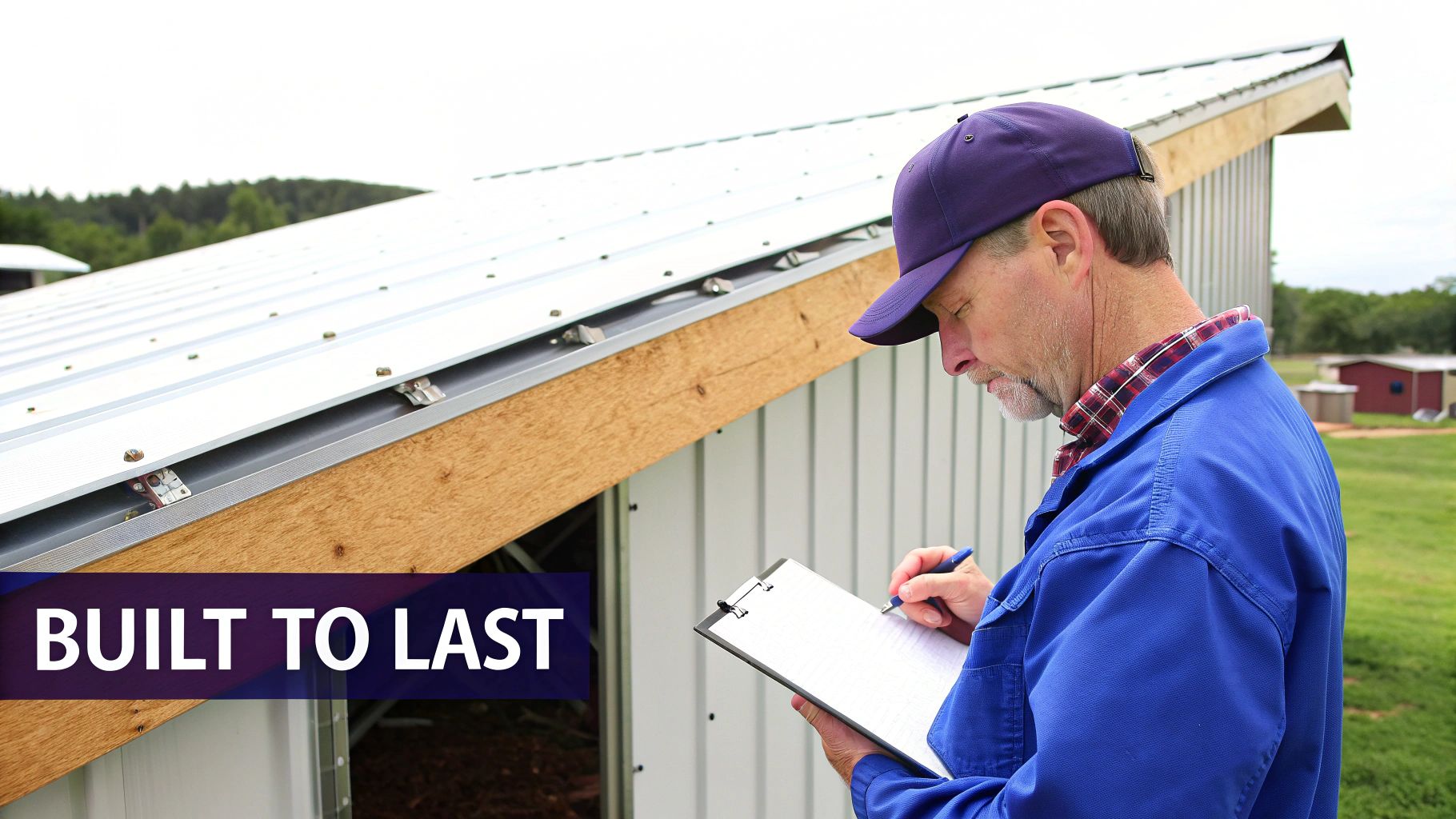
Keeping your steel building in peak condition is refreshingly simple. A quick walk-around once a year is usually all it takes to make sure it stays strong and weather-tight for decades.
Here’s a straightforward checklist to get you started:
- Check Fasteners: Walk the perimeter and give the screws and bolts a quick visual inspection. If any have loosened over time, just tighten them back up to keep the seals tight.
- Clear Gutters and Roof: Get rid of any leaves, branches, or debris that have collected in the gutters and roof valleys. This ensures water drains properly and prevents pooling, which is key to protecting your foundation.
- Wash Down Walls: Give the exterior panels a rinse with a hose or a gentle pressure washer every so often. This washes away dirt and grime, keeping that protective finish in top shape.
This minimal upkeep routine is a constant reminder of the value you've invested in. When you partner with a trusted supplier like Icon Steel Buildings, you’re not just buying a kit; you’re acquiring a durable, cost-effective asset built for the long haul. Contact us today for a custom quote and let's build a structure designed to last a lifetime.
Answering Your Top Questions
To wrap things up, we've gathered the most common questions farmers and ranchers ask before they pull the trigger on a steel farm building. This is your final checkpoint—just straightforward answers to clear up any last-minute questions and give you total confidence in your decision.
How Long Do Steel Farm Buildings Typically Last?
A well-maintained steel farm building will easily last for 50 years or more. In fact, it's not uncommon to see steel structures serve a family farm for generations. This incredible lifespan comes from steel's natural ability to resist rot, termites, and fire—threats that constantly plague wood barns.
When you add modern protective coatings like Galvalume, the frame is engineered to stand up to decades of brutal weather with barely any upkeep.
Are Steel Buildings More Expensive Than Wood Barns?
While the initial price tag might look similar at first glance, steel buildings almost always come out ahead on the total cost of ownership. The real savings pile up fast. Construction is quicker, meaning lower labor bills. Maintenance is minimal, saving you time and money year after year. And many farmers even see a drop in their insurance premiums.
Over the long haul, a steel building's durability means you're not constantly paying for repairs or replacements like you would with a traditional wood barn.
Steel's long-term value is undeniable. The combination of lower upkeep, better insurance rates, and superior energy efficiency means the building pays you back over its lifetime, making it a smarter financial asset for any modern farm.
How Much Can I Customize My Steel Building?
Think of a steel building as a blank canvas. They are fully customizable to fit your farm's exact needs. You aren’t stuck with off-the-shelf sizes; you can specify the exact width, length, and height you need to comfortably fit your largest combine or house your entire herd.
From there, you can dial in the functionality with all sorts of features:
- Insulation Packages: To keep the interior climate stable and stop condensation in its tracks.
- Doors and Windows: Everything from massive overhead doors for machinery to standard walk-in doors for quick access.
- Ventilation Systems: Ridge vents and louvers are popular choices to ensure healthy air circulation for livestock.
- Lean-To Structures: A simple and effective way to add covered outdoor storage for hay bales or smaller implements.
Will I Need a Permit for My Farm Building?
Most of the time, yes. Nearly every county and state requires a building permit for a new agricultural structure. These rules can vary wildly from one place to the next, so your first call should always be to your local planning and building department before you finalize any purchase.
A reputable supplier will make this easy by providing the certified, engineered drawings you need to complete your permit application, ensuring your new building is fully compliant with all local codes.
Ready to build a structure that’s as hardworking and resilient as your farm? The team at Icon Steel Buildings is here to help you design the perfect building for your needs. Get your custom quote today!