
So, you're trying to nail down the cost of a new metal garage. A standard 24×24 two-car garage kit often falls somewhere between $5,000 and $7,000, but that's really just the starting point. The final price tag on your project will also have to account for essentials like the foundation, delivery, and labor.
Your Quick Guide to Metal Garage Costs
Think of your total garage cost as a simple formula: the price of the base kit plus all the other necessary pieces. And trust me, things like a solid concrete foundation and a professional installation crew aren't optional add-ons—they're fundamental to building a structure that will last. Getting a handle on these components from the get-go is the best way to avoid sticker shock and build a budget that actually works.
The cost of a metal garage can swing pretty wildly depending on its size, where you're located, and any custom features you add. For example, while that two-car garage might land in the $5,000 to $7,000 range, a smaller 12×21 single-car garage kit can start as low as $2,955.
Location is another huge factor. A 20×20 garage in a state like Georgia could run you about $4,500, but that same structure in New York might be closer to $6,000. The difference comes down to higher local labor rates and material costs. To get a better sense of how these numbers are calculated, you can learn more about what goes into our steel building kit prices.
To give you a clearer picture of what to expect, let's look at some typical kit costs based on common garage sizes.
Estimated Metal Garage Cost by Size (Kit Only)
| Garage Size (Width x Length) | Typical Use | Estimated Cost Range |
|---|---|---|
| 12' x 21' | One car or large shed | $2,955 – $4,000 |
| 18' x 21' | One car with extra storage | $3,695 – $5,000 |
| 20' x 20' | Compact two-car | $4,500 – $6,000 |
| 24' x 24' | Standard two-car | $5,000 – $7,000 |
| 24' x 41' | Two cars with workshop/storage | $9,755 – $12,000 |
| 30' x 40' | Three-car or large workshop | $12,500 – $16,000 |
Keep in mind, these prices are for the kit itself. They don't include the foundation, delivery, or installation, which we'll cover next.
Visualizing the Total Cost Breakdown
This graphic breaks down the three core pillars that make up your total garage cost. It’s a great way to see how the numbers really stack up.
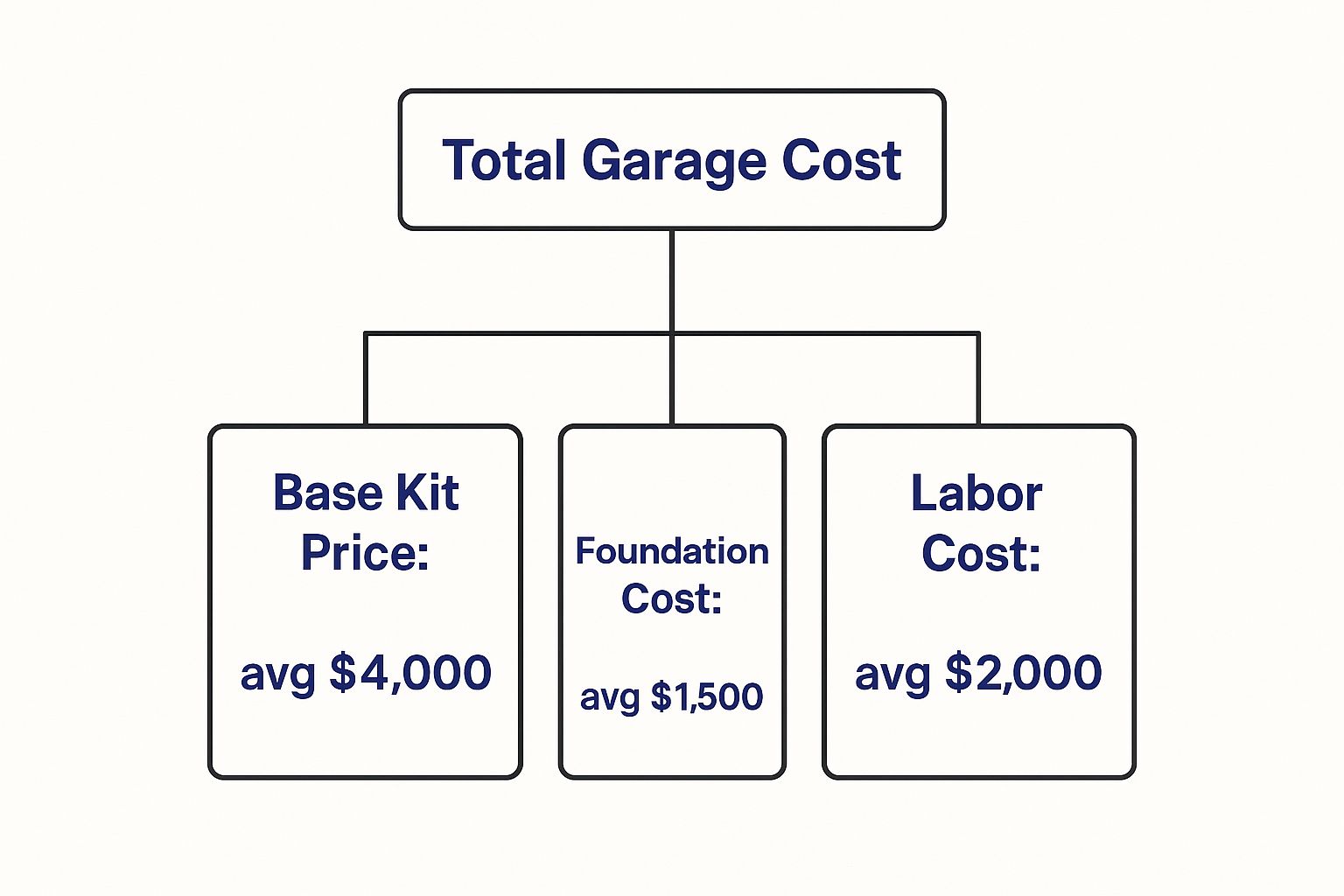
As you can see, while the base kit is the biggest slice of the pie, the foundation and labor costs are significant chunks of the budget you can't afford to overlook.
Key Takeaway: Whatever you do, don't just budget for the kit. When you factor in the foundation and labor right from the start, you get a true picture of what the project will cost. This simple step helps you dodge those nasty, unexpected expenses that can pop up during construction.
Breaking Down the Core Cost Factors
The sticker price on a metal garage kit is just your starting point. It’s a lot like buying a car—the base model looks affordable, but the real cost comes into play when you add the more powerful engine, better trim, and all-wheel drive. Your garage works the same way. The choices you make about its fundamental structure will have the biggest impact on your final budget.
Two of the most important decisions you'll face are the steel gauge and the roof style. These aren't just minor details; they form the backbone of your building, dictating its strength, how long it will last, and whether it can handle the weather in your area. Finding the right balance here is key to getting the durability you need without blowing your budget.
Steel Gauge: The Strength Behind the Price
The gauge of the steel is simply a measure of its thickness, and it directly affects both durability and cost. It works a bit backward from what you might expect: a lower gauge number means thicker, stronger, and more expensive steel.
- 14-Gauge Steel: This is the industry standard for most residential garages. It hits the sweet spot between cost and strength, providing solid protection for areas with typical weather. If you're in a moderate climate and watching your budget, this is a fantastic choice.
- 12-Gauge Steel: As the thicker option, 12-gauge steel brings about 25% more strength to the table. We highly recommend it for places that get heavy snow or high winds. It’s also the smarter pick for larger buildings that need that extra bit of structural muscle.
The upgrade from 14-gauge to 12-gauge steel usually adds between $100 to $700 to the final price, depending on the garage's size. It might seem like just another expense, but that extra investment buys you serious peace of mind and can save you from costly repairs down the road.
Choosing the right steel thickness is the foundation of your building's resilience. If you want to see how these choices play out in the overall structure, you can learn more about the components of a metal building frame.
Roof Styles and Their Cost Implications
Your garage's roof does more than just keep you dry. Its design impacts the building's overall strength and, crucially, how well it handles rain, snow, and falling leaves. Each style comes with its own price tag, which is directly tied to its design complexity and the amount of material needed.
- Regular Roof: This is your most budget-friendly option, easily identified by its rounded corners and horizontal panels. It’s perfectly fine for mild climates but can let water pool if you get a lot of rain or snow.
- A-Frame Horizontal Roof: Often called a boxed-eave roof, this style gives you a more traditional, house-like look with its A-frame peak. The panels still run horizontally, making it a solid mid-range choice for areas with moderate weather.
- Vertical Roof: This is the top-of-the-line choice for a reason. The panels are oriented vertically, so rain, snow, and debris slide right off. This clever design prevents rust and leaks, making it the strongest and most durable option. It's practically a must-have for harsh climates and typically increases the garage cost by 10-15% over a regular roof.
Uncovering Site Prep and Foundation Costs
A solid garage needs a solid start, and that foundation isn't free. Before your metal garage kit even shows up, the ground it will sit on needs some serious attention. This first step, called site preparation, is a critical—and frequently forgotten—part of your total budget.
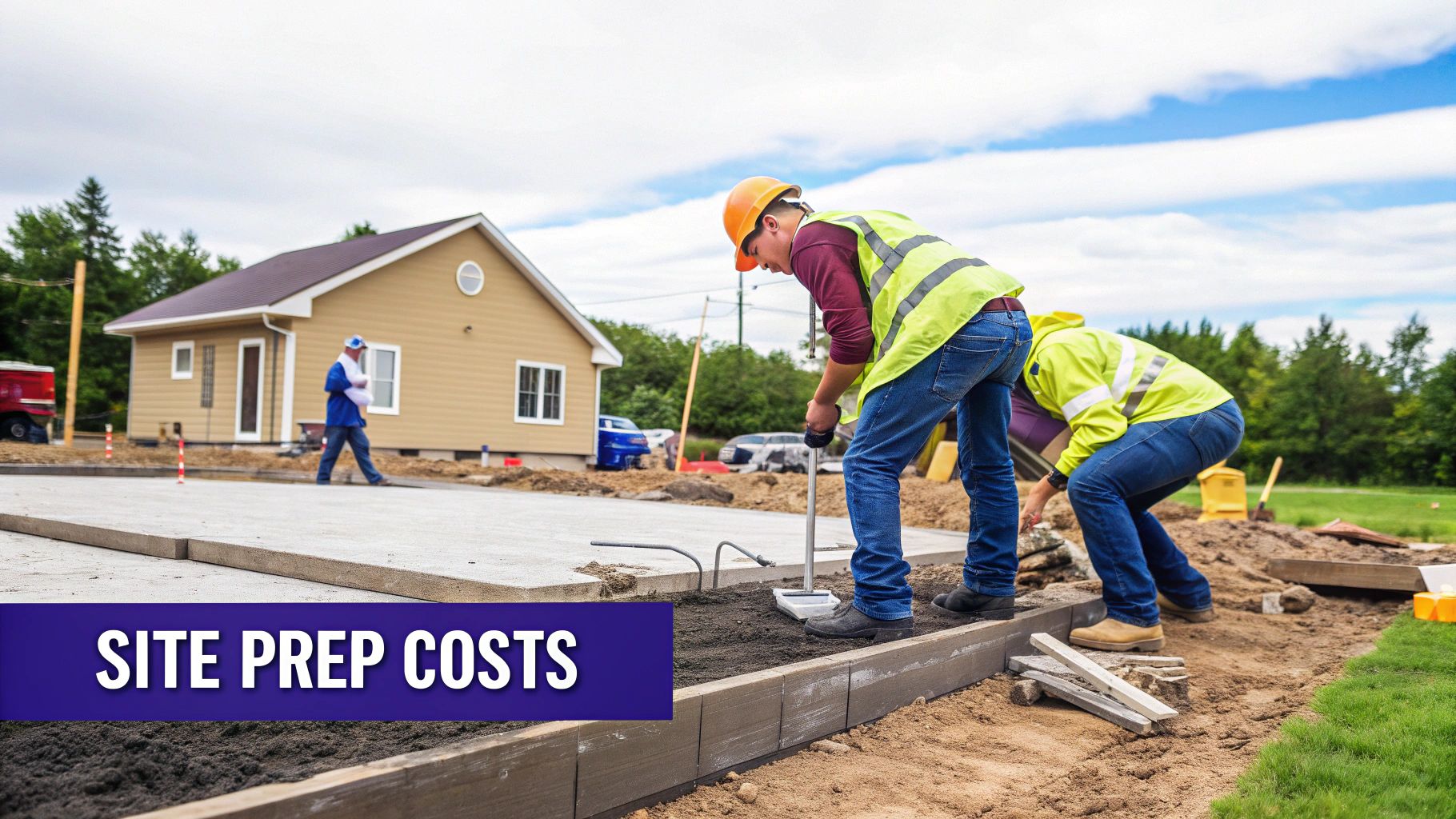
Think about it like building a house; you'd never put up walls on uneven, shifting dirt. The same idea applies here. Site prep means clearing trees, hauling away debris, and grading the land to create a perfectly level pad. Trying to skip this step is just asking for trouble down the road—think structural stress, drainage nightmares, and an unstable building.
The cost for this prep work really depends on what your property looks like. If you've got a mostly flat, clear patch of land, you'll spend less. But for lots with big slopes or thick trees, expect to add $1 to $2 per square foot to your budget for professional grading.
Choosing Your Foundation
Once the site is ready, you need a foundation. This is the platform your garage gets bolted to, and your choice here will have a big impact on both your final cost and how long the building lasts. There are a few common options, each with its own price tag and perks.
- Gravel Pad: This is your most budget-friendly choice. A gravel pad gives you good drainage and a stable base for a simple garage or carport. Easy and effective.
- Asphalt Pad: A step up from gravel, an asphalt pad offers a smoother, tougher surface. It’s a solid mid-range option that provides a cleaner finish for your garage floor.
- Concrete Slab: This is the gold standard for any permanent garage. A poured concrete slab delivers maximum stability, incredible durability, and a completely level, sealed floor.
Key Insight: A concrete slab costs more upfront, no question. But it delivers the best long-term value by preventing moisture problems, keeping pests out, and providing the strongest anchor possible for your building.
Budgeting for Your Foundation
The foundation is a major line item, so don't underestimate it. While the prefabricated steel building kits might run between $15 and $25 per square foot, the groundwork adds another layer of cost. The foundation itself usually costs another $4 to $8 per square foot, depending on the material you choose and the labor rates in your area.
It's absolutely vital to factor these costs in when figuring out the real price of an installed garage. To make sure you're meeting all the local codes and engineering standards, you’ll want to review our guide on steel building foundation requirements. Budgeting for site prep and the foundation from day one ensures your investment is built on solid ground, preventing expensive surprises and guaranteeing a structure that will stand strong for decades.
How Custom Upgrades Impact Your Final Price
A basic metal garage shell is really just the starting point. The real magic happens when you start adding custom features that turn it from a simple box into a truly functional, personalized space. Think of it like buying a new truck—the base model gets the job done, but the upgrades are what make it yours.
Each addition, from practical necessities to aesthetic touches, enhances the building's performance and appearance but also adds to the bottom line.
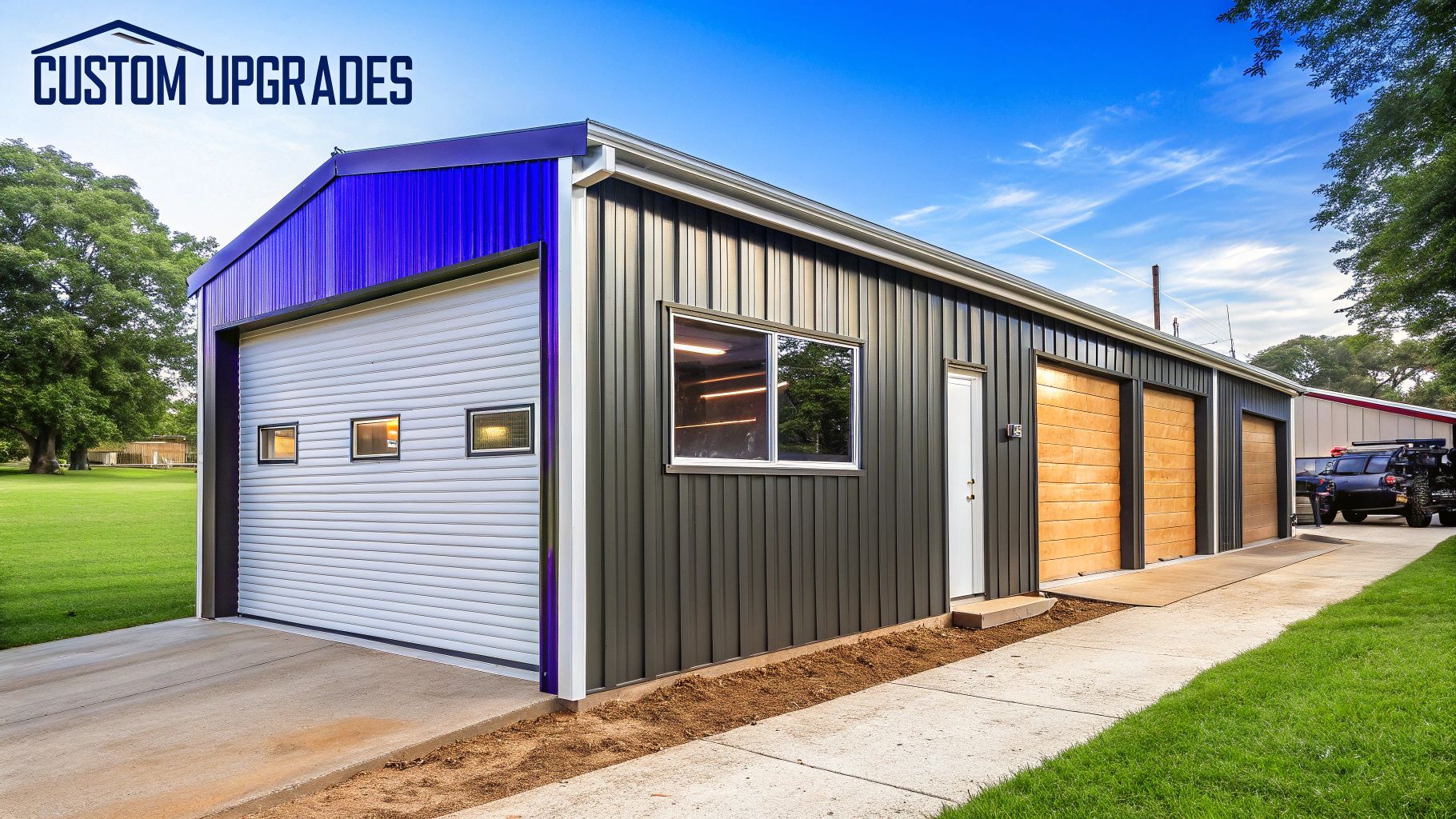
Understanding these costs upfront helps you decide what's essential versus what's a "nice-to-have." This way, you can design a garage that meets your needs without any financial surprises down the road.
Functional Additions And Their Costs
Doors and windows are non-negotiable for any garage, but the type and number you choose will definitely affect the price. Adding a standard walk-in door is a smart move, usually costing between $200 and $400. It gives you easy access without having to open the entire bay.
Roll-up garage doors are another key cost factor. A standard 8'x7' roll-up door might add $500 to $800 per unit. Of course, larger or specialized models will increase that figure. The type of door you select can make a big difference, so it’s worth it to explore commercial garage door options to see what’s out there.
Windows are a popular and relatively affordable upgrade that brings in natural light and improves ventilation.
- Standard Windows: Expect to add $150 to $300 per window for basic, non-insulated models.
- Insulated Windows: If you're planning a climate-controlled space, insulated windows are a great investment, typically running $300 to $500 each.
Insulation And Aesthetic Upgrades
If you plan to use your garage as a workshop, gym, or anything beyond simple storage, insulation is a must-have. It helps regulate the internal temperature, which cuts down on energy bills and prevents condensation.
ROI of Insulation: While adding insulation can increase your initial project cost by $0.75 to $2.00 per square foot, the long-term energy savings and year-round comfort deliver a fantastic return on your investment.
Aesthetic upgrades are all about personalizing the look of your building.
- Custom Colors: Most suppliers offer a solid range of standard colors at no extra charge. But if you want a premium color or a two-tone design, that can add $100 to $500 to the total cost.
- Wainscoting: This is the two-tone paneling you see along the bottom of the walls. It adds a ton of visual appeal and typically increases the price by $200 to $600, depending on the garage's size.
The table below breaks down the typical costs for some of the most common upgrades, giving you a clearer picture of how each choice can shape your final budget.
Common Customization Cost Estimates
| Custom Feature | Average Added Cost | Key Benefit |
|---|---|---|
| Walk-In Door | $200 – $400 | Convenient access without opening the main door. |
| 8'x7' Roll-Up Door | $500 – $800 | Essential for vehicle and large equipment access. |
| Standard Window | $150 – $300 | Adds natural light and improves ventilation. |
| Insulated Window | $300 – $500 | Crucial for temperature control in finished spaces. |
| Spray Foam Insulation | $0.75 – $2.00 / sq. ft. | Boosts energy efficiency and year-round comfort. |
| Wainscoting | $200 – $600 | Enhances curb appeal with a two-tone finish. |
| Premium Color | $100 – $500 | Personalizes the look to match your property. |
These estimates provide a great starting point for planning. By carefully selecting your features, you can design a building that fits your exact needs. To get a better idea of what’s possible, you can review our full range of custom steel buildings and see how different options come together.
Decoding Labor Costs and Installation Choices
The price tag on your garage kit is just the starting point. The real final cost involves assembly, and that brings you to a major fork in the road: do you build it yourself, or do you hire a professional crew? Each path has big implications for your wallet and your schedule.
Going the DIY route looks like an easy way to save a buck. If you’re handy and already own the right gear—ladders, drills, maybe even scaffolding—you could potentially shave thousands off the total cost of your metal garage. But don't underestimate what you're signing up for. This path requires a serious commitment of your time and energy.
Before you jump in, be honest with yourself about the project's scope. A DIY build isn’t just about tightening a few bolts. You’ll be interpreting complex blueprints, making sure every single component is perfectly aligned, and figuring out how to solve any problems that pop up along the way.
Professional Installation Costs
Hiring a professional crew is all about buying peace of mind and getting the job done fast. These installers have the experience to get the structure up efficiently and correctly, often in just a day or two. Their expertise is your guarantee that the garage is structurally sound and that you won't accidentally void the warranty.
So, what does it cost? Labor is usually priced in one of two ways:
- As a percentage of the kit price: This is the most common approach. Expect labor to run somewhere between 30% and 50% of the kit's value.
- A flat fee: Some installers quote a fixed price for the entire job, which is great for locking in your budget without any surprises.
Expert Insight: Remember, the condition of your job site plays a big role in the final quote. If your location is remote, hard to access, or isn't perfectly level, expect the labor cost to climb. A more complex building design can also add to the price.
Ultimately, the choice comes down to a simple trade-off between your skills, your time, and your budget. For a much deeper dive into what the pros handle, check out our guide on professional metal building installation. It lays out the whole process to help you make the right call.
Navigating Regional Price and Market Shifts
Ever wonder why the exact same metal garage costs more in one state than another? The price isn't a fixed number—it’s constantly shifting based on local economies, market trends, and even global trade policies. Getting a handle on these forces is the key to setting a realistic budget for your project.
Think of steel prices like the stock market; they go up and down all the time. Global supply and demand, production costs, and international tariffs can all send the price of raw steel climbing or falling, which directly hits the cost of your metal garage kit. These big-picture economic shifts are the first layer of pricing you'll encounter.
But where you'll really see the difference is at the local level. The on-the-ground realities of your specific zip code can create some pretty significant cost swings.
How Your Location Shapes the Final Cost
Several local factors have a direct impact on what you’ll pay. It’s not just about the building itself, but the environment where you're putting it.
- Local Labor Rates: The cost of a skilled construction crew varies dramatically across the country. A team in a major city will almost always charge more per hour than one in a rural town, and that difference goes straight into your installation quote.
- Shipping and Delivery Fees: How far are you from the manufacturer's hub? The further the distance, the higher the fuel and logistics costs, which get passed on to you. A remote job site will naturally have a higher delivery fee than one near a major distribution center.
- Building Codes and Regulations: Local building codes are there for safety, but they can add to your bottom line. For instance, areas with heavy snowfall demand higher snow load ratings, while coastal regions require specific wind ratings. Meeting these tougher standards often means using thicker steel or extra bracing, pushing up the material cost.
Understanding the Bigger Economic Picture
The metal building market is a major player in the global economy, and its trends can definitely affect your project's final price tag. The market, currently valued at around USD 22.5 billion, is expected to keep growing. However, things like potential 25% global steel tariffs can create price swings that make projects more expensive.
These pressures force suppliers to be smart with their pricing and buyers to look closely at the total installed cost. You can dive deeper into these market trends and their effects in this metal building systems market insight report.
Key Takeaway: The "cost of a metal garage" is always a local number. The only way to get a true price is to get multiple quotes from suppliers who serve your specific area. This ensures the price reflects local labor, delivery, and building code requirements, helping you find the best possible value for your project.
Common Questions About Garage Costs
When you’re planning a project like this, a few questions always bubble to the surface. Getting clear answers is the key to finalizing your budget and moving forward with confidence. Let's tackle some of the most common things people ask about the cost of a metal garage.
Is It Cheaper to Build a Metal Garage or a Wood Garage?
In almost every case, a metal garage is significantly cheaper to build. The biggest reason comes down to the building process itself—metal building kits are prefabricated, which slashes on-site labor time and practically eliminates material waste.
A traditional wood garage, on the other hand, starts with higher raw material costs and demands far more skilled labor to cut and assemble every single piece from scratch. While wood has a certain classic look, a metal structure delivers far better value. When you factor in the upfront cost, long-term durability, and minimal maintenance, a metal garage often ends up costing 30% to 50% less than a wood-framed garage of the same size.
Do I Need a Permit to Build a Metal Garage?
Most likely, yes. The specific rules change from one city, county, and state to the next, but the vast majority of local governments require a building permit for any permanent structure. Trying to skip this step can lead to some serious fines and legal headaches down the road.
The cost of the permit itself can be all over the map—from less than a hundred dollars to several thousand, depending entirely on where you live and the size of your project.
Crucial Tip: Always, always check with your local building authority before you buy a kit or break ground. They'll give you the exact rundown on what permits you need, which inspections to schedule, and how much it will all cost.
How Can I Save Money on a Metal Garage?
There are plenty of smart ways to keep your metal garage costs in check without cutting corners on quality. It all comes down to smart planning.
Here are a few proven strategies to get the most bang for your buck:
- Stick to Standard Sizes: Custom dimensions and one-of-a-kind designs will always drive up the engineering and material costs. Choosing a standard, common size is one of the easiest ways to keep the price tag down.
- Choose the Right Roof: If you're in a moderate climate, a regular or A-frame (boxed-eave) roof will do the job just fine. A vertical roof is the toughest option, but it's also the most expensive—only upgrade if you really need it for heavy snow or rain.
- Do Some Prep Work Yourself: If you have the skills and the tools, you can save a good chunk on labor costs by clearing and leveling the build site yourself.
- Get Multiple Quotes: Don't just go with the first price you see. Make sure you get quotes from at least a few reputable suppliers. This ensures you're getting a competitive deal on both the building kit and the installation.
Ready to design a garage that fits your budget and your vision? The team at Icon Steel Buildings is here to help you get started with a free, no-obligation quote today. Explore your options and build the perfect structure at https://iconsteelbuildings.com.